
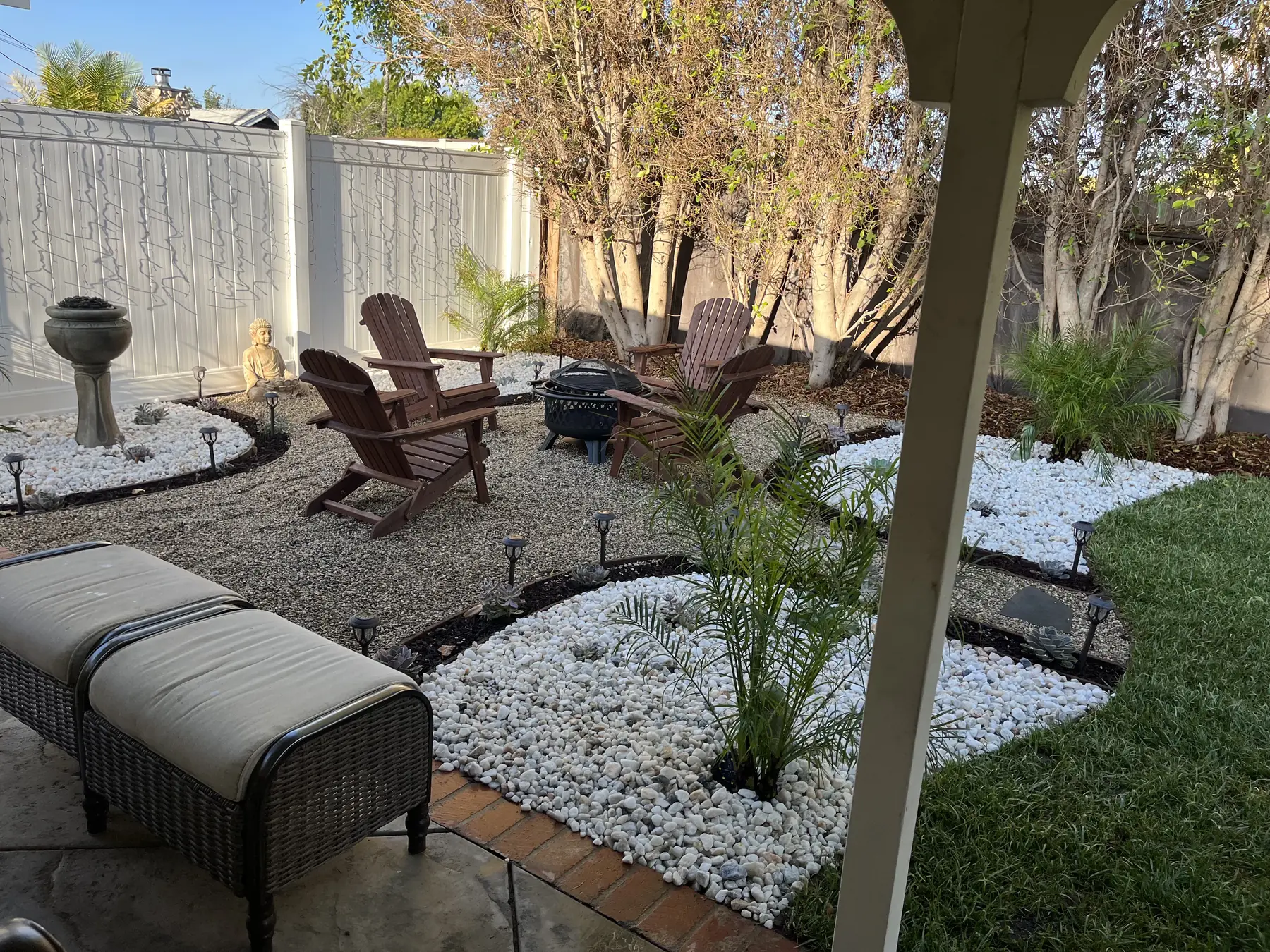
A landscape renovation is the process of reworking a yard that already exists, rather than designing one onto bare ground. That difference drives everything. An existing yard comes with a lawn that may have failed, planting that has outgrown its space, hardscape that has cracked or settled, irrigation of unknown age, and drainage that may never have worked properly. It also comes with things worth protecting, most often mature trees, established structure, and a pool. A renovation is really a sequence of decisions about which of those to keep, which to correct, and which to remove, followed by rebuilding in an order that does not undo itself. This page covers what a renovation includes, the order the work has to happen in, and how a remodel can be staged over time without wasting money.
What counts as a landscape renovation?
A renovation reworks a yard that already exists. That is a different job from a new install on bare ground, because most of the decisions are about what to keep, what to correct, and what has to come out. A typical renovation mixes several of these: removing a lawn that failed years ago, taking out shrubs that have outgrown their spot, breaking out cracked concrete, correcting grade and drainage that never worked, replacing an aging irrigation system, and putting in new surfaces and planting.
The distinction matters because an existing yard carries history. Old footings, buried pipe, roots, and previous grade changes are all still down there, and a renovation has to deal with what it finds.
Deciding what stays and what goes
The first walk through a yard is mostly triage. Mature trees almost always stay, because nothing you plant will replace decades of canopy. Healthy structural shrubs and established hedges are often worth keeping. Pools stay and become the anchor the rest of the plan works around.
What usually goes is anything failing or fighting the site: turf that cannot survive the water it now receives, plants sited where they will always be too big, hardscape that is cracked or draining the wrong way, and irrigation too far gone to repair. Being honest early about what is genuinely salvageable prevents spending money twice on the same area.
Why demolition and haul away is its own phase
Removal is real work, not a preamble. Old sod and roots have to be stripped rather than buried, because organic material left under new surfaces decomposes and settles. Concrete has to be broken out and hauled, and there is usually more of it below grade than shows on top. Stumps and large roots come out where new hardscape or grading is planned.
Access shapes how this goes. A yard reachable only through a narrow side gate limits equipment size and changes how debris leaves the property. That constraint is worth identifying before the work is scheduled, not during it.
Grade and drainage: fix it now or fix it twice
Once a yard is stripped, the ground is exposed and every drainage problem is visible and cheap to correct. After new surfaces go down, the same correction means tearing them up. This is the single most common regret in a renovation that was rushed.
Grading sets slope away from the house and toward somewhere water can actually go. Drains, channels, and pipe handle what slope alone cannot. On the clay soils common across the San Fernando Valley this matters more than most people expect, because clay holds water and moves as it wets and dries, which is what cracks flatwork and heaves paving.
The order a renovation has to happen in
Sequence is not a preference, it is dictated by what buries what. Demolition and removal come first. Grading and drainage follow, while the ground is open. Then anything that lives underground goes in: irrigation lines, sleeves for future runs, electrical for lighting, and drainage pipe. Hardscape comes next, since patios, walls, and paving are heavy and their construction is hard on everything nearby.
Planting goes last, deliberately. Plants installed early get trampled, buried, and coated in dust by the trades that follow. Turf and sod are last of all. Any renovation that plants before it builds will be replacing plants.
Phasing a renovation over time
A renovation does not have to happen all at once, and staging it is often the difference between doing it properly and not doing it at all. The workable approach is to split by area rather than by trade, finishing one zone completely before starting the next, so you always have a completed space rather than a yard permanently under construction.
The one thing worth doing up front regardless of phase is the underground work across the whole area. Running irrigation sleeves and drainage while the ground is open, even for areas you will not plant for a year, avoids cutting through finished surfaces later.
Working around what you are keeping
Mature trees are the feature most often damaged by a renovation, usually without anyone noticing until later. Heavy equipment driving over the root zone compacts soil and suffocates roots. Raising grade over the base of a trunk can slowly kill a tree that stood for fifty years. Trenching straight through a root plate does the same.
The protections are simple: keep equipment off the root zone, avoid changing grade near trunks, and route trenches around root plates rather than through them. Native oaks need extra care, since they are adapted to dry summers and regular summer water near the trunk encourages rot.
Where do we do renovations?
We install renovations across the San Fernando Valley. See the detail, local projects, and pricing for your city:
- Renovations in Arleta
- Renovations in Burbank
- Renovations in Calabasas
- Renovations in Canoga Park
- Renovations in Chatsworth
- Renovations in Encino
- Renovations in Granada Hills
- Renovations in Hidden Hills
- Renovations in Lake View Terrace
- Renovations in Mission Hills
- Renovations in North Hills
- Renovations in North Hollywood
- Renovations in Northridge
- Renovations in Pacoima
- Renovations in Panorama City
- Renovations in Porter Ranch
- Renovations in Reseda
- Renovations in San Fernando
- Renovations in Sherman Oaks
- Renovations in Studio City
- Renovations in Sun Valley
- Renovations in Sunland Tujunga
- Renovations in Sylmar
- Renovations in Tarzana
- Renovations in Toluca Lake
- Renovations in Valley Glen
- Renovations in Valley Village
- Renovations in Van Nuys
- Renovations in West Hills
- Renovations in Winnetka
- Renovations in Woodland Hills