
FAQ
Renovations in Sun Valley, answered
The questions we hear most from Sun Valley homeowners.
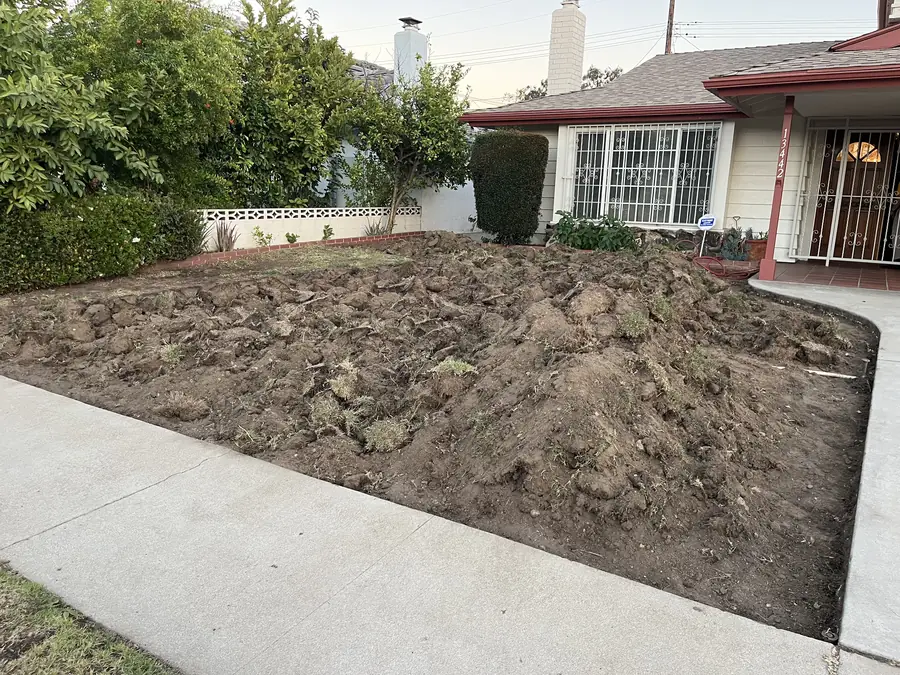
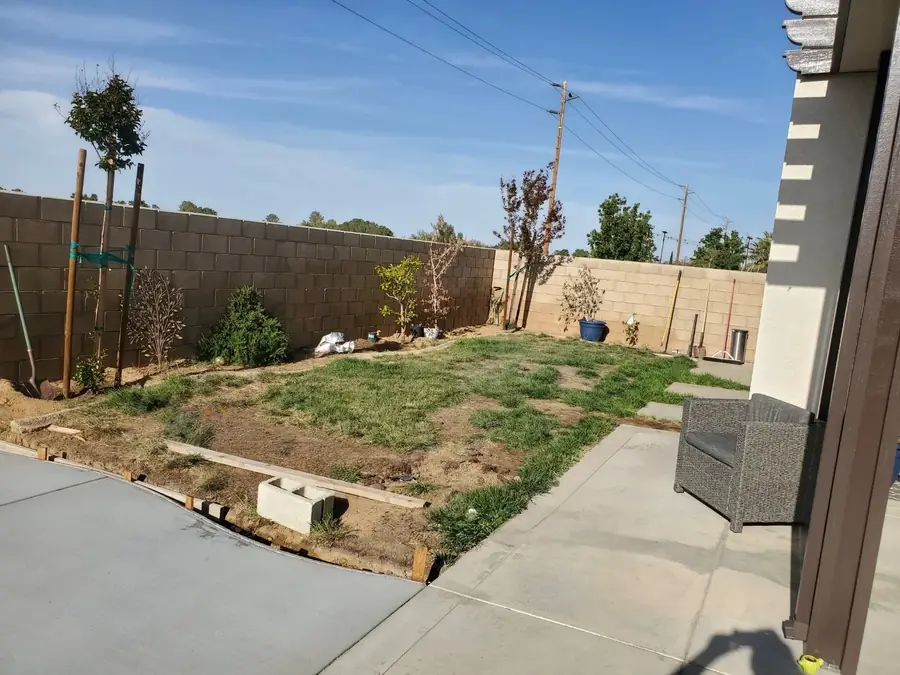
It starts with a walk and a hard sort. Before anything is torn out we go through the yard with you and put every element into one of three groups: keep, remove, or decide later. Mature trees, a sound wall, a pool shell and a usable slab often survive. Failing pipe, broken paving and exhausted planting rarely do. That list drives everything after it, because demolition scope sets the budget, the schedule and how much of the ground opens up for drainage work while there is still access.
Some of it, and the only way to know is to test rather than assume. Old galvanized or brittle poly lines that leak at every fitting are false economy, though a main line in good shape can sometimes stay while valves, laterals and heads all get replaced. Concrete is judged the same way. A slab that is level, uncracked and sitting where you want a surface anyway can remain. One that has heaved, sunk or cracked through is holding a problem underneath it and belongs in the dumpster.
Three questions get asked of every existing element. Does it work as built. Does it sit where the new plan needs that space. Will keeping it cost more in workarounds than replacing it outright. Anything that fails two of the three comes out. We are not interested in demolishing things for the sake of a bigger invoice, and we say plainly when something you assumed was junk is actually fine. Trees especially deserve that patience, because a healthy mature specimen is worth designing around rather than replacing.
It leaves the property, and it leaves on our schedule rather than sitting in the driveway for a month. Broken concrete, old pipe, spent sod and green waste get separated where separation is practical, loaded and hauled to the appropriate facility. Concrete in particular is heavy and volume adds up fast on an older yard full of original paving, so we plan haul trips into the sequence instead of treating them as an afterthought. Access from the street gets checked first, because a narrow side yard changes how the material comes out.
That is one of the best reasons to renovate rather than patch. Sun Valley ground is largely flat, so there is no natural fall doing the work, and once we have the old surfaces off the ground is open and correcting it is straightforward. We reshape the soil to create deliberate fall away from the foundation, set catch basins at the low spots, and pipe them out to a legal discharge point. Dry wells or open graded gravel handle overflow where a run cannot reach the street. Doing this after new paving is in place costs several times as much.
Yes, and many are. Practical budgets are the norm around here and there is nothing wrong with taking a yard in stages, so long as the stages are drawn in the right order rather than picked by whatever is bothering you most. The rules are simple. Anything below the surface goes early. Anything that requires machine access happens before the route to the back is blocked. Planting comes last in each area. Follow that and stage three never demolishes stage one.
It can, and this comes up constantly here because residential streets sit right against industrial and commercial use, sometimes changing within a single block. A renovation is actually a good moment to fix it, since the yard is already open. Options range from layered planting sized for the height you need, to a run of taller screening trees on one side only, to relocating the seating area so the ugly direction sits behind you. We aim at the specific sight lines from where people sit, not at the fence line in general.
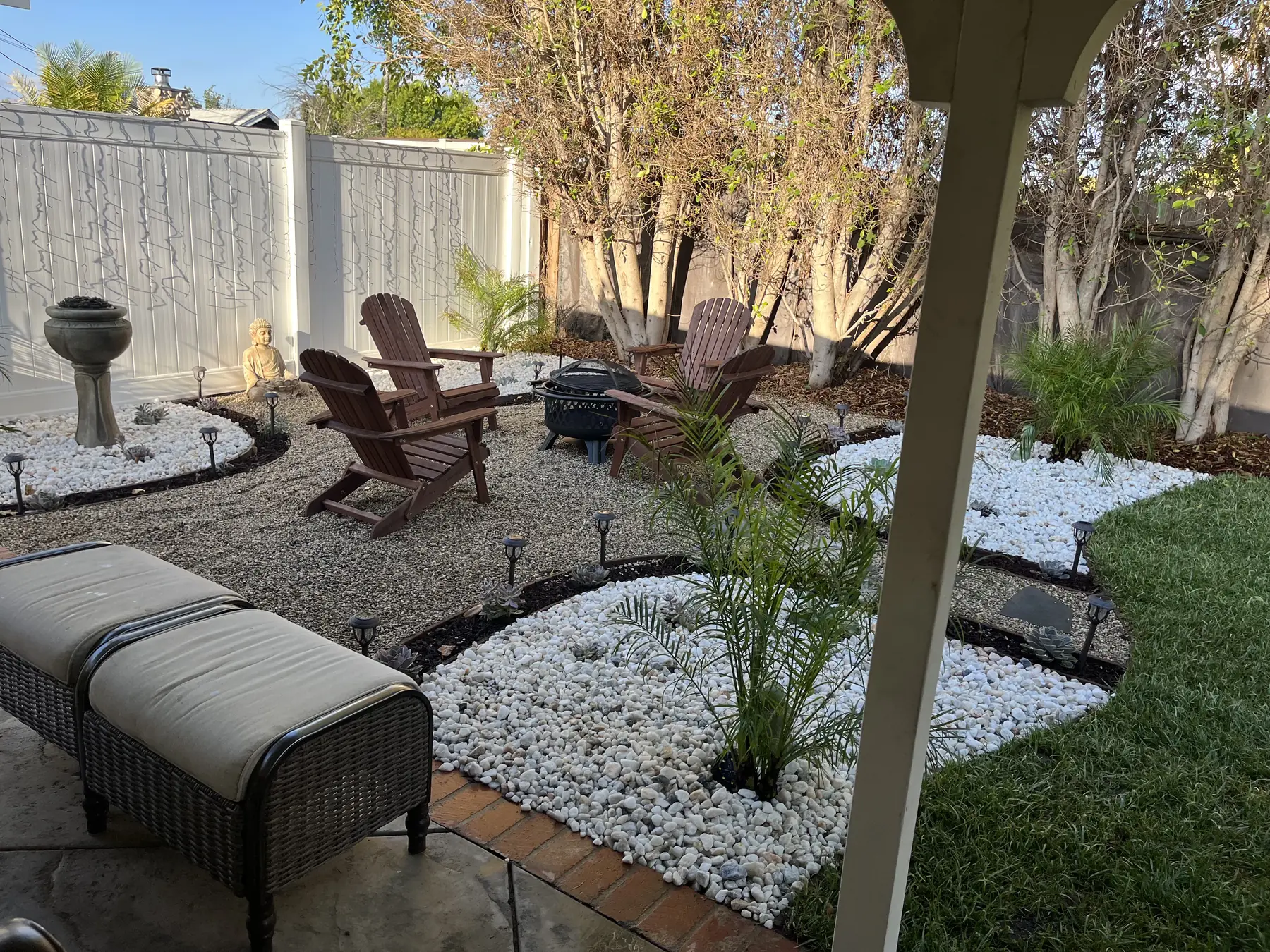
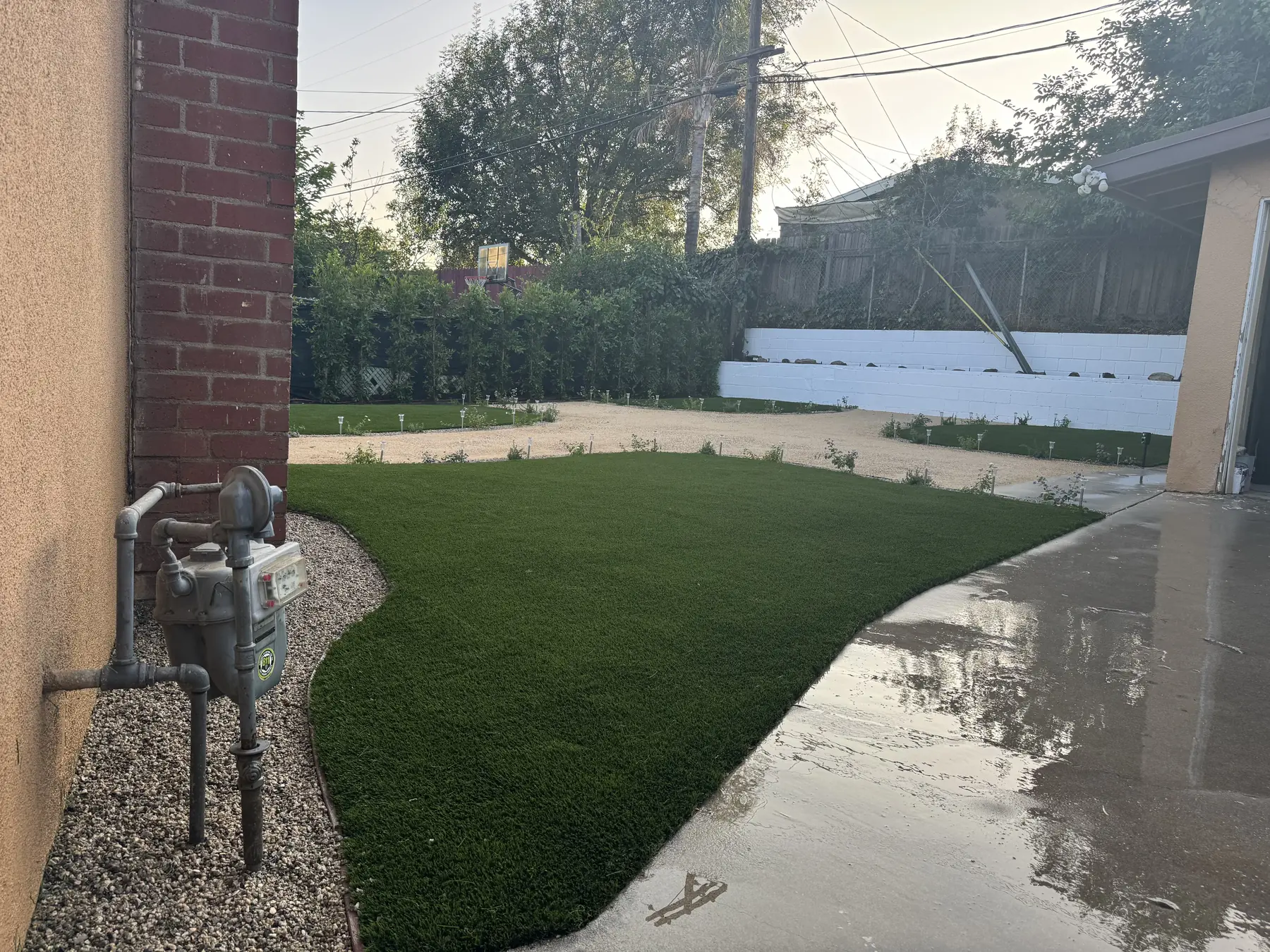
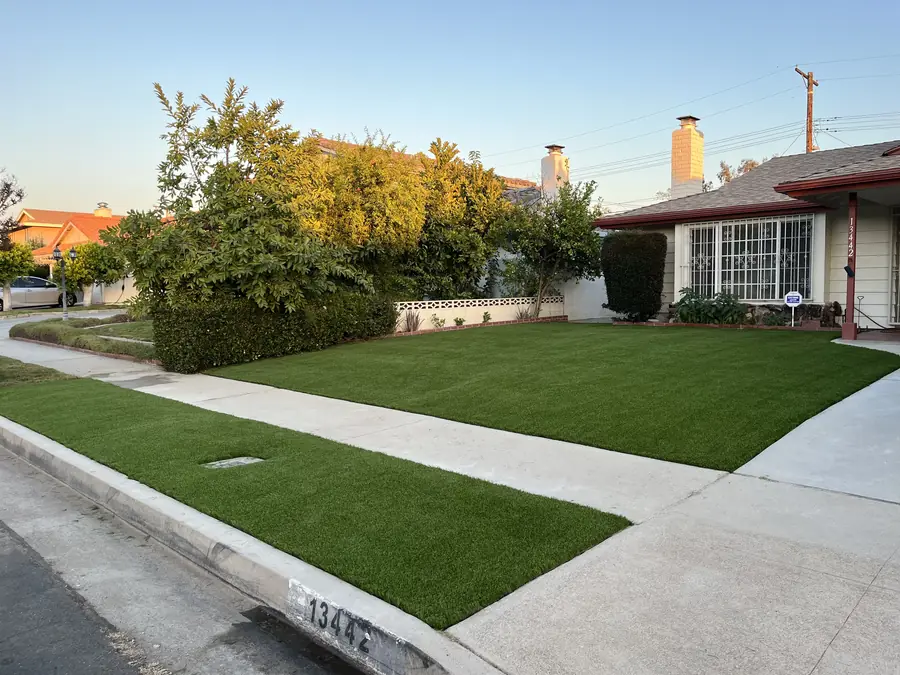
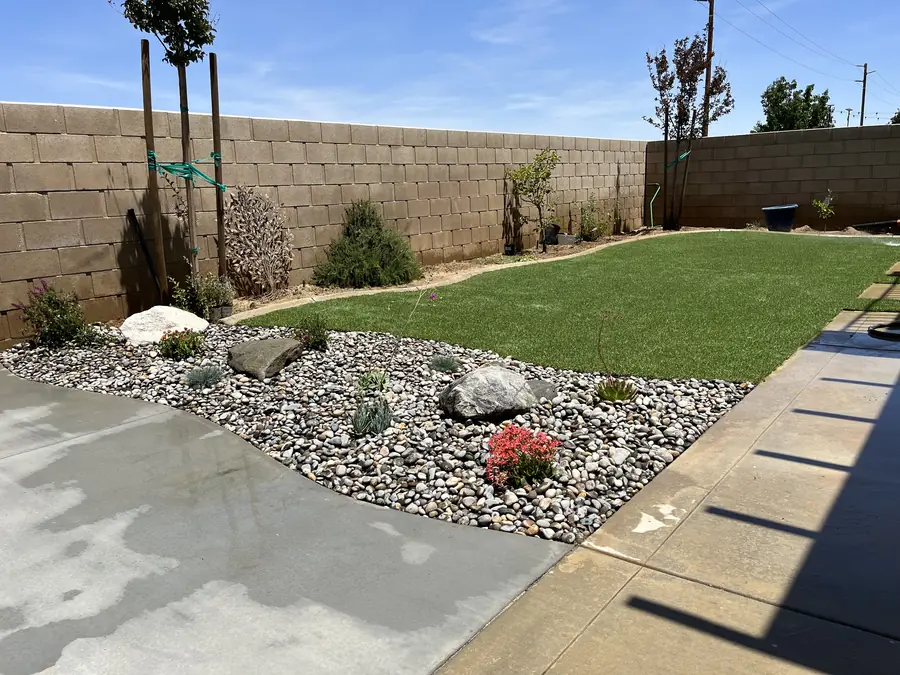
Depends entirely on how the space gets used. Where children or dogs need a soft open surface every day, either new sod over properly amended soil or a good synthetic lawn makes sense, and synthetic wins when the area is small, shaded or hard to keep even. Where the lawn exists mainly because someone installed it in the sixties and nobody has questioned it since, drought tolerant planting with drip is a better use of the water and the space. Old lawn also usually hides tired irrigation that needs replacing regardless.
By staying out of the root zone as much as the plan allows. Roots extend well past the canopy edge, and the damage that kills a tree usually comes from trenching straight through them or from driving equipment over the soil until it is compacted airtight. We fence a protection zone, route irrigation lines and drain runs around it, hand dig where a line has to cross, and avoid raising soil grade against the trunk. Older Sun Valley yards often have one good established tree, and it is nearly always worth building the plan around.
Pool decks are removed and rebuilt as their own piece of work, with care around the bond beam and any plumbing running under the perimeter. We saw cut and lift the old concrete rather than breaking blindly, protect the pool surface and equipment through demolition, then rebuild on compacted base. If the deck was pitching water toward the house or sending it into the coping, that gets corrected while the ground is open. Whether the new surface is poured concrete or pavers is a separate decision, and both work fine around a pool.
Rarely in full. Systems in these older neighborhoods were built for lawn everywhere, and a renovated yard almost never wants that pattern again. What tends to happen is that the point of connection and sometimes the main line stay, while valves, laterals and heads are replaced and the zoning is redrawn to match the new planting. Spray zones over converted beds get switched to drip. A weather based controller replaces the old dial timer. Half measures here are how a beautiful new yard ends up with dead patches by August.
The order is fixed and it does not bend for convenience. Demolition and haul away, then grading and drainage while the ground is bare, then utilities and irrigation in the open trenches, then hardscape on compacted base, then planting last. Every one of those steps disturbs the one before it if run out of turn. Crews that plant before hardscape end up replacing plants. Crews that pave before drainage end up cutting the paving back open. The sequence is the least glamorous part of the job and the part that protects the money.
It changes scope and access more than method. Properties on those northern edges, where Sun Valley runs into the horse keeping communities, can carry real acreage, which means longer irrigation runs, more ground to grade, and often gates and drives that equipment can actually use, a genuine advantage. It also means deciding which parts of the land get renovated at all, because treating five thousand square feet the same way you treat a tract lot backyard is not a good use of the budget. Standard lots nearby get a completely different approach.
Sometimes, and it depends on what the renovation contains rather than on the word renovation itself. Sun Valley is inside the City of Los Angeles, so permitting runs through Los Angeles Building and Safety. Replacing planting, irrigation or a patio surface generally does not require one. Taller retaining walls, new gas or electrical runs, structures, and work touching the driveway apron in the public right of way generally do. We identify which items on your particular list trigger a permit before the first piece of concrete is broken.
More than people expect, and less than sentiment would like. Established trees and large healthy shrubs are usually worth keeping and can be limbed up and cleaned rather than removed. Overgrown foundation planting that has swallowed the windows, hedges that have gone woody and bare at the base, and ground cover that has become a weed bank tend to be beyond rescue. Anything kept has to fit the new irrigation zoning too, since a thirsty survivor stranded in a drought tolerant bed will either die or waste water.
Yes, because they answer different questions. The front is seen from the street by everyone, gets full exposure, has to deal with parkway and driveway conditions, and usually rewards simplicity, clean edges, good lighting and planting that looks intentional year round. The back is where the living happens, so the money goes into surfaces, screening and shade. On these older modest lots the front often just needs the accumulated clutter removed and one strong idea put back, while the back needs a real plan.
Our own people. Daniels Landscaping stays accountable for the whole job, start to finish. The team that breaks out your old concrete is the team that grades the ground, sets the drain lines, builds the new surfaces and puts the plants in. Continuity matters most on a renovation, because whoever saw what was buried in that yard during demolition is the same person deciding how the new work sits on top of it. Nothing gets lost in a handoff between companies, because there is no handoff.
Reach us at (818) 443-9300 and we will schedule a visit, go through the yard element by element with you, and prepare a free written estimate covering demolition, drainage, irrigation, hardscape and planting. On a renovation the site visit is not optional, since what is buried and what is failing cannot be judged from photos. Daniels Landscaping holds California contractor license 1138709. If you plan to take the work in stages, the written estimate breaks it down that way so each stage stands on its own.