
FAQ
Renovations in North Hills, answered
The questions we hear most from North Hills homeowners.
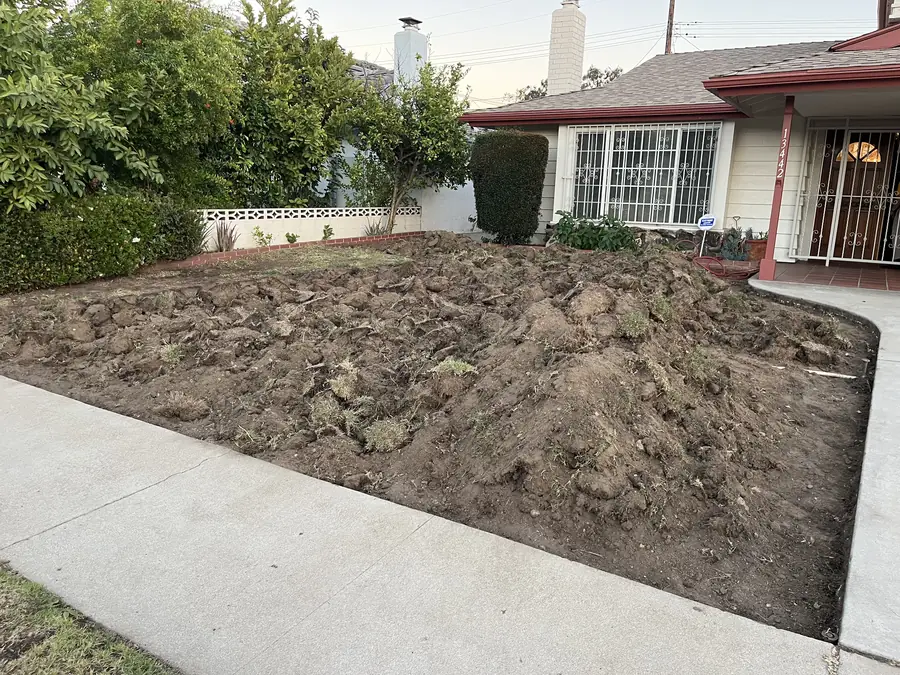
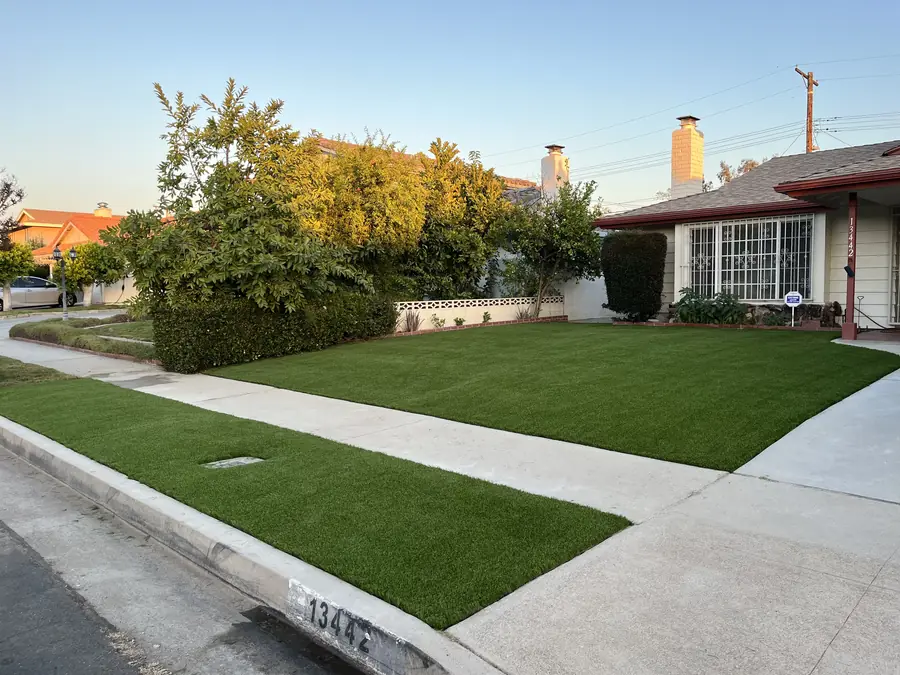
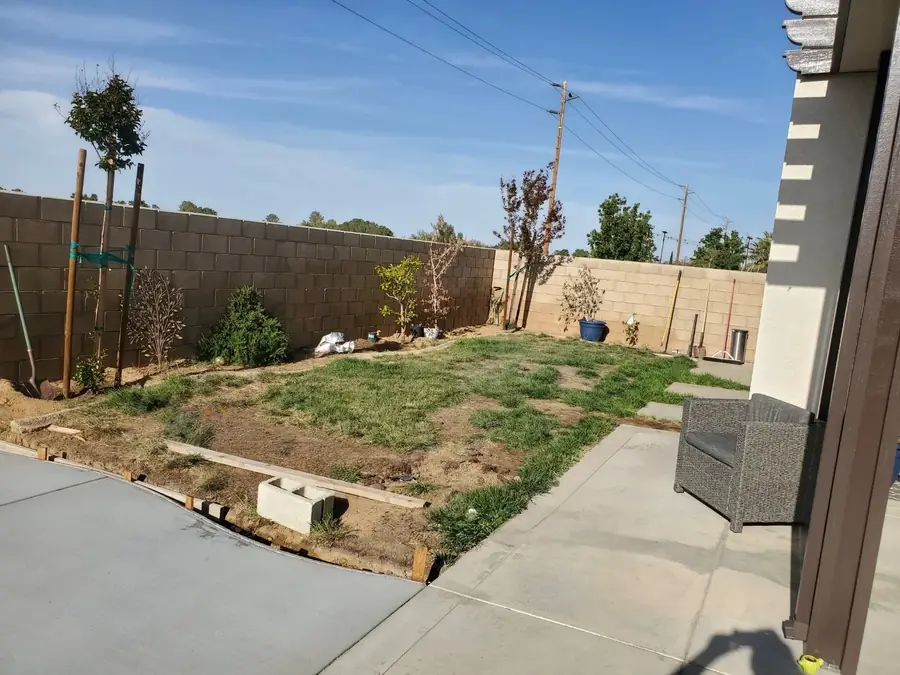
It is a rebuild of a yard that already exists, which is a different job from a new install on bare ground. We begin by separating what is worth keeping, such as mature trees, a sound wall, or a pool, from what has reached the end of its life. Everything else comes out. Then the yard gets regraded, drainage corrected, irrigation replaced, hardscape rebuilt, and planting set last. On a typical North Hills property the list of what comes out runs long, because most of what is in the ground has been there since the house was built.
Rarely in full, and honesty is cheaper than optimism here. Systems that old were built for lawn and spray heads, use pipe and fittings that have gone brittle, and run on valves that no longer seat properly. We do sometimes keep a mainline that tests clean and a sleeve run that happens to be well placed. The controller, valves, laterals, and heads are almost always replaced, because a renovated yard with new plants on a failing system fails right along with it. While the ground is open for demolition is when that replacement costs the least.
We walk the property with you and sort it into three piles. Keep, which is usually mature trees, healthy structural planting, a pool, and any wall or slab still running true. Remove, which covers dead lawn, broken concrete, overgrown foundation shrubs, and irrigation past saving. Rework, which is anything sitting in the right place in the wrong condition. On flat North Hills lots no terrain forces the answer, so the sort comes down to condition and to whether a thing still serves the layout you actually want.
Not necessarily. We check whether each slab is level, sound, and pitched away from the house. Original concrete at homes in the Sepulveda area has typically been in place for decades, and long stretches of it have lifted at the joints, spalled, or begun draining back toward the foundation. Those sections come out during demolition and get hauled off. A driveway or service walk still in good condition can stay and save real money. What we will not do is build a new patio on top of a slab that is already failing.
Phasing is completely normal on renovations here, and practical budgets in North Hills usually make it the sensible route. The rule is that anything buried or structural goes in first. Demolition, grading and drainage, and the full irrigation replacement happen in phase one, because opening the ground twice costs more than doing it once. Hardscape can follow in a later round, and planting can be split by area. We draw the whole finished yard first, then mark what gets built now and what is left stubbed, sleeved, and ready. Phase two never undoes phase one.
Yes, and a renovation is the right moment, since the ground is already open. Flat lots do not shed water on their own, so a North Hills yard that ponds is usually a grading problem, a soil compaction problem, or both. We reset the fall away from the house, add area drains or a French drain where water collects, and pipe it to a point where it can actually leave. Handling this before hardscape and planting go in costs a fraction of a retrofit, and it protects everything built on top of it.
Usually yes, though not because anything is added. Small yards feel cramped when they are chopped into leftovers: a strip of struggling lawn, a narrow bed, a walkway to nowhere. Lots in North Hills are modest, so the gain comes from committing the space to fewer, larger uses and clearing out what is only taking up room. Removing overgrown foundation shrubs alone often opens a yard visibly. We also keep new features scaled to the lot, because a renovation that installs an oversized feature simply trades one crowding problem for another.
Because nothing can be measured accurately until the yard is clear. Under old concrete and dead sod there are usually surprises: a buried slab, an abandoned line, a root mass, a low spot nobody knew about. Grading decisions depend on what is actually there, and irrigation layout depends on where the mainline really runs. Starting with demolition at a North Hills property means the plan gets confirmed against real conditions before anything new is committed. Building around old material to save a step is how change orders appear halfway through.
It leaves the site and goes to the appropriate facility. Broken concrete, old sod, root balls, and dead irrigation get loaded and hauled rather than piled beside the house for weeks. Concrete and clean green waste are separated where they can be, since those streams are recycled rather than landfilled. In a quiet residential neighborhood this matters more than people expect, because a debris pile on the driveway is what your neighbors experience of the project. We clear and tidy the site at the end of each working day.
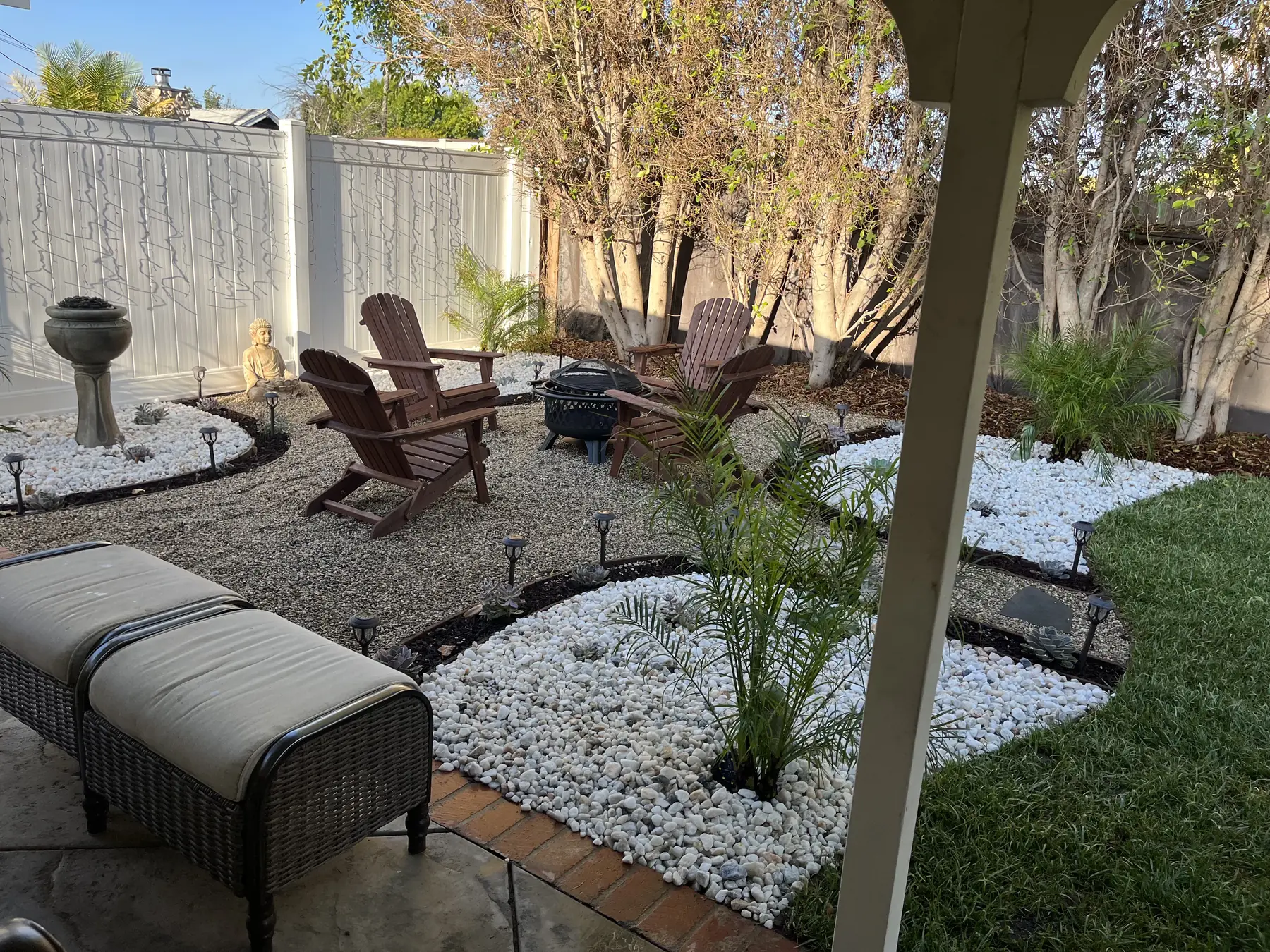
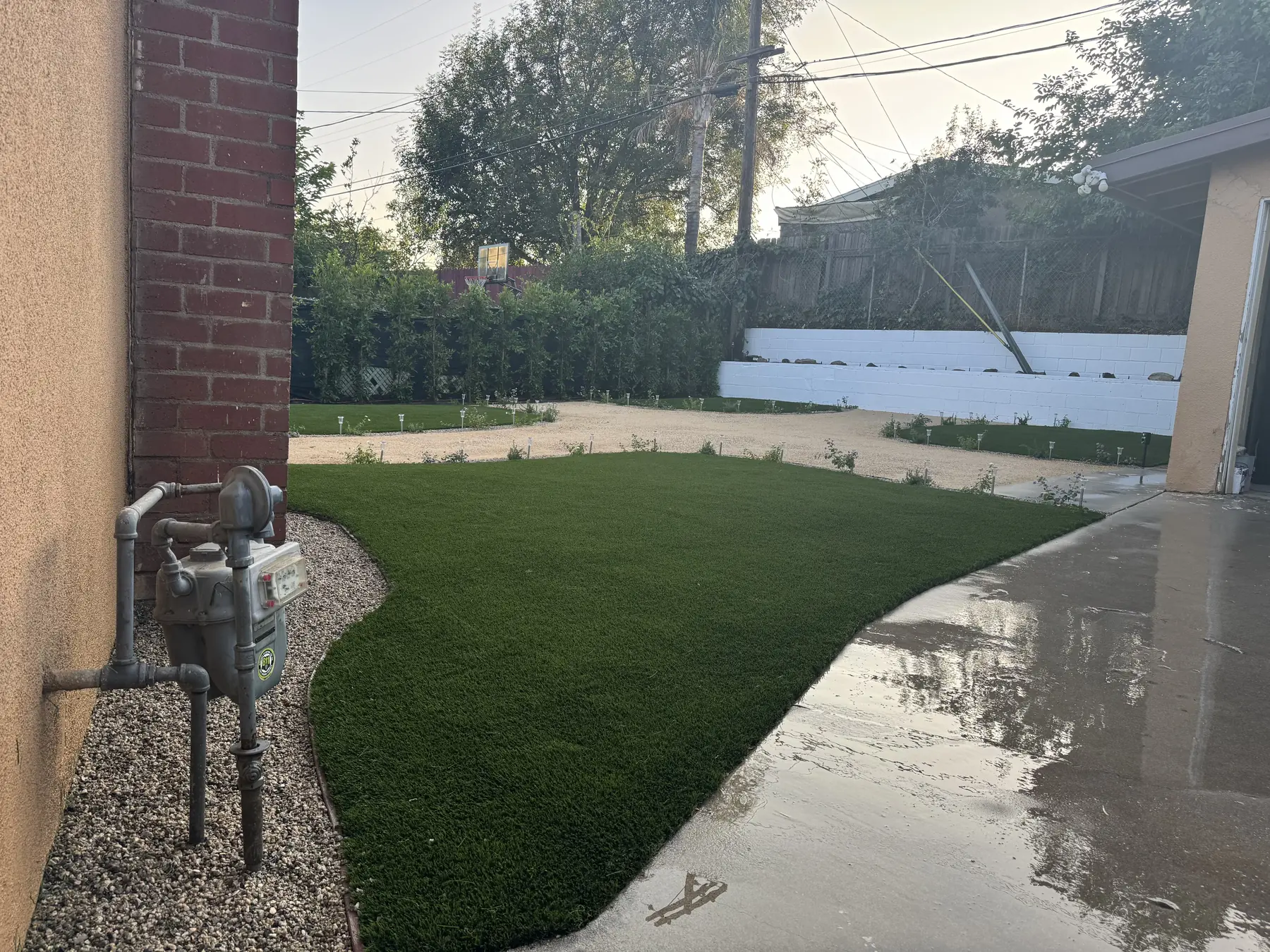
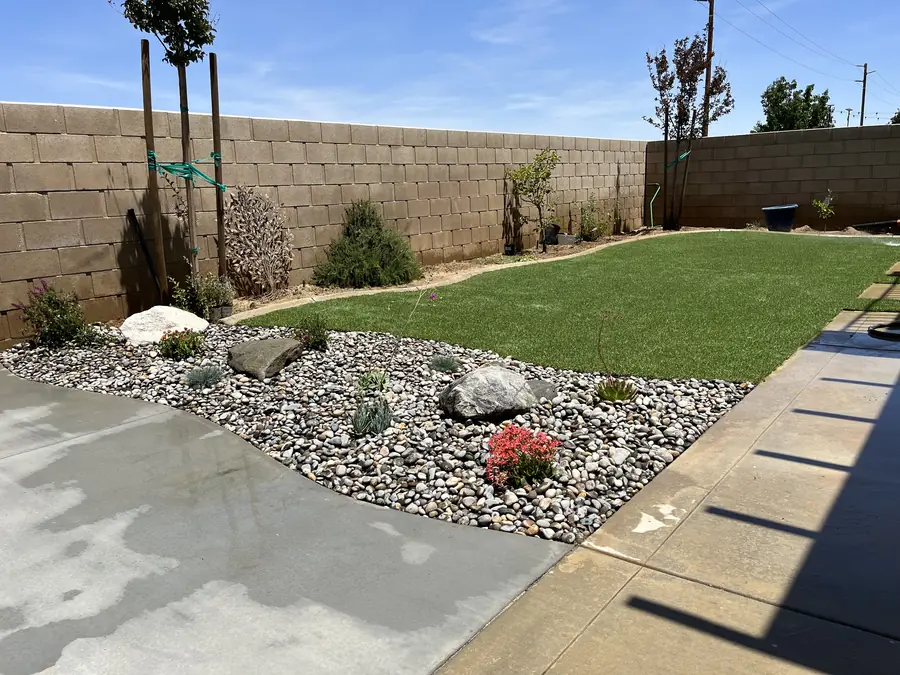
That depends on how the space gets used and how much water you want to buy. If children or dogs need a soft surface, sod and artificial turf both make sense, and turf removes the irrigation and mowing entirely at a higher upfront cost. If the lawn was mostly decorative and rarely walked on, drought tolerant planting with drip almost always serves better and cuts water use sharply. Many North Hills yards we renovate have a large lawn nobody uses, kept barely alive by a system that is failing. Replacing it is the single biggest change available.
Carefully, and with each tree treated as a fixed point rather than an obstacle. We locate the root zone and keep excavation, trenching, and heavy equipment out of it, routing irrigation lines around rather than through. Grade changes at the trunk are avoided, since piling soil against the base or cutting away from it is what kills established trees a year or two after the work is finished. Mature trees are one of the few things a decades old North Hills yard offers that cannot be bought back, so protecting them is not optional.
The pool becomes the fixed element everything else works around. We protect the shell and coping during demolition, cover the water while material is moving, and keep equipment traffic on a defined route. Deck condition gets assessed separately, since old pool decking often carries cracks and drainage issues of its own. Access is usually the real constraint on a North Hills lot, because the side yard is narrow and every load of base and debris passes through it. We plan that route before day one rather than discovering it with a loaded wheelbarrow.
Yes, and that conversion is one of the more worthwhile parts of a renovation. Beds fed by spray heads lose a large share of the water to overspray, wind, and runoff across hard flat ground. Converting a zone means capping the heads, installing a pressure regulator and filter at the valve, and running drip line or emitters to the plants themselves. Zones get separated so shrubs, trees, and any remaining lawn are watered on their own schedules. With most North Hills systems being decades old, this happens as part of the replacement rather than as an add on.
There is noise and dust during demolition, plus equipment moving through for the first stretch. After that the disruptive part is over and the work quiets down considerably. We keep the drive and street clear, contain debris, and clean the site daily, which matters in a quiet residential neighborhood where neighbors are home during the day. Water and gas are only interrupted if a line has to be tied in, and we tell you ahead of time. Material is staged in one place instead of spread across the whole frontage for the duration.
Most of a renovation does not require one. Replacing planting, irrigation, sod, and ground level paving generally does not. Permits come into play when the work involves structures, new electrical or gas, a driveway apron sitting in the public right of way, or a retaining wall above the height threshold that requires an engineered design. Anything of that kind on a North Hills project gets identified in the estimate rather than raised later, and we take care of the filing and inspections. Homeowners rarely need a permit for the parts of a renovation they care most about.
Ours. Daniels Landscaping stays accountable for the work. Demolition, grading, drainage, irrigation, hardscape, masonry, and planting on your North Hills renovation are all performed by our own employees. There is no rotating cast of trades showing up on different days to different standards, and no confusion about who is accountable when something needs correcting. It also keeps the schedule in our hands instead of dependent on another company calendar. One company plans the work, one company builds it, and one company answers for it afterward.
Planting goes in last, once grading, drainage, irrigation, and every hard surface are finished. That order keeps new plants from being crushed by traffic and lets us set emitters at the plants rather than guessing where they will land. Selection follows exposure, so the west facing side of a flat North Hills yard gets material that tolerates hard afternoon sun. Plants are spaced for their mature size, which looks sparse on day one and correct in a few seasons. Mulch goes over the beds to hold moisture and slow weeds down.
Reach us at (818) 443-9300 and we will come out to see the yard as it stands. On a renovation that visit matters more than on a new build, since the estimate depends on what is actually in the ground at your North Hills property. You receive a free written estimate covering demolition, grading, drainage, irrigation, hardscape, and planting, with phases marked if you want to spread the work out. Daniels Landscaping carries California license 1138709 and uses one licensed contractor on every job. Ask whatever you like while we are there.