
FAQ
Renovations in Tarzana, answered
The questions we hear most from Tarzana homeowners.
Think of it as a rebuild of the parts that stopped working. Typical scope includes clearing out failed material, reshaping the ground so runoff has somewhere to go, replacing or reworking the irrigation, taking out hardscape that has broken down, and installing new planting once everything underneath is right. The scale varies. Some homeowners remodel the entire property at once. Others hand us a single trouble spot, a bare slope or a patio nobody uses, and leave the rest alone. We price and plan around the condition of what is there today.
Keeping is cheaper than replacing, so we look hard for anything worth saving. Healthy trees, sound walls, a functioning pool, and flatwork that is still level generally stay. Anything structurally compromised or past its service life goes, and that call is usually obvious once you look at it closely. The gray area is material that still works but does not fit where the yard is headed, older paving in a color you dislike, for example. We lay out the cost either way and let you choose rather than deciding for you.
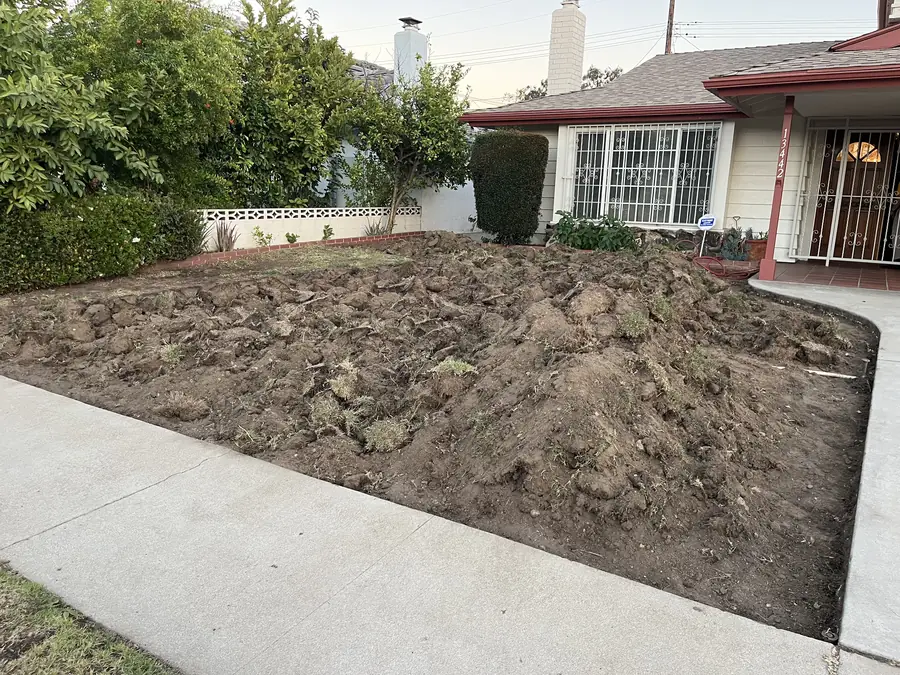
Everything that is leaving the property leaves at the start. That covers dead sod stripped down to soil, shrubs that outgrew their space taken out with the roots, and failed concrete broken up and loaded into trucks. Debris does not sit around in a pile for weeks. We flag and protect whatever is staying before the equipment arrives, including irrigation we plan to reuse and any low voltage lighting worth keeping. A clean site at the end of demolition is what makes accurate grade work possible in the next stage.
Water is the thing that quietly ruins landscapes, so grading gets serious attention. We identify where runoff collects, where it is running toward the house, and where the original grade was simply never set correctly. Fixes range from reshaping soil and building a swale to installing catch basins, French drains, and solid pipe carrying water out to the street. Sloped Tarzana properties often turn out to have had no real drainage plan at all, and correcting that comes before anything is built on top of it.
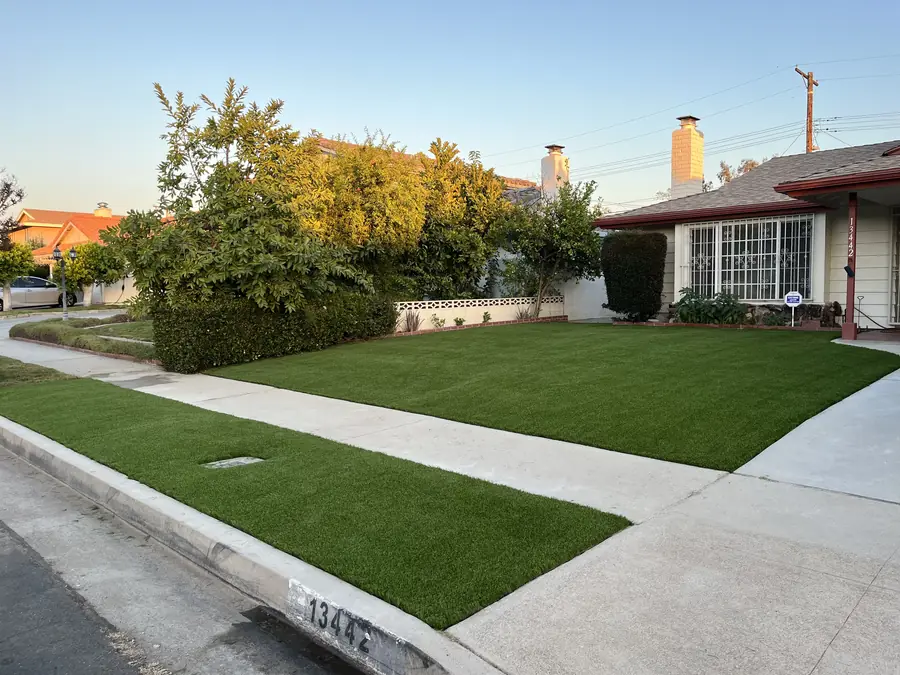
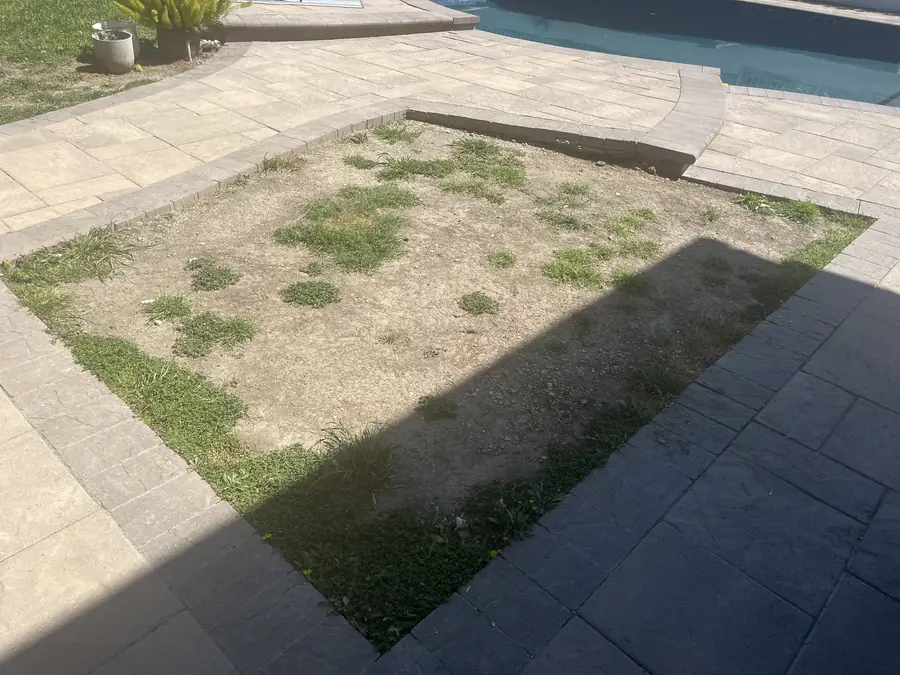
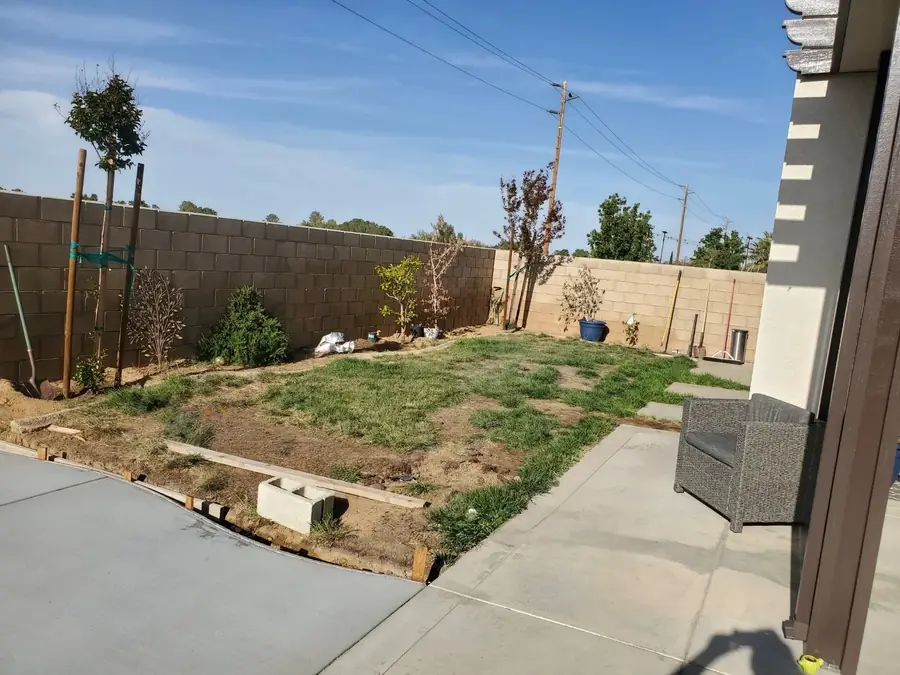
Once a lawn has thinned out and gone brown across most of its area, patching it rarely holds. We remove the sod and the dead layer beneath it, then look at the soil, which after years under a struggling lawn is usually compacted and depleted. What replaces it is your call. A reduced live lawn in the one spot that gets used, planting beds, artificial turf, or a mix of those. Whatever goes in, the ground gets prepared first so the new landscape does not repeat the old one.
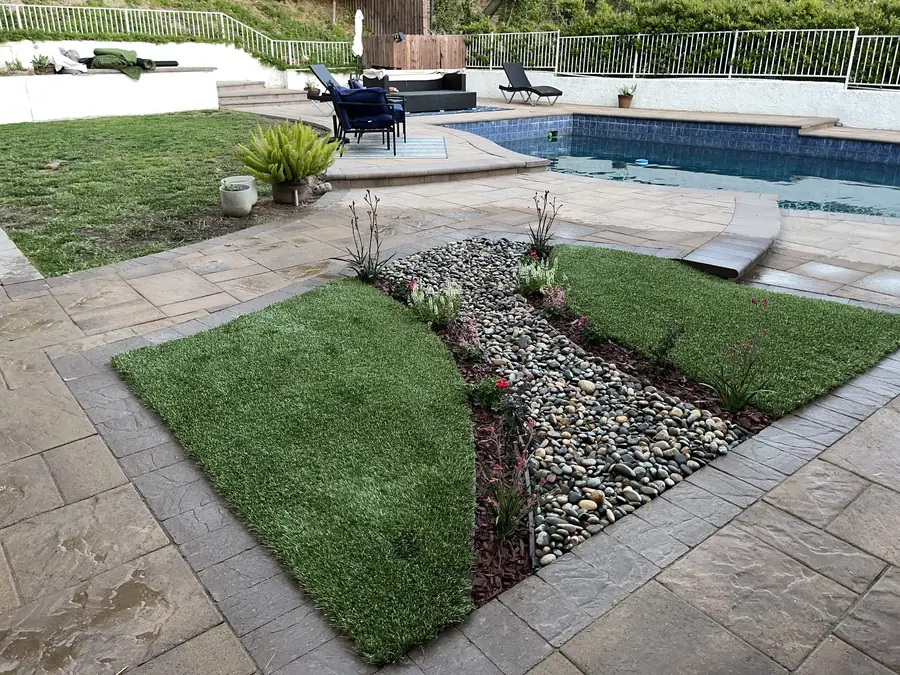
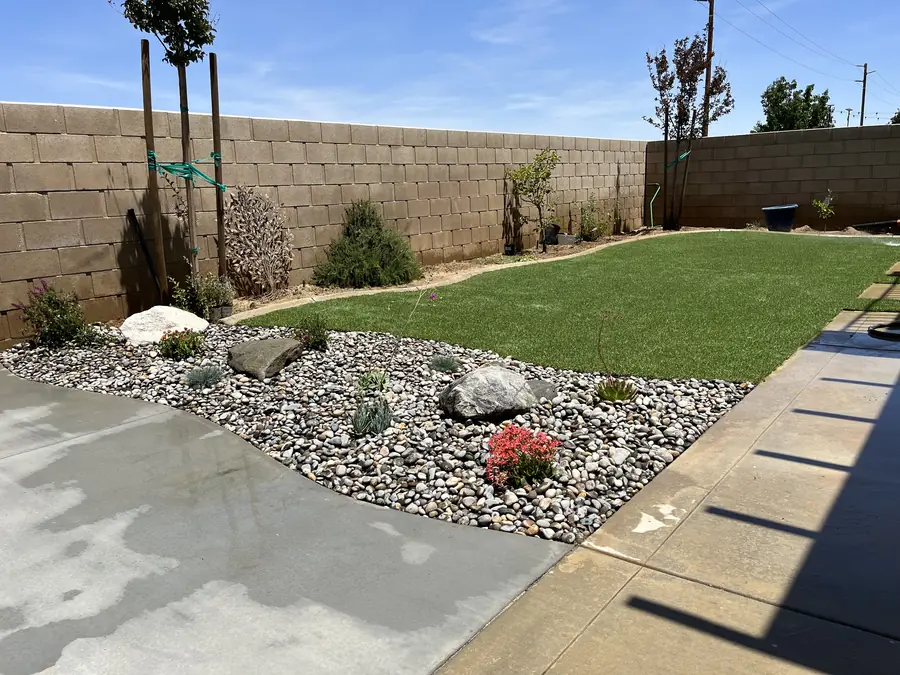
There is no single right answer, and a lot of renovations end up using both. Turf gives you a clean green surface year round with no watering and no mowing, and it holds up under pets and heavy foot traffic. Drought tolerant planting gives you texture, flowers, and something that changes with the seasons, at the cost of a couple of years to fill in. Turf lives or dies on its base preparation and drainage. Planting lives or dies on soil work and honest spacing. We build both correctly or not at all.
Old flatwork gets removed rather than resurfaced when it has real structural cracking, because a coating over a moving slab fails again quickly. We take it out, find out what caused the failure, rebuild and compact the base, and then install the new surface. Since the demolition cost is already committed, this is the natural point to rethink the space. Many people expand the patio footprint, switch to pavers, or reorient the whole area so it actually faces the part of the yard they want to look at.
Irrigation on an older property is usually the weakest link. Heads sink or get buried, valves fail one at a time, and the zoning matches a landscape that has since changed completely. Because a renovation opens the ground anyway, replacing or reworking the system costs far less now than it would as a separate job later. New planting gets its own zones and appropriate emitters, drip goes to beds, and the controller gets programmed for the plants you actually have. Everything is pressure tested before it gets buried.
Bed work is more than adding a fresh layer on top. Spent material and weeds come out, soil gets amended for what will grow there, edges are defined so the bed keeps a clean line, and plants are placed with their mature size in mind. Mulch finishes the job, applied thick enough to hold moisture and keep weed pressure down. If a budget is tight, this is frequently the highest value piece of a remodel, because new beds and clean mulch change the appearance of a yard immediately.
Features worth keeping get protected, not worked around casually. Around a mature tree we stay off the root zone with machinery, hand dig where necessary, and avoid raising or lowering the soil level over the roots. Around a pool we shield the coping and shell, keep debris out of the water, and route equipment access away from the deck. Pool decking itself is often the piece that needs replacement even when the pool is fine. Protection is planned before demolition day, not improvised once the equipment is already on site.
There is a required order and we follow it every time. Demolition, then grading and drainage, then utilities and irrigation, then hardscape, then planting. Each stage depends on the one before it being finished properly. Grade cannot be corrected once a patio sits on top of it. Irrigation lines cannot be run under flatwork that has already been poured. Plants put in early get crushed, buried, or driven over. Doing it in sequence is slower on paper and far faster in practice, because nothing has to be undone.
Renovations phase well as long as the whole plan exists first. Splitting by area is the usual approach, finishing one part completely before the next one starts. On a Tarzana property that includes both level ground and sloped ground, the two areas often need different approaches and different equipment, which makes them natural phase boundaries. What matters is stubbing drains, irrigation mains, and conduit into the areas you plan to build later, so a future phase does not require cutting into something you just paid for.
Duration tracks scope. Swapping planting and irrigation in a front yard is a short project. A whole property remodel with demolition, drainage correction, new hardscape, and full planting runs much longer, and there are stages that simply cannot be compressed, such as concrete curing before anything is set on it. Rain, inspections, and material lead times all move dates. We give you a stage by stage schedule with the estimate, including which days are noisy and which days block your driveway.
Ventura Boulevard is a real dividing line for this work. North of it, Tarzana is largely flat tract housing, and a remodel there is a conventional job, level ground, straightforward access, and predictable grading. South of the boulevard the land climbs toward Mulholland, and a hillside renovation is a different animal entirely, with retaining structures, slope stability, and drainage all in play. Two houses a few minutes apart can require completely different plans, so we never quote a Tarzana remodel from a description alone.
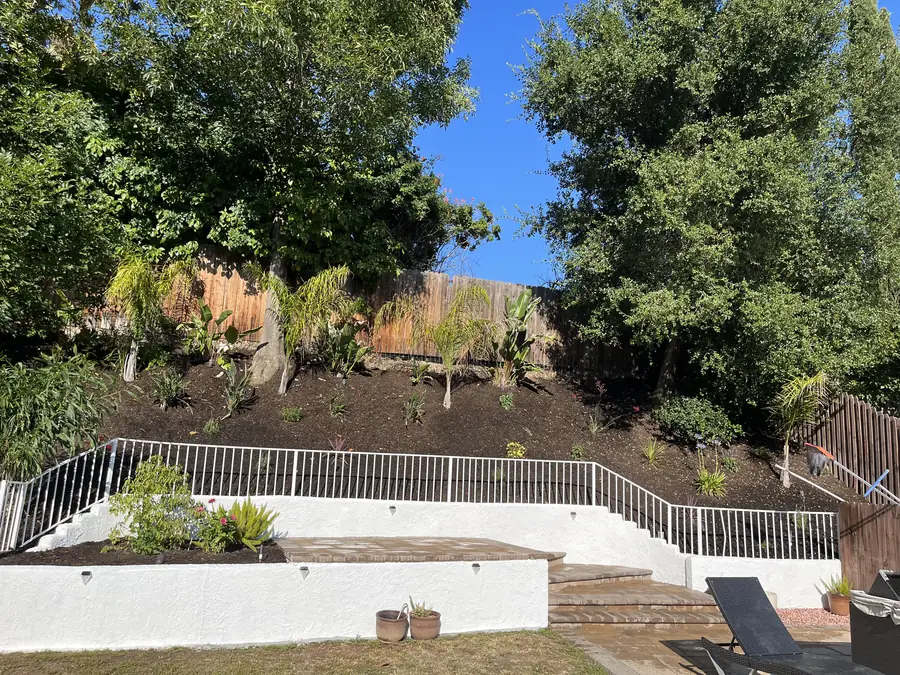
Failing retaining walls are the most common structural problem we find on the hillside side of Tarzana. Walls lean, terraces shift out of line, and once one level moves the levels above and below it start to follow. Renovation work there begins with the walls, because nothing built on a terrace is worth doing while the terrace itself is moving. Only after the retaining structures and their drainage are sound do we rebuild the surfaces, planting, and irrigation that sit on them.
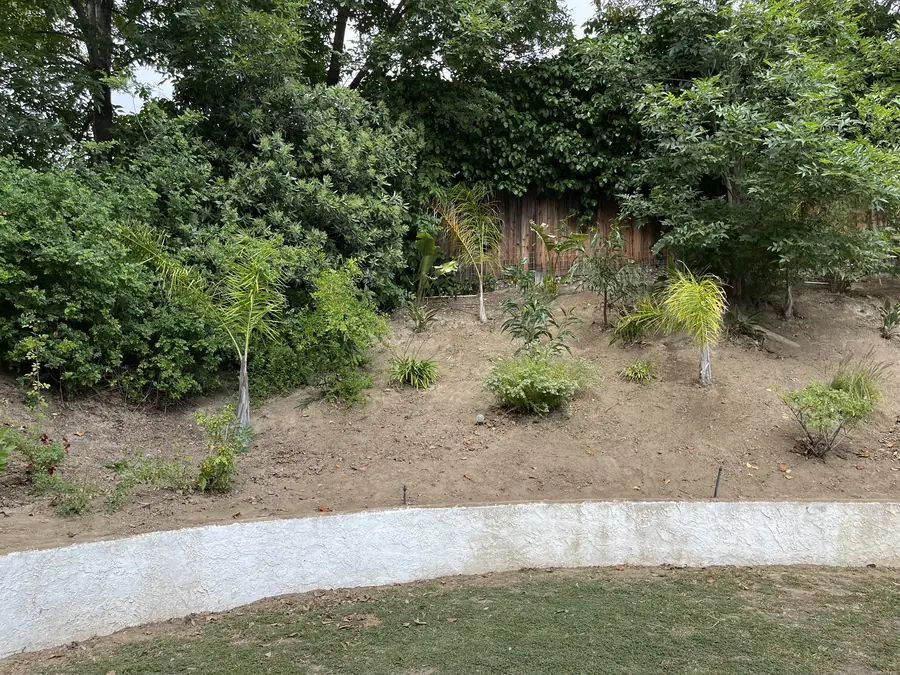
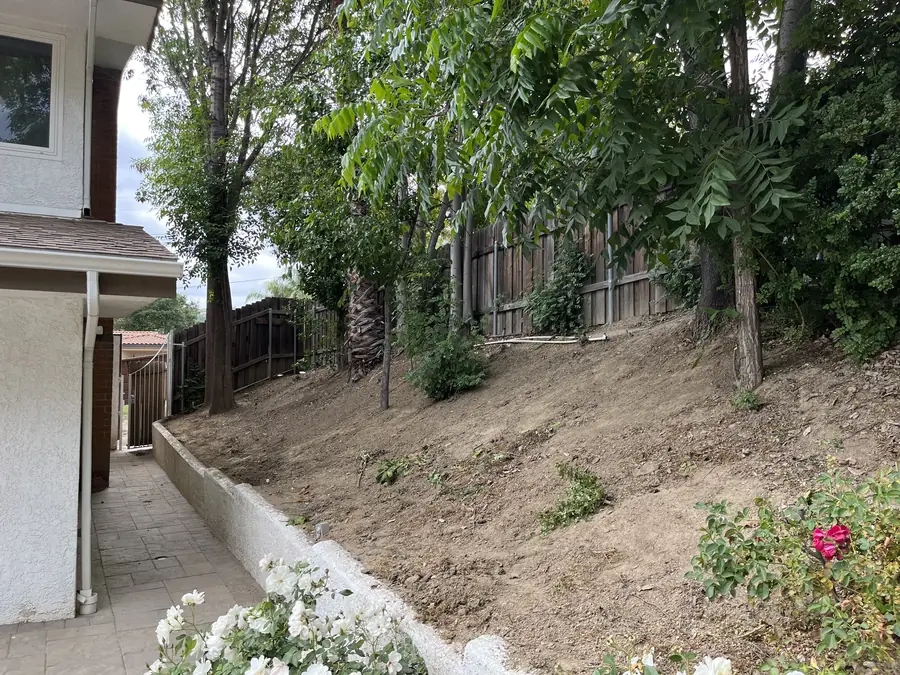
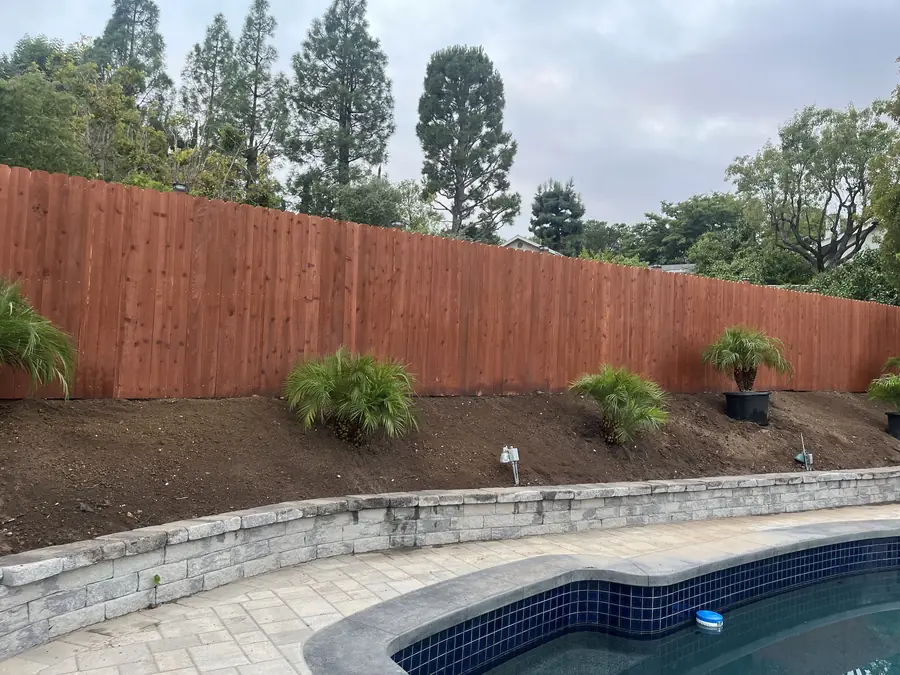
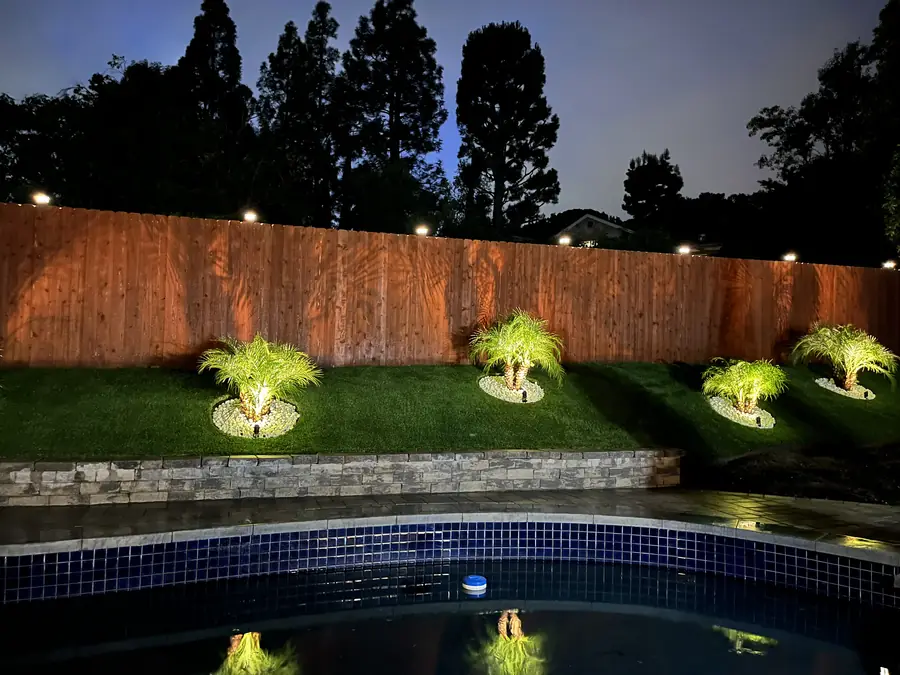
Slopes go bad in a predictable order. Planting dies, the roots that were holding soil together let go, and the next wet season carries material downhill and leaves gullies behind. Repairing that means stabilizing the slope, correcting where the water is coming from, and replanting with material that will actually hold. On hillside Tarzana properties the view is usually the reason people remodel in the first place, so we shape the planting to open and frame the outlook rather than letting it grow back into a wall of green.
Every stage is handled by one licensed contractor. Demolition, grading, drainage, irrigation, hardscape, and planting are all done by our people. One licensed contractor stays accountable for the work. Renovations punish poor coordination more than new installs do, since crews are constantly working around what stayed and what was buried yesterday, and a single team carries that knowledge from the first day to the last. You get consistent quality, one point of contact, and one company responsible for how the finished yard performs.
Reach us at (818) 443-9300 to schedule a walkthrough of your property. We will go through the yard with you, identify what is failing and what is worth keeping, talk through what you want out of the space, and then send a free written estimate broken out by stage so you can see exactly what each part costs. Phasing options can be included if you prefer to spread the work out. Daniels Landscaping holds California license 1138709, and one licensed contractor performs every part of the job.