
FAQ
Renovations in Chatsworth, answered
The questions we hear most from Chatsworth homeowners.
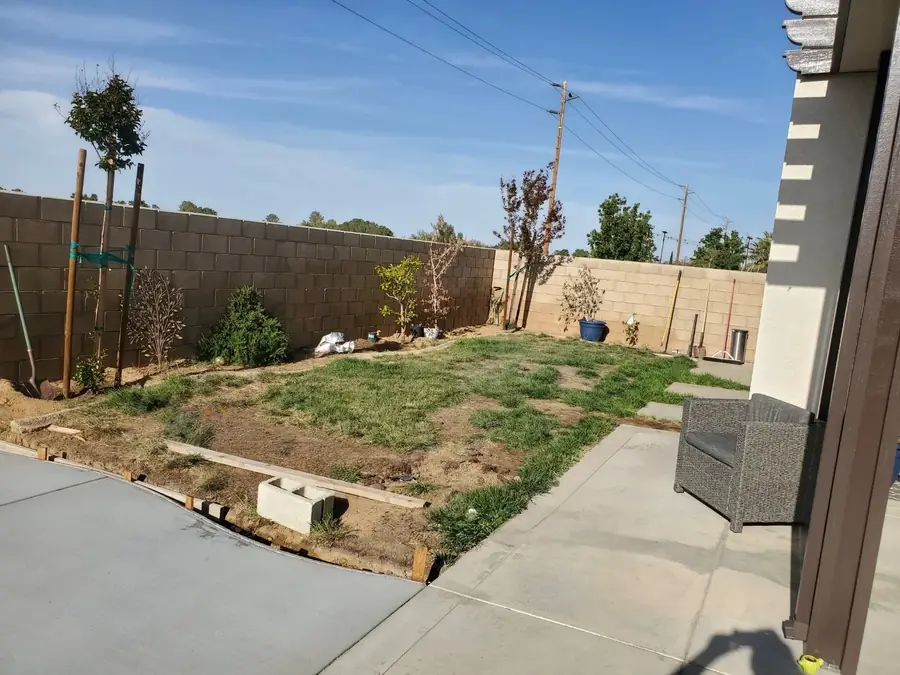
The distinction is what already exists. A new install begins with bare ground and no history. A renovation begins with a property that has been lived on, planted, paved, and neglected in some combination, and the work is figuring out what to keep, what to pull, and what to rebuild. Scope ranges from reworking one section of a large lot to clearing and replanting acreage that has not been touched in years. Either way we are fitting new work into conditions somebody else established, which takes more assessment up front.
Assessment happens on foot, across the whole property, before numbers get written. Native oaks and established shade trees stay. Fencing that is still plumb and solid stays. Surfaces that have held up under vehicles or livestock stay. Brush that has grown into a fuel load comes out, along with anything dead, structurally failing, or sitting where new work has to go. On larger parcels we also flag ground that is simply not worth improving yet, so the money lands where it changes how you use the place.
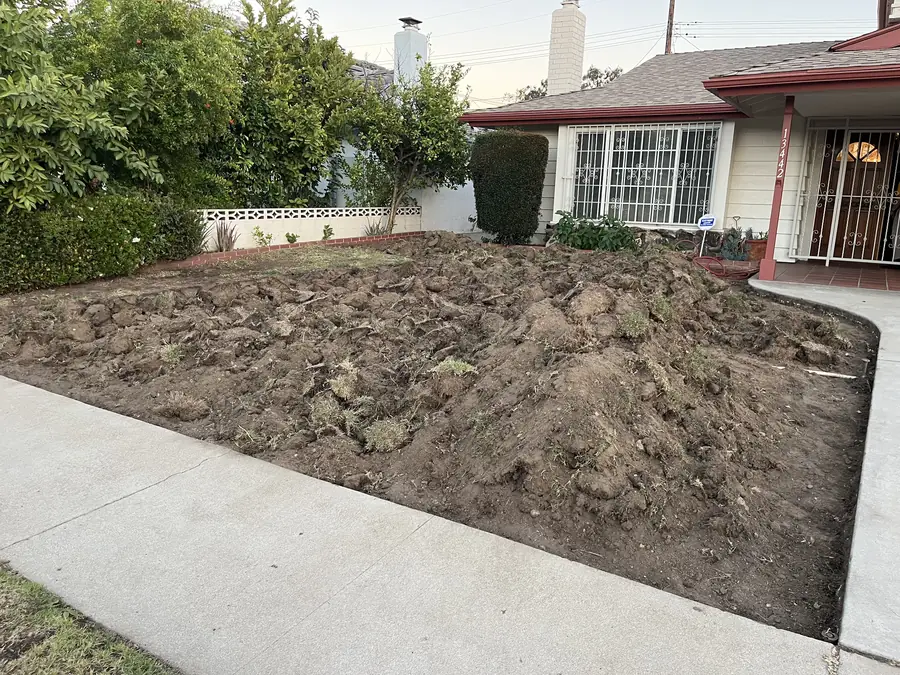
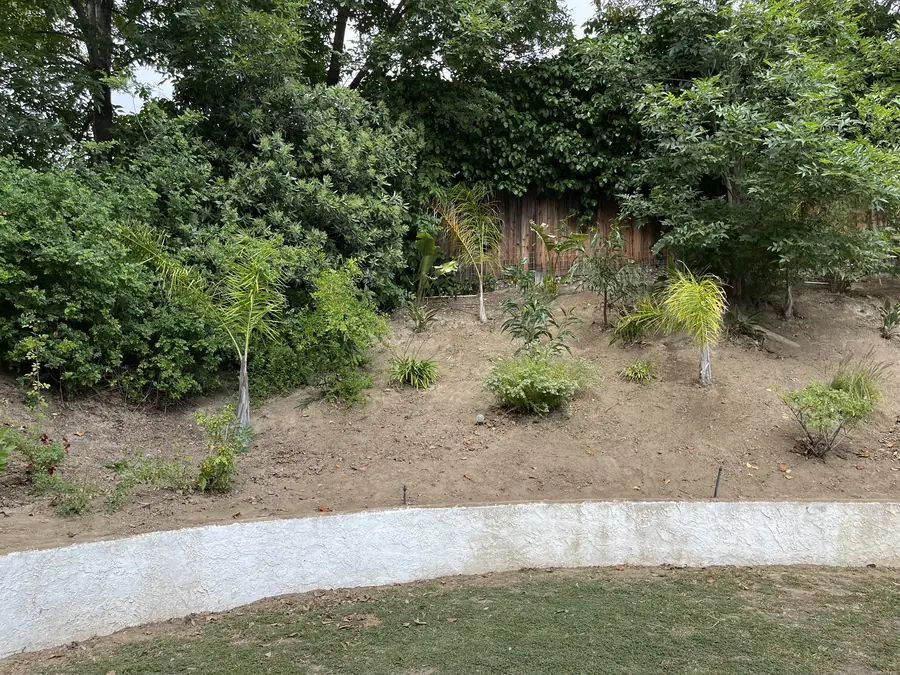
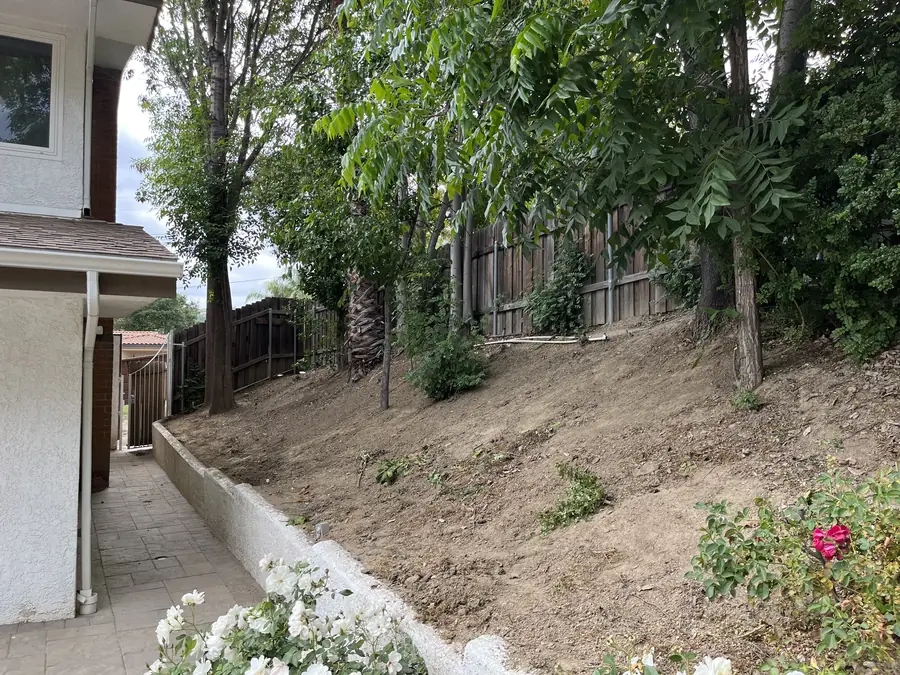
Clearing acreage is heavier work than stripping a standard back yard. Neglected ground hides old footings, buried debris, abandoned irrigation, and rock. We take out brush and unwanted growth, break out failed paving, pull stumps and root balls, and truck the material off site. Access matters a great deal, because equipment has to reach the back of the lot without tearing up what stays, so that route gets mapped first. With the ground open, the actual contours become visible, and the grading plan gets built from those.
Decomposed granite and embedded rock change the math on grading. Cuts that would be routine in soft valley soil can call for heavier equipment, and sometimes the smarter move is routing a drain line or a path around a rock shelf instead of fighting through it. What does not change is the goal. Water has to leave the building pads, the driveway, and every flat surface, and it has to go somewhere legitimate rather than onto a neighbor. Grade and drainage get settled before a single new surface goes down.
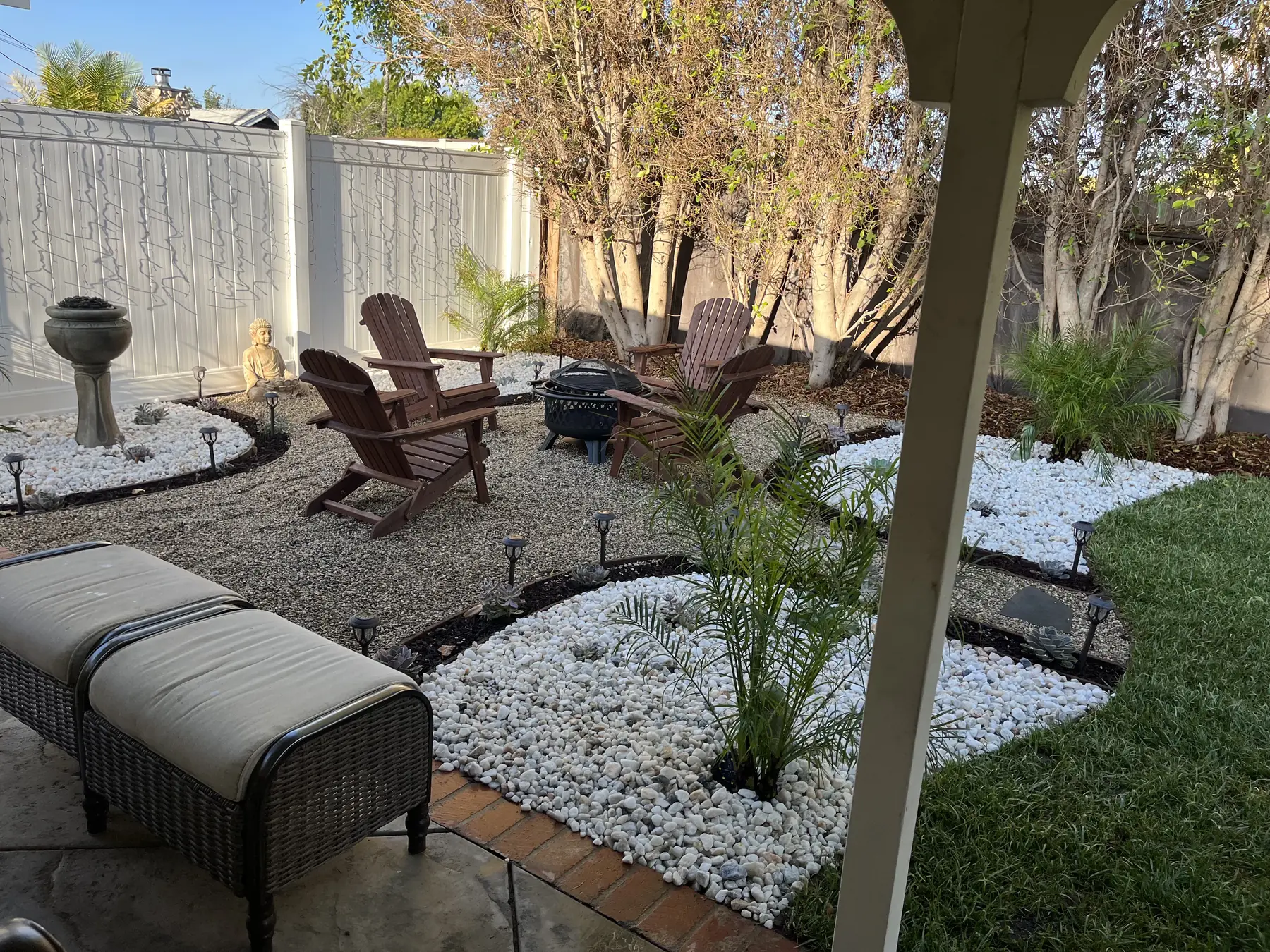
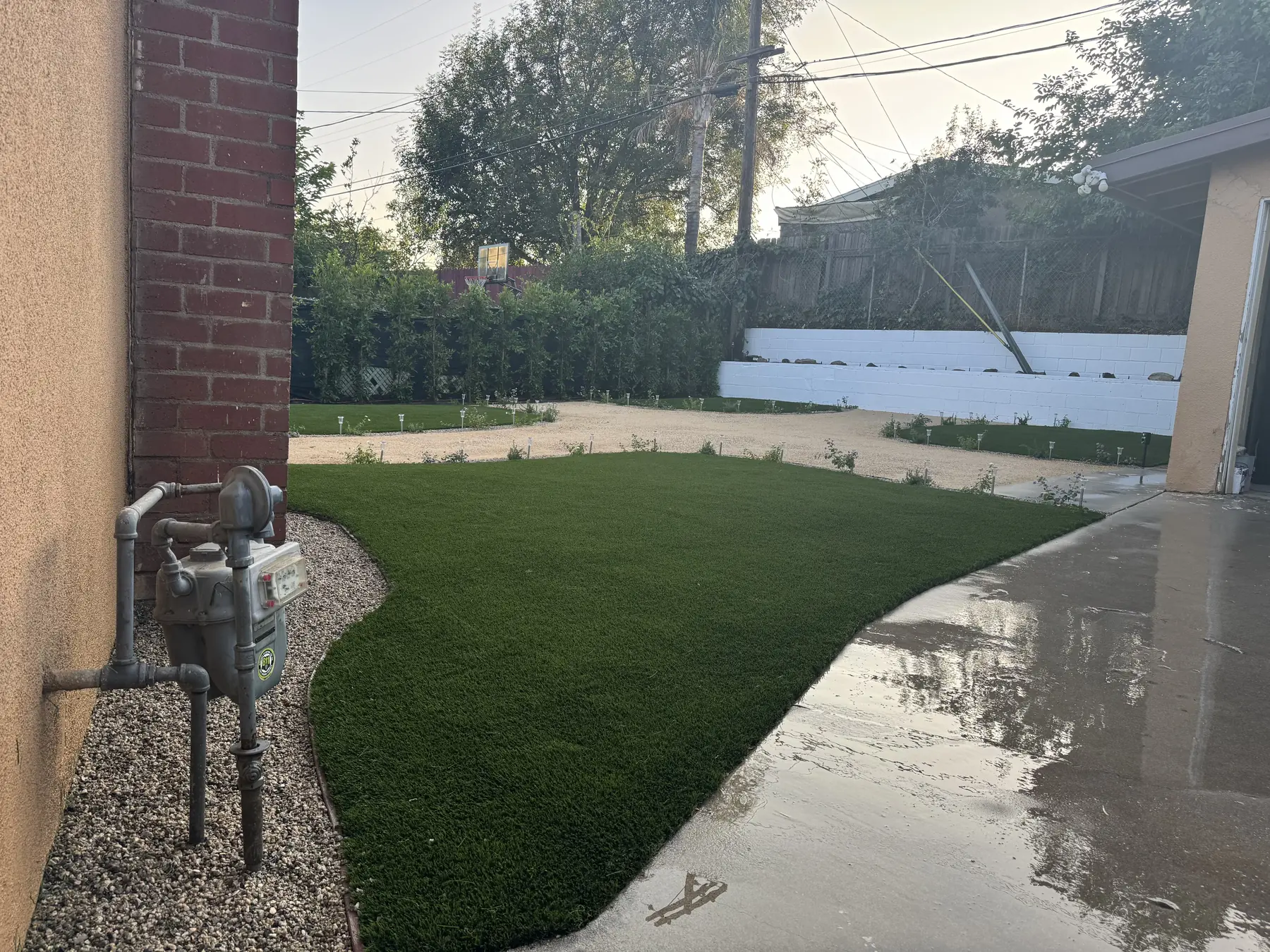
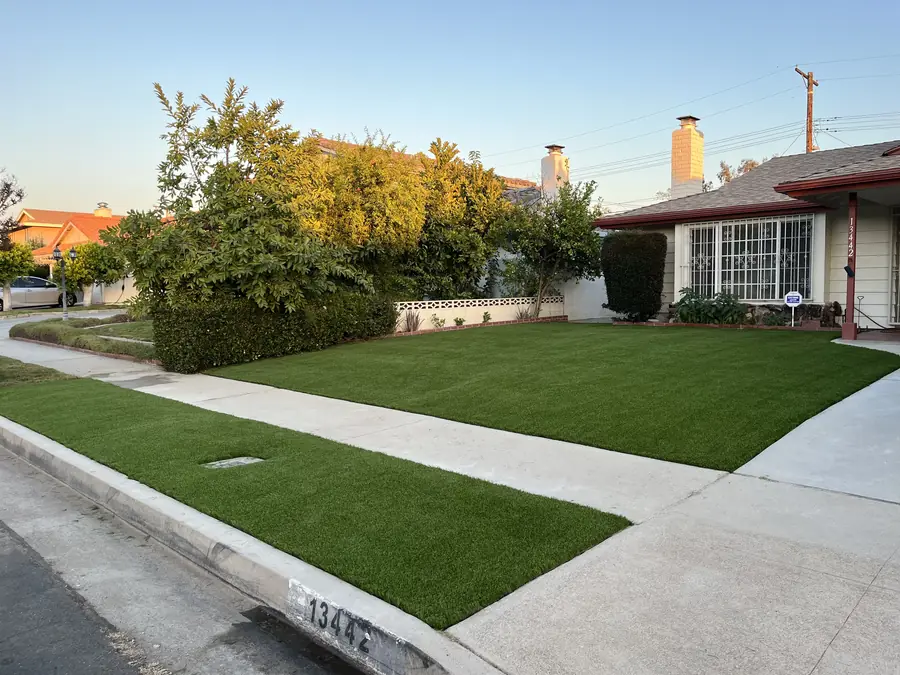
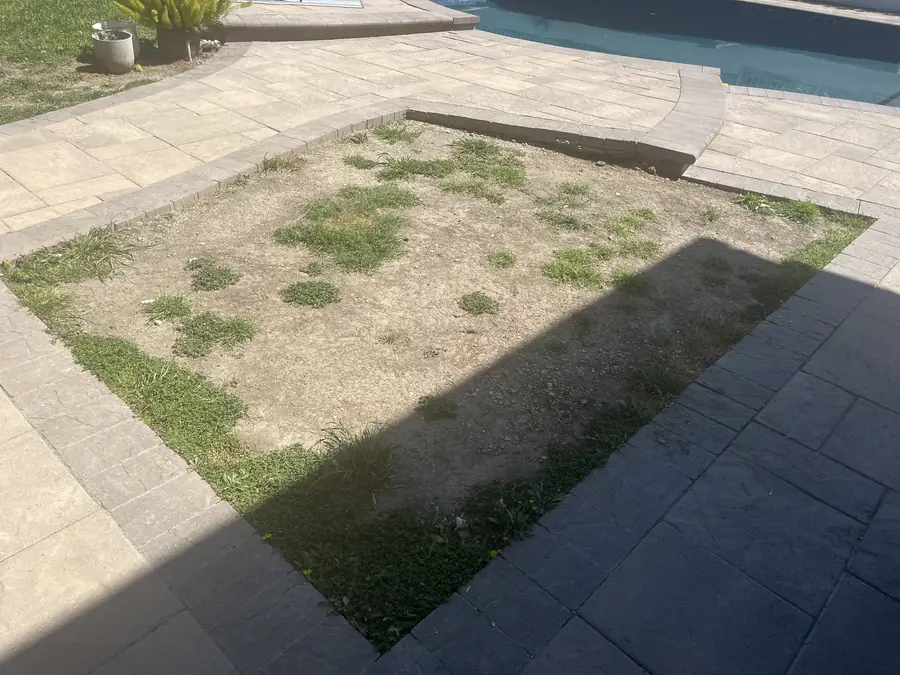
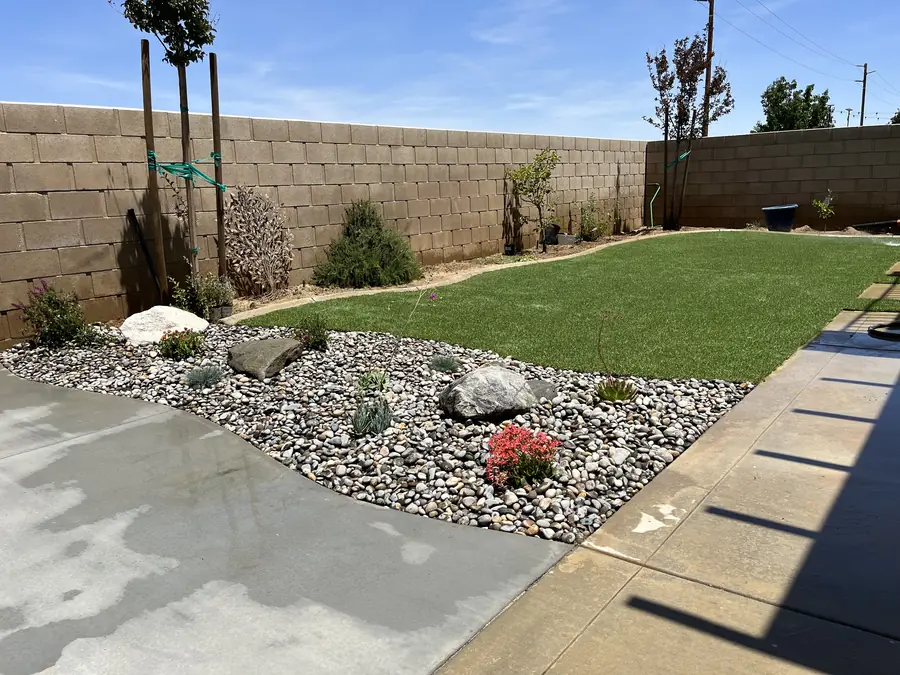
Large lots make big lawns expensive to keep alive, and out here they tend to lose the fight first. We remove the failed turf, decide how much genuine lawn you still want, and rebuild the rest as something that survives on far less water. That might be artificial turf in a defined area near the house, drought tolerant planting on drip, decomposed granite for informal space, or well maintained open ground. Reducing lawn to the footprint you truly use is almost always the right call on this kind of property.
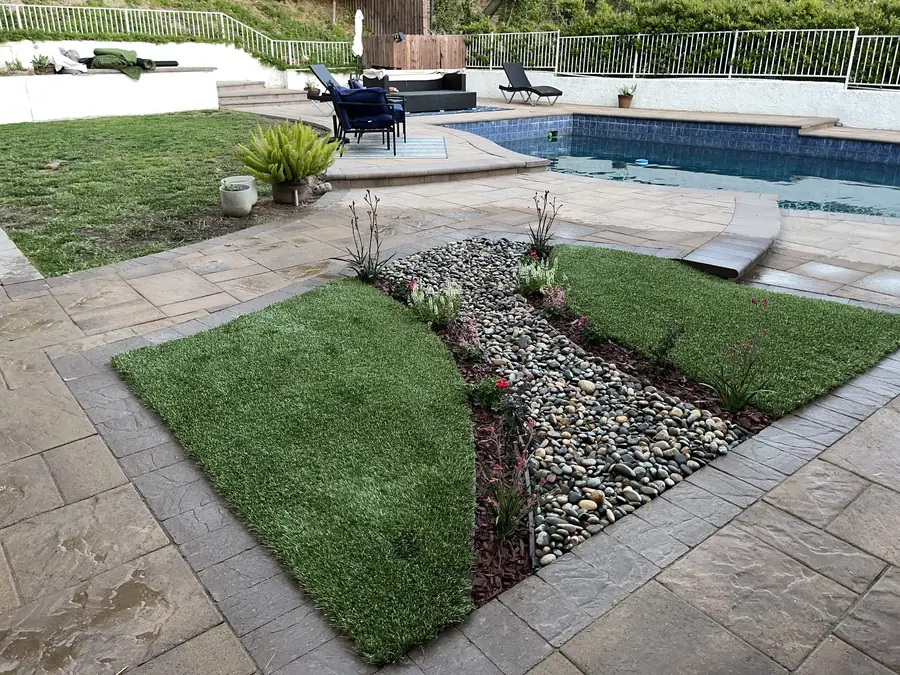
Both have a place. Artificial turf gives you a green, usable surface with no irrigation demand, which suits the yard area close to the house. Drought tolerant planting suits the wider property, and in Chatsworth the plant selection matters for more than water, since species and spacing affect how a fire behaves. We favor lower fuel material, real separation between plant groups, and gravel or hardscape breaks near structures. The finished result reads as landscaped rather than merely cleared, without stacking fuel against the house.
Long driveways and approaches take a beating out here, from vehicle weight, from ground movement, and from roots. Cracked and broken sections get removed rather than capped, the subgrade gets rebuilt properly, and new concrete or paving goes in with joints placed where the slab will want to move. Patios and walkways follow the same rule. On acreage we usually talk through which sections truly need replacement now and which can be repaired and revisited later, since paved area adds up quickly on a large parcel.
Systems on older Chatsworth properties tend to have been extended piecemeal over the years, with lines running to places nobody remembers and pressure that never quite reaches the far end. During a renovation we map what exists, keep the mainline if it is sound, and rebuild the zones around what is actually being planted. Long runs get sized correctly, planting beds get drip rather than spray, and cleared or fire wise areas get only what they need. All of it goes in while trenches are open and before hardscape is poured.
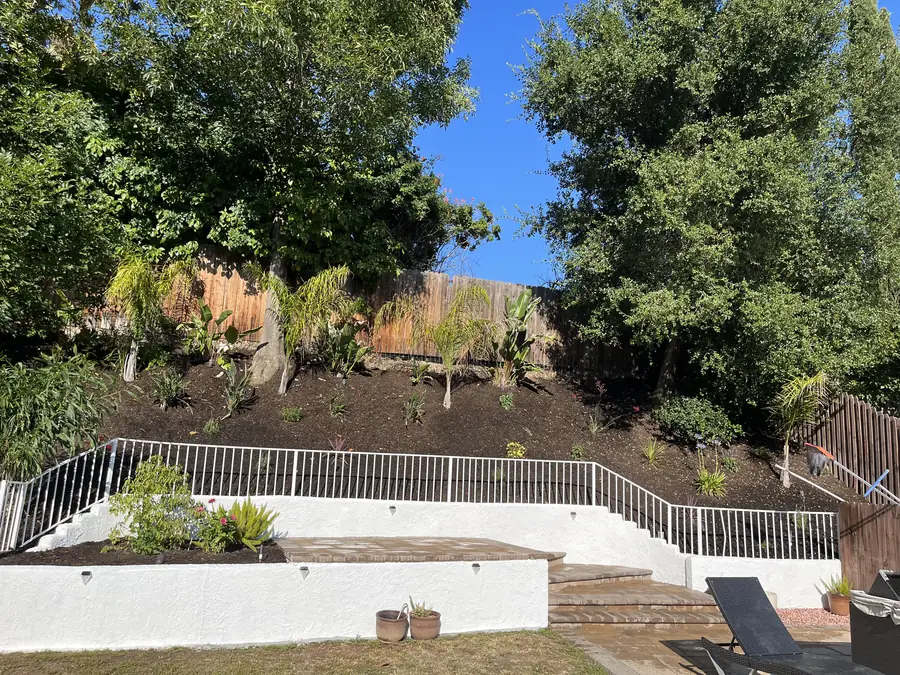
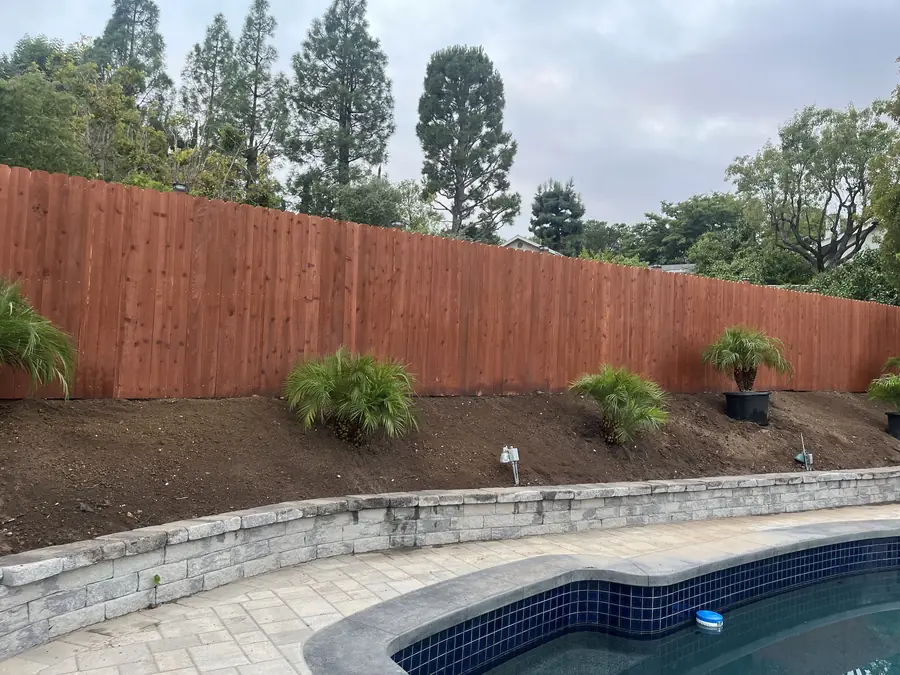
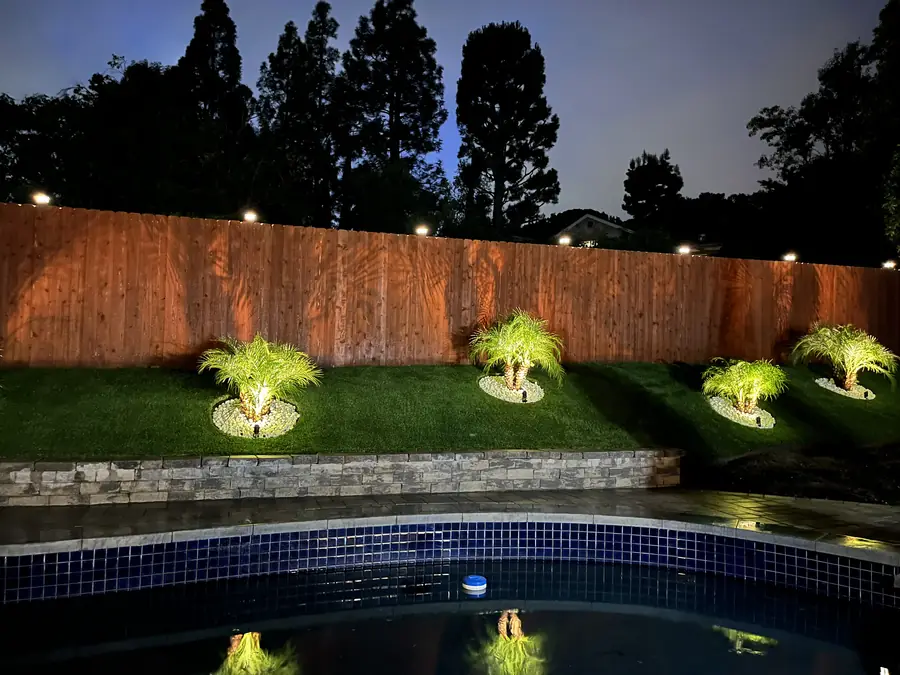
Bed work is where a cleared property starts looking cared for again. We rebuild soil that has been stripped or compacted, set plants with room for their mature size, run the drip, and mulch at a depth that holds moisture through summer. Close to structures we keep mulch choices and depths conservative for fire reasons and lean on gravel or stone instead. On a large lot the beds are concentrated where people walk and gather, with simpler treatment carried across the open areas beyond.
Established trees are the most valuable thing on most of these properties and the easiest to ruin. Grade changes and trenching stay outside the root zone, soil never gets piled against trunks, and new hardscape routes around canopies. A pool stays put while the decking and surrounds get rebuilt, with the shell and equipment protected through demolition. Corrals, sheds, well heads, and existing fence lines get located before equipment moves. Knowing what cannot be disturbed shapes the plan more than anything we are adding.
There is a sequence and we hold to it. Clearing and demolition first, so the ground can be read. Grading and drainage second, because every finished elevation depends on them. Utilities and irrigation third, while the ground is still open. Hardscape fourth, once grades are set and lines are buried. Planting and mulch last, so new material is not driven over or buried. On rocky sites the order matters even more, since hitting rock during grading can shift the hardscape layout before anything has been committed.
Acreage practically demands staging. We plan the property as a whole, then divide it into phases that stand on their own, so each one looks finished rather than abandoned. A typical order is clearing and drainage first because those protect everything that follows, then the areas closest to the house, then the outer property, driveway, or horse areas as budget allows. Irrigation and utility stubs for later phases go in during earlier trenching where it makes sense, which keeps you from paying twice to open the same ground.
Timeline scales with area and with how much rock we hit. Clearing overgrown ground moves quickly with the right equipment. Grading through sandstone and rock shelves moves slower. Concrete needs cure time, and planting is best scheduled with the season rather than jammed in whenever the crew reaches it. Before work starts you receive a written schedule stage by stage, along with which access points equipment will occupy. If conditions underground change the timing, you hear about it when we find it, not afterward.
Horse parcels carry requirements a standard yard does not. Surfaces need to drain and hold up under hooves and vehicles, fence lines have to stay solid and continuous, and access lanes have to remain usable while work is underway. We build around turnouts, stalls, and existing corral layouts rather than treating them as obstacles. Planting near animal areas gets chosen with that in mind. When part of a property is landscaped and part of it is working ground, the two get treated as separate problems with different answers.
Regularly, yes. Overgrown, dried out growth close to structures is fuel, and thinning it is often the first meaningful improvement on a neglected property in this area. After clearing we replant with lower fuel, fire wise material, hold spacing between plant groups instead of running continuous masses, and use gravel, hardscape, or bare ground as breaks near the house. The aim is a property that still looks planted and finished while carrying considerably less fuel than it did before.
Plenty of parcels here have a landscaped area near the house and open ground everywhere else that never received a plan. That ground is workable. We generally start by clearing and grading it, establishing drainage and whatever access or path makes it usable, then decide how much gets planted versus kept as maintained open space. Rock drives a lot of that decision. Where a shelf sits near the surface, we build around it or make it part of the design instead of paying to remove it.
No. All of the work is done by one licensed contractor. The same team clears your property, runs the grading equipment, trenches the irrigation, forms and pours the concrete, and sets the plants. One crew across every stage means the person who established the grade is the person who builds on top of it, and nothing gets lost in a handoff between companies. When you have a question about any part of the job, you are talking to the people who did it.
Reach us at (818) 443-9300 to schedule a walk of the property. On acreage that visit usually takes a while, since we want to see the open ground, the access routes, the driveway, and whatever structures or animal areas have to be worked around. After that you receive a free written estimate laying out the scope and the staging. Daniels Landscaping carries California license 1138709 and performs the work with one licensed contractor. Whether the project is one section or the entire parcel, it starts with that walk.