
FAQ
Renovations in Winnetka, answered
The questions we hear most from Winnetka homeowners.
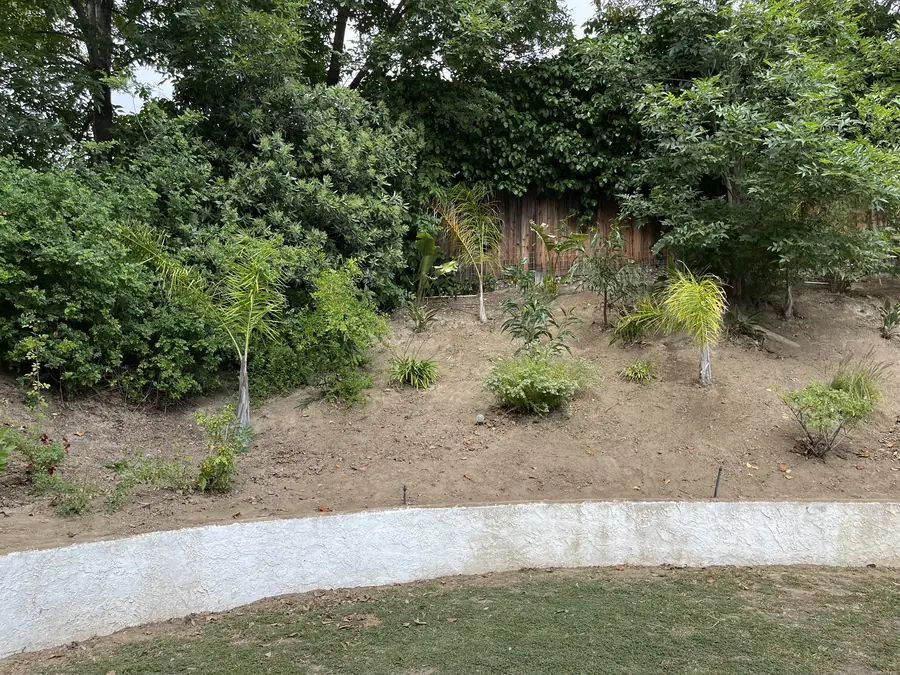
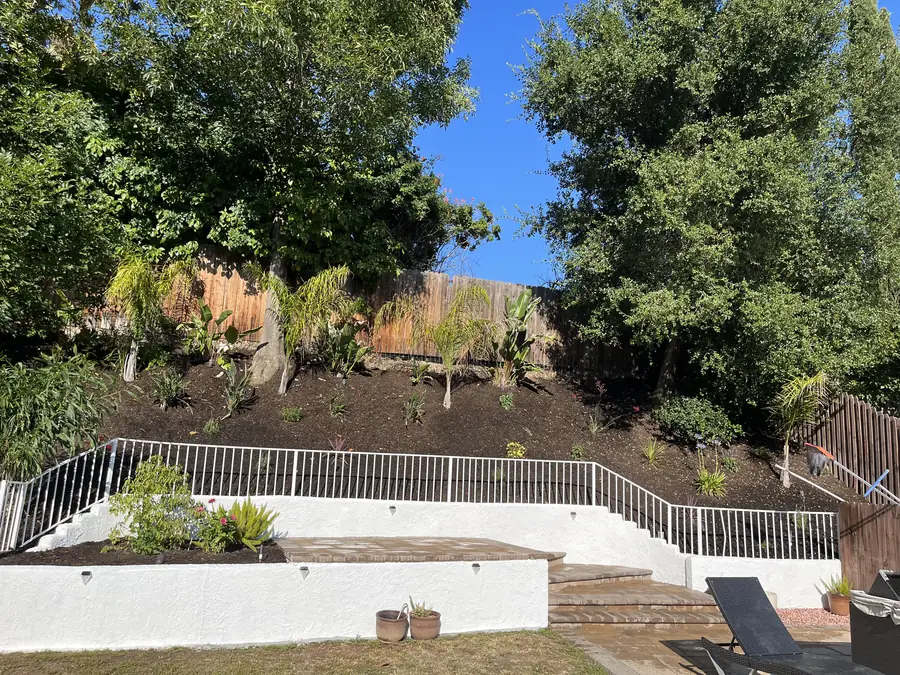
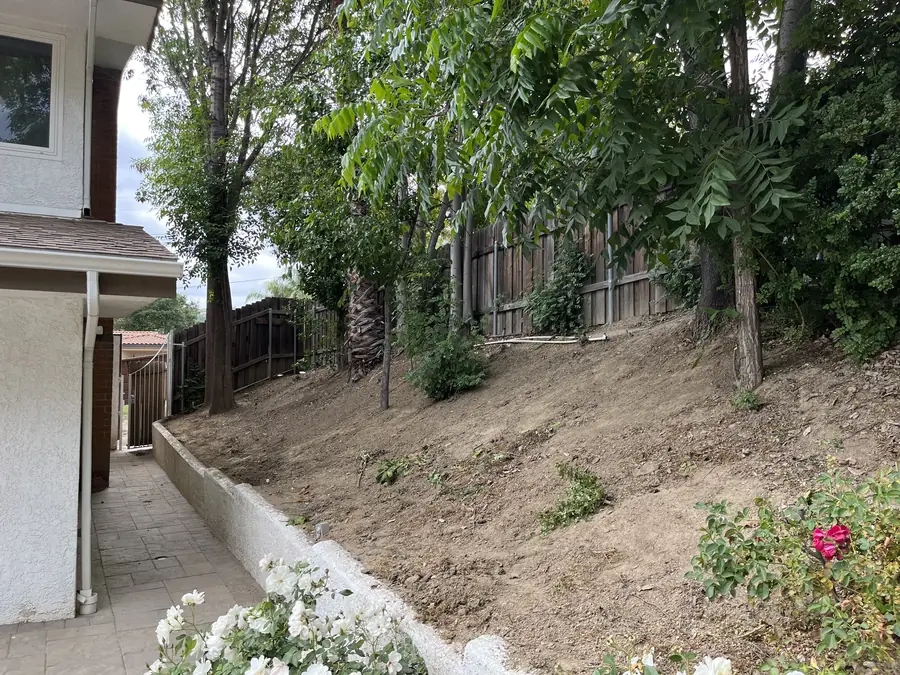
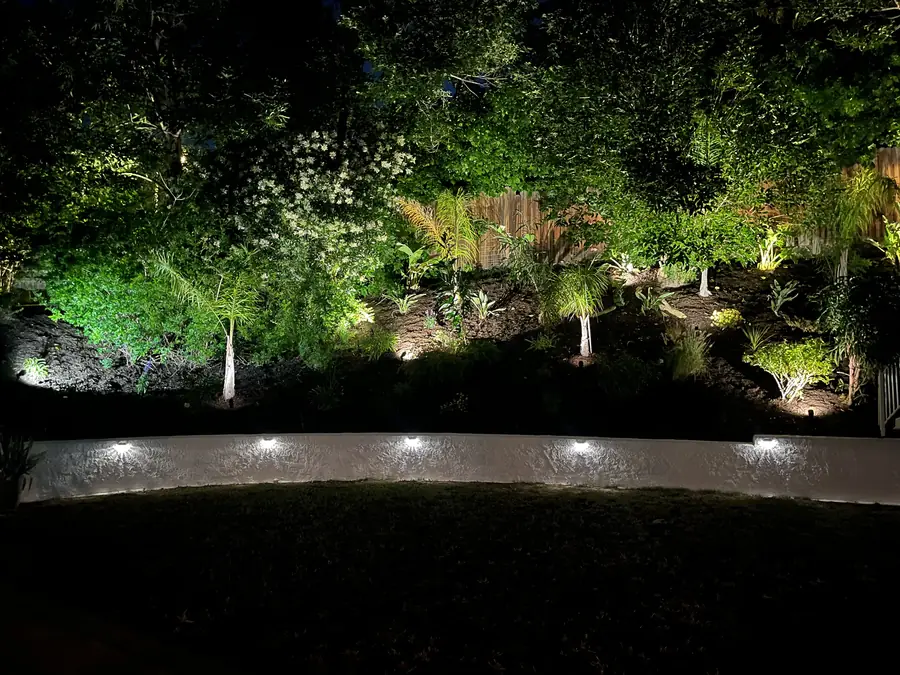
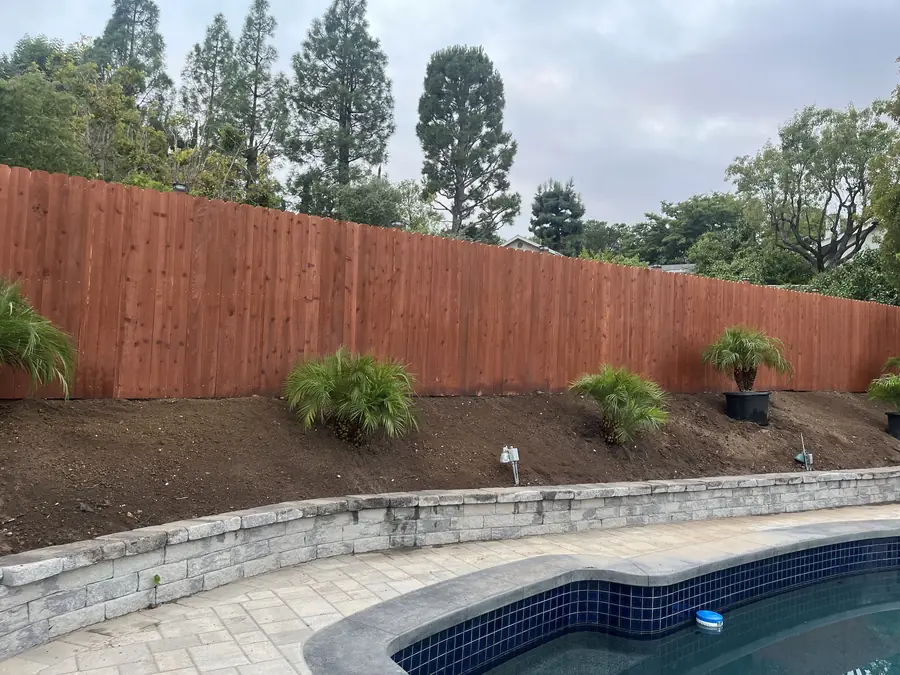
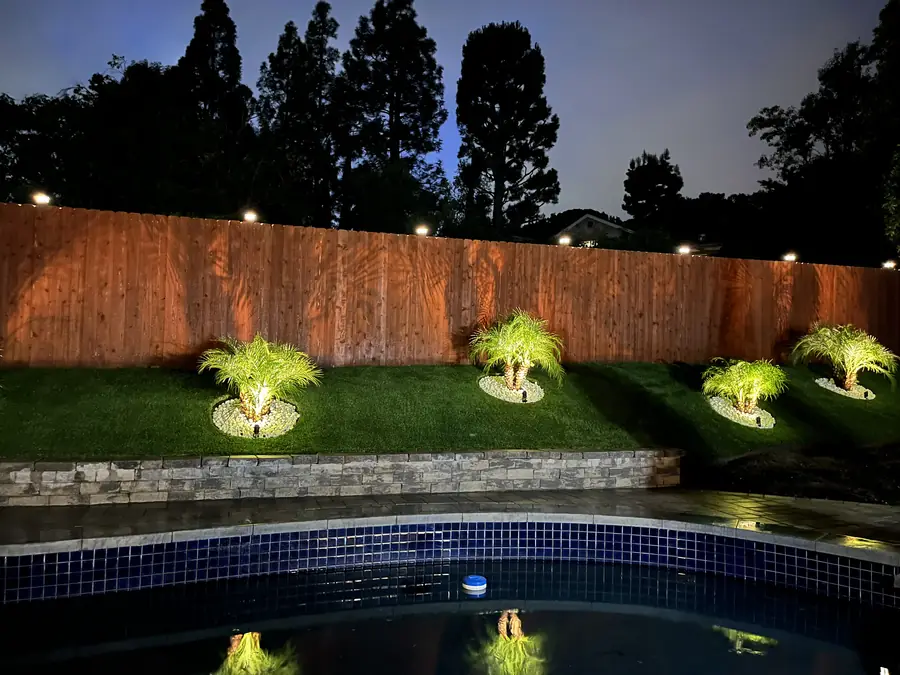
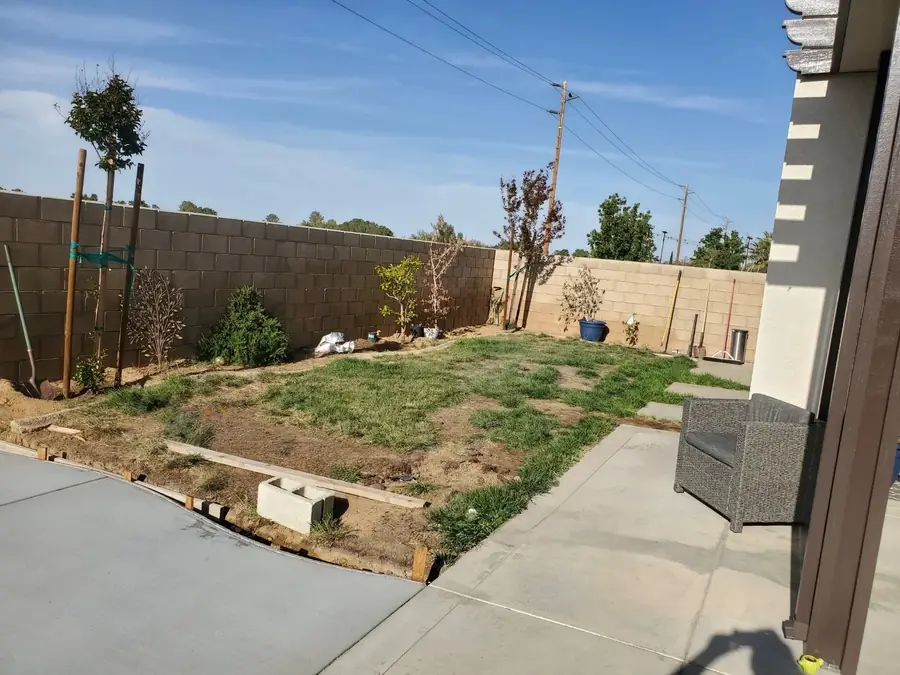
A renovation reworks a landscape that already exists instead of starting on bare ground. In practice that usually means removing a failed lawn, taking out overgrown or dead plant material, breaking up and hauling off cracked concrete, correcting grade so water leaves the property, replacing or repairing irrigation, then installing new surfaces and planting. Some renovations touch the entire yard. Others focus on one problem area, like a side yard that floods or a front lawn that will not hold. The scope depends on what is failing and what still has life in it.
We look at three things: condition, function, and cost to keep. A mature shade tree in good health stays, because you cannot buy back thirty years of canopy. A concrete slab with hairline cracks but a solid base can often stay and get resurfaced. Shrubs that have been sheared into blocks for a decade rarely recover their shape and usually come out. Irrigation gets tested rather than guessed at. Anything that would cost more to repair than replace, or that fights the new layout, goes on the removal list.
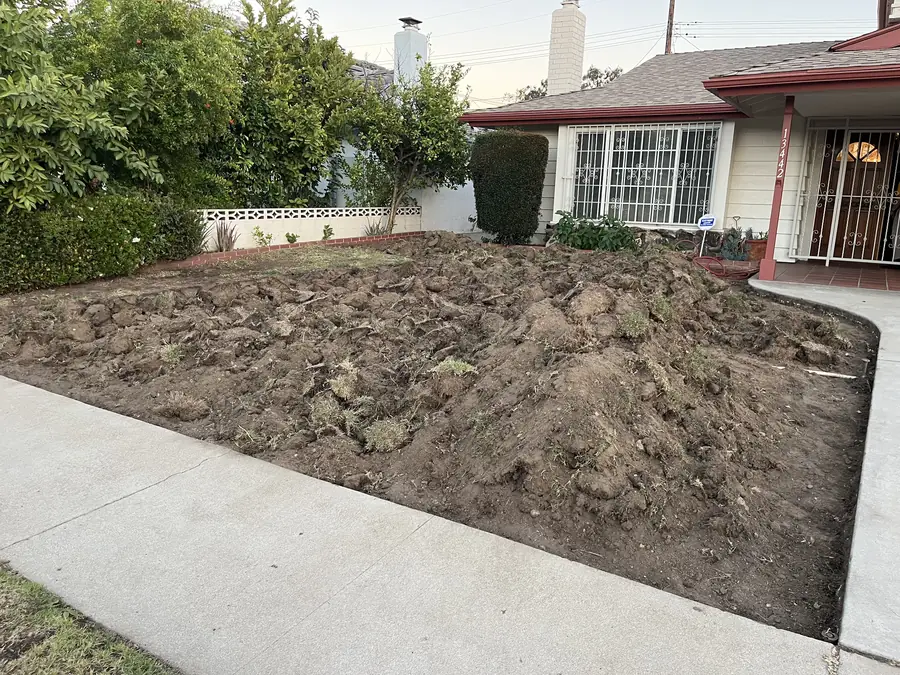
Yes, and it is generally the first phase of the job. Dead sod, old base rock, broken concrete, tree stumps, overgrown root balls, and failed edging all come out and leave the site. We bring in the right equipment for the access we have, load out debris, and dispose of it properly. Concrete and green waste get separated where it makes sense. When demolition is finished you should be looking at clean, workable ground, not a pile of rubble waiting on someone else to deal with it.
Because the original grade was often set for a lawn that no longer exists, or it has shifted over the years as soil settled and beds were added. Once you pull out sod and old hardscape, you can finally see where water actually goes. If it runs toward the house, ponds against a slab, or dumps into a neighbor's yard, that gets corrected before anything else is built. Regrading is unglamorous work that nobody sees when the job is done, and skipping it undoes everything installed on top of it.
Winnetka sits on clay, and clay does not let water through quickly. Rain and overspray sit on the surface, soften the soil, and eventually find the low spot, which is often a foundation or a patio edge. Correcting that usually means reshaping the grade to move water toward the street or a designated outlet, and adding catch basins with solid pipe where surface flow alone will not do it. On flat lots we sometimes have to build fall in rather than follow it, since there is little natural slope to work with.
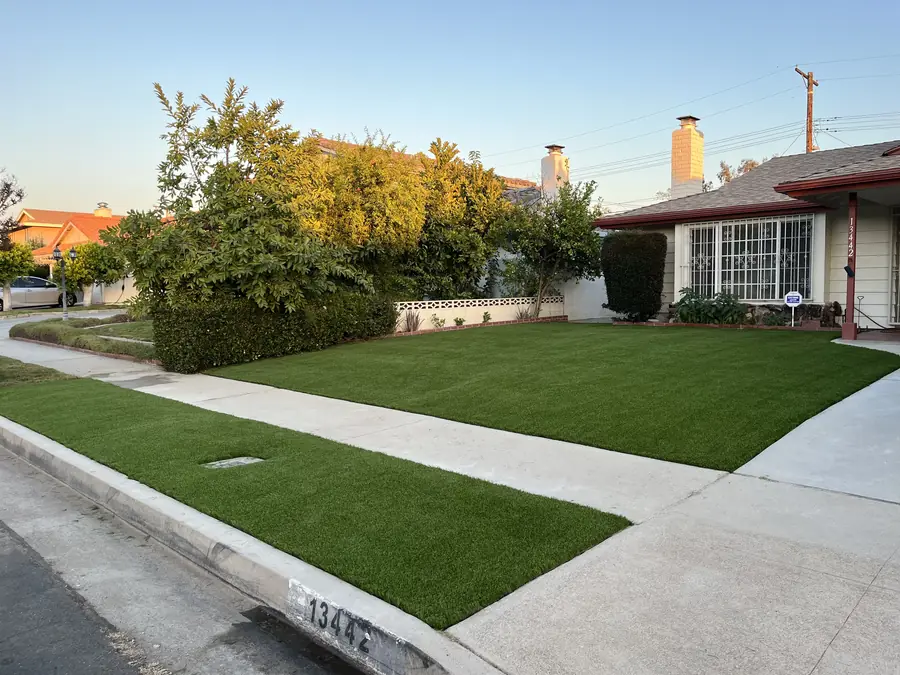
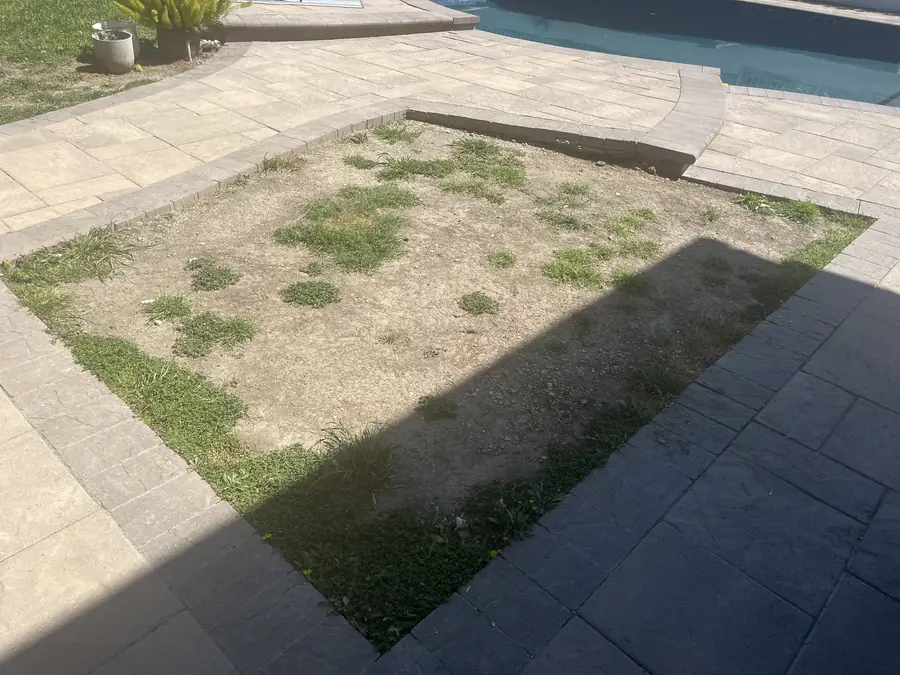
Often, yes. If the surrounding beds, hardscape, and drainage are in reasonable shape, we can strip the lawn area, correct the soil and grade in that footprint, adjust the irrigation zone that serves it, and install whatever replaces it. That said, a dead lawn is frequently a symptom. If it died from poor drainage, broken heads, or compacted clay, replacing the surface alone buys you a couple of seasons at best. We check the cause before quoting the cure.
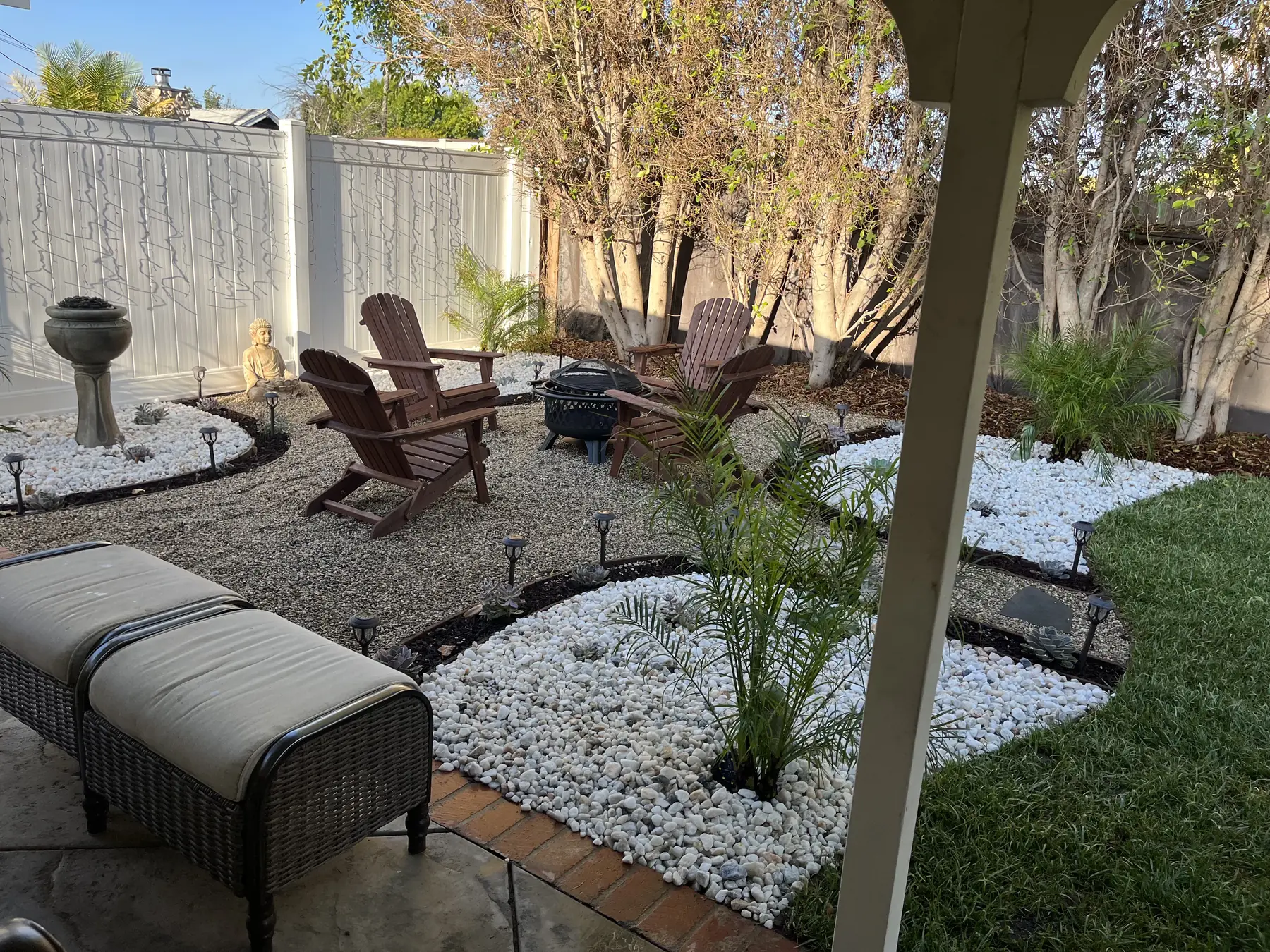
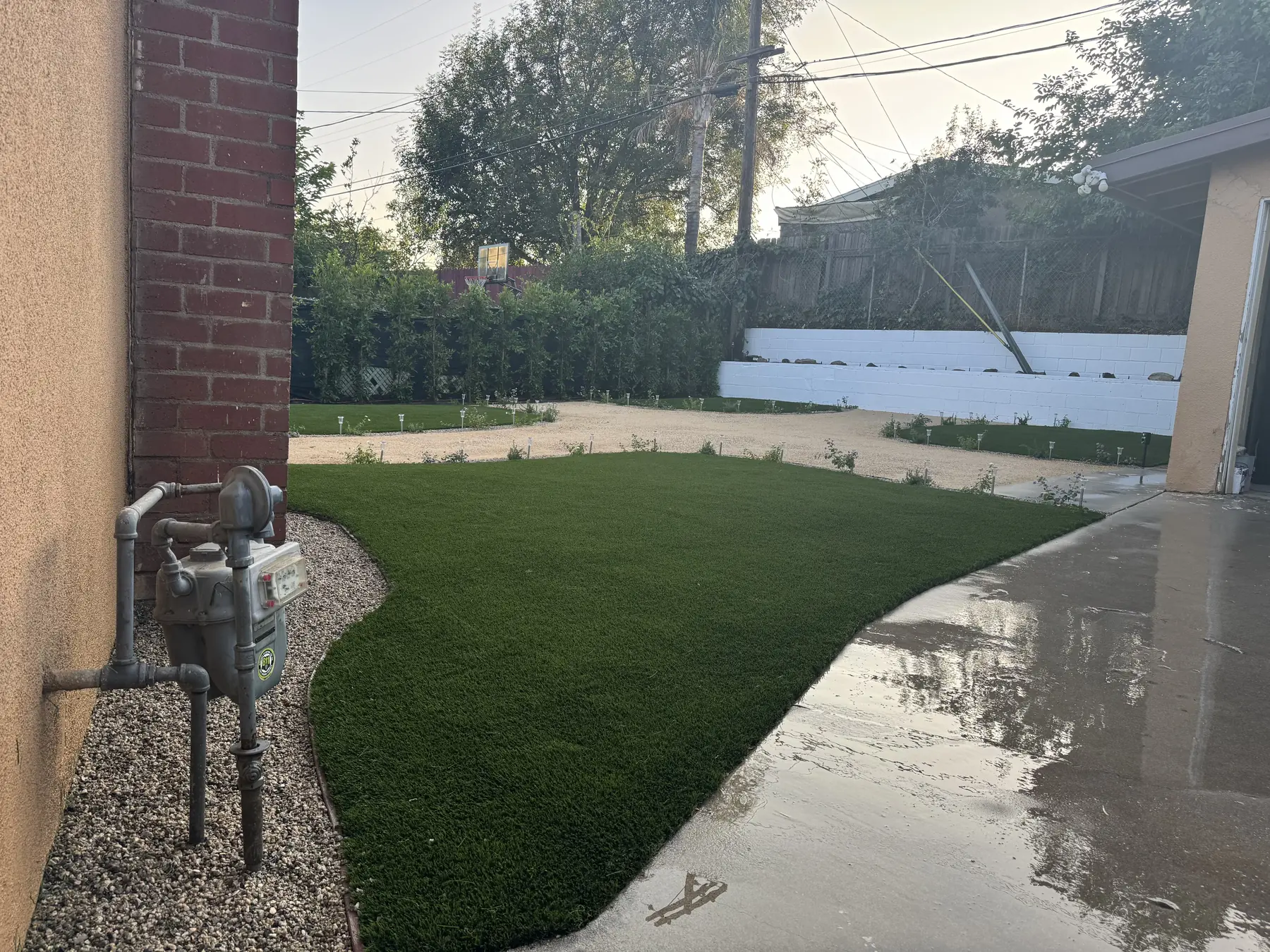
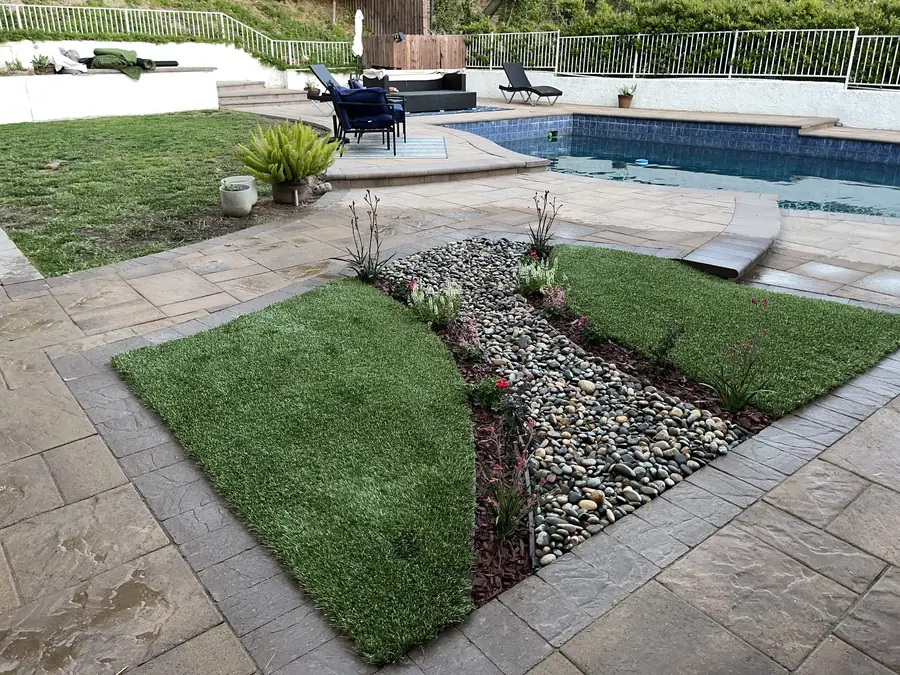
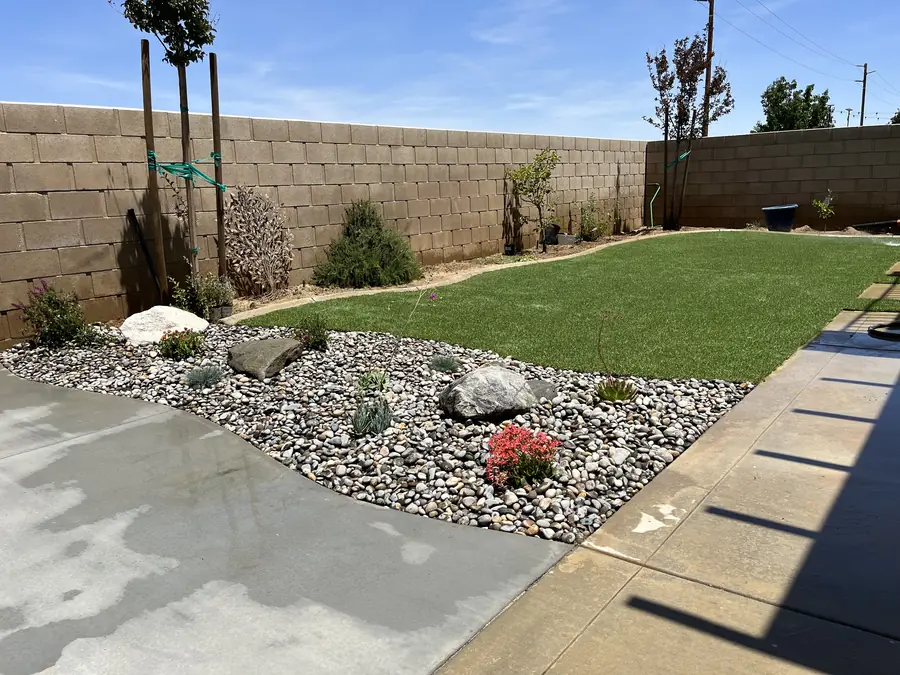
It depends on how you use the space. If children or dogs are running on it daily, artificial turf holds up where live grass will not, and it stays green through a Valley summer with no watering. If the area is mostly visual, drought tolerant planting gives you texture, seasonal color, and habitat for a fraction of the material cost. Plenty of renovations use both, turf where feet land and planting everywhere else. We will walk you through what each one requires once it is installed.
Cracked concrete usually means the base underneath failed, water undermined it, or roots lifted it. Patching the surface does not fix any of those. In most renovations the slab comes out, the base gets rebuilt and compacted properly, and a new surface goes down, whether that is concrete, pavers, or stone. If the existing slab is structurally sound and only looks dated, an overlay or a border of new material around it can be a smart way to stretch the budget without demolishing something that still works.
Not always, but old systems tend to have several problems at once: heads that no longer match the planting, valves that stick, galvanized or brittle pipe, and a controller nobody has adjusted in years. We pressure test what is there and report honestly. Sometimes the mainline is fine and we rework laterals and heads. Other times the labor to chase leaks through an aging system costs more than replacing it. If you are converting lawn to planting beds, converting spray to drip is usually part of the work.
Beds get cleared of whatever has failed or overgrown, then the soil gets amended, since years of the same planting and constant overhead spray leave clay compacted and tired. We reset the bed edges so they hold a clean line, install new plants at proper spacing for their mature size rather than for how they look on day one, and top the whole thing with mulch. Mulch is not just appearance. It slows evaporation, moderates soil temperature, and keeps weed pressure down while new plants establish.
Yes, and those features usually anchor the design rather than obstruct it. Around a mature tree we protect the root zone, avoid raising soil against the trunk, and keep heavy equipment off the critical area. Planting under it gets chosen for shade and root competition. Around a pool we work with the existing deck and equipment, plan for access during construction, and select plants that will not drop constant litter into the water. Both cases take more planning, which is exactly why they belong in the estimate up front.
Renovation follows a sequence that cannot be shuffled. Demolition first, so you can see the actual ground. Then grading and drainage, because everything else sits on top of that. Next come utilities and irrigation lines, which have to be in the dirt before anything is paved over them. Hardscape follows, since that is the heavy, messy phase. Planting goes in last so that new material is not crushed, buried, or driven over. Any contractor who plants before the concrete is poured is creating rework for someone.
It can, and we plan for it when that is the goal. The key is deciding the phase breaks at the estimate stage, not halfway through. Grading, drainage, and any irrigation mainline that crosses future work should happen in phase one, even if the visible improvements wait. That way phase two does not require tearing up what phase one just built. We can also sequence by area, finishing the front completely before touching the back, so you get a done space rather than two half projects.
Both, honestly. Less square footage means less material and less demolition, and a small lot can be transformed all at once instead of stretched across phases, which is a real advantage. The harder part is that on a compact tract lot every square foot is in view. There is no back corner to hide a rough transition or an awkward leftover strip. Details that would disappear on a half acre sit right in front of you here, so the layout and the finish work have to be tight.
It shapes almost every decision. Winnetka tract homes commonly have a narrow side yard and a standard gate as the only route to the back. That width determines whether we can bring in a compact machine or whether demolition debris and base material move by wheelbarrow. It affects how long the messy phases take and how we stage material on a small property. We measure the access before quoting, because a bid that assumes equipment can reach the backyard is worthless if it cannot.
These lots are flat and open, and most of them take full sun through the hottest part of the day with little relief. Combine that with clay that drains slowly and you want plants that tolerate heat and are not fussy about wet feet after a storm. That points toward established Mediterranean and California friendly material, planted slightly high in amended soil so roots are not sitting in a clay bowl. Between Canoga Park and Reseda the conditions run about the same, and the same approach holds up.
Every part of your renovation is performed by one licensed contractor. One licensed contractor stays accountable for the work. The same people who tear out your old lawn are the people who set your grade, run your irrigation, pour your hardscape, and put the last plant in the ground. That means one point of accountability, consistent workmanship from the first day to the last, and no scheduling gaps while an outside company decides when it feels like showing up on your property.
Call Daniels Landscaping at (818) 443-9300 and we will set a time to walk your yard with you. On site we look at what is failing, what is worth saving, how water is moving, and what your access allows, then talk through realistic scope and sequencing. You receive a free written estimate that spells out the work, not a number scribbled on a card. We are licensed in California under 1138709, and the crew that gives you the walkthrough is the crew that does the job.