
FAQ
Renovations in Mission Hills, answered
The questions we hear most from Mission Hills homeowners.
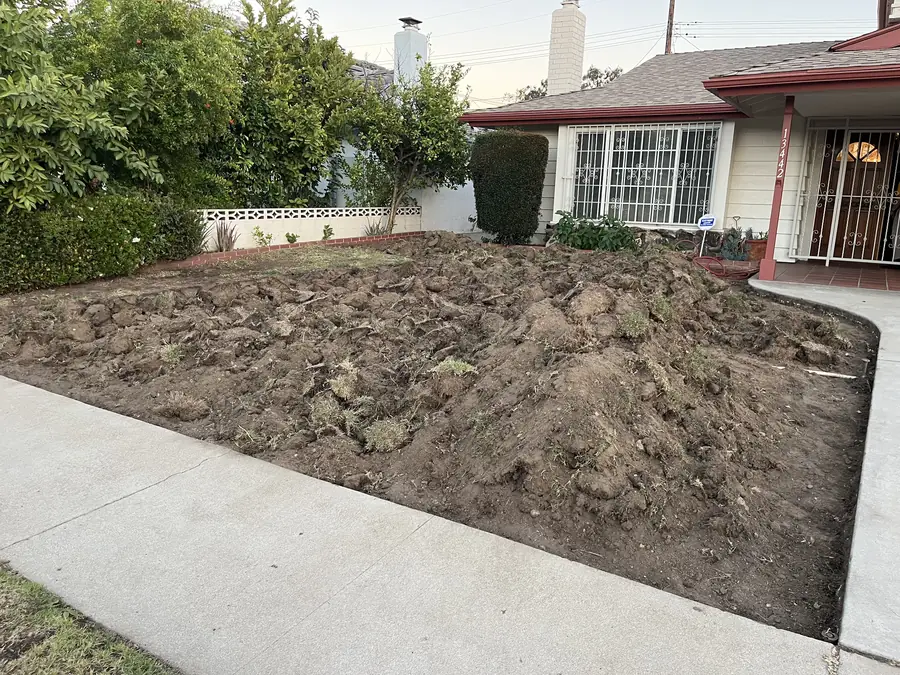
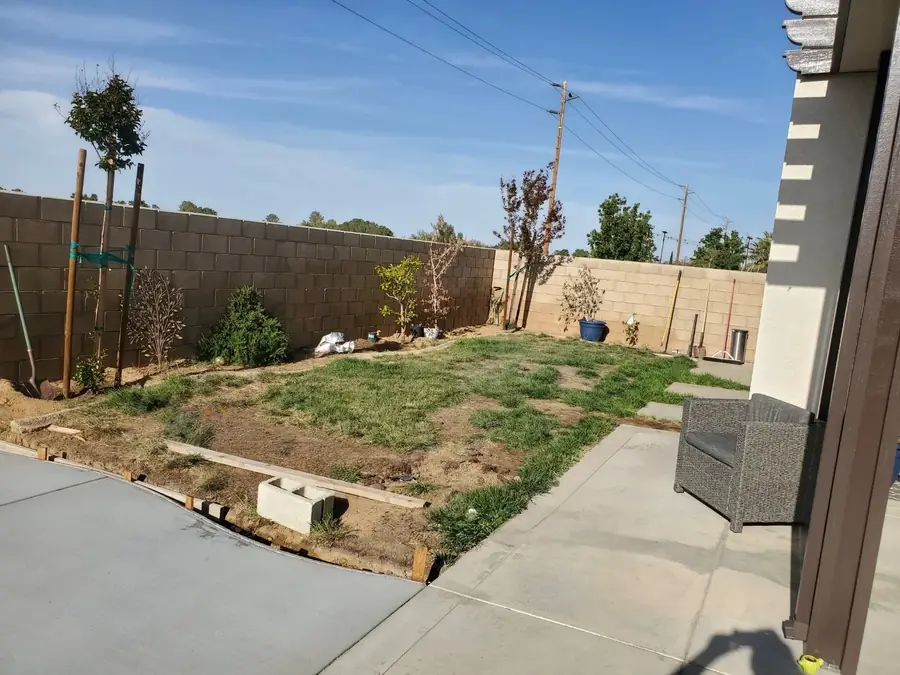
The difference is that half the job is removal. On a new build we arrive at open dirt and begin. On a renovation we first decide what earns its place: a healthy tree, a patio still sitting true, a wall worth keeping. Everything else comes out, and demolition takes real time and real hauling. There is also whatever previous work left behind, from buried irrigation nobody mapped to a slab poured straight over the drainage. We expect surprises under an old yard and sequence the job so finding one does not stall everything.
We walk it with you and sort everything into three piles. Keep covers what is healthy and correctly placed, usually mature trees, a sound retaining wall, sometimes paving that is level and intact. Remove covers what is failing or in the way: cracked slabs, dead lawn, shrubs that outgrew their space. The third pile is the interesting one, meaning things that could stay but should not, like a patio in the wrong location for how you use the yard now. Honest sorting here keeps a renovation from becoming an expensive patch job.
At a certain point repair stops being economical. Many homes in Mission Hills date back decades, and the systems in those yards were often designed for a lawn that no longer exists, then patched line by line as failures appeared. When valves are original, pipe is brittle, and head spacing no longer matches the planting, replacement costs less across a few seasons than continuing to chase leaks. We open the system, look at what is genuinely there, and tell you plainly which parts have life left in them and which do not.
The sequence is fixed, and jumping ahead in it is what causes rework. Demolition and haul away first. Then grade and drainage, corrected while the ground is open and reachable. Then utilities and irrigation, since those lines belong under whatever gets built above them. Then hardscape, meaning patios, walkways, walls, and steps. Planting goes in last, once heavy equipment has finished moving through and nothing else will be trampled. Every renovation we run follows that order, whether the project is a small courtyard or the entire property.
Right after demolition, before anything new is built. Standing water is a grading problem more often than a soil problem, and the only affordable moment to correct grade is when the yard is stripped and the machines are already on site. We reset the fall away from the house, cut in drains at the low points, and pipe the runoff somewhere it can leave the property. On flat parcels, and much of Mission Hills is flat, that fall has to be created deliberately, because the land will not supply it on its own.
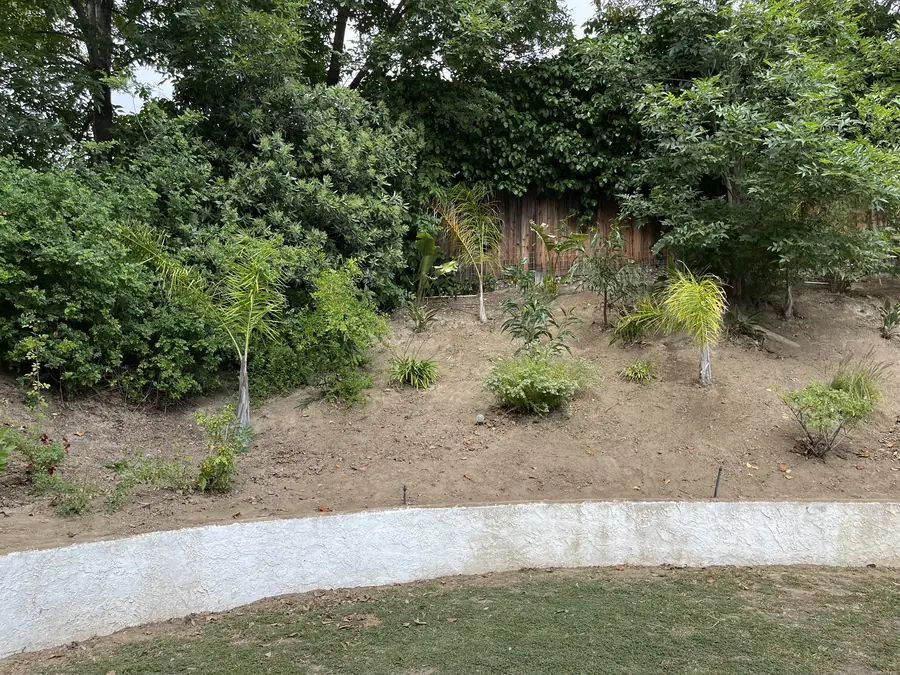
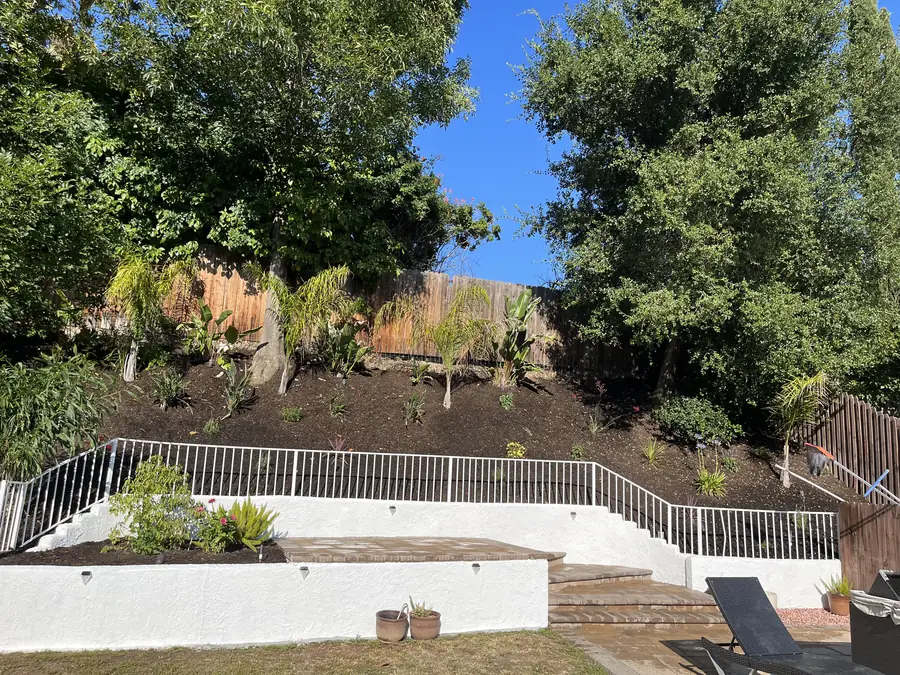
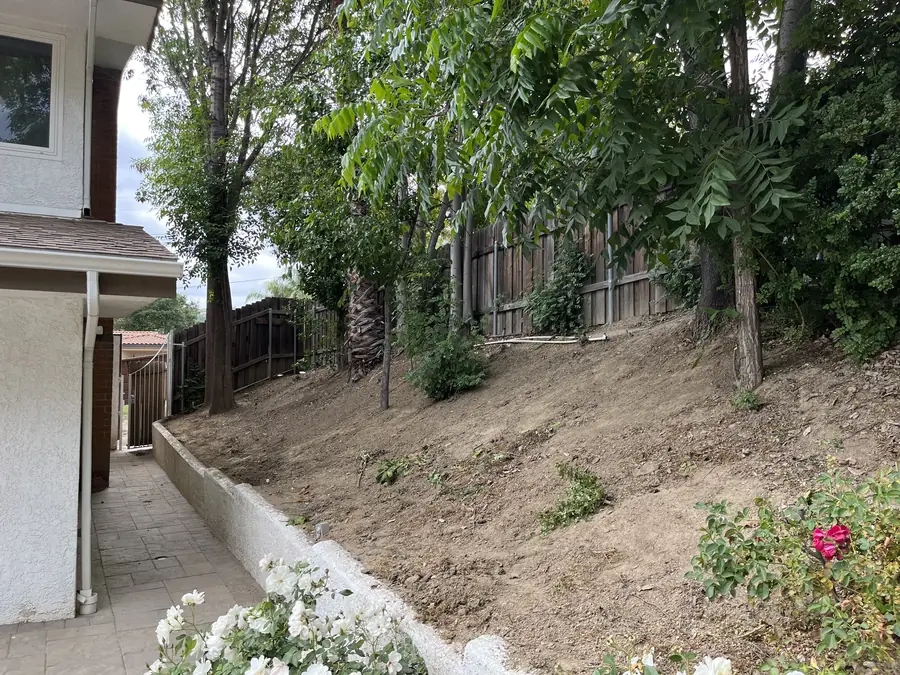
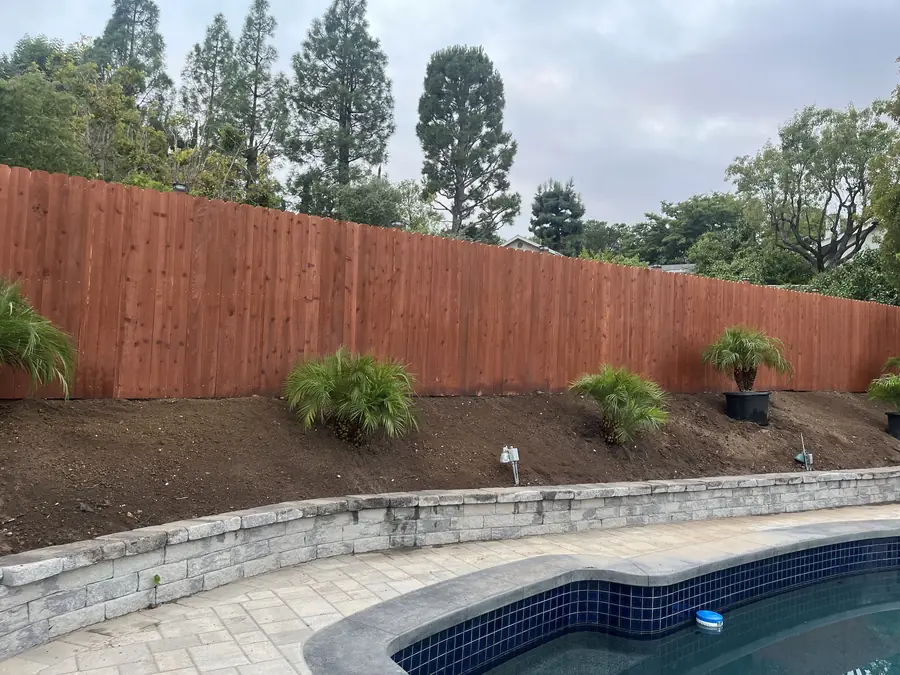
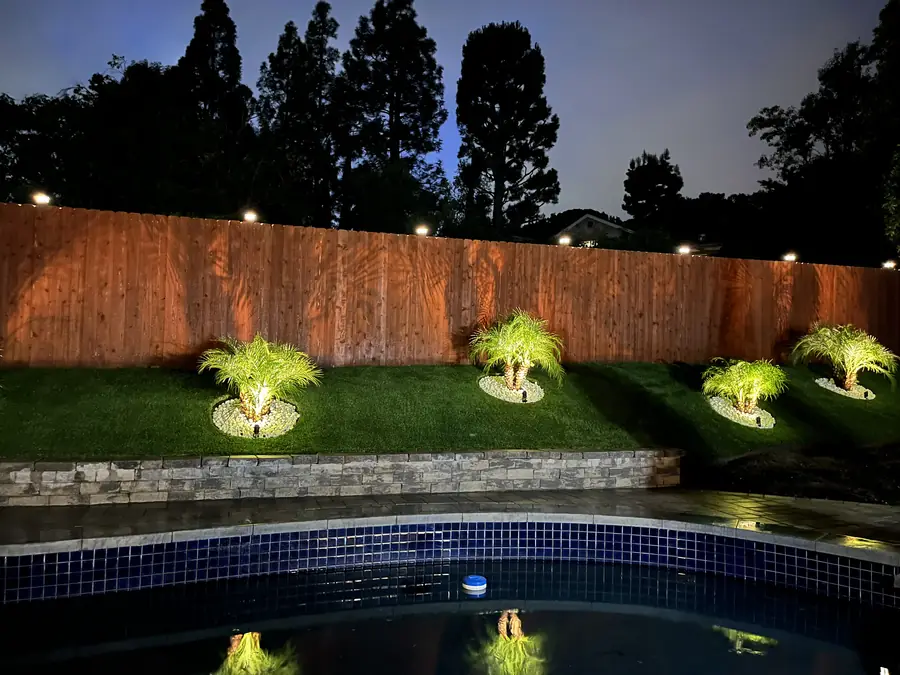
That is one of the better opportunities in a renovation here. Parts of Mission Hills lift gently as you move north, and a yard left as an awkward continuous slope can be reworked into distinct usable levels: a terrace near the house, broad steps, a lower area with a genuine purpose. Low retaining holds each change in elevation, with gravel backfill and a perforated drain behind it. Once the grade is deliberate rather than accidental, a modest rise stops being wasted ground and becomes the most interesting part of the property.
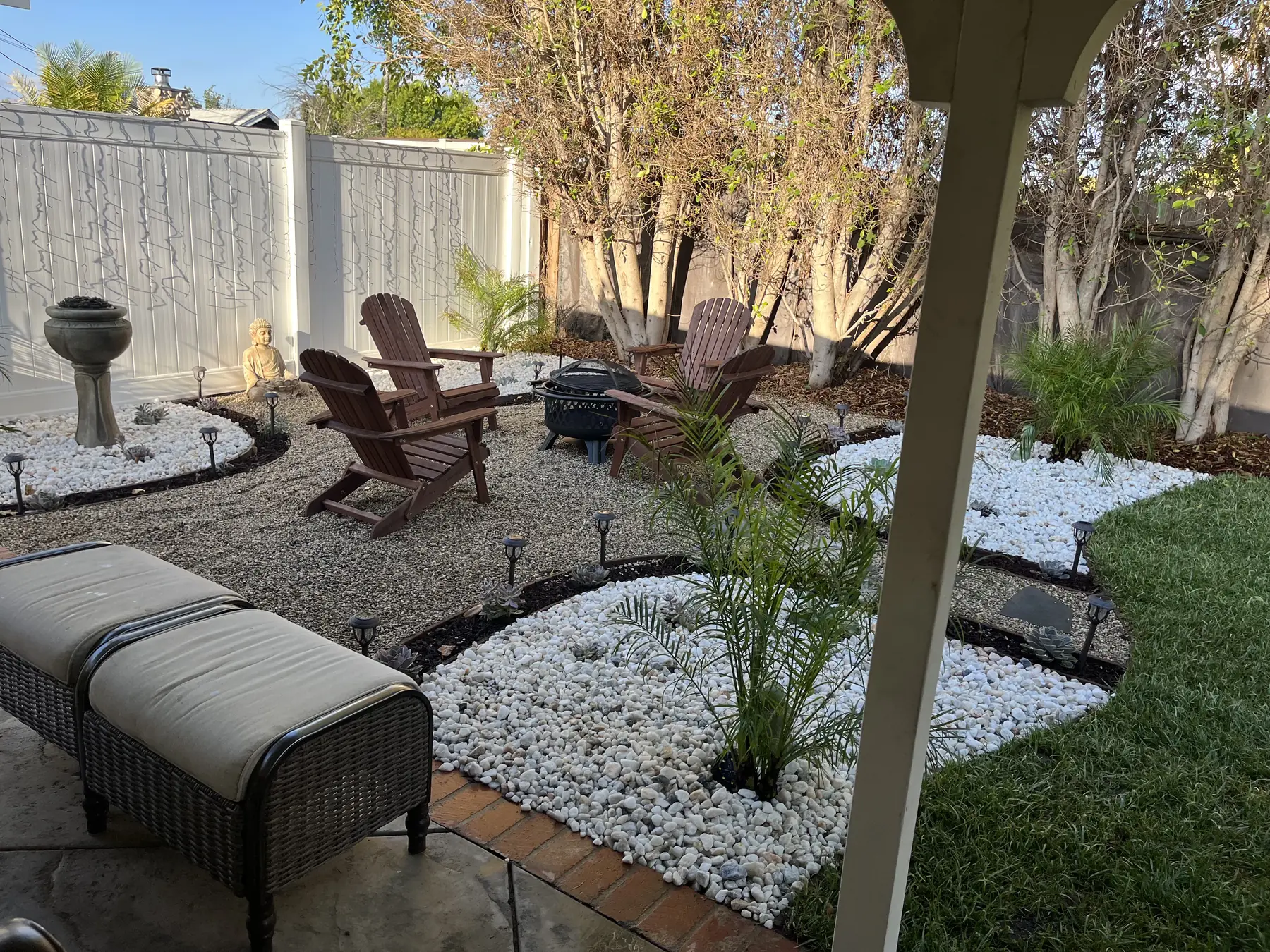
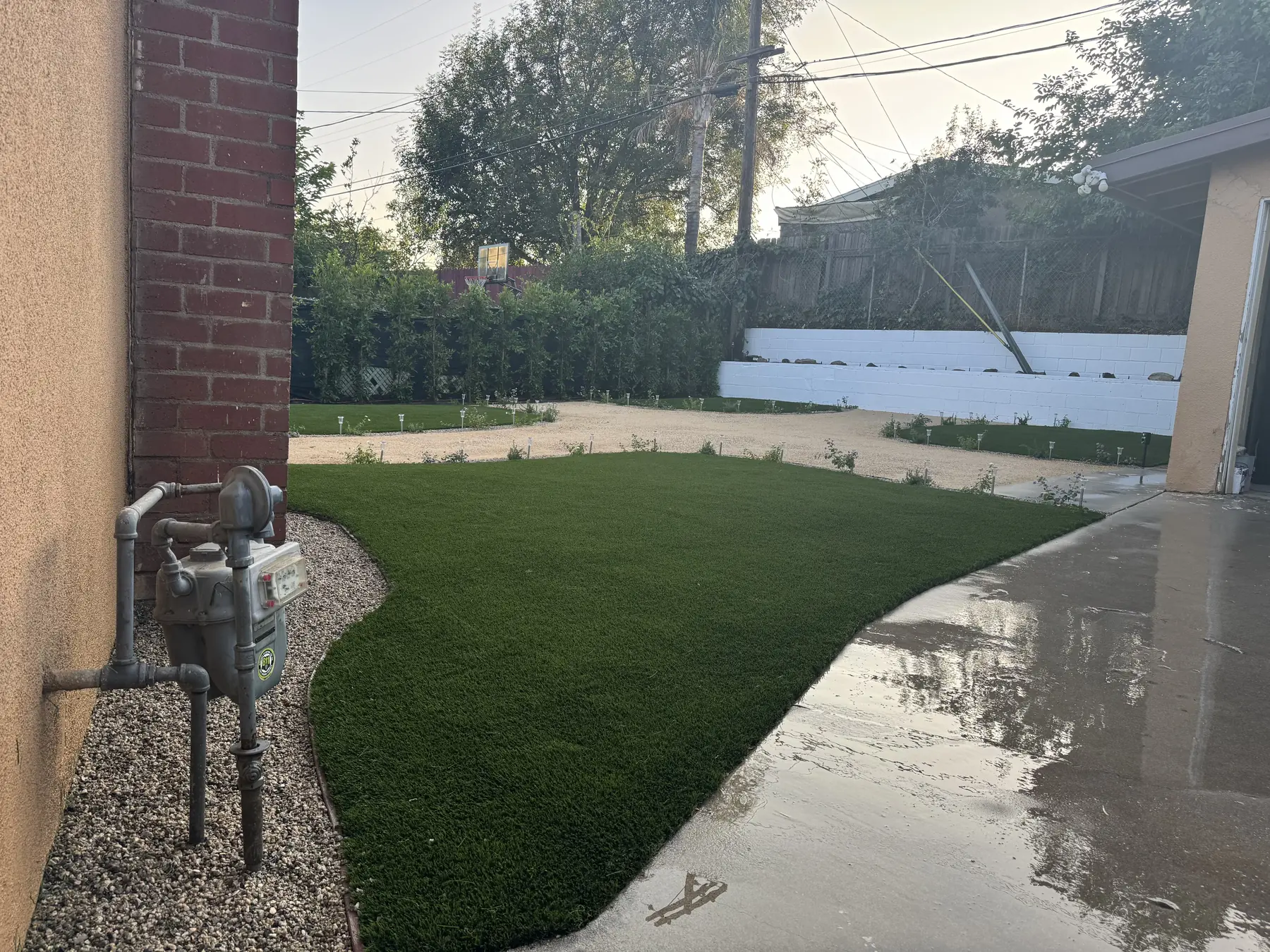
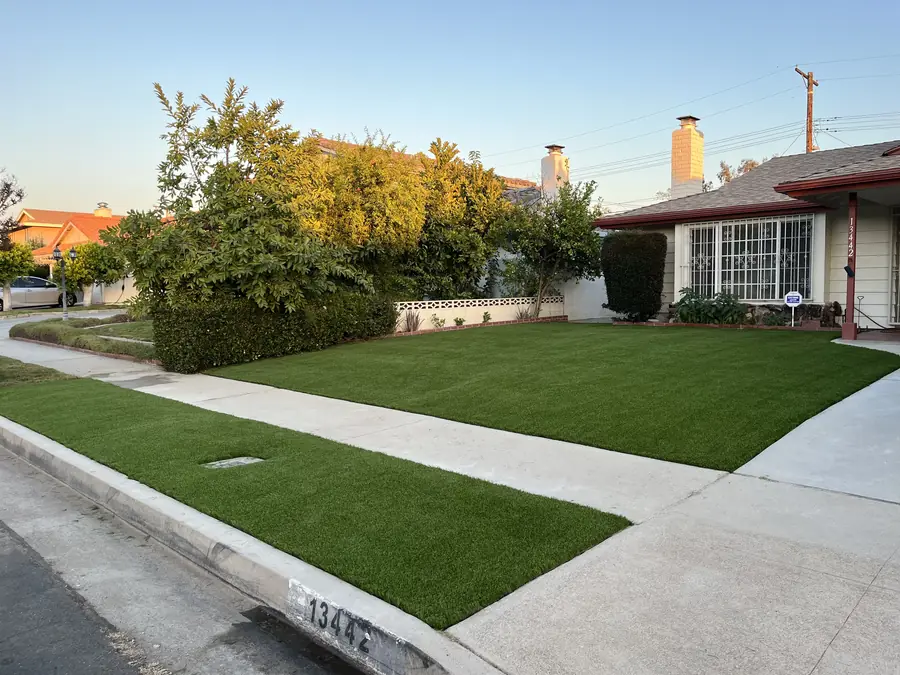
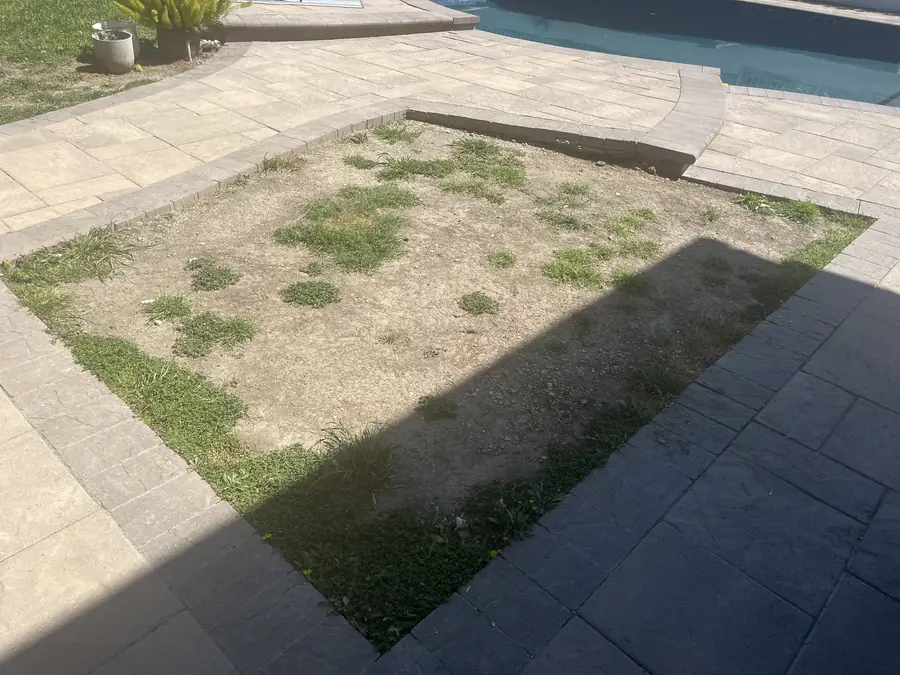
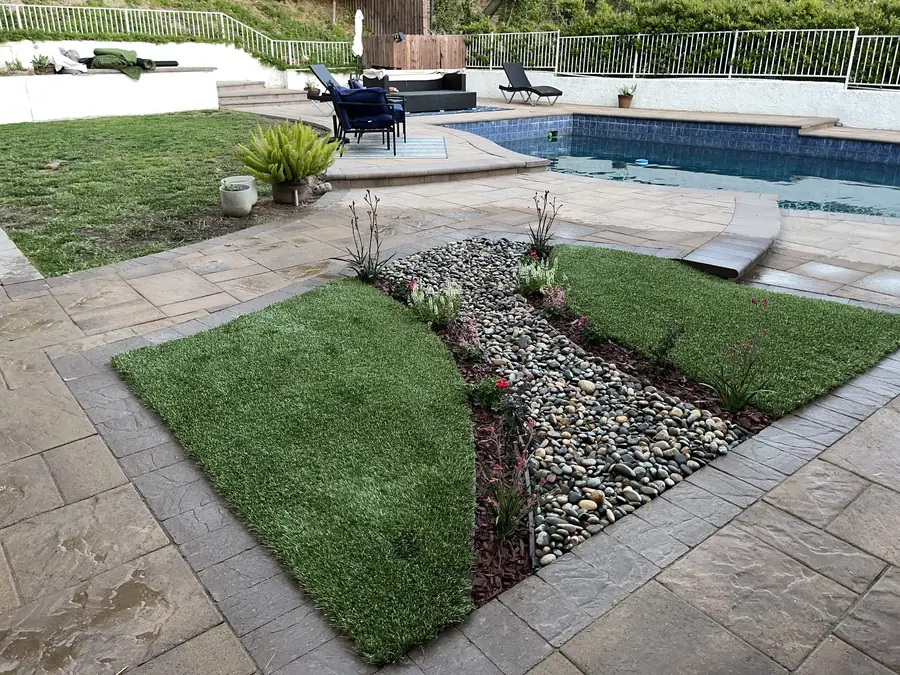
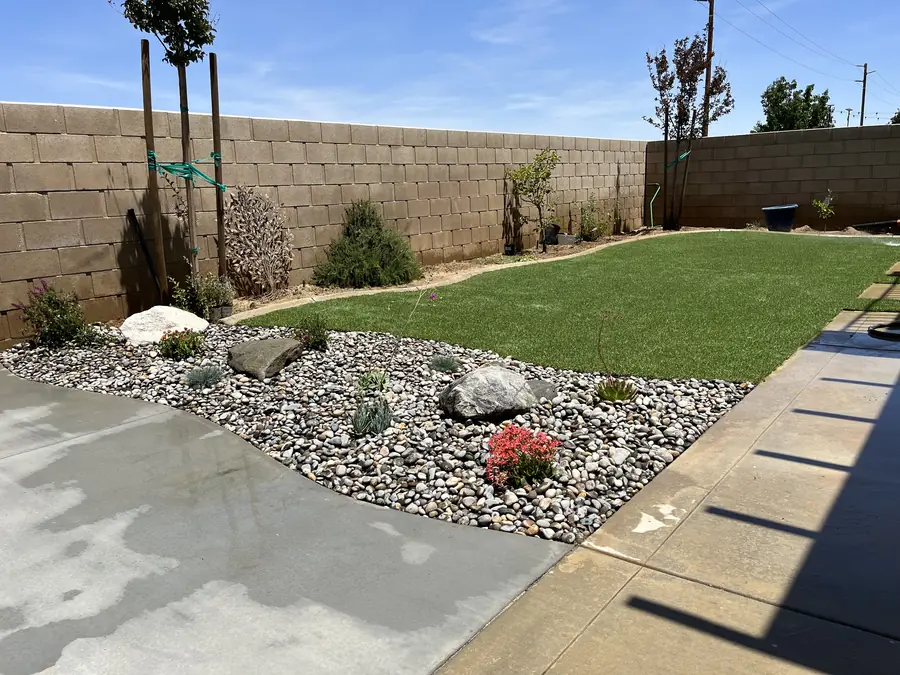
You have three realistic directions, and the summers here decide much of it. Hot dry weather and long hours of full sun punish thirsty turf, so replanting the same lawn tends to repeat the same outcome. Drought tolerant and heat tolerant planting with mulched beds and drip is the lowest maintenance route. Artificial turf keeps a green surface for children and dogs with no irrigation at all. Or you keep a smaller lawn where it is genuinely used and convert the rest. Whichever you pick, the irrigation gets reworked to match.
Yes, and the demolition itself is straightforward work. Old slabs get broken out, the reinforcing separated, and the material hauled off. What replaces it depends on why it failed. If the slab cracked because the base beneath was never compacted, pouring another one on that same ground repeats the mistake, so we rebuild the base first. From there you can choose a new pour with proper control joints, or switch to pavers, which are individually replaceable and let us reach anything buried without cutting a hole in your patio.
Not if the work is planned around them. Roots extend far past where the branches end, so the risk is rarely the trunk and almost always the excavation. We fence off the root zone, keep equipment traffic out of it, hand dig where a line has to pass close, and avoid piling fill against the base. Trenches get routed rather than driven straight through. A tree that took decades to reach its size is worth designing around, and losing one to careless machine work is damage no planting budget undoes.
The pool sets the constraints and the rest of the plan works to them. We check the deck for cracking and settlement, look at where the equipment sits and how it is plumbed, and confirm that surrounding grade drains away from the shell rather than toward it. Deck replacement, new coping, or a switch to pavers around the water can all happen without touching the pool itself. What we watch closely is excavation near the shell and the equipment lines, which get located before any machine starts digging.
Off your property, and not sitting in the driveway for weeks. Demolition generates more volume than most people expect, since broken concrete, old base rock, stumps, and stripped sod add up quickly. We stage a container or run loads out as the work produces them, keep material separated where it can be recycled, and sweep the street and drive at the end of each day. Hauling appears in the estimate we give you rather than arriving as a charge later, once the pile has grown.
Phasing is common and it works, provided the underground portion is not what gets split. Drainage, sleeves, and main irrigation lines belong in the first stage across the whole property, including areas that will stay untouched for a while, because reaching them later means cutting through finished surfaces. After that, you might rebuild the back this year and the front next, or complete hardscape now and planting during a cooler stretch. We draw the full plan first so each stage fits the one before it.
Often not, and that is worth knowing before you budget for one. Mission Hills mixes older established properties with newer development, and yards at the newer homes frequently have serviceable irrigation and sound paving already in place. What they tend to lack is design: a builder installed lawn, a narrow strip of planting, and no real use of the space. That calls for reworking layout and planting rather than tearing out systems that function. We tell you which category your property falls into instead of quoting a rebuild by default.
By deciding what is protected before the first machine arrives. Anything staying gets marked and physically fenced, whether that is a tree, a wall, a section of paving, or a planting bed. Equipment access routes are chosen so heavy traffic runs over ground that is going to be rebuilt anyway. Existing irrigation lines slated for reuse are located and flagged. It is unglamorous preparation, but the alternative is discovering at the end that something you paid to keep got crushed on the way to something else.
Daniels Landscaping crews, and nobody else. One licensed contractor stays accountable for the work. The people who break out your old concrete are the same people who regrade the yard, run the new irrigation, build the hardscape, and set the planting. Keeping it under one contractor means the crew that opened the ground knows exactly what is under it when the next stage begins, and nothing gets lost in a handover between companies. One company stays responsible for the entire job from the first day to the last.
Most clients start in back because that is where they spend their time, though there is an argument for the front. Homes here sit in an area shaped by its long history around the San Fernando Mission, and street facing yards carry much of that character, so a front renovation changes how the whole property reads from the curb. The practical case for starting in back is access: heavy equipment usually has to cross the front to reach the rear, so finishing the front first risks damaging new work.
Parts of it, for parts of the time. Demolition and grading are the disruptive stretches, with equipment moving and open ground everywhere. After that the site tidies up considerably as hardscape goes in. We keep a walkable route to the doors you need, protect the areas that are staying, and clean up at the end of each working day rather than leaving tools and material spread across the yard. If there is a date you need the yard presentable for, tell us at the start and we will sequence around it.
Reach Daniels Landscaping at (818) 443-9300 and we will arrange a walk through of your existing yard. We look at what is there now, what is failing, how the ground drains, and what you want the space to become, then prepare a free written estimate broken out by stage so demolition, drainage, irrigation, hardscape, and planting each appear as separate lines. We hold California license 1138709. Nothing is left verbal, and the price you approve is the price the work is built to.