
FAQ
Renovations in Van Nuys, answered
The questions we hear most from Van Nuys homeowners.
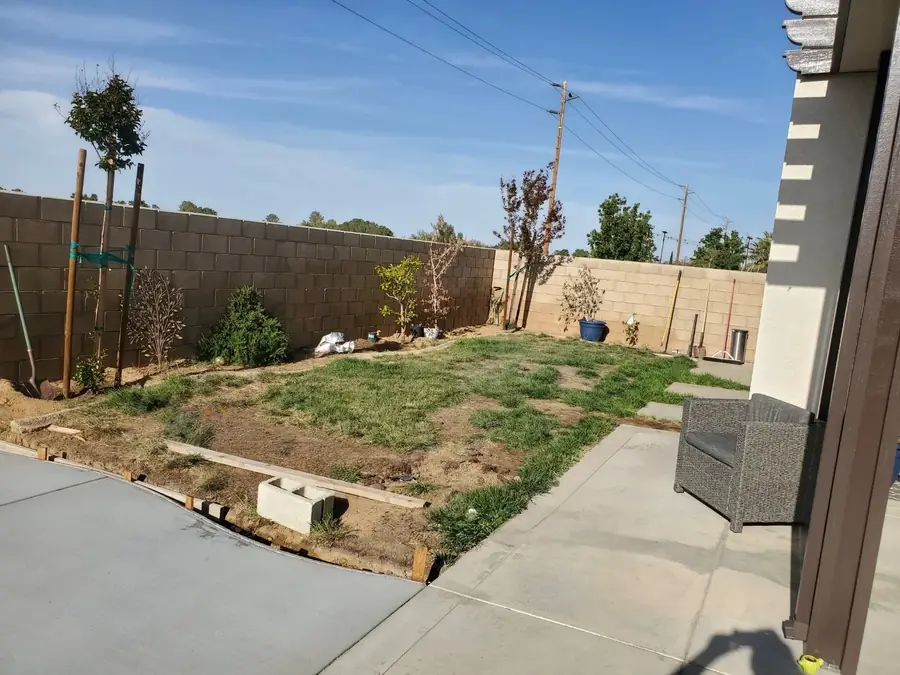
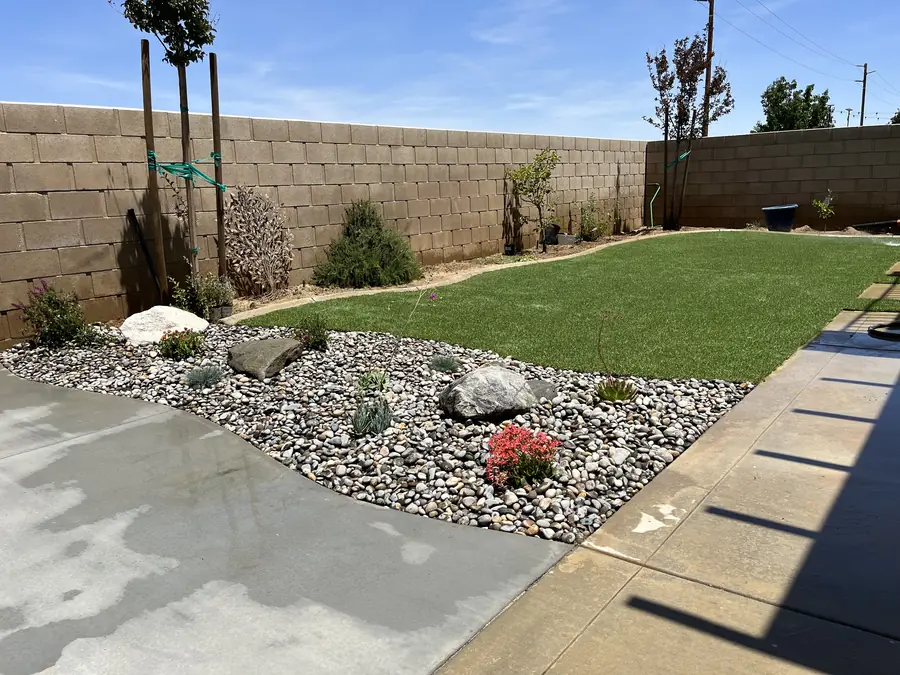
It covers everything from selective updating to a full tear out and rebuild. On the light end, that is replacing a failed lawn, refreshing beds, and correcting an irrigation system that no longer covers evenly. On the heavy end, it is removing all the paving and planting, regrading the entire yard, running new lines, and installing a new layout from scratch. Most projects land somewhere between. What separates renovation from a new install is that you are working around things worth keeping, and those constraints shape the design more than a blank lot ever would.
Three questions. Is it healthy or sound, is it in the right place, and does it fit where the yard is heading. A mature shade tree passes all three and stays. A cracked slab with no base under it fails the first and comes out. A perfectly good hedge sitting exactly where the new patio belongs fails the second, and then you make a judgment call. We walk the yard with you and mark decisions on the spot, because it is far easier to agree standing in front of something than to argue about it on paper.
Age, mostly. Much of the housing here dates to the postwar tract era, and a great many of those yards are still running the irrigation, concrete, and planting they were built with. Older pipe corrodes and splits, valves stop closing, slabs crack and lift, and plants installed decades ago either died out or outgrew the space they were given. None of that is neglect. It is simply a system reaching the end of its service life. We see more renovation work in this part of the Valley than new installs, and it is not close.
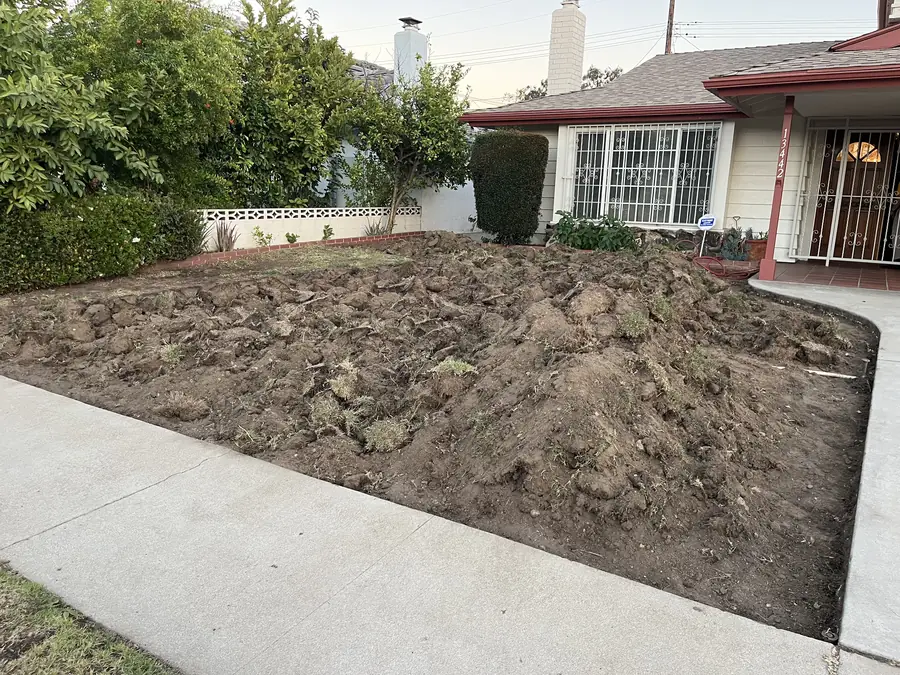
We protect what is staying first, then remove what is not. Concrete gets broken and loaded out, old irrigation is dug up rather than buried and forgotten, dead or unwanted planting comes out with the root ball, and debris leaves the site in bins rather than sitting in your driveway for weeks. We keep an access route for equipment and clean at the end of each day. Once the yard is stripped, you see the actual grade and the actual soil for the first time, and a few design assumptions usually get adjusted right then.
Yes, and flat lots are exactly where drainage problems hide. Without slope, water does not leave on its own, so it sits against a slab, pools in a low spot, or works toward the foundation. The fix is to build the fall in deliberately: cut a consistent grade away from the house, place area drains at the low points, run solid pipe to a legal outlet, and set finished hardscape elevations to match. Since Van Nuys ground is level throughout, this becomes a matter of engineering rather than luck, and open excavation is the only convenient time for it.
Because every other trade sits on top of it. Base depths, patio elevations, drain inverts, planting bed heights, and door thresholds all reference the finished grade. If grading is guessed at and adjusted later, the patio ends up an inch high at the back door or a bed drains toward the house. Getting the earth right while the machines are already on site costs a fraction of correcting it once concrete is poured. It is also the moment to bury drain lines and sleeves, since the ground will never be this open again.
Demolition, then grading and drainage, then utilities and irrigation, then hardscape, then planting. That sequence is fixed and there is a reason behind each step. You cannot grade around debris. You cannot trench through a finished patio. You cannot set paver elevations before the grade is established. And planting goes last because a young plant put in early gets crushed by wheelbarrows, compacted by foot traffic, and coated in cutting dust. Contractors who reorder those stages to look fast early on end up redoing work at the end.
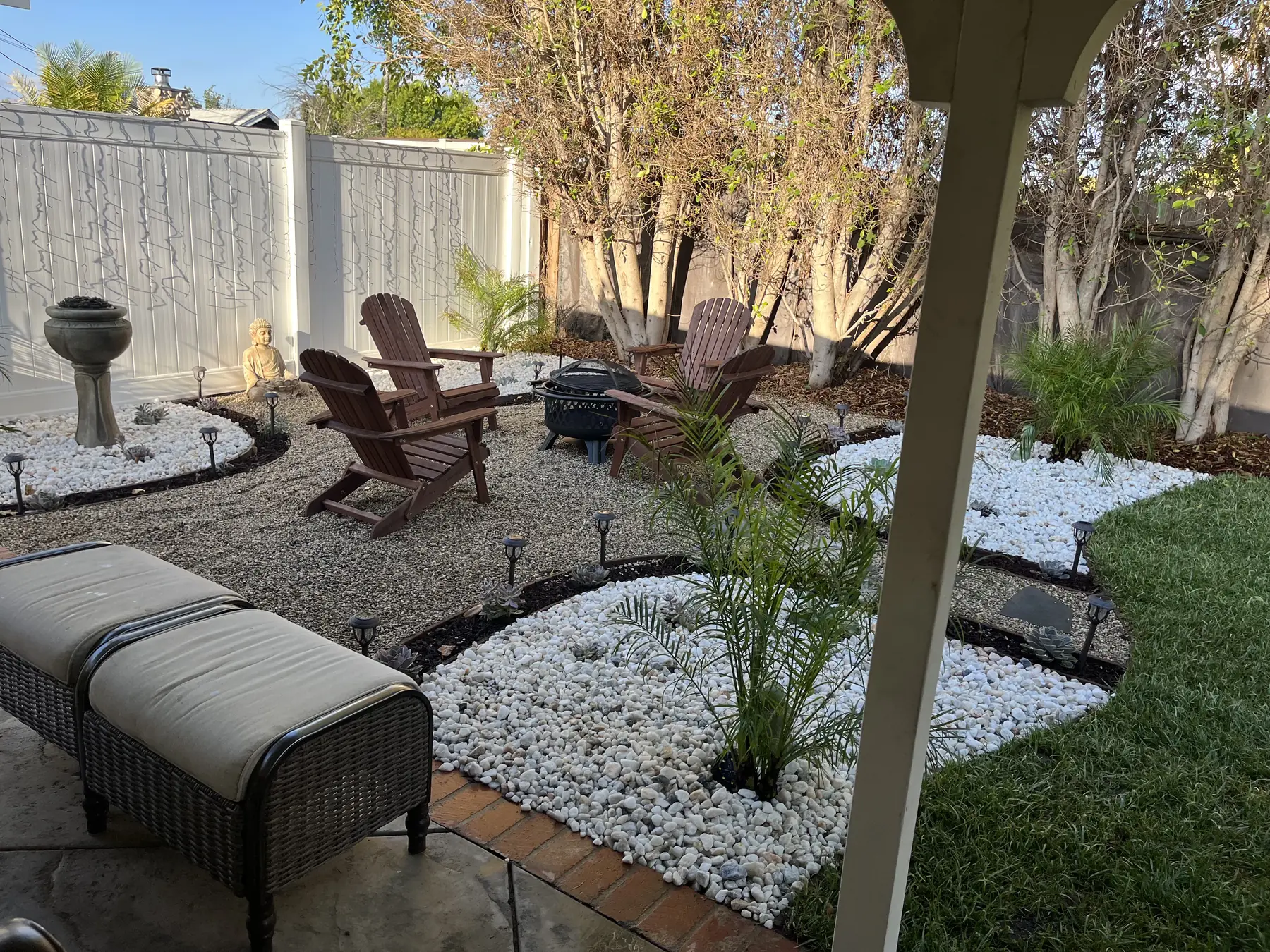
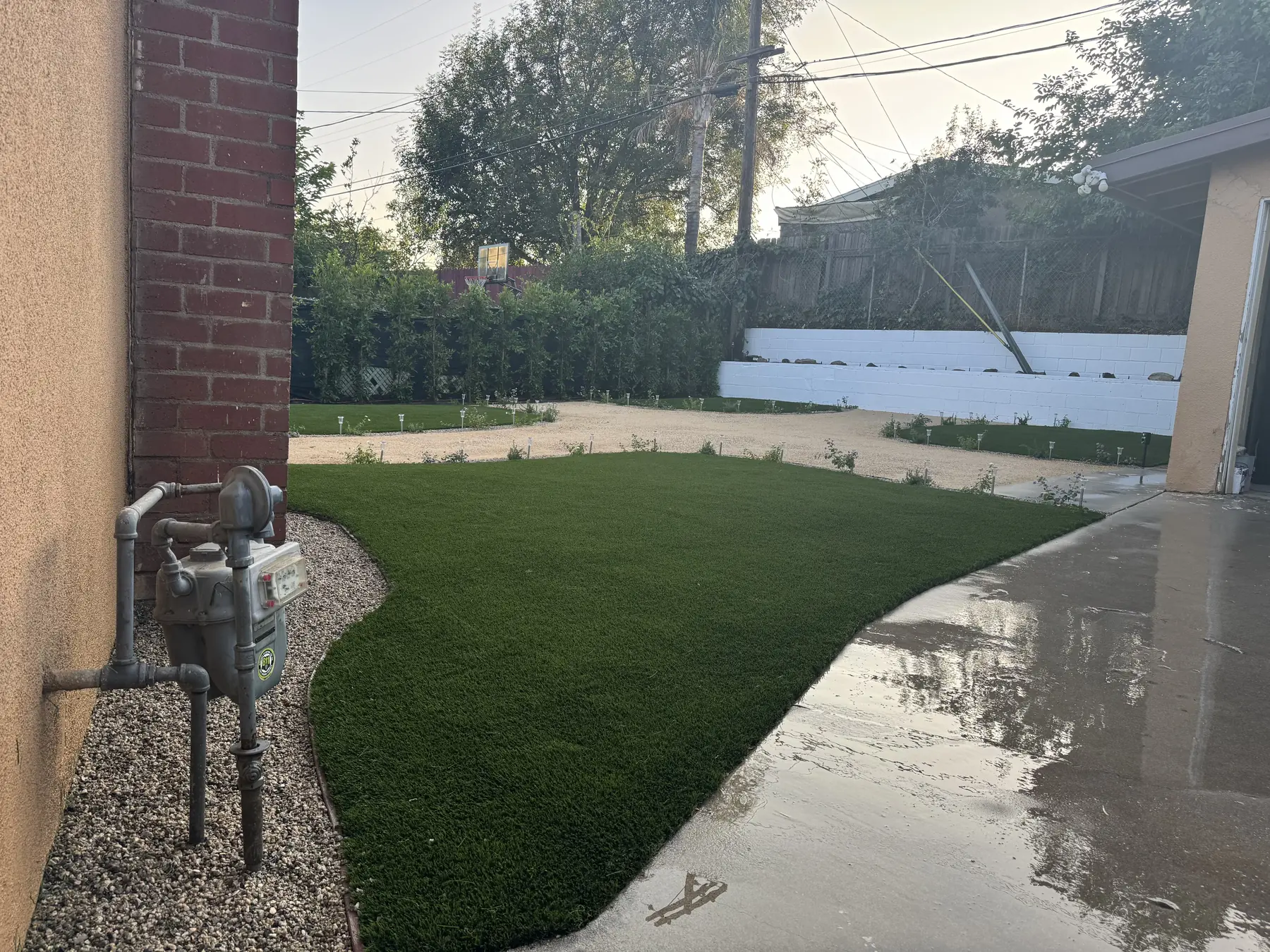
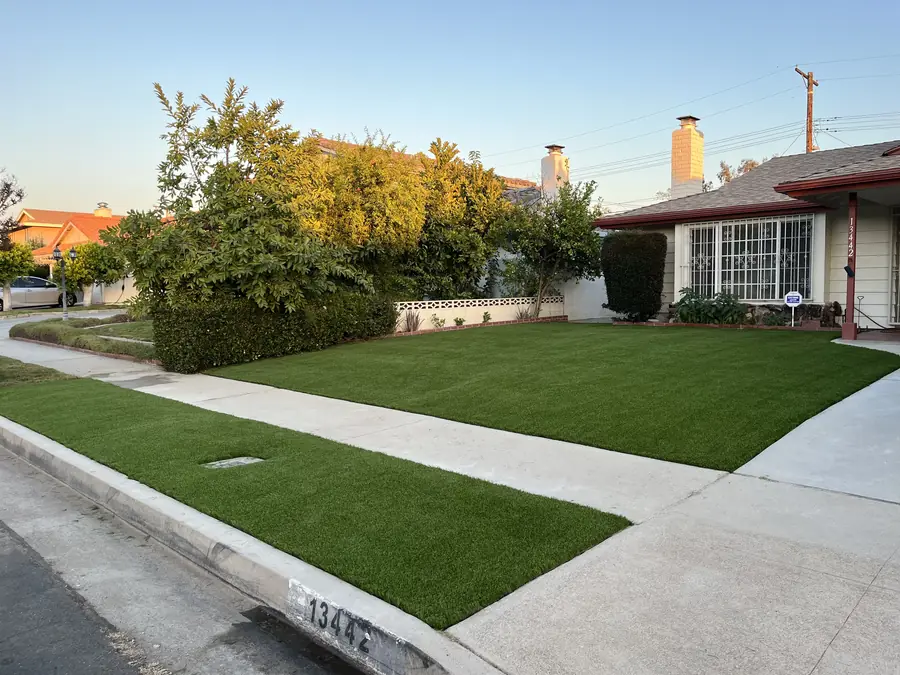
You have three realistic paths here. Replace it with a smaller live lawn sized to what you actually use, backed by irrigation that covers properly. Install artificial turf, which stays green through a hot, dry Van Nuys summer with no watering at all. Or convert the area to heat tolerant planting, gravel or decomposed granite paths, and a shade tree, which is the lowest water option and often the best looking one. Full sun and long dry summers here punish a large ornamental lawn, so we usually push toward using the space rather than watering it.
Old slabs in this area frequently sit straight on native soil with no compacted base and no reinforcement, which is why they cracked and why patching does not hold. We break the slab out entirely, remove the pieces, evaluate the subgrade, and rebuild with a proper compacted base and reinforcement if the new surface is concrete. If you would rather move to pavers or stone, removal is the same and the base build is the same. Overlaying new material on top of a failed slab simply transfers the crack upward within a couple of seasons.
If the system is original to the house, replacement is almost always the better value. Repairing one broken lateral on a system with corroded pipe, worn valves, and heads that no longer match each other buys a few months. A rebuild lets us set proper zones for the new planting, separate the areas that need water from the ones that do not, convert beds from spray to drip, and add a weather based controller. Since the ground is already open during a renovation, this is the cheapest moment in the life of the property to do it.
Yes, and protecting them takes real planning. The critical root zone extends well past the trunk, so we avoid trenching through it, keep equipment off that ground, and do not raise or lower the soil level over the roots, which is what actually kills established trees during construction. Hardscape near a tree can be set on a base that permits water and air to reach the soil. Irrigation gets separated so the tree is not forced onto the same schedule as new planting. A mature shade tree is the hardest thing in a yard to replace.
The pool stays and the yard around it changes, which means working carefully at the deck edge. We check the condition of the existing deck, address settlement or cracking, and set new surface elevations so water drains away from the coping rather than back into the pool. Equipment access, bonding for anything metallic near the water, and any required barrier or gate all get accounted for. Planting selection shifts near a pool as well, since heavy litter dropping species and aggressive roots create maintenance you will resent later.
Yes, and it is common in Van Nuys because most households here run practical budgets. We design the finished yard first, then decide what gets built now and what gets left ready. Anything underground belongs in the first phase: drainage, sleeves, mainline, and conduit. Anything visible can wait. Handled this way, phase two is finish work on ground that was already prepared, which is far cheaper than reopening a completed yard. Handled badly, phasing means paying twice, so the sequencing decision matters more than the split itself.
Sometimes, and we will tell you honestly when it is worth it. Sound stone, good boulders, healthy shrubs that can be transplanted, and a straight run of block wall in decent condition can all stay in the project. Broken concrete, brittle pipe, and undersized valves cannot. The test is whether reusing something saves real money without importing a weak point into the new build. Salvaging a marginal item to save a modest amount, then having it fail inside a finished yard, is a bad trade and we will say so.
It changes everything. Van Nuys spans a wide mix of property types, from compact postwar tract lots to considerably larger parcels, with commercial corridors running between them. A small yard renovation is an exercise in editing, where every square foot has to serve a purpose and one oversized feature ruins the space. A large yard is about connection, since a big open area with nothing in the middle simply reads as empty. We start from the measurements of your property, not from a layout that worked somewhere else.
Because it is the only stage that gets damaged by every other stage. Wheelbarrows, cutting, compaction, and foot traffic all destroy new plants, and soil that has been driven over needs to be loosened again before anything goes in. Waiting also means the final planting decisions are made looking at real, finished hardscape rather than a drawing. Sizes and quantities often adjust slightly at that point, and that is a good thing. Irrigation is tested and tuned around the actual plant locations rather than the other way around.
No. Every phase of your renovation is performed by the Daniels Landscaping crew. Demolition, grading, drainage, irrigation, hardscape, and planting are all done by our own people, and no part of the job is handed to an outside company. Renovation work in particular rewards this, because each stage depends on the one before it, and a crew that did the grading knows exactly why the elevations are what they are. One team on site from start to finish also means one point of accountability if something needs correcting.
Reach us at (818) 443-9300 and we will schedule a walk of your existing yard. We look at the condition of the concrete, the irrigation, the drainage, and the planting, listen to what is not working for you, and identify what is worth keeping. You then receive a free written estimate broken out by phase, so you can see what each stage covers and decide how much to take on now. Daniels Landscaping holds California license number 1138709. There is no cost and no obligation for the visit or the estimate.