
FAQ
Renovations in Burbank, answered
The questions we hear most from Burbank homeowners.
We evaluate each element on condition, position, and cost to keep. A healthy mature tree in a sensible spot almost always stays. Cracked concrete that has heaved at the joints rarely justifies patching. Irrigation gets tested rather than guessed at. Sometimes a feature is perfectly sound but sits in the wrong place for the new layout, and then the question becomes whether relocating costs less than replacing. We walk the yard with you and give you our reasoning on each item, so the decisions are yours with good information behind them.
Because you cannot see the real conditions until the old material is gone. Under a slab there may be poor compaction, buried debris, or an abandoned line nobody documented. Under a dead lawn there may be a grade that has been quietly directing water toward the house for years. Removing first and assessing second means the plan gets adjusted to the truth of the site rather than to assumptions. It also gives the crew clean access for the equipment that follows, which shortens the messy phase considerably.
It gets hauled off the property rather than piled in a corner for the duration. Broken concrete, old irrigation components, dead plant material, and excavated soil are separated where separation makes sense and removed in loads as the demolition proceeds. Keeping the site clear is not cosmetic. A yard full of debris slows every subsequent phase, makes accurate grading impossible, and creates hazards for anyone who walks out the back door. We plan the removal logistics along with the demolition itself.
The single best moment to correct drainage is when the ground is already open. Regrading, adding area drains, installing catch basins, and routing pipe are inexpensive relative to the rest of the project while the soil is exposed and equipment is on site. Doing the same work later means cutting into new paving and disturbing new planting. If your existing yard holds water, sends runoff toward the foundation, or has a soggy corner that never dries, this is the phase where it gets solved permanently.
No. Every phase of your renovation is performed by the Daniels Landscaping in-house crew. The same team handles demolition, grading, drainage, hardscape, and planting, which is exactly why the sequence holds together. Nothing stalls because an outside outfit did not show up, and nobody blames the previous trade for a problem. One licensed contractor is accountable on your property, following our standards, from the first load of debris to the final walkthrough. You always know who is in your yard and who answers for the work.
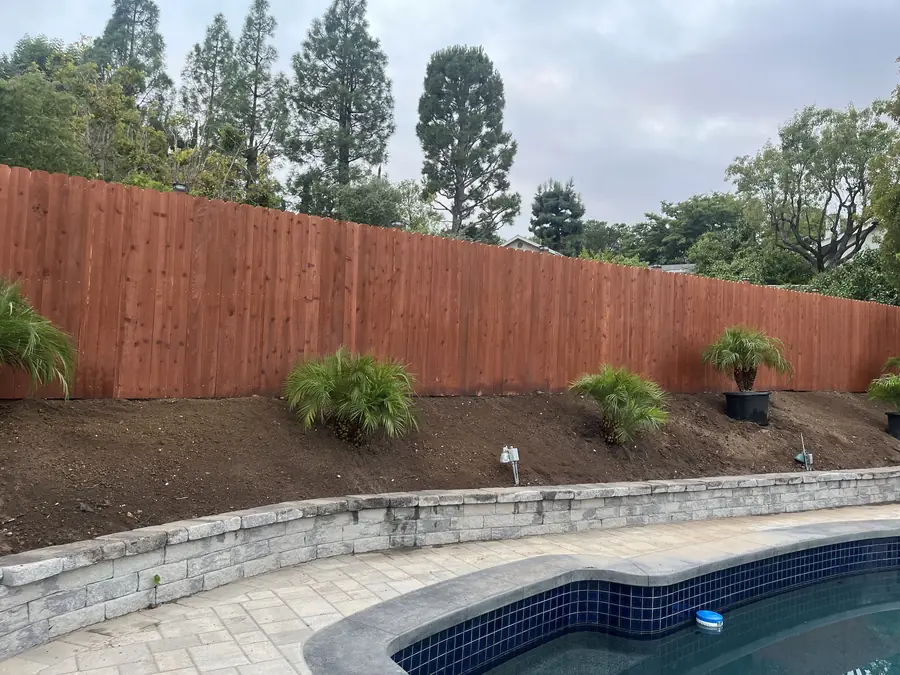
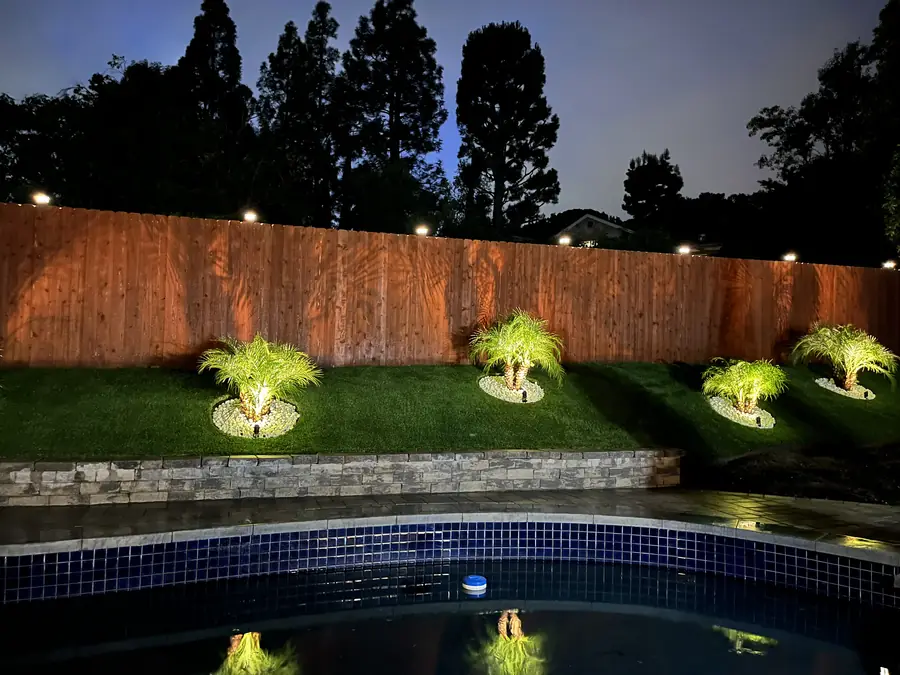
Yes, and pools are common in Burbank backyards. The pool shell, the equipment pad, and the buried plumbing all need protection during demolition and grading, so we identify and mark those runs before anything heavy moves. Deck replacement, coping updates, new surrounding paving, and reworked planting beds can all proceed with the pool in place. Water level and covering matter during dusty phases. We also check that the renovated grades keep runoff moving away from the pool rather than into it.
That is a priority, not an afterthought. Burbank neighborhoods are well established and the mature canopy is often the best thing in the yard. We define a protection zone around significant trees, keep equipment and stockpiles out of it, hand dig where trenching must come near roots, and avoid raising or lowering soil grade against a trunk. Root cutting is what kills trees during renovations, usually months later when everyone has forgotten the trench. Design decisions get adjusted around the roots rather than the reverse.
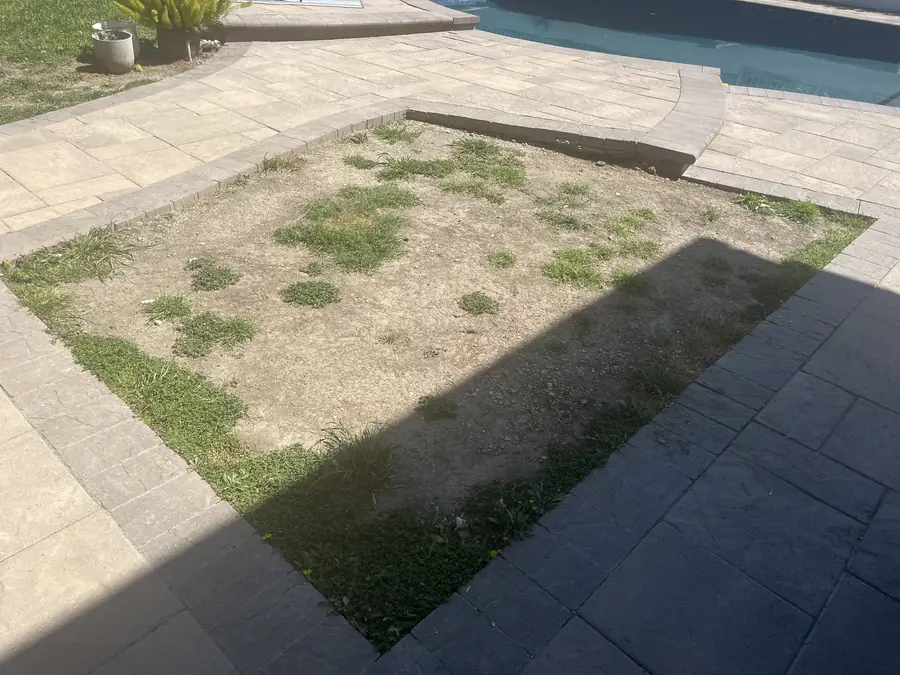
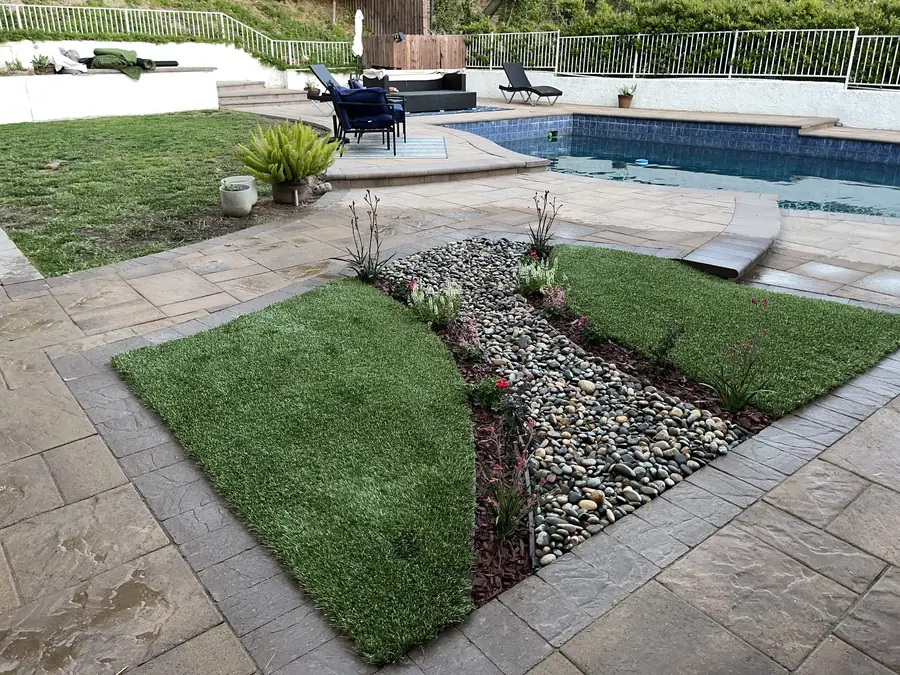
There are three honest paths. Replant turf if you genuinely use it for children, dogs, or games and are prepared to irrigate it. Convert the area to planted beds with drip irrigation, which cuts water demand substantially and gives the yard more visual interest. Or replace part of it with usable hardscape and keep a smaller lawn where it actually gets walked on. Most Burbank renovations we do end up with less turf than before, positioned where it earns its keep, rather than wall to wall grass by default.
Burbank runs its own municipal utility, Burbank Water and Power, so water conservation programs and requirements are administered locally rather than by a regional agency. Practically, that means the rules and any available programs relating to landscape water use are set at the city level. When a renovation changes the amount of irrigated area or replaces an irrigation system, we design the new zones for efficiency and can point you toward the city as the place to check on current conservation programs.
It depends on the scope. Planting, irrigation, and replacing paving on grade generally do not, while retaining walls above certain heights, new patio covers or structures, new gas lines, and new electrical circuits typically do. Burbank is a separate incorporated city, so those applications go through the City of Burbank rather than through Los Angeles. We tell you which parts of your scope are permitted work before we begin, and we build to whatever plan gets approved.
Existing systems are tested rather than assumed functional. We look for leaks, broken heads, mismatched nozzles on one zone, valves that no longer close, and controllers that are long past useful. Sometimes a system just needs new heads and a modern controller. Often, particularly when planting layouts change, the zone boundaries no longer match the planting and rebuilding is the cheaper long term answer. Either way the irrigation work happens after grading and before hardscape, so nothing gets buried under new surfaces.
Yes, and phasing is sensible when a full renovation is more than you want to take on at once. The important thing is that phasing follows a plan rather than happening randomly. We sequence the phases so early work does not have to be undone later, which usually means grading, drainage, and any utility runs for the entire yard get handled in the first phase even if the visible construction is limited to one area. Later phases then proceed without reopening finished ground.
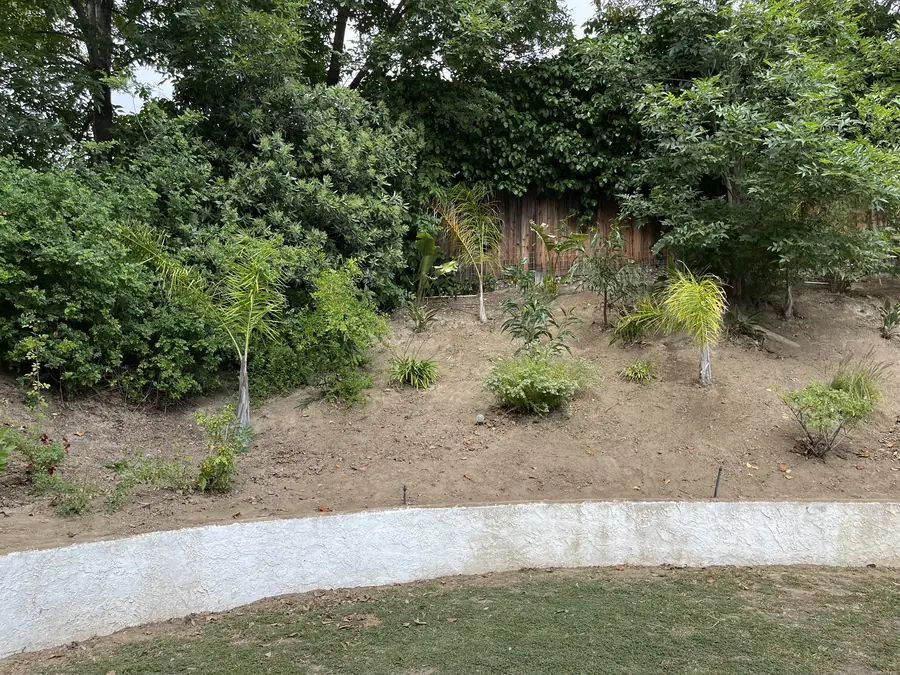
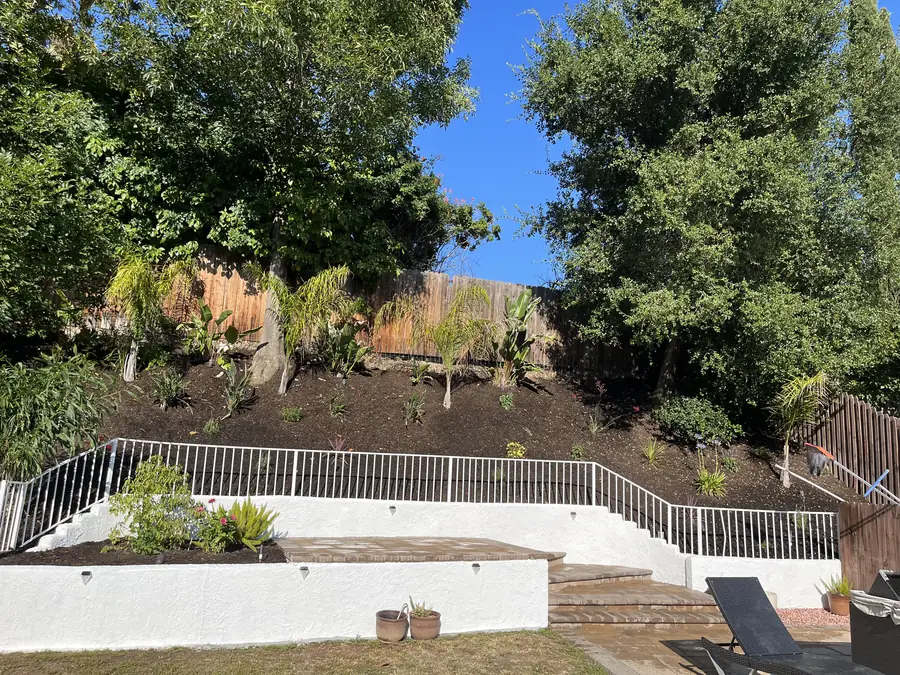
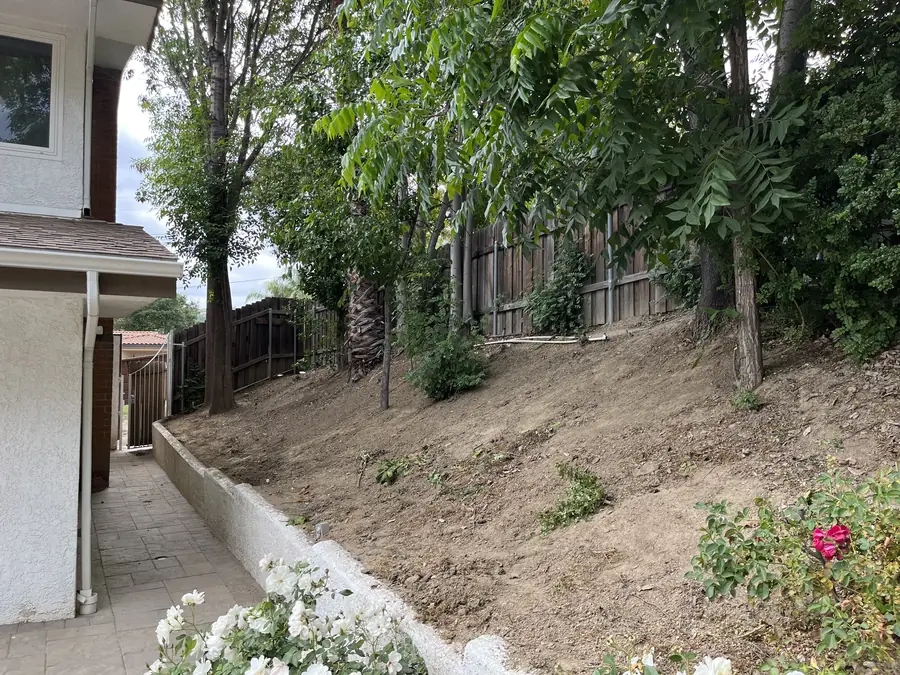
Burbank stretches from flat southern and central neighborhoods up into the Verdugo Mountains foothills, and renovating a sloped lot brings retaining, terracing, and water management to the front of the conversation. Old railroad tie walls and failing retaining are common findings, and replacing them properly with drainage behind is often the core of the project. Terracing creates the level ground that makes a hillside yard usable. We also look at how upslope water arrives on the property before designing anything downstream of it.
Demolition and haul away, then grading and drainage, then utilities and irrigation, then hardscape, then planting last. Every renovation we perform follows that order. Planting goes in at the end because plants that are installed early get trampled, buried in construction dust, and damaged by equipment. Utilities precede hardscape because trenching through finished paving is destructive and expensive. Grading precedes everything except demolition because you cannot set correct elevations for anything until the base grades are right.
It happens on older properties, and it is one reason we do not finalize every detail before the ground is open. Abandoned lines, buried concrete, undocumented footings, and unexpected soil conditions all turn up occasionally. When they do, we stop, show you what we found, explain the options and what each one changes about scope, and get your decision before proceeding. Surprises are managed with information, not by quietly working around them and mentioning it afterward.
The disruptive stretch is the front half, during demolition, grading, and utility work, when equipment is present and the ground is open. Once hardscape goes down the site starts reading as finished, and planting is the quietest phase of all. Duration depends on the size of the yard, the amount of demolition, whether structures or walls are involved, and permit review where it applies. We give you a phase by phase outline at the estimate stage so you can plan around the noisy weeks.
Frequently yes, and that is not just a budget argument. An established yard has assets that money cannot buy quickly, chiefly mature trees, settled grades, and a canopy that provides real shade. Clearing everything discards decades of growth. The better approach is usually to keep the strong bones, remove what has failed or aged out, correct the underlying grading and drainage problems, and rebuild the surfaces and planting around what remains. The result feels established from the day it is finished.
Reach Daniels Landscaping at (818) 443-9300 and we will schedule a walkthrough at your Burbank property. We look at the existing conditions with you, note what is worth keeping, identify grading and drainage issues, and discuss how you want the yard to work when it is finished. You then receive a free written estimate covering the scope in clear terms. We hold California contractor license 1138709, and every phase is completed by our own in-house crew.