

Calabasas
Calabasas landscaping questions, answered
The rules that make Calabasas different, and how we work with them.
Yes. Our work runs just east through Woodland Hills, so it is a short hop, and we work Calabasas regularly enough to know that the rules here are not the Los Angeles rules. That difference is the main reason to hire someone who has done it before.
Yes, it catches people out. Calabasas is its own incorporated city rather than part of Los Angeles, so permitting and landscape requirements come from the Calabasas municipal code. The water district is different, the tree ordinance is stronger, and much of the city is in a high fire hazard zone. A plan drawn for a Woodland Hills lot may not be approvable here.
Calabasas is served by Las Virgenes Municipal Water District, not LADWP. That means the conservation rules and the turf replacement rebate programs are their own, with their own terms and their own timing. We check what is currently offered for your address rather than quoting you the LADWP programs your neighbors across the county line are using.
Calabasas protects its oaks with a real ordinance, and it covers work in the protected zone around a trunk, not only removing the tree. Trenching, grading, paving, and even significant pruning inside that zone can require review and approval. We identify protected trees at the walkthrough and design around them, because doing it the other way round can stop a project cold.
Very little, and that is genuinely what is best for the tree. Native oaks want a dry summer, so lawn or irrigated planting under the canopy is the standard way to kill one slowly. Natural leaf mulch, a few shade tolerant natives that need no summer water, or a clean decomposed granite surface all keep the tree healthy and satisfy the intent of the ordinance.
Not a bare dirt lot. It means the zone closest to the structure stays low growing, higher moisture, and well spaced, with non combustible surfaces like gravel or hardscape where it makes sense. Further out, planting gets spaced so there is no continuous fuel path running from the open slope up to the house. Resinous and oily plants stay away from structures. Done properly it reads as designed landscaping.
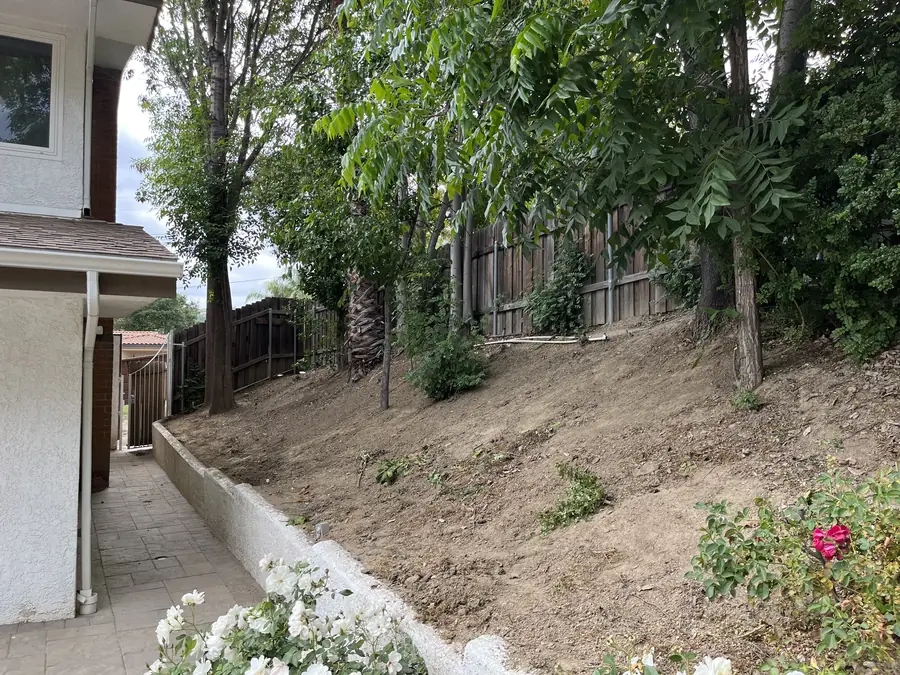
We handle clearing as part of a landscaping project, removing overgrowth, dead material, and the planting that should not be near a structure. What matters is what goes back. Clearing a slope and leaving it bare gives you erosion in winter and the same overgrowth again in two years, so we replace it with material that stays compliant and holds the hillside.
Yes. It is normal here. A lot of Calabasas is gated communities with architectural or landscape committees that want a plan, a plant list, and often material samples before anything starts. We put that package together and adjust it if the committee comes back with changes. It is worth starting that process early, because approval timing is usually the least predictable part of the schedule.
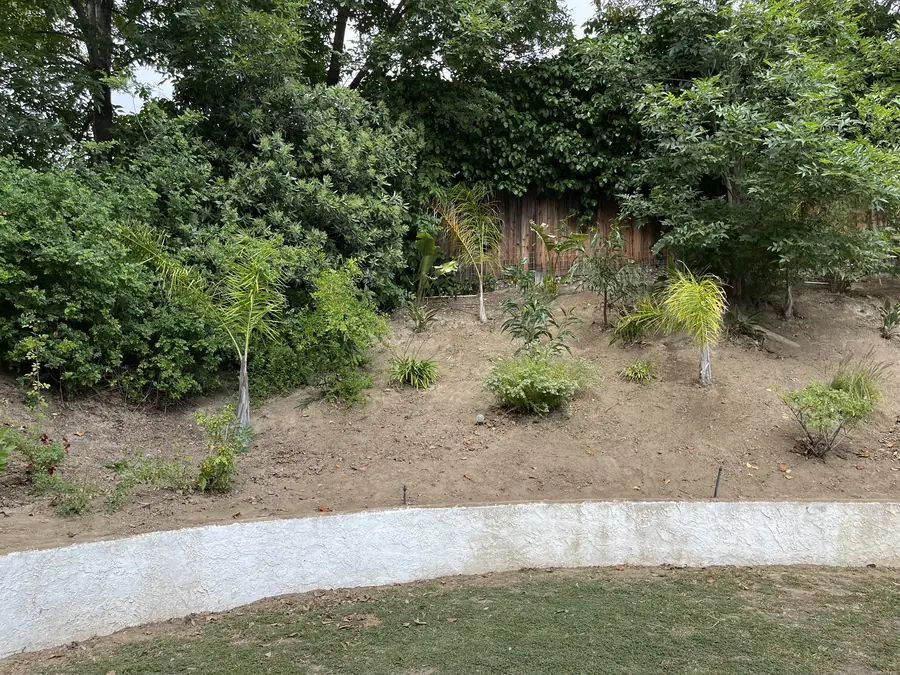
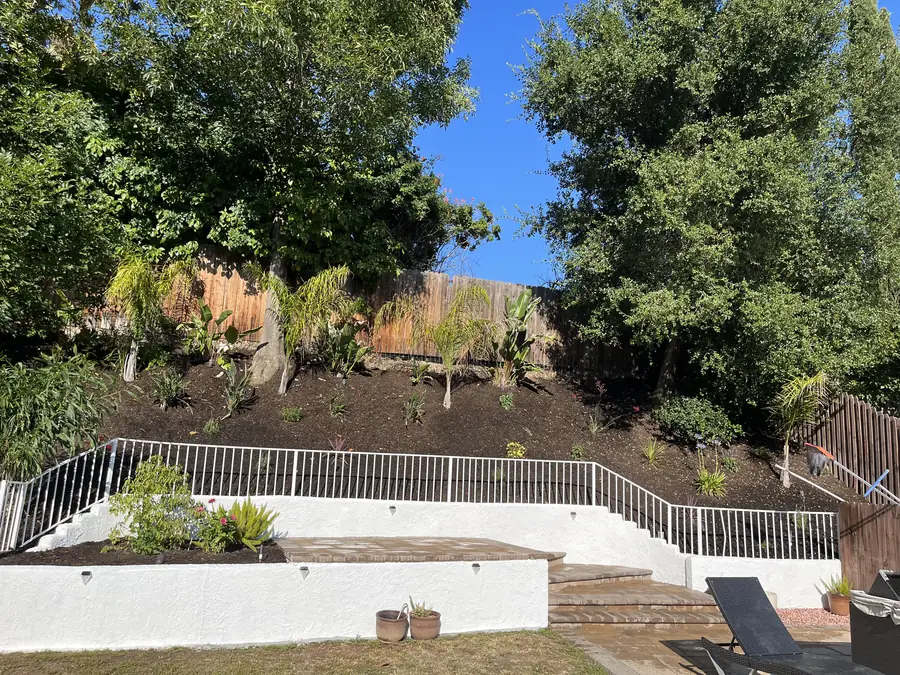
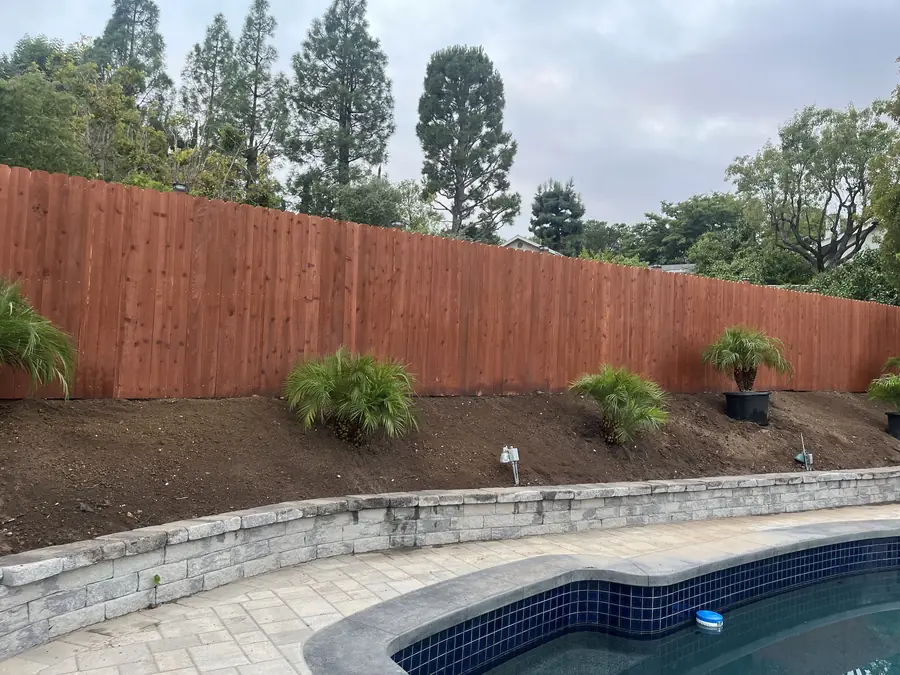
We can, and on Calabasas terrain it is common work. Deep rooting plants that grip and knit together, mulch or jute netting to hold the surface while roots establish, irrigation that soaks rather than runs off, and terracing or a retaining wall where the grade is too steep to plant out. Doing it before winter is far cheaper than doing it after.
Yes, here they very often do. Past a set height a wall needs a permit and an engineered design, and on a hillside lot with a slope above the wall that threshold matters even more. Calabasas reviews this properly. We establish the requirement before quoting rather than building first.
Slowly and deliberately, especially given the conservation rules. Spray on a grade runs off before it soaks. Drip and low precipitation emitters with cycle and soak scheduling puts water in where it lands. It uses less water and gets a better result, which matters when the district is watching usage.
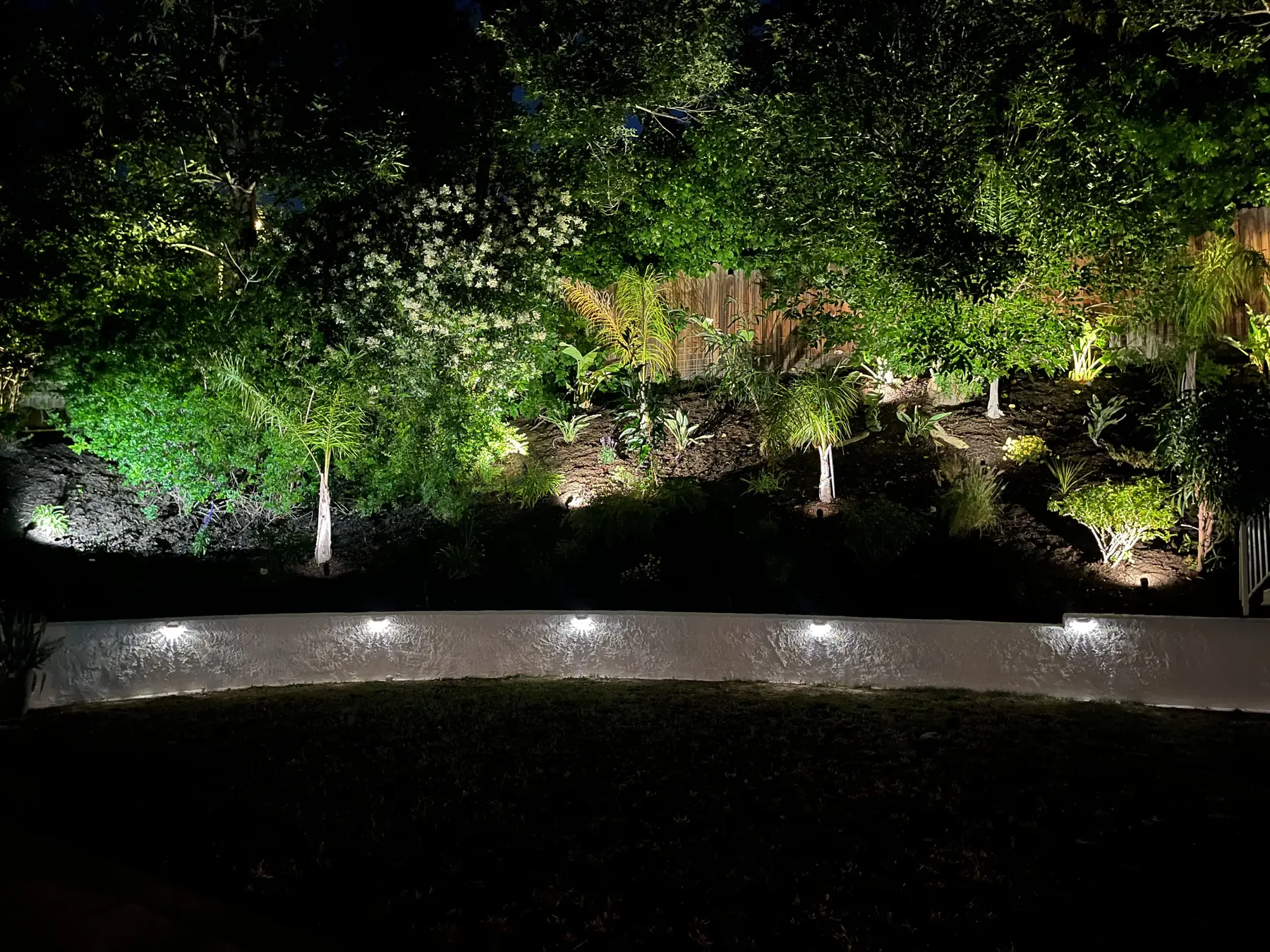
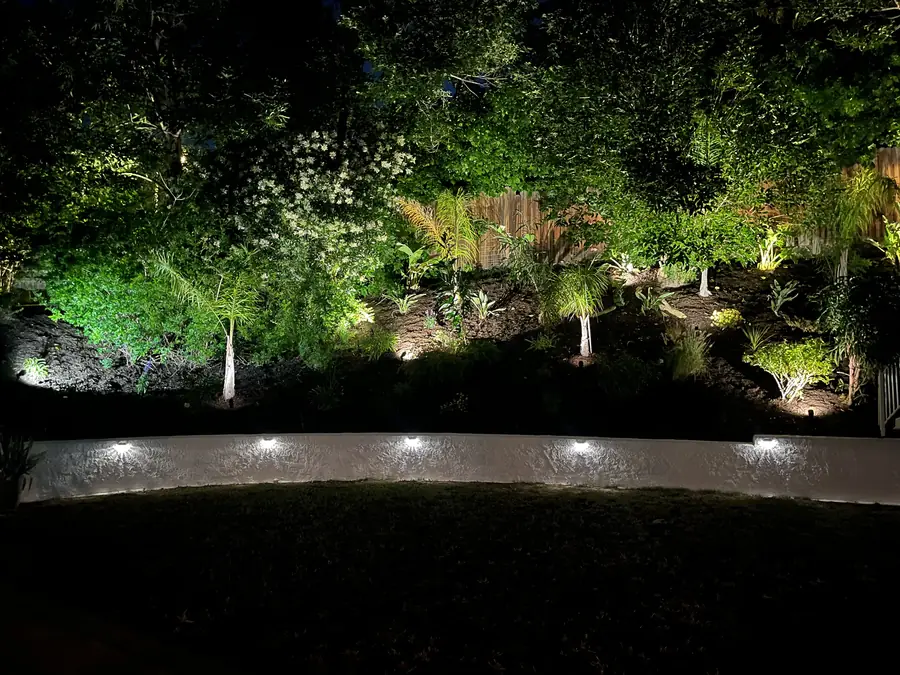
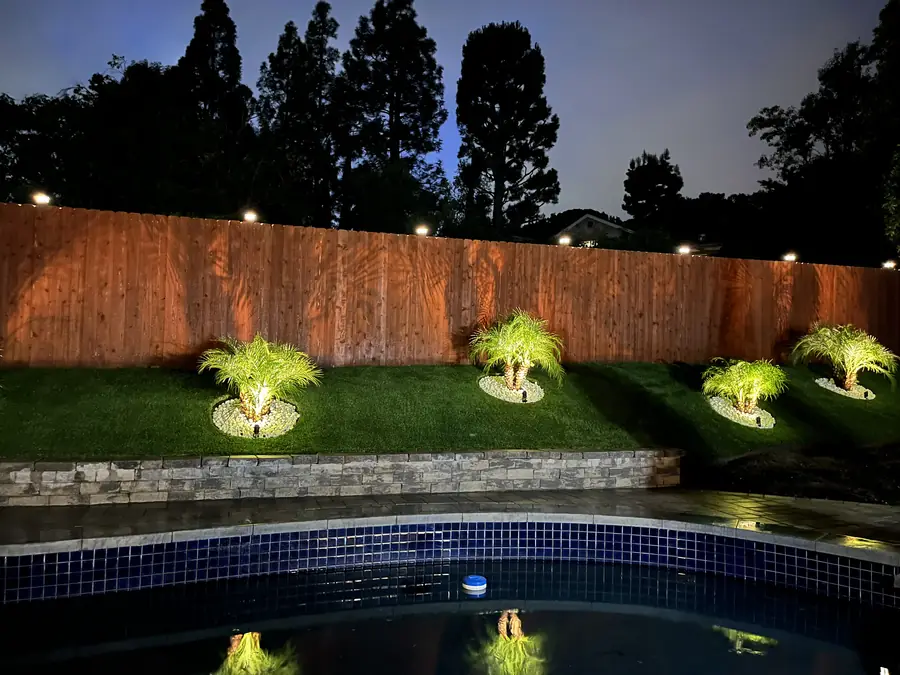
We do. Calabasas properties need it. The lots are large, the driveways are long, and there is very little street lighting once you are up in the hills, so the ground genuinely goes dark. Steps, drives, and grade changes first for safety, then uplighting on the oaks, which out here is the best fixture money you can spend.
Native and Mediterranean material chosen with fire in mind. Ceanothus, manzanita, toyon, coffeeberry, sages, grasses, and succulents further out, with the higher moisture, lower growing material kept nearest the house. We also keep the palette to something an HOA committee will recognize and approve.
The build is comparable to anywhere else, but approvals are not. Between city permits, oak review where it applies, and an HOA committee, the paperwork can add real time before a crew ever arrives. We start that early and keep you posted rather than leaving you wondering where things stand.
We walk the property, identify the oaks and the fire zone constraints, look at the grade and the drainage, and talk through what your HOA is likely to want. Then you get a plan and a real number. Request a free quote and we will set a time.