
FAQ
Renovations in Canoga Park, answered
The questions we hear most from Canoga Park homeowners.
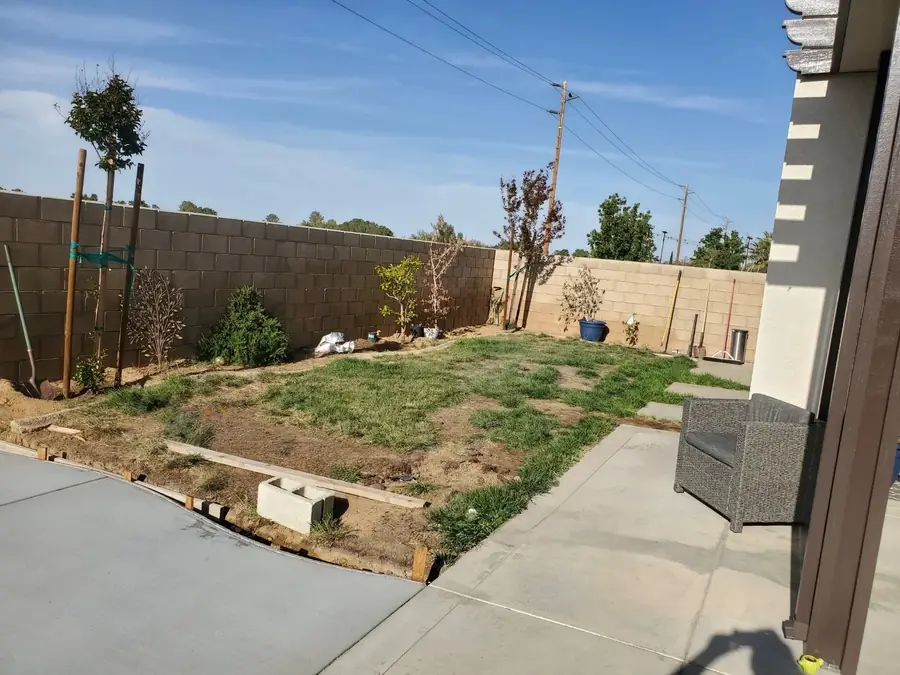
Renovation covers everything involved in taking an existing yard apart and rebuilding it. That usually means removing dead lawn, overgrown shrubs, and failed hardscape, correcting the grade so water leaves the property, updating or replacing the irrigation, pouring new concrete or setting new paving, and planting last. Some of it is repair work and some of it is redesign. The difference from a new install is that we are working around things that already exist, including trees, pools, fences, and utility lines that were put in decades ago.
We walk the yard with you before anything gets quoted. Healthy mature plants, sound concrete, a pool in good shape, and irrigation valves that still function are worth keeping. Things come out when they are dead, badly overgrown, planted in the wrong spot, or failing structurally. Sometimes a plant is perfectly fine but sits exactly where a new patio needs to go, and then it becomes a judgment call. You get our honest read on each item, and you make the final decisions before demolition day arrives.
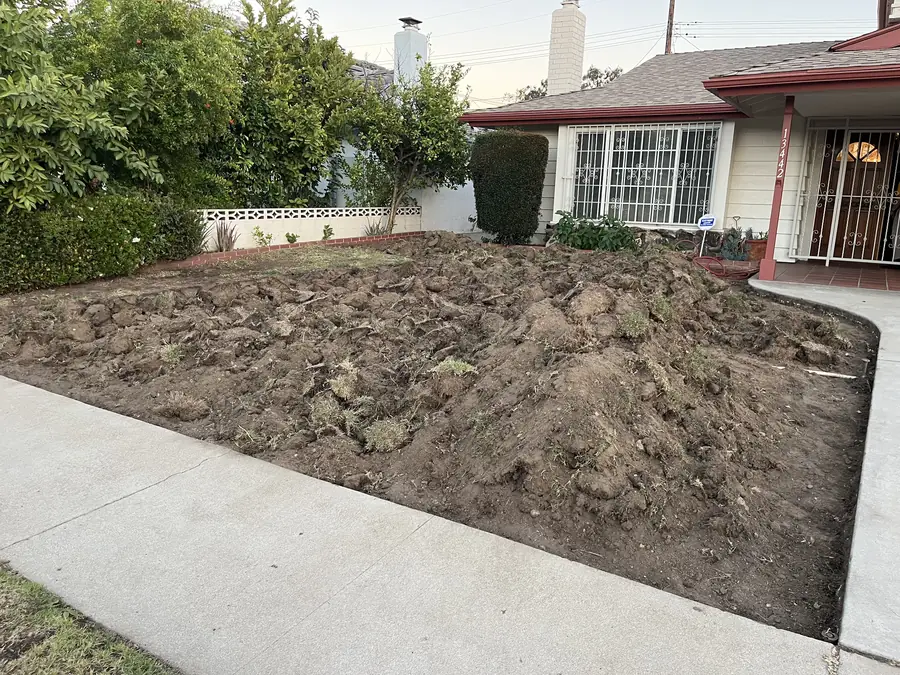
Demo is the first physical stage. Sod and dead turf get stripped, shrubs come out at the root so they do not resprout, and old concrete is broken up and loaded out. We haul the debris off the property rather than leaving piles for you to deal with. Old hardscape is heavier than most people expect, so access and staging get planned up front, especially on tight side yards. Once the ground is bare, the real shape of the lot is visible and any surprises show up early instead of late.
Grading is the part nobody sees and everybody feels. After demolition we look at where water sits following a storm and where it runs toward the house. Correcting that usually means reshaping the soil to move water away from the foundation, and often adding area drains or a drain line to a proper outlet. Doing this before any hardscape goes in is the whole point, because once new concrete is set the grade is locked in. A yard that drains right keeps new planting alive and keeps new paving from lifting.
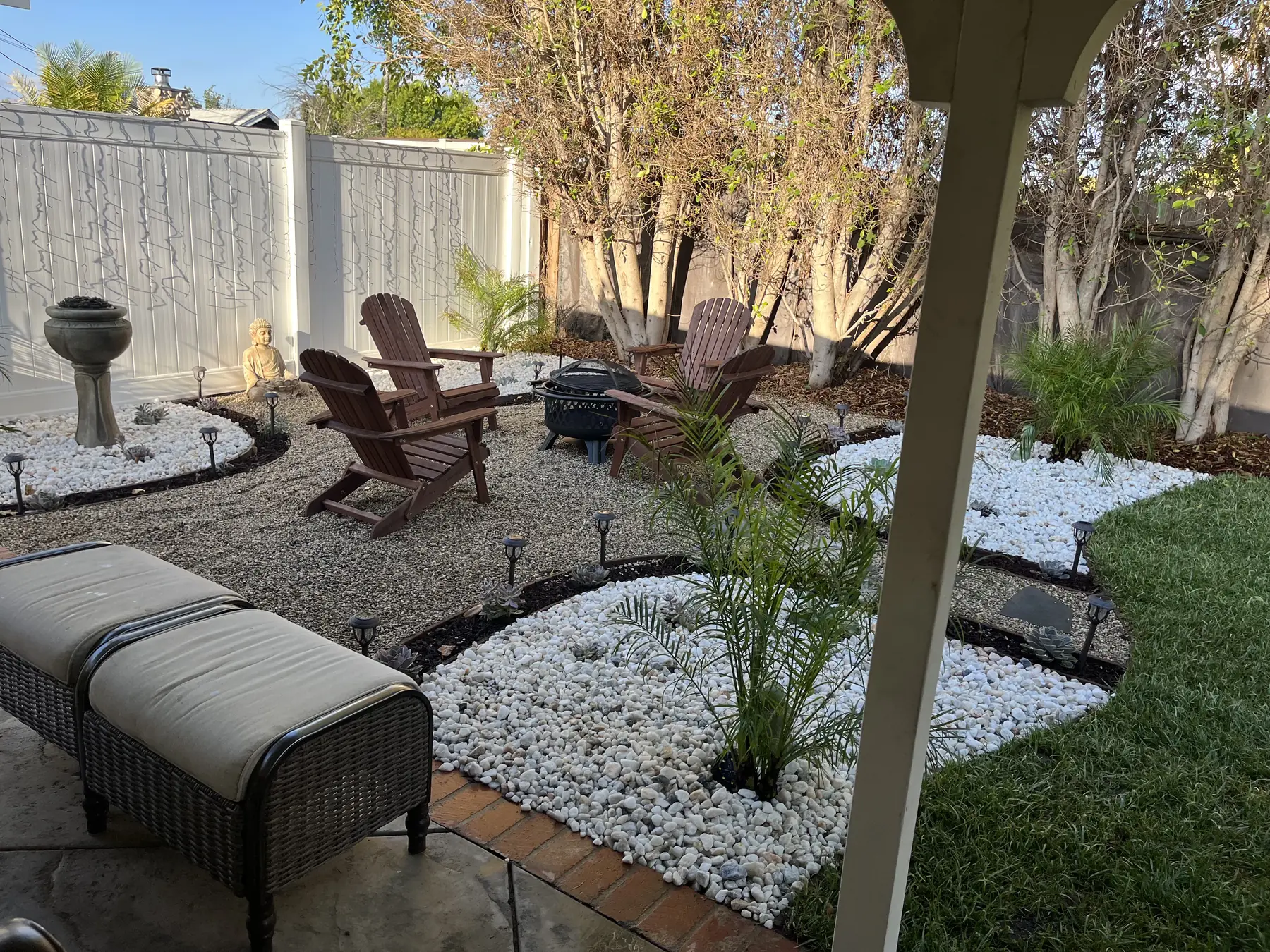
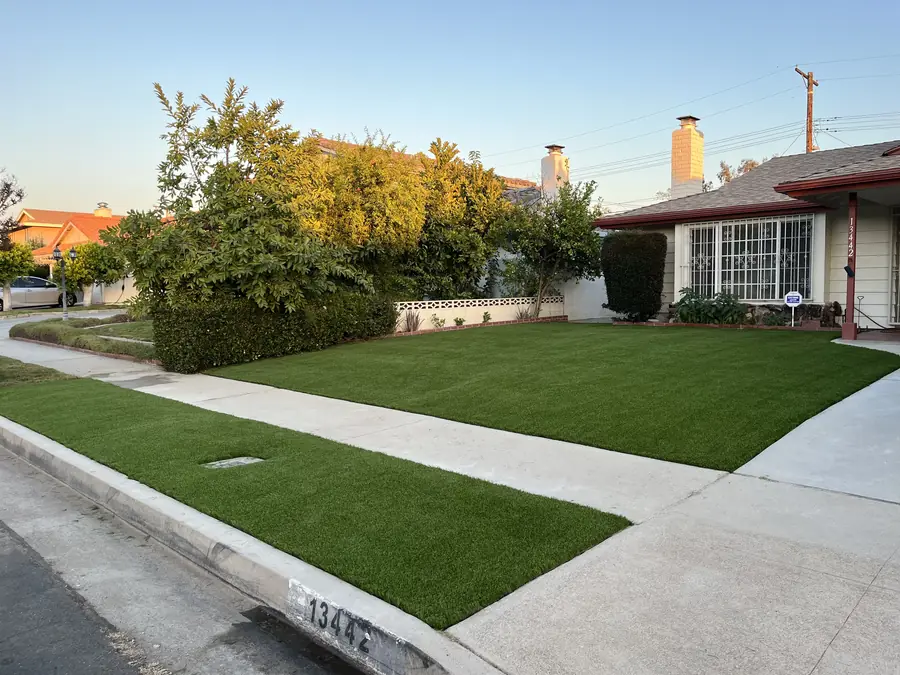
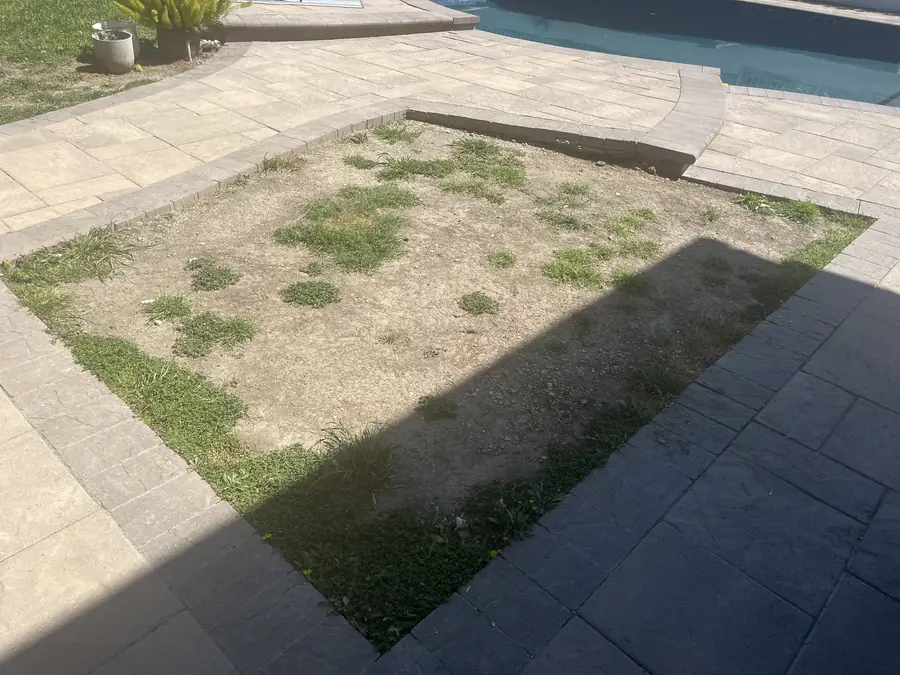
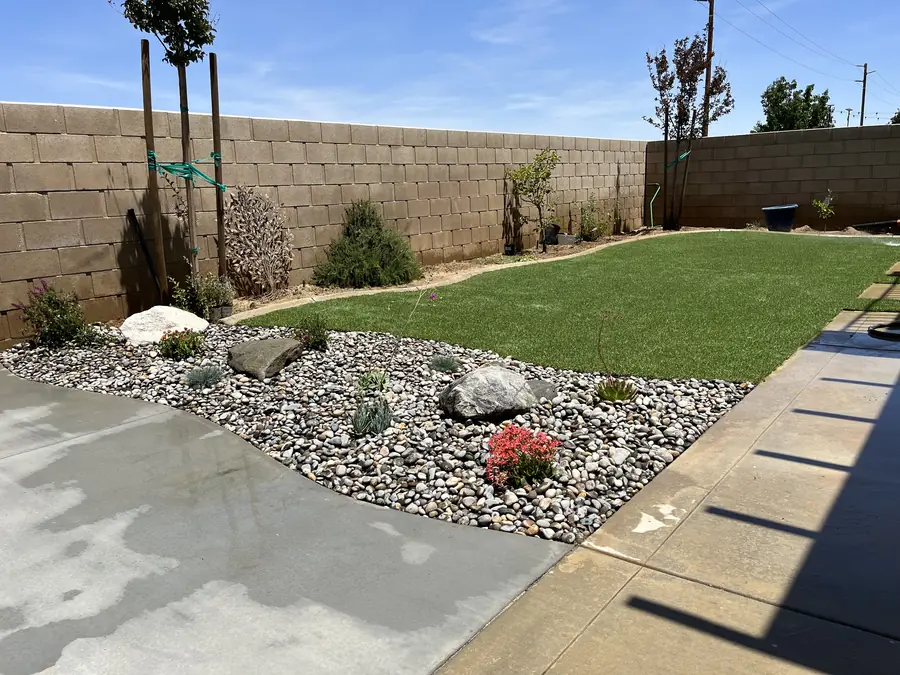
A lawn that has been brown for years is rarely worth reviving, because the soil underneath is usually compacted and the irrigation feeding it has already failed. We strip it out, address the soil, and give you real choices: artificial turf, drought tolerant planting beds, decomposed granite or paving for usable space, or a smaller live lawn in the one area where you genuinely want grass. Shrinking the lawn instead of eliminating it is a common middle ground, and it cuts the water bill without making the yard feel bare.
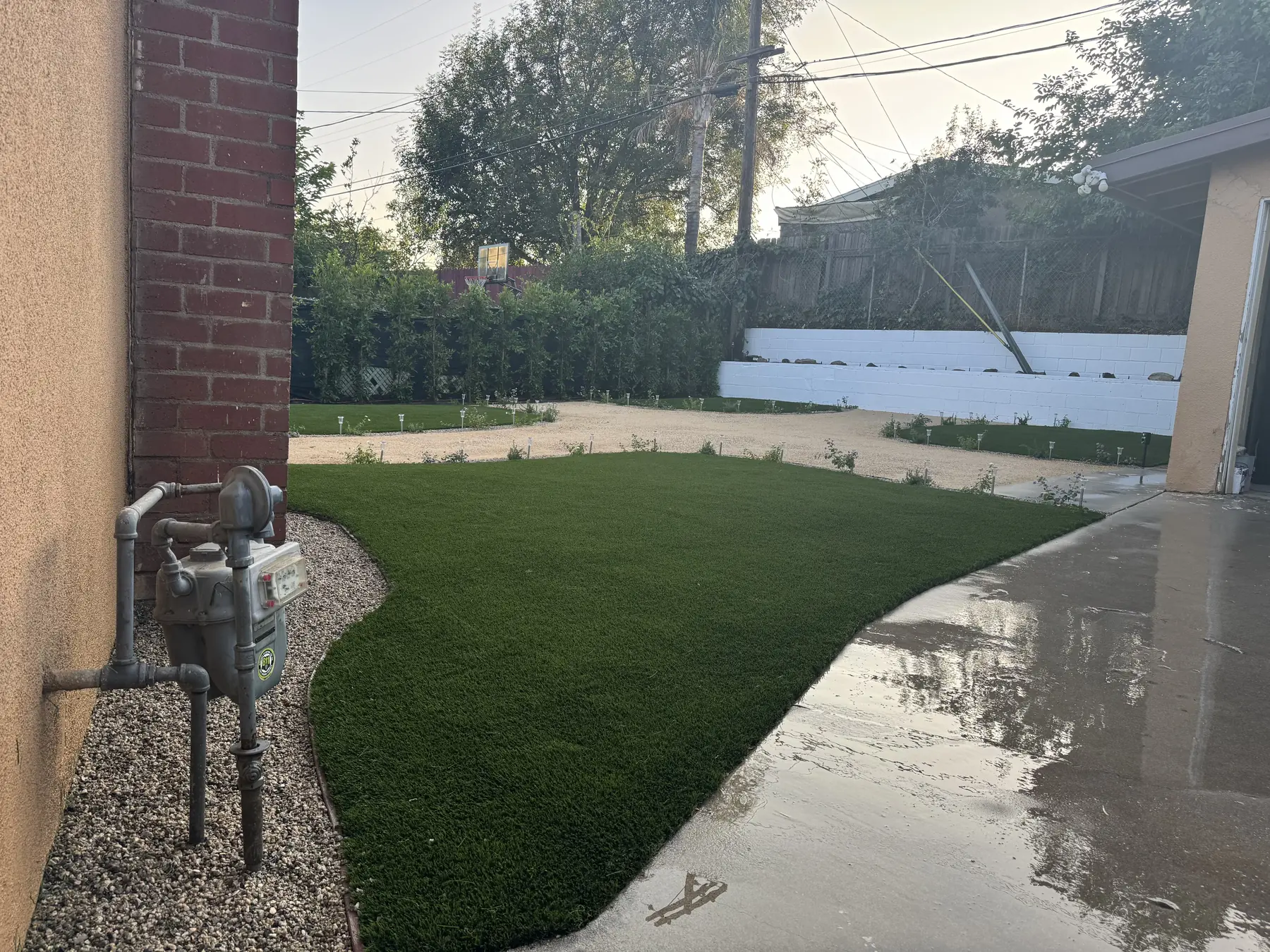
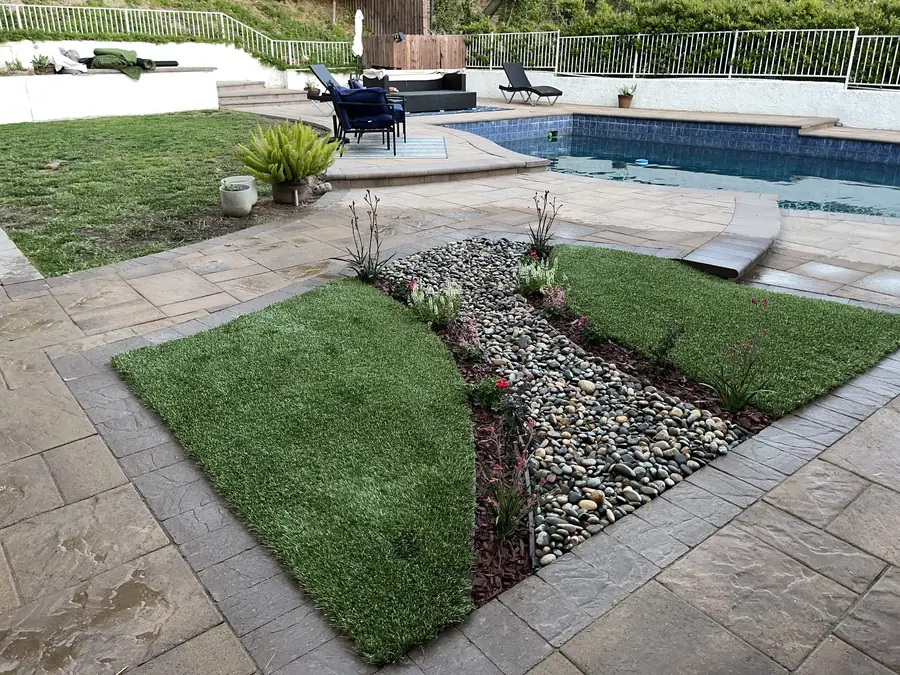
Artificial turf makes sense where you want a clean green surface with no watering and no mowing, such as a play area, a dog run, or a small front yard that has to look tidy year round. Drought tolerant planting makes sense where you want something living, seasonal, and softer looking, with mulch and drip irrigation instead of spray heads. Plenty of renovations use both, turf in the high traffic zone and planted beds around the edges. We will walk you through the maintenance and the look of each before you commit.
Cracked and lifted concrete can be broken out and replaced, and in many older yards that single change makes the biggest difference. We remove the old slab entirely rather than pouring over it, fix whatever caused the failure, usually roots or a poor subgrade, then form and pour new work. If you want a different look, the same footprint can come back as pavers, stamped concrete, or a clean broom finish. Tired patios often get expanded slightly at the same time, since the demolition and forming are already underway.
Old systems fail quietly. Heads get buried, lines crack underground, valves stick, and the controller keeps watering on a schedule built for a lawn that is no longer there. During a renovation we either repair and extend what is sound or replace the system outright, which often costs less than chasing leaks year after year. New beds get drip, turf areas get proper coverage, and the controller gets programmed for what is actually in the ground now. Irrigation goes in after grading and before hardscape, so nothing has to be cut open later.
Bed work is the least expensive part of a remodel and the part that shows fastest. We clear out spent plants and old weed cloth, amend the soil, reset the drip, and replant with material sized for the space it has to fill. Fresh mulch goes on top at a real depth, which holds moisture, keeps weeds down, and makes the whole yard read as finished. On projects being phased, bed refreshes are often the piece we do early, because the cost is manageable and the improvement is immediate.
Features that stay set the boundaries for everything else. Mature trees have root zones we do not trench through or bury under new concrete, so paving gets routed around them and grade changes near the trunk stay shallow. A pool stays in place while the deck around it changes, which means protecting the shell and the equipment through demolition. The same goes for a block wall or fence line worth keeping. Planning around these first is far faster than discovering the conflict once the forms are already set.
Sequence is not flexible. Demolition comes first so the ground is visible. Grading and drainage come next, because everything after that sits on top of the finished elevations. Utilities and irrigation follow while the ground is still open. Hardscape comes after that, since concrete and paving set the final edges. Planting and mulch go in last, so new material does not get trampled by equipment or buried under debris. Jumping ahead in that order is exactly what leads people to tear out work they just paid for.
Yes, and in Canoga Park most of them are. We put together the full plan first so the whole yard makes sense as one finished result, then break it into stages you can fund one at a time. A common split is back yard now and front yard later, or drainage and hardscape this year with planting the next. Grading and irrigation get planned for the entire property up front even when only part goes in, because retrofitting those into finished areas later is the expensive way to do it.
Duration depends on how much comes out and how much goes back in. A bed refresh with new mulch and a repaired irrigation zone is short work. Stripping a yard down, regrading, replacing a full patio or walkway, and replanting is a much longer run, and concrete needs cure time before anything sits on it. You get a realistic schedule in writing along with the estimate, and we tell you plainly which stages will make the yard unusable while they are happening.
Small lots renovate well, and the older Canoga Park tracts are mostly flat, which keeps grading straightforward. On a compact yard every square foot is visible, so the work tends to be about proportion: a right sized patio, beds that do not swallow the walkway, and surfaces that stay clean without constant attention. Flat ground also means drainage has to be built deliberately rather than borrowed from natural slope. We would rather do a small yard thoroughly than spread a thin version of a big plan across it.
That situation comes up constantly around here. Many of these homes still run their original systems, with heads that no longer pop up, pipe that has been patched in three places, and a controller nobody has opened in years. Patching further is usually throwing money at it. During a renovation the trenching is already open, so replacing the system is far less disruptive and less costly than it would be as a standalone job. You end up with valves you can locate, zones that match the planting, and a controller that makes sense.
Plants set a few feet from the siding decades ago are now leaning on it. Overgrown shrubs trap moisture against the wall, block windows, and push into walkways, and cutting them back hard rarely leaves you with an attractive plant. In most cases we remove them, correct the spacing, and replant with material chosen for the mature size that spot can actually hold. That one change opens up the front of a house more than almost anything else, and it lowers the maintenance load from then on.
Every part of your renovation is performed by one licensed contractor. One licensed contractor stays accountable for the work. The same people who tear out your old concrete are the people who grade the yard, run the irrigation, pour the new work, and set the planting. That means one schedule, one standard of workmanship, and one company answering for the result. You will not be handed off between outfits midway through, and you will not hear that a problem belongs to somebody else. It is our work from demolition through the final cleanup.
Call us at (818) 443-9300 and we will set a time to come look at the yard. We walk the property with you, talk through what can stay, what has to go, and how the project could be staged, then put together a free written estimate with the scope spelled out. Daniels Landscaping holds California license 1138709, and every stage is handled under one licensed contractor. Whether you are renovating the whole lot or fixing the worst corner of it first, the conversation starts the same way.