
FAQ
Renovations in Woodland Hills, answered
The questions we hear most from Woodland Hills homeowners.
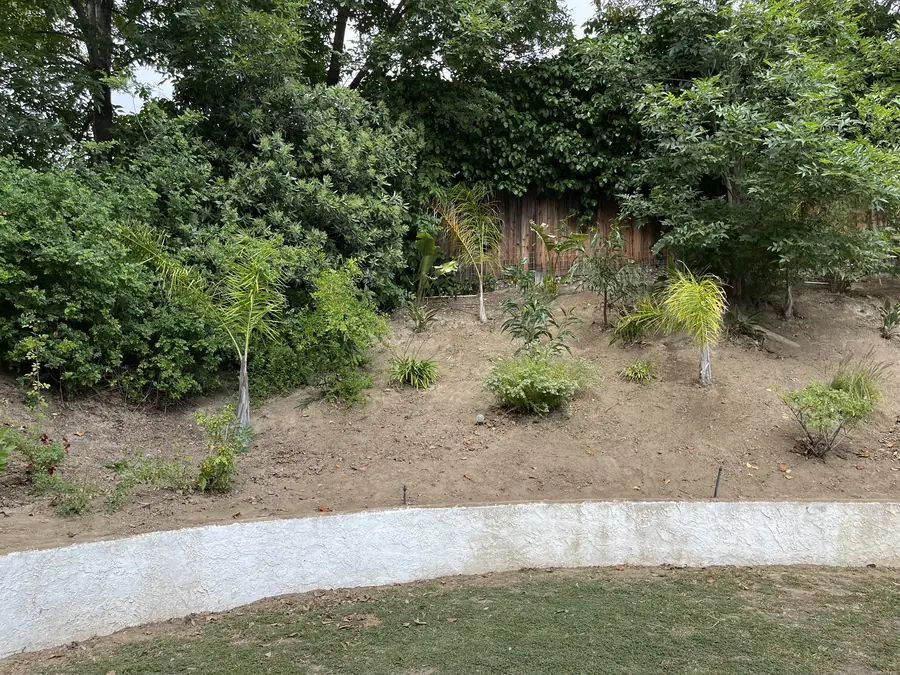
Renovation covers the work of reworking a landscape that already exists. In practice that means removing what has failed, correcting the problems underneath, and rebuilding on top of a sound base. A typical scope pulls out dead lawn and overgrown shrubs, breaks out cracked concrete, fixes grade and drainage, updates or replaces irrigation, then rebuilds hardscape and planting. Some renovations touch the whole property. Others focus on one problem area, such as a front yard that has gone brown or a back patio that is breaking apart. The scope follows the condition of what is already there.
We walk the yard with you and go feature by feature. Anything structurally sound and still serving a purpose usually stays, mature trees, a pool in good shape, a retaining wall that is holding, flatwork that is level and uncracked. Things come out when they are failing, when they block the new layout, or when keeping them would cost more than replacing them. Plants get judged on health and habit, not sentiment alone, though we will work around anything you care about. You will get a straight answer on each item, including the ones that are cheaper to save than to rebuild.
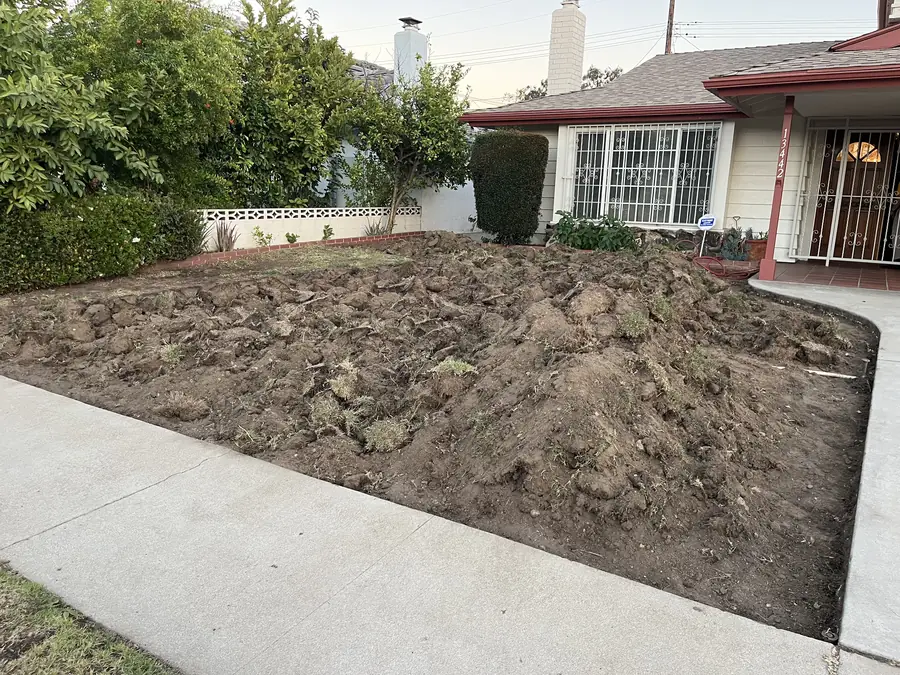
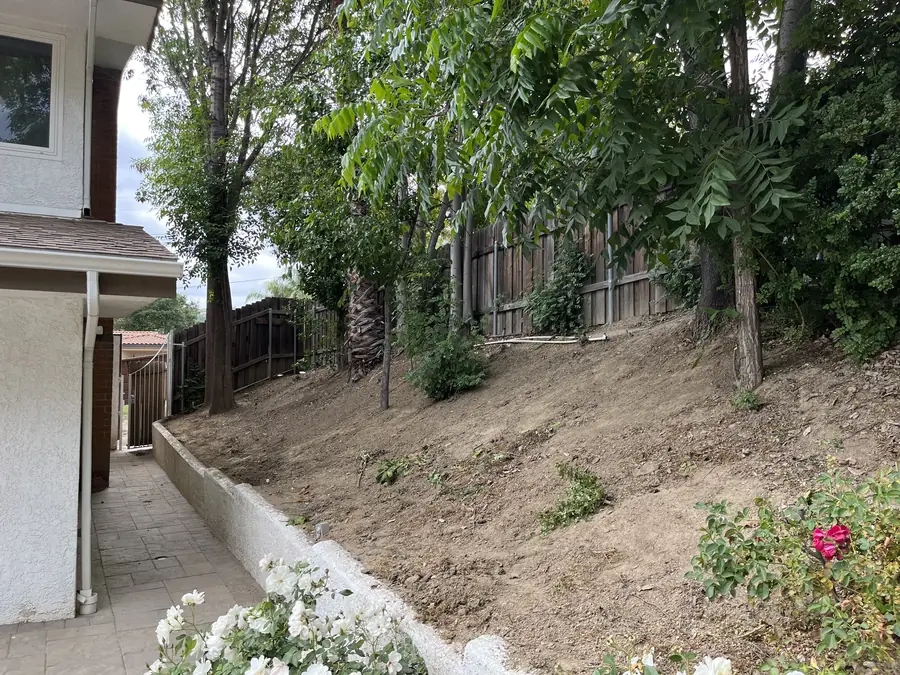
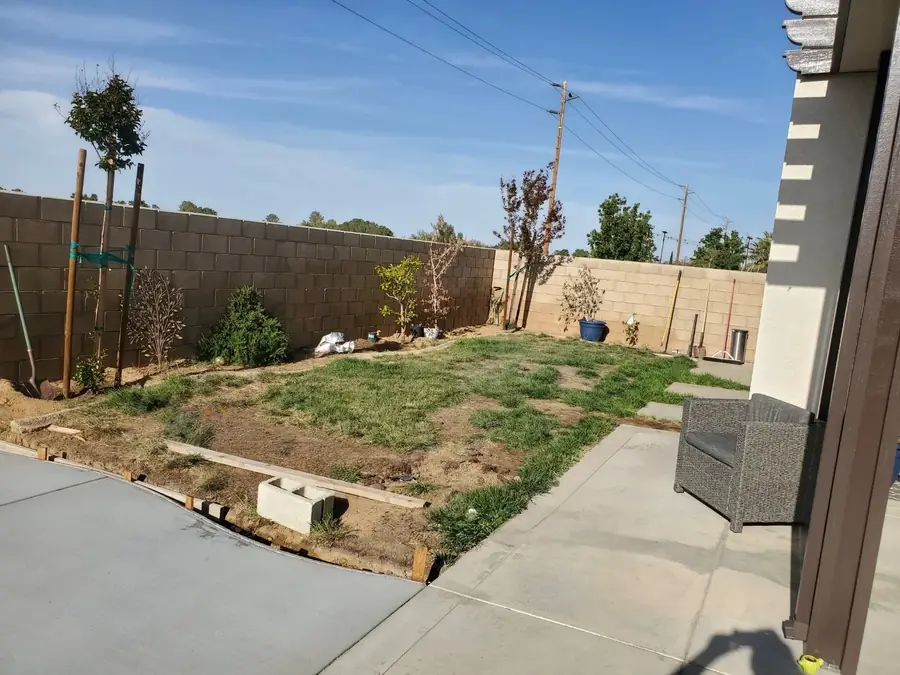
Demolition is the first physical stage and it sets the tone for everything after. Our crew cuts and removes dead sod, digs out shrub stumps and root balls, breaks out concrete, and strips old edging, weed fabric, and buried irrigation lines that are no longer usable. Debris goes into hauling loads and leaves the property rather than sitting in a pile for weeks. We protect what stays, trees, pool coping, driveways, and the neighbor side of a fence, before heavy work starts. Once the yard is stripped down to soil, the real condition of the grade shows itself.
Drainage is one of the most common reasons a Woodland Hills renovation gets called in the first place. Much of the area sits on heavy expansive clay, and it is especially thick south of Ventura Boulevard. Clay holds water instead of letting it move, so yards puddle, planting beds stay soggy, and soil swells and shrinks under flatwork until the concrete cracks. Correcting it means reshaping the grade so water runs away from the house, then adding the collection it needs, area drains, catch basins, and solid pipe carrying flow out to the street or another safe outlet.
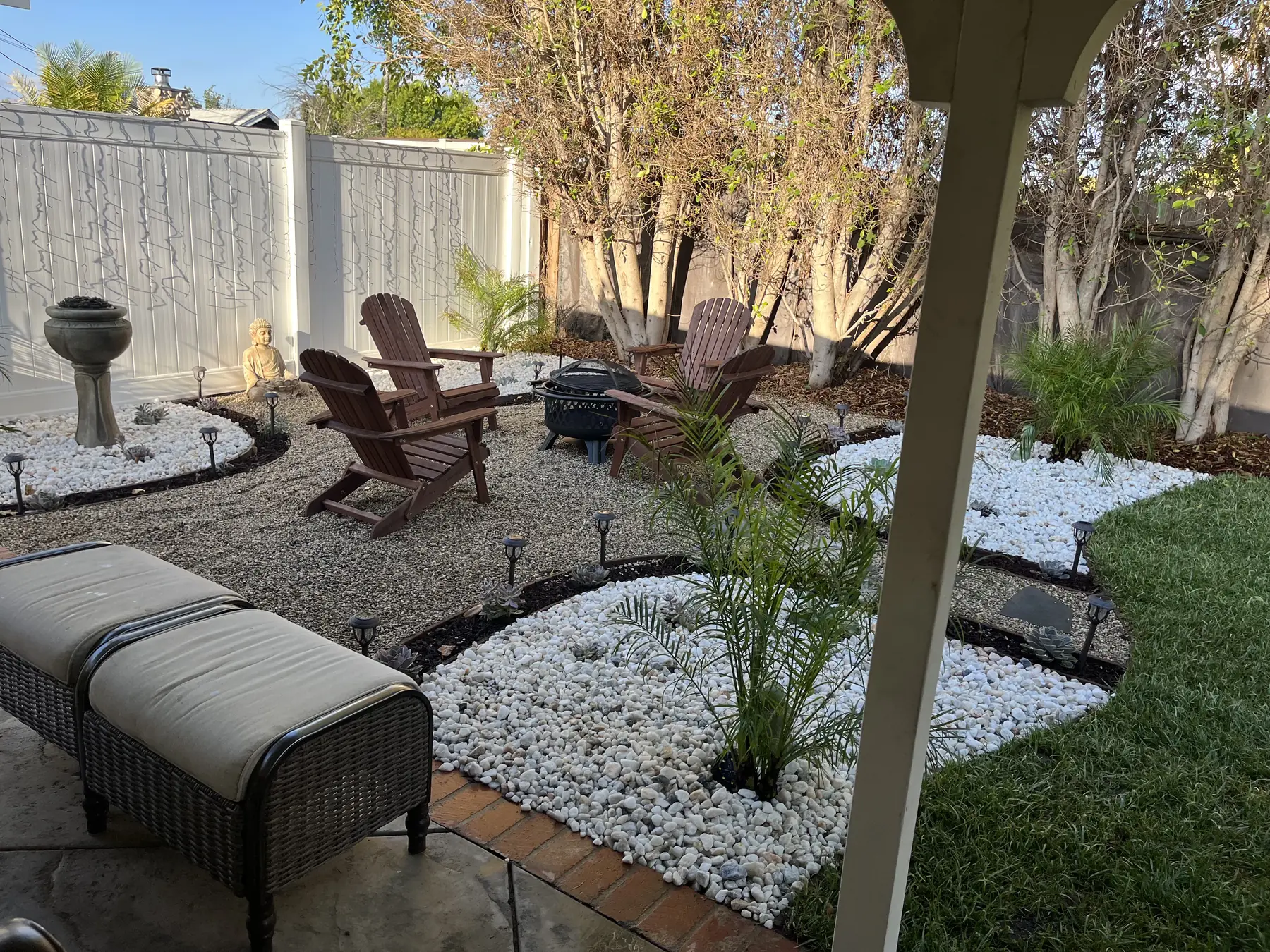
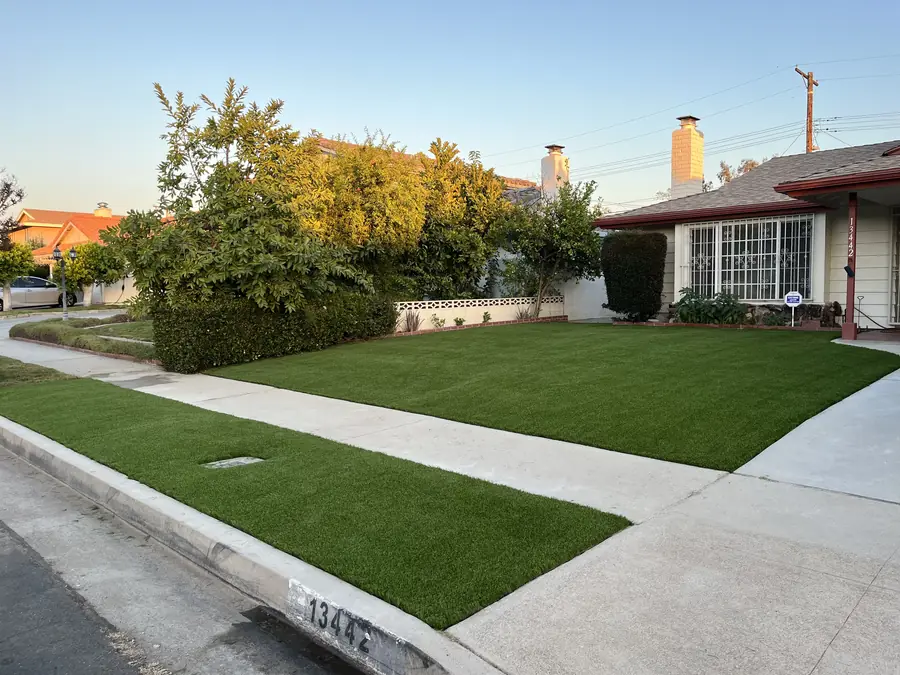
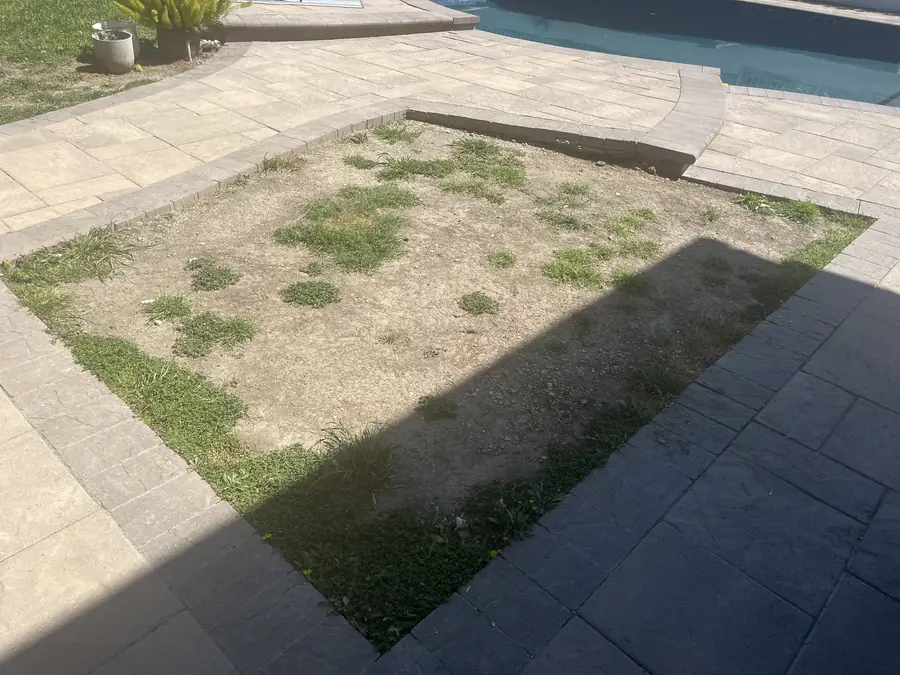
A lawn that has thinned out and browned in the Woodland Hills heat rarely comes back with more water. This is the hottest corner of the San Fernando Valley, and a big turf area here asks for irrigation all summer and still struggles in full afternoon sun. Most renovations we do replace some or all of that lawn. Some homeowners keep a smaller green area where the kids or the dog actually use it and convert the rest. Others take the lawn out entirely and go to planting and ground cover that can handle the heat.
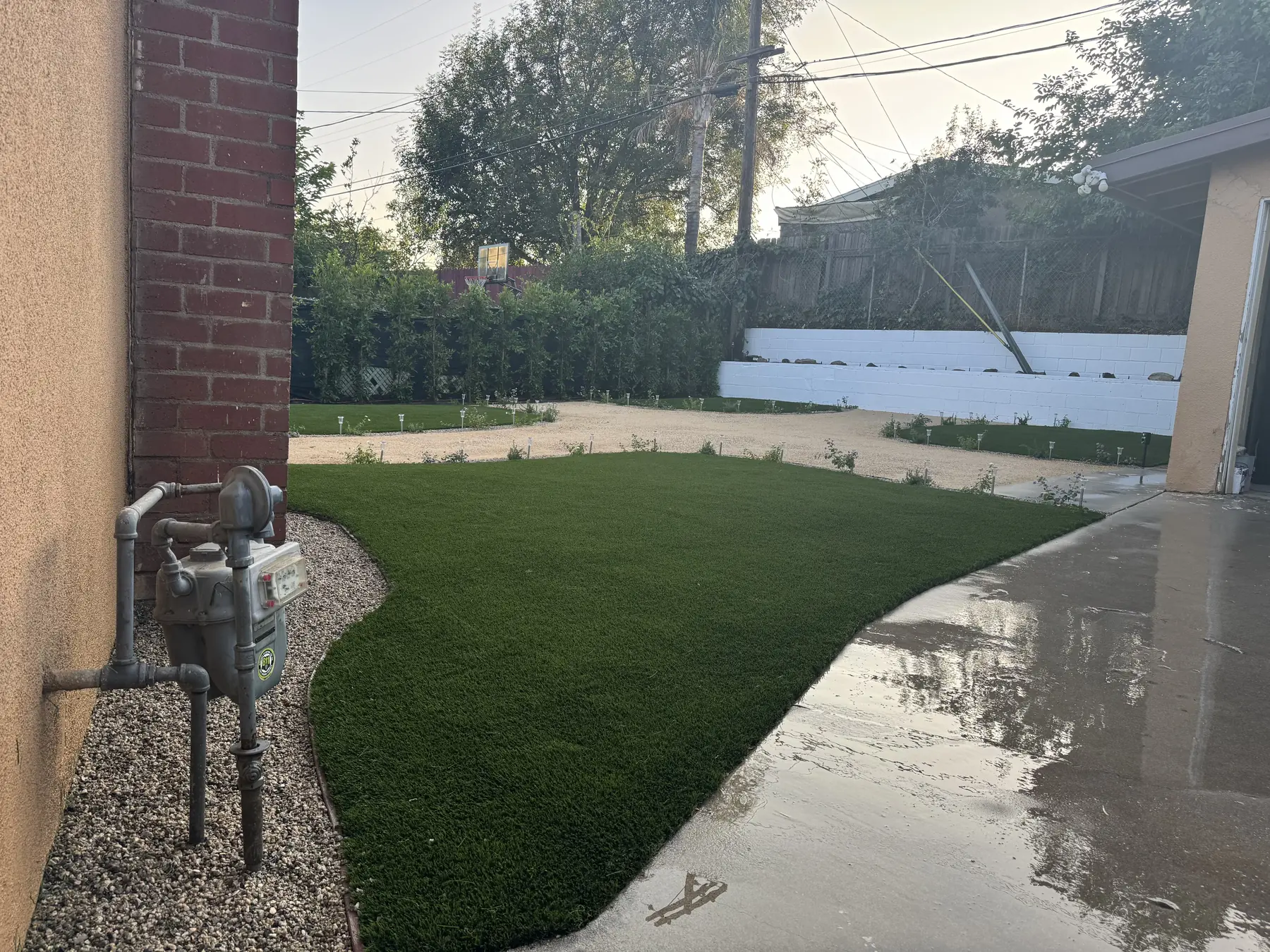
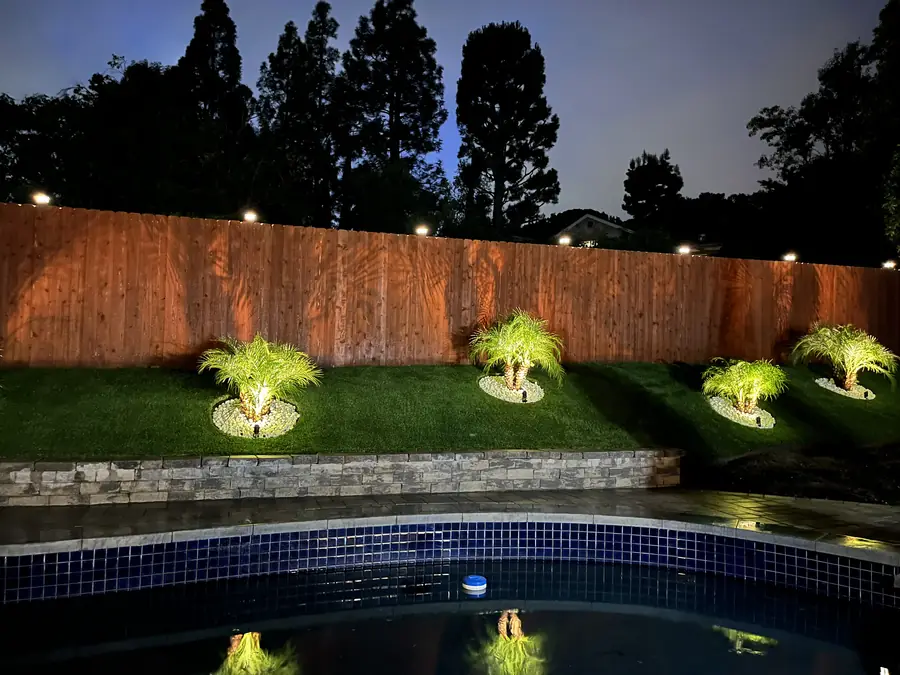
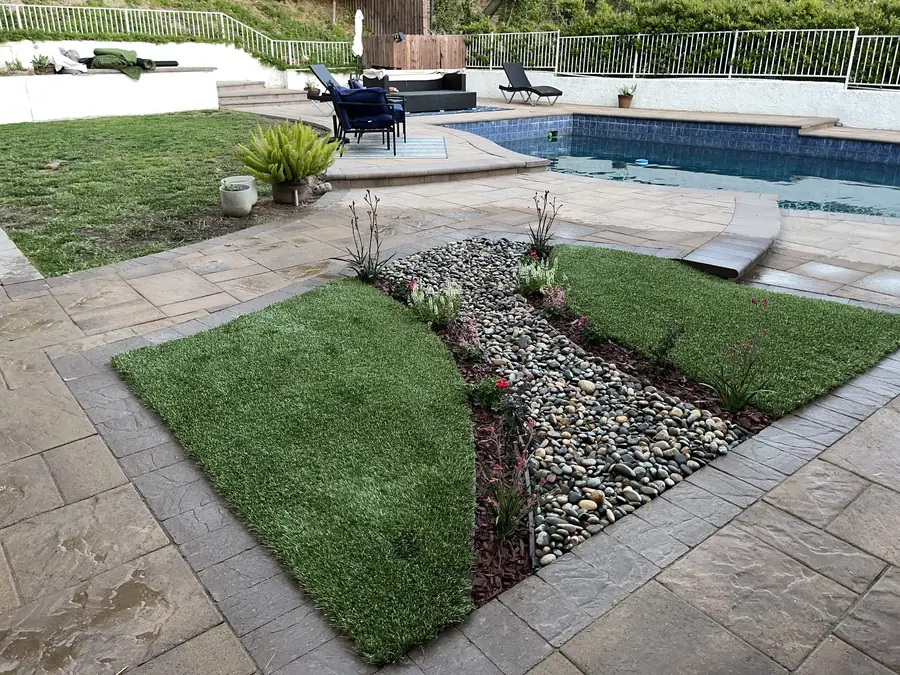
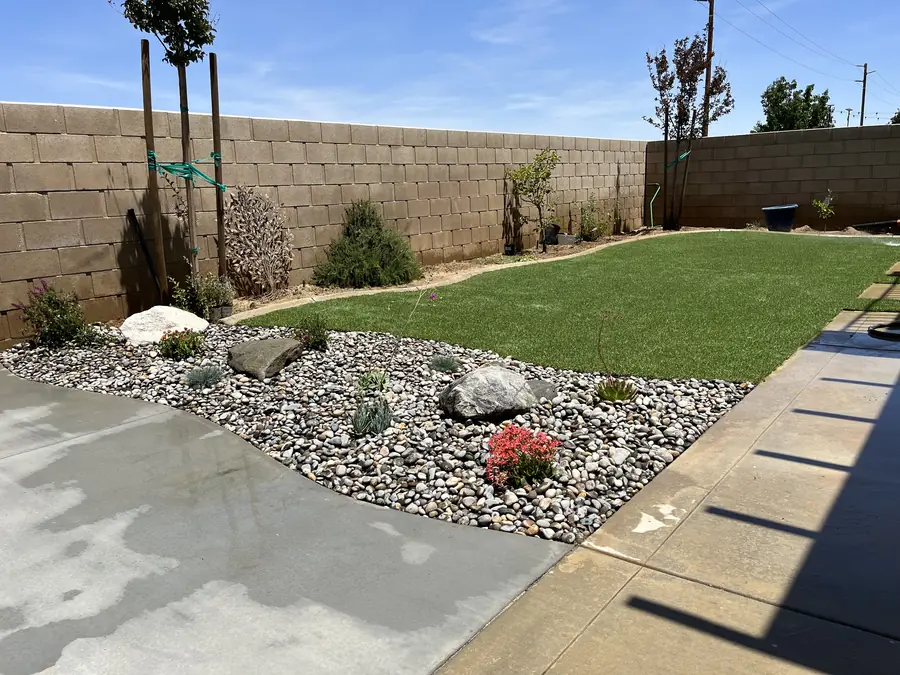
Both options work, and the right one depends on how the space gets used. Artificial turf gives you a green surface that stays green through August, holds up to dogs and traffic, and needs no watering. It is a good fit for play areas and small yards that need to look tidy year round. Drought tolerant planting gives you color, texture, and shade over time, and it costs less to install across a large area. Plenty of renovations use both, turf where feet land and planting everywhere else. We lay out either one on a base that drains.
Old flatwork in these neighborhoods tends to fail in a predictable way. The clay underneath swells when it is wet and shrinks when it dries, and over enough seasons the slab lifts, settles, and cracks through. Patching rarely holds. We break out the failed sections, correct the base and the grade under them, and pour or set new hardscape with proper thickness, control joints, and fall for water. A tired patio can also be reworked into something larger or reshaped to fit how you actually use the back yard, since the demolition is already happening.
Irrigation on an older yard is usually the wrong system for the new one. A renovation changes where water needs to go, so spray heads aimed at a lawn that is gone do nothing but waste water. Depending on condition, we repair and rezone what is usable or replace the system outright, converting beds to drip, resetting heads, and putting planting with different water needs on separate valves. Controllers get updated so the schedule matches the new landscape. This work happens after grading and before hardscape, since lines have to be in the ground first.
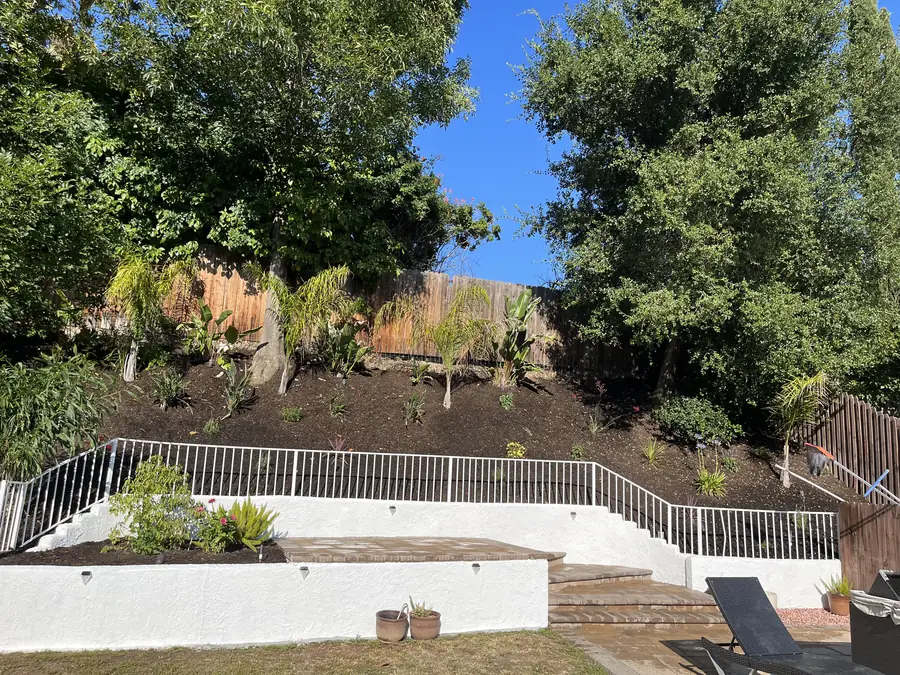
Not every renovation calls for a full tear out. Sometimes the structure of a yard is fine and the planting is simply tired. In that case we clear out the overgrown and half dead material, cut back what is worth keeping, amend the soil, and replant with a layout that has room to mature. Fresh mulch goes on at the end at a depth that holds moisture and keeps weeds down. Beds also get their edges redefined so the lines read clean. It is the least invasive kind of renovation and it changes how a yard looks quickly.
Mature trees are usually the most valuable thing in an older yard, and they stay. Protecting them means keeping equipment off the root zone, hand digging where lines cross near the trunk, and avoiding grade changes that bury or expose roots. We also plan planting under them for shade and root competition rather than fighting it. If a tree is dead, dying, or lifting a wall it cannot coexist with, we will tell you plainly, but the default is to design the renovation around what took decades to grow.
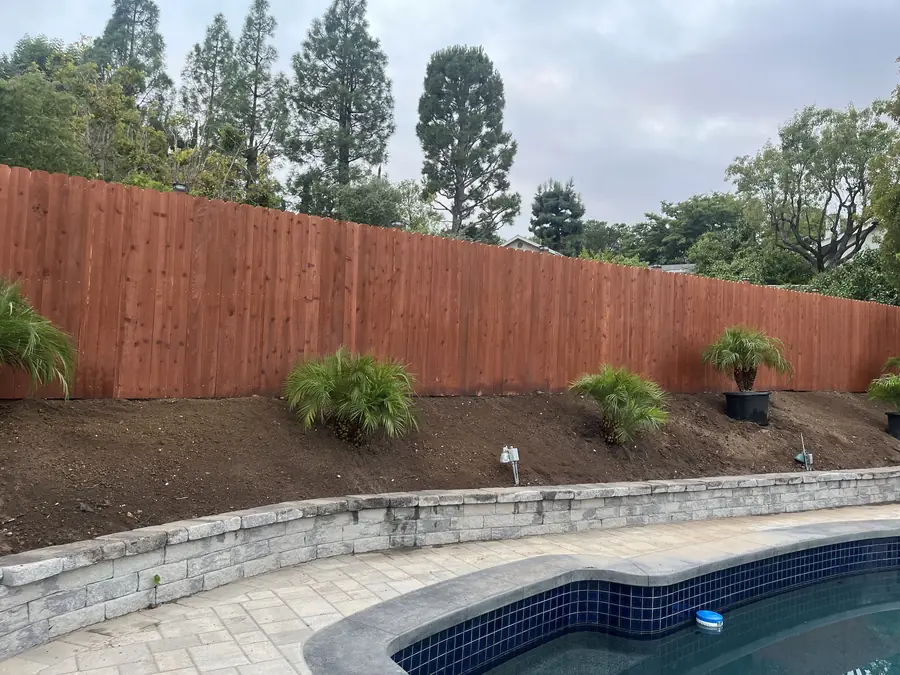
A pool that is in good shape stays, and the renovation works around it. The usual scope is everything surrounding the water, cracked or dated decking, coping edges, drainage that dumps toward the pool instead of away, and planting that drops constant debris into it. We protect the pool surface and equipment through demolition and keep access clear for service. Deck replacement gets sloped so runoff leaves the pool area properly. Plant selection around the water leans toward material that does not shed heavily, so you spend less time skimming.
Sequence matters more on a remodel than on a new build, because mistakes get buried. Demolition comes first and clears the site. Grading and drainage follow, since everything sits on that surface. Utilities and irrigation lines go in next, while the ground is still open. Hardscape comes after that, patios, walkways, walls, and any structures. Planting and mulch go in last, once the heavy equipment is finished and there is nothing left to damage them. Working out of order is the main reason renovations get torn up twice and paid for twice.
Phasing is common, especially in the flatter tracts north of the boulevard where homeowners often want practical updates spread out rather than one large project. The key is dividing the work along lines that do not create rework. Drainage and irrigation for the whole yard usually belong in the first phase even if the planting waits, because trenching through finished hardscape later is wasteful. From there you can take the front yard now and the back later, or hardscape first and planting the following season. We plan the full renovation up front and build it in the order that fits your budget.
Duration depends on how much has to come out and what goes back in. A bed refresh with new planting and mulch moves quickly. A full remodel with demolition, regrading, drainage, new flatwork, and a rebuilt irrigation system runs considerably longer, and concrete and masonry need curing time that cannot be rushed. Weather and inspection schedules can shift things as well. We give you a realistic sequence and duration before work starts, and you will know which stage the crew is on and what comes next as the job moves.
Woodland Hills is largely mid century tract housing, and those yards were laid out for a different era. The pattern repeats from street to street, a wide thirsty lawn out front, a straight run of dated concrete, and foundation shrubs that were small once and now cover the windows. None of it is wrong, it is simply built around assumptions about water and maintenance that no longer hold. Renovation here typically means opening up the front, reducing or removing the lawn, replacing the flatwork, and bringing the planting back down to a scale that fits the house.
Lot size shapes the scope quite a bit. South of Ventura Boulevard the parcels tend to be larger, and renovations there more often go complete and higher end, full demolition, new hardscape, custom features, and a rebuilt planting plan across the property. North of the boulevard the tracts are flatter and more uniform, and the work is usually more targeted, correcting drainage, replacing a lawn, redoing a patio, and updating irrigation in stages. Both approaches are legitimate. We scope the renovation to the property and to what you want out of it, not to a template.
Every phase of your renovation is built by the Daniels Landscaping crew. One licensed contractor stays accountable for the work. The same people who tear out the old yard do the grading, set the irrigation, build the hardscape, and put the plants in the ground. That matters on a remodel more than most projects, because the crew that opened the ground knows exactly what is under it and where every line runs. It also means one point of accountability. If something needs correcting, there is no question about whose work it was.
Getting started is straightforward. Call (818) 443-9300 and we will set a time to walk the property with you. On that visit we look at what is failing, what is worth keeping, how water is moving, and what you want the finished yard to do. You will receive a free written estimate that lays out the scope stage by stage, so you can see the whole renovation or take it in phases. Daniels Landscaping holds California license 1138709. Ask whatever you want about the process before you commit to anything.