
FAQ
Renovations in Reseda, answered
The questions we hear most from Reseda homeowners.
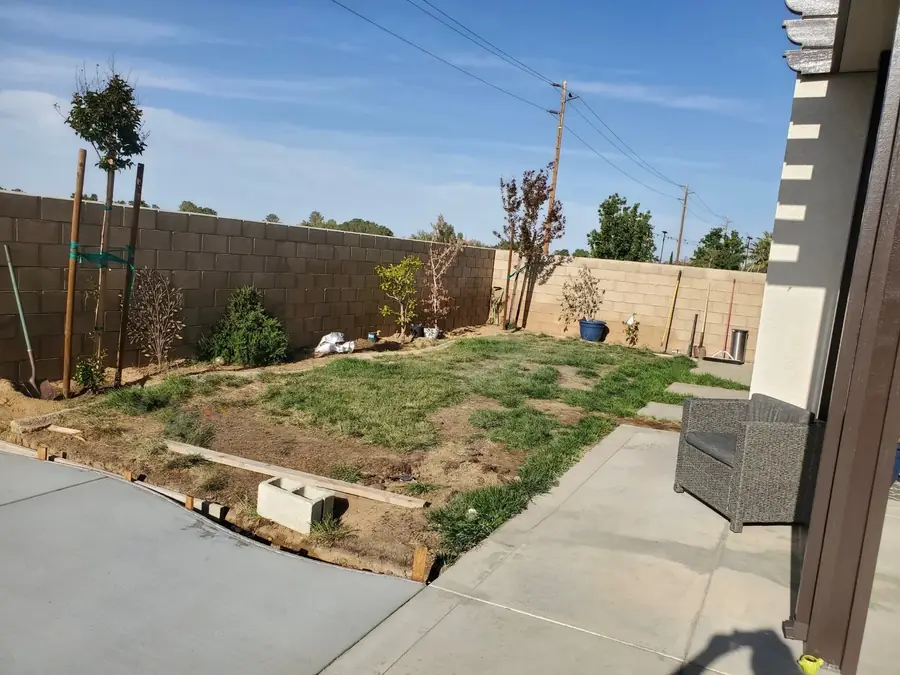
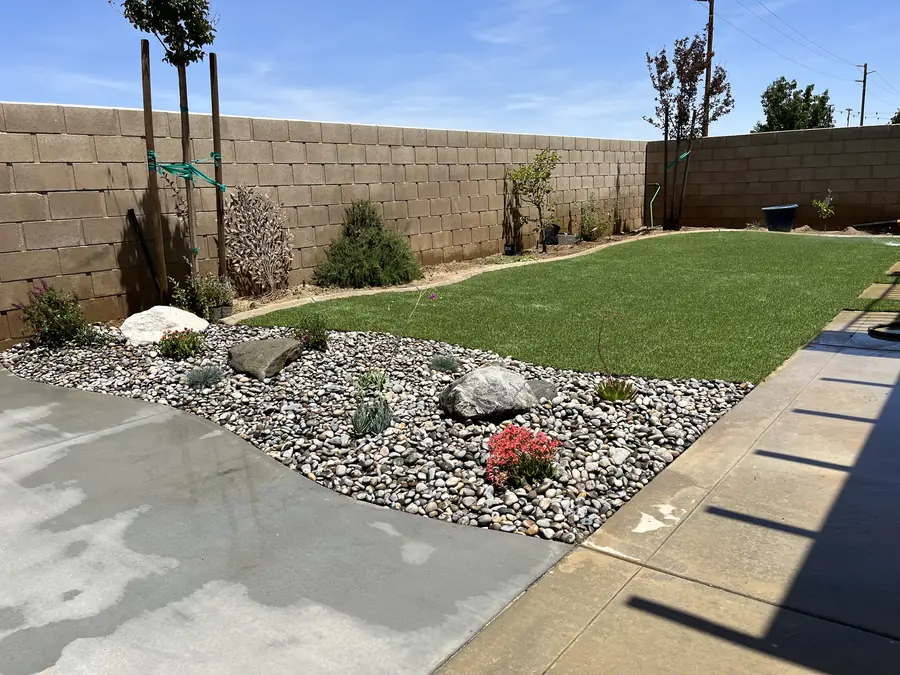
Renovation means reworking a landscape that is already in place. On a typical job that covers removing whatever has failed, hauling the debris off site, correcting the grade so water drains where it should, dealing with old irrigation, replacing or repairing hard surfaces, and installing new planting. It is different from a new install on bare dirt, because we are working around things that stay, and different from a design consultation, because the outcome is a finished yard rather than a drawing.
We go feature by feature. Healthy trees stay unless they are actively damaging something. Structures and slabs get evaluated on the condition of what is underneath them, not just how they look on top. Plants get judged on whether they can recover, since a shrub that has been hacked back for fifteen years generally cannot. Irrigation gets tested with the water on. If keeping something forces awkward compromises everywhere else in the layout, we will say so and let you decide.
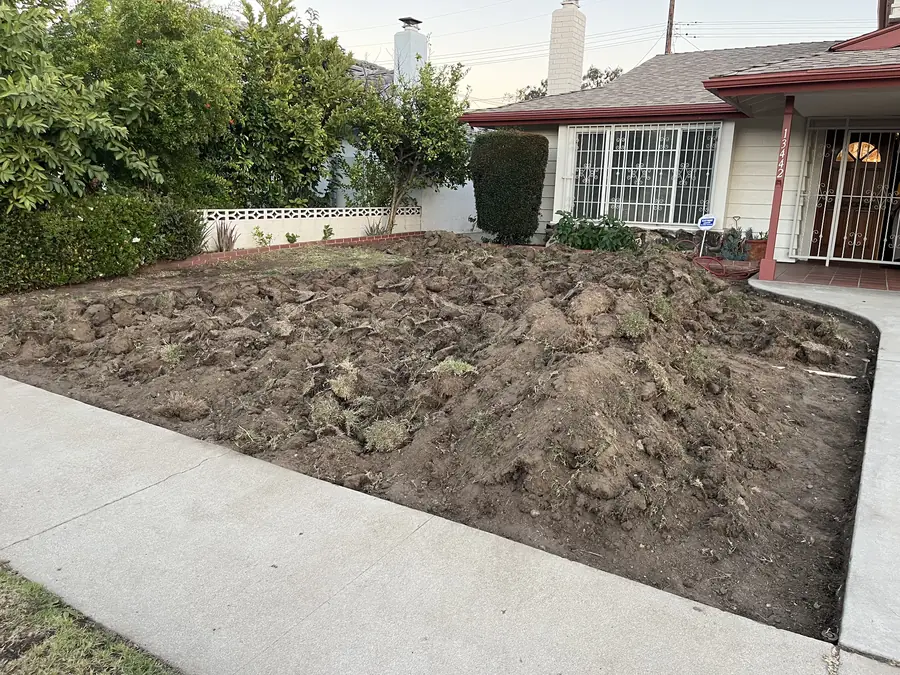
We do, and it leaves with us. Demolition covers dead sod, broken and sunken concrete, old base material, failed edging, stumps, and any overgrown planting coming out. Our crew breaks it down, loads it, and disposes of it at the appropriate facility, keeping concrete and green waste separated where that applies. Nothing gets stacked at the curb for you to arrange later. Clearing the site fully also lets us see the real condition of the ground before we commit to the grading plan.
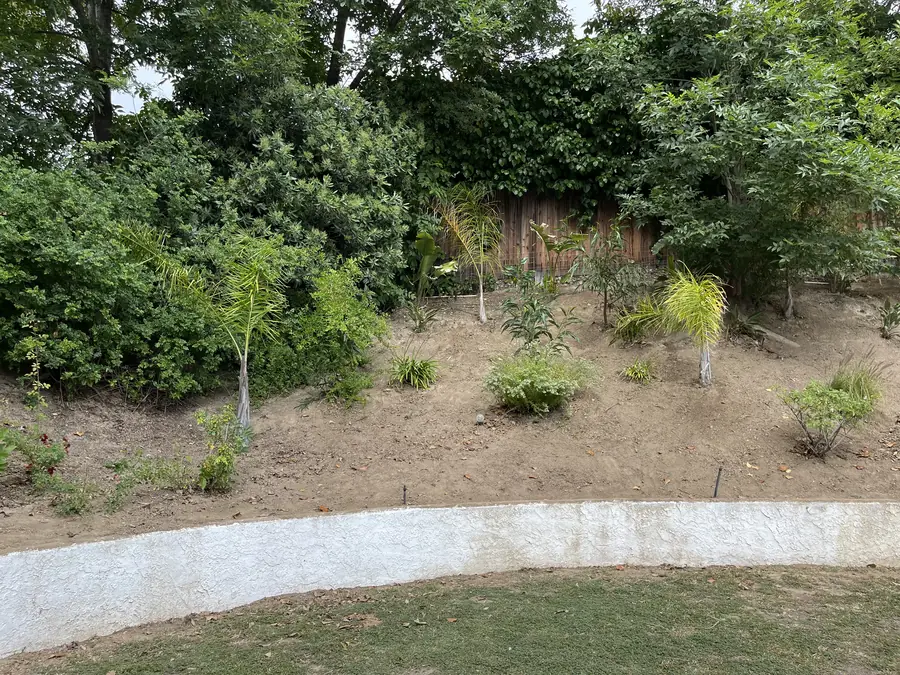
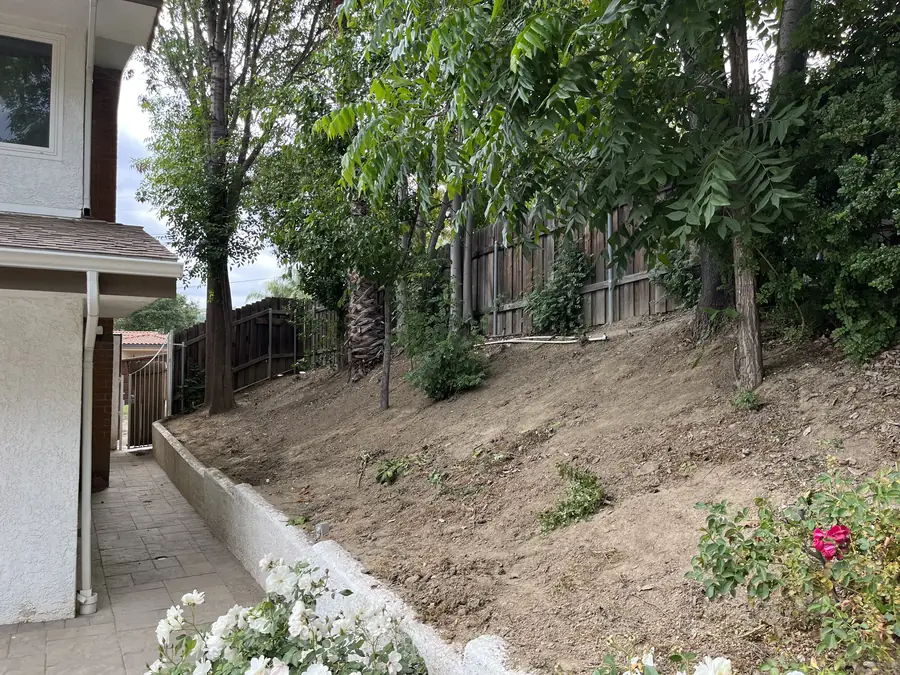
Over decades, soil settles, beds get built up, and planters get added, and the grade slowly stops doing its job. You cannot really see it until the lawn and hardscape are gone. Once the site is clear we shoot the grade and find out where water is actually headed. If it is running toward the house or standing in the middle of the yard, we reshape it before anything is built. This is the least visible part of a renovation and the part that determines whether the rest lasts.
Flat lots on clay soil hold water at the surface, and older yards often have decades of accumulated changes that block the path water used to take. Add irrigation that has been leaking quietly and you get chronically soggy areas and soft ground next to slabs. The fix is usually a combination of reshaping the surface so it actually falls toward an outlet and installing catch basins with solid pipe in the spots where regrading alone will not carry the volume away.
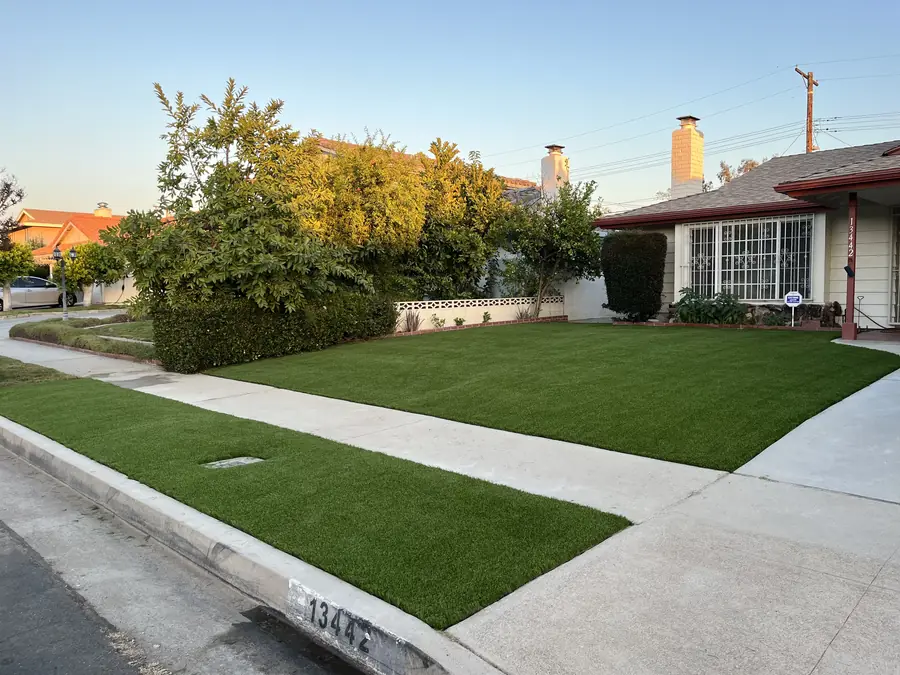
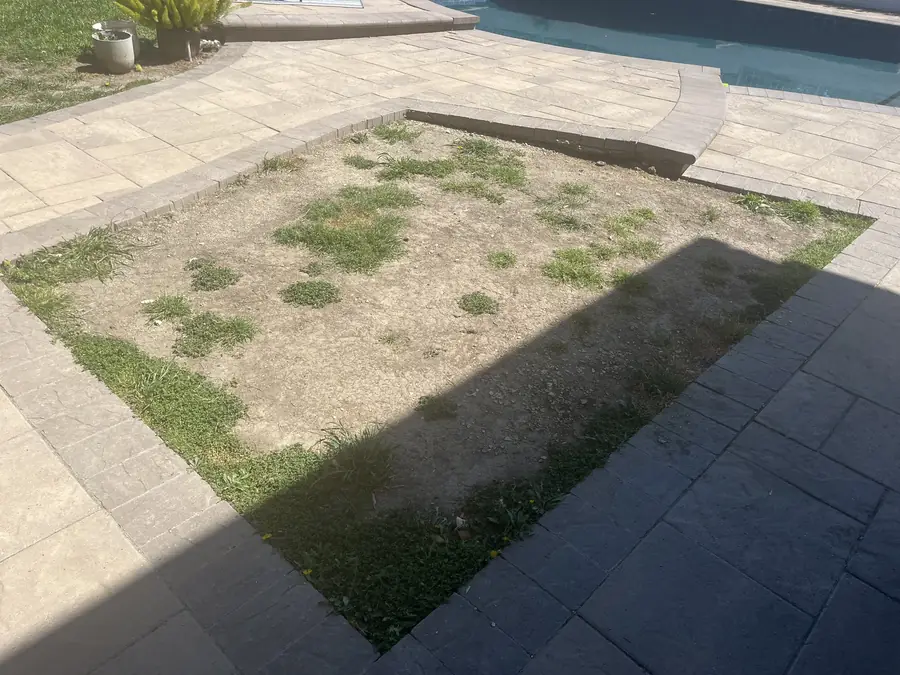
Remove it and figure out why it failed before deciding what replaces it. In older Reseda yards the causes are usually some combination of compacted clay, coverage gaps from worn irrigation, and shade from trees that were small when the grass went in. Once the sod is stripped we address the soil and the grade, then install the replacement. Some owners want live grass back in a smaller, better designed area. Many choose artificial turf or planting instead so they are not fighting the same battle again.
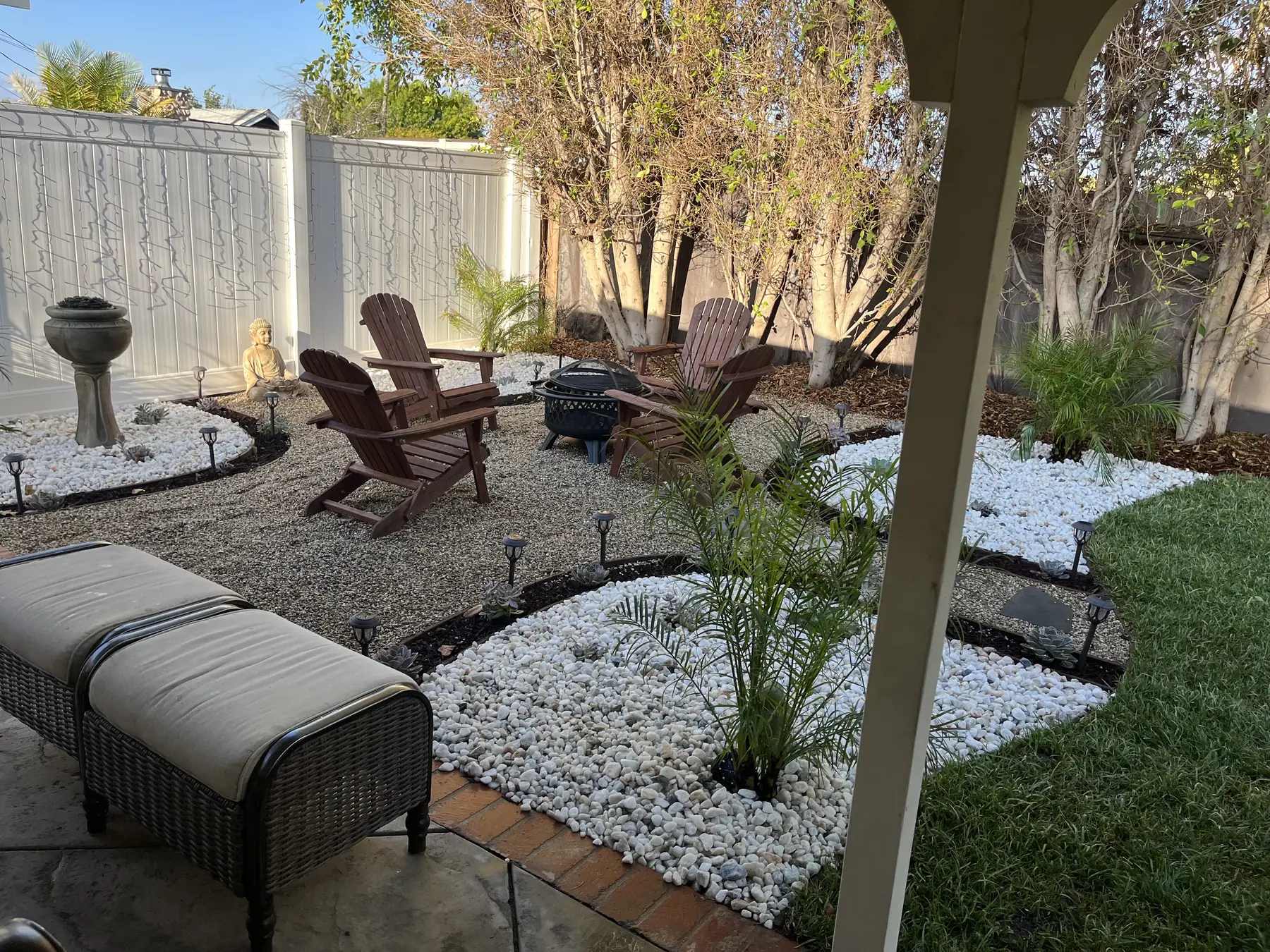
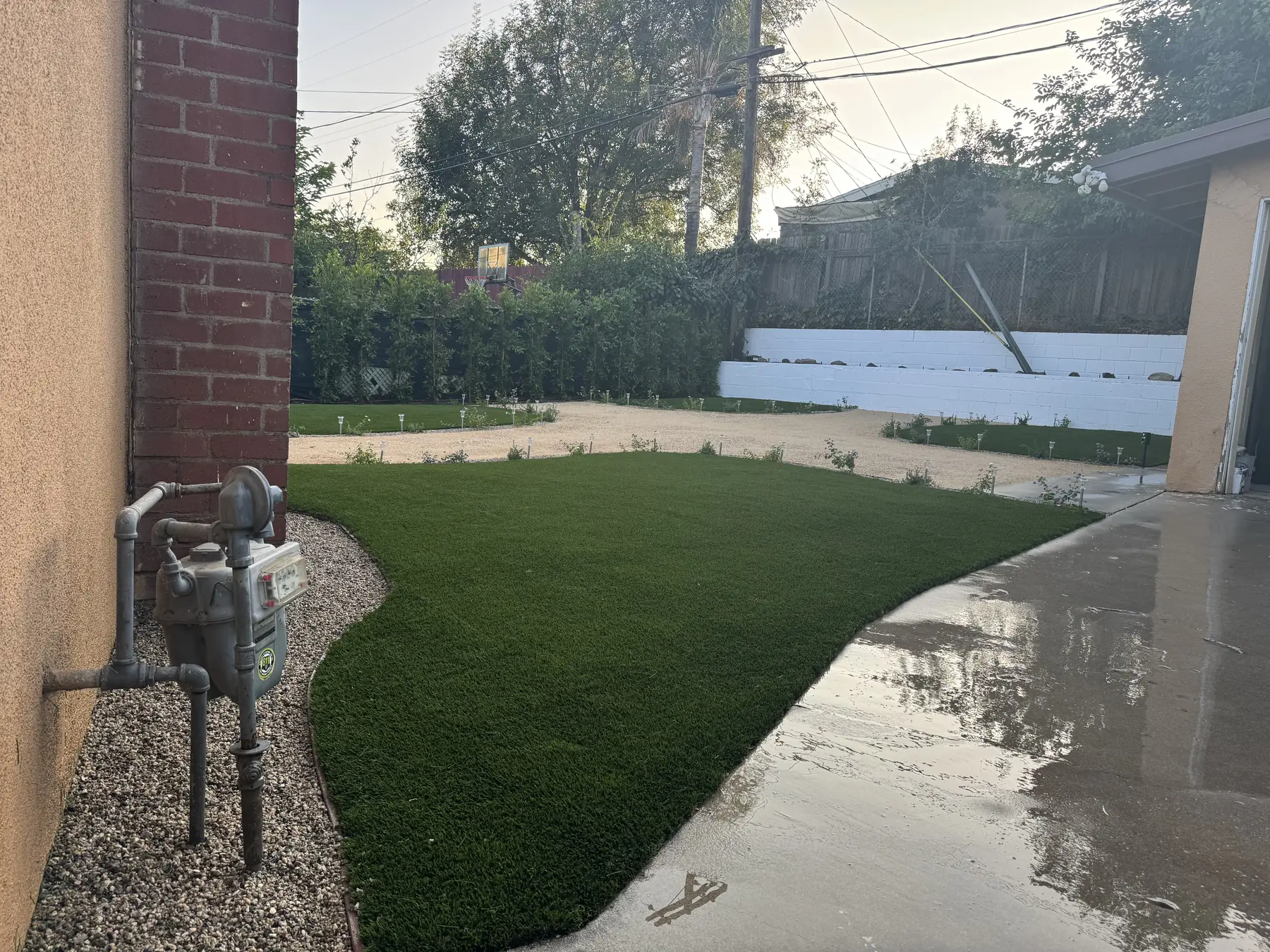
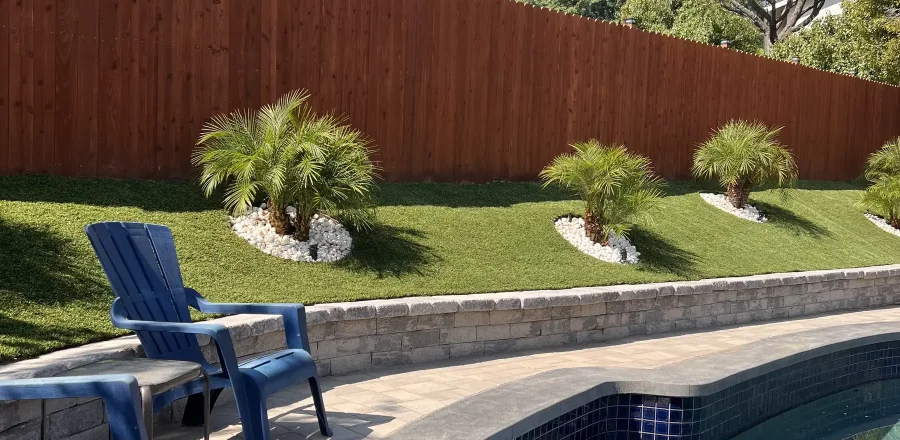
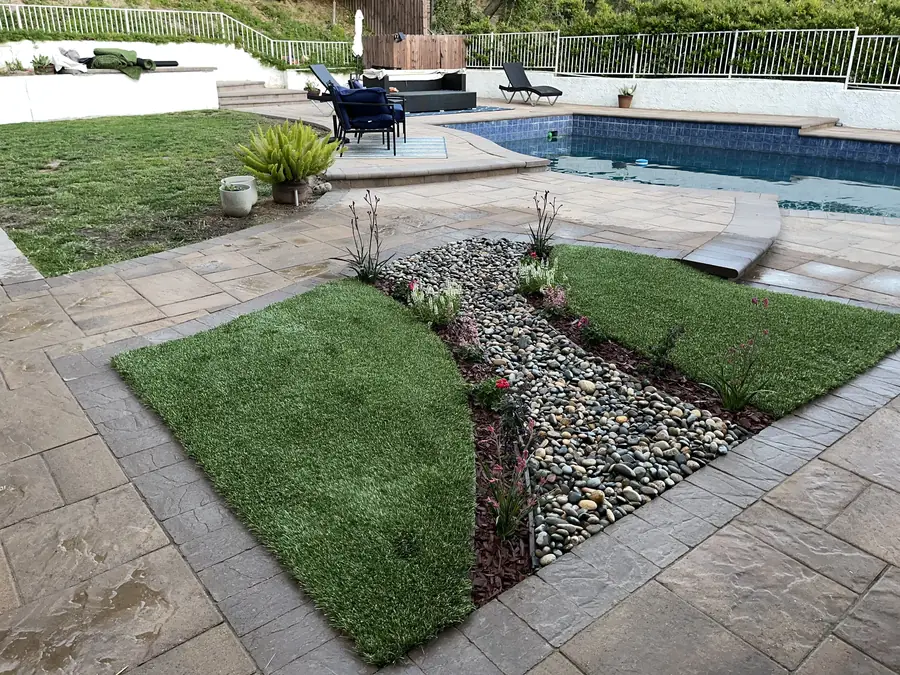
Turf makes sense where the space gets used underfoot and where you want a green surface with no watering and no mowing. Drought tolerant planting makes sense where the area is mainly seen rather than walked on, and it costs less to install across a large footprint. For rentals and multi-family properties, owners often lean toward turf in the high traffic zones and simple, tough planting elsewhere, because that combination survives inconsistent maintenance better than anything requiring regular attention.
Sunken concrete means the base beneath it failed, usually from water, poor original compaction, or roots. Repairs to the surface do not address any of that, so the same cracks return. In most cases we remove the slab, rebuild and compact the base correctly, and pour or set a new surface. If a slab is sound underneath and only looks dated, there are ways to resurface it or frame it with new material, which is worth considering when the budget is tight.
Original systems in older homes tend to fail in several places at once. Brittle pipe, valves that no longer seat, heads that were never repositioned as the planting changed, and a controller nobody has touched in years. We run the system and test it before advising. Sometimes only laterals and heads need rework. When we are chasing leaks through aged pipe, replacement is usually the cheaper answer. Converting lawn to beds means converting spray to drip as part of the same work.
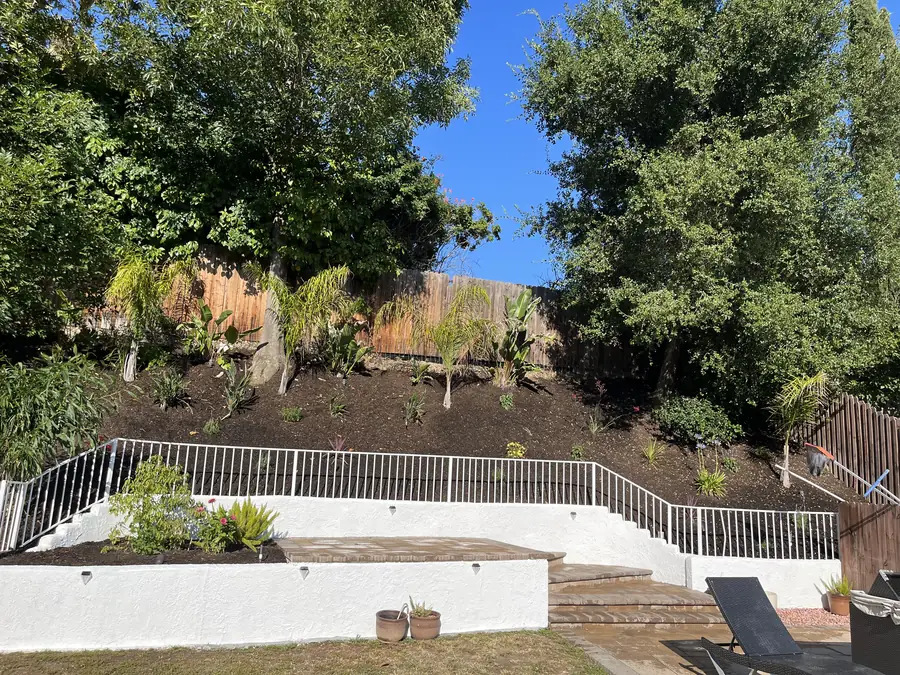
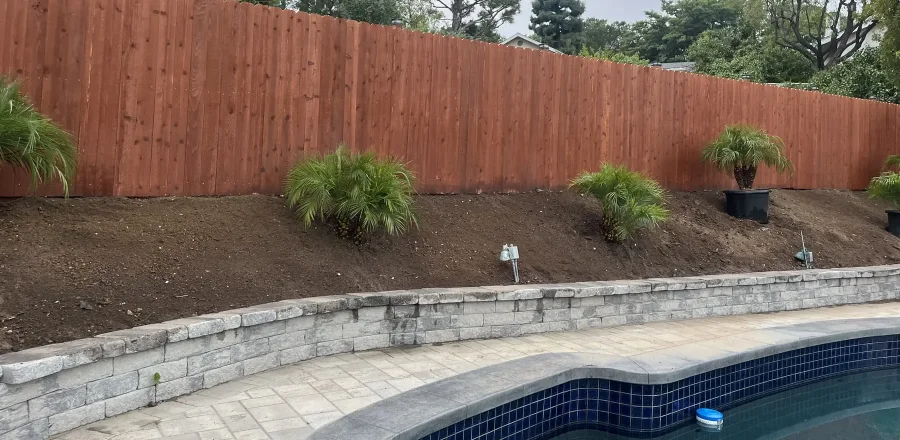
Beds get cleared, then the soil gets amended, because clay that has been under the same overgrown shrubs for decades is compacted and depleted. We reset the edges so the beds hold a defined shape, then plant with spacing based on mature size instead of filling every gap on installation day. A fresh mulch layer goes on top. Mulch reduces evaporation, keeps soil temperature steadier through summer, and suppresses weeds while the new plants get established.
Features like these usually stay and the renovation is built around them. With an established tree we keep equipment off the root zone, avoid piling soil against the trunk, and select understory plants that will tolerate shade and root competition. With a pool we plan construction access carefully, coordinate with the existing deck and equipment, and choose planting that will not shed constantly into the water. We account for the extra care these areas require when we put the estimate together.
The order is fixed by how construction works. Demolition comes first so the ground is exposed. Grading and drainage follow, since every surface installed later depends on them. Then irrigation lines and any utilities go in the ground while trenching is still practical. Hardscape comes next, because it is the heaviest and dirtiest phase. Planting is last, so nothing new gets trampled or buried during construction. Reversing any of these steps means tearing out finished work to reach something underneath.
Yes, and staging works well when it is planned before the first shovel goes in the ground. Anything underground gets handled in the first stage, including grade correction, drainage lines, and irrigation mainline that will serve later areas. After that we can break the remaining work by area so each stage finishes as a complete, usable space. What we avoid is stopping in the middle of a zone, which leaves you with an unfinished yard and duplicated setup costs when work resumes.
Because the housing stock here is among the oldest in the west Valley, and a lot of these landscapes are essentially original. When a yard has not been substantially updated since the house was built, the failures are not isolated. The lawn, the irrigation, the concrete, and the planting all reached the end of their service life around the same time. Repairing one of those in isolation tends to be money spent twice, since the next system fails a season later and the work gets opened up again.
For rentals and multi-family buildings, the goal is usually lower maintenance and lower water use rather than a showpiece. That points toward durable surfaces that handle traffic, artificial turf or drought tolerant planting instead of grass that needs weekly attention, and irrigation that is simple enough for any maintenance company to understand and service. We keep the plant list tight and the systems accessible, so nothing depends on specialized knowledge or on somebody noticing a problem quickly.
Shrubs planted against the house forty or fifty years ago are typically well past the size anyone intended, covering windows and holding moisture against the wall. Most of them come out during demolition, roots included, since cutting back that hard rarely produces a plant worth keeping. We open the area back up, correct the soil and any grade problems hiding behind the old growth, and replant with material chosen for the mature size the space can actually accommodate.
No. Daniels Landscaping performs your renovation with our own in-house crew. We do not hire outside companies for any portion of it. The same team that demolishes the old yard sets the grade, installs the drainage and irrigation, builds the hardscape, and finishes the planting. You deal with one company from the first walkthrough to the final cleanup, which is why the quality stays consistent and why there are no dead days waiting for somebody else's schedule to open up.
Reach out to Daniels Landscaping at (818) 443-9300 and we will schedule a walkthrough at your property. We look at what is failing, what is salvageable, where water is going, and how you want to use the space, then talk through scope and staging in realistic terms. You get a free written estimate laying out the work in detail. We are licensed in California under 1138709, and the crew you meet on that first visit is the crew that carries out the renovation.