
FAQ
Renovations in Hidden Hills, answered
The questions we hear most from Hidden Hills homeowners.
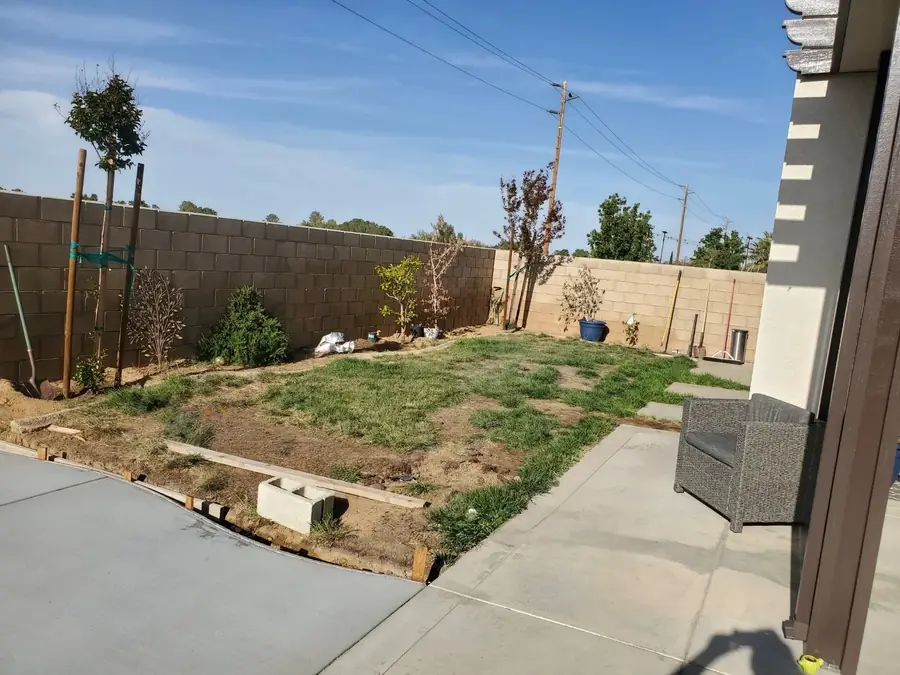
A renovation means there is already something in the ground worth accounting for. Old irrigation, a lawn that has given up, cracked walkways, planting that has outgrown its space, grading that sends water the wrong direction, and mature trees that are staying no matter what. The work is partly removal and partly rebuilding, and the hard part is judgment rather than muscle. A new install on bare dirt has no history to work around. A renovation has decades of it, and the decisions about what to keep shape everything that follows.
We walk the property with you and sort it into three piles. Things in good condition that still serve the layout stay. Things that are failing, such as broken paving, leaking valves, or a lawn beyond recovery, come out. Then there is the middle group, usually mature planting and older hardscape that is sound but no longer fits the direction you want. Those get discussed honestly, because pulling out a healthy mature specimen is a decision you cannot reverse. Cost, condition, and how each piece supports the finished plan drive the call.
Hauling is scheduled ahead of time, the same as deliveries. Gated access means bins and trucks cannot simply roll up when the crew is ready, so removal is arranged in advance and timed so debris is not sitting around the property longer than it needs to. We stage broken concrete, old turf, and green waste in one designated spot rather than in piles spread across the lot, and we keep driveways and riding routes clear while removal happens. Fewer, fuller loads means fewer trips through the entry for everyone.
Usually yes, and it is safer to assume so. The city maintains a strict architectural review process covering materials, heights, fencing, and overall character, and a renovation that changes any of those falls squarely inside it. Swapping a cracked concrete walk for stone is a material change. Rebuilding a fence at a different height is a height change. We prepare the plan so the review body can see exactly what is being removed and exactly what replaces it, and approval is scheduled as a real step before demolition begins.
That is one of the best reasons to renovate. Drainage problems are cheap to solve while the ground is open and expensive to solve once new paving and planting are finished. During demolition we can regrade to move water away from the house and out of the flat spots, cut in area drains and pipe them to a proper outlet, and set slope under surfaces before anything gets rebuilt on top. On a large property with varied grade there is usually somewhere sensible for water to go, which makes the fix straightforward.
Stages suit lots this size very well. Rather than turning the entire property into a work site, we take one area at a time, finish it completely, and move on. The front approach might be stage one, the main entertaining area stage two, and the areas around the barn or the far corner of the lot later. What has to be planned as a whole is drainage and the irrigation mainline, since those cross the boundaries between stages. Everything else can wait comfortably until you are ready.
Access comes first. Properties in this city are laid out around horse keeping and riding, so the routes to and from the stalls stay open and safe while we are working. Equipment is parked clear of those paths, materials are staged where they do not narrow a turn, and open trenches near a route are covered or fenced rather than left exposed overnight. Dust and noise get managed as much as any construction site allows. The horses were there before the renovation, and the schedule works around them.
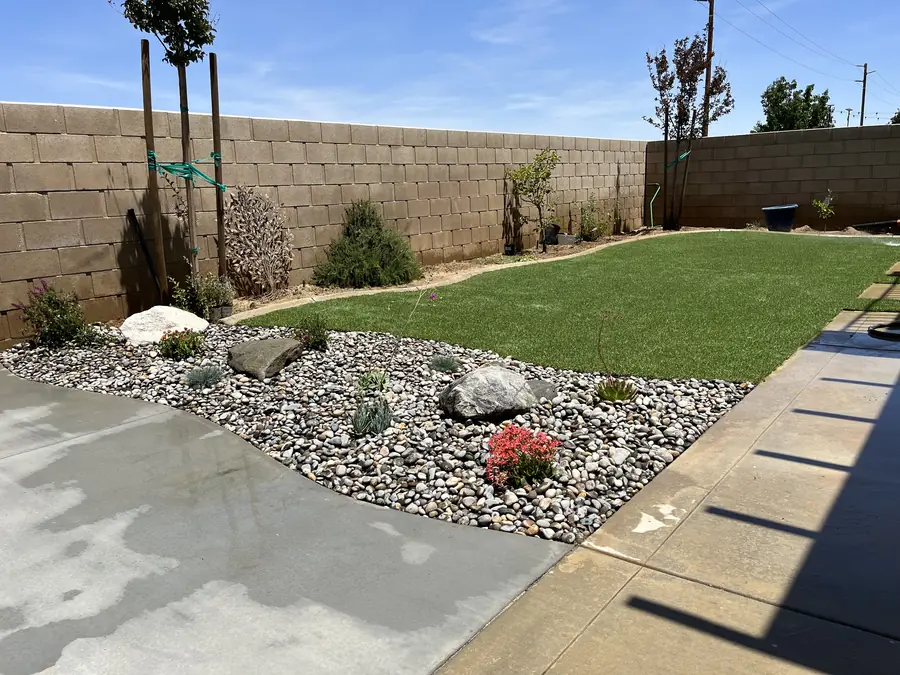
Three directions are realistic. A new lawn can go in if the space genuinely gets used for play or by animals, but it needs the soil rebuilt and the irrigation corrected first, since the old lawn probably died from one of those. Artificial turf gives a green surface with no watering, which appeals on larger properties where irrigation costs add up. Drought tolerant planting with mulch and drip covers the areas nobody actually walks on. Many properties here end up using all three, matched to how each area is used.
It is broken up, loaded, and hauled off, and the interesting part is what happens underneath. Once a slab is gone we see the base it was sitting on, and often that base is the reason it failed, whether from poor compaction, a tree root, or water tracking beneath it. Correcting that before anything new goes down is the whole point. We also check for irrigation lines and conduit buried under the old work, because plenty of them run right through where the concrete used to be.
It gets assessed rather than assumed. We run each zone and watch it, since the failures show themselves quickly: heads buried by grade changes, zones fighting each other on pressure, spray landing on paving, valves seeping, and cracked laterals feeding water where nobody wants it. Sound mainline and valve locations can often be reused. Beyond that we rebuild zones to match the new planting, convert spray to drip where beds are going in, and add a weather based controller so the system responds to conditions instead of a fixed clock.
Yes, and on properties with this level of exposure it should be part of the plan. Renovation is the moment to pull overgrown, resinous, and dry material out of the zone nearest structures and replace it with fire wise planting kept lower and spaced apart. Gravel, decomposed granite, stone, and paving can carry the ground immediately around the building. We also thin and limb up where planting has grown into the eaves and make sure nothing forms a continuous run of fuel from the open ground toward the house.
Carefully, because a mature tree is the one element you cannot buy back. We fence the root zone before demolition begins and keep equipment, material staging, and traffic outside that line. Grade changes near a trunk are avoided, since piling soil over roots or cutting them away is what kills trees a year or two after the work looks finished. Trenching near a canopy gets routed around or hand dug. Irrigation is also rebuilt so an established tree is not suddenly watered like a new shrub bed.
The pool becomes a fixed point that everything else works around. Decking may be replaced, coping and surrounds may change, and the planting nearby usually gets reconsidered so the deck is not constantly littered. Equipment access has to stay clear for service. Drainage near a pool matters more than most people think, since runoff should never sheet toward the water. We also protect the pool itself during demolition, because dust and debris from breaking concrete find their way into it faster than anyone expects.
Demolition and haul away, then grading and drainage, then utilities and irrigation, then hardscape, then planting last. That sequence is not a preference, it is what keeps the work from being redone. Grade cannot be fixed once paving covers it. Pipe cannot be run once the patio is set. Plants placed before construction traffic finishes will be crushed or coated in dust. On a phased property each stage runs through that same order within its own area, which keeps every stage independently finished.
No. This is an independent incorporated city, so permitting runs through local rules rather than the Los Angeles process, with architectural review as a separate step alongside it. On renovations the items that commonly trigger a permit are retaining walls above a height threshold, drainage that discharges off site, structures such as covers, and any gas or electrical being replaced or extended. We identify those at the estimate stage so nothing surfaces halfway through demolition as a surprise.
One licensed contractor stays accountable for all of it. One licensed contractor is accountable for the work. The same team breaking out old concrete on day one is the team regrading, running irrigation, setting new hardscape, and putting the planting in at the end. On a renovation that continuity is worth a lot, because the person who saw what was buried under the old slab is still on site when the new work goes over it. One company is accountable for the entire job.
It depends far more on scope than on anything else, so we describe it in stages rather than promising dates. Demolition and grading are the disruptive part, when equipment is moving and the ground is open. Once utilities are buried and hardscape starts, the site tightens up considerably. Planting is the calm end of the job. On a phased renovation only the active area is affected, so the rest of the property stays usable throughout, which is exactly why phasing appeals to families with horses to keep moving.
Reach Daniels Landscaping at (818) 443-9300 and we will schedule a walk of the existing yard. We assess what is worth keeping, where water is going wrong, what condition the irrigation is in, and what the architectural review process will need to see before demolition. You then get a free written estimate covering removal and rebuild in clear terms, phased by area if that suits the property. We hold California license 1138709, and the crew that walks the yard with you is the crew that does the work.