
FAQ
Renovations in Northridge, answered
The questions we hear most from Northridge homeowners.
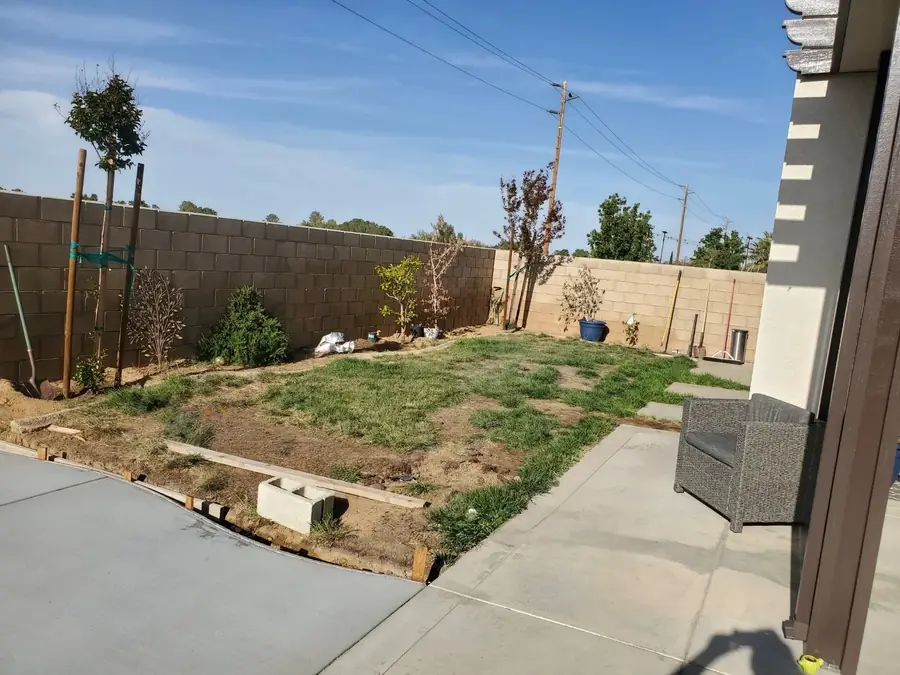
A renovation covers whatever the existing yard needs to become usable again. On most jobs that means removing failed material, correcting the grade so water leaves the property instead of sitting against a slab, replacing or updating irrigation, rebuilding hardscape that has cracked or settled, and putting in new planting. Some renovations touch the whole property. Others are limited to one problem area, such as a side yard that never drained or a patio that broke apart. We scope it around what is actually wrong rather than assuming everything has to go.
We walk the property with you and sort it into three piles. Things in good condition that fit the new plan stay, such as a healthy tree, a sound wall, or a pool in working order. Things that are failing structurally or are simply worn out come out. The third group is the judgment call, plants that are alive but badly overgrown, or concrete that is intact but ugly. Those decisions get made together, because they usually come down to budget and how much you like the existing feature. Nothing is demolished without your sign off.
Demolition is the first physical step and it is usually the loudest day of the project. Dead sod comes up, overgrown shrubs get pulled out with the root ball, and broken concrete is broken down and loaded out. We haul everything off the property rather than leaving piles behind for you to deal with. Before any of it starts we locate irrigation lines, low voltage wiring, and anything else buried that we intend to keep. Clearing the site properly matters, because every stage after this one depends on starting from clean, honest ground.
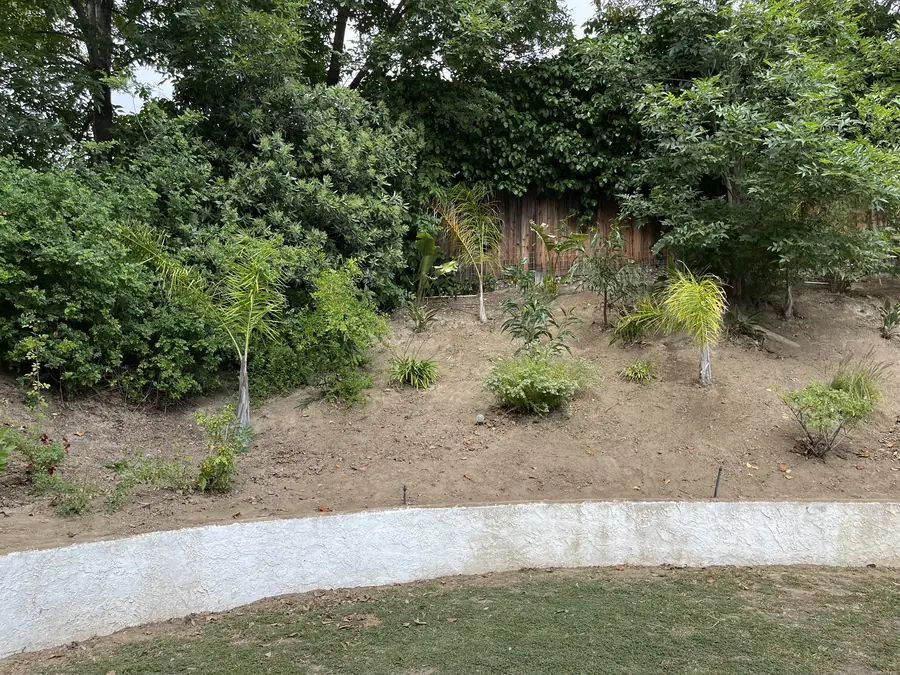
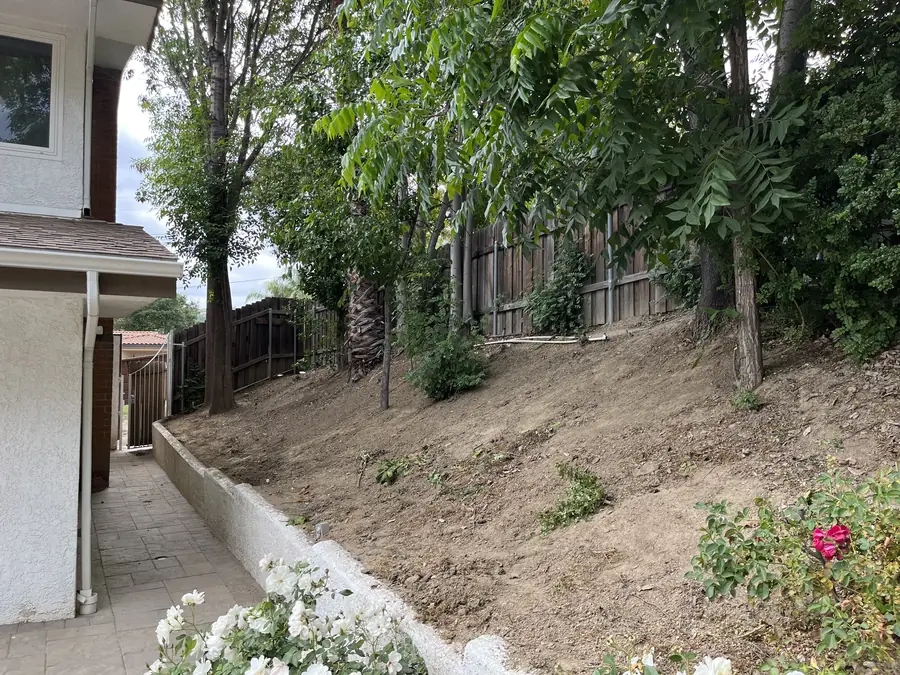
Grade work happens right after demolition, while the site is open and machines can still move freely. We look at where water goes during a real storm, not where it is supposed to go on paper. Common fixes include pulling soil away from the foundation, cutting a swale to move runoff toward the street, adding area drains at low points, and tying downspouts into a drain line instead of letting them dump next to a slab. On larger Northridge lots the runoff has a long way to travel, so the fall has to be planned across the whole yard rather than patched in one corner.
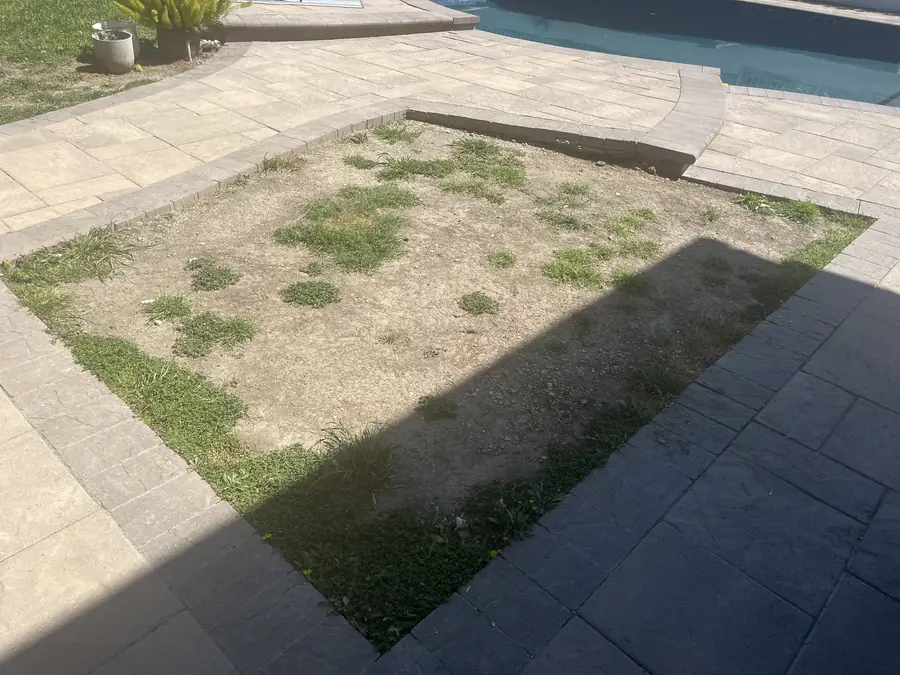
A lawn that has gone brown and thin is rarely worth reviving, especially if the irrigation feeding it was already failing. We strip the old sod, remove the thatch and dead root layer, and then decide with you what replaces it. Some clients want a smaller live lawn in one usable spot with planting around it. Others are done with grass entirely. Either way the soil underneath gets addressed first, because dropping new turf or new plants onto compacted, exhausted ground is how the second failure starts.
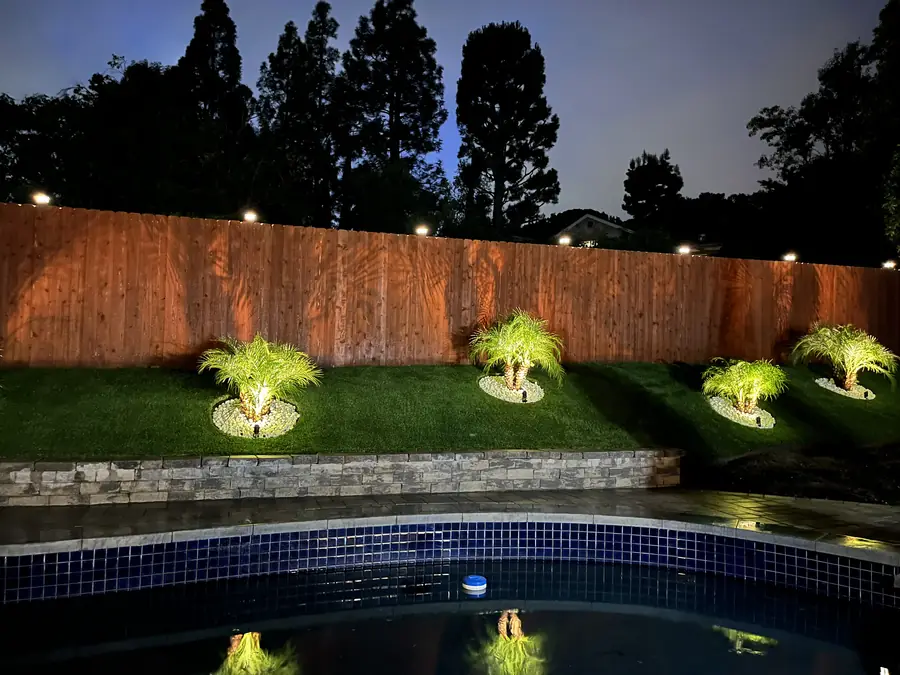
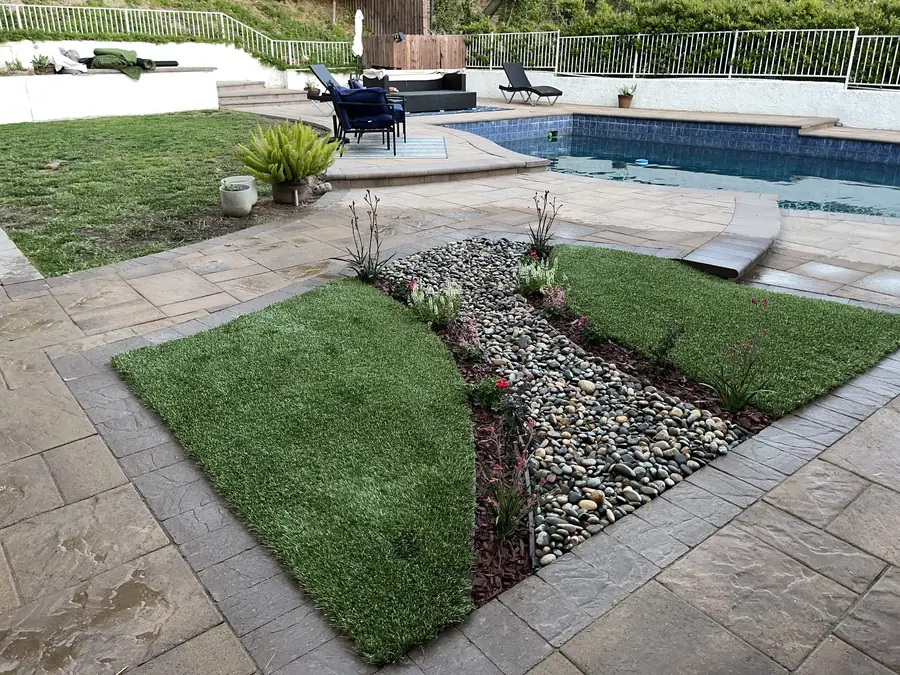
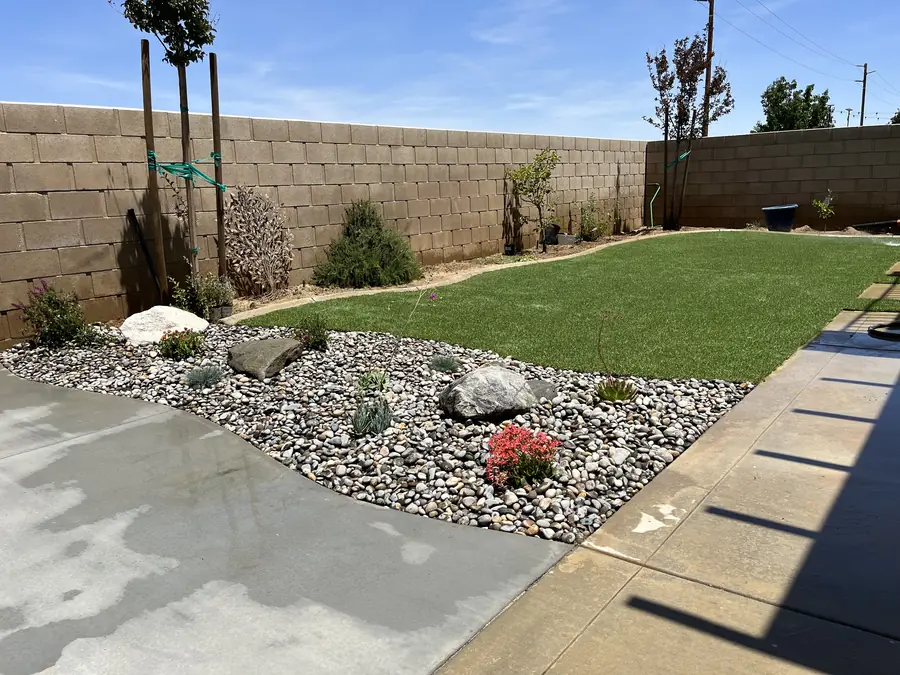
Both work well, and plenty of renovations use each in different parts of the yard. Artificial turf makes sense where you want a green surface that stays green, holds up to dogs and kids, and needs no water. Drought tolerant planting makes sense where you want something living, seasonal, and softer looking. Turf needs a properly compacted base and drainage underneath or it will ripple and hold odor. Drought tolerant beds need honest soil prep and correct spacing so they fill in over a couple of seasons instead of looking sparse forever.
Cracked flatwork usually cracked for a reason, so we look at the cause before pouring anything new. Sometimes it is a root, sometimes it is a poorly compacted base, sometimes water has been undermining the edge for years. Demolition takes the old slab out, the base is rebuilt and compacted, and then the new surface goes in. Replacement is also the moment to change the material, since you are already paying to remove what is there. Pavers, a new pour with a finish you like, or a larger footprint all become options at that point.
Old systems tend to fail in the same ways. Valves stick, lines leak underground, heads spray the fence instead of the plants, and the whole layout was designed for a lawn that no longer exists. On a renovation we open the ground anyway, so this is the cheapest moment in the project to fix it. Depending on condition we either rework the existing zones or replace the system outright. New planting almost always needs new zoning, because shrubs and drought tolerant beds do not want the same schedule the old grass was on.
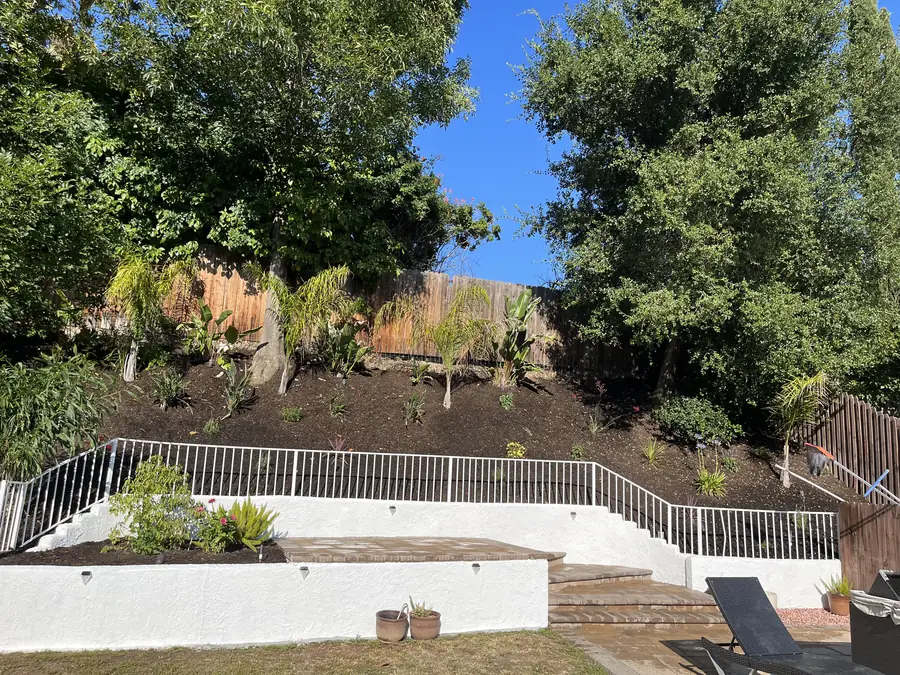
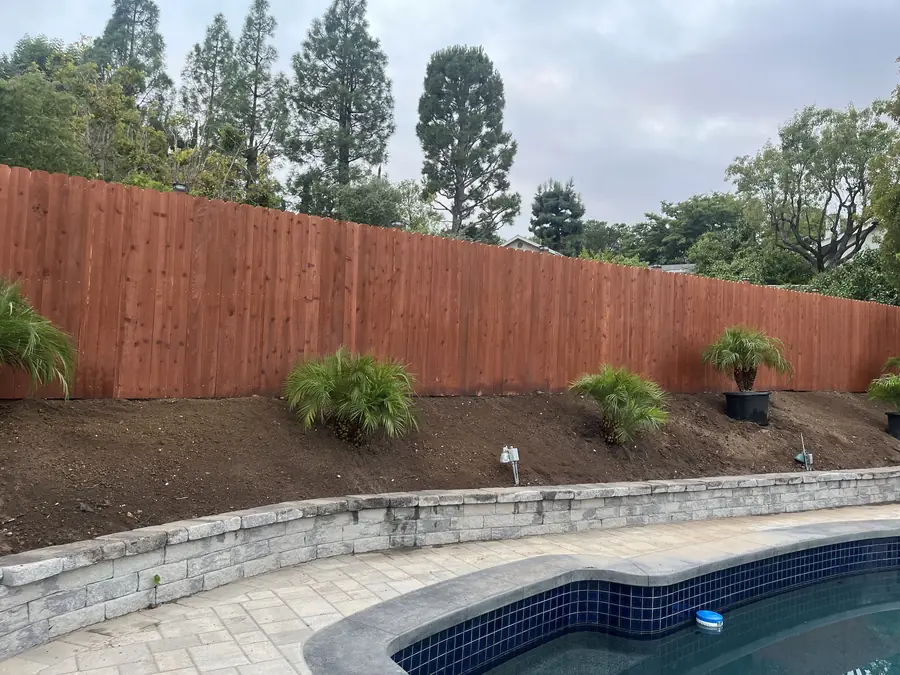
Beds get rebuilt rather than touched up. Old material comes out, the soil gets amended, edging is set so the bed holds its shape, and new plants go in with spacing that accounts for mature size instead of instant coverage. Mulch goes on last, at a depth that actually suppresses weeds and slows evaporation. Refreshing beds is also the least expensive way to change how a yard reads, so on a tighter budget it is often the piece that delivers the most visible improvement for the money.
A pool that is in good shape is a reason to renovate around it, not through it. We protect the shell and the equipment, keep demolition debris out of the water, and plan access so machines are not tracking over the deck. The deck itself is often the part that needs replacing, since coping and surrounding concrete take the worst of the sun and the movement. Planting near a pool gets chosen for low litter, because nobody wants to skim leaves every morning. The same care applies to any feature that is staying.
Sequence is not flexible on a remodel. Demolition comes first so the site is clear. Grading and drainage come second, while the ground is open and correctable. Utilities and irrigation follow, since those lines run under everything. Hardscape goes in once the grade is set and the lines are buried. Planting is last, because it is the one thing that gets damaged by every stage before it. Skipping ahead is how people end up cutting a brand new patio to reach a broken drain line. On a phased Northridge project each zone follows this same order.
Phasing works, and on Northridge properties it is common. Lots here run deep, so the back yard and the front are effectively two separate projects, and many clients do the back first because that is where they actually spend time. Other properties get split by zone, one area completed and finished before the next begins. The important part is planning all of it up front, even the phases you are not building yet, so drainage lines, irrigation mains, and conduit are stubbed where the later work will need them.
Timeline depends on scope, on how much demolition is involved, and on how much of the yard is being touched at once. A bed refresh with new irrigation moves quickly. A full remodel with regrading, new flatwork, and a complete planting plan takes considerably longer, and concrete needs curing time that cannot be rushed. Weather and inspections can shift the calendar. We give you a realistic schedule with the written estimate and tell you when the noisy stages fall, so you can plan around the days that affect the house most.
Mature trees are the best thing many Northridge yards have, and a renovation should be built around them. That means keeping heavy equipment off the root zone, hand working where machines would do damage, and avoiding grade changes that either bury the root flare or expose roots that were covered. Trenching for irrigation gets routed around the critical area rather than straight through it. A tree that has been growing for decades cannot be replaced by anything you plant during the remodel, so it gets treated as a fixed asset from the first walkthrough.
An established canopy changes what will actually grow underneath it. Sun loving plants that look great in a nursery lot will thin out and stretch in deep shade, and turf under a dense Northridge tree tends to struggle no matter how it is watered. We select material that tolerates the light the yard genuinely has, and in the hardest spots we use mulch, shade tolerant ground cover, or a seating area instead of forcing plants where they will not thrive. Working with the shade is cheaper than fighting it every season.
Some Northridge properties were regraded or rebuilt after the 1994 earthquake, and fill soil placed during that work does not always behave like native ground. Fill can settle at a different rate, which matters when a renovation adds new flatwork or reroutes drainage across it. We check what we are building on before pouring, compact the base properly, and set drainage so that any settlement does not turn into water sitting where it should not. It is a quiet detail, but it is the difference between a slab that holds and one that cracks.
We use one licensed contractor on every renovation. The people who demo your yard are the same people who set the grade, run the irrigation, build the hardscape, and put the plants in. One licensed contractor stays accountable for the work. That is deliberate, because a remodel depends on stages handing off cleanly to each other, and a crew that knows what was buried on Tuesday builds better on Thursday. It also means you know who is on your property, and one company is accountable for the finished result rather than pointing at somebody else.
Call us at (818) 443-9300 and we will set up a time to walk the yard with you. On that visit we look at what is failing, what is worth keeping, and what you want the space to do, then we put together a free written estimate that spells out the scope stage by stage. If you want to phase the work, the estimate can be built that way. Daniels Landscaping is licensed in California, license 1138709, and the crew that gives you the number is the crew that does the work.