
FAQ
Irrigation in Porter Ranch, answered
The questions we hear most from Porter Ranch homeowners.
Zoning follows water demand, not convenience. Lawn, shrubs, trees and containers all want different amounts at different intervals, so putting them on one valve guarantees something is drowning while something else stays thirsty. We group by plant type and by exposure, since a bed baking on a west facing slope dries far faster than a shaded side yard on the same property. Zone count also depends on available flow and pressure, because a valve cannot supply more heads than the water service is able to feed at one time.
Spray heads throw a fixed fan across a short distance and put water down quickly, which suits small, level areas. Rotors turn a stream back and forth across larger spaces at a much slower application rate. Rotary nozzles split the difference, fitting a standard spray body while delivering several slow moving streams instead of a mist. Application rate is what matters most here: slower output gives soil time to accept water, and heavier streams resist drift on the windy afternoons that are common through this end of the valley.
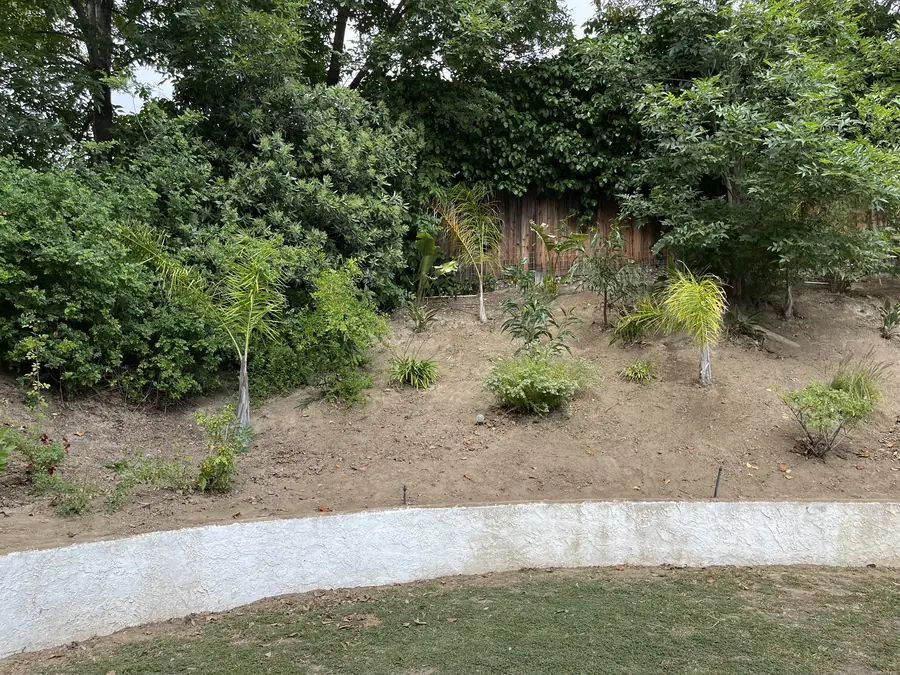
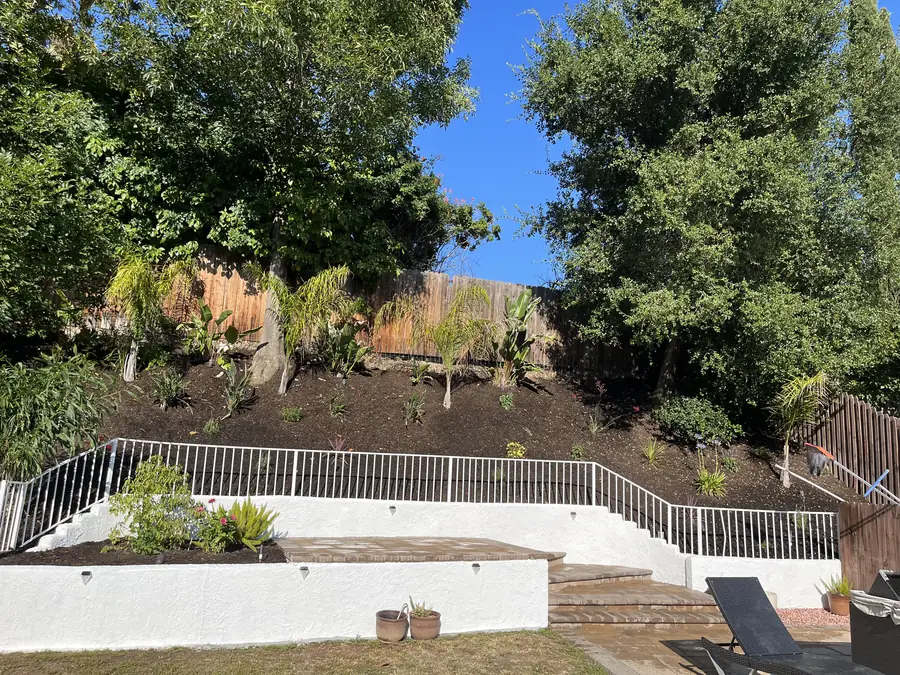
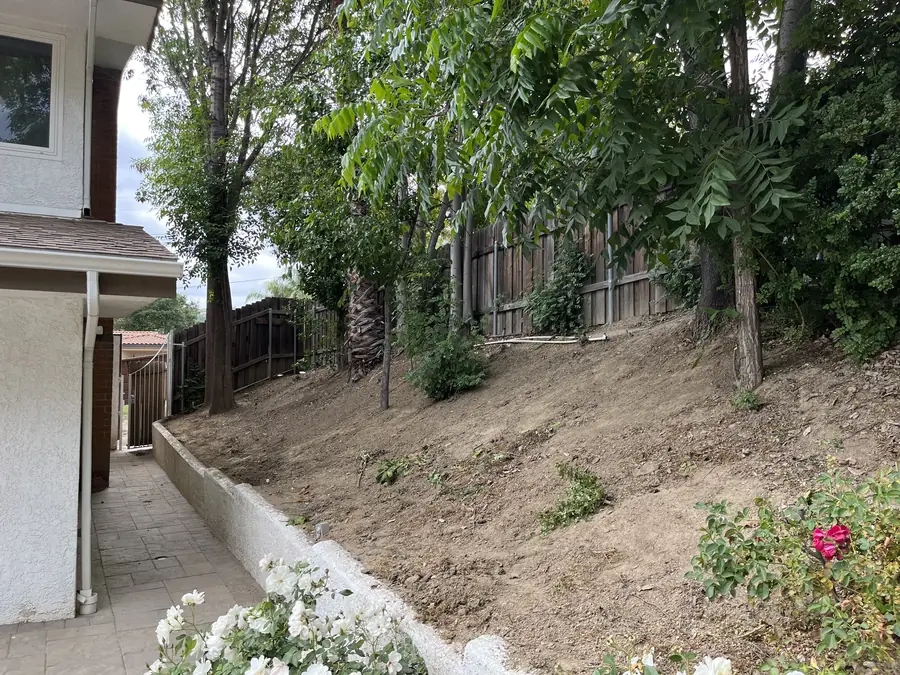
Two changes solve most of it. First, lower the rate at which water arrives by switching to low precipitation nozzles, which apply water more slowly than conventional spray so the soil can keep up. Second, split the run time into several short cycles with rest periods between them, an approach called cycle and soak. The soil absorbs what it can, moisture moves downward during the pause, and the next cycle starts on ground that is ready. On the slopes common through this community, those two adjustments turn wasted runoff into stored moisture.
Considerably. Water loses pressure climbing and gains pressure falling, so the high corner of a hillside lot and the low corner behave like two different systems fed by one meter. Heads at the bottom can mist and fog from excess pressure while heads at the top barely reach their design radius. We handle it by zoning along elevation bands rather than across them, adding regulation where it belongs, and specifying pressure regulating bodies. Mixing high and low ground on a single valve is the fastest way to make half a zone water poorly.
Sprinklers do not water evenly across their radius. They throw more water close in and less at the outer edge. Head to head spacing means each head throws far enough to reach its neighbors, so the light edges overlap and the zone receives an even depth. Matched precipitation means every nozzle on that valve applies water at the same rate, so a quarter circle and a full circle finish with equal depth. Mix unmatched nozzles and the run time that is correct for one part of the zone will be wrong everywhere else.
Drip belongs anywhere plants sit in defined spots rather than continuous ground cover: shrub beds, perennials, trees, hedges, containers and slope plantings where overhead spray would simply run downhill. Emitters release water slowly right at the root zone, so very little evaporates or lands on paving. Tubing routes under mulch, with emitter output matched to plant size and moved outward as roots expand. Drip needs its own valve, a filter and a pressure regulator, because it operates at far lower pressure than sprinklers and clogs when either component is skipped.
Yes, and it is one of the more worthwhile upgrades on an established shrub bed. The valve receives a filter and a pressure regulator, the existing lateral line is reused where its condition allows, spray bodies are capped or converted, and tubing with emitters is laid out to the actual plants. Run times change completely after conversion, because drip applies water slowly over a longer period, so the controller program has to be rewritten rather than reused. We walk the bed afterward with the zone running to confirm every plant has an emitter.
A weather based controller adjusts run times using local weather data along with site details you enter, including plant type, soil, sprinkler type, sun exposure and slope. Instead of a fixed schedule that waters the same amount in March and August, it lengthens and shortens automatically and skips cycles after rain. Programmed carefully, it cuts water use noticeably while keeping plants healthier, since most landscapes suffer more from steady overwatering than from drought. Programmed carelessly, it is an expensive timer, so we set it up properly and explain how it thinks.
It is inexpensive insurance, and it stops the embarrassing sight of sprinklers running during a storm. A sensor interrupts the circuit once it registers rainfall and releases the system after it dries out. Weather based controllers already pull forecast data, but a physical sensor responds to what actually fell on your property rather than what a regional station recorded, and it keeps working if the controller loses its connection. On a slope there is a second benefit, since watering already saturated ground contributes to slumping and surface erosion.
Too much pressure atomizes water into fog that drifts away before it lands, wears components out early and turns small leaks into large ones. Too little leaves heads that dribble and zones that never reach their design radius. Regulation brings each zone to the pressure its nozzles were engineered for, whether through pressure regulating spray bodies, a regulator at the valve or a master regulator at the point of connection. We measure static and working pressure before designing anything, since guessing at that number produces a system that underperforms from day one.
Backflow prevention keeps irrigation water from being pulled back into the drinking water supply if pressure in the main drops. Sprinkler lines sit in soil that contains fertilizer, animal waste and everything else present in a yard, so that separation is a public health measure rather than paperwork. The assembly is installed at the point of connection, sized for the system and positioned where it can be tested and serviced. We inspect the existing device on any repair or renovation, because a failed or missing assembly deserves immediate attention.
Symptoms come first: a bill that jumped without a schedule change, a meter that creeps with everything off, a permanently soggy patch, a zone that lost pressure. We isolate by valve, run each zone while watching the meter, then narrow the search to a section of lateral before opening any ground. Common culprits include cracked fittings, a valve failing to seat, split poly line from root pressure, and heads sheared off by mowers or vehicles. Excavation stays tight and targeted, and repairs use fittings matched to the existing pipe.
Often the honest answer is a rebuild rather than a full replacement. Builder installed systems in the newer neighborhoods here were designed to a budget and to the original plant palette, which usually means widely spaced spray heads, no drip, no pressure regulation and a basic timer. As planting matures and gets replaced, that layout no longer matches what is actually in the ground. We normally keep sound mainline and valves, then correct spacing, convert beds to drip, add regulation and modernize the controller, which delivers most of the gain without trenching the whole yard.
Fire wise design in a Very High Fire Hazard Severity Zone calls for spaced plants and clearance near structures instead of continuous, dense vegetation, and the irrigation has to follow that same geometry. Blanket spray across a zone built around separation wastes water on bare ground and encourages weeds to fill the gaps. Drip with dedicated emitters at each plant keeps individual specimens hydrated, which matters because a well watered plant is far less flammable than a stressed one. We also keep heads and emitters off the walls, so siding and eaves stay dry.
Most of the system is buried, so a committee is generally less concerned with pipe than with what shows: the planting it serves, any visible controller or backflow enclosure, and the condition of turf areas. Even so, irrigation is normally part of the landscape plan submitted for approval, and in Porter Ranch that approval comes before work begins rather than after. We assemble what your community asks for and build the review window into the schedule, because opening a trench before the committee has responded is how a project turns into a dispute.
Restrictions change over time and can limit which days and hours outdoor watering is permitted, so a system has to deliver a full soak inside a narrow window. That pushes design toward efficient nozzles, drip in beds, tight hydrozoning and a controller capable of running several short cycles within the allowed hours. Local water agencies sometimes offer rebate programs for efficiency upgrades such as turf replacement or smart controllers, though terms and availability shift and eligibility is decided by the agency, never by us. We build to the efficient standard regardless.
No. Every trench, valve, head and controller on your property is installed by employees of Daniels Landscaping. One licensed contractor stays accountable for the work. Keeping it under one contractor means the person who planned the zoning is connected to the person who sets the heads, so nobody is guessing at intent from a sketch. It also means one company is responsible if a head needs adjusting three months later, and you are not chasing a phone number for a crew that has moved on to another company's project.
Reach Daniels Landscaping at (818) 443-9300 and we will come out to your property. We measure static pressure and available flow, run each existing zone to watch real coverage, note the elevation change across the lot, and talk through what you want the landscape to look like a few years from now. From that you receive a free written estimate describing zones, materials and controller in language you can compare against other bids. We are licensed in California, number 1138709, and the installation stays under one licensed contractor.