
FAQ
Landscaping in Sherman Oaks, answered
The questions we hear most from Sherman Oaks homeowners.
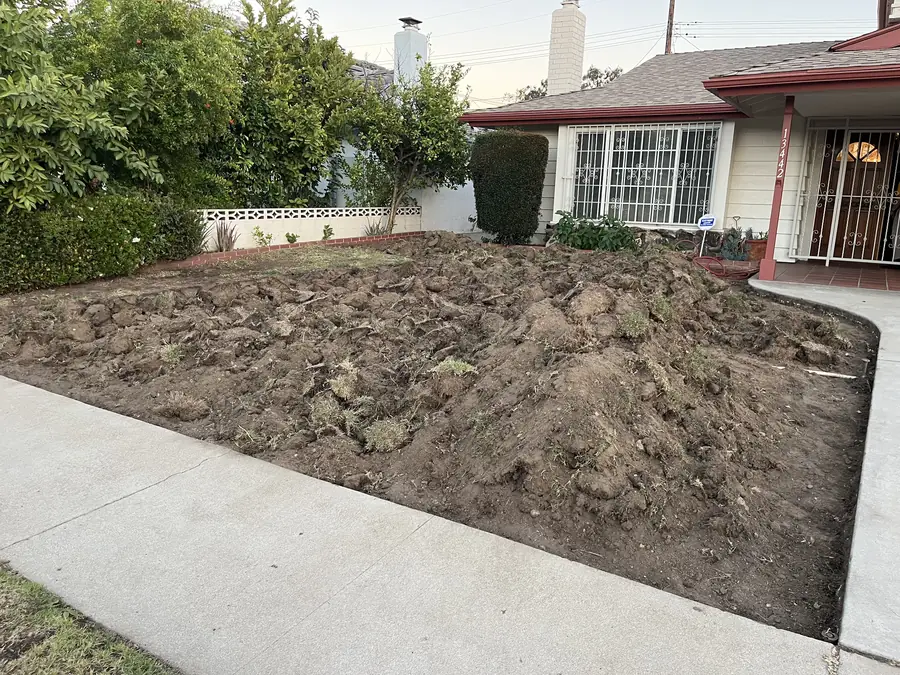
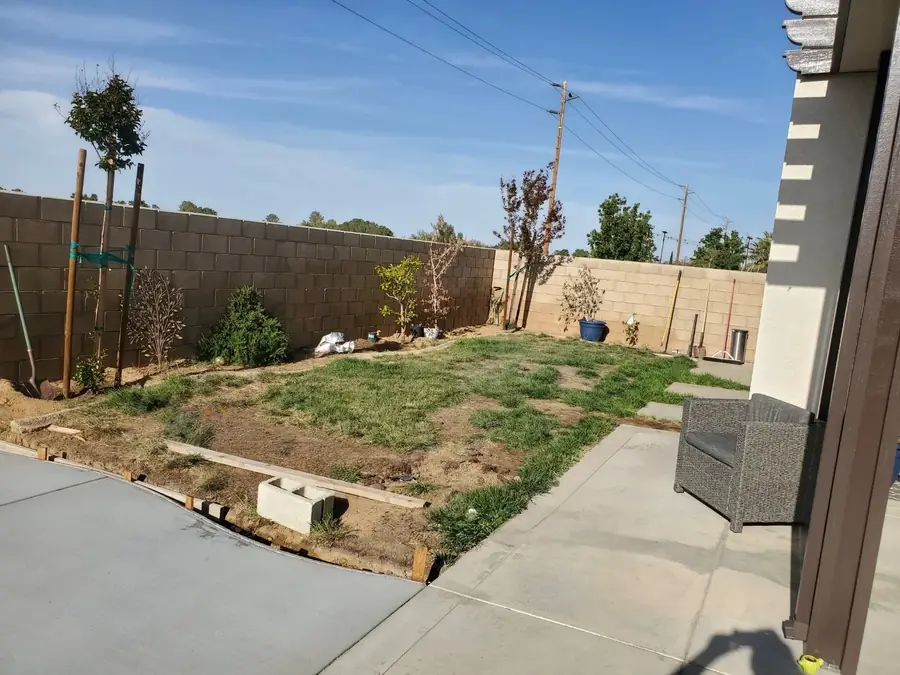
A full install starts with demolition and haul off of whatever is currently in the yard, then rough grading to set the slopes. After that comes soil work, trenching and installing irrigation, setting hardscape edges if the plan calls for them, fine grading, planting trees first and then shrubs and ground cover, and finally mulch and a full cleanup. Lighting and any drainage lines get installed while the ground is still open. The sequence matters because going back to fix grading after planting means tearing out finished work.
Grading decides where water goes, and water decides whether the rest of the yard survives. If the ground slopes toward the house, no amount of good planting fixes it. We set the finish grades so surface water moves away from the foundation and toward a drain, a swale, or the street. On flat lots that means building in a gentle fall that most people never notice. Once grades are correct we can place irrigation and plants with confidence, because we know where the wet spots and dry spots will be.
Clay holds water and releases it slowly, so roots sit wet longer than they would in sandy soil, and plants that want sharp drainage will sulk or rot. Clay also swells when it takes on water and shrinks when it dries, which moves anything sitting on top of it over the seasons. We deal with it by amending planting areas with compost, mounding beds slightly so crowns sit above the surrounding grade, and choosing species that tolerate heavier ground. Irrigation runs shorter and less often on clay than most controllers are set for.
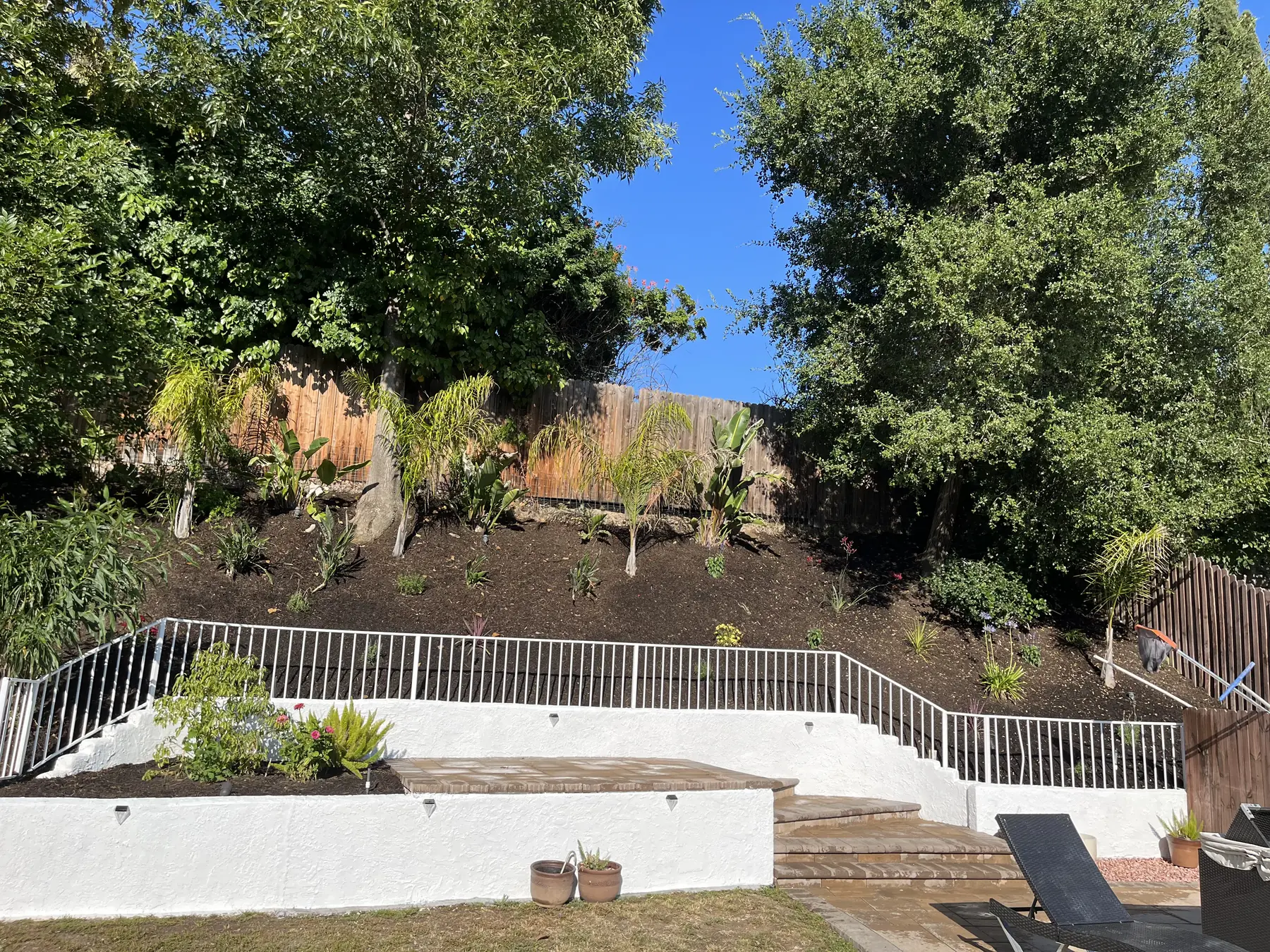
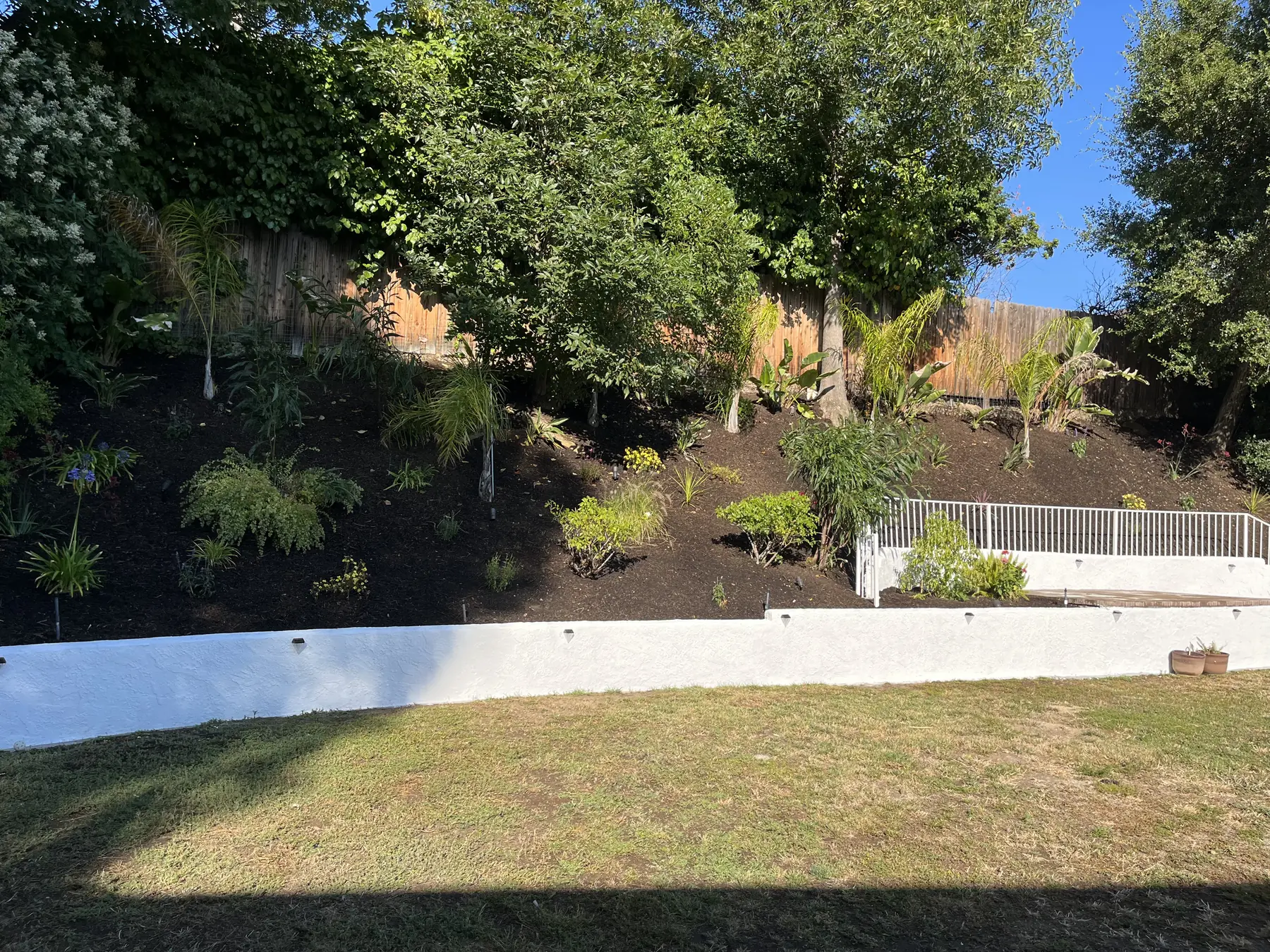
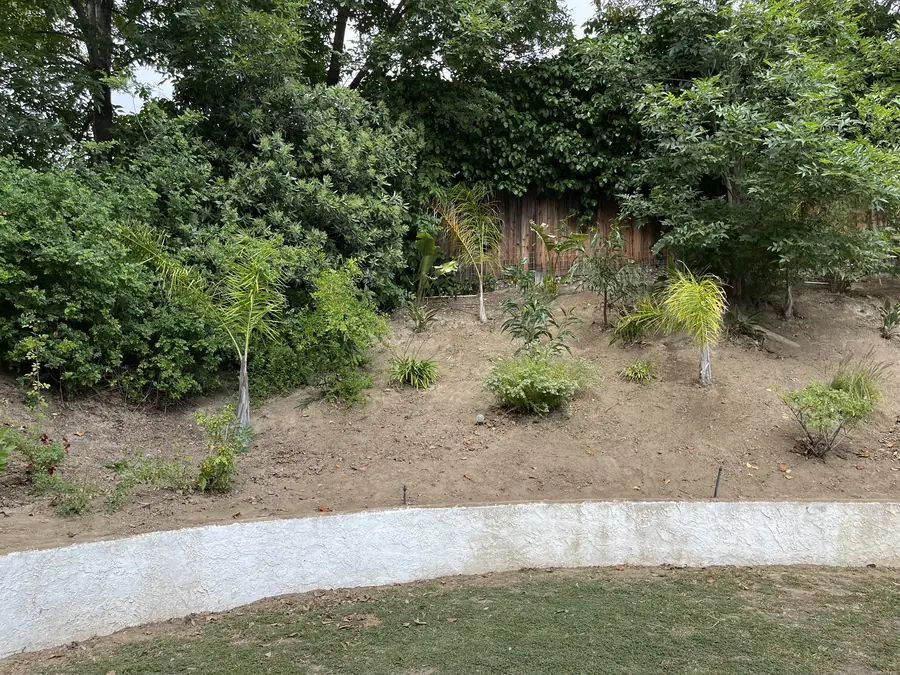
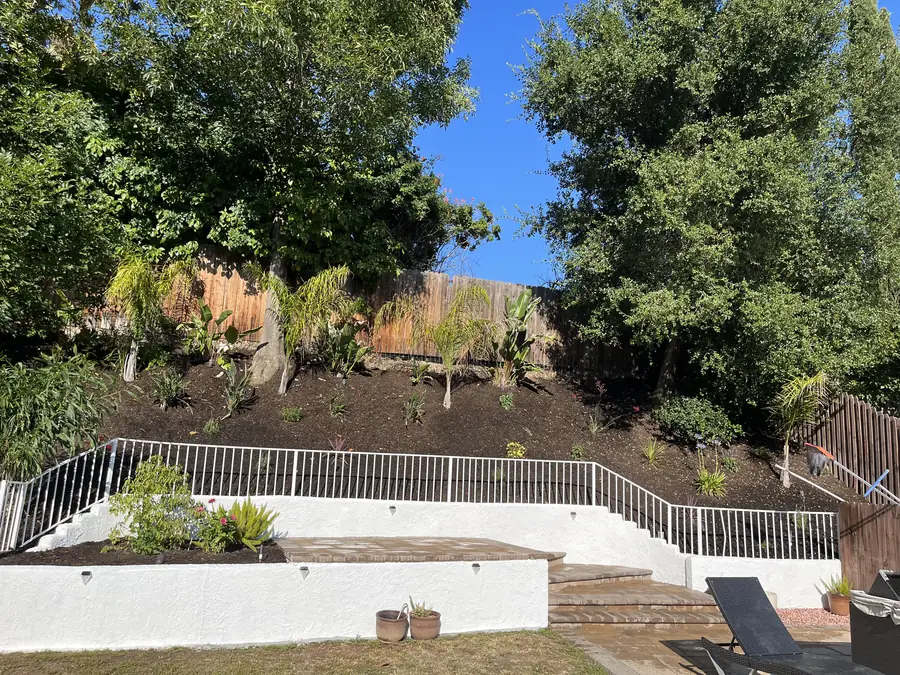
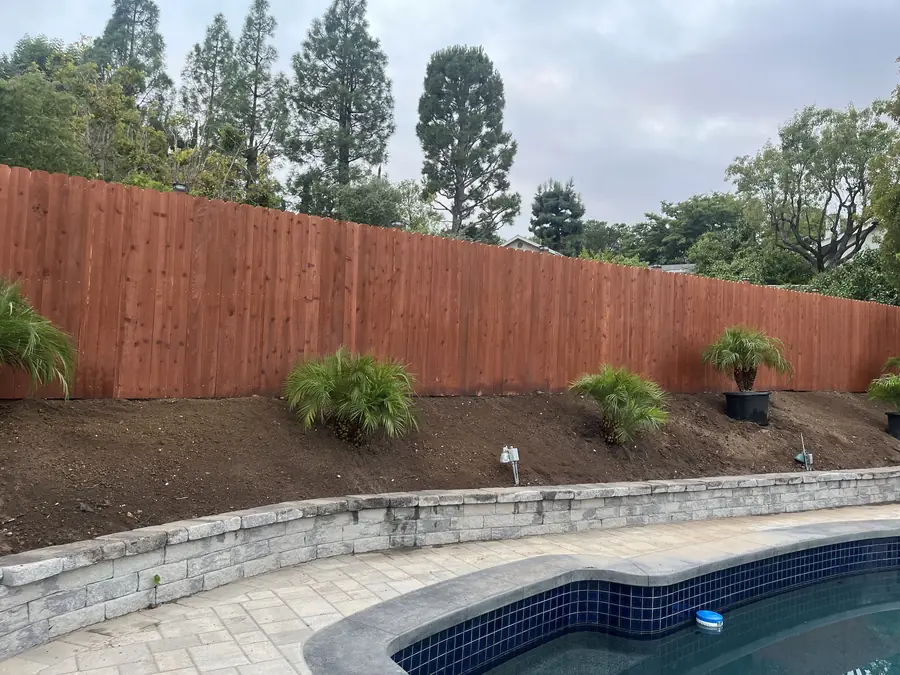
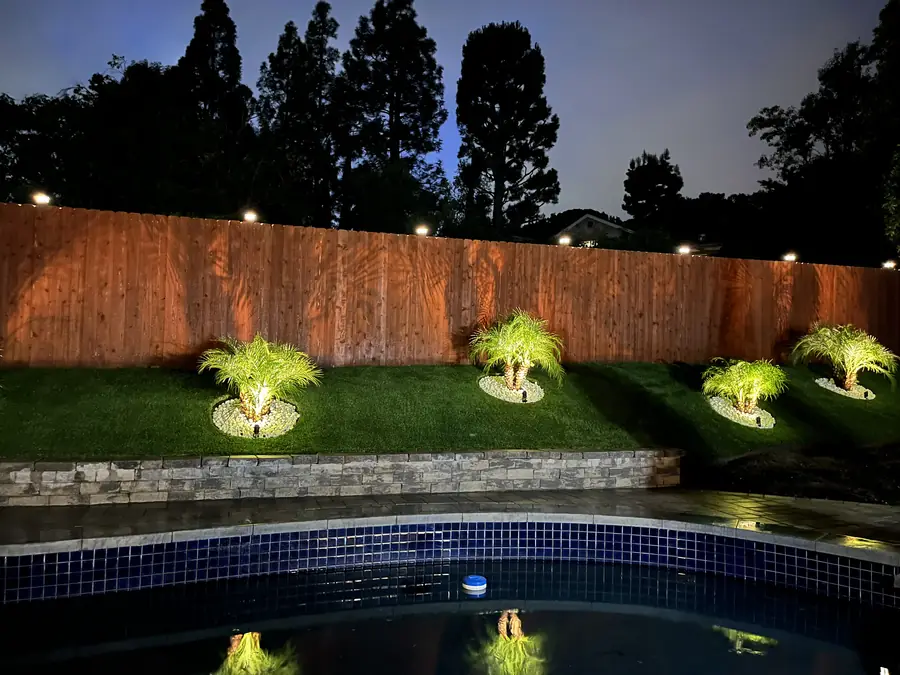
Considerably differently. Once the lot starts climbing toward Mulholland, the usable space has to be created rather than just decorated. That means terracing, retaining where the cut requires it, and erosion control on any slope face that stays exposed. Drainage gets designed rather than assumed, since water arriving from uphill has to be intercepted and carried through the property instead of allowed to sheet across it. Planting on slopes leans toward deep rooted material that binds soil. The design also tends to organize itself around the valley views the elevation provides.
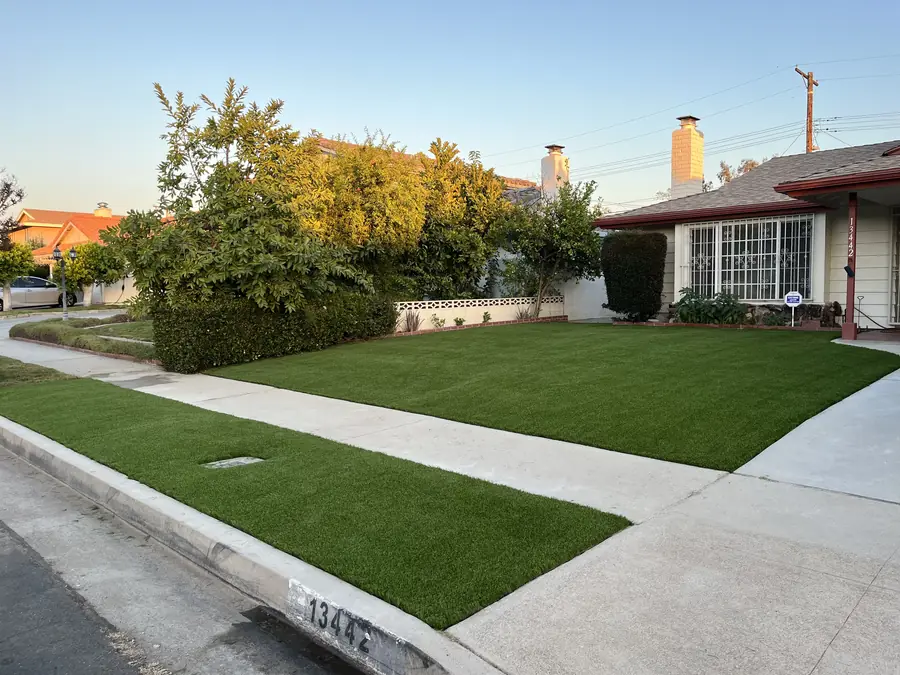
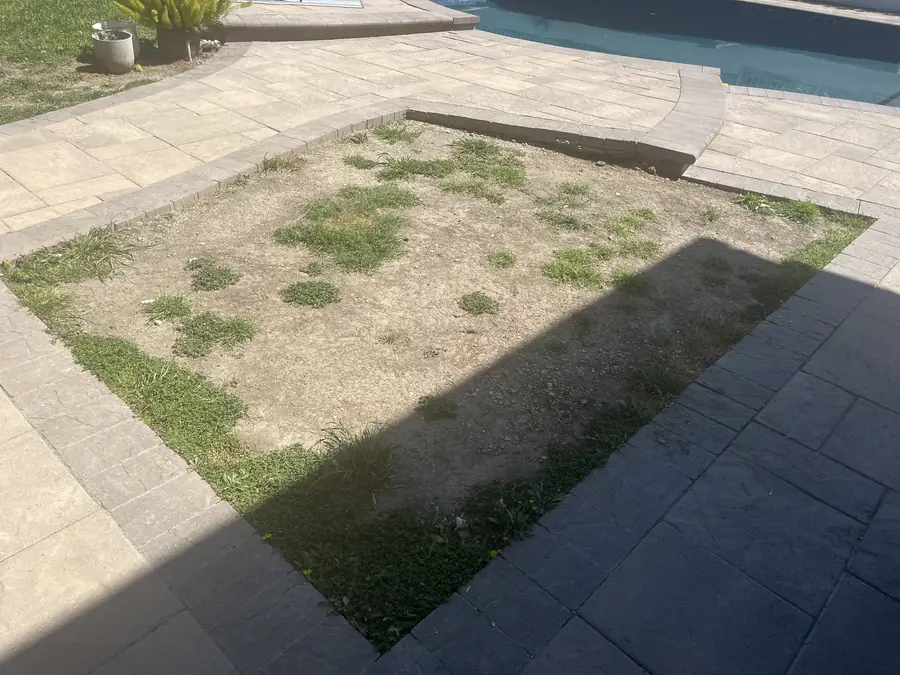
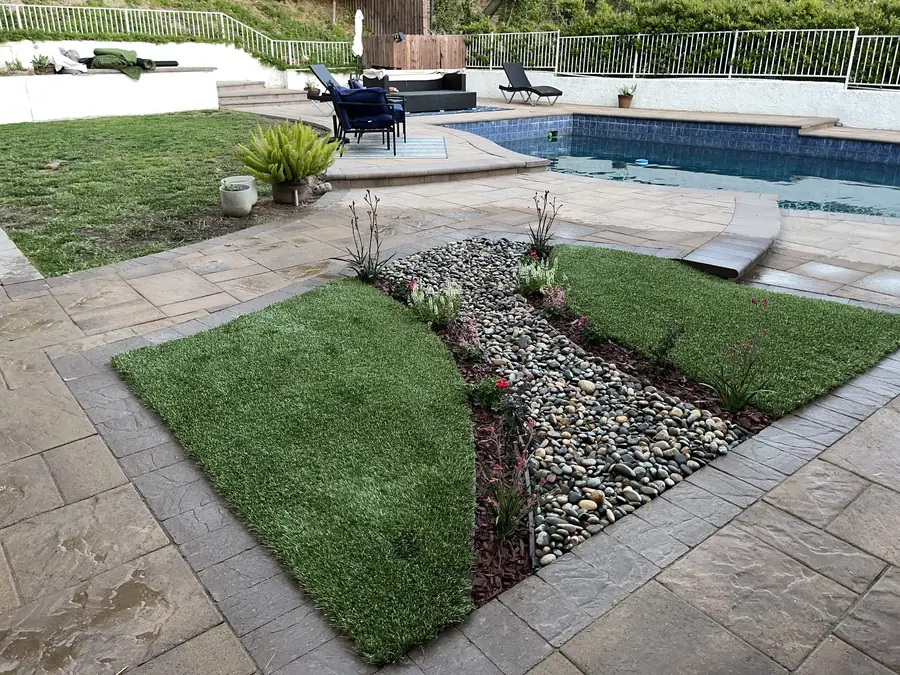
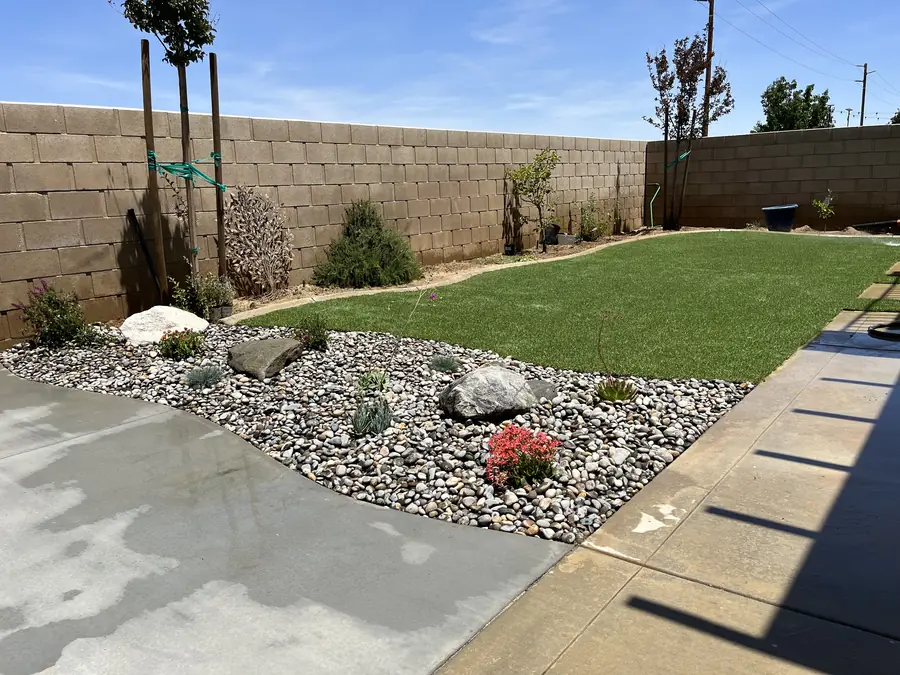
It depends on what the space is actually for. Lawn is worth it where children or dogs use the ground daily and you accept the water and mowing. Artificial turf gives you the same green surface without irrigation, which suits shaded side yards and small flat areas where real grass struggles. Drought tolerant planting covers the most ground for the least water and reads as intentional design rather than a compromise when it is laid out well. Many Sherman Oaks yards end up with a small real or synthetic lawn surrounded by low water planting.
No. Every phase of the work is performed by one licensed contractor. The people who demo your yard, grade it, run the irrigation, and set the plants all work for Daniels Landscaping. We do not hand any part of a project to an outside company. That is deliberate, because it is the only way to hold a consistent standard from the first day to the last and to know exactly who is on your property. It also means questions get answered by the person who actually did the work.
Established neighborhoods carry established root systems, and those roots extend well past the canopy line. Trenching for irrigation gets routed around them, and we hand dig where a trencher would tear through anything structural. Shade from a large canopy also changes what will grow underneath, so we select shade tolerant material rather than fighting it with sun loving plants that will thin out. On the practical side, low branches sometimes limit what equipment can reach a backyard, which affects how material gets moved in.
Most properties already have some system in place, and we evaluate whether it is worth keeping. Older heads and valves are frequently mismatched or leaking, and reusing them undermines a new install. We separate the yard into zones by water need, so trees, shrub beds, and any lawn run independently. Drip goes to planting beds and rotors or sprays go to turf areas. Everything ties back to the controller with a clear schedule, and we walk you through it so you can adjust seasonally rather than guessing.
We remove construction debris and old root mass first, because that is what usually causes problems later. Then compost gets tilled into the top layer of planting areas to open up the structure and feed soil biology. Compacted areas, which are common where equipment has driven or where a lawn sat for years, get broken up so roots can move. Planting holes are dug wider than they are deep, and we backfill with native soil rather than pure amendment so roots grow outward instead of circling in a rich pocket.
Trees are the longest lived thing we install, so they get chosen first and placed first. We consider mature size against the actual space available, root behavior near foundations and paving, whether the tree drops heavily and where that debris lands, and how it will read against the house. On south of the boulevard lots, a tree may also be placed to frame a view rather than block it. Evergreen material handles screening, deciduous material gives summer shade and lets winter sun through.
Mulch is the cheapest thing in the yard doing the most work. A layer two to three inches deep holds moisture in the soil so irrigation runs less, moderates soil temperature, suppresses most weed germination, and breaks down slowly to feed the ground. It also makes new planting read as finished rather than raw. We keep it pulled back from trunks and stems, since piling it against bark holds moisture where you do not want it. It needs topping up periodically as it decomposes, which is normal and beneficial.
On a flat lot, water more or less stays where it lands and a modest slope handles it. On a hillside, water arrives from above with momentum, concentrates in low points, and can carve a channel through a planting bed in a single storm. So we look at the whole path: what is coming down onto the property, where it collects, and where it can legally and safely be released. That usually means catch basins, solid pipe carrying water through the site, and surface shaping that directs flow rather than hoping it behaves.
Getting equipment and material onto a steep property is often the hardest part of the job. Narrow driveways, tight side yards, and steps between grade levels can rule out a skid steer entirely, which means soil, gravel, and plants move by wheelbarrow or by hand. That changes how the work is staged and what is realistically worth doing. We walk the access route before pricing anything, because a design that ignores how a ton of material reaches the back of the property is not a real design.
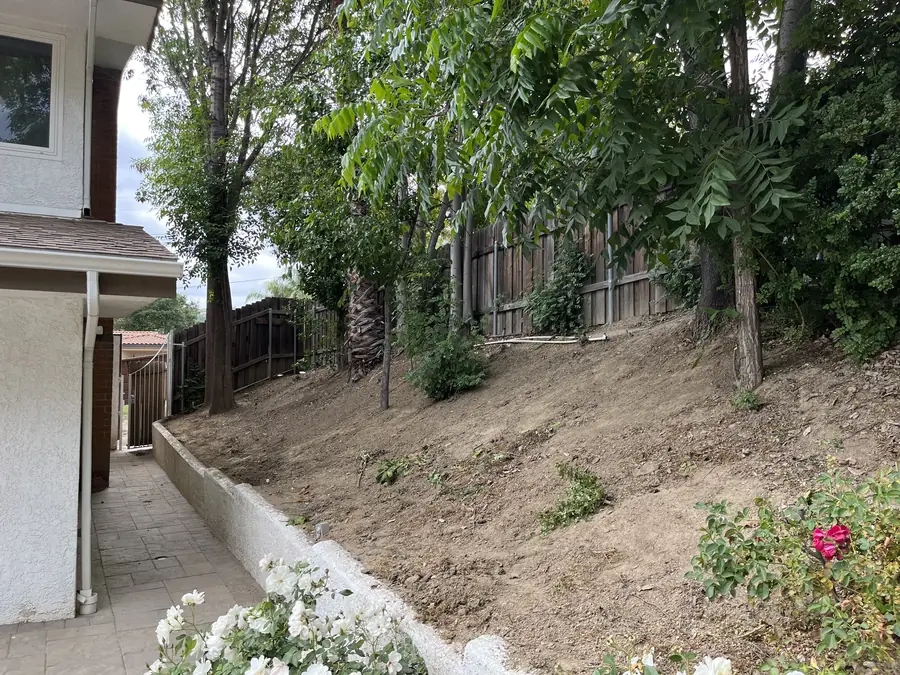
Erosion is stopped by three things working together: slowing the water down, covering the soil surface, and getting roots into the ground. We break long slope runs with terraces or check structures so water never gains speed over a long distance. Exposed soil gets covered, with mulch on gentler faces and with jute or a similar mesh where the pitch is steeper. Then deep rooted ground cover goes in to bind the soil permanently. The planting is the long term fix, and the other measures hold the ground while it establishes.
There is no formula, but yards that feel good usually keep a generous open area and push the planting to the edges and corners. Filling every square foot with shrubs makes a lot read smaller and creates a maintenance burden nobody wants. On flat lots north of the boulevard, a clean open center with layered planting around the perimeter tends to work well. On sloped properties, the open space usually becomes a terrace or two, and the planting handles the slope faces between them.
The first year is the demanding one. New plants need consistent water while roots establish, and the irrigation schedule has to be adjusted as the weather shifts rather than set once and forgotten. Weeds appear wherever soil was disturbed, and pulling them early keeps the problem small. After the first year, established drought tolerant planting settles into seasonal pruning, an annual mulch top up, and periodic irrigation checks. We go over the specific needs of what we planted before we leave the property.
Yes, and on larger properties it often makes sense. The important thing is to plan the whole yard up front even if you build a portion at a time, because irrigation mains, drainage lines, and grading all need to be laid out for the finished condition. Doing that lets us stub out lines during the first phase so later work does not mean digging up something already finished. We generally recommend front yard or main gathering area first, since that is where the daily benefit shows up.
Call us at (818) 443-9300 and we will set up a time to walk the property with you. We look at the grades, the soil, the existing irrigation, and how equipment and material can reach the work area, then talk through what you want the space to do. After that you receive a free written estimate that lays out the scope in plain language so you can see what is included. Daniels Landscaping holds California license 1138709, and all work is performed under one licensed contractor.