
FAQ
Irrigation in Sherman Oaks, answered
The questions we hear most from Sherman Oaks homeowners.
They are three different tools, and mixing them on one valve is a classic mistake. Fixed spray heads throw a fan of water over short distances and put it down fast, which suits small turf areas and tight planters. Rotors shoot a stream that sweeps back and forth across a large lawn, applying water slowly over a longer run time. Rotary nozzles sit in between, sending several slow rotating streams from a spray body, which cuts runoff on slopes and heavy soil. Since each type applies water at a different rate, each type belongs on its own zone.
A zone is everything a single valve turns on at once, and hydrozoning is the practice of grouping plants that genuinely want the same schedule. Lawn does not drink like a row of shrubs, and shrubs do not drink like a bed of California natives that would rather be left alone. When those get mixed on one valve, the schedule ends up set for the thirstiest plant and everything else is drowned. Splitting them costs a little more in valves and wire at install and saves water every month afterward. Sun exposure and slope belong in that grouping too.
Sprinklers are designed to overlap. Spacing heads so the spray from one reaches the base of the next, commonly called head to head coverage, is what produces even application. Gaps between heads show up as dry circles by midsummer, and the usual reaction is to add run time, which floods everything else in order to fix one spot. Matched precipitation nozzles matter for the same reason. A quarter circle nozzle needs to put down water at the same rate as a full circle nozzle on that zone, otherwise corners get soaked while the center stays thirsty.
Drip delivers water slowly at the soil surface through emitters or inline tubing rather than throwing it through the air. In planting beds, around shrubs, along hedges, and in pots it is usually the stronger option, because water reaches the root zone instead of landing on leaves, fences, and pavement, and very little is lost to evaporation or wind. Drip runs longer at lower flow, so its run times look nothing like spray times. It does require filtration and a pressure regulator at the valve, plus occasional inspection, since a clogged emitter is quiet about failing.
Conversion is usually straightforward and often worth doing in established beds. The existing valve and lateral line can generally stay in place. We add filtration and pressure regulation, cap or convert the spray heads, and lay inline drip tubing or point emitters arranged for the plants that are actually there now. The controller schedule then has to be rewritten, because leaving old spray run times on a drip zone underwaters everything on it. Conversions make the most sense where shrubs and groundcover have taken over what used to be lawn, which describes a great many yards right now.
A weather based controller adjusts watering to conditions instead of running identical minutes in February and August. It uses local weather data or an on site sensor to estimate how much moisture the landscape lost, then scales run times up or down. Programmed honestly, with correct plant type, soil, slope, sun exposure, and sprinkler type entered for every zone, it saves a meaningful amount of water and grows healthier plants. Programmed lazily, it is an expensive timer. The setup is the product, which is why we take time entering real values zone by zone.
A rain sensor interrupts the controller once measurable rain has fallen, so your system does not water through a storm and look ridiculous doing it. Some are wired, some are wireless, and many smart controllers accomplish the same result using weather data. Either way the purpose is to skip cycles the landscape does not need and resume automatically once conditions dry out. It is inexpensive, it is required under many local water rules, and it is one of very few upgrades that pays for itself without anyone having to change a habit.
Pressure is the quiet variable that decides whether a system works at all. Too little and heads fail to reach. Too much and spray atomizes into mist that drifts off before it lands, wasting water and wearing out fittings early. On hillside properties south of Ventura Boulevard, the elevation change across a single yard creates genuine pressure differences between the top and the bottom, so a layout that performs well near the house can misbehave at the far end of the slope. We measure static and working pressure, then use pressure regulating bodies, correct pipe sizing, and zone splits to even things out.
Backflow prevention keeps irrigation water from being drawn back into the drinking water supply if pressure in the main drops. Depending on the setup, that means an approved backflow assembly at the point of connection or antisiphon valves installed above the highest head they serve. Codes are specific about type, height, and clearance, and inspectors do look at it. Beyond the code question it is a health protection. Sprinkler water sits in pipe alongside soil, fertilizer, and whatever else is on the ground. We install to whatever the local requirement is for your address.
Valves are the switches, and a manifold is where a group of them is gathered on a common supply. Building a clean manifold in an accessible box, with room to get a hand inside and with labeled wiring, is the difference between a five minute repair and a two hour excavation years from now. We place manifolds where they can be reached without tearing up finished hardscape, keep them out of the sightlines that matter, and on larger or split level properties we may set more than one so runs to distant zones stay reasonable.
The signs usually arrive before the bill does. A soggy patch that never dries, a sudden drop in spray distance, a head that weeps between cycles, moss creeping across hardscape, or a meter that creeps with everything shut off all point toward a leak. We isolate zone by zone, watch the meter, check valve solenoids and diaphragms, then dig only where the evidence points instead of trenching a yard on a hunch. Repairs range from a cracked fitting or broken riser to a lateral crushed by roots, or a mainline failure that has to be located and cut in.
Cycle and soak means splitting one long watering into several shorter starts with rest time between them. It exists because soil accepts water only so fast. Clay, which covers much of Sherman Oaks, takes it in slowly, so a single long run leaves most of the water sitting on the surface, running off down a driveway or a slope. Three short cycles let each pass soak in before the next arrives. On sloped ground the practice is close to mandatory. Every modern controller can do it, and most systems we inspect are not using it.
Clay holds moisture far longer than sandy soil, which changes things in two directions. Water has to be applied slowly, and it has to be applied less often. Deep and infrequent beats short and daily, because it pulls roots downward instead of keeping them parked at the surface. Clay also shifts seasonally as it wets and dries, which is hard on rigid pipe and fittings across the years. When we repair older systems around here, that movement is frequently why a joint finally gave out. Proper depth and bedding help the next system last longer.
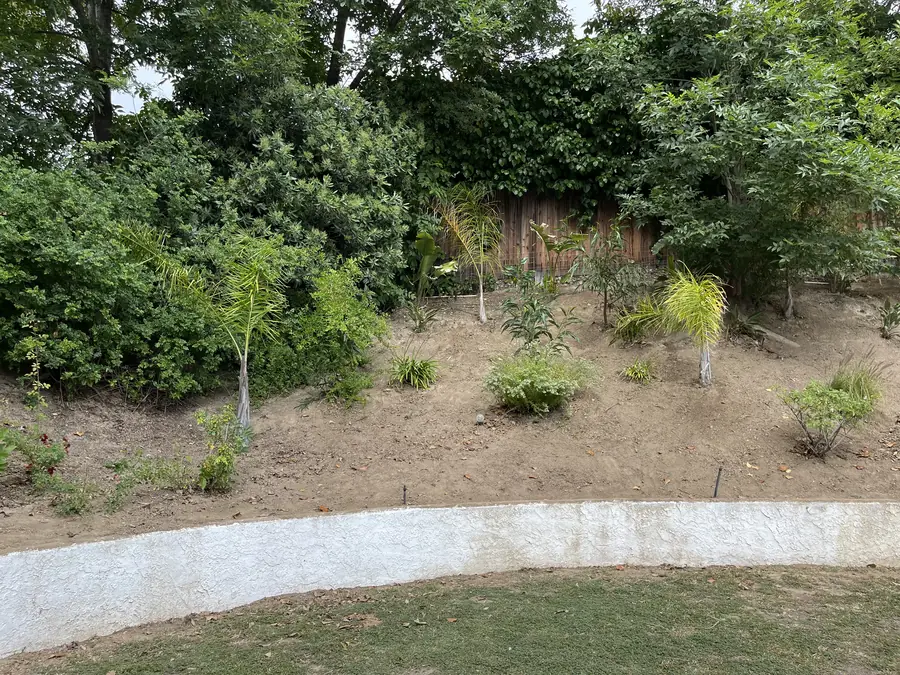
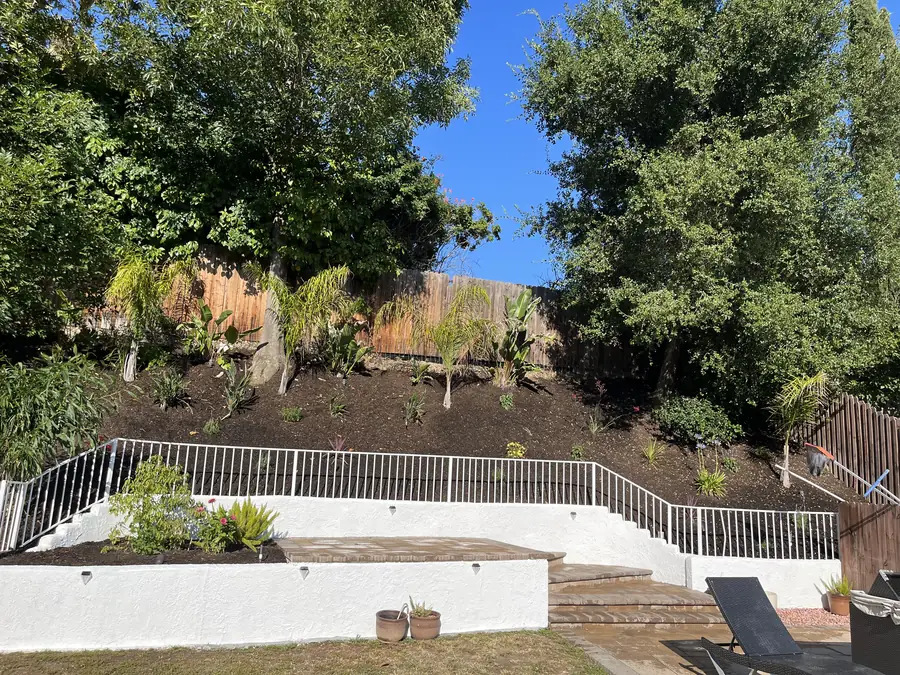
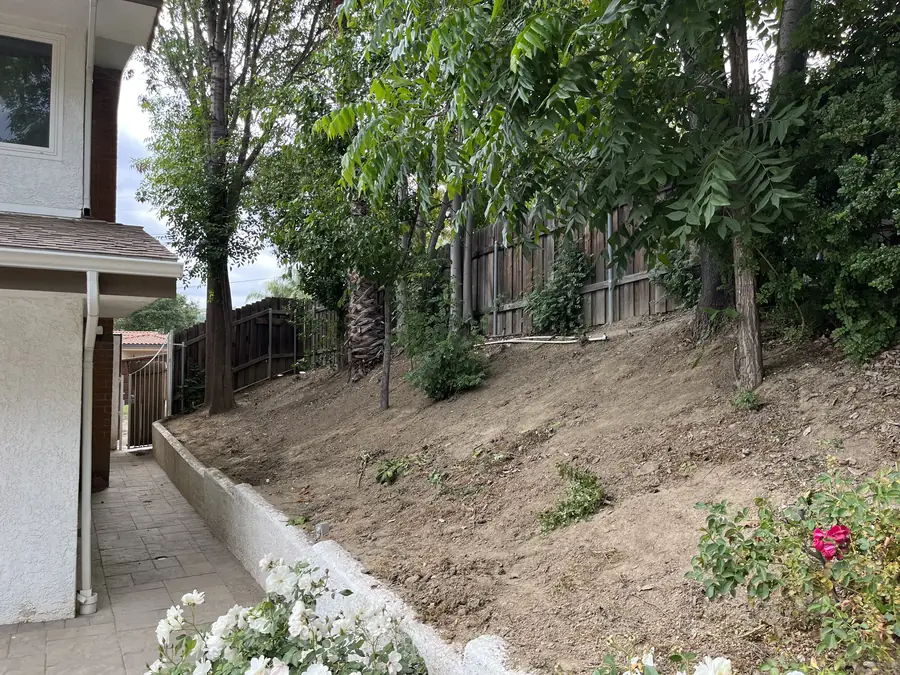
On the slopes above the boulevard, water that fails to soak in does not stay put, it carries soil with it. The design answers are consistent. Apply water slowly using rotary nozzles or drip, run cycle and soak schedules, put the top of the slope and the bottom of the slope on separate valves because they dry at different rates, and avoid throwing spray across terraces where half of it lands on hardscape. Where irrigation meets a drainage plan, we coordinate the two so nobody is quietly feeding a runoff problem all summer long.
Many yards here are on their second or third system, and what sits in the ground is often a patchwork of eras. We find mismatched nozzles sharing one valve, heads buried by decades of grade change, mature street tree roots wrapped around laterals, and controller stations wired to zones nobody can identify anymore. Rather than guess, we map what exists, test each valve, and tell you plainly which parts are worth keeping and which are past saving. On a refined property, a rebuilt system that is labeled and documented is worth the extra effort.
State rules change and local agencies set their own watering day and time limits, so any schedule we program is built to fit whatever is in force for your area. Beyond compliance, the equipment that uses less water is the same equipment that grows better plants, meaning drip in beds, rotary nozzles on slopes, honest zoning, and a controller that reacts to weather. Rebates for efficient irrigation equipment or turf replacement are sometimes offered through local water agencies. Programs and eligibility shift over time, so we point you to the agency rather than promise you anything.
No, and that is deliberate. Every irrigation install and repair is performed by our own employees. Daniels Landscaping stays accountable for the work. Irrigation is a trade where the person who trenched the line, the person who wired the valves, and the person who programs the controller need to be the same team, because a mistake at one step hides inside the others. Keeping it under one contractor also means the crew already knows your system when you call a year later with a question. One company is responsible for the result, and that company is ours.
Reach Daniels Landscaping at (818) 443-9300 and we will schedule a visit. For a new system we look at water source, pressure, plant material, sun exposure, soil, and grade before drawing a single zone. For an existing system we run each valve while you watch, so you can see what your system is truly doing. Either way you receive a free written estimate listing zones, equipment, and scope in plain language. We hold California license 1138709, and one licensed contractor performs the work from the first trench to the final controller setting.