
FAQ
Artificial Turf in Sherman Oaks, answered
The questions we hear most from Sherman Oaks homeowners.
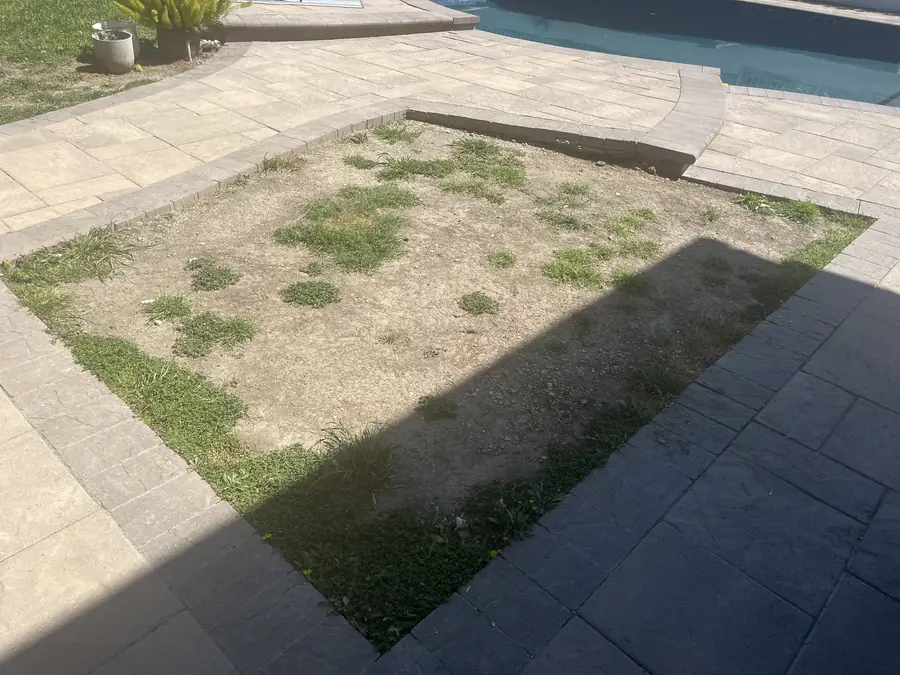
We remove the existing lawn or surface down several inches, then install crushed aggregate and compact it in layers to a firm, even plane with a slight pitch for drainage. A weed barrier goes down where conditions call for it. The turf is unrolled and left to relax so the backing loses its roll memory, then cut to the perimeter and seamed where panels meet. Edges are secured with nails or staples into the base. Finally infill is spread and power broomed in, which stands the blades up and gives the lawn its finished look.
Face weight is the weight of yarn per square yard, not counting the backing, and it is the most honest single number for density. Higher face weight means more fiber packed into the same area, which resists matting under traffic and looks fuller. A lightly used decorative area can go lighter without regret. A backyard where a family and a dog live on the lawn every day should be heavier, because that is what determines whether it still looks good after two summers. Face weight is also the main driver of cost.
Pile height is the length of the blade. Shorter pile, roughly an inch or a bit over, stays upright naturally and gives a clipped, formal look that suits refined front yards. Longer pile looks lusher and more natural but lies down more readily under traffic and needs adequate infill and periodic brushing to stand back up. Most residential installations land in the middle. Longer is not automatically better. A tall pile with insufficient density mats quickly and starts looking tired, while a moderate pile with high density holds up well.
It does, more than most people expect. The cross section of each fiber determines how stiff it is and how it handles light. S shaped, W shaped, and diamond profiles have more structural rigidity than a flat blade, so they stand back up after being walked on instead of staying flattened. Shape also affects glare, since a flat fiber reflects light like a mirror and reads plastic in direct sun, while a contoured blade scatters light and looks more like grass. Better products also mix blade colors and add a brown thatch layer at the base.
Yes, always. One licensed contractor performs the entire installation, from excavation and base compaction through seaming and infill. One licensed contractor stays accountable for the work. Turf is unforgiving of shortcuts, and a bad seam or a base that was compacted carelessly cannot be hidden once the lawn is down. Keeping the work with our own trained crew is how we control that. The team that shows up the first morning is the team that finishes, and they are accountable to us for the result.
Infill is the granular material brushed down between the blades after the turf is laid, usually silica sand or a coated sand product. It does real work: it weighs the turf down so it stays flat, it supports each blade at its base so the lawn does not mat, and it protects the backing from sun. Turf installed without adequate infill lies down, wrinkles, and wears out fast. For yards with dogs, an antimicrobial coated infill helps control odor. It needs occasional topping up in high traffic paths.
The backing is perforated with drainage holes across the full sheet, so rain and hose water pass straight through rather than pooling. Below that, the compacted aggregate base is permeable and carries the water down and out. That is why the base cannot simply be dirt. On Sherman Oaks clay, which drains slowly, the base layer becomes the drainage system itself, and on hillside lots we often tie it into a subsurface line so water leaves the area rather than saturating the soil under the lawn.
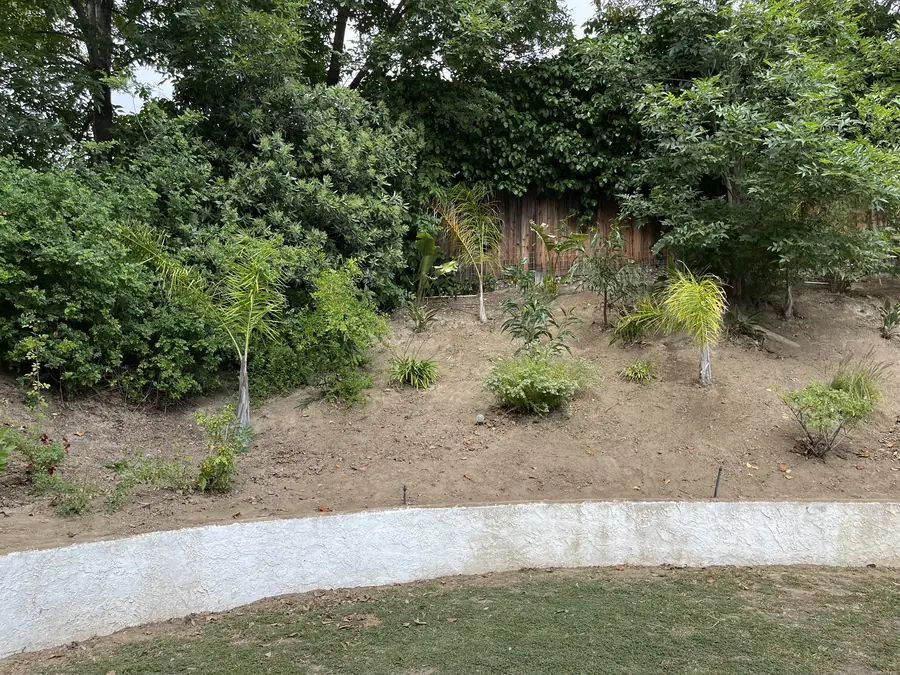
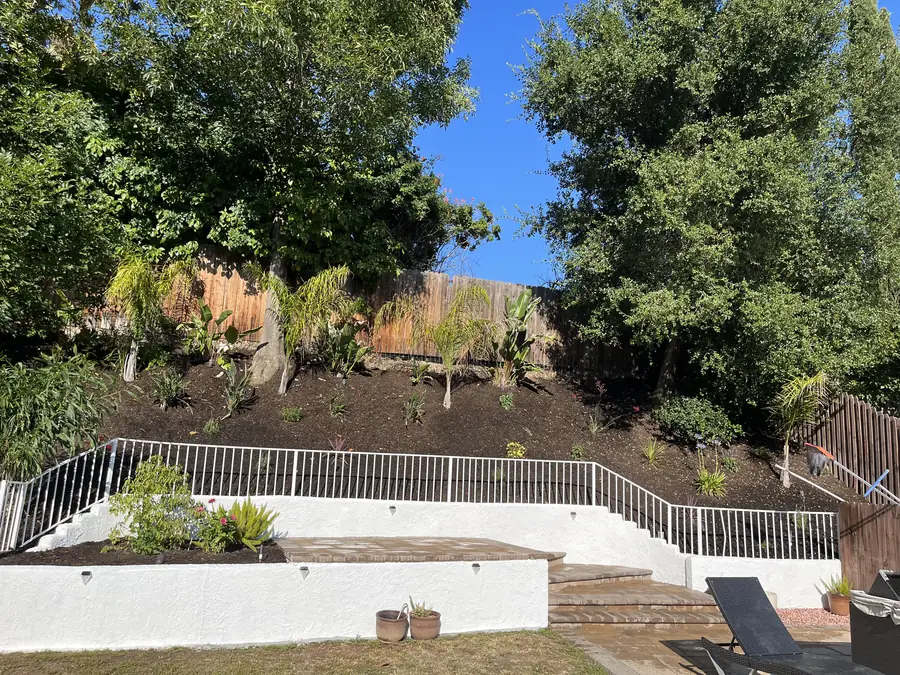
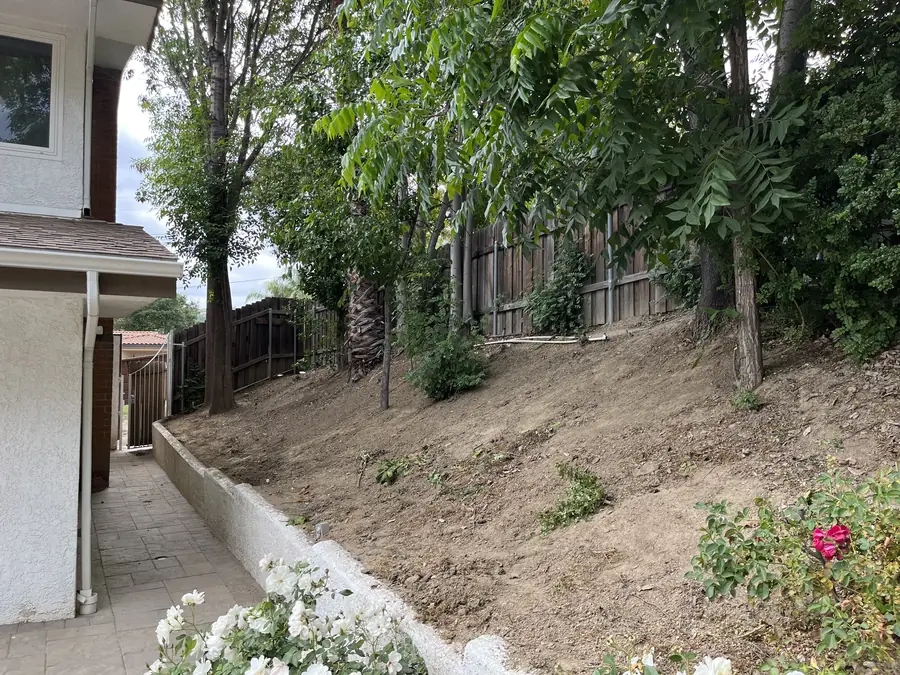
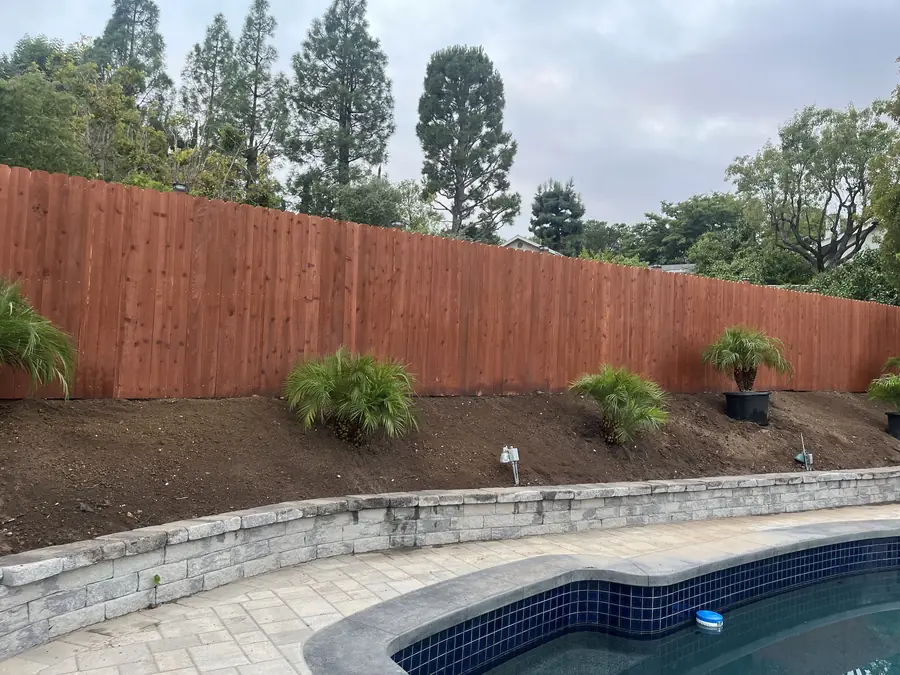
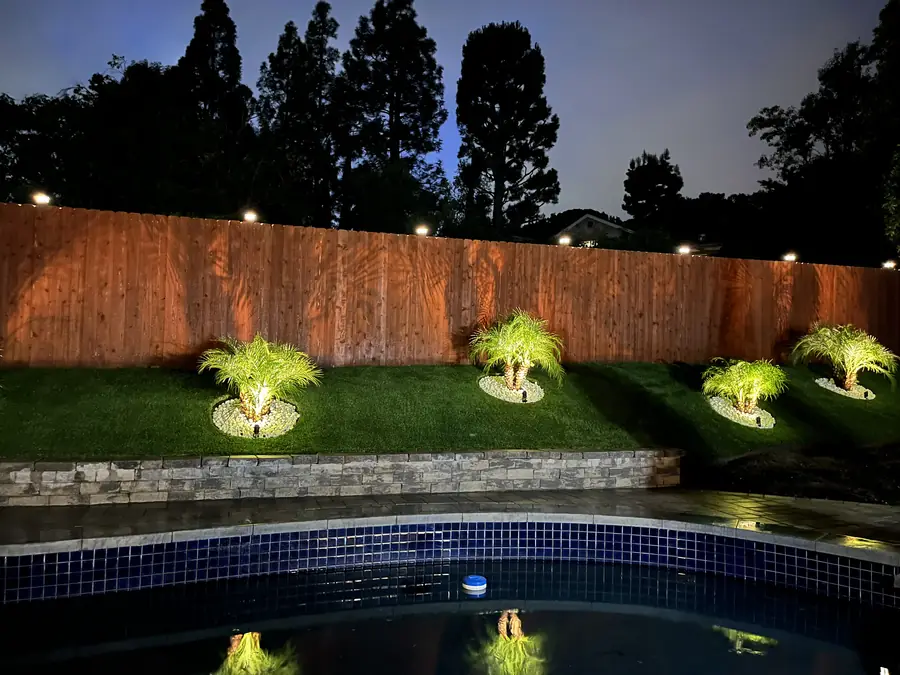
Yes, and on the hillside properties south of the boulevard it is often the better choice. Real grass on a slope is difficult to irrigate evenly, hard to mow safely, and prone to erosion. Turf covers the soil completely and holds it. The critical part is anchoring, since gravity pulls a large sheet downhill over time. That means additional fastening, and on steeper faces we build in horizontal anchor points across the run. Base preparation on a slope also has to resist washing out from above, so uphill water gets intercepted first.
Whatever shape the base is in, the turf will copy it. A low spot in the aggregate shows as a dip in the finished lawn, a high spot shows as a bump, and neither can be corrected afterward without pulling the turf back up. The base has to be graded to a consistent plane, compacted in lifts so it does not settle later, and pitched for drainage. This is the slowest part of the job and the part that separates a lawn that still looks right years on from one that does not.
Every panel of turf has a grain direction, and all panels must run the same way, otherwise the seam shows as a color change from certain angles. The factory edge gets trimmed off and the pieces are cut to butt together precisely, not overlapping and not gapped. They are joined with seam tape and adhesive or stitched, then the blades along the joint are teased up so fibers from both sides mix. Done properly, you cannot find the seam. Done carelessly, it becomes the first thing you notice.
It works well for dogs, which is a common reason people install it. It does not develop mud, it will not be dug into holes the way soil is, and urine does not burn yellow patches into it. Solids get picked up as usual and the area rinsed down. Liquid passes through the perforated backing into the base. To manage odor over time, use a coated infill designed for pets and rinse the lawn periodically, more often in hot weather. Enzyme cleaners handle anything that lingers.
Maintenance is light but not zero. Leaves and debris come off with a leaf blower or a plastic rake, and a stiff broom or power broom used occasionally lifts the blades back up in areas that get walked on most. A rinse with a hose clears dust, which matters here where dry months build up a film. Spills wipe up with mild soap and water. Under the mature street trees common in these neighborhoods, expect more leaf litter and plan on blowing it off more regularly.
In direct summer sun it does get noticeably warmer than natural grass, since there is no evaporation cooling it. It cools down quickly once shaded or once hosed briefly. Lighter colored infill absorbs less heat than dark, and some products use cooling technology in the yarn, which helps somewhat. In practice, the layout matters most: a lawn that sits under a canopy or gets afternoon shade from the house stays comfortable. Full sun areas with no shade at all are worth thinking about carefully before committing.
Edges are where a turf lawn either looks built in or looks like a rug thrown down. Along a hard edge such as a patio or walkway, the turf is cut tight to the material and fastened into the base right at the line. Against planting beds we install a bender board or metal edge to give the turf something firm to be secured to and to keep the bed material from spilling over. Nails or staples go in at close spacing around the whole perimeter, since the perimeter is what holds the field.
A quality product installed correctly holds up for many years of normal residential use. What eventually ends its life is fiber wear in the paths people walk most and gradual loss of resilience from ultraviolet exposure. Density and base quality are the two things that most affect longevity, which is why we do not recommend cutting the specification to save on the front end. Keeping infill topped up and brushing traffic areas extends it further. Failures well short of the expected span almost always trace back to installation rather than the material.
Shady side yards are one of the best applications for it. Real grass under a dense canopy or between two structures gets thin, patchy, and muddy no matter how it is cared for, and those areas around here often stay damp on clay soil. Turf does not need light, so it stays uniformly green. The base still needs to drain properly, which matters more in a shaded area since it dries slowly. Expect a little more debris cleanup where trees hang over the space.
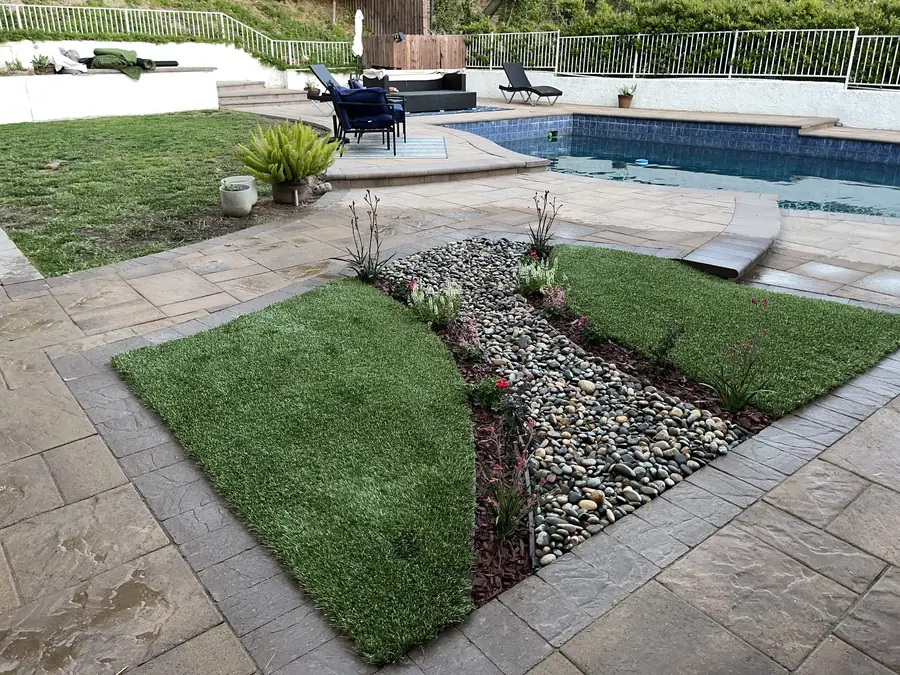
It reads best when it is treated as one element in a designed yard rather than as a wall to wall replacement for everything. A defined turf panel surrounded by planting beds, framed by a paver or stone edge, looks intentional. Turf run to every property line usually does not. In the established, well kept neighborhoods along this part of the valley, that detailing is what separates a refined result from an obvious one. We plan the turf area alongside the planting and hardscape rather than after them.
Give us a call at (818) 443-9300 and we will come measure the area and look at the conditions, including how the site drains, how much sun it takes, whether pets will use it, and how material can be brought in. We will show you product options and explain the tradeoffs between them honestly. You then get a free written estimate covering excavation, base, turf, infill, and edging. Daniels Landscaping holds California license 1138709, and the installation stays under one licensed contractor.