

FAQ
Landscape Lighting in Sherman Oaks, answered
The questions we hear most from Sherman Oaks homeowners.
The system runs on 12 volts instead of household current. A transformer mounted near an exterior outlet takes 120 volt power down to 12 volt, and everything past that point is low voltage cable and fixtures. The practical benefits are safety, since a nicked low voltage cable is not the hazard a line voltage cable would be, and flexibility, because fixtures can be moved, added, or reaimed later without rebuilding anything. Burial requirements are lighter as well. The tradeoff is that low voltage is sensitive to run length and load, which is precisely where careless installations come apart.
Selection starts by adding up the wattage of every fixture, then leaving real headroom so the unit is not running at its limit and you have room to expand later. Multiple taps, meaning terminals at slightly different output voltages, allow long runs to be corrected. Placement should be near the power source, reachable for service, out of the sightline from the patio, and protected from sprinkler spray. On larger properties, particularly split level ones, two smaller transformers positioned closer to their fixtures usually outperform one large unit trying to reach an entire yard from a single corner.
Voltage falls as current travels down a wire, and low voltage systems have very little to give away. A fixture at the end of a long undersized run receives less voltage than the one nearest the transformer, and the visible result is dim, yellowed, uneven light down the line. Hillside properties south of Ventura Boulevard turn this into a daily design problem, since the runs are long and the terrain forces the transformer to sit well away from the farthest fixtures. We size wire generously, balance loads, use hub wiring, and select taps so every fixture lands in range.
Cable goes into a shallow trench, kept away from where a shovel is likely to land, and routed along bed edges rather than straight through the middle of a lawn. Two wiring approaches exist. A daisy chain strings fixtures one after another, which is fast and compounds voltage drop with every fixture. Hub wiring sends a heavy home run out to a junction point, then short equal spurs from that hub to nearby fixtures, so everything on the hub sees similar voltage. Hubs use a bit more wire and produce a far more even result, so that is how we build.
Path lights sit low and light the ground for safe walking, and they are not meant to be stared at. Uplights and bullets sit at grade and throw a controlled beam up a trunk, a wall, or a column. Well lights are the same idea buried flush, used where a visible fixture would clutter a clean lawn or patio. Step and wall lights recess into the hardscape itself, putting light exactly where feet land. Wash and flood cover broad surfaces such as a facade or a long hedge. Most good plans use four or five of these together.
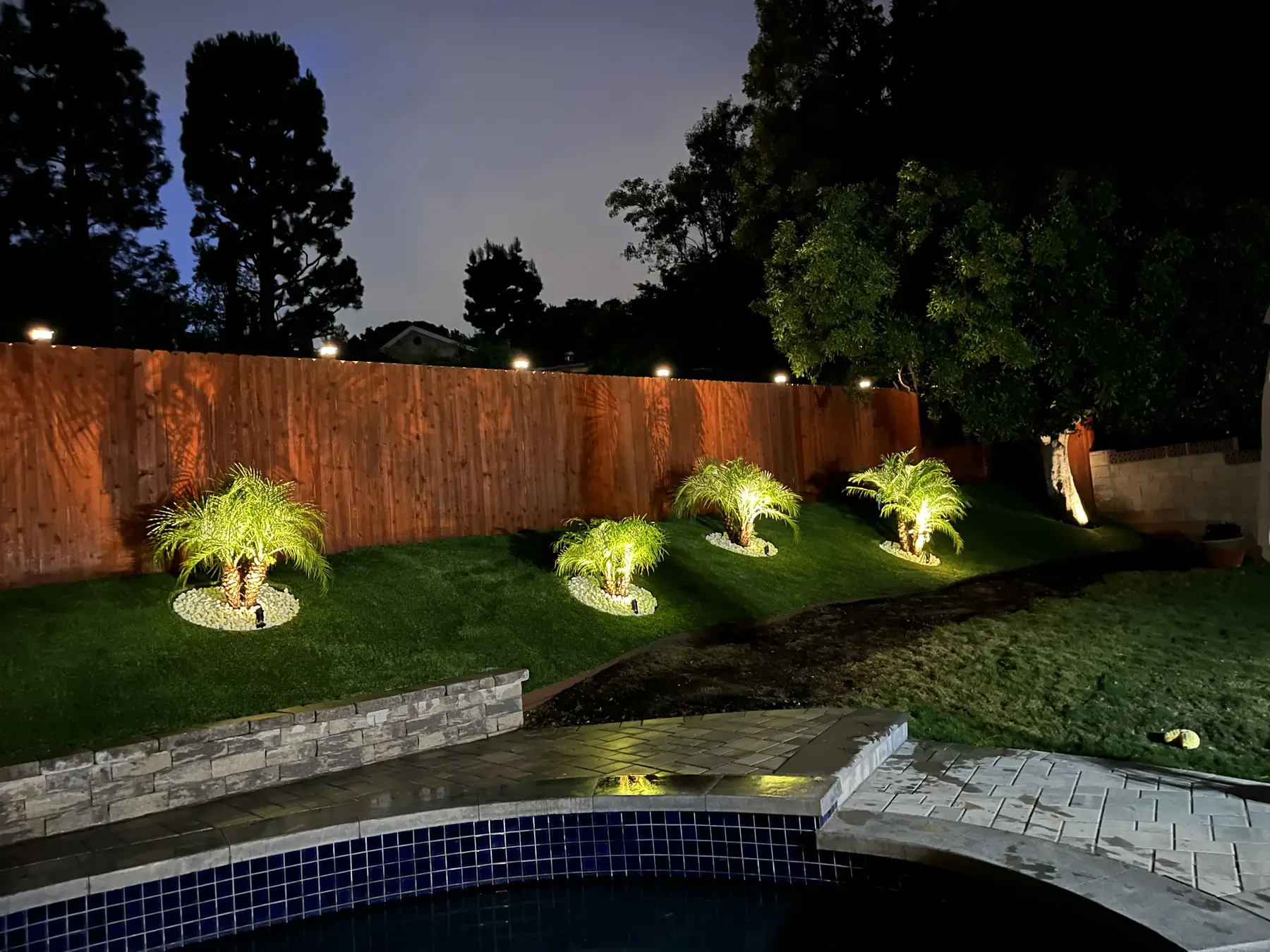
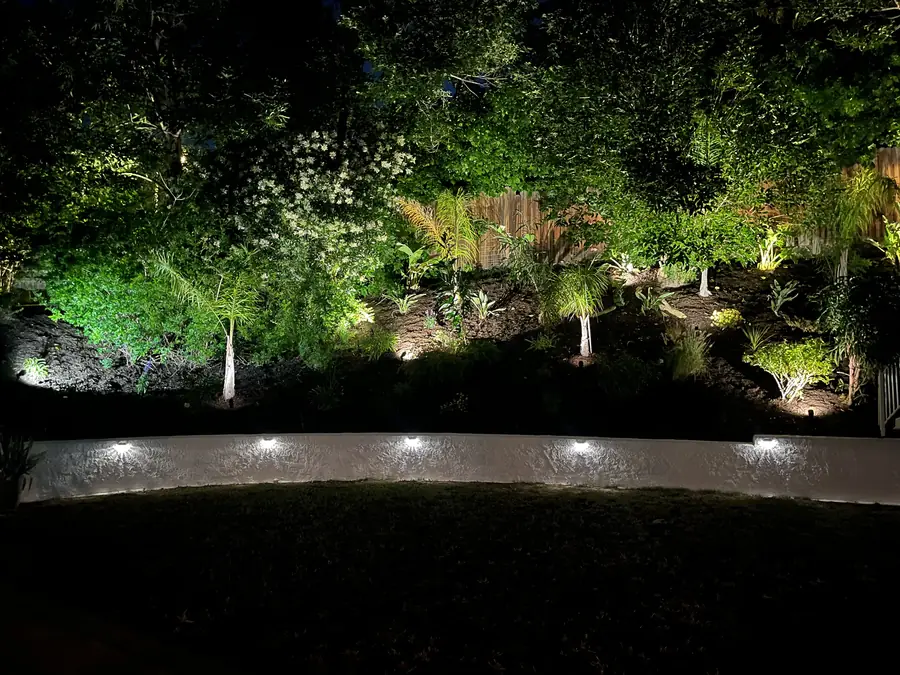
Depth comes from lighting things at different distances, not from lighting everything at the same level. A plan that reads well usually has a foreground layer of path and step light near where you walk, a middle layer of shrubs, seat walls, or specimen plants, and a background layer of trees and structures that gives the eye somewhere far away to land. Silhouetting a plant against a lit wall, or grazing light across stone to raise its texture, adds another dimension. When every fixture is identical at identical spacing, a yard looks flat and vaguely commercial.
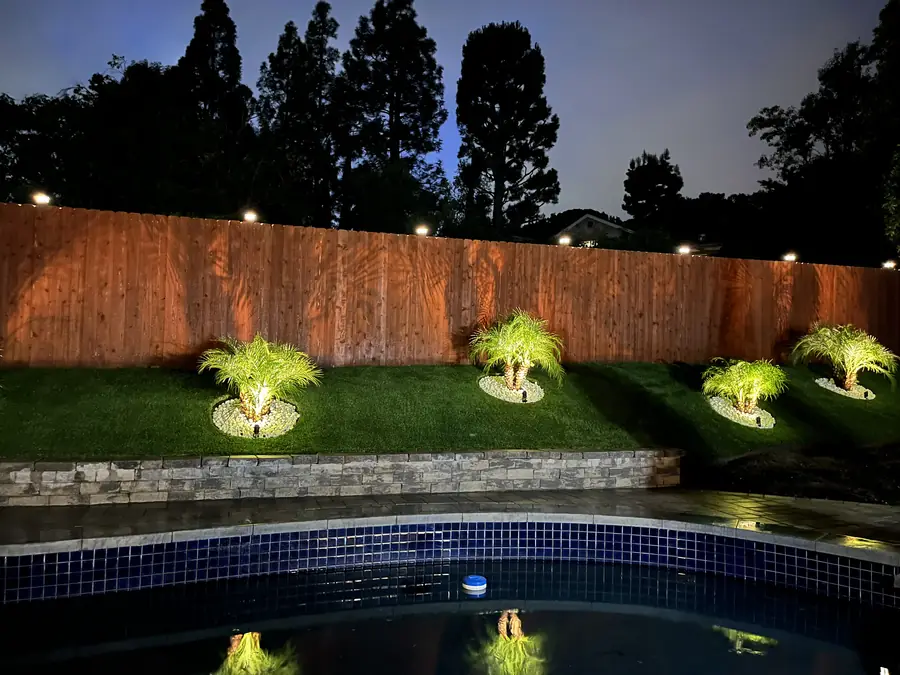
Glare is the single biggest difference between lighting that looks expensive and lighting that looks cheap. You should see the effect and not the source. We control it by aiming away from seating and sightlines, adding shrouds and hoods that extend past the lamp, fitting glare guards or honeycomb louvers on bright uplights, dropping output where a fixture sits near eye level, and tucking fixtures behind planting. Path light selection matters too, since a well designed hat pushes light down instead of spraying it sideways. We aim at night, on site, with the client present.
Nearly all of the work we do now is LED. Draw is low, which means more fixtures per transformer and lighter loads on the wire, and lamps last long enough that relamping stops being an annual chore. Quality varies enormously though. Cheap LED lamps shift color as they age, fail early in summer heat, and produce beams with hard edges and odd artifacts. Solid brass and copper fixture bodies with good optics and replaceable lamps cost more up front and stay serviceable for years. Fixtures with the lamp sealed permanently inside become disposable the moment one dies.
Warm light flatters both landscape and architecture, and consistency matters more than the exact number. Most residential work sits in the warm range, roughly what a traditional halogen produced, because it makes stone, wood, and foliage look natural rather than clinical. Cooler light can be used deliberately, for instance on a palm or on blue toned foliage, but scattering mismatched color temperatures around a yard is jarring and impossible to unsee once noticed. We keep the plan consistent by default and vary it only where there is a reason. Beam spread deserves the same care.
A photocell senses darkness and switches the system on at dusk automatically, adjusting itself as the seasons move. A timer or astronomic clock handles the off time, usually set for when the household actually goes to bed rather than left burning until sunrise. Many transformers combine both, and app controlled units add zones, scenes, and schedules for anyone who wants them. Splitting the system so safety lighting on paths and steps can stay on later while display lighting shuts off earlier is a small refinement that saves energy and keeps the street from glowing all night.
Fixtures get the attention and the installation determines the result. One brass uplight can look striking or look like a spotlight stuck in a bush depending on distance from the trunk, aiming angle, beam spread, shielding, and the voltage it is actually receiving. We have walked properties full of expensive fixtures that were daisy chained, never aimed, and drooping at the end of a long run. Sherman Oaks buyers generally expect refined detailing, and lighting is where sloppy work shows most clearly after dark. Invest in layout, wire, connections, and aiming before catalog names.
Established streets in this area carry large mature trees, and they are usually the best thing on the property to light. Two or three uplights spaced around a trunk read far better than one, since a single source flattens the canopy and drops a hard shadow behind it. Fixtures go outside the drip line where practical, mounted so they can be adjusted as the tree grows, with slack left in the cable so nothing gets strangled a few seasons later. Moonlighting, meaning a downlight mounted high in the canopy, casts branch shadows across the ground and looks remarkably natural.
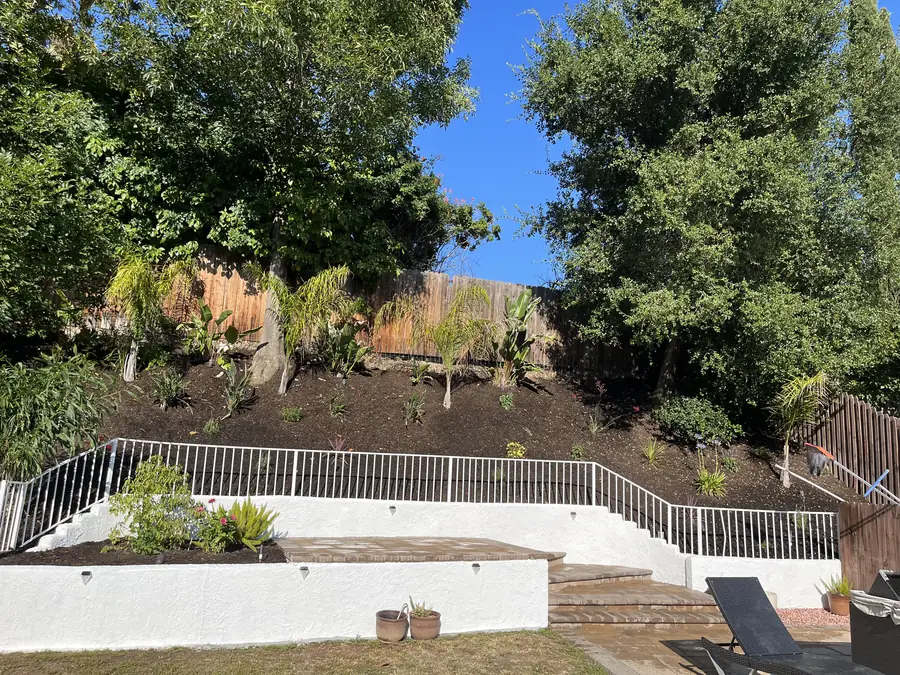
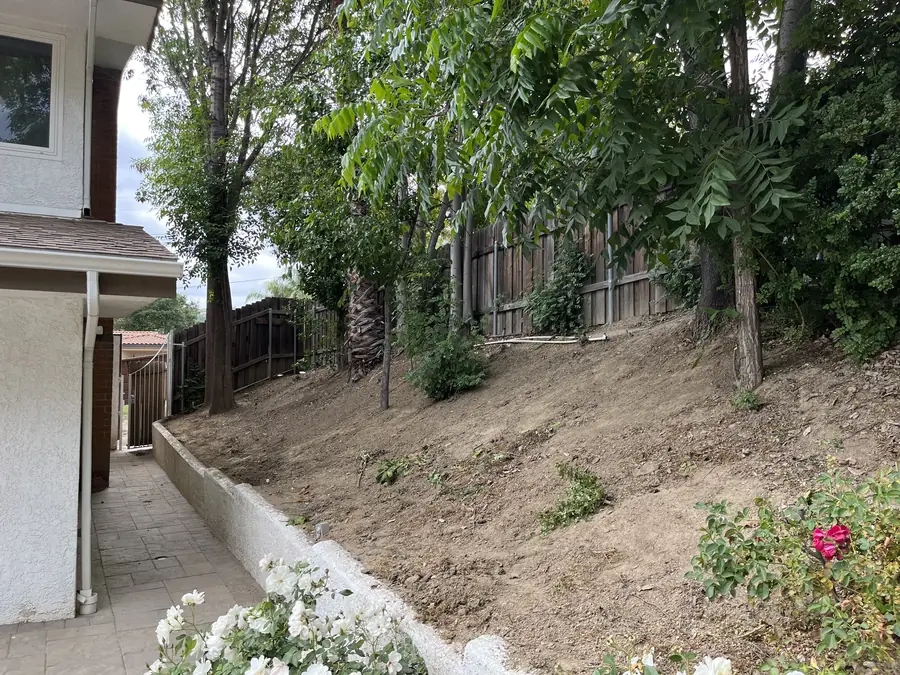
On the sloped properties above the boulevard, lighting is a safety system before it is a design feature. Every grade change, every run of steps, and every terrace edge should be readable without anyone having to think about it. Recessed step lights and low wall lights handle that quietly, since path lights along a stair run tend to shine straight into your eyes on the way down. Retaining walls and terrace faces take grazing light from below very well, showing the stone and marking the level change at once. Access also shapes fixture placement and trenching routes.
When a property looks out over the valley, the lighting plan has to protect that view instead of competing with it. Bright fixtures aimed outward, or too much light near the edge, turn the glass into a mirror and erase the view completely. What works is restraint at the far edge of the yard, brightness held closer to the house and the walking surfaces, and a few deep background accents to give the middle distance some shape. Downward aiming and shielded sources also keep light off neighbors, which matters on a hill where everyone can see everyone.
Clay does not forgive a lazy trench. It holds water, moves as it wets and dries through the seasons, and works slowly on anything buried in it. We sleeve cable in conduit where it passes under hardscape or crosses a drive, hold depth consistent, avoid low spots where a connection would sit in standing water, and leave service loops at fixtures so seasonal movement pulls on slack instead of on a splice. Connections are the weak point in any low voltage system, so ours are made with waterproof connectors rather than twist caps buried and forgotten.
Landscape lighting is low maintenance and not zero maintenance. Over time plants grow into beams, mulch and soil creep over well lights, fixtures drift out of aim, lenses cloud, and a corroded connection dims an entire run. One pass in the fall to reaim, clean lenses, clear planting, check connections, and reset the schedule keeps a system looking the way it did on the first night. If a section goes dark, the cause is usually a connection, a lamp, or a transformer tap rather than the whole system, and diagnosis is normally quick.
One licensed contractor stays accountable for the work. Daniels Landscaping employs one licensed contractor, and those are the people who trench, wire, set, and aim every fixture on your property. Keeping it under one contractor is why we can come back at night and adjust something because you decided a beam sits a foot too far left. It also keeps the standard consistent, since the same team makes the same connections the same way on every job. When one company installs the system and stands behind it, nobody spends time deciding who owns a problem.
Call (818) 443-9300 to set up a walk through. Daylight tells us where fixtures can sit and how cable will route. What we generally recommend alongside that is a second look after dark, because that is when the trees, walls, and grade changes worth lighting reveal themselves. You will receive a free written estimate covering fixture counts and types, transformer, wire, and the aiming visit, with no vague line items. Daniels Landscaping holds California license 1138709, and the crew installing your system works for us directly.