

West Hills lighting
Landscape lighting questions, answered
What West Hills homeowners ask before they light the yard.
It is priced by fixture count plus the transformer and the cable runs, so a West Hills lot usually costs a bit more than an equivalent job in the flats simply because the runs are longer. A modest front yard system is one of the smaller line items in any yard budget. We quote the fixture count after walking the property, and we would rather start you with fewer fixtures aimed well than more fixtures aimed badly.
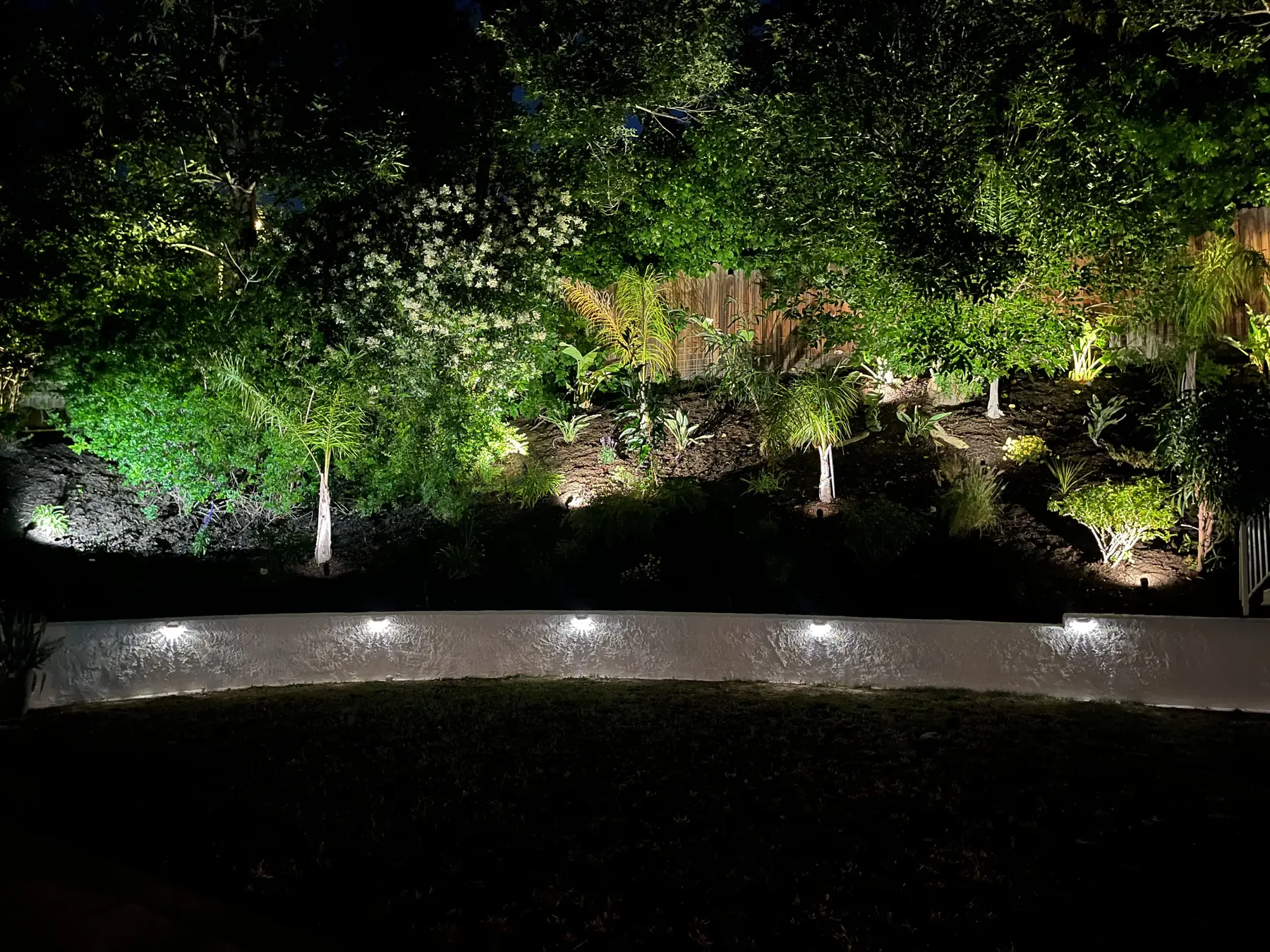
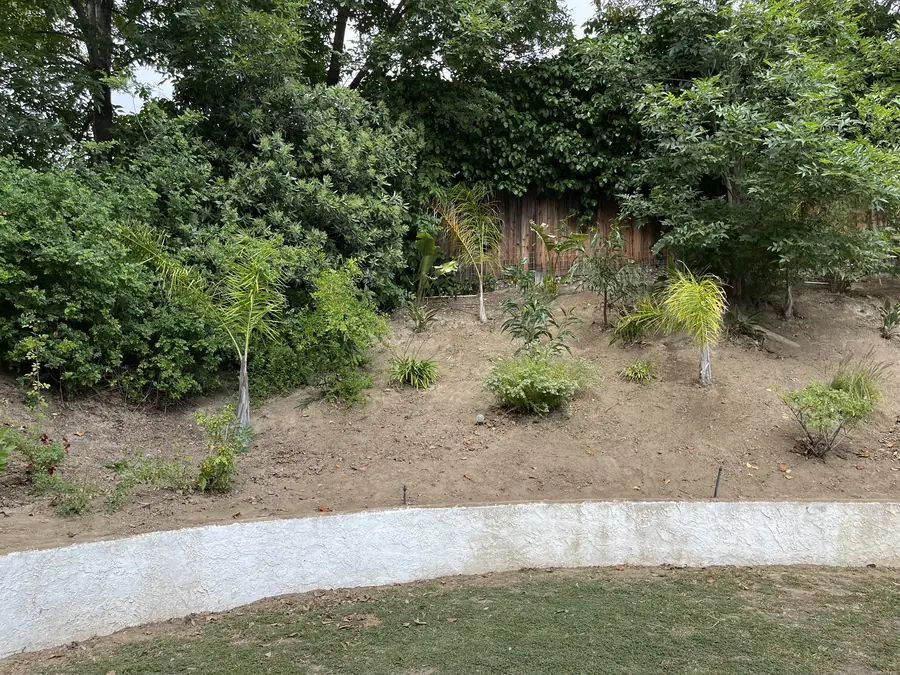
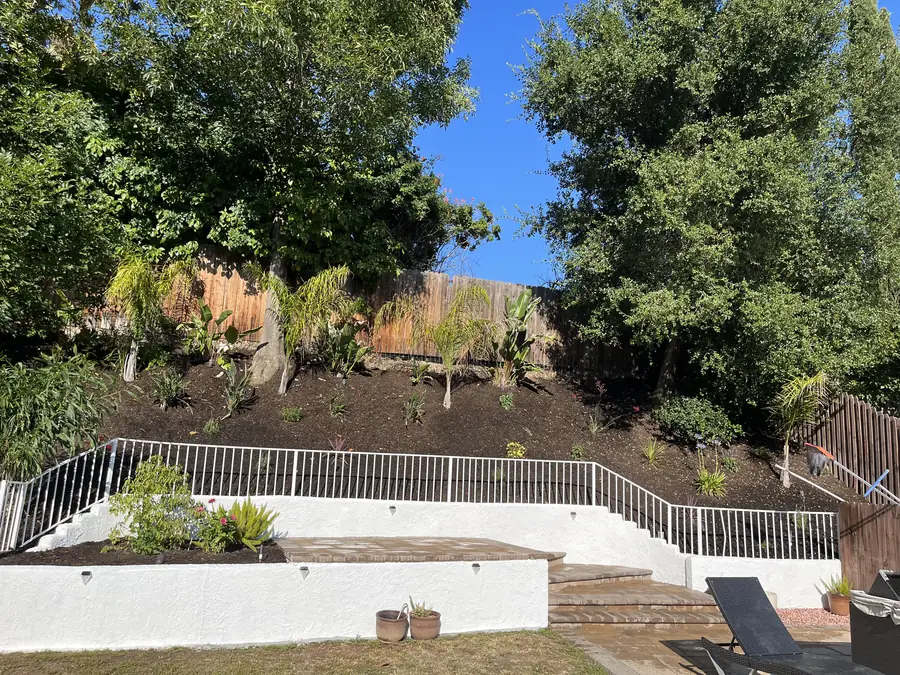
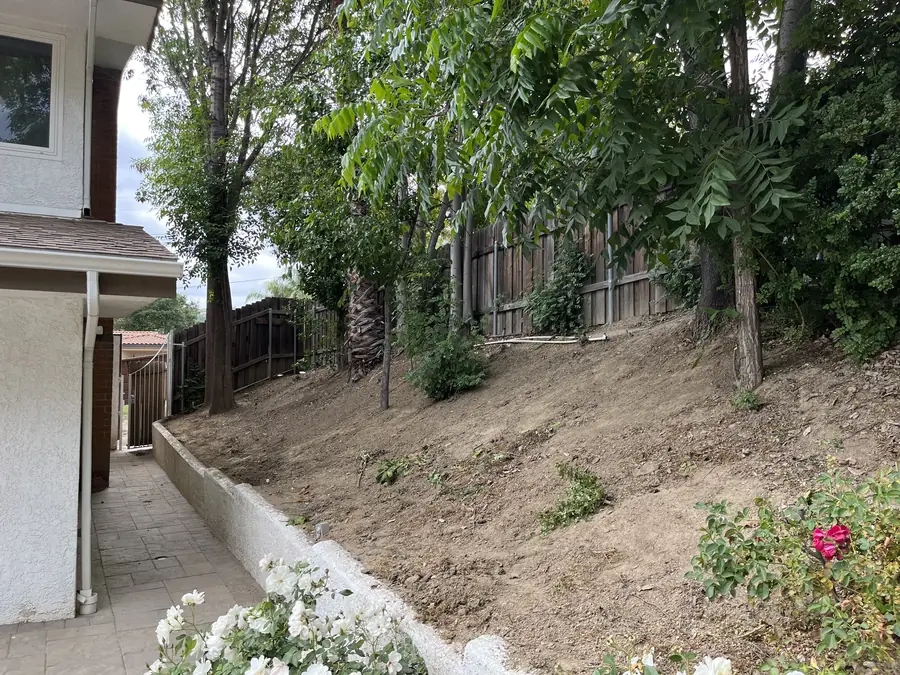
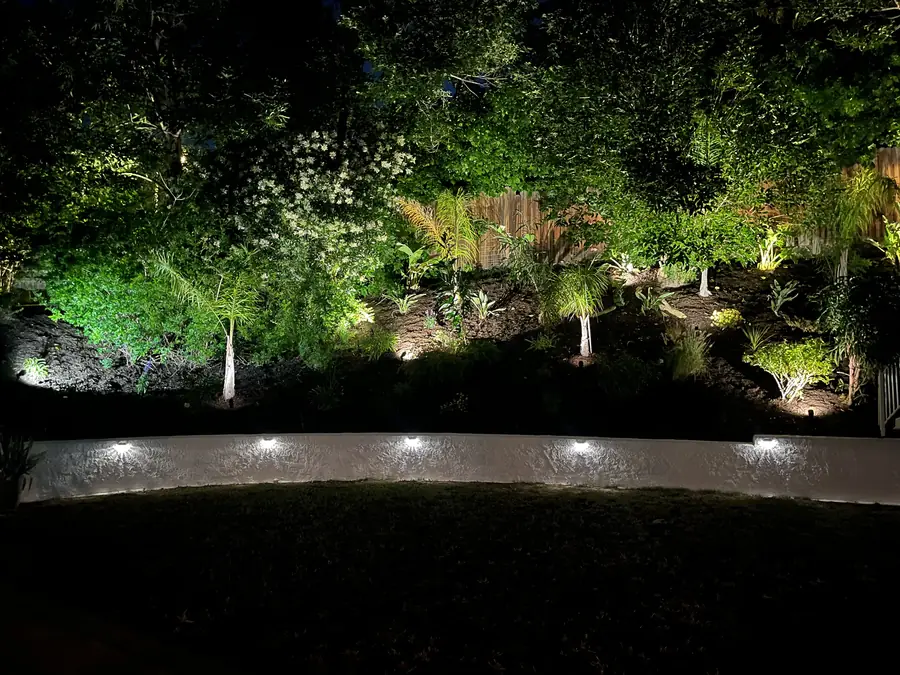
We can, and it is a large share of what we do in West Hills. The technique is different from a flat yard. Fixtures aim up the grade so the light climbs the slope rather than blasting across it, they sit out of the natural drainage line so winter runoff does not wash them out, and cable gets routed where roots and future planting will not cut it. A lit slope is the single most dramatic thing you can do with a West Hills lot.
Not for the low voltage system itself. The transformer plugs into an existing exterior outlet and everything past it runs at twelve volts, which is why the cable can be tucked into beds rather than buried in conduit at depth. If your property has no suitable exterior outlet, that one addition is electrician work and we will tell you up front.
Yes, that is the reason it is the standard for landscape work. The transformer steps house current down to twelve volts, so the cable running through your beds is not a hazard the way line voltage would be. It also means a shovel that nicks the cable during planting is an inconvenience rather than an emergency.
Start with the approach. The driveway, the front walk, and any steps, since those are where people get hurt and they are usually the darkest part of the lot out here. Then the specimen trees, because West Hills yards tend to have real ones worth uplighting. Then the retaining walls and terraces, which is what makes a sloped back yard read as usable space after dark instead of a black edge.
It helps more than a single motion floodlight does. Eliminating dark corners, lighting the approach to the house, and putting soft light across entry points removes the cover an intruder wants, and it does it without blinding you when you pull into your own driveway or annoying the neighbors. Along the quieter foothill streets, where there is little street lighting to begin with, that difference is noticeable.
LED, and warm. The power draw is a fraction of halogen and the fixtures last many years longer. The part most people get wrong is color temperature. Warm white makes stone, wood, and planting look right at night. The cool blue white sold as daylight makes a garden look grey and lifeless, and it is the most common reason a lighting system ends up looking harsh.
Yes. Most of our systems run on a photocell so they come up at dusk on their own and shut off on a timer later at night. Smart transformers add app control and scheduling if you want that. The setup most homeowners settle on is on at dusk, off around midnight, with nothing to think about.
We can. It is one of the easier retrofits in landscaping. Low voltage cable tucks into planting beds and under mulch without tearing anything up. The only awkward part is crossing an existing paved surface, so if any hardscape is going in we always put a sleeve under it first even when the lighting is a later phase.
Brass and copper. Afternoon sun on a west facing West Hills slope is punishing, and it is what destroys inexpensive plastic and painted aluminum fixtures. Painted finishes chalk, lenses cloud, and gaskets dry out. Solid brass costs more once and then weathers to a patina that most people end up preferring to the original finish.
It affects where fixtures go more than whether you can have them. Along the foothill edge, planting near the structure gets cleared back, so we plan fixture positions and cable routes around the cleared zone rather than into planting that is going to be cut. Lighting that perimeter also makes the cleared area easier to keep an eye on.
Certainly, and it is a common West Hills request because the driveways here get long. The mistake to avoid is a matching row of path lights down both sides, which reads like a runway. We space them irregularly, light the turns and the grade changes where they matter, and let the planting and the trees carry the rest.
Most residential systems go in inside a day or two. The part that takes real time is not the digging, it is the aiming, which has to happen after dark. We come back at night, walk the property with you, and adjust every fixture. Anyone who installs a system in daylight and never returns has skipped the step that makes it look designed.
Yes. Failed transformers, corroded connections, halogen fixtures worth converting to LED, and systems that were undersized from the start are all common. The usual finding is that the original transformer has no headroom left, so adding fixtures means upsizing it. We test what is there before quoting so you are not paying to replace things that still work.
Yes, on West Hills slopes the two really belong on the same visit, since both involve trenching through the same ground. Slope irrigation has its own demands, mainly soaking slowly enough that the water goes in rather than running off. See our irrigation and lighting page for the detail.
Yes. It takes some care, because West Hills has a lot of established oaks and some of them are protected. Fixtures get set outside the root flare rather than dug in against the trunk, cable is routed around the root zone instead of trenched straight through it, and we keep light off the trunk itself so the effect is the canopy rather than a spotlit pole. A properly lit oak is the best fixture on most West Hills properties.
Everywhere, from the Valley Circle corridor and the neighborhoods around Shadow Ranch up to the hillside lots along the foothills, plus the 91307 and 91304 areas generally. More on our West Hills page. We light properties in Chatsworth as well, and we cover the other neighboring cities too.
We come out in daylight, walk the property, and note where the grade changes, where the steps are, and which trees are worth lighting. You get a fixture count and a price. Request a free quote and we will set up the visit.