
FAQ
Irrigation in West Hills, answered
The questions we hear most from West Hills homeowners.
It starts with a walk of the property to check water pressure at the meter, look at grade changes, and note where the wet spots and dry spots already are. From there we lay out zones, size the mainline and laterals for the distance involved, set valves in accessible manifolds, and choose head types and nozzles for each area. Trenching, wiring, controller installation, and programming follow. We finish by running every zone in front of you, adjusting arcs and throws, and correcting any spot that is throwing water where it does not belong.
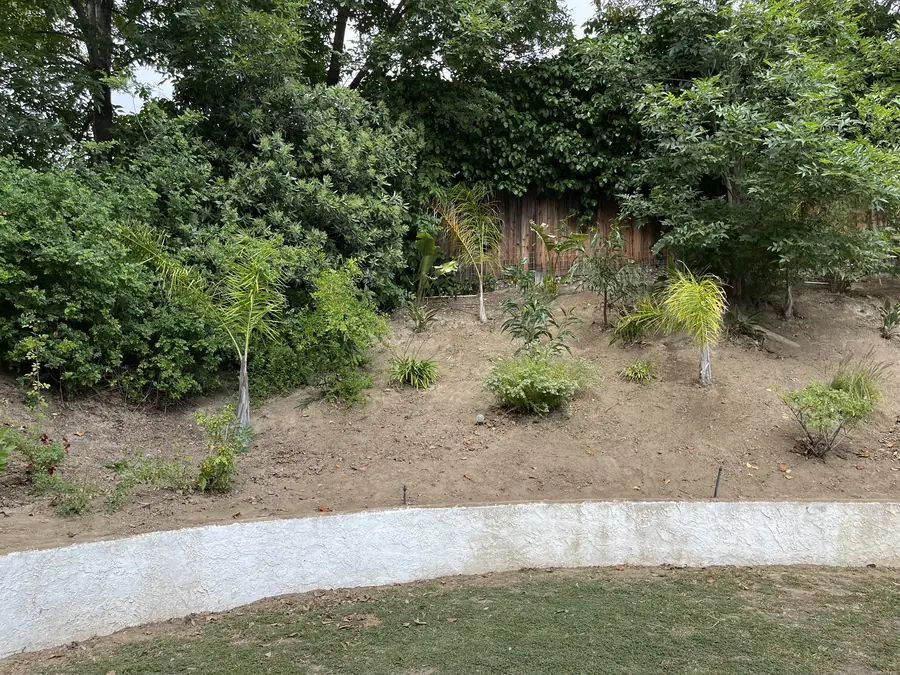
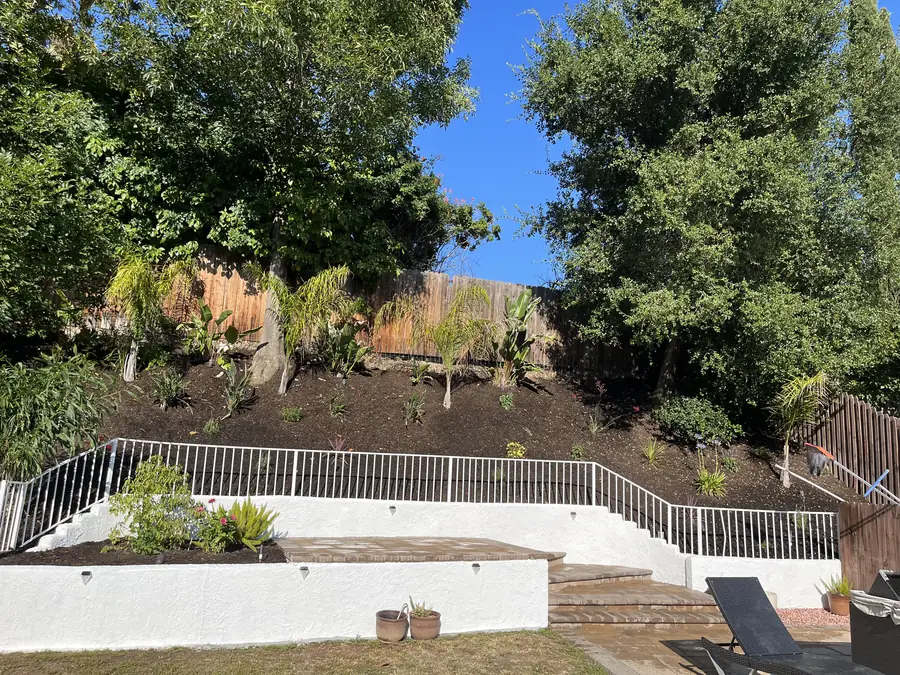
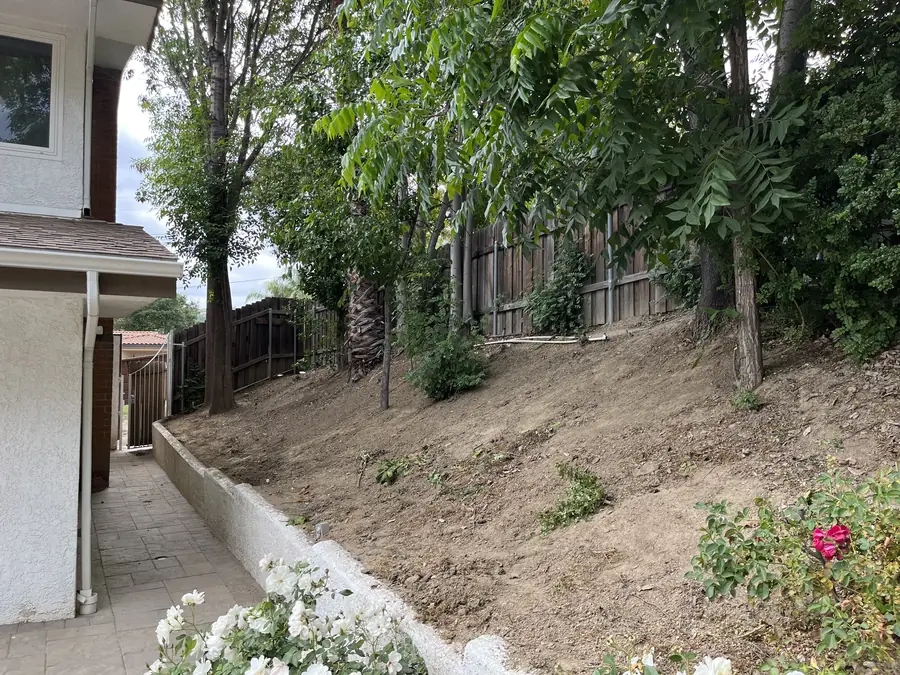
Slopes are the defining irrigation problem in West Hills, and the fix is applying water slower than the soil rejects it. We use low precipitation rate nozzles so the output per hour drops, then program cycle and soak, which means the controller runs a short interval, pauses to let water absorb, and repeats until the zone gets its full amount. Head placement matters just as much. Heads at the toe of a slope receive their own water plus whatever drifts down, so layout has to account for that or the bottom drowns while the top stays thirsty.
Precipitation rate is simply how many inches of water a nozzle puts down in an hour. Standard spray nozzles are fast, often too fast for clay or graded hillside soil, so the excess sheets off. MP rotator style nozzles deliver multiple slow streams instead of a fan of mist, cutting that rate by more than half and giving the ground time to accept it. Rotors work on a similar principle over larger distances. On sloped West Hills yards these nozzles are usually the difference between water soaking in and water running into the street.
Every foot of drop in elevation adds pressure, and every foot of rise takes it away. On a hillside parcel that can mean heads at the low end misting while heads at the high end barely pop up, and both conditions waste water. Pressure regulating heads hold each one at its designed operating pressure regardless of where it sits. Beyond that, we size valves and pipe for the actual run and split zones by elevation band rather than lumping high and low ground together, which keeps output consistent across the whole system.
Yes, and large lots are common out here. The main considerations are friction loss over long pipe runs and having enough zones that no single valve is asked to carry more heads than the available flow supports. We calculate gallons per minute at the meter, then divide the property into as many zones as that number allows. Bigger parcels simply need more valves and sometimes a larger mainline. Wiring gets planned so future zones can be added without tearing anything up, and valve boxes go where you can actually reach them.
In planting beds, almost always. Drip puts water at the root zone with essentially no overspray, no misting, and no wasted throw onto hardscape. On slopes it performs well too, provided the tubing is laid on contour and fitted with pressure compensating emitters so the ones at the bottom do not discharge more than the ones at the top. Drip also keeps foliage dry, which reduces disease pressure. Lawn areas still need spray or rotors, but for shrubs, perennials, and native plantings drip is the better tool.
A smart controller connects to WiFi and adjusts run times based on local weather data, temperature, and the plant and soil settings entered for each zone. Instead of watering the same amount in April and August, it scales up and down on its own and skips cycles after rain. You can also check and change everything from your phone, which is genuinely useful on a large property. Most homeowners see enough reduction in wasted water to justify the upgrade, and several water agencies offer rebates on qualifying models, though eligibility varies.
A zone is the group of heads or emitters controlled by one valve. Hydrozoning means grouping plants with similar water needs onto the same zone so nothing gets overwatered to keep its neighbor alive. Lawn, shrubs, natives, and vegetable beds all want different schedules. Sun exposure and slope position factor in as well, since a south facing bank dries far faster than shaded flat ground. Getting zones right at the design stage is the single biggest lever on both plant health and monthly water use.
Repairs are a regular part of what we do. Cracked risers, heads knocked off by mowers, nozzles clogged with grit, valves that will not close, solenoids that have failed, and broken lateral lines are all routine. We also chase down wiring faults that make a zone refuse to start. If a system is mostly sound we repair what is failing and leave the rest alone. If the same section keeps failing, we will tell you plainly that replacement is the better use of your money.
The usual signs are a water bill that jumps without explanation, a soggy patch that never dries, a sinking spot in the lawn, or a zone that has lost pressure. On a hillside property water can also surface well downhill of where the break actually is, which makes visual guessing unreliable. We isolate one zone at a time, watch flow at the meter with everything off, and narrow the location before digging. Finding the break precisely means one small excavation instead of a trenched yard.
Backflow prevention keeps irrigation water, along with any fertilizer or soil contact it has had, from being drawn back into the drinking water supply if pressure in the main drops. Code requires an approved assembly on residential irrigation systems, and the type depends on your configuration and elevation relative to the water source. We install the correct device for the property and set it at the proper height. On a system with significant grade change, placement is not arbitrary, so it gets figured during design rather than at the end.
Conversion is straightforward and one of the better water saving moves available. The existing valve stays, and we replace the head with a drip conversion fitting that includes a filter and pressure regulator, then run tubing and emitters through the bed. Emitter count and flow rate get matched to what each plant needs. Older lawn areas being replaced with shrubs or natives are ideal candidates. Just keep in mind that drip runs much longer per cycle than spray, so the controller program has to be rewritten, not simply reused.
Wildfire risk is real along the western hills, and the zone closest to the house is meant to hold well irrigated, low growing, well spaced plants rather than dry brush. Dependable irrigation is what keeps that vegetation green through the long dry stretch instead of turning it into fuel. We make sure coverage actually reaches the near home planting areas, use drip so water goes to the roots consistently, and set schedules that hold moisture through late summer. A system that fails quietly in August defeats the entire purpose of the planting plan.
The standard is matched precipitation, meaning every head in a zone applies water at the same rate regardless of whether it covers a quarter circle or a full circle. Nozzles are selected accordingly. Beyond that, heads are spaced head to head so each one throws to its neighbor, which is what compensates for wind and grade. On uneven ground we also adjust riser height and head tilt so the spray pattern stays parallel to the surface rather than shooting over a rise or into a bank.
It usually can, because most of the waste in an older system is invisible. Misting heads, broken nozzles, overlapping zones, and runoff on a slope all bill you for water the plants never receive. Correct nozzles, pressure regulation, drip in beds, and weather based scheduling recover a good share of that. Watering day restrictions also make efficiency matter more, since you have fewer opportunities to deliver what the landscape needs. Rebates through local water agencies are sometimes available for qualifying upgrades, though programs and eligibility change.
We program it fully before we leave, with run times, start times, and cycle and soak settings entered for each zone based on soil, slope, and plant type. Then we walk you through it. You will see how to run a manual test, how to shut a zone off, how seasonal adjustment works, and if it is a smart controller, how to use the phone app. We also leave a simple zone map so you know which valve serves which area. Call us later with a question and we will help.
one licensed contractor performs all of the work. One licensed contractor stays accountable for the work. The same people who plan your zones dig the trenches, set the valves, install the heads, and program the controller, which is why the finished system matches what was designed. It also means one clear point of accountability, one standard of workmanship, and no scheduling gaps waiting on an outside company. Whether the job is in West Hills or over in Woodland Hills, the crew on your property works for Daniels Landscaping.
Call us at (818) 443-9300 and we will set a time to come out. We walk the property, check pressure and existing equipment, talk through what is working and what is not, and give you a free written estimate that spells out zones, materials, and scope so there are no surprises later. Daniels Landscaping holds California license 1138709. If you are comparing bids, we are glad to explain what is in ours and why, so you can judge the numbers fairly.