

Woodland Hills, low water
Drought tolerant questions, answered
What Woodland Hills homeowners ask before they tear out the lawn.
It scales with area and with how much has to come out first. A parkway strip is a small job. A full front yard with lawn removal, regrading, new drip, planting, boulders, and a gravel or decomposed granite surface is a bigger one. The number people should compare it against is not zero, it is what they are currently spending every summer to keep a lawn alive in this climate.
On water, yes, and the saving is largest here precisely because the summers are so hot. The bigger saving is usually the things that stop happening. No mowing service, no reseeding the patches that died in August, no fertilizer, and far fewer sprinkler repairs, since a drip system has no heads to get run over or snapped off.
Woodland Hills is in LADWP territory, and turf replacement rebate programs have run on and off for years with changing rates and requirements. They also tend to require you to apply before the lawn comes out, which is the detail that catches people. We tell you what is available at the time of your estimate and what the timing needs to be.
No, and that is the image that puts people off. That look is what you get when someone removes a lawn and stops. A properly designed low water yard has layers, seasonal color, movement from grasses, structure from boulders and larger specimens, and full ground coverage as the planting fills in. It should look more interesting than the lawn, not less.
Agave, aloe, and the larger succulents. Native shrubs like ceanothus, manzanita, and toyon. Ornamental grasses such as deer grass and muhly. Lavender, rosemary, salvia, and westringia. Olive and desert willow for smaller trees. All of it handles triple digits and full sun without complaining, which is the whole point out here.
Planted at a sensible spacing, most low water yards read as established through the second growing season and look fully filled in by the third. We can plant closer together for faster coverage, but that costs more and crowds later. What we do not recommend is planting too far apart to save money, because you then live with a sparse yard for years.
Yes, especially through the first year while roots go down. That is the part people skip, and it is why new low water yards sometimes fail. The difference is that after establishment the schedule drops off dramatically, from a lawn watering several times a week to established planting on deep, infrequent drip.
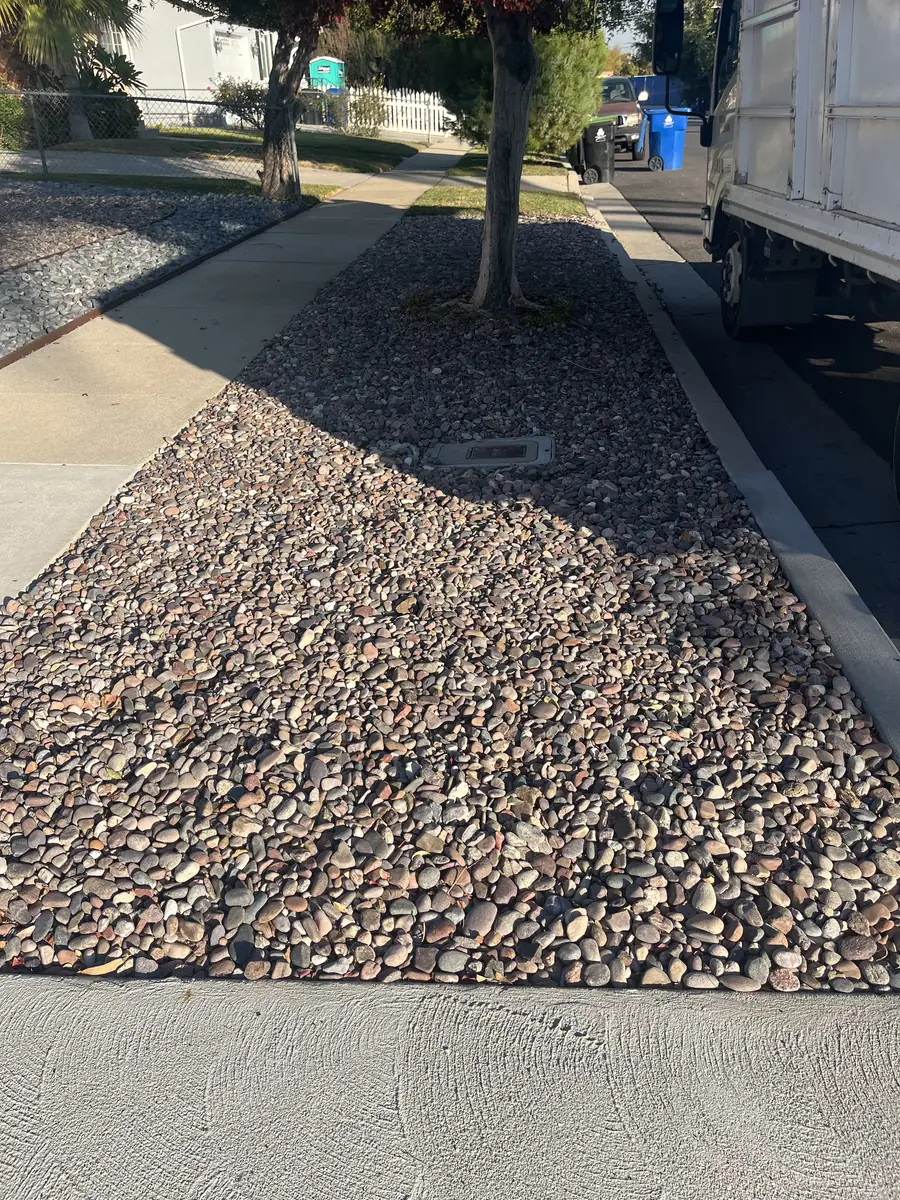
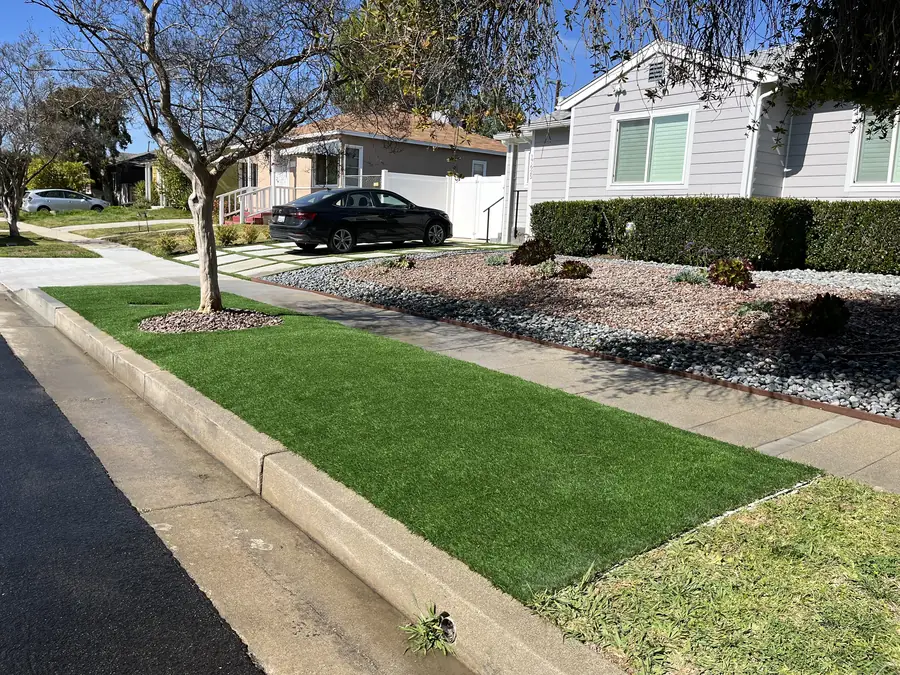
It is the best place to start and the piece most worth converting. It bakes from reflected heat off the pavement on both sides, it is nearly impossible to water with spray without soaking the sidewalk, and it is the first thing anyone sees. Note that the city has rules about what can go in a parkway, mainly around height, visibility, and keeping a walkable path from the curb, and we build to those.
Usually a combination. Decomposed granite compacts into a firm, walkable surface and suits paths and open areas. Gravel and larger rock give texture and drain well. Mulch belongs in the planting beds, where it holds moisture at the roots and feeds the soil as it breaks down. Using only one across the whole yard is what makes a conversion look flat.
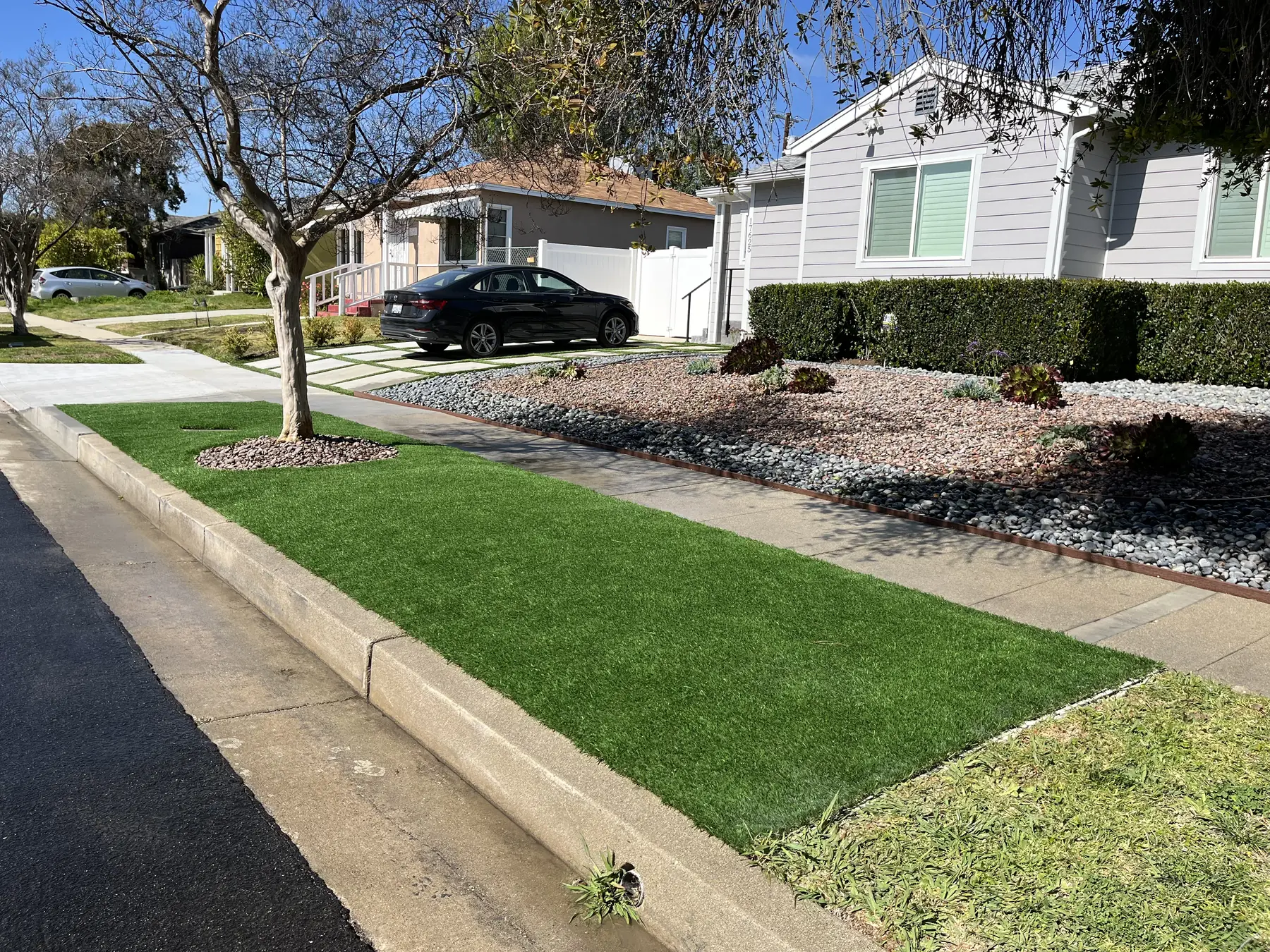
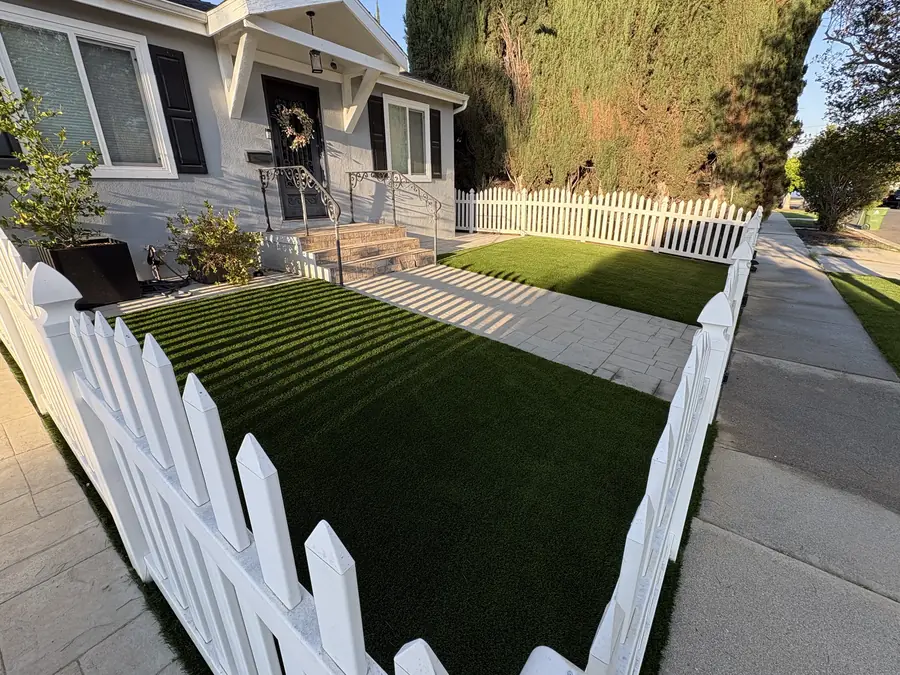
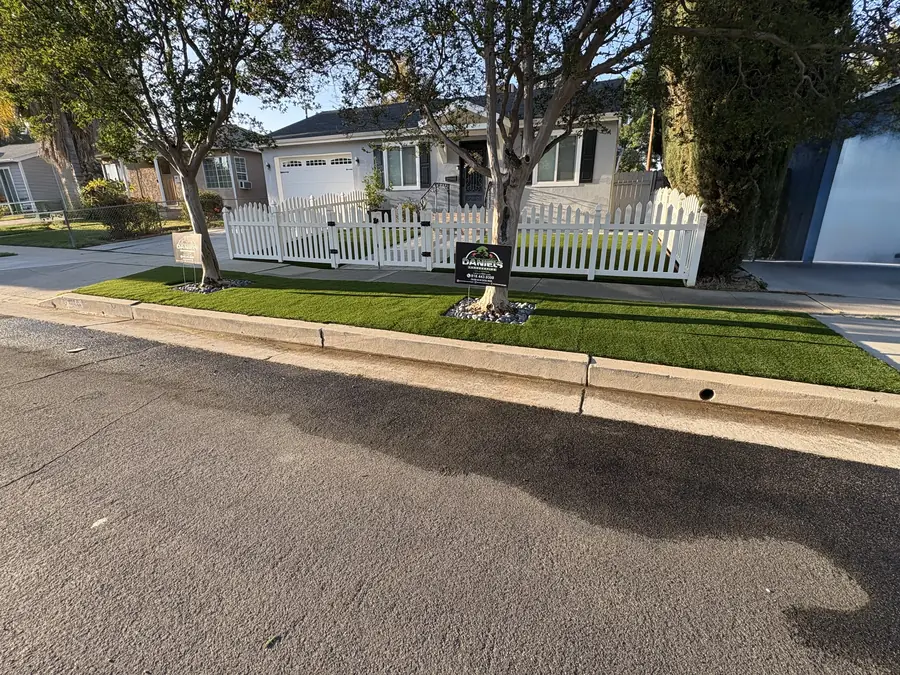
Absolutely, and it is a sensible compromise. Keep a real usable green area where it gets used and convert everything else. Plenty of homeowners here go a step further and put artificial turf in that play area, so it stays green through a 110 degree August with no water at all, and go drought tolerant everywhere around it.
They get converted, not abandoned. Spray heads come out and the zone gets reworked to drip, which puts water at the root instead of into the air on a hot afternoon where a good share evaporates before it lands. If the controller is old, this is the moment to put in a smart one, and there are often rebates on those too.
Yes. Sod removal, old irrigation, and debris all leave with us and it is written into the estimate. If you are applying for a rebate, do not let anyone remove the lawn before the paperwork is approved, because most programs require a before inspection or photographs.
Less and less. Conversions are common across Woodland Hills now, particularly in the older tracts where the original lawns are on their last legs. A well designed low water yard tends to be the best looking one on the block, because it is the only one that is not brown in September.
It can, if the planting is chosen and spaced with that in mind, which matters on the hillside lots toward Topanga and Mulholland. Well spaced, higher moisture planting near the house and no continuous fuel path is the goal. Some low water plants are resinous and are not what you want close to a structure, so the palette gets picked accordingly.
A parkway strip is a couple of days. A full front yard usually runs about a week to ten days depending on demolition, drainage, and how much hardscape is involved. Back yards take longer. We give you a real schedule at the estimate and tell you promptly if anything moves.
Far less than a lawn, but not none. Occasional pruning, topping up mulch every year or two, pulling the odd weed before it seeds, and a seasonal adjustment to the irrigation schedule. Compared to weekly mowing from March to November it is a different life.
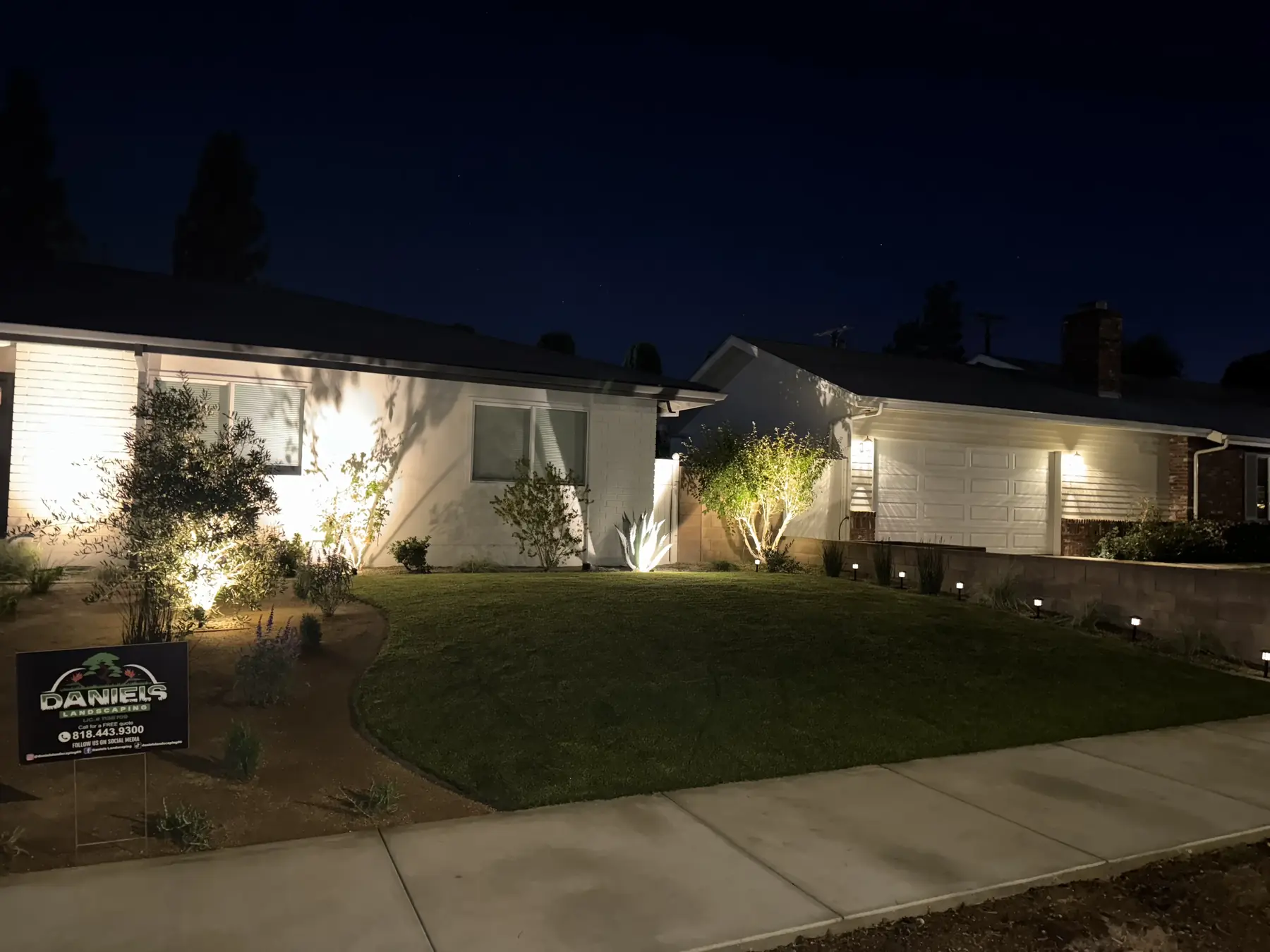
Often, yes, and it suits them particularly well. Uplighting an agave or a specimen olive throws shadow and structure that a lawn never gives you, and it means the yard reads as designed after dark. See our irrigation and lighting page.
The full city, from the Warner Center flats and the Ventura Boulevard corridor up to the hillside lots toward Mulholland and Topanga, across 91364 and 91367. More on our Woodland Hills page. Request a free quote to get started.