

FAQ
Landscaping in Woodland Hills, answered
The questions we hear most from Woodland Hills homeowners.
It depends on the yard and how much of it changes. A front yard conversion from lawn to drought tolerant planting runs differently than a full back yard rebuild with new irrigation and a lawn. Square footage, access, and how much old material has to come out are the three things that move the number most. We measure on site and give you a written price before anything starts, so there is no guessing and no surprise partway through.
That is the clay soil and the heat working together. Woodland Hills bakes hotter than almost anywhere in the county, and a cool season lawn set in unamended clay cannot pull water fast enough to keep up. The lasting fix is usually to convert, either to drought tolerant planting or to artificial turf if you want green without the fight. If you want to keep real grass, it means a warm season variety, proper soil prep, and irrigation that soaks deep instead of wetting the surface.
Most of Woodland Hills sits on heavy clay, and it matters more than almost anything else in the yard. Clay holds water and then sets like concrete, so roots drown in winter and cannot push through in summer. We break it up and amend it before planting, and on tough lots we adjust the grade so water moves instead of pooling. Skipping that step is the most common reason a fresh yard looks great in spring and struggles by the next summer.
Yes, and it is the most common job we do here. We remove the old lawn, amend the clay, reshape the grade so water stays in the beds, and plant a layered mix of low water plants, grasses, and ground cover with gravel or mulch between. Done properly it reads fuller than the lawn it replaced, not like a bare gravel lot. We also handle the LADWP rebate paperwork, which can cover a real part of the cost.
Yes. Woodland Hills is served by LADWP, which runs a turf replacement rebate that pays a set amount per square foot of lawn you convert to drought tolerant landscaping. The rate and the terms change from time to time, so we check what is current for your address before we quote, and we handle the application and the required photos. It will not cover the whole job, but it takes a useful bite out of it.
The ones built for heat and drought. Natives like manzanita, sage, and buckwheat, Mediterranean plants like rosemary, lavender, and olive, ornamental grasses, and a wide range of succulents and agaves. The trick is grouping them by water need so a thirsty bed and a dry bed are not sharing a valve. Planted this way, a yard looks full and layered on a fraction of the water a lawn drinks.
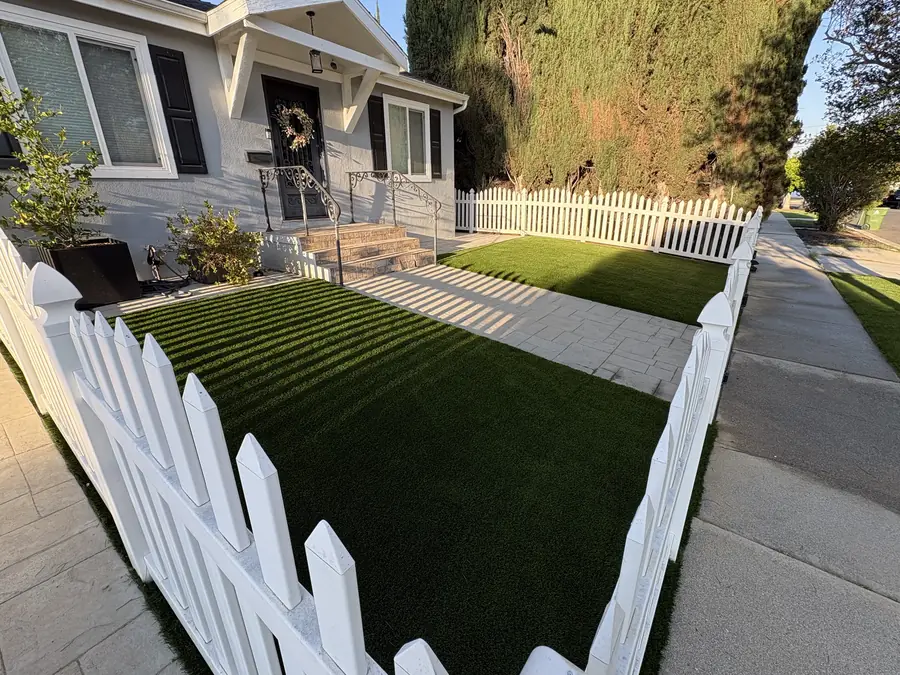
Yes, and in this heat it is a popular choice. Artificial turf stays green with no water and no mowing, which matters when summer runs long and hard here. It suits pets, kids, and the small flat back yards common in the older tracts. The base under it matters as much as the turf, especially over clay, so it drains rather than holding water. Our Woodland Hills artificial turf page covers the types and the base in detail.
Usually yes, but it shapes the plan. A lot of the 1950s and 1960s homes here have tight side yard access, sometimes only a gate wide enough to walk through. That means material moves by wheelbarrow or by hand, which we price in from the start rather than discovering on day two. We look at access during the walkthrough and tell you honestly if it changes the approach or the cost.
A front yard conversion is often about a week. A full back yard with new irrigation, planting, and a lawn or turf runs longer, and adding hardscape like pavers or a wall extends it further. Heat plays a part too, since we protect fresh plantings and sometimes shift heavy work to the cooler part of the day through peak summer. You get a realistic timeline with the written estimate, not a vague promise.
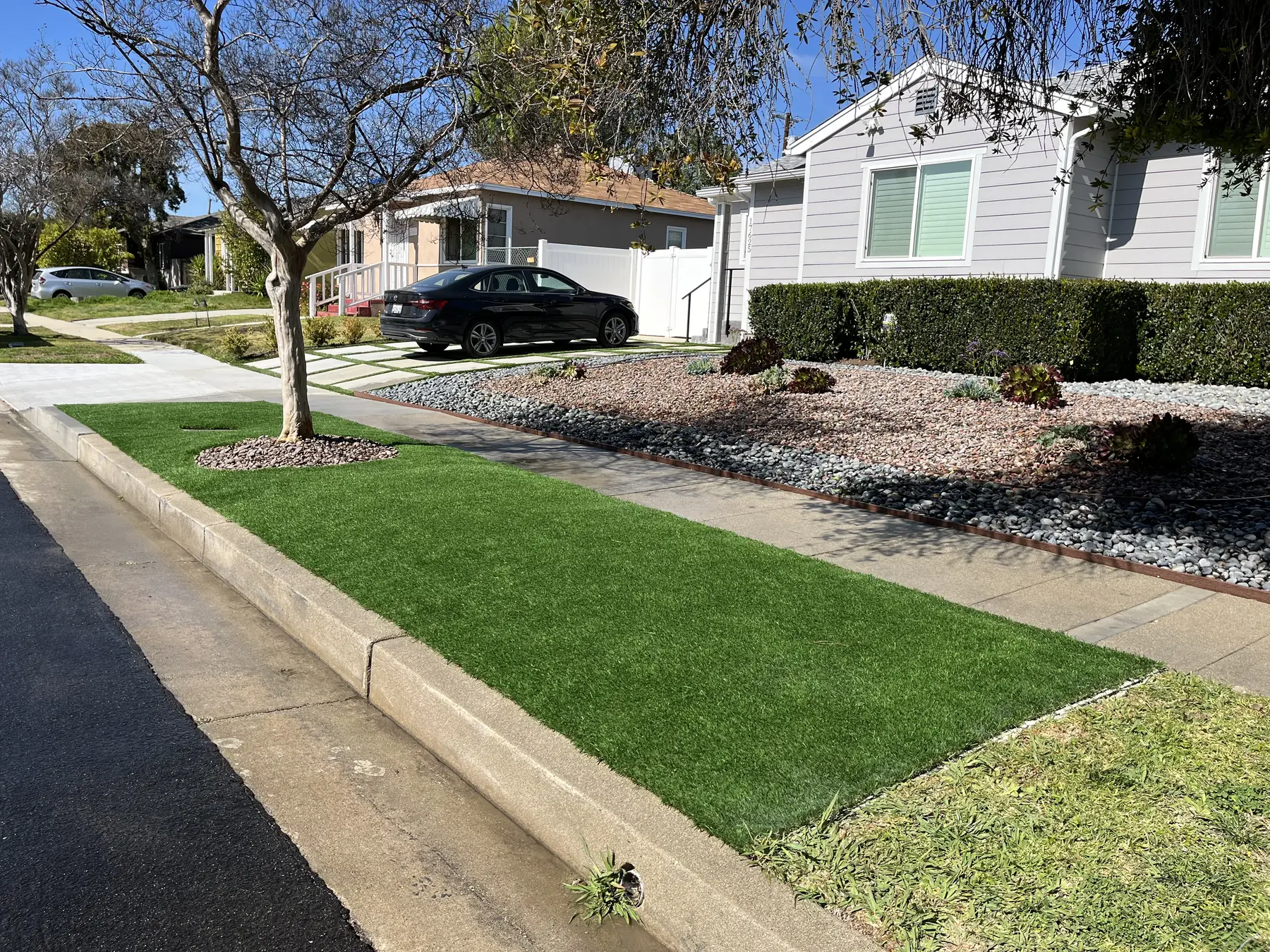
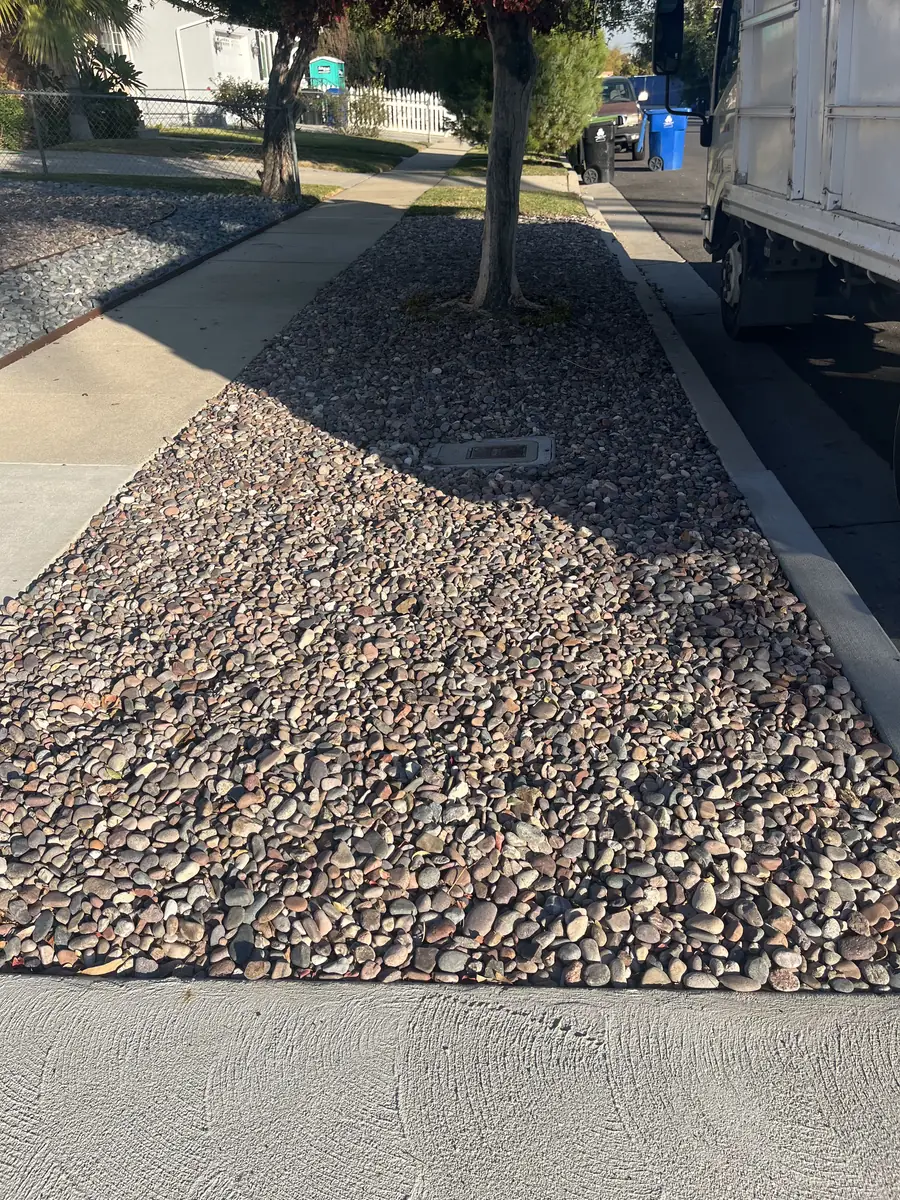
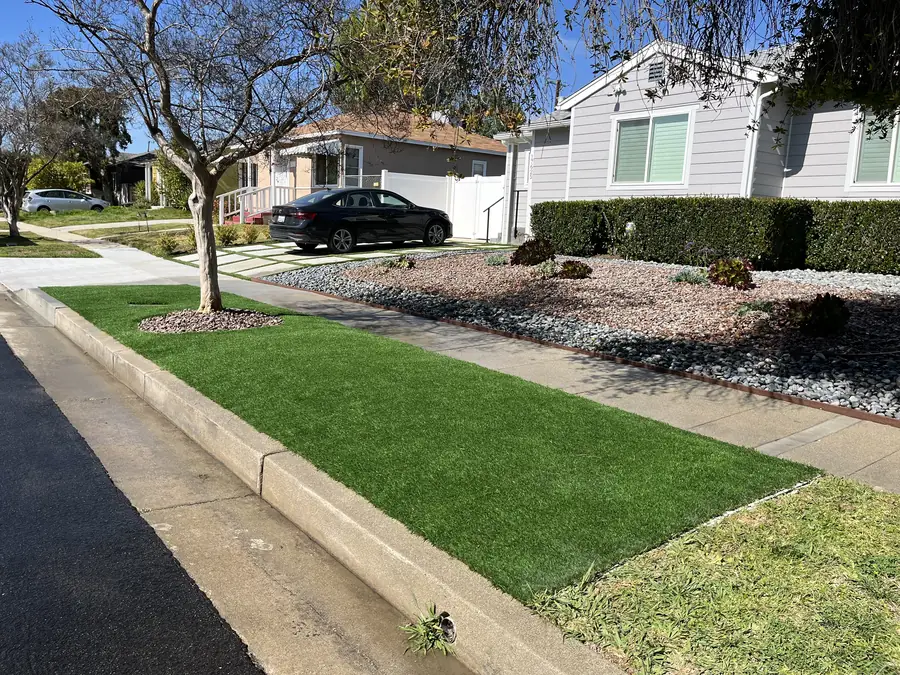
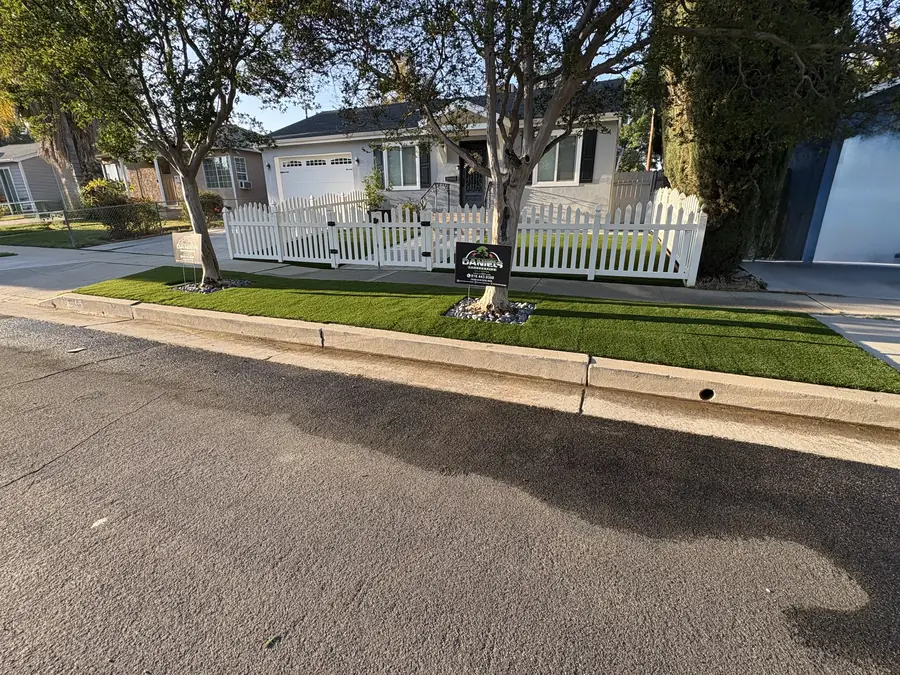
The parkway, that strip between the sidewalk and the street, is a strong candidate for drought tolerant planting, and converting it can add to your rebate square footage. There are a few rules about height and clear sight lines near driveways and corners, which we design around. Planted with low water shrubs and grasses instead of struggling grass, it cuts water use and lifts the look of the whole front for very little space.
All of it, from the flats near Ventura Boulevard and Warner Center to the hillside streets rising toward Mulholland and the Topanga edge, across the 91364 and 91367 ZIPs. The hillside lots bring their own questions around grading and access, and the flatter tracts bring clay and aging irrigation, and we work both regularly. If you are just over the line in Tarzana or Canoga Park, we cover those too.
We do all of it, and on a clay lot the grading and drainage are the most important part. Water has to move away from the house and into the beds, not pool against a foundation or sit on top of clay that will not drain. We shape the grade, set drains where the water needs to go, and only then build the soil and plant. A yard that skips this looks fine until the first real rain.
Yes, we take on rescue and renovation work. Often it is a drainage problem that was never solved, planting set straight into raw clay, or irrigation that misses half the yard. We walk it, find what actually went wrong, and give you a plan to put it right instead of papering over it. Sometimes that means redoing the base, and we will tell you plainly if that is the case.
In this climate, usually by a lot. A lawn is the thirstiest thing in most yards, and Woodland Hills summers make it drink even more. Converting to drought tolerant planting or turf, with irrigation that soaks the root zone rather than spraying the surface, can cut outdoor water use sharply. Add the LADWP rebate on the way in, and the change often pays back a meaningful part of itself within a few years.
Yes. Most older Woodland Hills homes still run original irrigation that leaks, oversprays, or waters on a fixed clock no matter the weather. We install drip for beds, efficient heads where spray makes sense, and a smart controller that adjusts to the season, which counts for a lot when the gap between a mild week and a 110 degree week is so wide. The right irrigation is half of what keeps a low water yard alive.
Fall and spring are ideal, because new plants settle in before the worst heat arrives. That said, we plant year round and take extra care with summer installs: deeper starter watering, shade where it helps, and timing to avoid setting tender plants into a heat spike. If you are planning ahead, starting the design in late summer often means installing into the perfect fall window.
Yes, and in Woodland Hills shade is worth real money. A well placed tree cools a yard, eases the load on the house, and makes an outdoor space usable through summer. We choose species that suit the heat and the space, keep them clear of foundations and lines, and set them where the afternoon sun actually needs blocking. It is one of the highest return additions you can make to a hot lot.
Call or request a quote and we set a time to walk your yard. We look at the soil, the access, the grade, and what you want the space to do, then hand you a written price with no obligation. From there, if it is a fit, we schedule the work. The walkthrough is free and you get a real number, not a rough figure over the phone.