


Woodland Hills hardscaping
Hardscaping questions, answered
What to ask before anyone starts setting stone in a Woodland Hills yard.
Price per square foot moves with the paver you choose, how much excavation is needed, and how complicated the shape is. A clean rectangle off the back door is the cheapest thing we build, and curves, steps, and levels all add labor. When you compare bids, check the base depth and whether edge restraint and haul away are included, because that is usually where a cheaper number is hiding.
Lighter tones, and it matters more here than almost anywhere in the county. A dark charcoal paver in full Woodland Hills sun in July is not something you cross barefoot. Light greys, buff, and sand tones stay usable. We hand you samples to put down outside in the afternoon sun on your own property before you commit, because they read completely differently indoors.
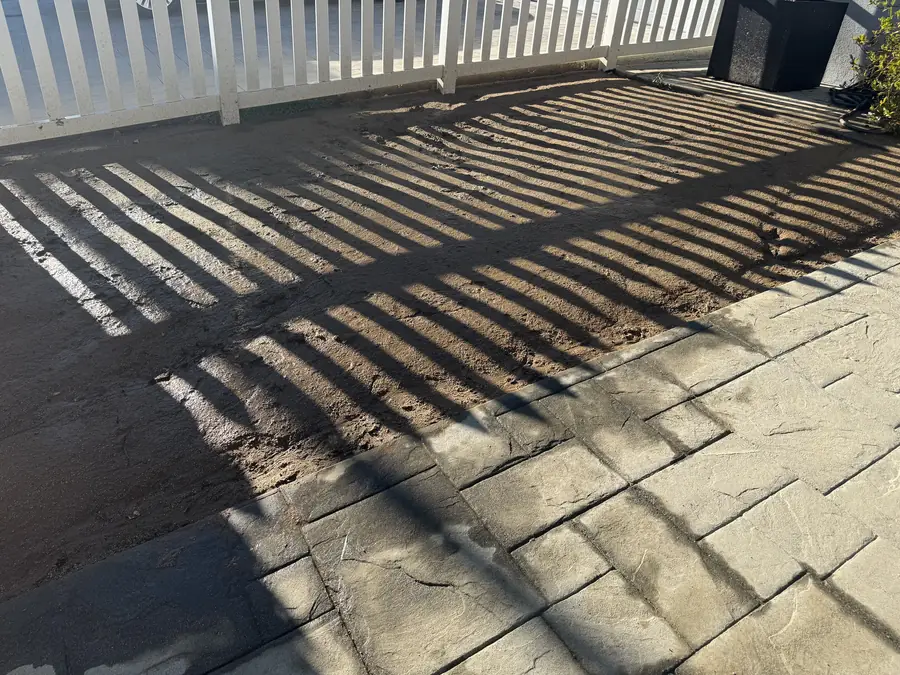
Pavers cost more up front and are usually worth it on the clay soil here, because they flex with ground movement instead of cracking, and a stained or damaged one lifts out and gets swapped in minutes. Poured concrete is cheaper and makes sense for driveways, side yards, and long straight runs. We will price both on the same layout if you are undecided.
Expansive clay. It swells with winter moisture and shrinks as it dries through summer, and that movement works on a slab all year. Add sixty year old concrete poured thin with no steel, which describes a lot of the original flatwork in these tracts, and cracking is inevitable. Proper depth, correct steel placement, and control joints cut at the right spacing and the right time are what manage it.
Yes, the important part is dealing with the root rather than just the concrete. Pouring a new slab over the same root buys you the identical failure in a few years. Depending on the tree and the root we either route around it, prune it where that can be done safely, or design the new work to bridge it. Some trees are protected, so we check before cutting anything.
It depends on the load. A walkway needs less than a driveway holding a delivery truck. On clay we do not economize on depth, and what matters as much as depth is compacting in lifts rather than dumping the full depth and running a plate over the top, which leaves the bottom half loose and guarantees settlement.
Almost always a thin base, poor compaction, or missing edge restraint. Water gets under a weak base, the clay moves, and the field settles unevenly. Without edge restraint the perimeter creeps outward and the joints open up. Both are inexpensive at install and expensive afterward, since fixing them means lifting and relaying the pavers.
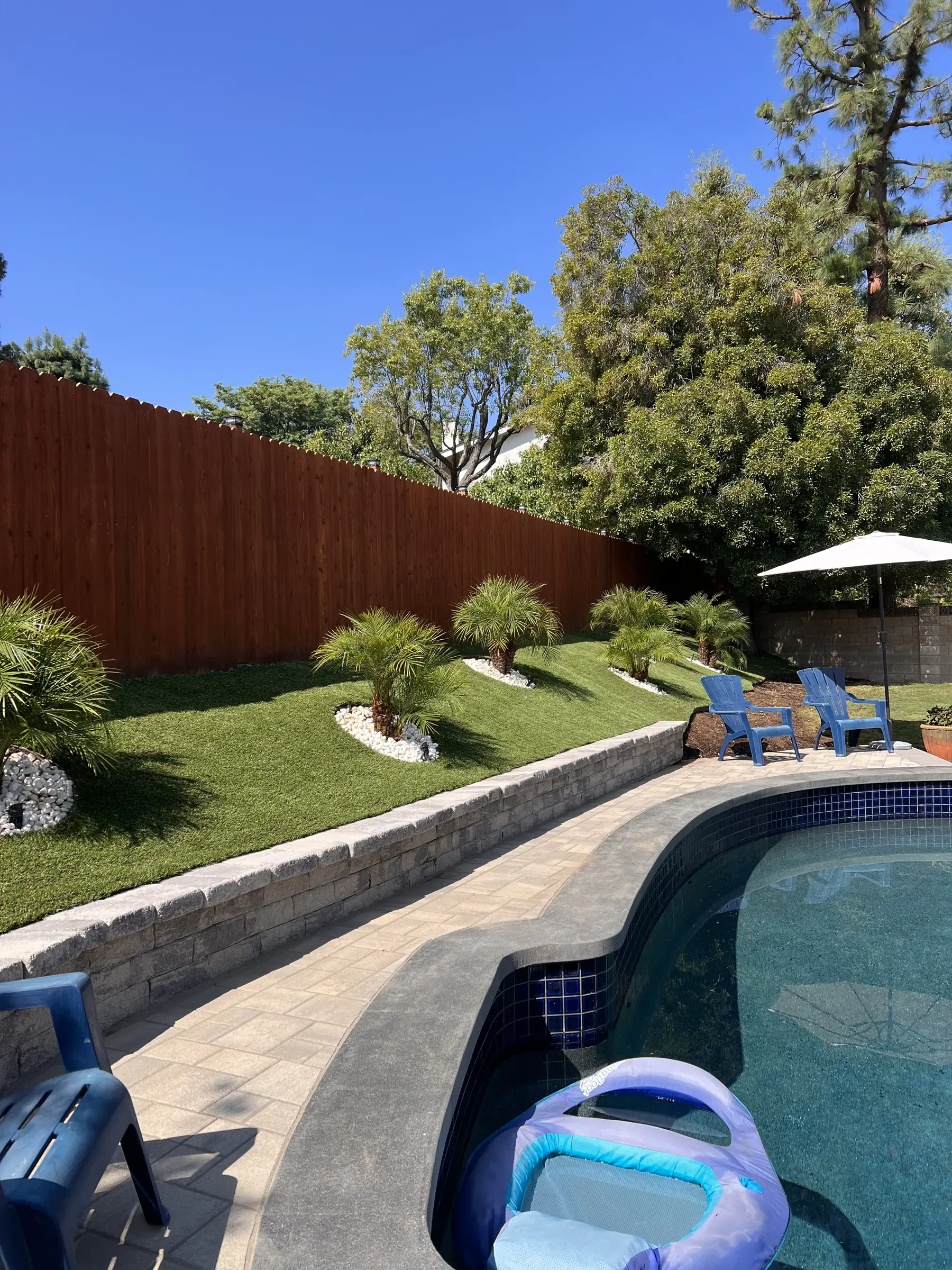
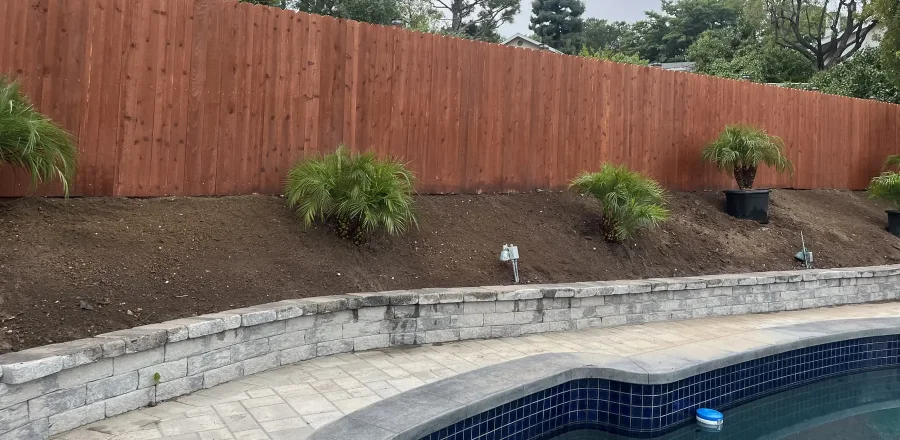
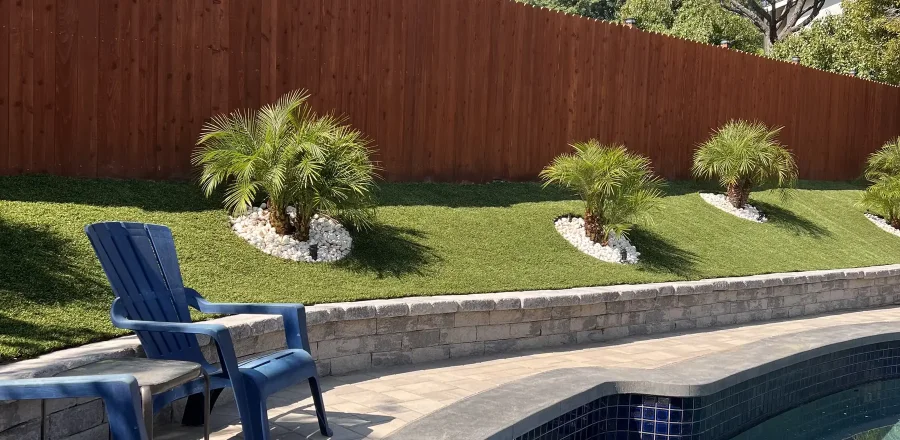
Yes. Past a certain height they need a permit and often an engineered design, which is common on the hillside lots toward Mulholland and Topanga. Whether there is a slope or a surcharge above the wall changes the requirement as well. We establish which category your wall falls into before quoting rather than after building.
Drainage, more than anything visible. A wall holds soil that gets very heavy when it is wet, and if the water has nowhere to go it pushes the wall out. Gravel backfill, a drain pipe running to daylight, and filter fabric so the gravel does not silt up. Add a compacted footing and block rated for the height and the wall stays put.
It will if nobody plans for it, because you are replacing ground that soaked up water with a surface that sheds it. We slope every hard surface away from the house at a fall you cannot feel underfoot but water can, and add channel drains or a dry creek where the volume needs it. Permeable paver systems are an option where you want water going back into the ground.
We can, and it is common here. The three priorities are a surface that is not slick when wet, not painfully hot barefoot in a Woodland Hills summer, and drainage that carries water away from the pool rather than sheeting into it. Pavers around a pool also make future plumbing repairs simple, since you lift pavers instead of breaking concrete.
Yes, they are usually built during the same hardscape phase. Seating walls are one of the best value items in a back yard, since they give permanent seating with nothing to store or blow over. Fire features and outdoor kitchens fall under our outdoor living work.
Sometimes. If the product is still made we can order it. If it has been discontinued we either find a close match or design the new area as a deliberate contrast, banding or a border, so it reads as intentional instead of as a failed match. We show you samples against what is there before ordering.
A modest patio or walkway is several days to about a week. A larger patio with walls, steps, and lighting takes longer, and driveways add cure time and access limits. Excavation and base take longer than laying the stone, which surprises people, and that is the part doing the work for the next twenty years.
We do. They pair well with the drought tolerant work that is common in Woodland Hills. Decomposed granite compacts into a firm walkable path at a fraction of the cost of paving, and it suits the low water planting palette. It needs an edge to hold it and a refresh every few years, and we are upfront about both.
Not required, but worth it on patios and driveways. Sealer deepens the color, makes oil and leaf stains much easier to clean, and helps hold the joint sand. It needs redoing every few years. On a back patio that only sees foot traffic, plenty of homeowners skip it and are perfectly happy.
We do, and hardscape is usually the biggest line in a yard budget so phasing makes sense. We plan the whole layout once so grades, drainage, and materials still work together, then build in stages. Planning it as one design is what stops phase two fighting phase one.
It is a cost and schedule question rather than a dealbreaker, and it comes up constantly in the older Woodland Hills tracts, where the side yards are narrow and the fence line is tight. If a machine cannot reach the back, then base material, demolition debris, and pavers all move by wheelbarrow, and that changes the labor on the job considerably. We look at access during the walkthrough and price it accordingly, rather than quoting for machine access and then discovering the gate is thirty inches wide. See our Woodland Hills page, or request a free quote.