
FAQ
Landscaping in Pacoima, answered
The questions we hear most from Pacoima homeowners.
The sequence rarely changes. We clear and demo whatever is coming out, set the rough grade, correct the soil, then run irrigation lines and any drainage while the ground is still open. Hardscape goes in next, because moving material across a finished yard damages it. Planting is last, followed by mulch and a final irrigation adjustment once heads and emitters can be aimed at real plants. Running those stages out of order is the most common reason a yard has to be torn back up a season later.
Yes. Pacoima is flat throughout, which makes the grading itself simple, but flat ground gives water nowhere to go on its own. On a sloped lot the terrain does part of the work for you. Here it has to be built in on purpose: a consistent fall away from the foundation, area drains at the low points, and solid pipe carrying water out to the street or an approved outlet. We set those falls before any surface goes down, because correcting standing water after patios and planting are finished costs far more.
Summers here run hot and dry with very little shade cover on most lots, so the planting list leans heat tolerant and low water. Westringia, rockrose, salvia, lantana, agave and other succulents, dwarf olive, and ornamental grasses hold up without constant irrigation. Grouping plants by water need matters as much as the species, because putting thirsty material on the same valve as drought tolerant shrubs guarantees one group suffers. The few plants that want relief get placed where a wall, fence, or existing tree throws afternoon shade.
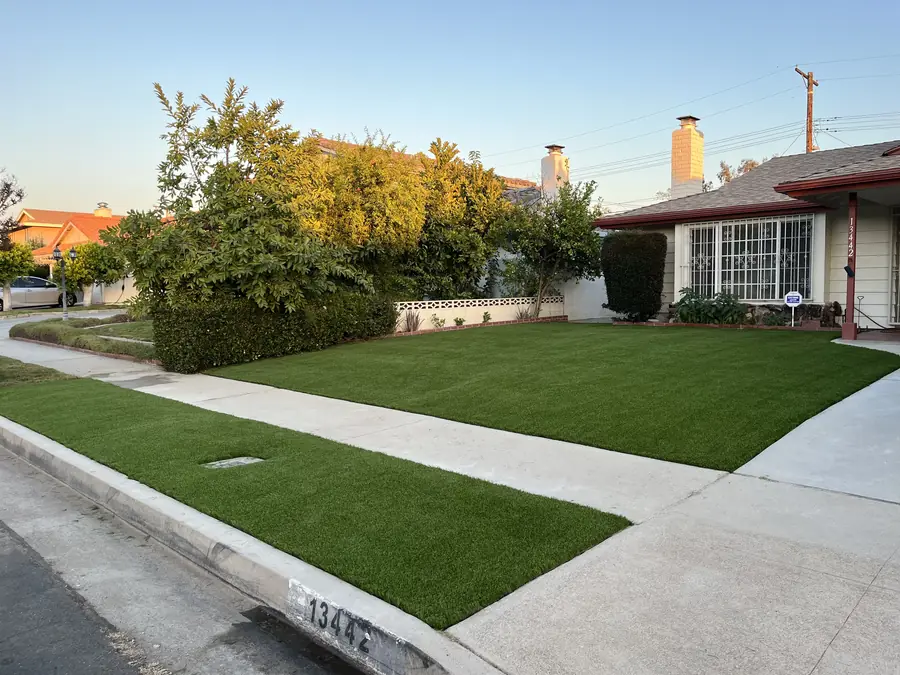
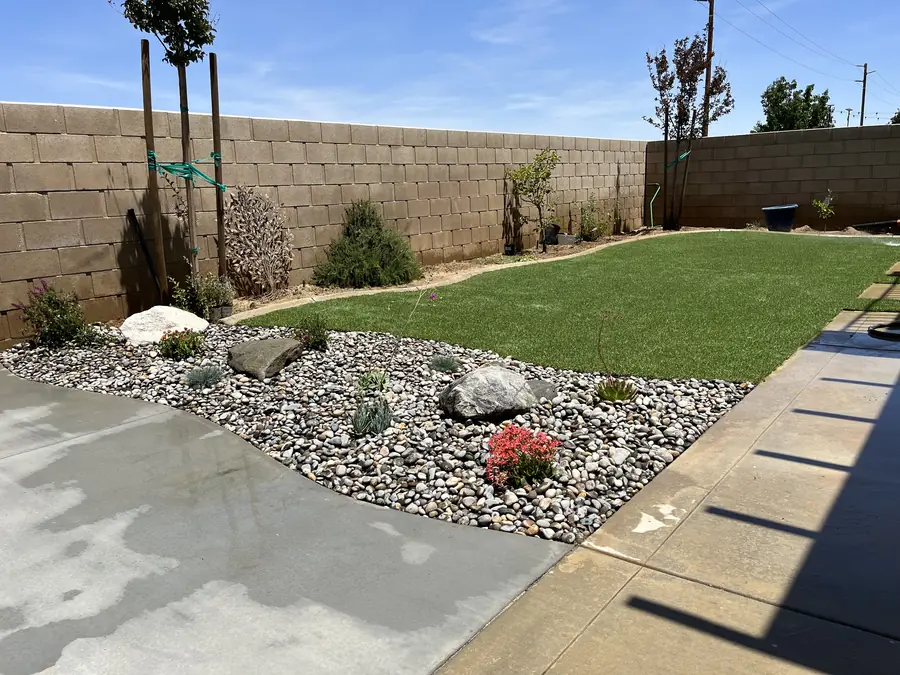
All three work, and the honest answer depends on how the yard gets used. Live lawn makes sense where kids or dogs are on it daily and someone is willing to water and mow. Synthetic turf gives the green look with almost no ongoing cost, which suits a household that wants the yard to stay easy. Drought tolerant planting is usually the best value per square foot and reads as a finished landscape instead of a blank field. Plenty of yards here end up with a small turf area and planting around the rest.
Often the old system is not worth saving. A large share of homes here still run irrigation installed decades ago, and by now the pipe is brittle, the heads are mismatched, and half the coverage overlaps while the rest stays dry. We open a few points, check pressure and valve condition, and tell you plainly what can be reused. Frequently the mainline and a valve manifold stay while lateral lines and heads get replaced, which keeps cost down. Converting shrub beds to drip at the same time cuts water use noticeably.
Phasing is normal here and we plan for it rather than treating it as a compromise. Budgets in this neighborhood are practical, and there is nothing wrong with building a yard in stages as long as the stages run in the correct order. The rule is that anything buried goes first. Grading, drainage sleeves, and irrigation mainline get installed across the whole yard in phase one, even under the parts not being finished yet. After that you can add hardscape one year and planting the next without cutting into finished work.
Soil is the part nobody sees and the part that decides whether planting survives. On older lots the top layer is usually compacted from decades of foot traffic and irrigation, so we rip or till the planting areas, break the hardpan, and blend in compost to open the structure. Amendment rates depend on what is going in, since succulents and natives want lean, fast draining soil while shrubs and ornamentals want more organic matter. Finished soil gets graded below adjacent hardscape so mulch has somewhere to sit.
Pacoima sits inside the City of Los Angeles, so anything permit related goes through Los Angeles Building and Safety. Straight landscaping, meaning grading within normal limits, planting, mulch, irrigation, and drainage, generally does not require one. The moment a scope adds a retaining wall above the height threshold, a patio cover, gas or electrical runs, or significant earth movement, a permit enters the picture. We tell you which side of that line your project falls on before work starts, and nothing requiring approval begins without it.
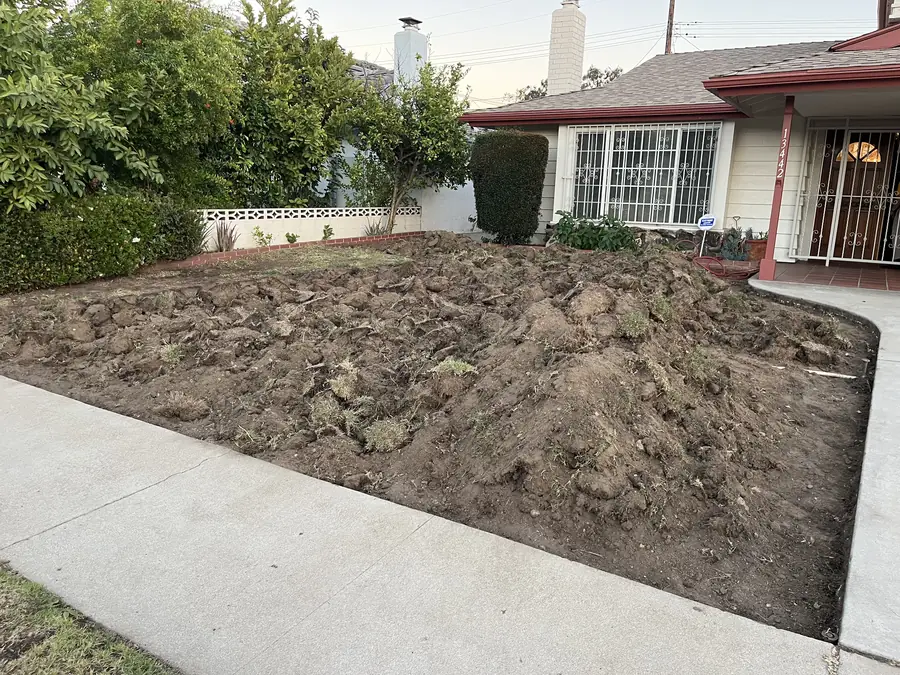
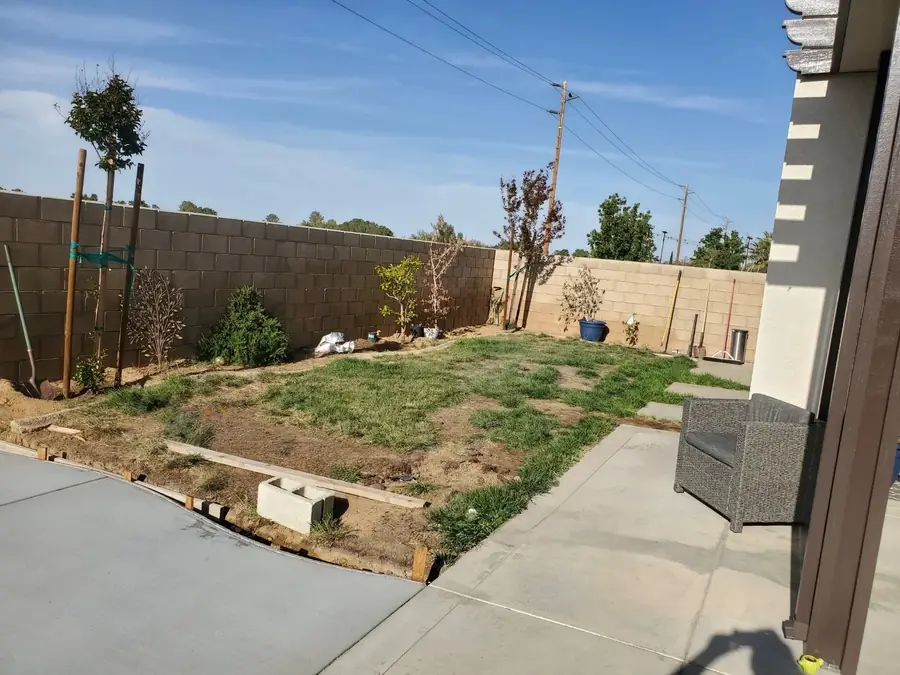
On a property still carrying its original concrete and planting, prep is mostly removal. We demo cracked walkways and slabs, pull shrubs that have outgrown the space or died back, cut and grind stumps where a tree is coming out, and haul all of it off. With the yard bare we can finally read the actual grade and find low spots that were hidden under overgrowth. That is also the moment to properly abandon dead irrigation lines instead of leaving them buried to confuse the next person who digs.
Front yards on regular lots here are not large, so the split matters. A clean walkway and a modest surface for access, then planting across the rest with a defined edge, gives a yard that reads as intentional. Wall to wall gravel looks bare, and wall to wall lawn costs money every month in water. Massing three or four plant types in repeating groups gives the front structure from the street, and keeping low growing material near the walk protects sight lines to the door and the driveway.
Tree choice on a smaller lot comes down to mature size and root behavior. A tree that finishes forty feet across will crowd the house, the fence, and the neighbor. Small to medium canopy trees that handle heat and low water work best, placed so the shade lands on the west or south face of the house or over a seating area. Setback from foundations, walkways, and sewer laterals gets checked before the hole is dug, because a tree planted too close turns into a hardscape problem within a decade.
Mulch does more work per dollar than almost anything else in a yard. Two to three inches across planting beds holds moisture in the soil through long hot stretches, keeps root zones cooler, suppresses weeds, and slowly feeds the soil as it breaks down. It also makes new planting look finished immediately instead of looking like bare dirt with plants stuck in it. We keep it pulled back from trunks and stems so nothing sits wet against wood, and it gets topped off every couple of seasons.
One licensed contractor, every time. Daniels Landscaping stays accountable for the work. The people grading your yard, running irrigation, setting hardscape, and putting plants in the ground work under one licensed contractor, working under our supervision on our schedule. That is why quality stays consistent from one stage to the next and why you always know who is standing in your yard. It also means there is no finger pointing between trades when something needs adjusting, because one company is responsible for all of it.
Low maintenance gets designed in, not added later. It comes from choosing plants that reach the size you want without constant shearing, spacing them for mature width instead of instant fullness, converting spray to drip in beds, mulching properly, and giving every planting area a hard edge so material stays where it belongs. Value and durability tend to matter more to homeowners here than elaborate features, so we would rather put budget into a base that lasts and planting that fills in than into details that demand upkeep.
Mature trees stay unless there is a real reason to take one out. Shade is worth a great deal on a lot that gets full sun all day, and a tree that has stood for decades cannot be replaced quickly. We protect the root zone during construction, avoid trenching straight through major roots, keep heavy equipment off the drip line where possible, and select shade tolerant planting underneath. When hardscape has to pass near a trunk, we adjust the layout instead of cutting the roots holding the tree up.
The estimate is written, free, and itemized so you can see where the money goes. We walk the property, take measurements, look at existing irrigation and drainage, talk through how you actually use the yard, then put the scope on paper: demolition and haul away, grading, drainage, irrigation, hardscape quantities, plant sizes and counts, and mulch. Having it broken out by stage is what makes phasing workable, since you can see exactly what moves to a later phase and what has to stay in the first one.
Edges separate a landscape that stays sharp from one that blurs within a year. Between lawn or ground cover and a planting bed we set a physical edge, whether steel, a concrete mow strip, or a hardscape band, so roots and mulch do not migrate. Ground cover gets chosen for how fast it fills and how it behaves at the boundary, since an aggressive spreader will climb into everything next to it. Spacing is set for coverage in a reasonable time rather than instant density that crowds itself out.
Call us at (818) 443-9300 and we will set a time to walk the property with you. There is no charge for the visit and no charge for the written estimate that follows it. We look at the whole yard, the grade, the existing irrigation, and what you want out of the space, then put a real scope and price on paper you can compare against anyone else. Daniels Landscaping is licensed in California under number 1138709, and one licensed contractor performs every stage from demolition through final planting.