

FAQ
Landscape Lighting in Pacoima, answered
The questions we hear most from Pacoima homeowners.
The system has three parts. A transformer mounted near an exterior outlet drops 120 volt house power to 12 volt, low voltage cable gets buried out through the yard, and fixtures tap into that cable at connection points. We begin by walking the property after dark to see what is already lit by streetlight and porch light, then decide what deserves attention: the entry, the walkway, a tree, the face of the house. Layout comes before fixture selection. Once positions are settled, we size cable and transformer to the load and bury the runs.
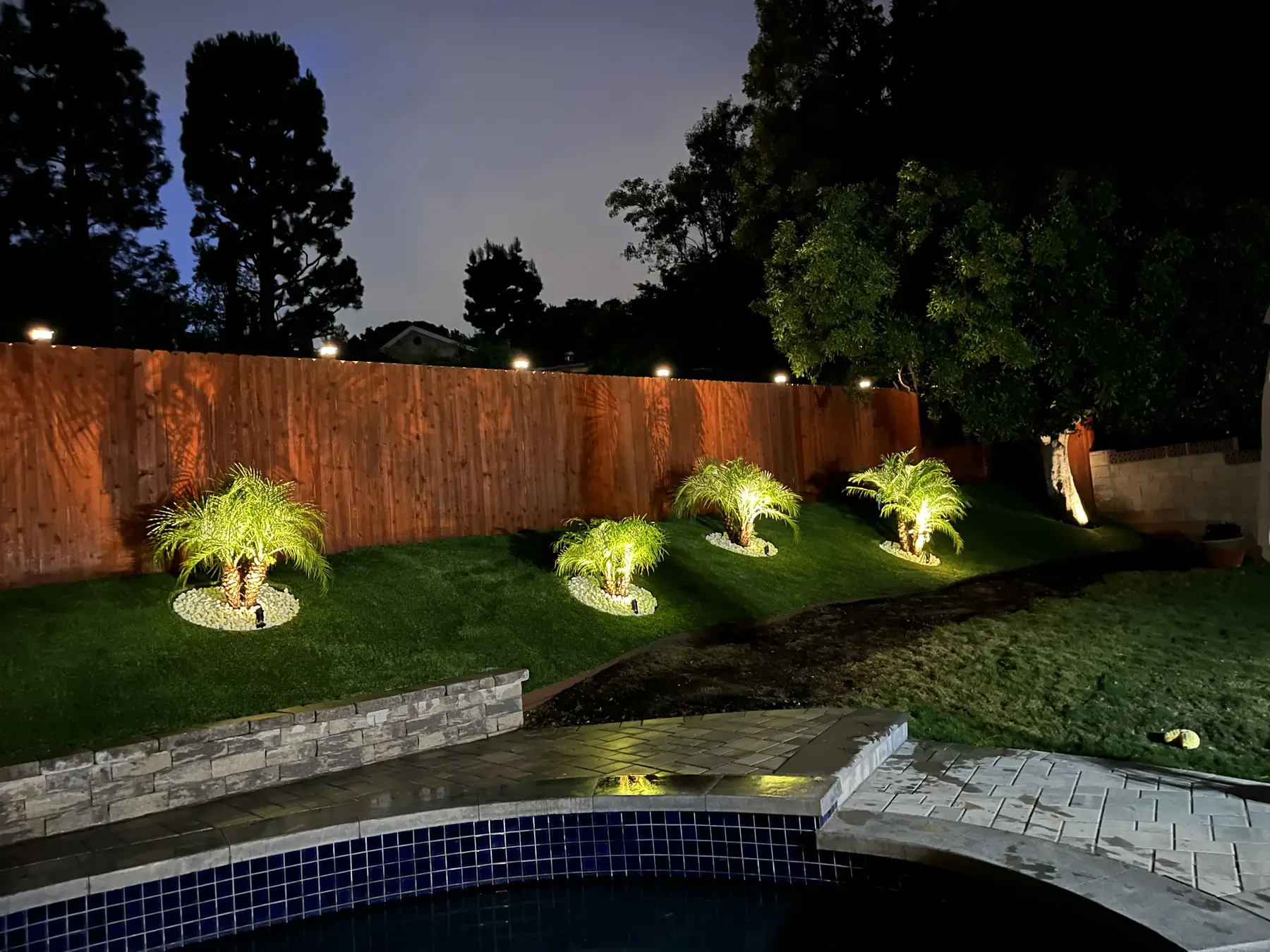
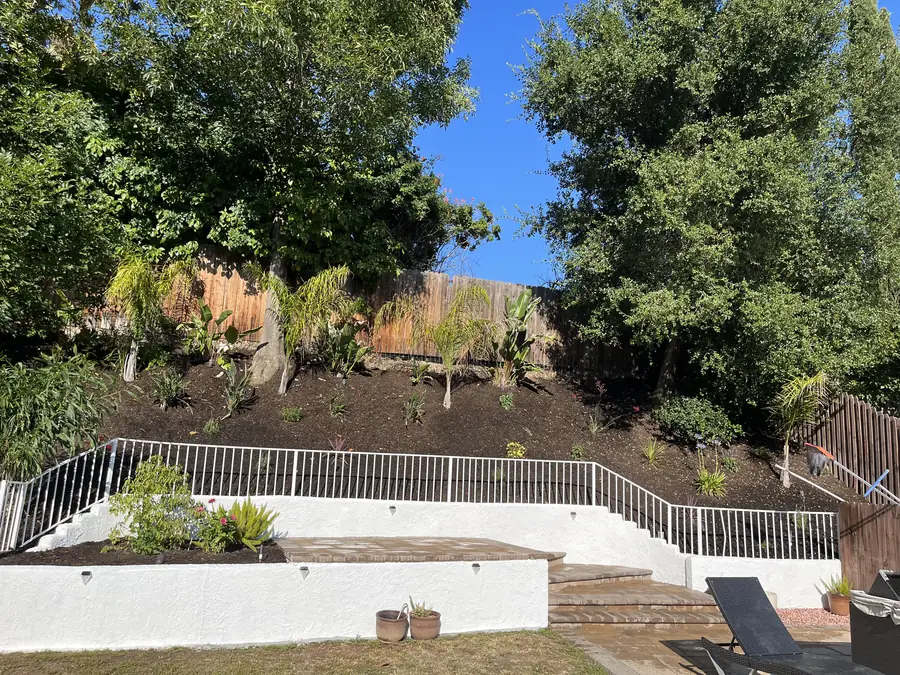
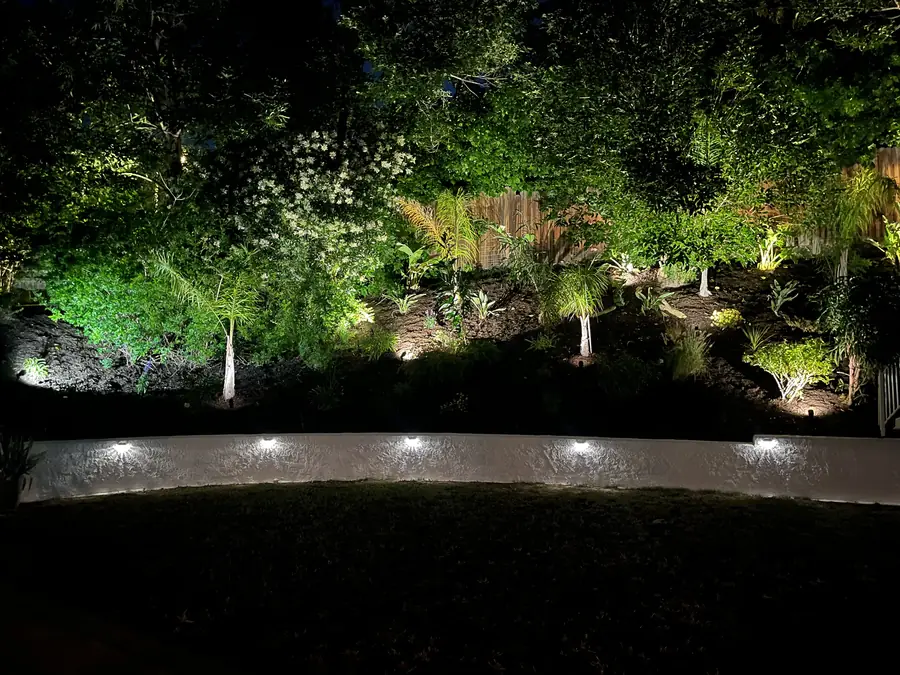
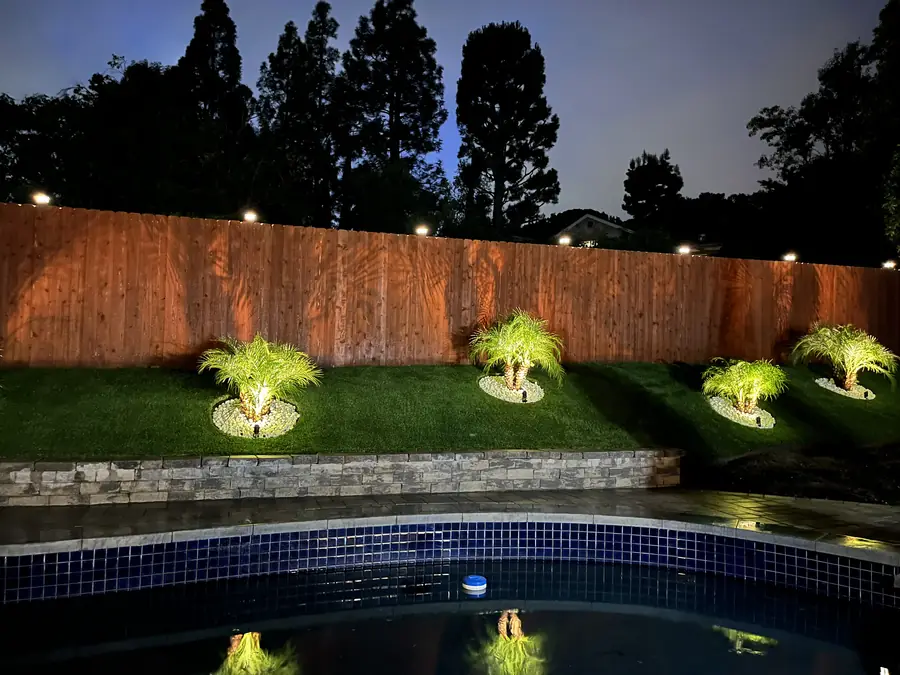
Flat ground gives you nothing for free, so depth gets manufactured. We light in layers: something low and close to the viewer such as path lights, something in the middle like a shrub mass or a low wall grazed with light, and something tall and set back such as an uplit tree or the face of the house itself. The eye reads those separations as distance. Deliberate dark gaps between lit objects matter just as much, because unbroken brightness across a flat Pacoima yard flattens it further instead of opening it up.
A short list covers most properties here. Path lights along the walk to the door, a pair of uplights or bullets aimed at whatever tree or architectural feature the house has, and a soft wash across the front elevation so the house is not left a dark shape behind lit landscaping. Where there are steps or a low wall, small step and wall lights handle those. Regular sized lots do not need dozens of fixtures. A dozen placed thoughtfully outperforms thirty scattered around, and it costs less to run and less to maintain.
It is the piece that makes everything else safe. The transformer takes 120 volt power from an exterior outlet and steps it down to 12 volt, which is what the buried cable and the fixtures operate on. We mount it on a wall near the source, up off the ground, somewhere you can reach the dial and the breaker without hunting. Sizing deserves attention. We total the wattage of every fixture and pick a transformer with headroom left over, so lights can be added later without replacing the unit.
That comes up constantly on houses of this age, since outdoor circuits were not standard when the neighborhood was built. A transformer needs a dedicated exterior receptacle in a weatherproof enclosure, and adding one is electrical work on the 120 volt side. Pacoima falls inside the City of Los Angeles, so that portion follows Los Angeles Building and Safety requirements. Everything past the transformer is low voltage and does not carry the same restrictions. We plan the transformer location around where power can practically be brought, instead of picking a spot and forcing it.
Low voltage cable goes into a shallow trench, deep enough to stay clear of a shovel or an edger, routed along bed edges and fence lines rather than straight across open lawn. Connections are where cheap installations fall down. We use waterproof connectors at hubs, so several fixtures branch from one point instead of being spliced randomly along the run, and hub wiring keeps voltage even across those fixtures. Before anything gets covered, the system is energized and every fixture checked, because finding a bad connection after backfill means opening the trench a second time.
Voltage drop is loss that occurs as current travels down a wire, and it shows up as fixtures at the far end of a run glowing dimmer than the ones close to the transformer. Distance and wire gauge control it. The regular sized lots common in Pacoima keep runs relatively short, which helps, though a run that loops around a back yard and returns still adds up quickly. We calculate the drop, upsize cable where the math calls for it, and split the load across separate taps so every fixture receives the voltage it was built for.
Because a good fixture aimed wrong is worse than a plain fixture aimed right. What people actually notice at night is glare hitting them in the eyes, a hot spot burning on a wall, and pools of light that do not connect to one another, and every one of those is a placement and aiming issue rather than a product issue. Wiring quality is the other half. Poor connections and undersized cable produce dim, uneven, short lived systems no matter what the fixtures cost. Budget spent on correct layout, proper cable, and solid connections returns more than budget spent on brand names.
Aiming and shielding handle it. Uplights get set close to the trunk or wall and tilted so the beam catches the object rather than the sky or the house next door, and we choose narrow beam spreads wherever a wide flood would spill. Glare guards and hoods cut the visible hot point, so somebody standing on the sidewalk sees the lit tree instead of the lamp. On the regular sized lots here, houses sit near one another, so we walk the property line after dark and adjust from the neighboring side of the fence before calling it finished.
Both, because they do different jobs. Path lights are functional. They mark the walkway so people see where to step, and they should sit far enough apart that the yard does not read like a runway. Uplights create the drama, throwing a tree canopy or a textured wall into relief and giving a flat lot vertical interest it does not otherwise possess. A property with nothing but path lights looks like a lit line through a dark space. Pair the two and the whole yard takes on shape once the sun goes down.
Quality LED holds up well, but the details decide it. Full sun and long stretches of dry heat are hard on plastic housings and cheap gaskets, so we favor brass or solid cast fixtures with proper seals, which happen to be the ones that can be serviced instead of thrown away. LED draws a fraction of the power older halogen systems demanded, meaning smaller transformers, less load on the cable, and lamps that are not radiating heat into the planting around them. Color temperature counts too, and warm output flatters both stucco and foliage.
Two common methods, and they are frequently combined. A photocell senses darkness and brings the system on at dusk, which stays accurate all year as sunset moves. A timer, either built into the transformer or run through an app, sets when everything shuts down, since most households have no need for a lit yard at three in the morning. Running dusk to a set hour keeps energy use low and stretches lamp life. We configure it and show you how to change it, because the schedule belongs to you.
Very little, and that is deliberate, because low ongoing maintenance is what most households here are after. Once a year, wipe dust and hard water film off the lenses, since dry Pacoima air leaves a haze on glass that dims output more than people expect. Check aiming after planting grows in, because a shrub that has filled out will block a fixture that sat perfectly two seasons ago. Clear mulch and soil away from buried lenses. Past that, a lamp fails now and then and gets swapped, and the system keeps running.
It phases about as cleanly as anything we build, which suits the way many households here spread work over time. The usual approach handles the front of the house first, since that is what you and everyone passing see every night, then extends into the back yard later. The key is sizing the transformer and running primary cable for the finished plan at the start, leaving capacity and taps available. That way stage two is fixtures and short branch runs rather than digging up stage one. Planning the whole system on paper costs nothing extra and saves real money later.
Small dedicated fixtures do this far better than trying to reach with something else. Step lights recess into the riser or an adjacent wall and throw light down onto the tread, so the edge of each step reads clearly without a glaring source at eye level. Low wall lights tuck under a cap or a seat wall ledge and wash the surface below. Safety without a spotlight effect is the goal. Anywhere there is a grade change, even a single step on an otherwise flat Pacoima lot, deserves its own fixture.
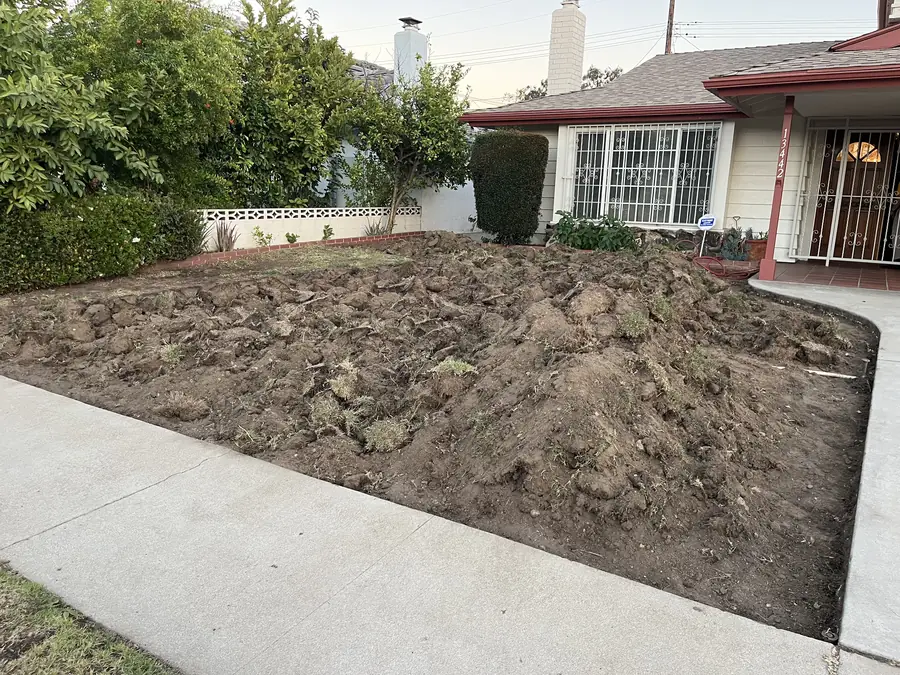
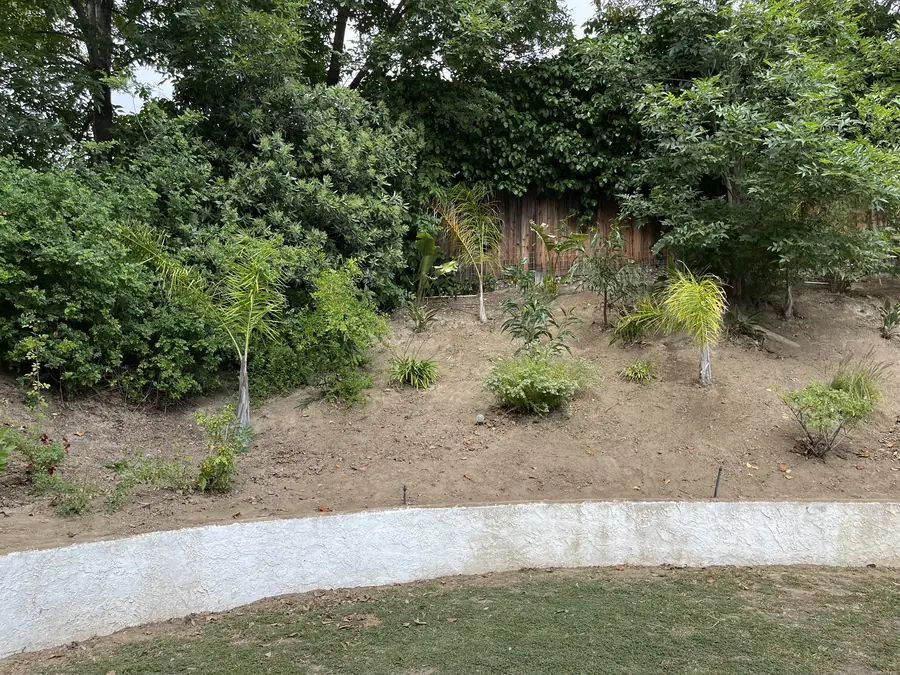
Yes, and most of our lighting work in this area is exactly that, added to a yard that already exists. The care goes into trenching. We probe and hand dig near known irrigation lines, route cable along bed edges where pipe and roots are less likely, and hold depth shallow enough to stay above most laterals. Established planting actually helps, since mature shrubs conceal fixtures and cable while giving the light something worth washing. If a sprinkler line does get nicked, our crew repairs it properly on the spot rather than leaving it for somebody else.
One licensed contractor performs the entire installation. Every part of a lighting job stays under one licensed contractor. The people who lay out the fixtures, trench the cable, mount the transformer, and aim each light after dark all work for us. Lighting rewards that arrangement, because final quality comes down to judgment made on site at night, nudging a beam a few degrees until it looks right, and that is not something you get from a crew passing through once. It also means one company answers the phone when something needs attention later on.
Reach Daniels Landscaping at (818) 443-9300 and we will arrange a visit, ideally including a look at the property after dark so you can see what we are describing. We talk through which features are worth lighting, where power can come from, and how the system might grow later. You receive a free written estimate covering fixture counts and types, transformer size, cable runs, and controls. We hold California license 1138709. Nothing is ordered or dug until that estimate is in your hands and you tell us to proceed.