
FAQ
Artificial Turf in Lake View Terrace, answered
The questions we hear most from Lake View Terrace homeowners.
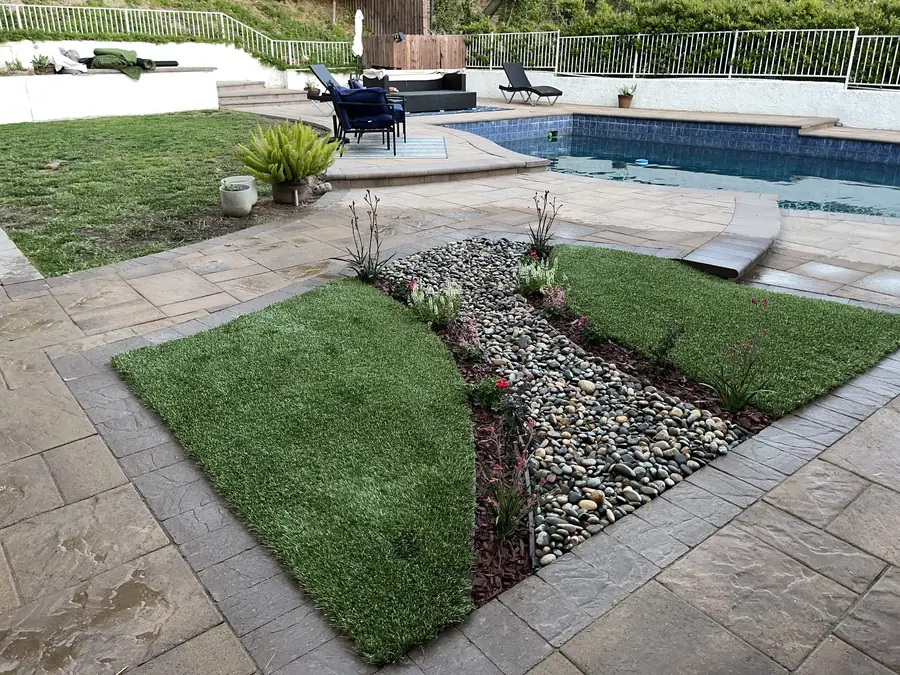
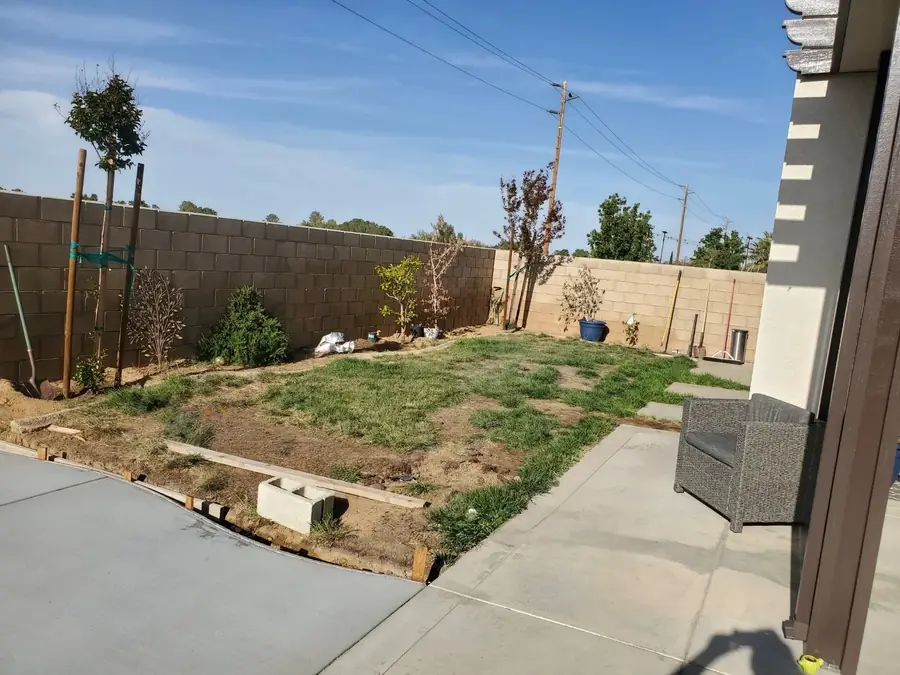
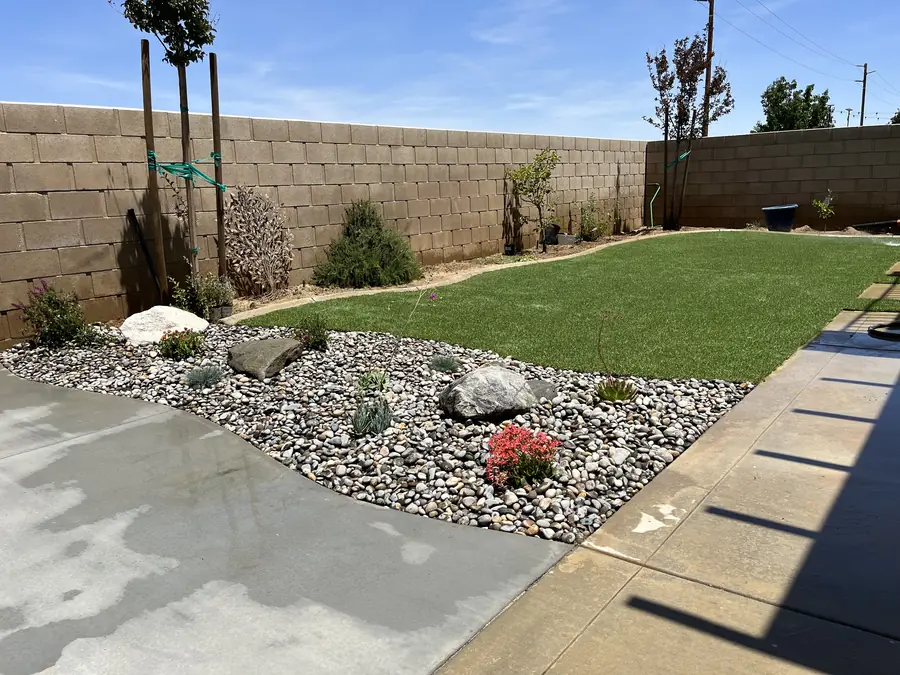
Turf earns its place in the areas people actually stand on: a play area, the space right off the patio, a dog run, or a defined green shape near the house. Covering large open acreage with synthetic grass is expensive and usually unnecessary, since the far parts of a property are better served by tough planting, gravel, or decomposed granite. The logic on a big parcel is concentration. You pick one area that has to look green and stay usable year round, build that properly, and let the rest of the land be what it is.
The digging is the hard part and the drainage is the easy part. Cutting base depth through alluvial cobble takes equipment and time, more than it does on softer soil elsewhere in the Valley. Once the excavation is done, though, the subgrade underneath drains well, which is exactly what a turf base wants. We excavate to depth, place crushed aggregate in lifts, compact each lift, and screed the surface flat. Turf shows every imperfection underneath it, so the flatness of that final base is what separates a good lawn from a lumpy one.
Turf is not the right surface for a working area or anywhere hooves land. Concentrated weight on small contact points tears backing and crushes fiber, and manure and bedding are far easier to handle on compacted decomposed granite or gravel. Where turf does work on a horse property is on the living side of the line: the yard by the house, a seating area, a play space for kids. We keep it clearly separated from the animal side with a change of surface and, where it helps, fencing or a grade change.
It deserves a straight answer. Synthetic turf does not carry fire the way dry grass and brush do, and it needs no water, which is why some owners like it near structures. It is still a petroleum product and it can melt or be damaged by embers and by radiant or reflected heat. We would not treat it as a fire break. Within the band closest to buildings, gravel, stone, and paving are the safer choice, with turf placed slightly further out in the area you actually use. Clearance and spacing beyond that still do the heavy lifting.
For a back yard that gets normal family use, a mid range face weight with a pile height around an inch and a half looks natural and stands up without going flat. Very tall pile lies over and reads fake once it is walked on. Very short, dense turf looks more like a sports surface. Blade shape matters as much as the numbers, since a stiff spine in the fiber helps it recover after traffic. A color blend with tan thatch beneath the green is what keeps it from looking like a single flat sheet of plastic.
Warmer than live grass, and that is worth planning around. Synthetic fiber absorbs heat and afternoon sun in this part of the Valley is intense. Practically, that means placing the turf area where a tree, a patio cover, or the house throws shade during the hottest hours, choosing a lighter color blend, and knowing that a quick rinse cools the surface within a minute or two. Turf that is shaded by mid afternoon is comfortable. Turf placed in full open western exposure will be hot underfoot at the peak of summer.
Water goes straight down. The backing is perforated across the whole sheet, so rain or a hose passes through the fibers and into the compacted aggregate base, then into the native ground. Since the ground here drains fast, that path works well. Underneath, the base is sloped so water also has somewhere to go if it moves laterally, and where turf sits near a structure or in a collecting spot we put a drain line in during the base work. The failure mode with turf is never the backing, it is a base with no fall.
Silica sand is the standard, brushed into the fibers after the turf is laid and secured. It weighs the sheet down so it stays flat, keeps the blades standing upright instead of matting, and protects the backing from foot traffic and sun. Where pets are part of the picture we use a coated or antimicrobial infill that resists odor. Infill is not a one time thing, since it settles and migrates over years and gets topped up occasionally. Turf installed with too little infill goes flat and shiny early, which is the most common shortcut we see.
Yes, and dogs are one of the better reasons to install it. Urine drains through the perforated backing rather than sitting, and solids get picked up and the area rinsed. An odor resisting infill makes a real difference over time, and an occasional enzyme rinse handles the rest. Dogs cannot dig it into dirt patches or wear a track across it the way they do a live lawn. The parts to get right are drainage in the base and secure edges, since a determined dog will find any perimeter that was not properly nailed down.
Good turf installed properly lasts a long stretch of years in this climate, and the two things that decide it are UV exposure and traffic. Sun is the main enemy here, so fiber quality and the UV stabilization in the product matter more than they would in a milder place. Base quality decides whether it stays flat that entire time. Wear shows first in the traffic paths and near gates, not across the field. Brushing the fibers up and keeping infill topped up genuinely extends the life, and neither takes much effort.
Careful planning and careful cutting. Turf comes in rolls of fixed width, so seams are unavoidable on anything larger than a narrow strip. We lay all rolls with the grain running the same direction, because fiber direction changes how color reads and a reversed piece stands out immediately. The edges are trimmed cleanly, joined with seaming tape and adhesive or stitched, then the fibers brushed across the joint so it disappears. Where possible we place seams away from the main sight line from the patio or the back door.
The perimeter is nailed down into the compacted base with landscape spikes at close spacing, and where the turf meets an open edge we give it something to hold against. That can be a bender board edge, a paver or stone border, a concrete curb, or a mow strip. On this rocky ground the spikes bite well once you are into the aggregate base. A loose edge is where problems start, since a lifted corner catches a foot, admits weeds, and lets infill escape. We treat the perimeter as part of the base work, not as a finishing detail.
Artificial turf on its own generally does not require a permit, since it is not structural and nothing is poured. Grading beyond a certain scope on a larger parcel, retaining walls, or drainage work tied into other systems can be a different matter, and Lake View Terrace sits inside the City of Los Angeles, so any of that goes through Los Angeles Building and Safety. There can also be property specific rules on some parcels. We flag anything in your plan that touches a review while we are putting the estimate together.
It removes irrigation from whatever area it covers, permanently. On a property this size the more useful way to think about it is what that frees up. Water you are not putting on a lawn can go to the trees, the shrubs near the house, and the areas that genuinely need it, which fits how a large parcel should be run anyway. Turf also removes mowing, fertilizer, and reseeding from the picture. We do not quote savings figures, because it depends entirely on your current system and how much area is involved.
Very little, but not nothing. Rinse it when it gets dusty, which happens out here, and hose it after pets. Brush the fibers against the grain a couple of times a year in the traffic paths so they stand back up. Pick up leaves and debris before they break down into the infill and feed weeds at the edges. Top up infill every few years. Keep the perimeter clean so nothing roots along the edge. That is the whole routine, and it takes a fraction of the time a live lawn does.
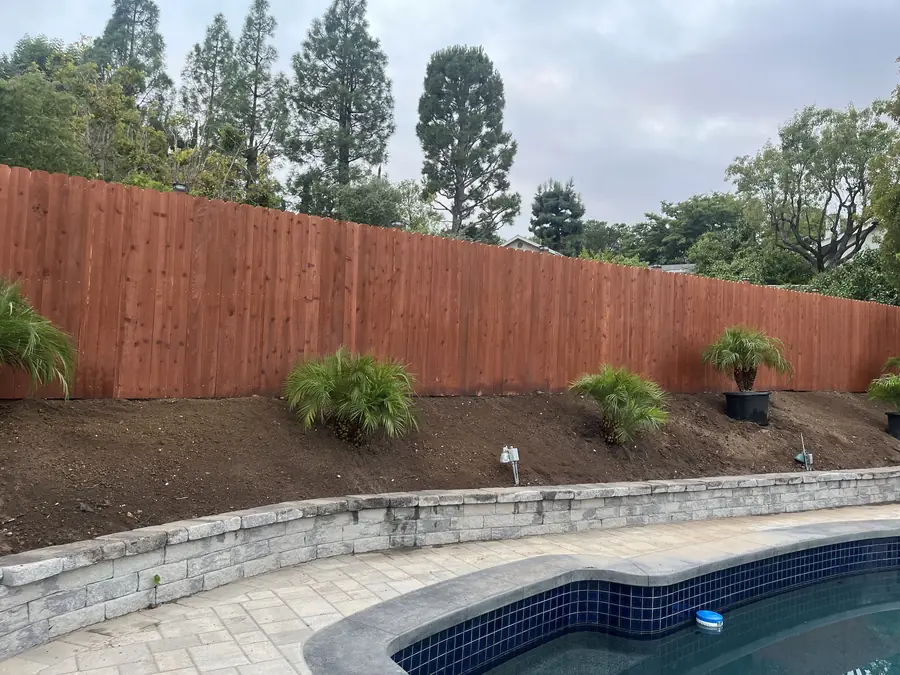
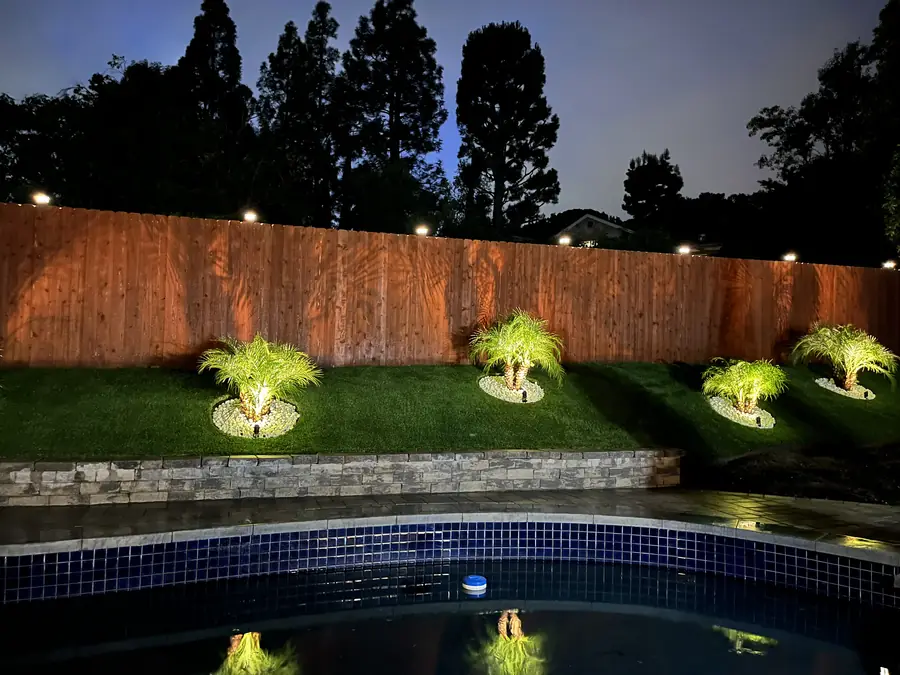
Yes, and slope is common on parcels running toward the hills. The turf itself follows whatever the base does, so the work is in shaping and compacting that base, then securing the sheet so it does not creep downhill. On a grade we use tighter spike spacing, additional seaming adhesive, and a firm edge at the bottom to hold the run. Very steep areas are usually better handled with planting or terracing, since maintaining a walkable slope matters more than making it green. We tell you which category a slope falls into after we see it.
Daniels Landscaping installs it with one licensed contractor. One licensed contractor stays accountable for the workty. The same crew excavates, builds and compacts the base, screeds it flat, lays and seams the turf, secures the perimeter, and brushes in the infill. That matters more with turf than with almost anything else, because nearly every visible defect in a synthetic lawn traces back to base work that a different company did and nobody inspected. One crew, one standard, one company answering for the result.
Call Daniels Landscaping at (818) 443-9300 and we will come out to your Lake View Terrace property, measure the area, look at sun exposure, drainage, and how the space is used, and bring samples so you can feel the difference between products instead of guessing from a photo. You get a free written estimate covering base depth, the specific turf, infill, and edging, with nothing hidden in a lump sum. We are licensed in California under number 1138709. One licensed contractor does the installation from the first cut of excavation to the final brushing.