
FAQ
Landscaping in Lake View Terrace, answered
The questions we hear most from Lake View Terrace homeowners.
On a horse property the yard is really two properties, so we plan them together. We start with demolition and grading, correct the soil where planting will actually go, then run irrigation and drainage lines while the ground is open. Hardscape follows, and trees, shrubs, ground cover, and mulch finish the job. The difference in Lake View Terrace is that the plan has to respect access routes for trailers and animals, durable working surfaces near stalls and turnouts, and a clean edge where the working area stops and the living yard begins.
Alluvial ground carries rock that water pushed out of the canyons over a very long time, and you feel it the moment a trench starts. Excavation is slower, we hit cobble at depth, and some of what comes out is not worth putting back around roots. Practically that means budgeting for real digging, screening or removing rock from planting pits, and bringing in amended soil for beds instead of pretending the native material will grow anything well. The upside is drainage. Water moves through this ground quickly once it is opened up.
Treating an acre uniformly is the fastest way to spend a lot and end up with a yard nobody uses. We divide the parcel into zones by how often people are actually in them. The areas around the house, the patio, and the main entry earn planting, irrigation, and detail. The middle distance gets tough shrubs and trees on drip. The far edges get low input ground cover, decomposed granite, or simply kept clear. Water follows that same hierarchy, which is what keeps a large Lake View Terrace property affordable to run year after year.
Living at the wildland interface changes what belongs close to the walls. Within the first zone around structures we keep things low, green, well spaced, and irrigated, using succulents, low ground cover, and gravel or stone instead of dense woody shrubs pushed against siding. Nothing should ladder fire from the ground into tree canopy or up to eaves. Further out we space trees and shrubs in islands rather than continuous masses. Ongoing clearance matters as much as the original plan, so we design planting you can realistically keep trimmed and thinned.
Lake View Terrace is inside the City of Los Angeles, so anything requiring a permit goes through Los Angeles Building and Safety. Planting, soil work, mulch, and standard irrigation typically do not. Structures, retaining walls above the height threshold, electrical, and gas lines do. On horse properties there can also be requirements tied to how animals are kept, so it is worth confirming before a layout is finalized. We tell you plainly which parts of your plan touch a permit and which do not, rather than leaving it as a surprise later on.
Separation is mostly about surfaces and circulation. Working areas want compacted, durable ground that drains and can be raked, not lawn or fine planting that will be destroyed in a season. Living areas want the opposite. Between them we use grade changes, fencing, a hedge line, or a change of surface so the transition reads clearly and dust and traffic stay on the working side. Access routes for a trailer or a truck get planned first, because a wide turning path drawn late forces the rest of the design to move.
Sequence protects everything buried. Grading comes first because it sets where water goes, and nothing built on top can fix a bad grade. Irrigation and drainage go in next while trenches are open and cheap. Hardscape follows, since compactors and loaded wheelbarrows crossing finished beds will wreck them. Planting is last, and irrigation gets tuned to the plants that are truly in the ground rather than to a drawing. Skipping around in that order is the usual reason a yard gets torn back open a season later.
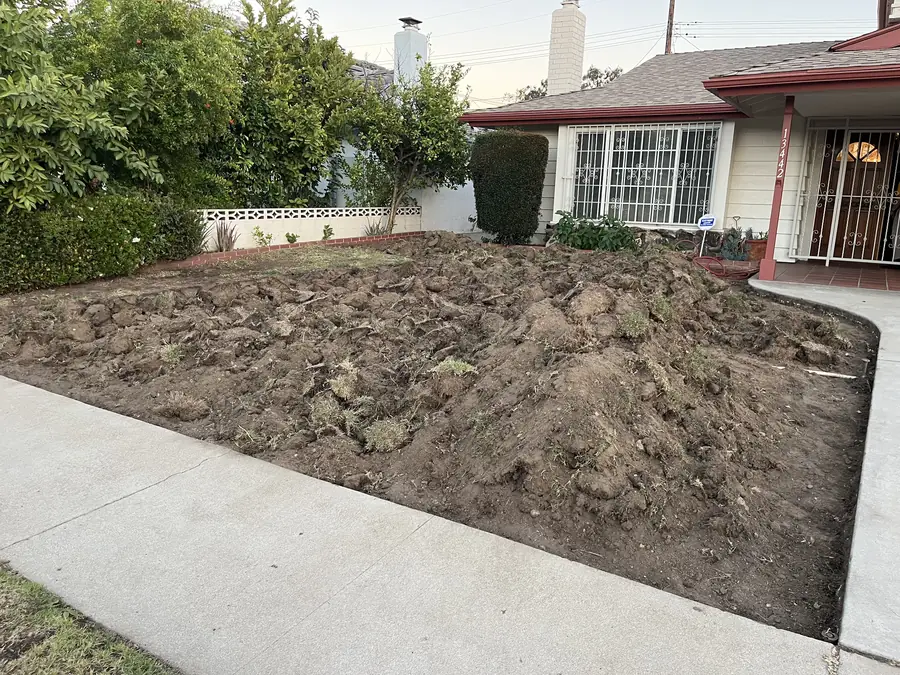
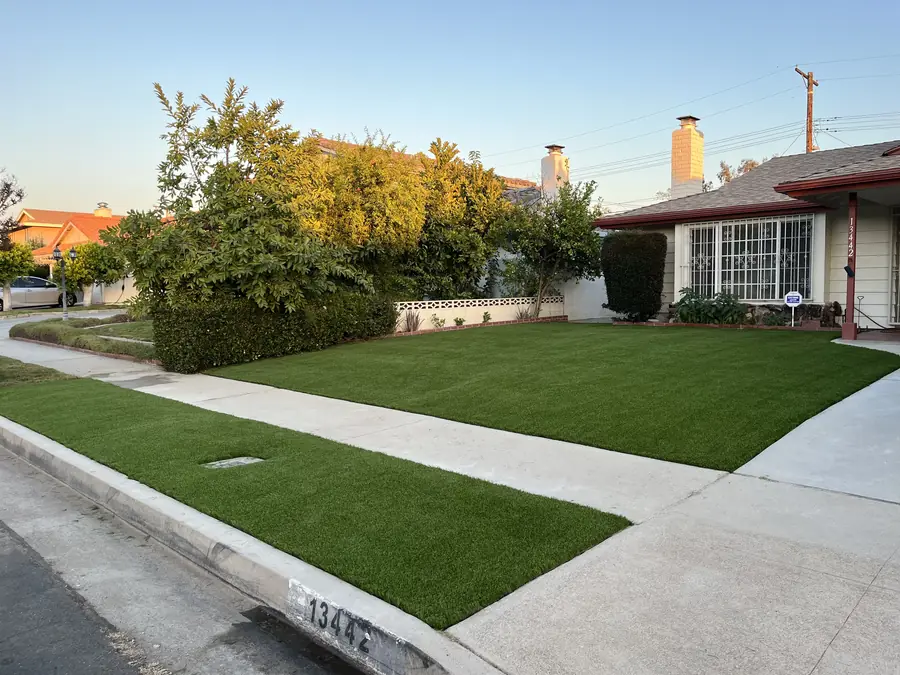
It depends on who uses the space. A live lawn makes sense in a defined area where kids or dogs actually play, and on this fast draining ground it needs steady water to hold color. Artificial turf gives a green area with almost no water, which suits properties where water is being concentrated elsewhere. Drought tolerant planting is usually the right answer for everything past the core use area on a larger parcel. Most Lake View Terrace yards we build end up as a combination, with a small green zone and tough planting beyond it.
Native ground here is rocky and drains almost too well, so beds need body added rather than more sand. We remove oversized rock from the planting area, break up compaction, and blend in compost and organic amendment to hold moisture and feed roots. Planting pits are dug wide instead of deep so roots spread into improved material. Mulch goes on top to slow evaporation. Doing this before anything is planted is far cheaper than trying to rescue struggling shrubs after the fact, which is the usual alternative.
Trees earn their place on a large parcel because they do what nothing else can, which is throw real shade. Species that handle heat, wind coming down out of the canyons, and lean fast draining soil do best. Oaks, sycamores where there is room, pistache, olive, and desert willow are all reasonable in this setting. Near structures we keep spacing generous and canopy lifted for fire clearance. Placement matters as much as species, since a tree set on the west side of a patio changes how usable that space is by afternoon.
Fast drainage cuts both ways. Water rarely sits, which is good, but it also moves past the root zone quickly, so long infrequent watering wastes much of what you apply. We set shorter run times with more cycles, use drip on shrubs and trees so water goes where roots are, and group plants by water need instead of mixing thirsty and tough species on one valve. Mulch depth does real work here. On acreage this approach is the difference between a manageable bill and an unmanageable one.
Three inches is the working number, kept back a few inches from trunks and stems so bark does not stay wet. On rocky fast draining ground mulch is not decoration, it is the layer holding moisture in the root zone and keeping soil temperature down through a Valley summer. It also suppresses weeds, which matters on a large property where weeding is otherwise endless. Near structures we choose the material with fire in mind and often switch to gravel or stone in the band closest to walls.
Usually yes, once we see what is there. Older systems on these properties are often a mix of additions made over years, sometimes shared with stock water or hose lines. We check pressure, valve condition, and whether existing zones have capacity before adding to them. If a line will not support new planting, adding to it just starves everything on that valve. Converting spray zones to drip for new beds is common, and new planting frequently gets its own zone so it can be watered on its own schedule.
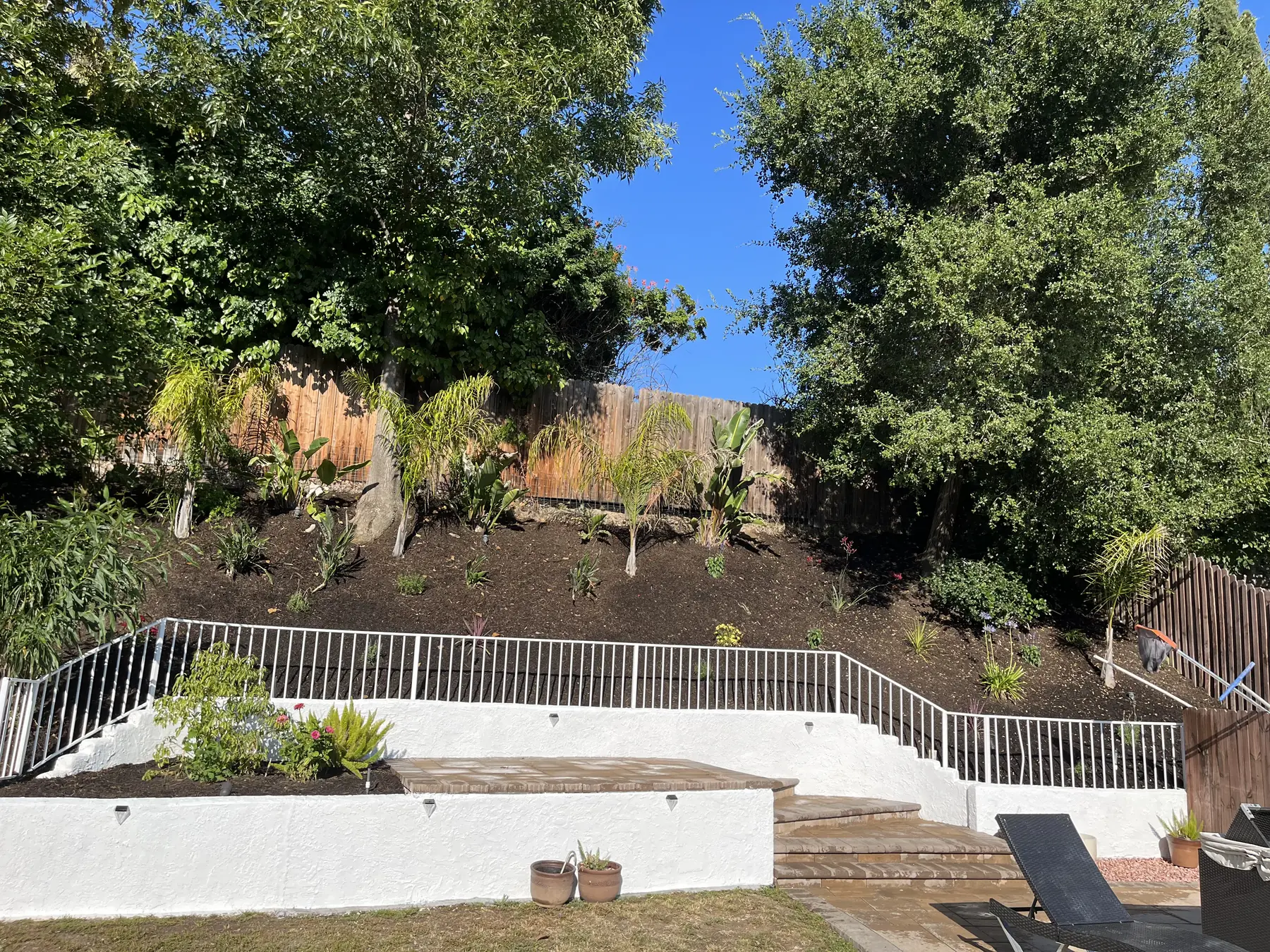
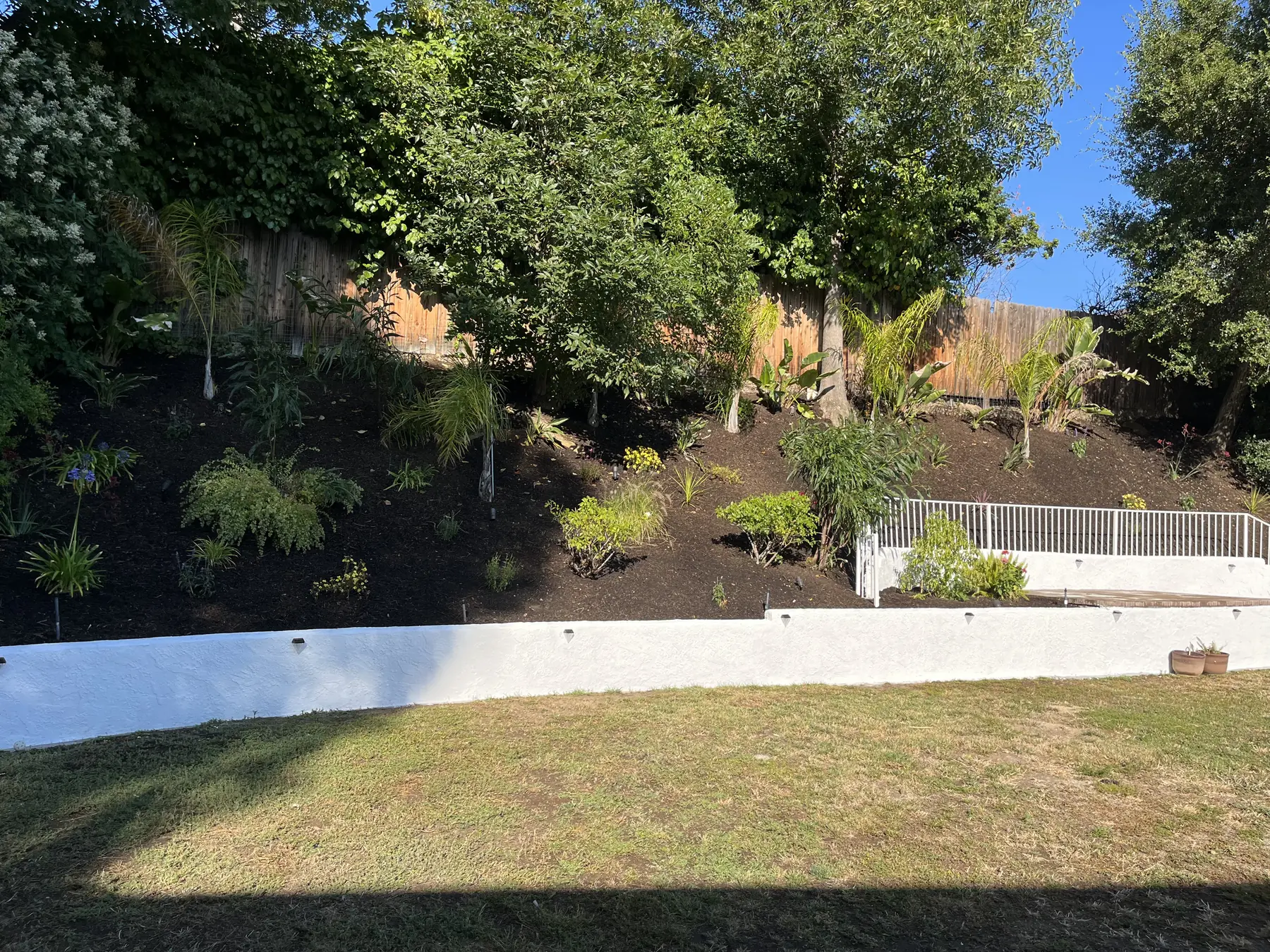
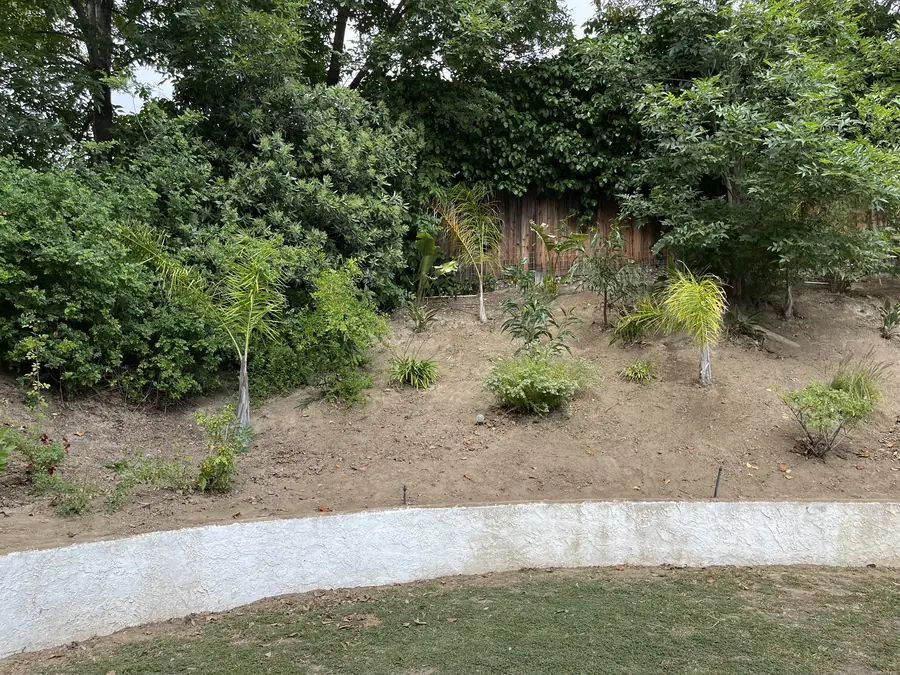
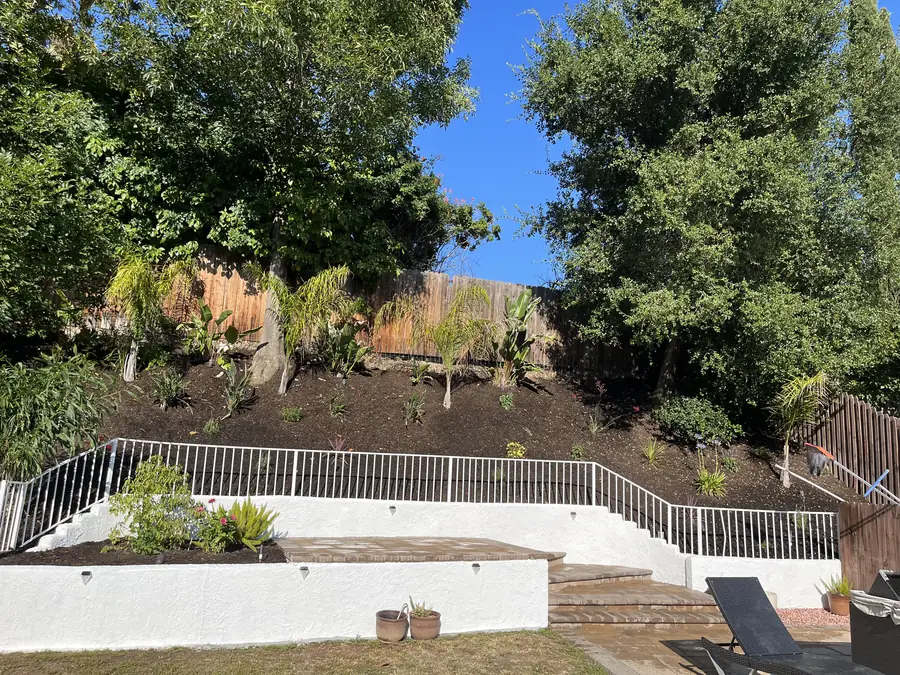
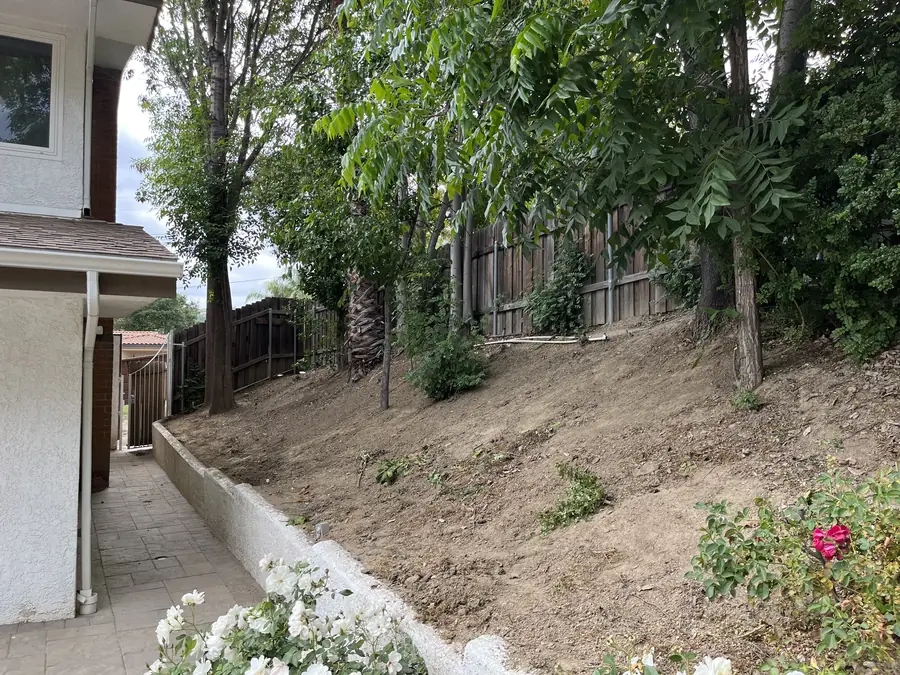
Ground at the foot of the hills tends to carry water across it during a real storm, so grading is about direction and interception, not just leveling. We shape the ground to move water away from the house and around use areas, use swales where a broad path is better than pipe, and place catch basins where flow naturally collects. On a slope, terracing with low walls or planted benches breaks the run so soil stays put. All of this gets established before hardscape or planting exists.
Daniels Landscaping uses one licensed contractor for every part of the work at your Lake View Terrace property. One licensed contractor stays accountable for the work. The same people who grade the site run the irrigation, build the hardscape, and set the planting, which is why the plan does not drift between stages and why nobody points at another company when a question comes up. It also means you are dealing with one company from the estimate through the final walkthrough, and we stand behind all of it.
Open ground on a larger parcel needs a plan too, or it becomes weeds and dust. Options that hold up include tough spreading ground covers on drip, native shrub islands with space between them, decomposed granite for areas that get walked or driven, and gravel where fire clearance is the priority. The choice usually comes down to how often you are out there. Areas you cross daily deserve a firm surface. Areas you only look at can carry planting that gets established and then largely takes care of itself.
Phasing works well on acreage and we plan for it often. The rule is that anything buried or under a surface has to be done in the right stage even if the visible work waits. Grading, drainage, and irrigation mainlines for future areas go in while the ground is open, with capped stubs left where the next phase will connect. Then the core area around the house gets finished completely so the property is usable. Later phases extend outward without tearing up what was already built.
Call Daniels Landscaping at (818) 443-9300 and we will schedule a site walk at your Lake View Terrace property. We look at the parcel, the soil, access, how the working and living areas relate, and what you want the place to do, then put together a free written estimate that spells out scope and materials instead of a vague number over the phone. We are licensed in California under number 1138709 and we build with one licensed contractor. Ask whatever you want during the walk, including the things you are unsure about.