
FAQ
Landscaping in Toluca Lake, answered
The questions we hear most from Toluca Lake homeowners.
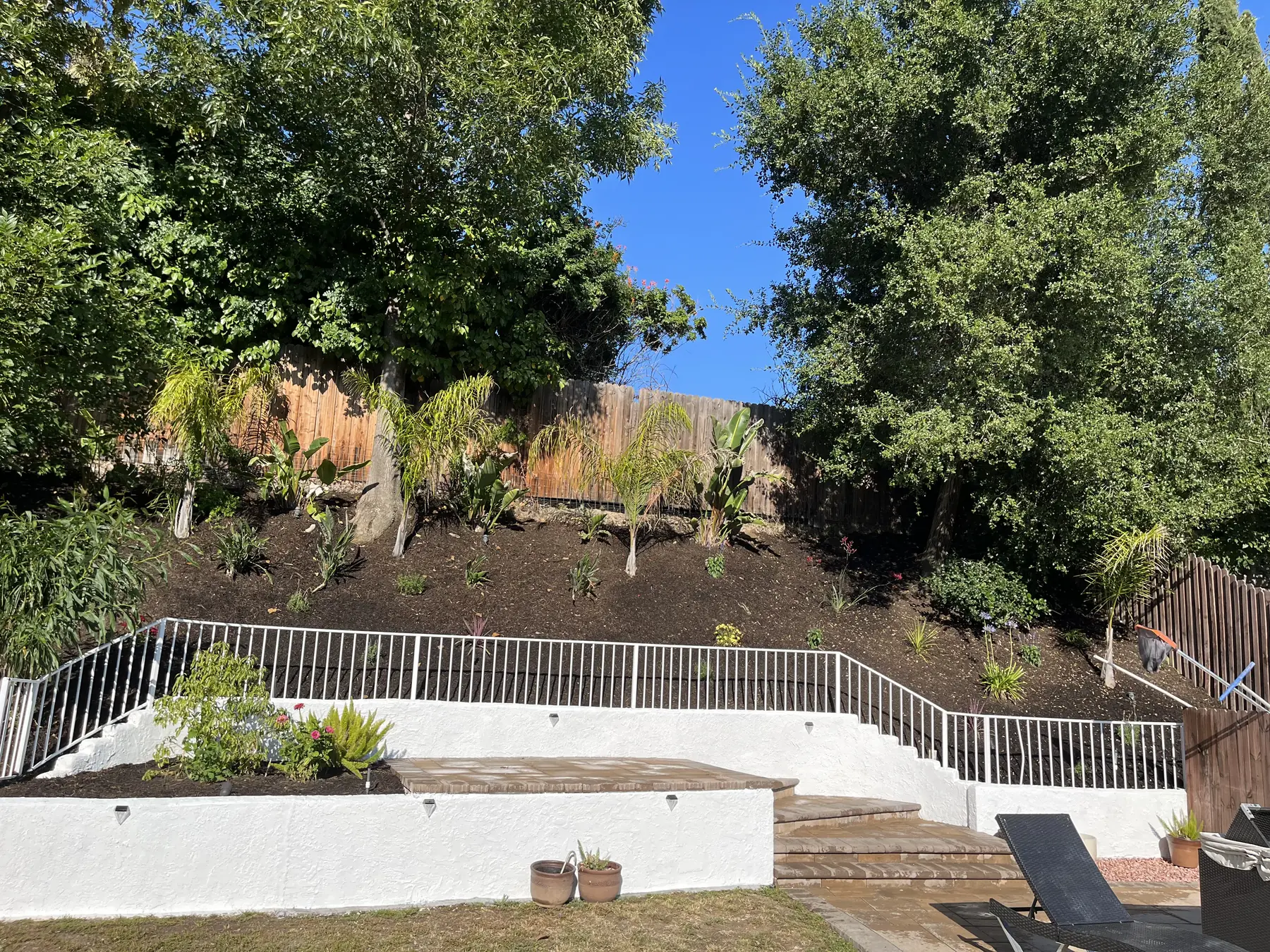
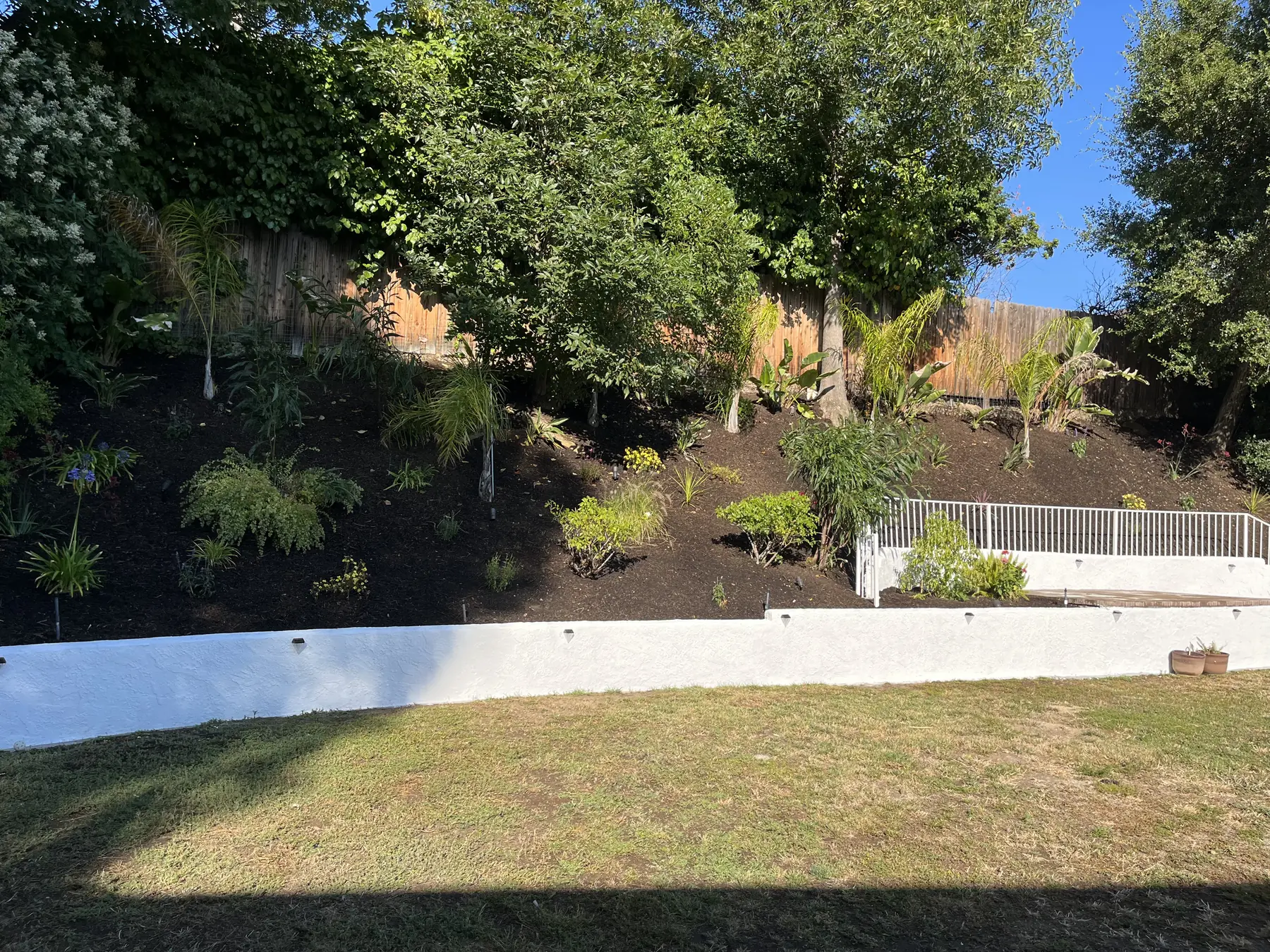
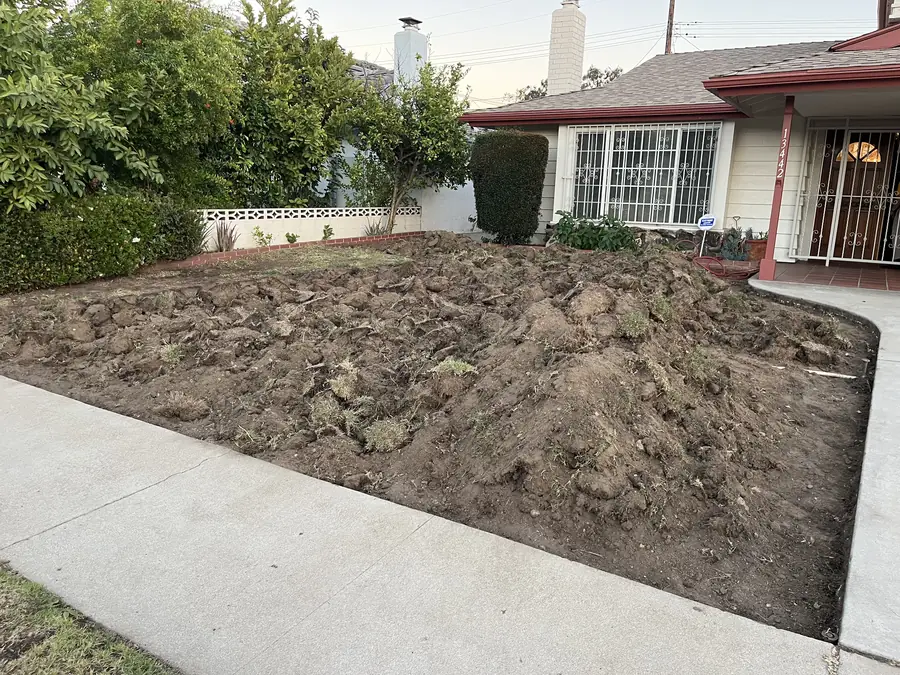
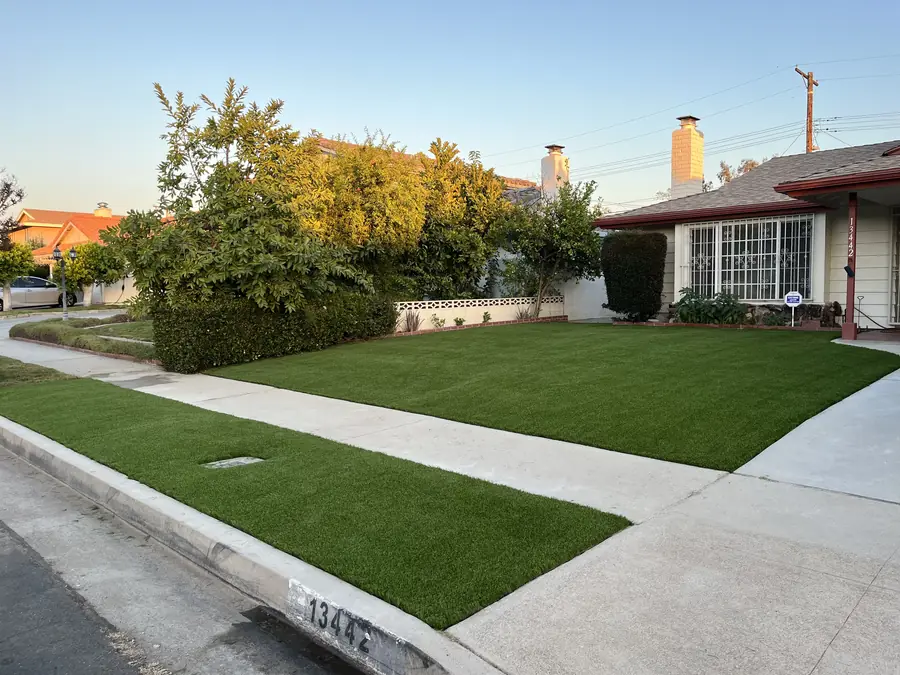
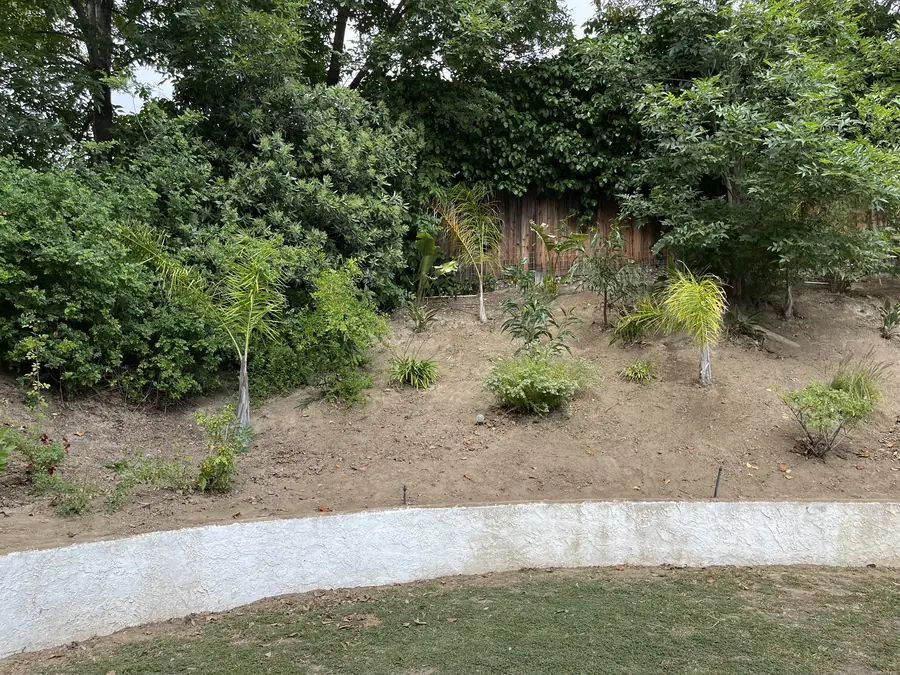
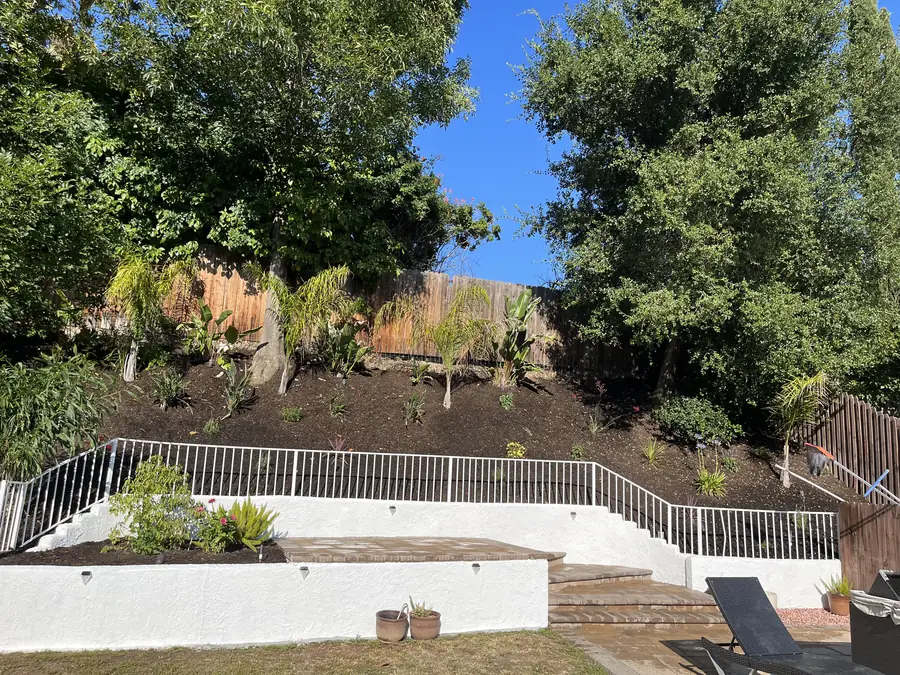
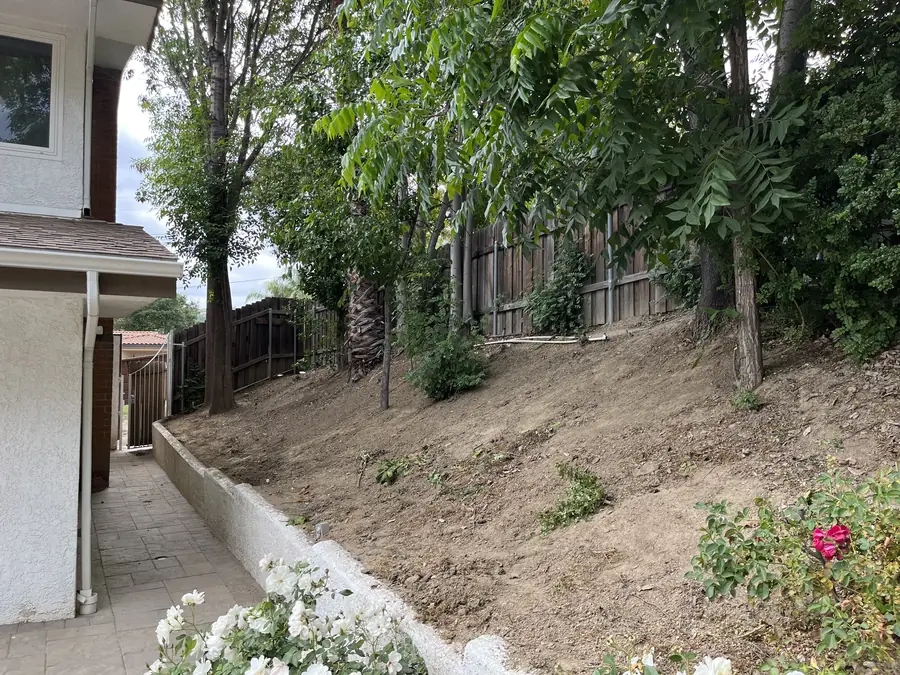
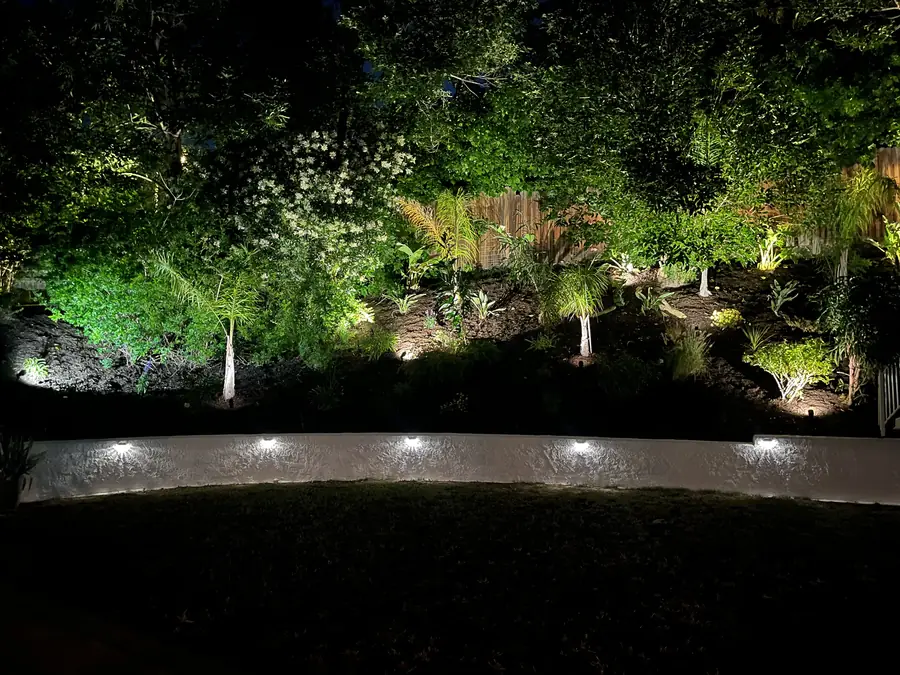
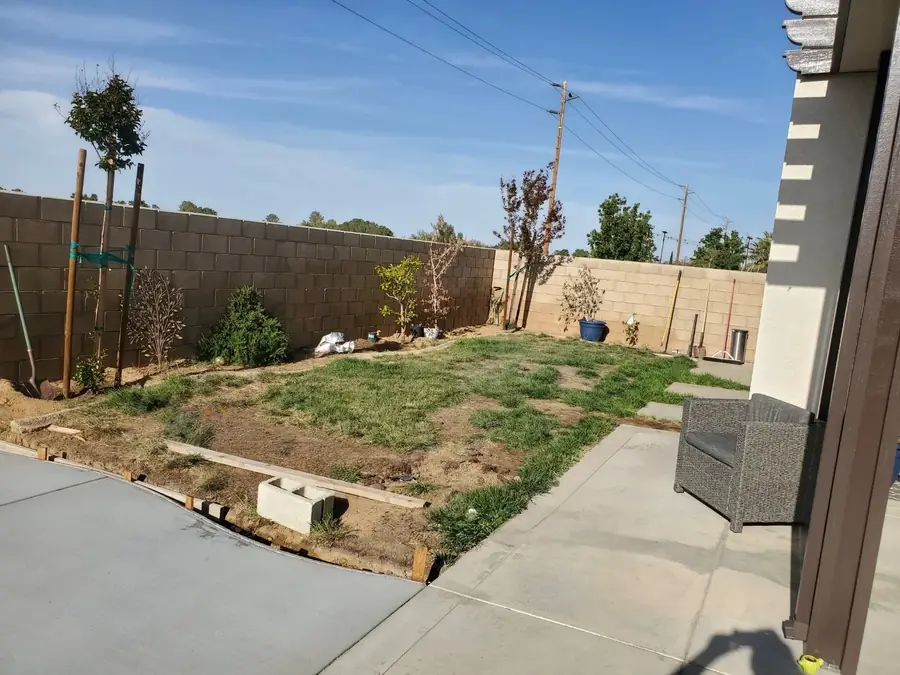
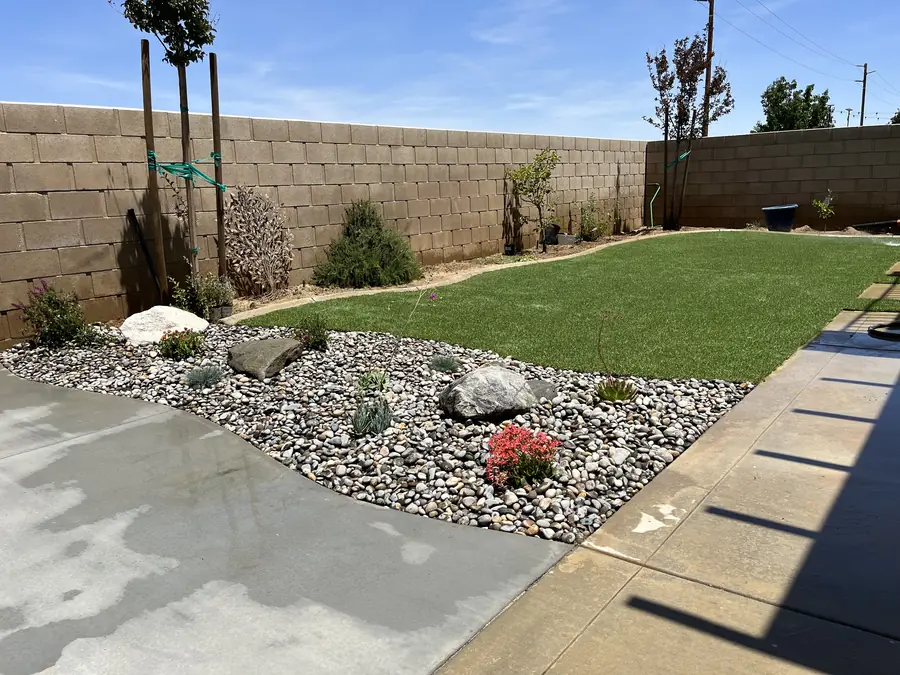
Everything from bare or tired ground to a finished, planted yard falls under it. That includes clearing and haul away, grading so water moves away from the house, soil amendment, a planting layout with trees, shrubs and ground cover, a decision on lawn or synthetic turf or low water beds, irrigation adjusted to serve the new planting, and mulch to close it out. Many properties here also want edging, a path, or a low wall to make the layout read cleanly. Scope is built around the lot rather than sold as a package, and it is written out before anyone starts.
Sequence protects the work. Demolition and clearing happen first, then rough grading and any drainage correction, because moving soil later would undo finished planting. Irrigation goes in while the trenches are still open. Soil amendment follows, then trees and large shrubs, since those are the hardest pieces to place and they set the structure everything else answers to. Smaller plants and ground cover come after, then lawn or turf, and mulch last so it stays clean. If paving is part of the plan, it gets built before final planting so machines never cross new beds.
Heavily. A large canopy changes the light budget beneath it from full sun to dappled or deep shade, and most of the sun loving plants people picture will stretch, thin out and eventually fail there. The root zone also competes hard for water. We map the shade across the day before choosing anything, then plant shade tolerant material at spacing that accounts for roots, and we keep beds shallow near trunks rather than cutting into feeder roots. The result looks intentional instead of like a lawn that gave up under a tree.
Usually, but the route is planned rather than improvised. Root zones extend well past the trunk, often past the branch tips, and repeated machine traffic compacts soil there and slowly kills a tree that took decades to grow. On these lots we pick an access path, protect it, keep heavy equipment off critical root areas, and switch to hand work close to trunks. Where excavation would land in a root zone, we shift the feature, shallow the cut, or dig by hand around what we find. Losing a mature tree to save a day of labor is never worth it.
Use, water and upkeep decide it. Real lawn still feels best underfoot and takes hard play, but it needs steady water, mowing and feeding, and under a heavy canopy it thins no matter how well it is fed. Synthetic turf holds color year round in shade and through dry spells and suits small side yards and dog areas. Low water beds use the least water and carry the most seasonal character. On a front yard where the street sets the tone, a trim lawn or turf panel framed by well chosen planting usually reads better than any single surface covering everything.
Water has to leave the property, and nearly every complaint about a soggy yard or a damp wall traces back to grade. Sitting on the valley floor close to the Los Angeles River, much of this neighborhood is flat, which sounds simple but means water has nowhere to go on its own. We build fall away from the house, and where the ground cannot carry it far enough we add area drains and a piped outlet. That gets set before planting, because correcting grade afterward means pulling out beds that were just finished.
Older yards tend to have tired soil. Decades of the same watering, the same feeding and constant leaf drop leave ground that is compacted in the traffic areas and unbalanced in the beds. We loosen where roots need to travel, work compost into planting areas, and adjust for what the existing trees have already taken out. Under a canopy the top layer is often full of fine roots, so amendment stays shallow and we choose plants that tolerate those conditions rather than fighting them. Good soil is invisible, and it is the reason planting fills in instead of limping along.
Detail and material choice, mostly. This is a street where a rushed job announces itself: uneven bed lines, undersized plants stranded in mulch, mismatched edging, a path that wanders. We keep lines clean and deliberate, size plant material so the yard reads finished rather than sparse, use edging that holds a crisp shape, and specify materials that age well instead of the cheapest option that photographs alright on day one. Restraint helps too. Fewer plant varieties, repeated with intention, look considered, while a collection of one of everything looks accidental.
Toluca Lake sits within the City of Los Angeles, so anything requiring review goes through LA departments. Straight planting, soil work and mulch generally do not trigger anything. Grading past a certain scope, retaining walls, and changes to how water leaves the property are the items that commonly do. Trees are the other consideration, since removals and work close to certain trees can carry their own requirements. We confirm what applies to your actual scope before we begin instead of starting and correcting later.
Design around it rather than pretend it will not happen. A large canopy sheds constantly, and the wrong surface underneath turns into a maintenance chore. Beneath heavy droppers we favor planting beds and mulch, where litter breaks down and disappears, over fussy ground covers that trap every leaf. Where a seating area or path has to live under a tree, we choose a surface that sweeps or blows clean and we keep the joints tight. Gutters, drains and any gravel areas get planned with the same thought, because a clogged drain is usually a leaf problem.
Where it is sound, yes. Established properties often have serviceable mainline and valves worth keeping, and there is no reason to tear out working pipe. What rarely survives a redesign is the head layout, because coverage was set for a yard that no longer exists. We pressure check what is there, replace failing valves and cracked lateral lines, re-zone so shaded beds and sunny areas do not share a valve, and convert bed zones to drip where that makes sense. Anything we would not stand behind gets replaced rather than patched.
Shade tolerant material with foliage worth looking at, since flowers are scarce under a dense canopy. Textural ground covers, ferns, and broadleaf shrubs that hold their form in low light do the heavy lifting, with lighter foliage used to bounce what light there is. Selection depends on whether the shade is dappled or solid, and the two are not interchangeable. We also match plants to how the tree above drinks, because a thirsty ground cover under an established tree usually loses. Rather than force sun plants into shade, we let the canopy set the palette.
Lots here are generous, which gives room to solve privacy with planting instead of walls. We look at exactly what you want screened and from which vantage point, because a targeted screen in the right spot beats a hedge wrapped around the whole property. Layering works better than a single row: an upper layer for sight lines from second stories, a mid layer along the fence, and lower planting to finish the base. Growth rate and mature size get checked against the existing canopy so the new screen does not sit in shade it cannot handle.
One licensed contractor, every part of it. Daniels Landscaping stays accountable for the work. The people who grade, trench, plant and finish your yard work for us, and the same team is on site from the first day to the last. That is why we can hold a standard on a street where finish quality gets noticed. There is no unfamiliar crew arriving, no coordination gap between one trade and the next, and no confusion about who is accountable for the result. You deal with us throughout.
Phasing works as long as the order stays honest. Anything underground comes first, so grading, drainage and irrigation for the whole yard get handled in the opening phase even if planting waits. Splitting a property into a front phase and a rear phase is common and causes no trouble. What causes trouble is finishing a planted area and later needing to trench through it or drive equipment across it. We map the phases at the design stage, set the sequence, and leave clean access for whatever comes later.
It depends on how you actually live outside, though the canopy pushes the answer. Under mature trees, wall to wall paving fights the roots and collects litter, while too much lawn in deep shade never fills in. A workable balance gives usable, well sized surfaces where you gather, generous planted beds elsewhere, and clear circulation between them. Oversized paving on a large lot can read cold, and a yard that is all planting leaves nowhere to sit. We size surfaces against real furniture rather than guessing from a drawing.
We walk the yard with you and sort it into keep, move and remove. Established shrubs that are healthy, well placed and in scale often stay, and a mature specimen is worth designing around rather than replacing with something that needs years to catch up. Overgrown material that has outgrown its spot or died back in shade usually goes. Tired lawn is generally removed rather than patched, since thin grass under a canopy rarely recovers. Everything taken out is hauled away, and the ground beneath it is reworked before anything new is planted.
Call us at (818) 443-9300 and we will set a time to walk the property. We look at grade, drainage, sun and shade, soil, the trees and how you want to use the space, then put together a free written estimate covering scope, materials and what the work includes. Nothing is verbal and nothing is vague. Daniels Landscaping is licensed in California, number 1138709, and the crew that prices your project is the crew that builds it. Take the estimate, read it, ask questions, and decide from there.