
FAQ
Artificial Turf in Toluca Lake, answered
The questions we hear most from Toluca Lake homeowners.
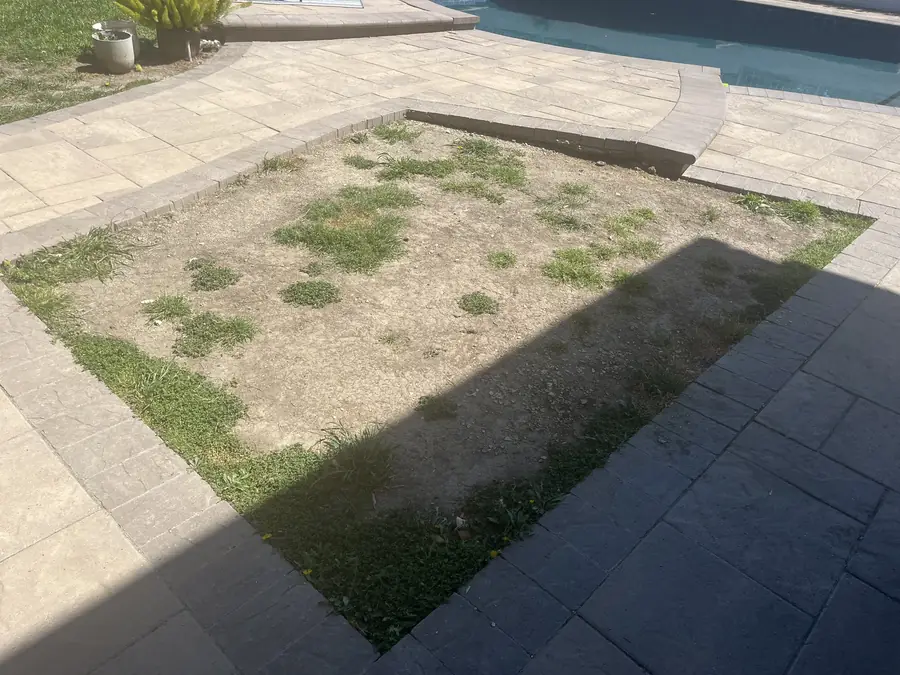
Shade is one of the strongest arguments for it. Real grass needs light, and under the large canopies common on these lots it thins, goes patchy and stays bare in the worst spots regardless of watering, feeding or reseeding. Synthetic turf does not care about light at all, so it holds an even green where grass has given up, and it stays out of competition with tree roots for water. The two things to get right are the base beneath it and the drainage, since a shaded yard under trees collects debris and moisture that a poorly built lawn will hold.
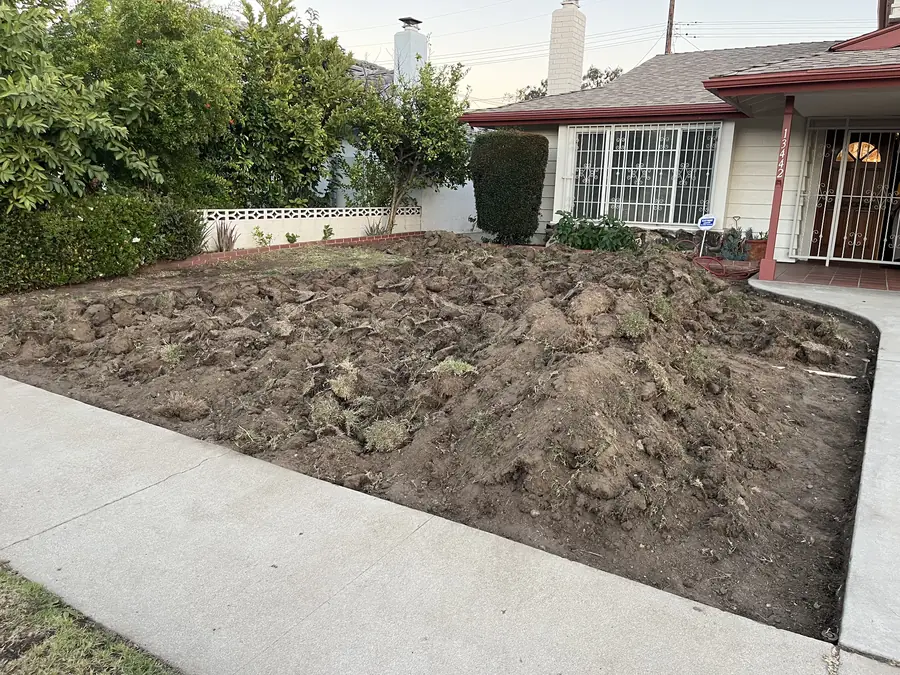
A compacted aggregate base, and it is most of the job. Existing sod and soil come out, grade gets shaped for drainage, then base rock goes in and is compacted in lifts so the surface will not settle. A finer layer is screeded smooth on top, because every bump underneath telegraphs through the turf and shows in raking light. Depth depends on the use and the soil. Skipping compaction is the single most common reason a synthetic lawn develops low spots and ripples in its first year, and no amount of good turf fixes a bad base.
Match both to how the area gets used and how much sun it takes. Face weight is the amount of yarn per unit area, so a heavier product stands up better under regular traffic, while a lighter one is fine for a strip that is rarely walked. Pile height affects appearance more than durability, and very tall pile lies down and mats in traffic lanes, which looks worse than a moderate height that stays upright. For a visible front lawn we generally favor a moderate pile with good density, since density is what keeps it from looking thin.
Natural looking turf tends to have blades with a shaped profile rather than a flat ribbon, because the shape helps each blade stand up and catch light unevenly the way grass does. Color is the other half. A single flat green looks synthetic from the sidewalk, while a product with mixed green tones and a brown or tan thatch layer at the base reads as real. On streets where the eye is used to well kept planting, an overly bright uniform green is the detail that gives a cheap lawn away first.
Infill is the granular material brushed down between the blades, and it does more than fill space. It weighs the lawn so it lies flat, holds blades upright, shields the backing from sunlight, and gives the surface a softer, more natural feel underfoot. Quantity depends on the pile height and the specific product, and material choice depends on use, with pet areas getting a different specification than a purely decorative lawn. Infill is brushed in and worked down over several passes, then topped up as it settles with time.
Straight through, then away. Turf backing is perforated so water passes into the aggregate base rather than pooling on the surface. Because the ground on this side of the valley sits low and level near the Los Angeles River, the base itself is shaped to carry that water toward a drain or a suitable outlet instead of holding it in place. That is why the base gets built before anything green arrives. Turf drains well on its own, but only if what sits underneath has somewhere to send the water.
It does not ruin turf, but it does need clearing. Leaves left sitting break down into fine organic material that works into the infill, holds moisture, and eventually supports moss or weeds growing on top of the lawn. Under the large canopies here that is a regular chore rather than an occasional one, so we plan for it. A blower or a stiff broom handles most of it, and periodic rinsing keeps the surface clean. Turf placed beneath the heaviest droppers gets the most attention, which is worth knowing before deciding where the lawn area goes.
Carefully, and with the design giving way. Excavating a full base depth across a root zone removes roots a mature tree cannot spare, so near significant trees we reduce the excavation, work the area by hand, and accept a shallower assembly rather than cutting through. In some spots the right answer is stopping the turf short of the tree and using a planted bed or mulch ring around the base instead, which is better for the tree and looks more natural anyway. Roots also keep growing, so an area over them may eventually need lifting and resetting.
Seams are placed before they are made. Roll width is planned so joints fall in low traffic, low visibility parts of the lawn rather than through the middle of the view from the house. Both edges are cut so the stitch rows line up, pile direction is kept consistent across the entire lawn, and the joint is bonded and secured rather than simply butted together. Mismatched pile direction is the giveaway that makes a seam show up in certain light, so keeping every roll running the same way matters as much as the joint itself.
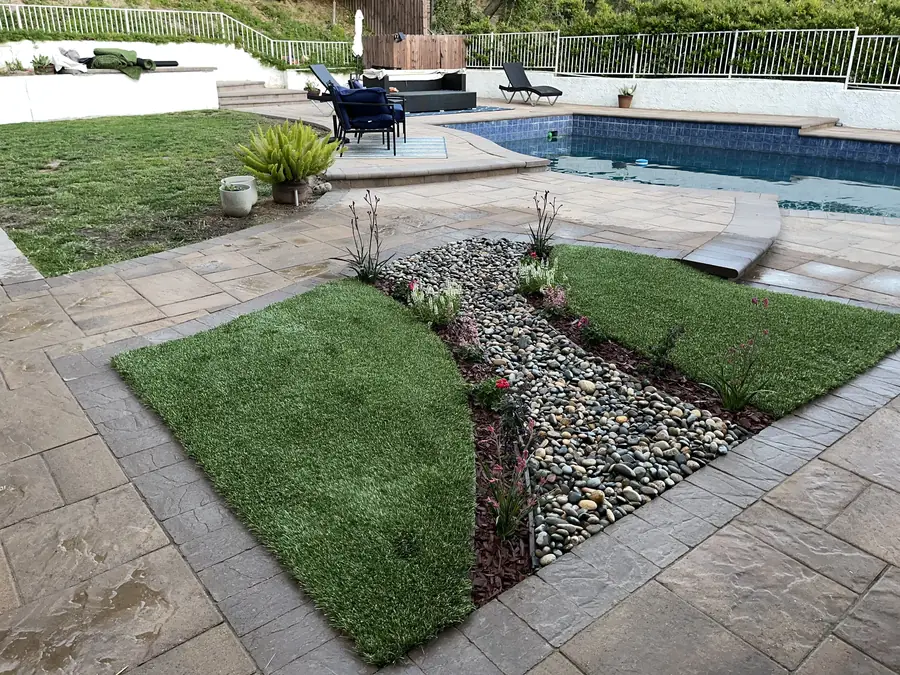
Edges are what a finished turf lawn gets judged on. Against paving, turf is trimmed tight and secured so no backing shows and no lip catches a foot. Against planting beds we set a solid edge, a bender board, metal edge or header, so beds hold their line and soil and mulch do not migrate onto the green. The perimeter is fastened at close spacing into the compacted base, since a loose edge is where a lawn starts pulling away. A crisp perimeter is also a large part of why a lawn reads as intentional.
In full sun it warms up more than living grass, because there is no evaporation cooling it. In this neighborhood that matters less than it does elsewhere, since many turf areas sit under a canopy that shades them for much of the day and stays noticeably cooler. Where a lawn does take strong afternoon sun, lighter infill choices and a rinse with a hose bring surface temperature down quickly. Shade from existing trees or a planned structure is the most effective answer, and on these lots it is usually already there.
It handles dogs well, which is a common reason people switch. Urine drains through the perforated backing into the base rather than sitting on the surface, and solids lift off so the area rinses clean. For pet heavy use we specify infill suited to it and make certain the base drains freely, since odor is almost always a drainage problem rather than a turf problem. Regular rinsing and an occasional enzyme treatment keep things fresh. Turf also solves the worn dirt track dogs create along a fence line, which no living lawn survives.
Quality turf on a properly built base lasts a long time, and the base usually outlives the turf itself. What shortens that is almost never the yarn. It is settlement from poor compaction, edges that were never properly secured, rushed seams, or drainage that was never solved. Sun exposure gradually affects fibers, and heavy traffic lanes flatten over the years, which brushing helps. When a lawn is eventually replaced, a sound base can often be reused, so the second install involves less work than the first. We do not quote a lifespan we cannot stand behind.
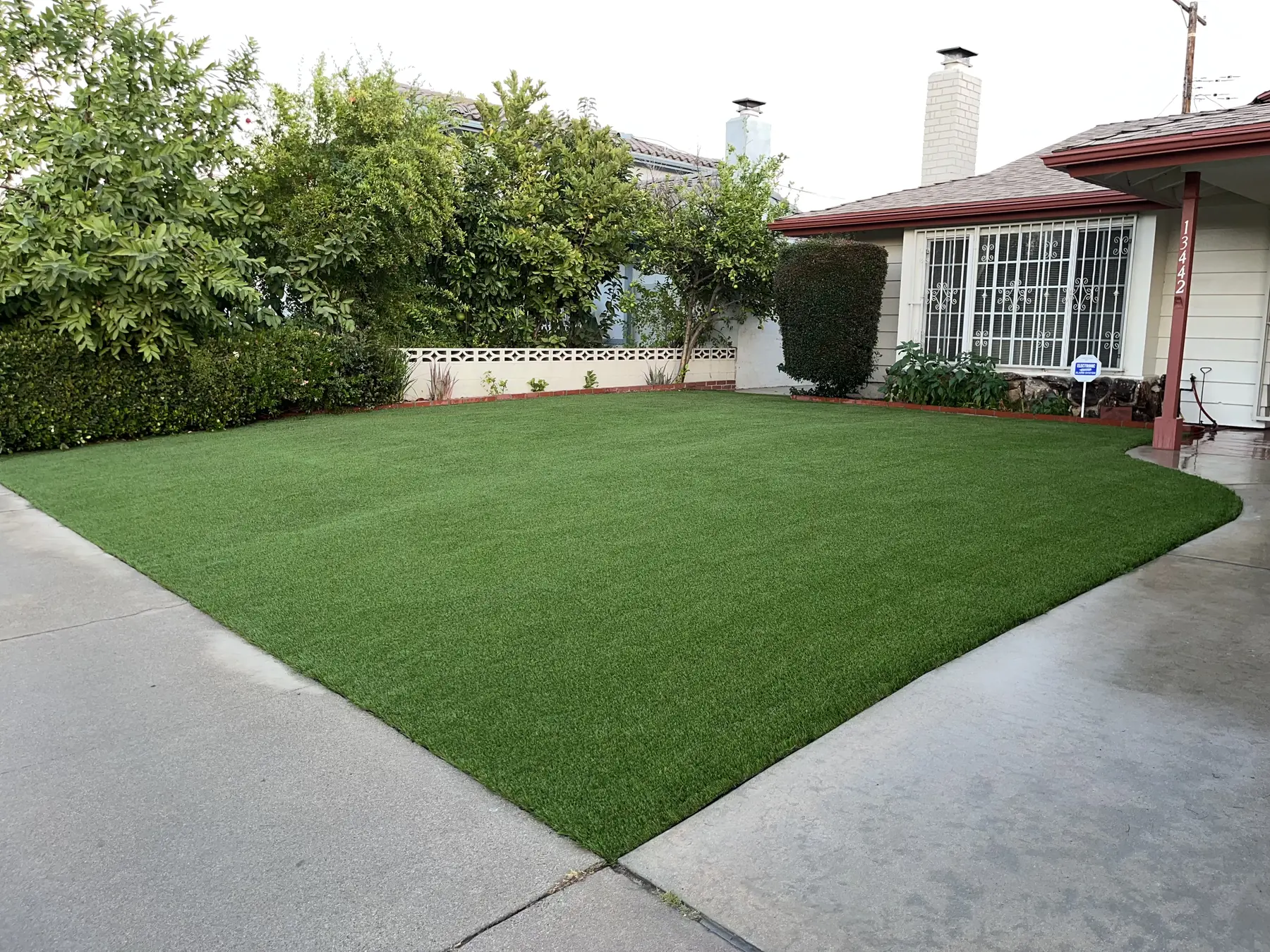
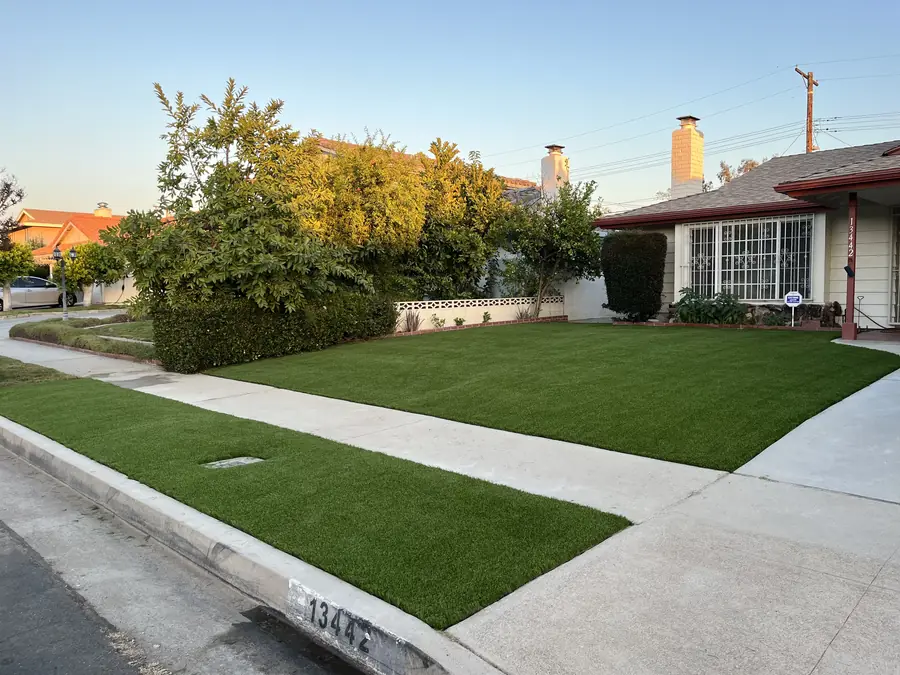
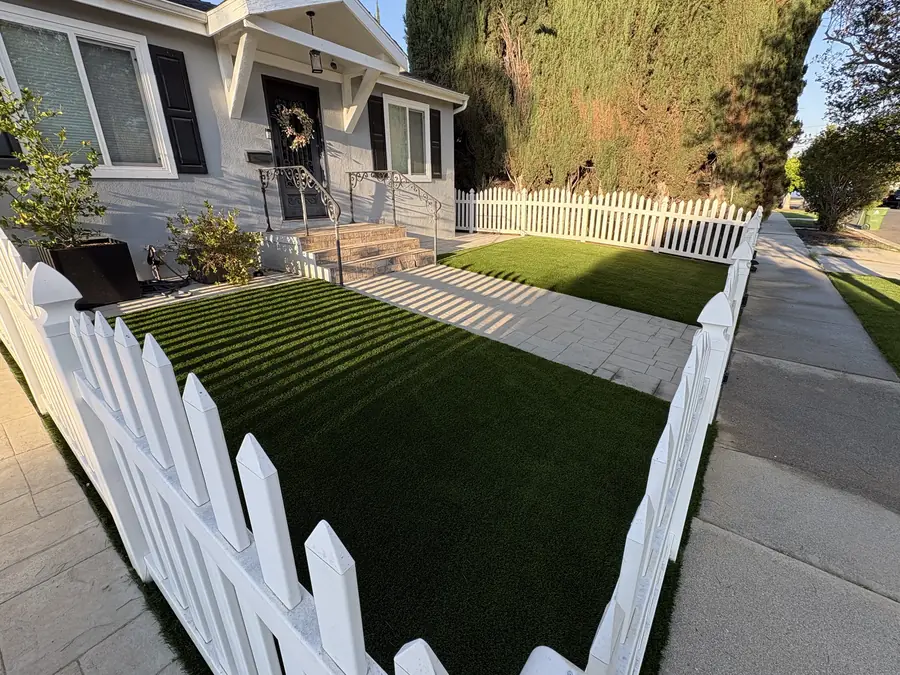
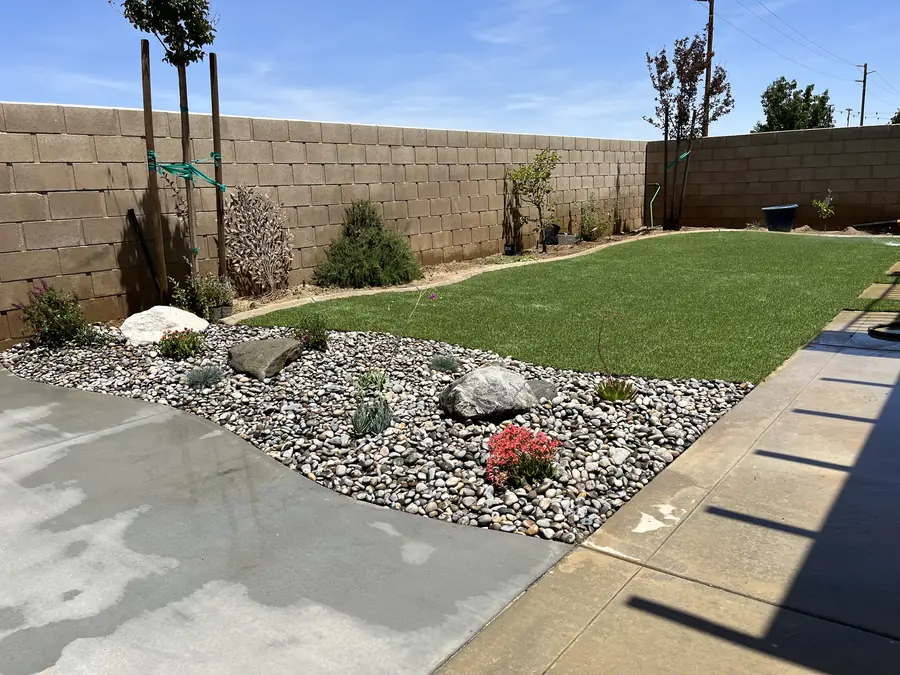
Product choice, base flatness and edge work, roughly in that order of visibility. A uniform bright green with no thatch, a pile so tall it mats, visible seams and a wavy surface are what make people notice a lawn is synthetic. Multi tone color with a thatch layer, moderate dense pile, a flat compacted base and tight clean edges do the opposite. Framing helps as well. A turf panel bordered by real planting and a defined edge reads as a lawn, while turf run wall to wall with nothing around it reads as carpet.
One licensed contractor handles it, from demolition through the final brush out. Daniels Landscaping stays accountable for the work. The people excavating and compacting your base are the same people cutting, seaming and edging the turf, so nobody is rushing the invisible part in order to hand the job off to someone else. That matters here more than in most places, because the base and the edge detail are exactly where a cheap looking lawn comes from. The same team stays on it start to finish, and we answer for the result.
That is usually the best outcome, and it is what most yards here end up with. A defined turf panel where you actually want open green, framed by planted beds, trees and hardscape, looks far better than covering an entire lot in synthetic surface. It also plays to the strengths of each. Turf keeps its color in the deep shade under a canopy where grass fails, while beds and mulch handle the ground around trunks and under the heaviest leaf drop. We set the shape and size of the turf area against how the yard is really used.
Light, but not zero. Debris gets blown or swept off, especially under trees, and the lawn is rinsed occasionally to keep it clean and knock down dust. Traffic lanes benefit from brushing against the pile direction a few times a year to stand the blades back up, and infill gets topped up as it works down. Weeds do not grow through a properly installed lawn, though seed can sprout in debris left sitting on the surface, which is another reason to keep it clear. There is no mowing, no feeding and no watering to keep it green.
Call (818) 443-9300 and we will walk the yard with you. We measure the area, look at drainage, sun and shade, tree locations and how the space gets used, then show you samples so you can compare face weight, pile and color in daylight rather than on a screen. You receive a free written estimate covering base preparation, drainage, the specific turf, infill, seaming and edging. Daniels Landscaping holds California license 1138709. Everything is set down in writing before you decide anything.