

FAQ
Landscape Lighting in Studio City, answered
The questions we hear most from Studio City homeowners.
Low voltage is safer, more flexible, and easier to live with. A 12 volt circuit in a wet garden carries far less risk than line voltage buried among plants and irrigation. Cable can be trenched at a shallow depth without conduit in most situations, which matters a great deal when you are working around tree roots. Fixtures can be repositioned as plants grow, without rewiring the whole system. The tradeoff is that voltage drop becomes a real design consideration, which is where planning earns its keep.
The transformer converts 120 volt household power to the 12 volt output the fixtures use, and it is the heart of the system. Sizing starts with adding up the wattage of every fixture, then leaving meaningful headroom so you can add lights later without replacing the unit. Multi tap models offer several output voltages, which lets us compensate for long cable runs. We mount it near an exterior outlet, off the ground, in a spot where you can reach the controls without walking into a planted bed.
Electricity loses voltage as it travels along wire, and the further it goes the dimmer the far fixtures get. Push it too far and lamps at the end of a run look yellow and weak next to the ones near the transformer. Larger gauge cable, shorter runs, hub wiring rather than one long daisy chain, and multi tap transformer terminals all counter it. On a long deep Studio City lot running downhill from the house, this is not theoretical, and we calculate it before anything gets buried.
Instead of stringing fixtures one after another along a single line, hub wiring runs a heavy home run cable out to a junction point, then splits short leads from there to the nearby fixtures. Every fixture on that hub sees nearly the same voltage, so brightness stays consistent. It also simplifies service enormously. When a fixture needs attention years from now, we open one accessible hub rather than digging along a chain looking for the connection that failed.
Low voltage cable is typically buried a few inches below grade, deep enough to stay out of the way of routine gardening and shallow enough to remain serviceable. In the older Studio City neighborhoods with heavy mature canopy, the root zone dictates the route. We hand dig near trunks, follow existing bed lines, and route around major roots rather than slicing through them. Protecting a mature tree is worth a longer cable run every time, and the trees are usually why the lighting exists.
You can buy excellent fixtures and still end up with a yard that looks harsh and cheap at night. What decides the result is where each light sits, what angle it points, how it is shielded, how much output it puts out relative to its neighbors, and whether the wiring holds steady voltage. A modest fixture aimed with care outperforms an expensive one dropped in the wrong spot. Hardware is a component. Design and craftsmanship are the product, and that is where our attention goes.
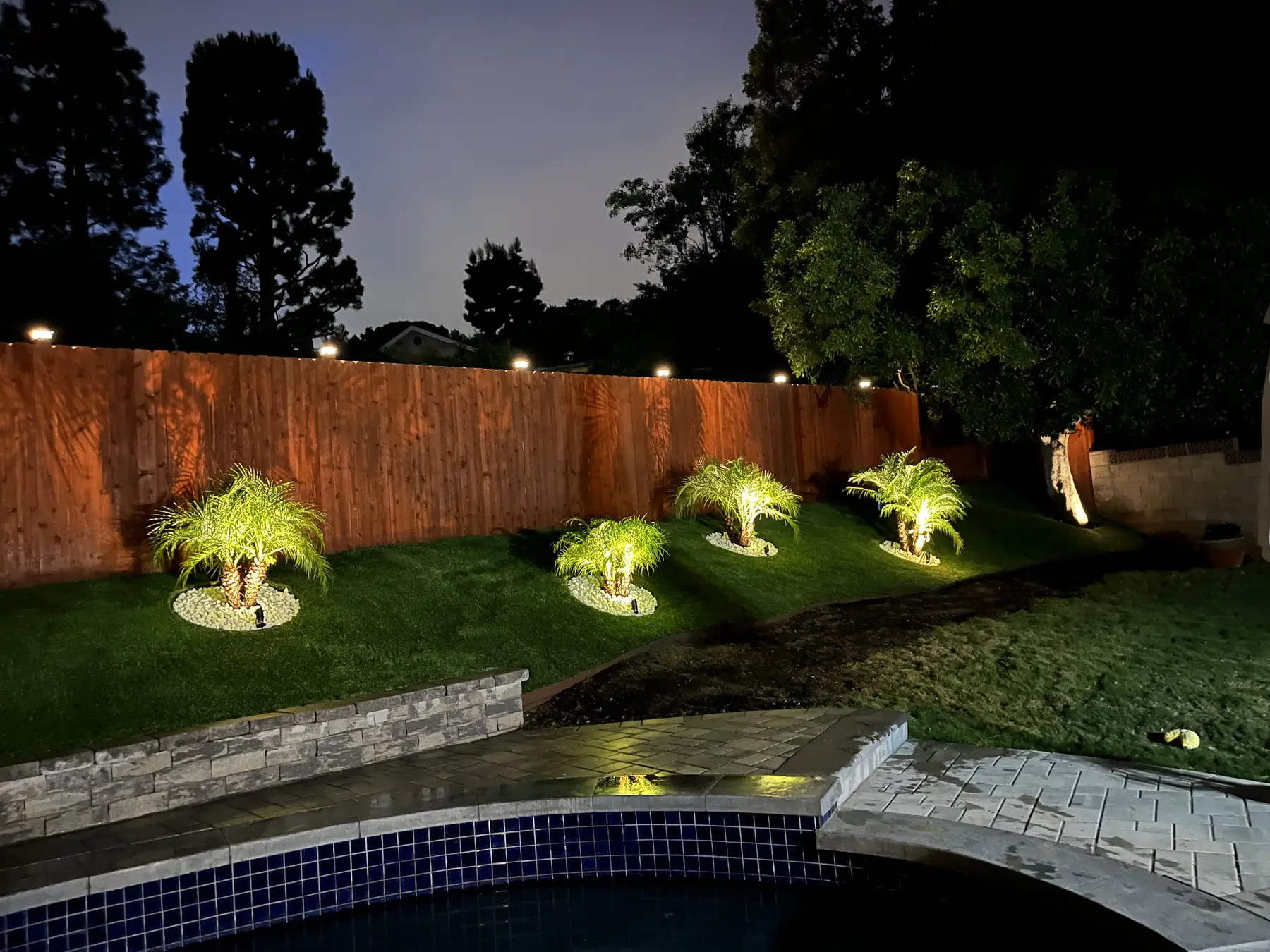
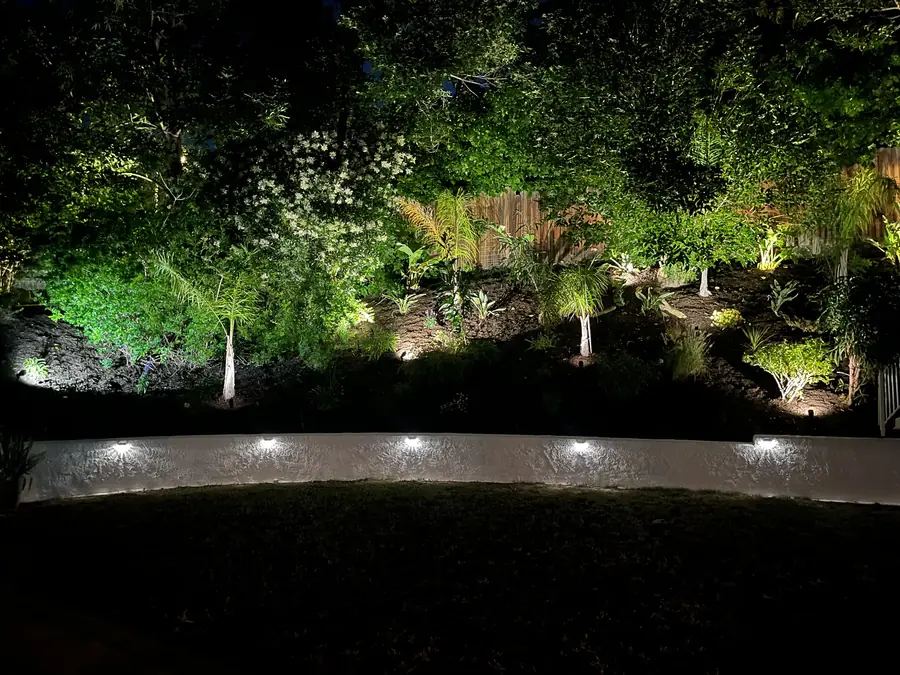
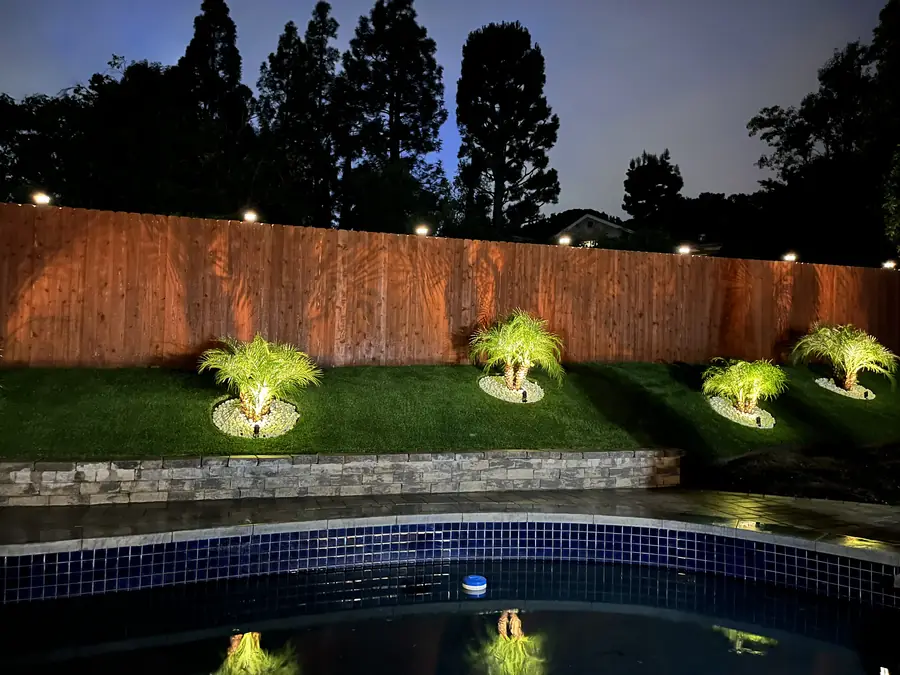
Layering means lighting at several distances and heights so the yard reads with depth instead of appearing as one flat lit wall. A typical composition combines near ground light on paths, mid ground accents on shrubs or a specimen plant, and far reaching uplight into the canopy or across the back fence line. Contrast is part of it. Deliberate pockets of darkness give the lit areas their impact. Lighting everything evenly is the most common mistake and it flattens a garden completely.
Big canopy trees are the best subject in this part of the valley and they deserve real attention. We usually place two or three uplights spread around the base rather than one directly beneath, so the trunk shows form instead of a single hot stripe. Beam spread is chosen to match canopy height, narrow for tall reach and wider for spreading limbs. Fixtures sit far enough out to be hidden by planting, and we plan for adjustment since the tree will keep growing.
A well light is buried flush with grade with a shielded lens, so nothing sticks up. It is the right call in lawn where a mower passes, at a walkway edge where a housing would be a trip hazard, or tight against a wall where an above ground fixture would be visible from a seating area. A bullet or directional uplight sits above grade on a stake and gives easier aiming and better heat handling. In planted beds, bullets are typically the more practical choice.
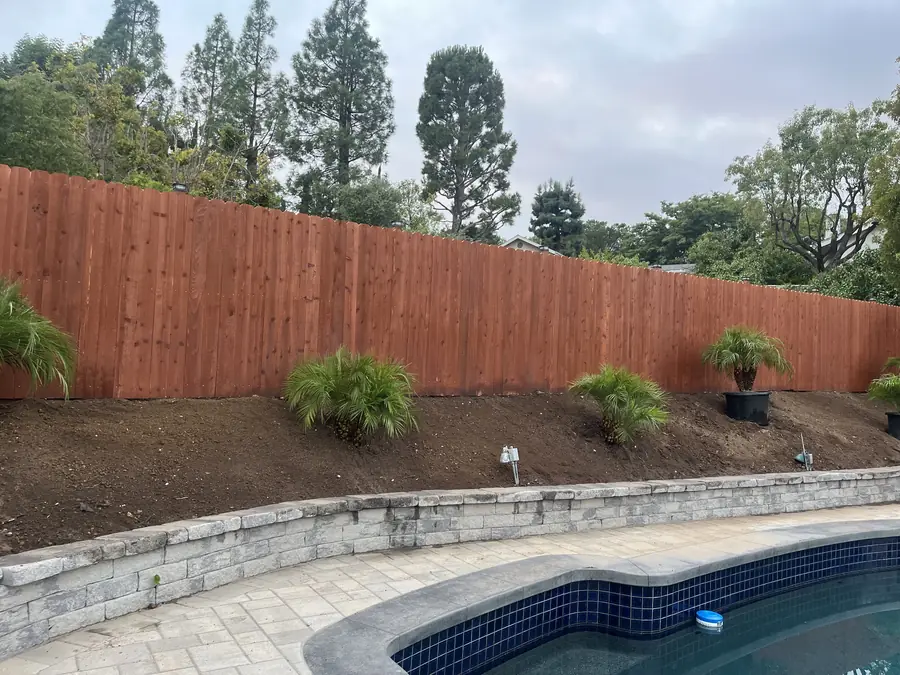
Homes sit close together on these hillside streets, so this shapes the design from the beginning rather than being fixed at the end. We aim fixtures inward and downward toward your own property, use shields, hoods, and glare guards on anything pointed near a boundary, choose narrower beams instead of broad floods along fence lines, and set uplights close to what they light so the beam terminates in foliage rather than continuing into the sky. Restraint on the property edges is simply good neighborhood practice.
Glare is seeing the light source itself instead of the surface it lights. It causes eyes to constrict, which makes everything around the fixture appear darker and defeats the whole purpose. The fixes are practical: recessed lenses, hoods, honeycomb louvers, aiming away from where people sit and walk, and mounting outside normal sight lines. A well lit garden should show you glowing trees, warm walls, and clearly defined paths, without a single bulb visible from the patio.
No. one licensed contractor performs the entire installation. The same people lay out the fixtures, trench and route the cable, build the hubs, set and aim every light, and program the controls. Landscape lighting rewards continuity, because the person who understood the design intent is the person who should be standing there at dusk making the final aiming adjustments. Keeping it under one contractor means the result matches the plan and there is one team answering for the work.
The goal is a readable surface, not a runway. We stagger fixtures on alternating sides rather than lining them up in matched pairs, and we space them so the pools of light nearly meet without perfectly overlapping. Height and shade shape matter as much as spacing, since a well designed path light throws a wide low circle and hides the lamp from view. On a curved walk, placement follows the turns so light lands where your foot goes next.
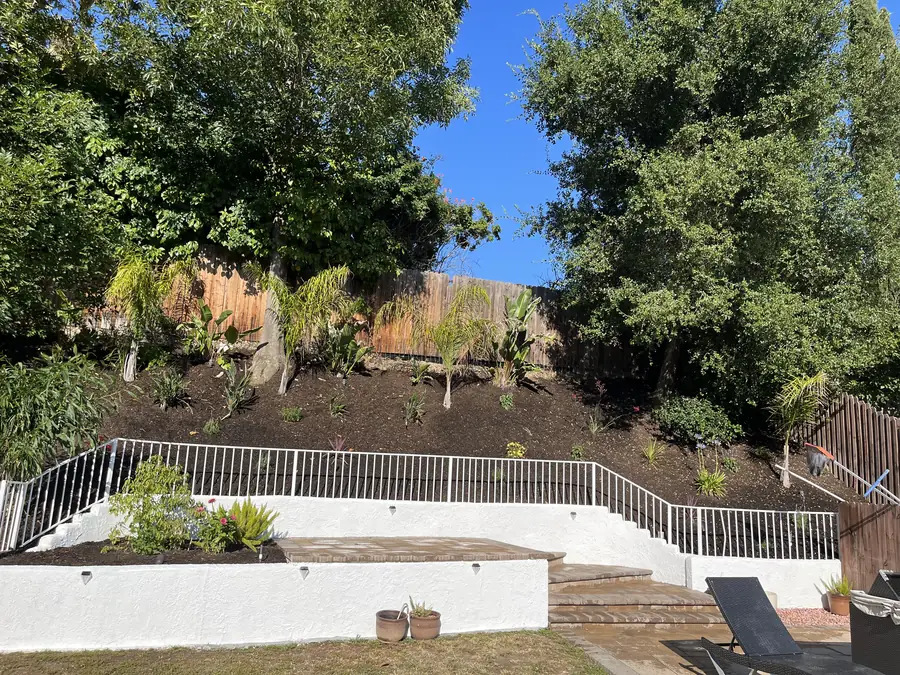
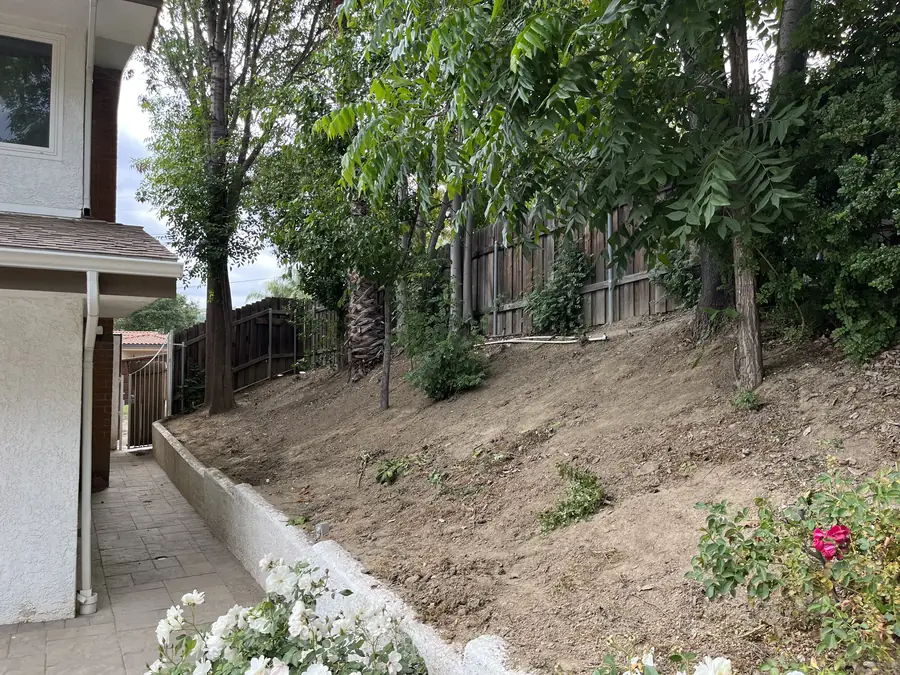
Grade changes are a safety issue first. Every step, retaining wall edge, and abrupt drop deserves light so the change in elevation is visible before someone reaches it, which is what step lights and wall lights are for. Slopes also change how light travels. A fixture that works on flat ground can shine straight into your eyes from below when you are standing uphill of it. We aim on site after dark, walking the property from the angles people actually use.
Far less than most landscape trades. Low voltage lighting needs hand tools, cable, and fixtures, so it is not gated by whether a truck can reach the back of the lot the way concrete or heavy grading would be. That makes lighting one of the most practical improvements available on a tight Studio City hillside property. Access still affects how we stage material and where we park, and we sort that out during the site visit so the work stays out of your neighbors' way.
Both approaches work and they are often combined. A photocell senses darkness and turns the system on at dusk automatically, adjusting itself as sunset shifts through the year. A timer or digital astronomical controller sets when things shut off, whether that is a fixed hour or a set number of hours after dusk. Many systems now offer app control and zone separation, so a front yard can run all evening for security while the back garden runs only while you are using it.
Very little, which is why it suits clients who want a good looking property without weekend work. LED sources last for years, so lamp changes are infrequent compared with the old halogen systems. What a system does need is occasional attention: wiping lenses clear of dust and leaf litter, trimming growth that has begun to block a beam, and re aiming fixtures as plants fill in. Under heavy canopy the leaf drop is the main culprit, and a quick seasonal pass keeps everything performing.
Give us a call at (818) 443-9300 and we will come look at the property. We walk it in daylight to understand the architecture, the trees, the grade, and the routes people use, and we talk about what you want the yard to feel like after dark and how you use it. From there you receive a free written estimate covering fixture locations, quantities, transformer, wiring, and controls. We hold California license 1138709 and we are happy to explain any part of the plan.