

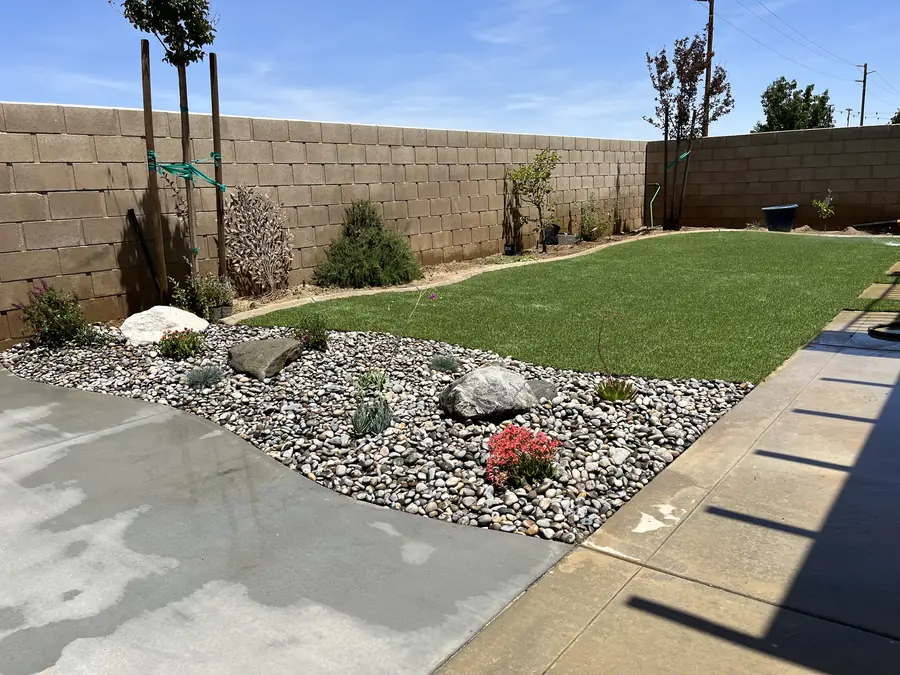
Northridge hardscaping
Hardscaping questions, answered
What Northridge homeowners ask before building.
Square footage is the first thing that moves it, and the deeper Northridge lots mean bigger areas than a tight tract. A large patio or a long driveway is a bigger job than the same work elsewhere. We measure the property and quote the finished scope in writing, and we are happy to phase it.
Yes, and on these streets you generally should. Laying a patio or driveway tight to a mature tree means cutting roots to build the base, and cutting the wrong ones kills the tree over a few seasons. We keep the base outside the root zone where we can, and design the layout around what stays. Some trees are protected, so we check first.
Pavers flex with the clay and a damaged one lifts out; poured concrete is cheaper for a long straight run, which the deep Northridge driveways often are. We price both, and on a long drive the drainage and where the water sheds matter as much as the surface.
Yes. North of Devonshire there are still lots with the room and the zoning for it. The hardscape work is the same, patios, drives, walls, just at a larger scale with longer runs. Access is usually good on these lots, which keeps costs more reasonable than tight jobs.
Sometimes. A lot of Northridge homes were repaired or rebuilt afterward, and that occasionally changed the grading, the hardscape levels, or where utilities run. We look for it on the walkthrough, because a driveway or patio replaced at a different level than the original can be why water now runs the wrong way.
Expansive clay. Northridge soil swells with winter moisture and shrinks through summer, and that movement works on a rigid slab all year. Proper depth, steel at the right height, and control joints cut correctly steer where it cracks.
It depends on the load. A walkway needs less than a driveway holding a vehicle. On the bigger lots we do not economize on depth, and compaction in layers matters as much as depth.
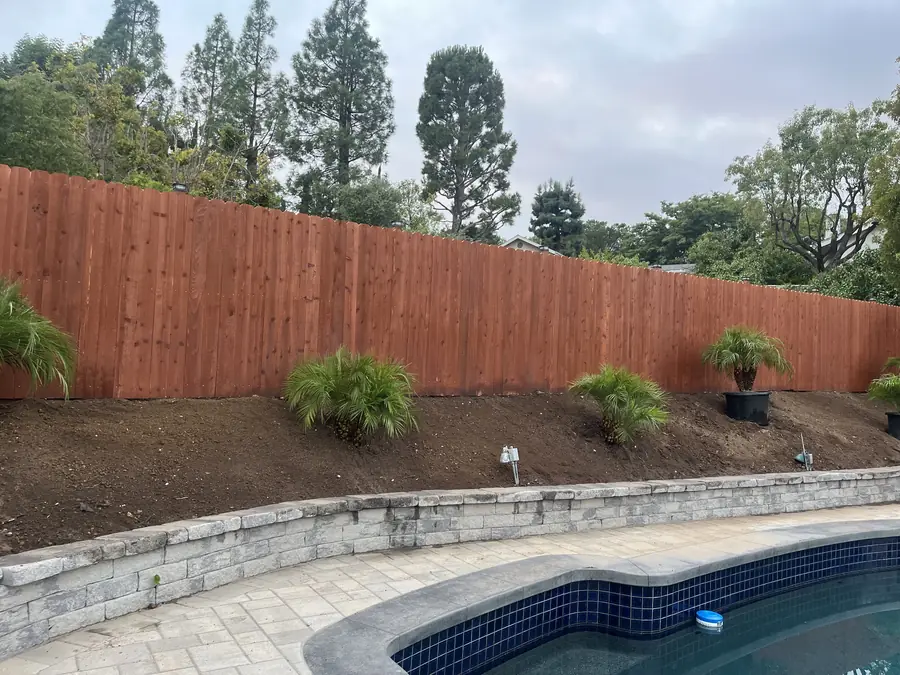
Yes. The priorities are a surface that is not slick when wet, not painfully hot barefoot, and drainage that carries water away from the pool. Pavers around a pool keep future plumbing repairs simple, since you lift them instead of breaking concrete.
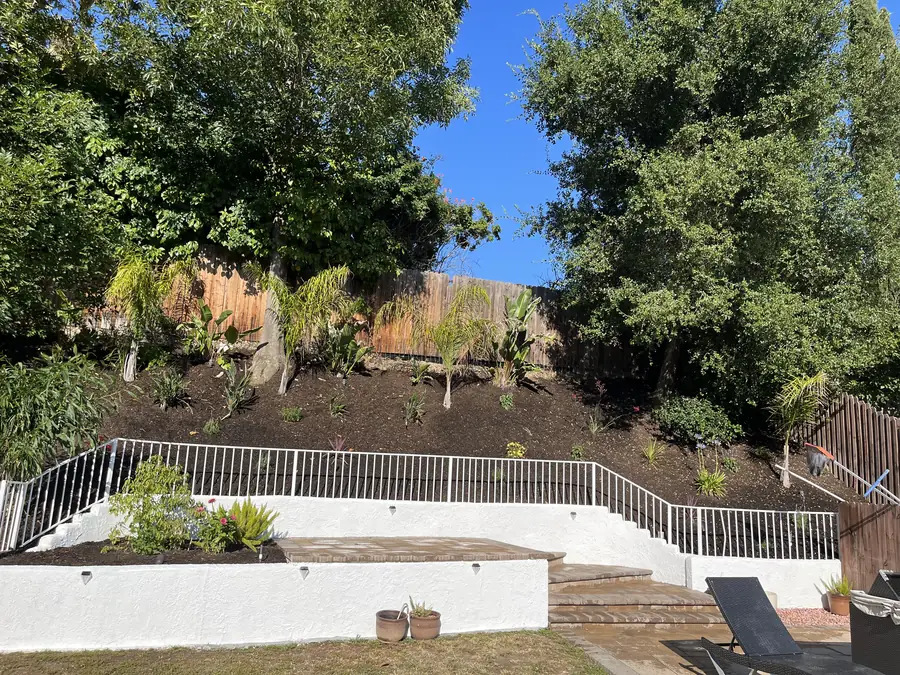
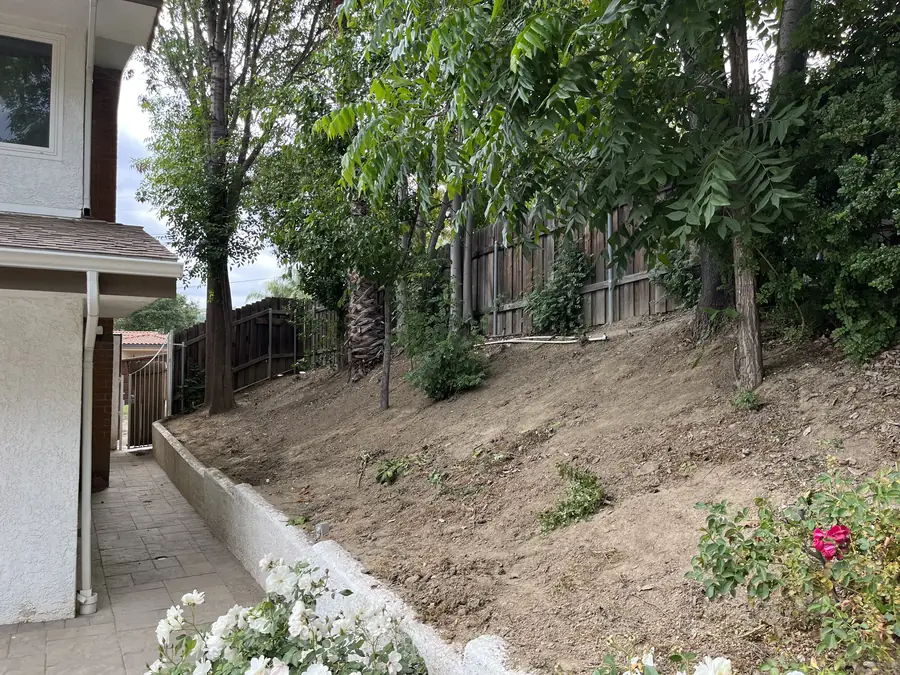
Yes. On the more sloped lots toward the edges they come up, and past a certain height they need a permit and an engineered design. Drainage behind the wall is what keeps it standing. We tell you which category your wall falls into before quoting.
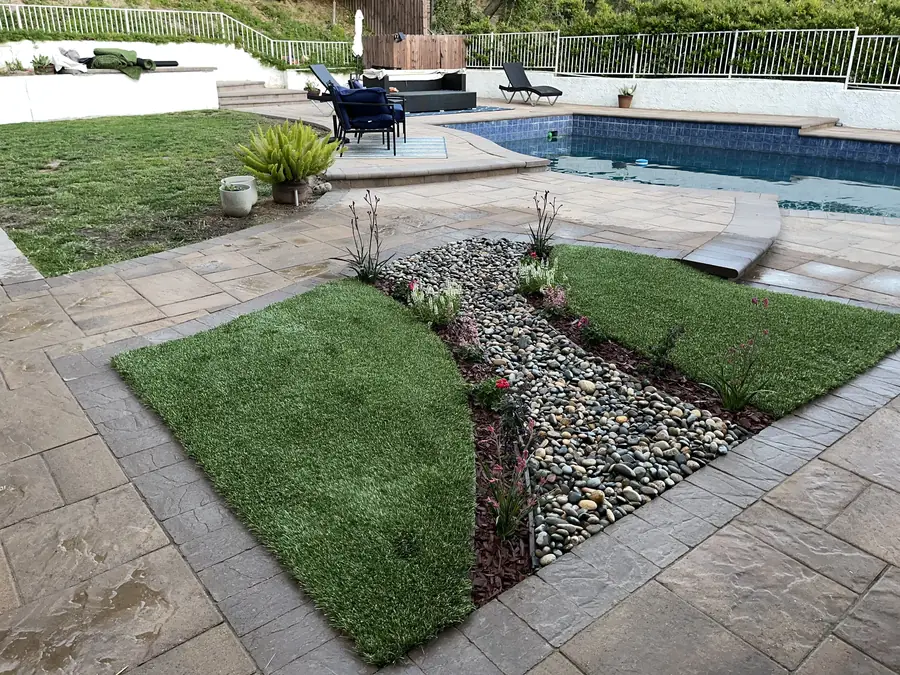
It will if nobody plans for it, since you are replacing absorbent ground with a shedding surface. We grade every surface to fall away from the house and add drains or a dry creek where the volume needs it, which on a deep lot funneling water toward one point matters.
Yes. It gives a patterned surface over a large area for less than natural stone, which suits big Northridge spaces. It is still a slab, so it cracks along its joints and the color needs resealing, and repairs are hard to hide. We will say where pavers are the better call.
Yes, all of it, written into the estimate. On a big lot the haul volume can be significant, and we account for it up front.
Concrete pavers and natural stone both handle the Valley sun. Color matters for comfort, since dark surfaces get hot underfoot in summer. Lighter tones stay usable, and shade helps more than any material choice.
Not required. On the bigger Northridge driveways a sealer is worth it for stain resistance and to hold the joint sand across a large area, redone every few years. A shaded back patio can go without.
A modest patio is several days to about a week. A large lot with a long driveway, walls, and pool deck takes longer, and the larger jobs sit at the long end simply because there is more of everything.
Yes, and on a big property it often makes sense. We plan the whole thing once so grades, drainage, and materials still work together, then build in stages.
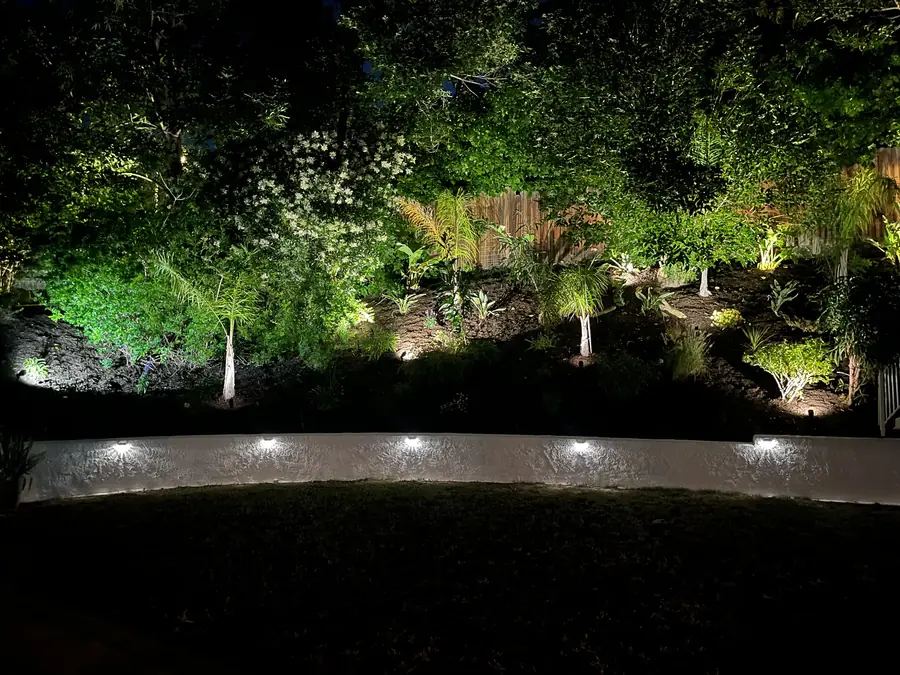
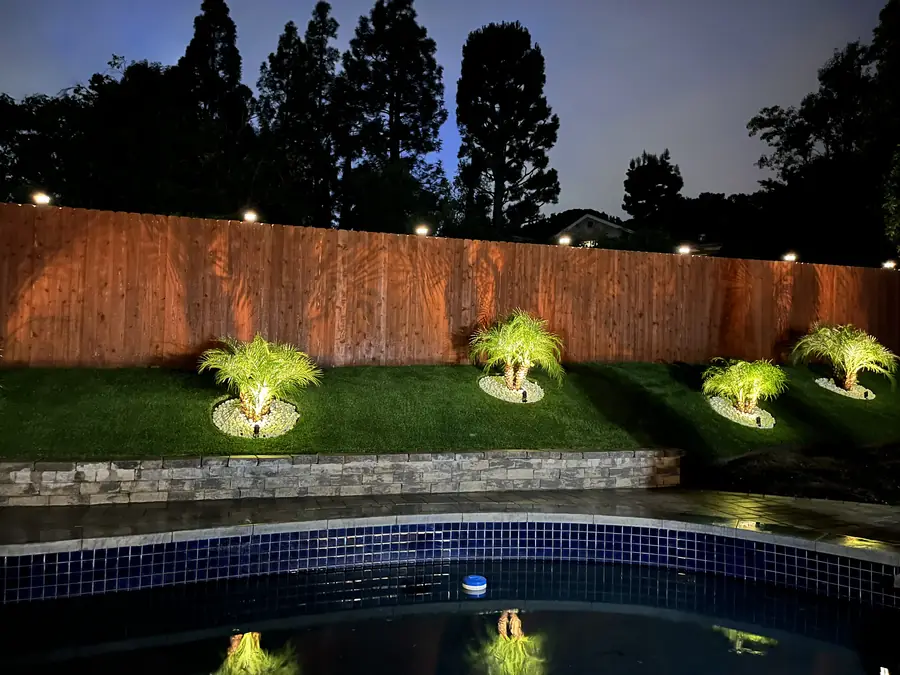
Yes, low-voltage lighting for paths, steps, walls, and trees, added during the hardscape phase. On a deep front yard with mature trees, uplighting is one of the highest-value additions. See our lighting page.
All of it, from the streets near the university up through the larger properties toward Porter Ranch and Granada Hills. See our Northridge page for everything we do here, and we cover the neighboring cities too.
We walk the property, look at the trees, the grade, and the drainage, and give you a written number. Request a free quote and we will set it up.