
FAQ
Landscaping in North Hills, answered
The questions we hear most from North Hills homeowners.
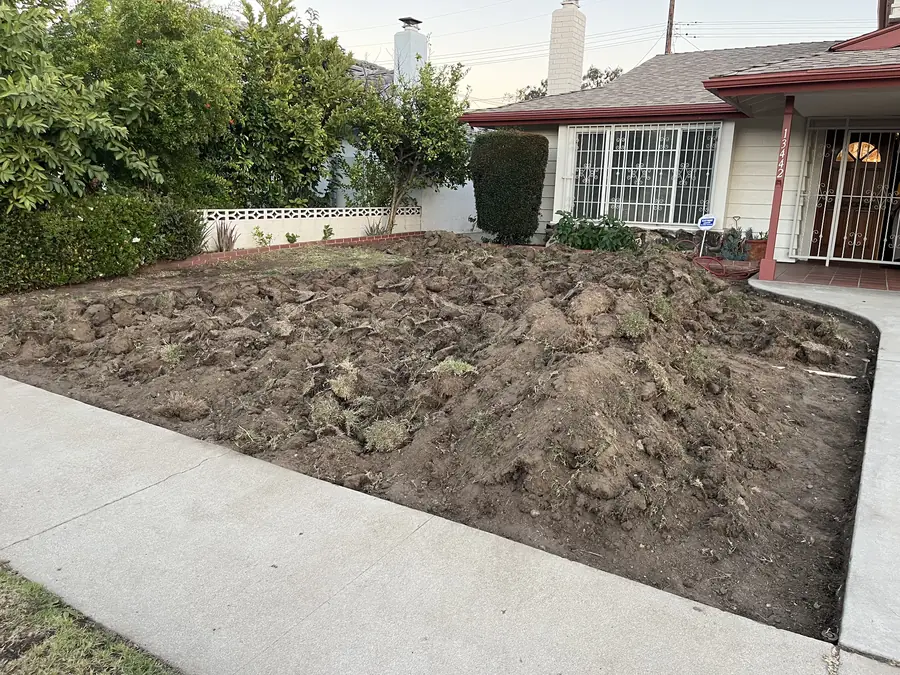
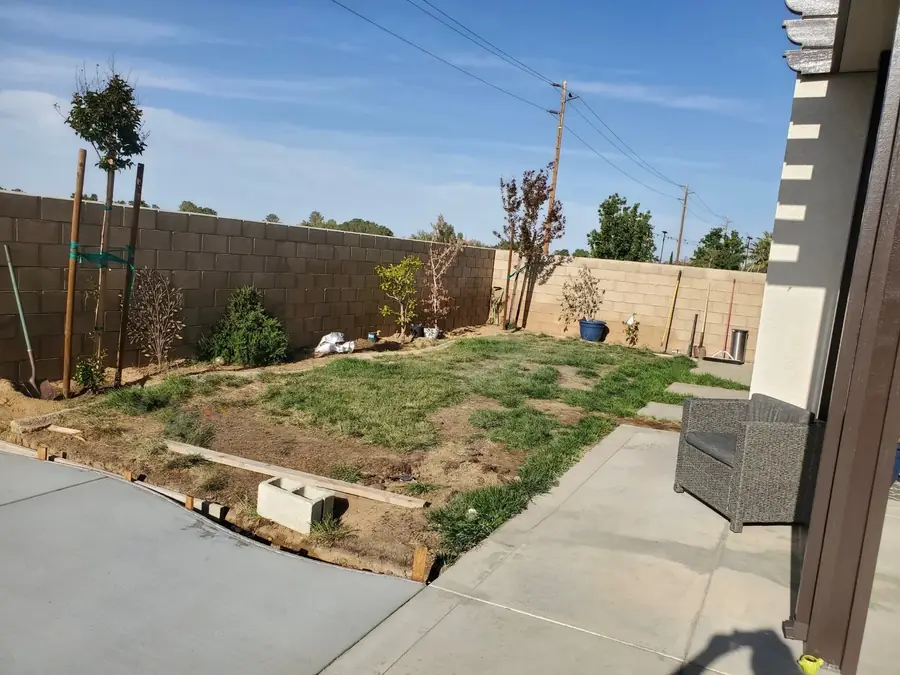
Everything from bare dirt to a yard you can use. We strip out what is failing, haul it off, set rough grade, amend the soil, trench for irrigation and any drain lines, install borders and edging, fine grade, then plant in order of size and finish with mulch. Sleeving for future lighting or a gas line goes in while the trenches are open. On the regular, modest lots common in this part of the Valley the site work moves along without surprises, so more of the budget lands on planting and irrigation.
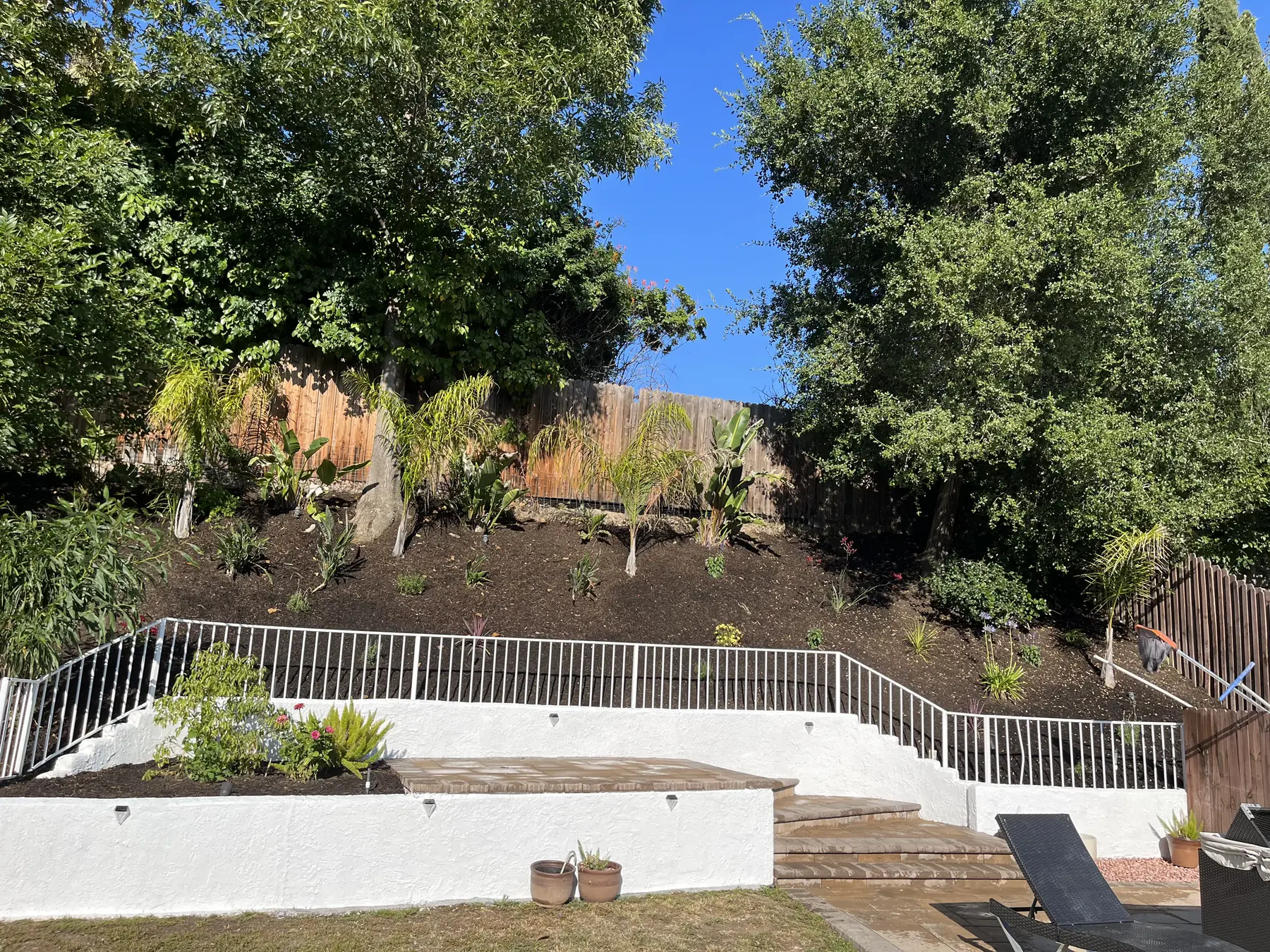
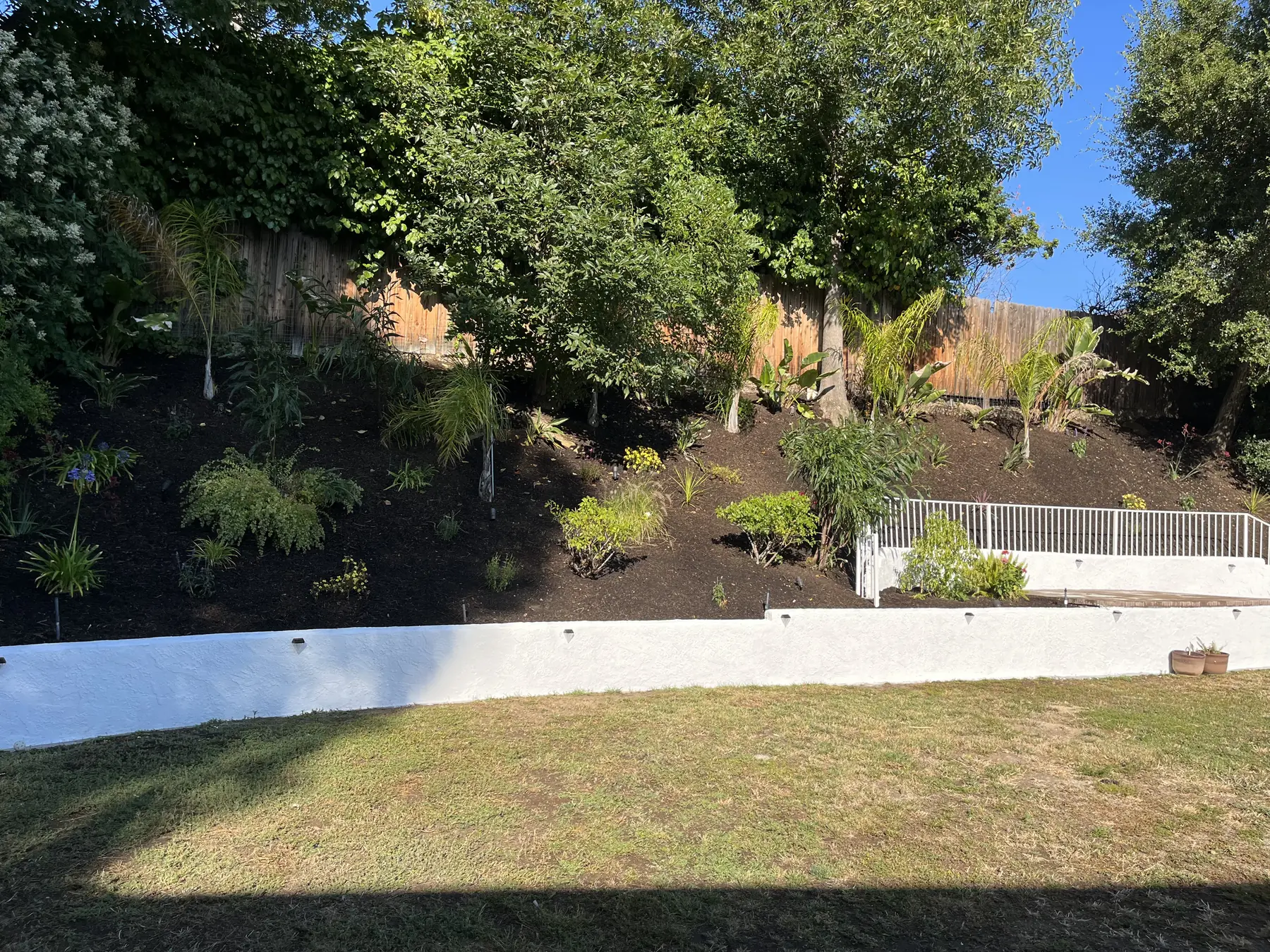
No. Flat and draining are two different things, and a yard with no fall will hold water against a slab or leave a soft spot in the middle of the lawn. What the level terrain here does give us is predictability. We are shaping a gentle slope from scratch instead of fighting a hillside, so there is no terracing, no retaining wall, and no erosion control absorbing the budget. The fall we build is shallow enough that no one notices it walking across, but it carries water to a drain or out to the street.
The sequence is fixed. Demolition and haul away first, then grade, then everything that lives underground, meaning irrigation, drainage and sleeves. Hardscape surfaces and edging follow. Planting comes second to last and mulch closes the job. That order exists because every step buries the one before it, and cutting a trench through a finished bed means pulling out plants that were set the week before. It also keeps wheelbarrows and machines off ground we have already prepared, which matters because compacted soil is hard to undo once planting has started.
Most of these yards have been under the same lawn or the same layer of ground cover since the house was built, and the top few inches are usually tired, compacted and low on organic matter. We rip or till the planting areas, blend in compost, and check how quickly water moves through before anything is ordered. Where old sprinkler lines and roots have left the ground uneven, that gets corrected at the same time. Skipping this step is the most common reason new planting looks fine for one season and then stalls.
We choose material that wants heat rather than merely survives it. For canopy, olive, desert willow, palo verde and crape myrtle do well. Underneath, westringia, rosemary, salvia, lantana, agave, dwarf myrtle and ornamental grasses hold shape and color through a dry August without constant water. Exposure gets checked corner by corner, because a west facing wall on one of these lots radiates heat well into the evening and will cook anything soft planted against it. If a client wants something greener and thirstier, we cluster it in one place instead of spreading it.
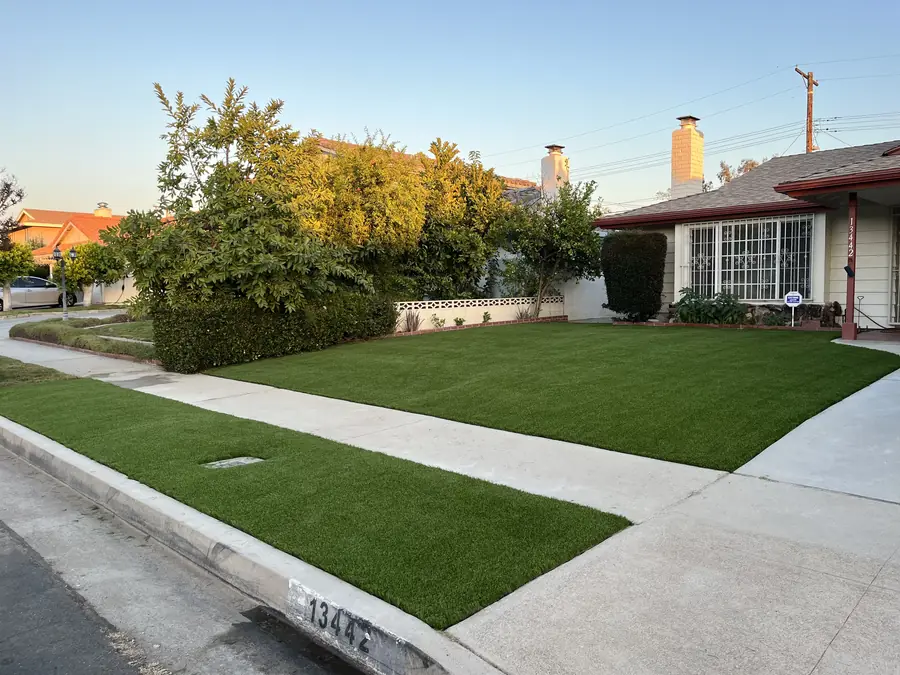
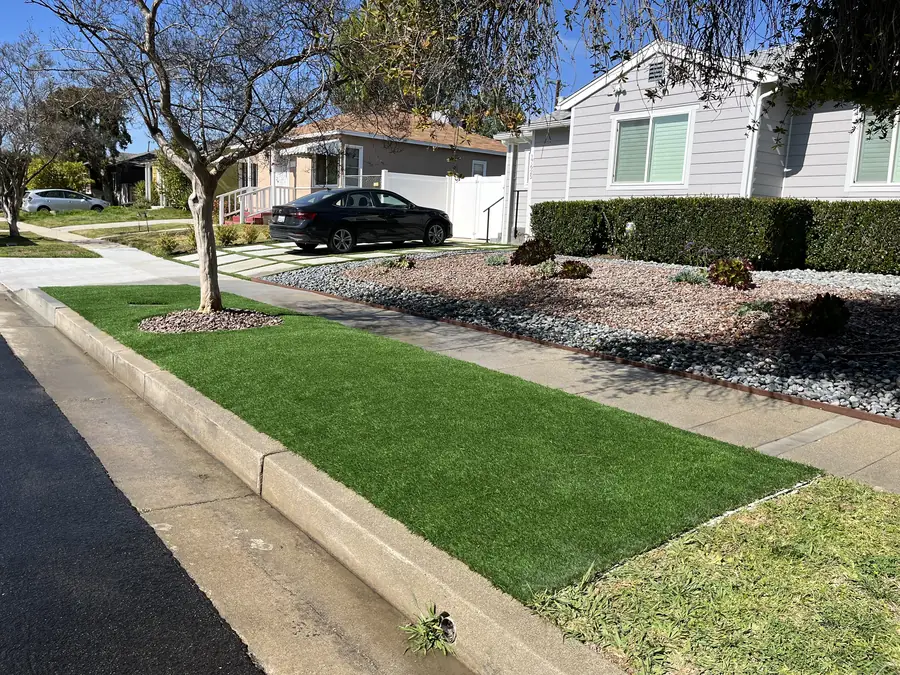
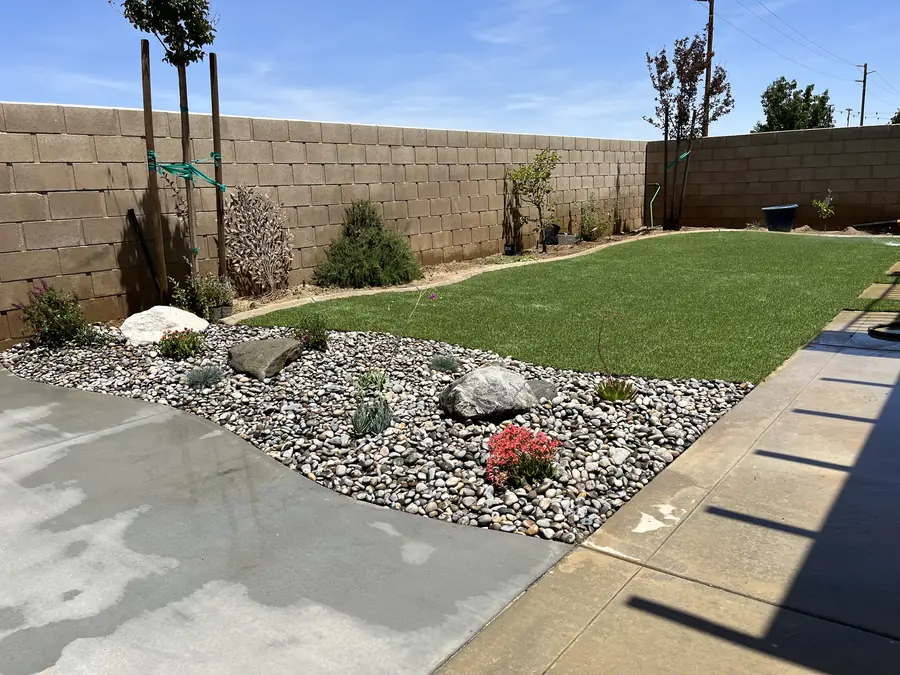
It comes down to how the space gets used. Live lawn is worth its water only where kids or dogs are on it regularly, and here it will drink steadily from May through October to stay green. Synthetic turf gives the same open green panel with no watering at all, which is why it suits the smaller back yards on these lots. Low water planting covers the most ground for the least water and, arranged well, reads as a garden rather than a compromise. A common outcome is a small green panel ringed by drought tolerant beds.
Yes, and a lot of homeowners around here do it that way because budgets are practical and there is no reason to do everything at once. The rule is that anything underground has to be finished before the surface above it is closed. We will often run the full irrigation mainline and sleeves in stage one even if only part of the yard gets planted, so later stages do not require tearing anything open. Front yard first and back yard later is the most common split, and we plan the whole thing on paper up front.
Layered planting does more than a taller fence. We use upright evergreen material such as podocarpus, ficus nitida in a hedge form, bamboo in a controlled planter, or Italian cypress where the space is narrow, then soften the base with shrubs so it does not read as a wall. Where a neighboring second story looks in, a single well placed tree with a high canopy blocks the sight line better than a long hedge. On regular rectangular lots like these, the screening only needs to go where someone actually looks in.
Where the system dates to the original construction, replacement is almost always the right call. Old galvanized or brittle plastic laterals, worn valves and mismatched heads waste water quietly and fail at the worst time, and a new planting plan rarely matches the old head layout anyway. We keep what is genuinely sound, usually the point of connection and sometimes a mainline run, and rebuild the rest with proper zoning, drip for beds, and a weather based controller. It costs more up front and less every month afterward.
Trees are the long answer and structure is the short one. We place shade trees on the south and west sides where afternoon sun does the damage, choosing species with a canopy that will actually reach useful size on a lot this scale rather than something that outgrows the yard. For shade you can use this summer, a pergola, a sail or a patio cover over the seating area does the work while the trees fill in. Both approaches drop the surface temperature of paving noticeably and make the yard usable earlier in the day.
One licensed contractor, on every phase. Daniels Landscaping stays accountable for the work. The same people who tear out the old yard set the grade, run the irrigation, place the hardscape and put the plants in the ground, and they answer to us rather than to another company. That is why the quality holds from the first day to the last and why the schedule does not stall waiting for an outside outfit to show up. You will see familiar faces on your street for the length of the project.
We walk it with you first and separate what stays from what goes. Established trees and any healthy specimen shrub are usually worth keeping and designing around. Dead lawn, overgrown junipers, tired ground cover and volunteer growth come out, roots included, because leaving stumps or root mass in a bed causes settling later. Everything is loaded and hauled off rather than piled at the curb. Once the yard is stripped, we can see the real grade and the true condition of the soil, which sometimes adjusts the plan slightly.
It is the cheapest thing in the yard and it does the most work. A layer of bark or wood chip holds moisture in the soil during a hot dry stretch, keeps root zones cooler, suppresses most weed germination, and breaks down over time into the organic matter these older soils are short on. We keep it a few inches deep and pull it back from trunks and stems so nothing sits wet against bark. Beds get topped up every year or two, which is easy homeowner maintenance and makes a visible difference.
Whenever the tree is healthy and in a sensible spot, yes. A tree that has been in the ground since the neighborhood was built gives shade nothing new can match for years. We protect the root zone during demolition, keep machines off it, avoid raising or lowering grade inside the drip line, and put beds under it on drip rather than spray so the trunk stays dry. Planting beneath an established canopy also has to suit shade and root competition, so the plant list under a mature tree looks different from the rest.
Side yards are usually the last thing anyone plans and the first place water collects. We treat them as a corridor with a job to do. A firm walking surface, gravel, decomposed granite or a simple paver runner, keeps mud down, and a shallow fall with a drain at the low end moves roof runoff away from the foundation. Planting stays narrow and upright so nothing crowds the path. Where the strip gets no sun, we plant for shade or leave it clean and hardscaped instead of forcing plants that will sulk.
It will look clean, complete and intentional, but not full. Planting is drawn and spaced at mature size, so on day one there is visible soil and mulch between shrubs. That gap is deliberate. Crowding plants to make the yard look instantly dense means pulling half of them out in a few years. Trees usually go in at a size that establishes well rather than the largest available, since a smaller tree catches up to a boxed specimen quickly. By the second summer the beds knit together and the spacing stops being noticeable.
Grouping is the first move. Plants with similar water needs go on the same valve so nothing is being watered on somebody else's schedule, and beds run on drip instead of spray so water goes to roots rather than into the air. A weather based controller adjusts run times through the year on its own. Beyond the equipment, the plant list carries most of the load, because a yard built around heat tolerant material simply asks for less. Mulch and healthy soil then hold on to what does get applied.
Call us at (818) 443-9300 and we will set a time to walk the property with you. We look at sun and shade, existing grade, the condition of the irrigation, what is worth keeping, and how you want to use the space, then put together a free written estimate that lays out scope and materials so you can read it line by line. Daniels Landscaping is licensed in California under number 1138709. If you would rather build the yard in stages, say so at the walk and we will structure it that way.