
FAQ
Artificial Turf in North Hills, answered
The questions we hear most from North Hills homeowners.
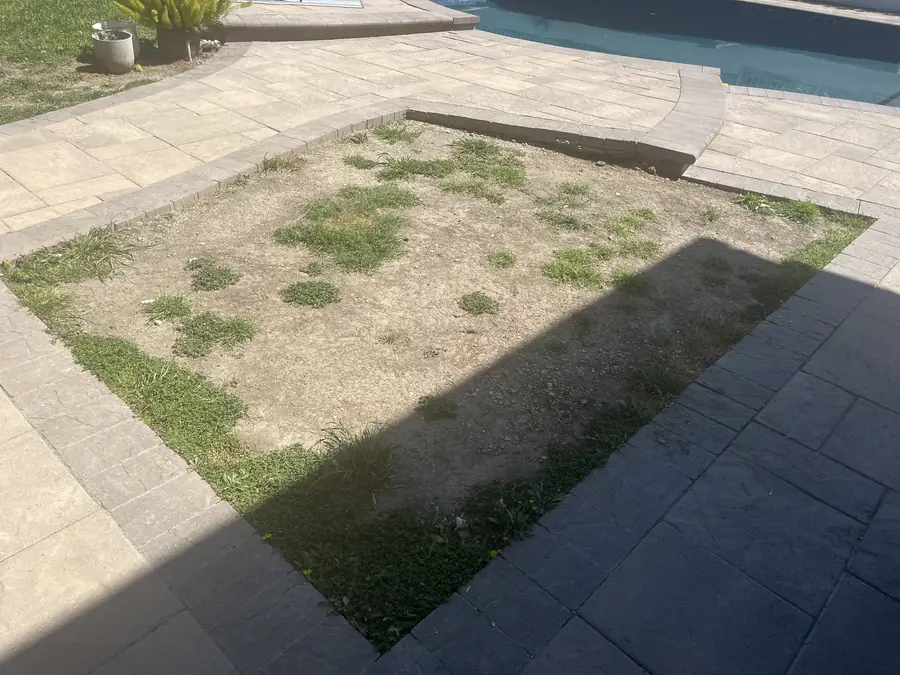
The math works here. Grass on these lots faces full sun and a long dry summer, so keeping it green means watering hard from spring through fall, and even then thin spots show up where the old sprinklers do not reach. Synthetic turf gives the same open green surface with no watering, no mowing and no fertilizer, and it looks the same in September as it did in April. On a modest back yard where the lawn is mostly there for kids, dogs or open space, it removes the single largest water draw on the property.
A compacted aggregate base, and it determines everything. We remove the existing lawn and several inches of soil, compact the subgrade, then lay and compact crushed rock in lifts, grading it to shed water and screeding the top so the surface is genuinely flat. A weed barrier goes over that where it is warranted. Turf laid straight onto soil will develop dips, hold moisture and grow weeds through from underneath within a couple of years. Almost every failed turf lawn we are called out to look at failed in the base.
Yes, provided it is built to. The turf itself has a perforated backing that lets water pass straight through, and the compacted rock beneath it is free draining. On level ground we still build a slight fall across the area toward a drain or toward the street so water leaves rather than sitting under the panel. Where a yard has nowhere to shed to, we set an area drain and tie it into a solid line before the base goes in. Handled that way, turf clears a storm faster than the lawn it replaced.
Warmer than grass, and that is worth being straight about. Synthetic blades absorb sun and a turf lawn in full afternoon exposure will be hot underfoot on the worst days, though it cools within minutes once the sun is off it. Lighter colored turf and cooling style infill help, shade helps more, so we look at where a tree or a patio cover can put the seating and play area in shadow through the afternoon. Rinsing the surface with a hose drops the temperature quickly if children or a dog are heading out.
Face weight is the amount of yarn per square yard and it is the closest single number to quality, since a heavier turf stands up better under traffic and looks fuller. Pile height is the blade length, and shorter is often better than it sounds, because tall blades on a lawn area lay over and look matted. For a family yard we generally land in the middle to upper range of face weight with a moderate pile, and we pick a blade shape with a spine so it recovers rather than flattening. Samples get left with you to judge in your own light.
Infill is the granular material brushed down into the turf after it is laid. It weighs the panel down, keeps blades standing upright instead of matting, and shields the backing from sun. Silica sand is the standard and works fine for most yards. Coated or antimicrobial infills cost more and are worth considering where dogs use the lawn heavily. The amount matters as much as the type, since under filled turf lies flat and looks fake, and infill is topped up occasionally over the years as part of normal care.
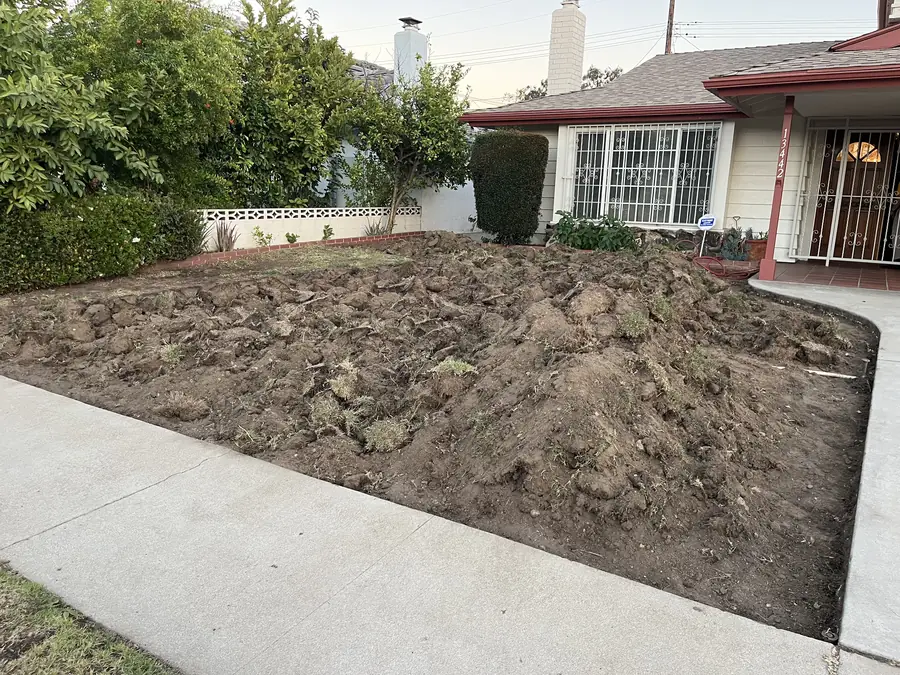
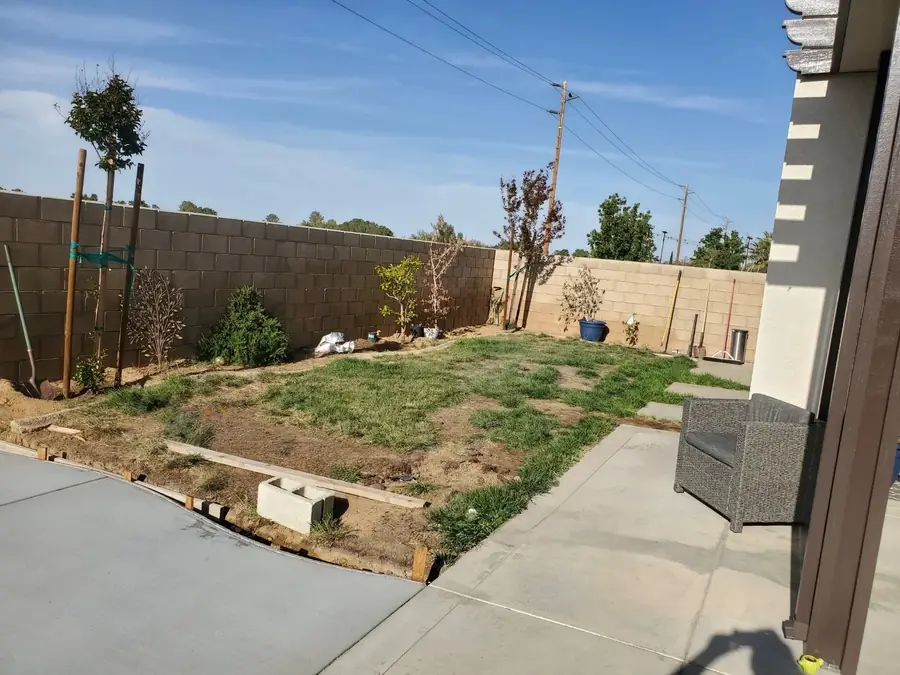
No, the old lawn has to come out. Laying turf over living grass or over soil that has not been excavated and compacted leaves organic material to break down underneath, and the surface goes soft and uneven as it does. On the older properties around here the lawn usually sits on ground that decades of foot traffic packed hard in some places and left loose in others, so we strip it, remove the root layer, and rebuild the grade from a known starting point. Old sprinkler heads come out during the same excavation.
Careful planning and careful cutting. Turf comes in rolls of fixed width, so we lay out the yard first to put seams where they will be least seen and to keep every roll running the same direction, since the blades have a grain and reversing a piece makes the color shift visibly. Edges are trimmed between stitch rows, joined with seaming tape and adhesive, and the blades along the joint are brushed up so the line disappears. Regular rectangular yards like the ones on these streets seam cleanly and waste very little material.
It holds up well and most of our turf clients have dogs. Urine drains straight through the perforated backing into the rock base rather than pooling, and solids are picked up as usual. A weekly rinse keeps odor down, and an enzyme cleaner handles it in hot weather when the yard gets heavy use. Dogs cannot dig it up once it is properly nailed and edged, and there are no dead yellow patches the way there are on a live lawn. Heavier face weight earns its money where a dog runs the same line daily.
Every edge has to be captured or the turf will curl and lift over time. Against a patio, walkway or a mow curb we nail the turf into the compacted base with galvanized spikes on close spacing right along the perimeter. Where the lawn meets a planting bed with no hard edge, we install a bender board or a steel edge to give it something to hold to. On smaller yards this perimeter detail is a large share of the visible result, because the eye goes straight to the line where turf meets everything else.
A quality turf on a properly built base has a long service life, and the base outlasts the turf by a wide margin. What ages first is appearance, since full sun exposure slowly fades color and heavy traffic lanes flatten before the rest of the lawn does. Keeping infill topped up and brushing the blades against the grain now and then extends that considerably. When the surface is finally worn out, replacement means pulling the old panel and laying new turf on the existing base, which costs far less than the original installation.
One licensed contractor, start to finish. Daniels Landscaping stays accountable for the work. The same team excavates, builds and compacts the base, lays out the rolls, cuts and seams, nails the perimeter and brushes in the infill. Turf is unforgiving work, since a seam done poorly or a base left soft shows for the life of the lawn, and that is exactly why we keep it under one contractor. You deal with us for the whole project and there is no other company involved at any stage.
Very little, but not nothing. Leaves and debris get blown or raked off, and the lawn benefits from a rinse now and then to clear dust, which builds up quickly during a dry summer here. Brushing the blades upright in the paths people walk keeps the surface from looking worn in lanes. Infill gets topped up every few years, and any weed that sprouts from a windblown seed at an edge pulls out easily. Set against mowing, edging, fertilizing and patching a live lawn through the heat, it is a short list.
The heads and laterals inside the turf area come out during excavation, and we cap the line cleanly rather than leaving it buried and live. What we do not do is abandon the whole system, because the planting beds around the turf still need water and that is the moment to convert those zones to drip. On these older properties the sprinklers are frequently original to the house and already failing, so retiring the lawn zone and rebuilding the bed zones properly tends to happen in the same visit.
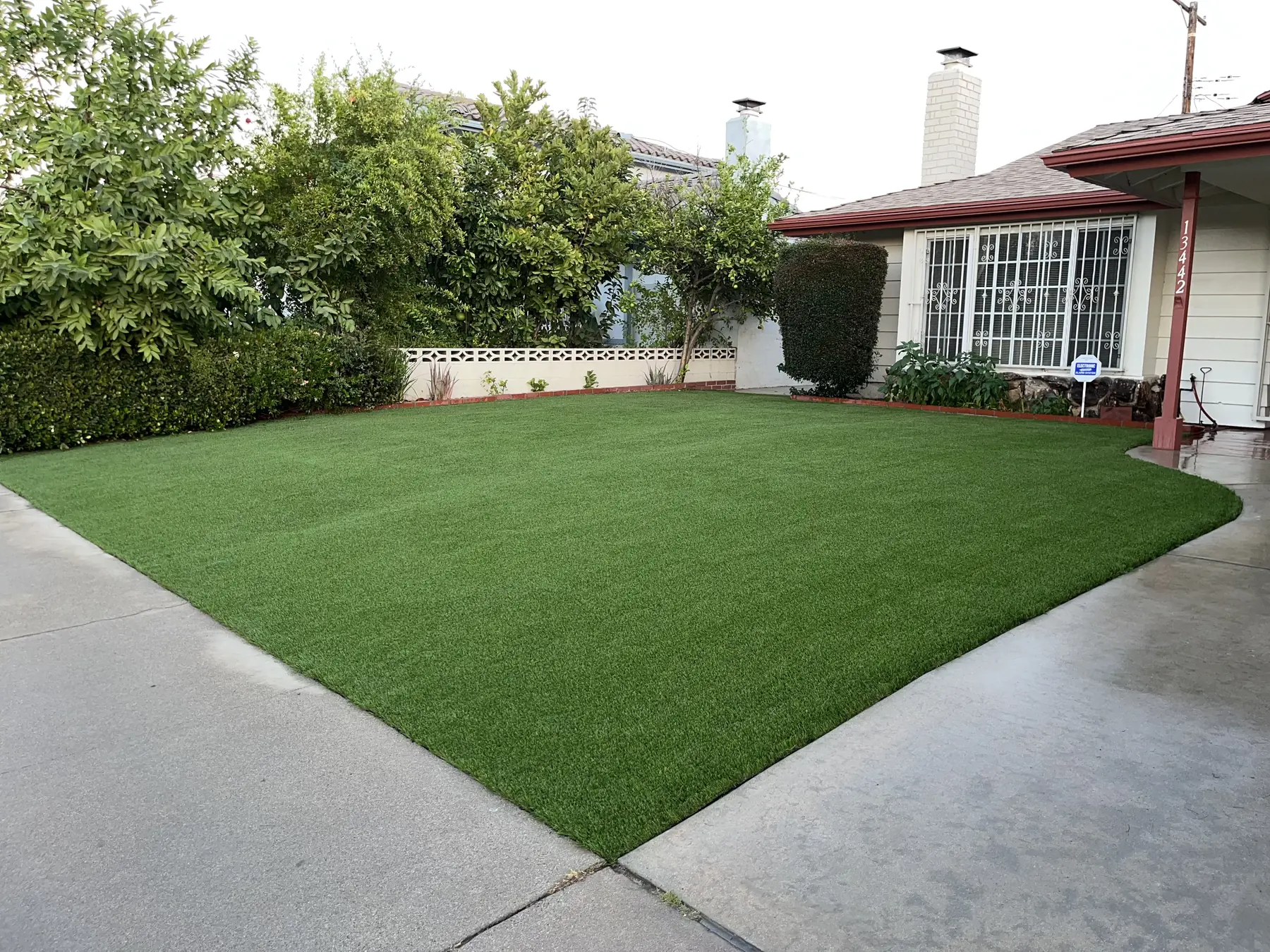
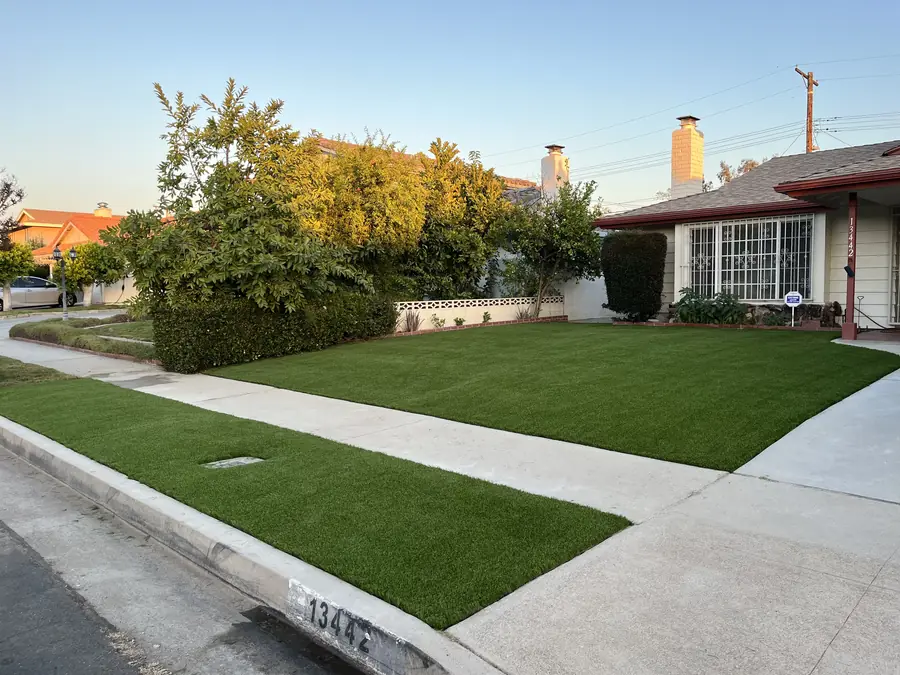
Good product is convincing at a glance, and front yard turf is common now. The tells on a cheap install are a uniform single color, blades that all stand at exactly the same height, and an unnatural sheen. Better turf blends two or three green tones with a tan thatch layer underneath and uses varied blade shapes, which reads as a real lawn from the street. What gives an installation away faster than the material is the details, a wavy edge, a visible seam, or a lawn that does not sit flush with the walkway beside it.
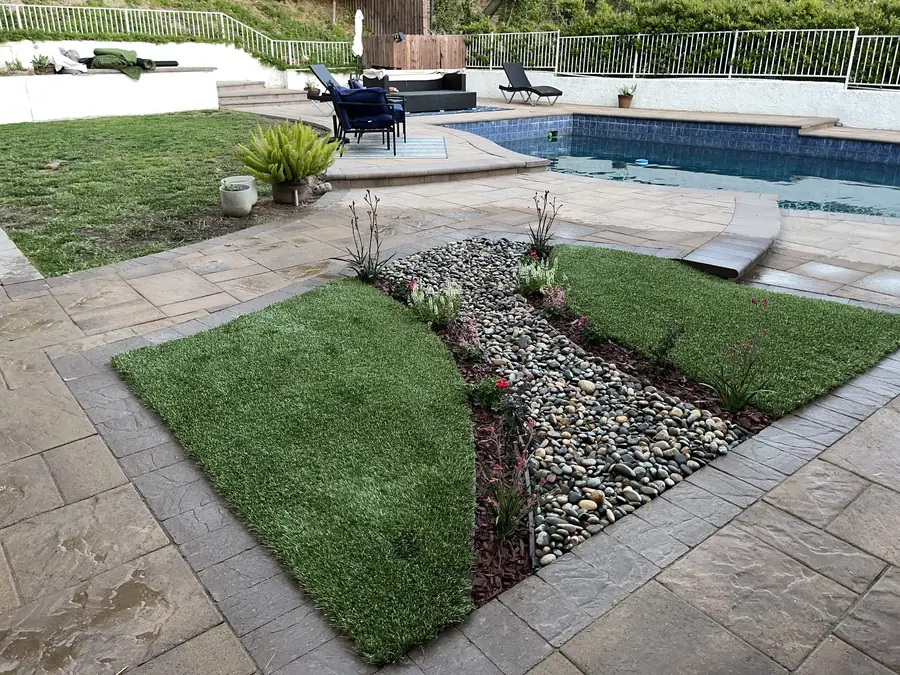
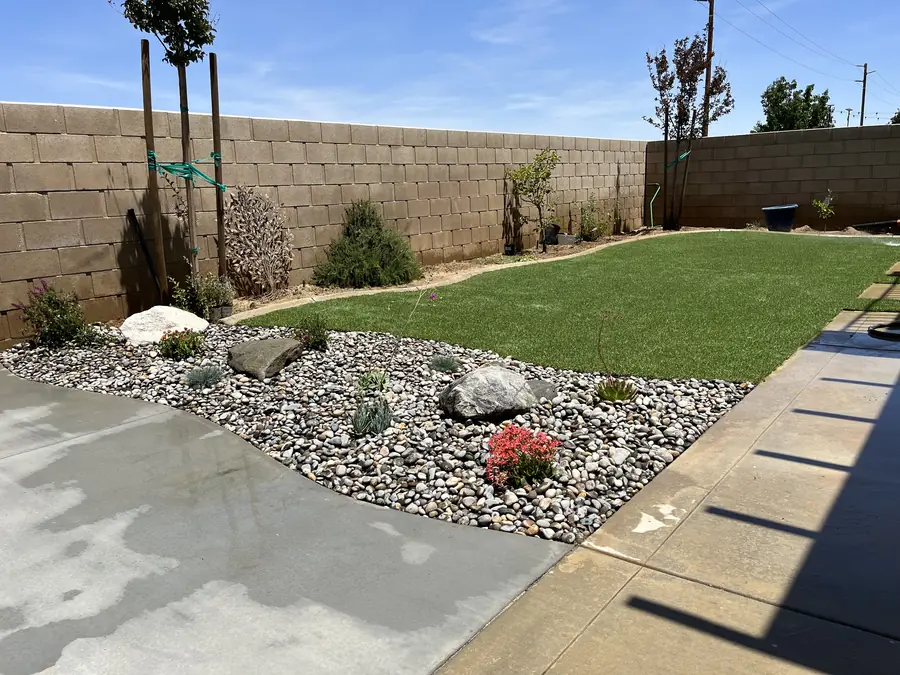
Rarely should it all be turf. A green panel sized to what the yard is actually used for, play, dogs or an open middle, surrounded by planting beds and a paved seating area, looks far better than wall to wall synthetic and costs less. Full coverage tends to read as carpet, especially on a smaller lot where nothing breaks it up. Turf also does not need to reach into corners nobody walks on, and those spots are better spent on heat tolerant shrubs that give the yard some depth.
Yes. Turf divides at an edge as cleanly as paving does, so a back yard lawn now and a front yard conversion later is a normal way to run it, and plenty of homeowners here spread the work out that way. The one thing to settle early is drainage and any sleeving, since a drain line that will eventually serve both areas is much easier to install while the ground is already open. We size the base and set the grade in stage one with the later area in mind.
Call (818) 443-9300 and we will come measure the area and bring samples so you can compare face weight, pile height and blade color in your own sunlight. We check where water currently goes, what the existing irrigation is doing, and how the space gets used, then send a free written estimate covering base depth, the specific turf, infill, seaming and edging. Daniels Landscaping is licensed in California, number 1138709. If you want the front and back done at different times, mention it at the walk and we will plan the sequence around it.