
FAQ
Landscaping in Granada Hills, answered
The questions we hear most from Granada Hills homeowners.
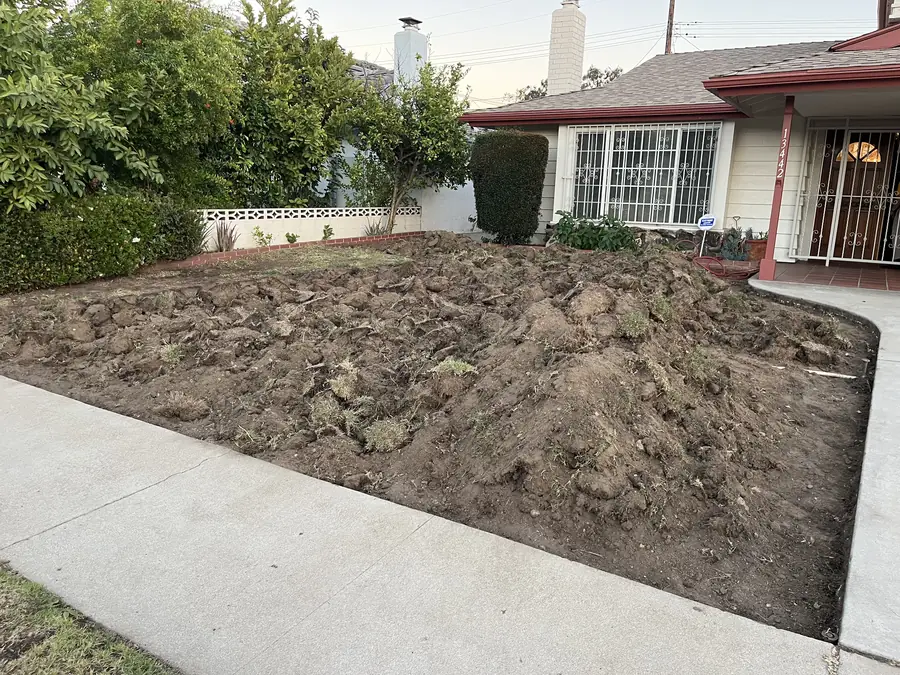
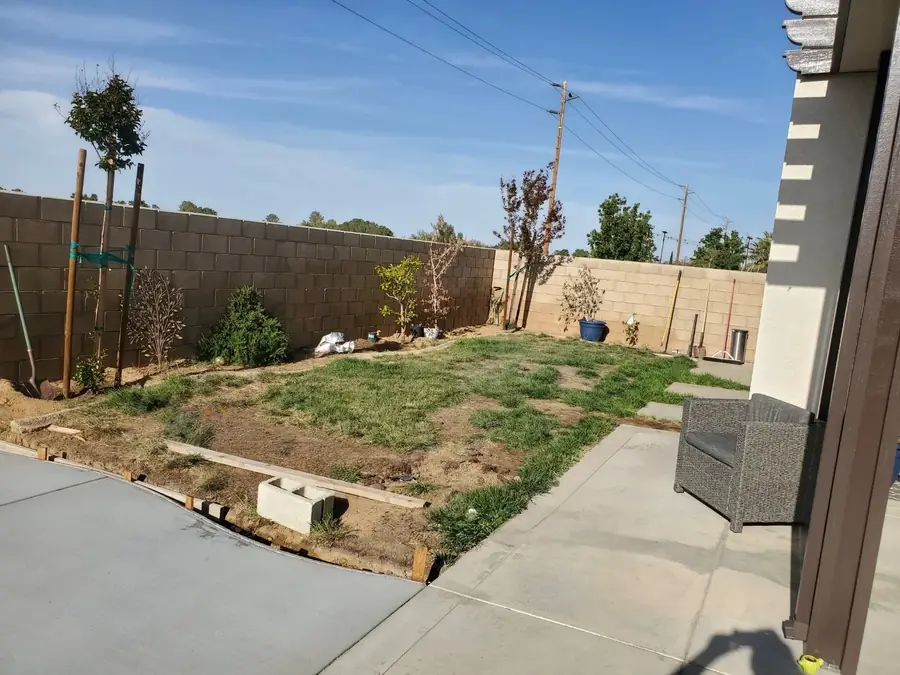
Clearing and demolition come first, followed by rough grading, soil amendment, trenching for irrigation and any drainage lines, then hardscape edging if the plan calls for it, fine grading, and planting. Trees go in ahead of shrubs, shrubs ahead of ground cover, and mulch closes the job out. Cleanup and a walkthrough finish it. The order is not flexible, since anything buried has to be installed while the ground is open, and correcting a grade after plants are already set means undoing finished work.
Everything downstream depends on where water ends up. Grade sets the direction of surface flow, and if that flow points at the house or pools in the middle of the yard, no planting plan rescues it. We shape the ground so water leaves the foundation and reaches a swale, a basin, or the street without cutting channels along the way. Once the grades are right, we know which parts of the yard will stay damp and which will dry out fast, and plants get placed accordingly.
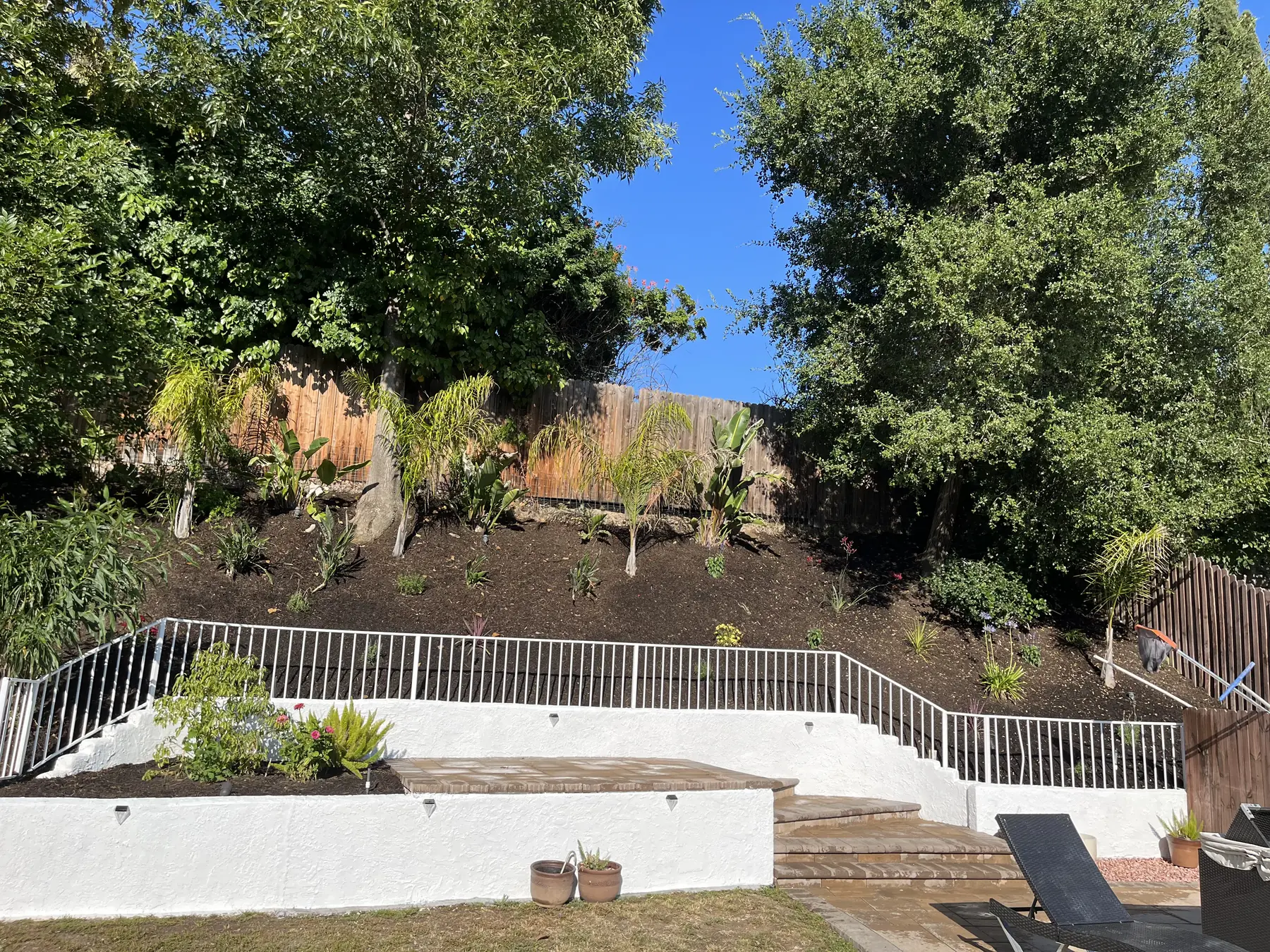
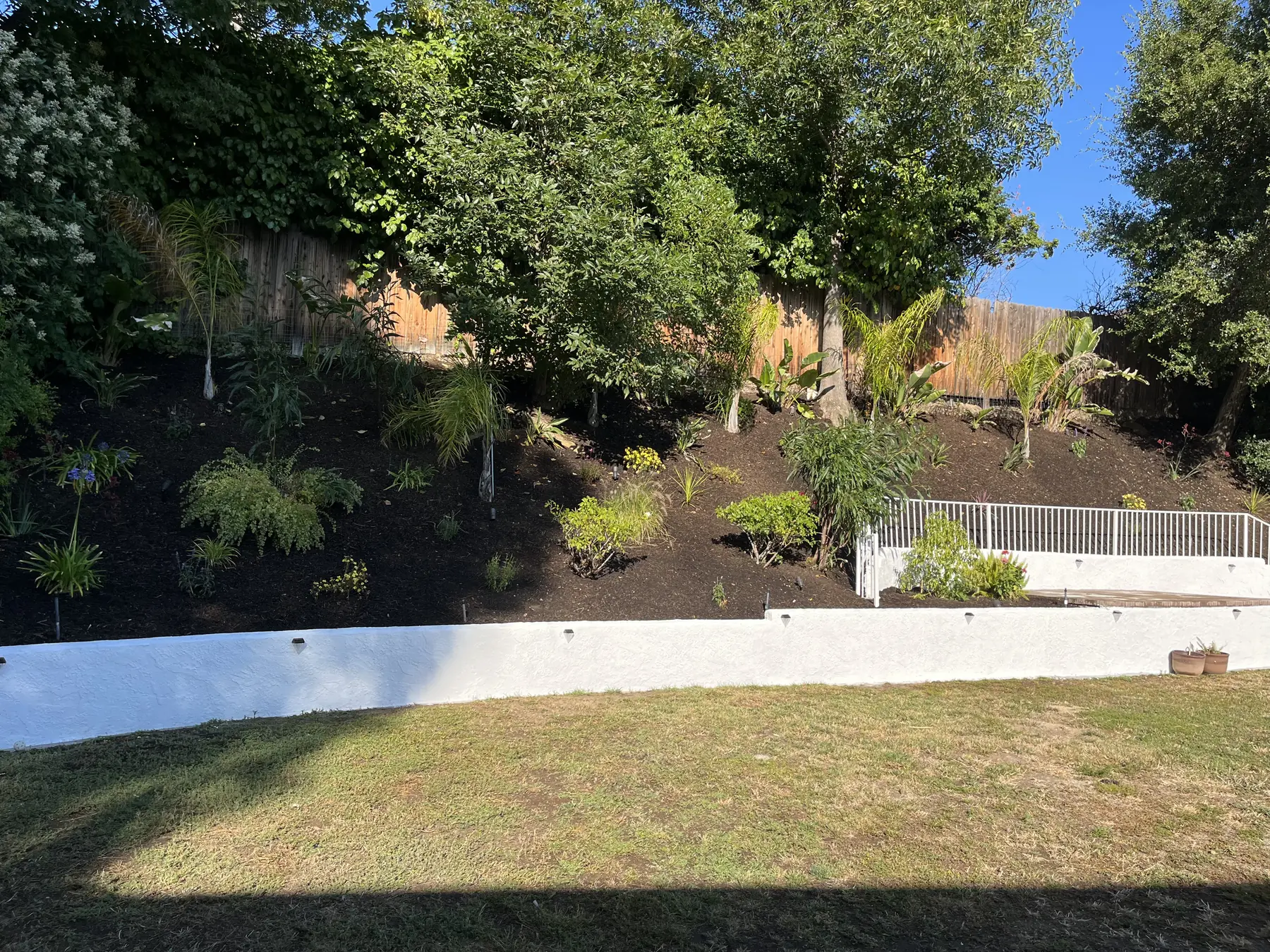
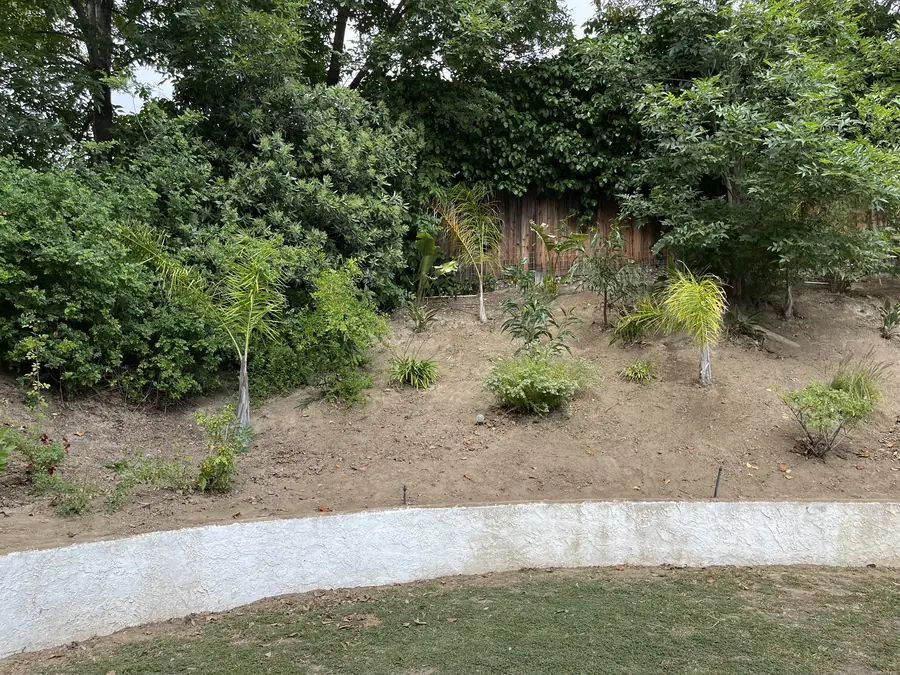
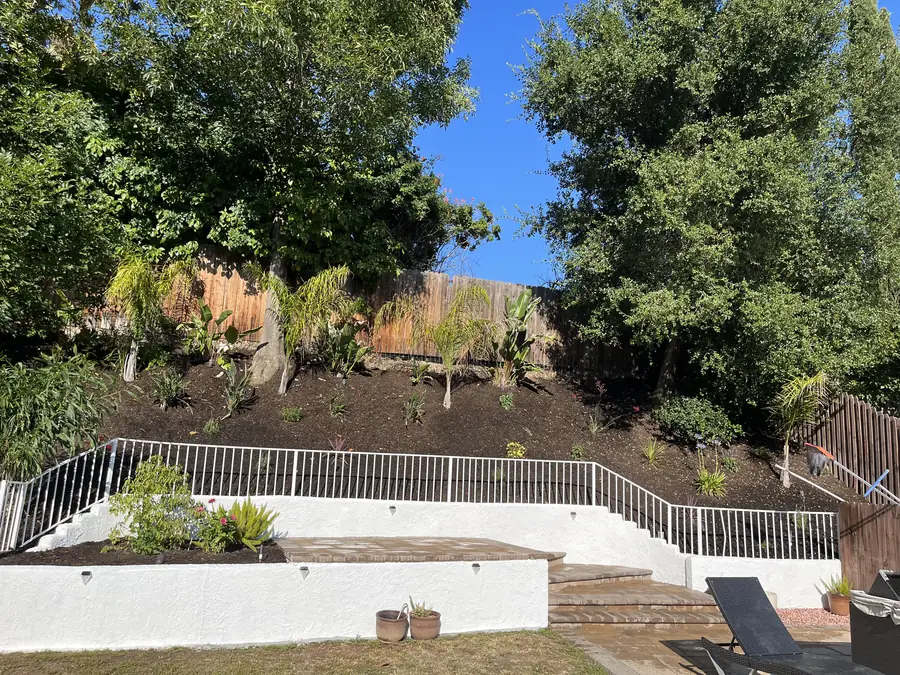
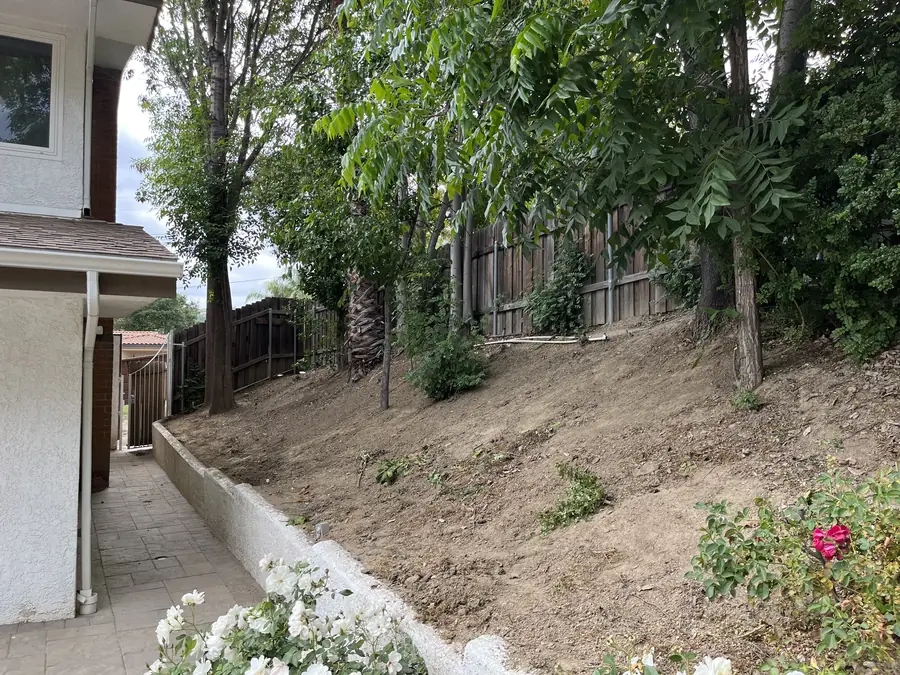
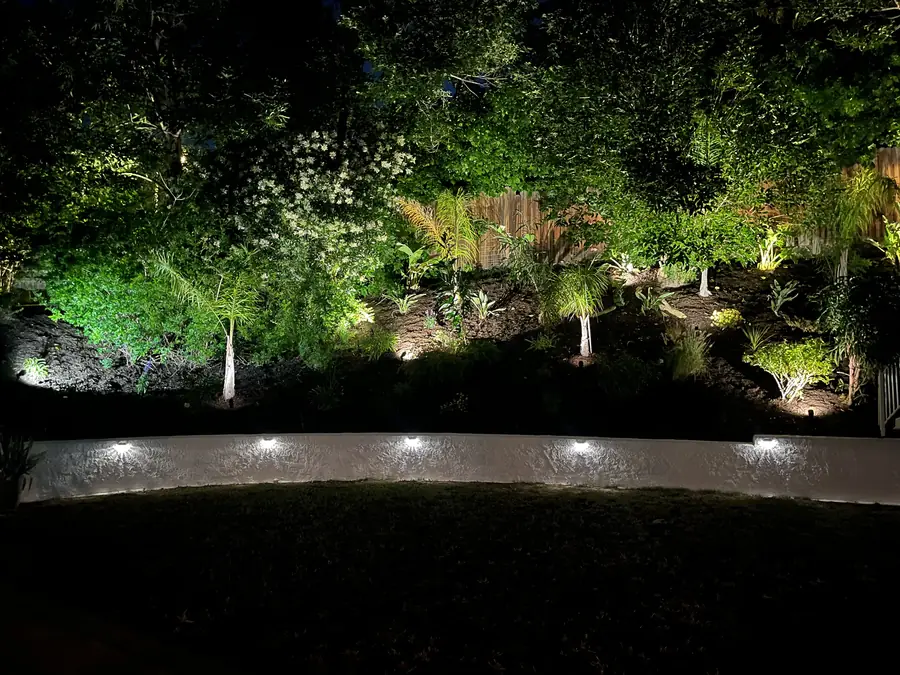
The range inside this one city is wider than most places in the valley. A flat southern lot is largely a question of layout, proportion, and planting, with drainage handled by a gentle fall across the surface. Move north into the foothills and usable space has to be built. That means cutting terraces, retaining where the cut needs support, controlling erosion on exposed faces, and routing water that arrives from higher ground rather than pretending it will behave. Two yards of the same size can take very different amounts of work.
Larger parcels are common around here, and the main risk on a big lot is spreading everything thin so nothing reads as finished. We divide the space into defined areas instead: a gathering area near the house, planted transitions, and a looser zone further out carrying lower water material that needs less attention. Irrigation gets zoned the same way, so the far corners are not running on the same schedule as the beds by the patio. Building in stages also becomes practical, because a large yard rarely needs to be finished all at once.
No. Daniels Landscaping performs every part of the work with one licensed contractor. The same company that grades your yard runs the irrigation, sets the trees, and spreads the mulch. Nothing is handed to an outside firm at any stage. We keep it that way because the standard stays consistent from the first morning to the final cleanup, you know who is on your property each day, and when a question comes up about how something was built, the person who built it is available to answer it.
Properties along the wildland interface need planting treated as a safety decision rather than a style preference. The zone immediately around the house stays lean: low growing, well watered, widely spaced material, with nothing woody pushed against walls, under eaves, or against a fence that touches the structure. Further out, plants get grouped in islands with gaps between them so fire has nothing continuous to travel along, and taller material is kept clear of anything below that could carry flame upward. Dead growth and leaf litter get cleared on a schedule.
Granada Hills is known for tree lined streets, and White Oak Avenue is the example people usually name. Mature canopy is an asset, and it also sets real constraints. Roots run well beyond the branch spread, so irrigation trenching gets routed around them and hand digging replaces machine work close in. Shade underneath rules out sun loving material, so we plant for the light that actually reaches the ground. Canopy drops leaves and can block equipment access to a back yard, both of which we plan for rather than discover midway through.
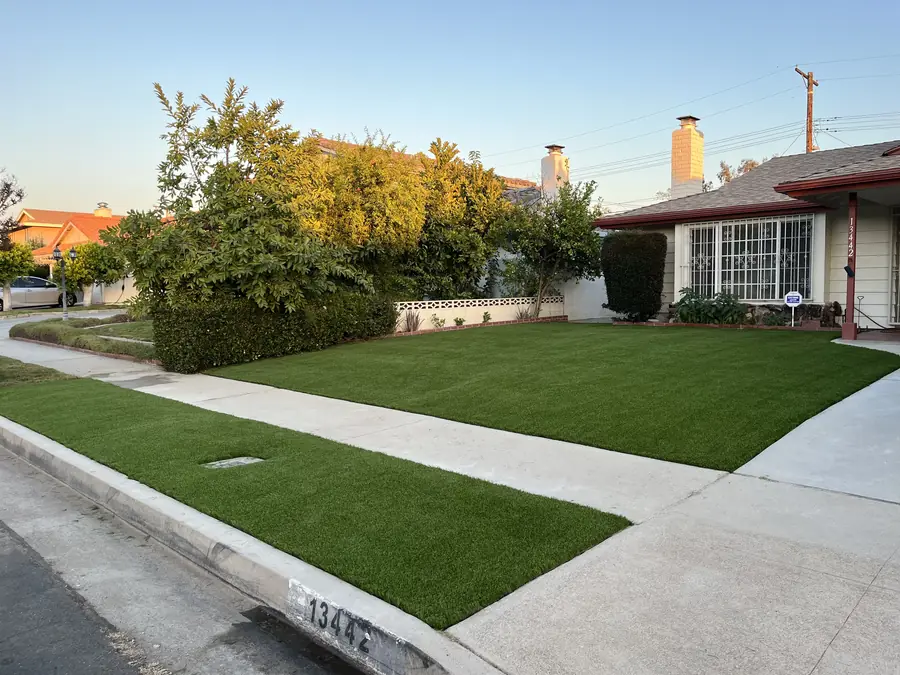
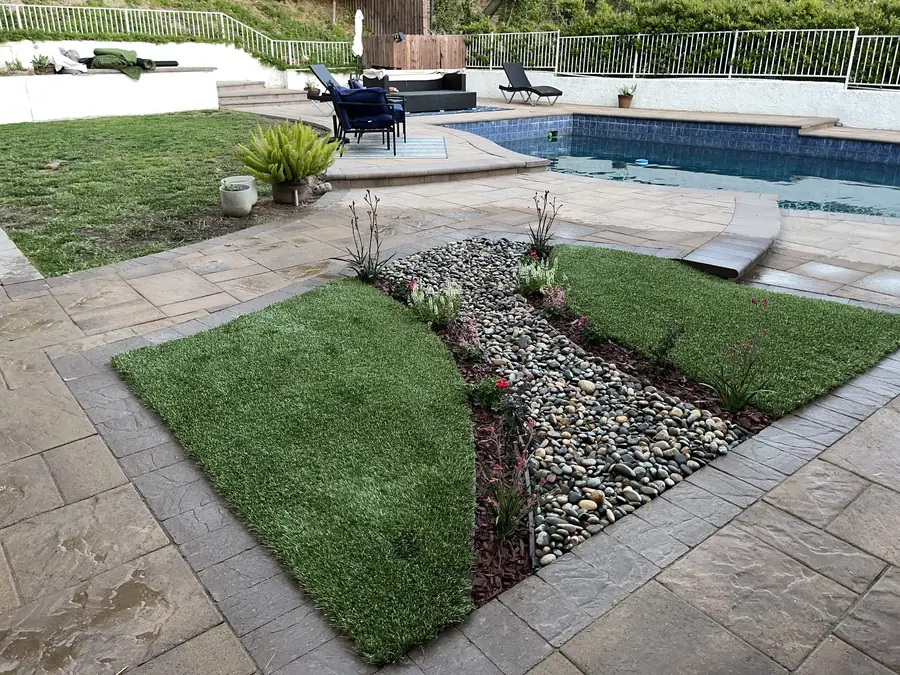
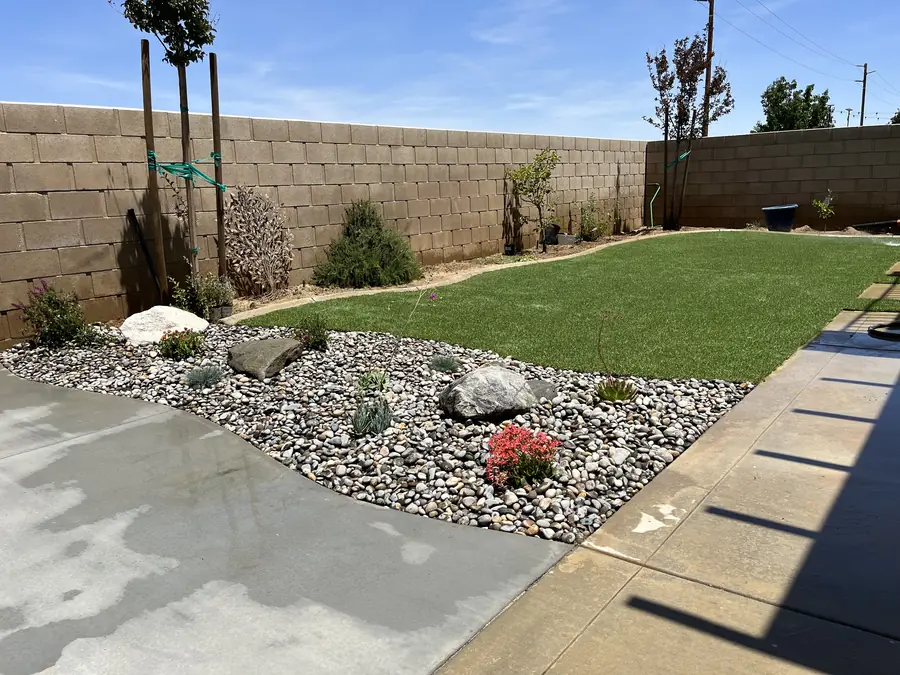
Use decides this more than taste does. Real lawn earns its water where children and dogs are on it daily and someone is willing to mow. Synthetic turf holds the same green surface with no irrigation and works well in shaded pockets and small flat areas where grass never fills in. Low water planting covers the most ground for the least input and looks deliberate when it is composed properly. Plenty of yards here end up with a modest lawn area of one kind or another framed by drought tolerant beds.
Old root mass, buried debris, and construction leftovers get pulled out first, since those are what cause failures a year later. Compost is then worked into the planting areas to loosen structure and feed soil life. Where equipment has run or an old lawn sat for years, the ground is compacted and gets broken open so roots can travel. Holes are dug wide rather than deep, and backfill uses native soil rather than straight amendment, which keeps roots reaching outward instead of circling inside a soft pocket.
Most yards arrive with something already in the ground, and the first task is judging whether any of it deserves to stay. Old valves and mismatched heads undermine new planting, so they get replaced rather than patched. The yard is then split into zones by water demand, with drip serving beds and spray or rotary heads serving any turf. Trees receive their own zone whenever the layout allows, because their watering pattern has nothing in common with shrubs. We set the controller and show you how to shift it seasonally.
The northern part of the city has genuine horse keeping parcels with real acreage, and they get planned differently. Turnout areas, trails, and truck or trailer access come first, because those set the circulation everything else works around. Planting stays clear of fence lines where animals reach through, and anything toxic to horses is left out entirely. Dust control, drainage away from stalls and paddocks, and surfaces that hold up to hooves and heavy vehicles matter more than ornamental detail. The decorative landscaping usually sits close to the residence.
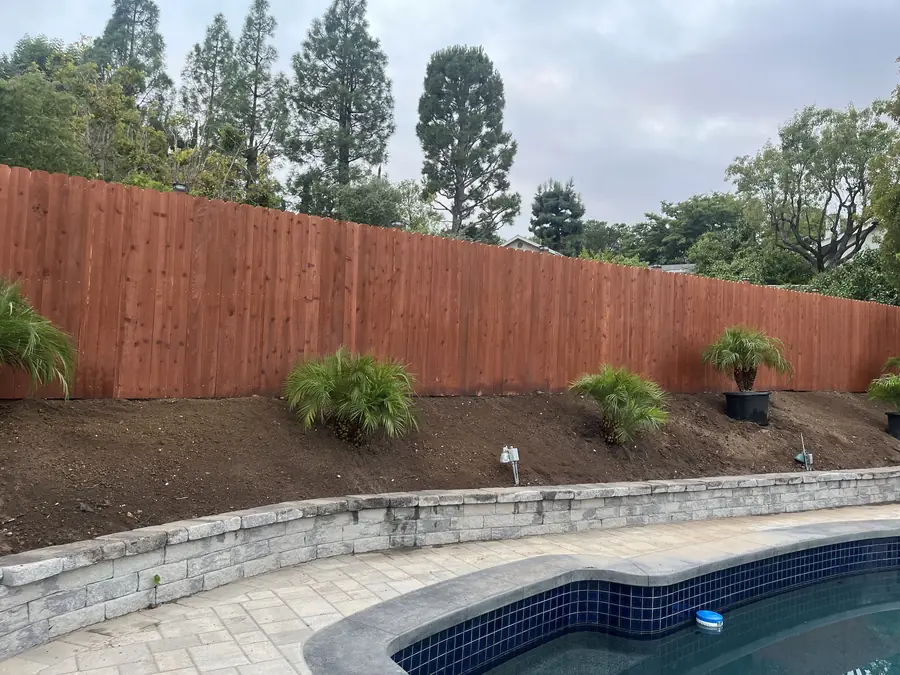
Water on a slope arrives with speed and volume, so it gets intercepted rather than absorbed. We look at what flows onto the property from above, where it concentrates, and where it can be released safely. Long runs are broken with terraces so nothing gains momentum over distance, and catch basins tied to solid pipe carry collected water through the site. Retaining walls get drainage behind them as a matter of course. Surface shaping does the rest, directing flow along paths we chose instead of paths the last storm carved.
Trees outlive everything else we install, so they are selected and placed before the smaller material. Mature size gets compared against the space genuinely available, not the space a young tree occupies at planting. Root behavior near foundations, walkways, and utility lines matters. So does litter, because what a tree drops and where it lands decides whether people enjoy sitting under it. Evergreens handle screening and privacy, while deciduous trees shade the house through summer and let winter sun reach it once the leaves fall.
A layer two to three inches deep is the least expensive material in the yard and the hardest working. It slows evaporation so irrigation runs shorter, holds soil temperature steady through heat waves, blocks most weed seed from germinating, and feeds the ground as it breaks down. It also makes fresh planting look complete instead of raw. We keep mulch pulled back from trunks and stems, since piling it against bark traps moisture where rot starts. Expect to top it up every year or two as it decomposes.
Open space is what makes a yard usable, so we protect it. Filling every square foot with shrubs shrinks the space visually and creates work nobody signed up for. A reliable approach keeps a generous clear area, whether that is lawn, turf, gravel, or paving, and layers planting around the edges where it frames views and screens neighbors. Depth comes from varying heights rather than from covering more ground. On larger parcels, several smaller open areas connected by paths beat one enormous empty middle.
Year one asks the most. Roots are establishing, so watering has to stay consistent and get adjusted as the weather turns instead of being set once in spring. Disturbed soil grows weeds, and pulling them while they are small keeps that from becoming a chore. After establishment, drought tolerant planting settles into seasonal pruning, a mulch top up, and irrigation checks a couple of times a year. Before we leave, we go through exactly what was planted and what each group needs so nothing is guesswork.
Yes, and on a large property that is often the smarter route. The requirement is that the entire yard gets designed up front even when only part of it gets built now. Grading, irrigation mains, drainage lines, and sleeving under future paving all need to reflect the finished layout, and we stub those out during the first stage so later work does not mean cutting into completed areas. Most people start with whatever they look at or use daily, then move outward as budget allows.
Call (818) 443-9300 and we will arrange a walk of the property. We check the grade, the soil, the existing irrigation, the trees, and how equipment and material can physically reach the work area, then talk through how you want to use the space. You receive a free written estimate afterward, put in plain language so the scope is clear before anything begins. Daniels Landscaping carries California license 1138709, and the crew that shows up on day one works for us.