
FAQ
Artificial Turf in Granada Hills, answered
The questions we hear most from Granada Hills homeowners.
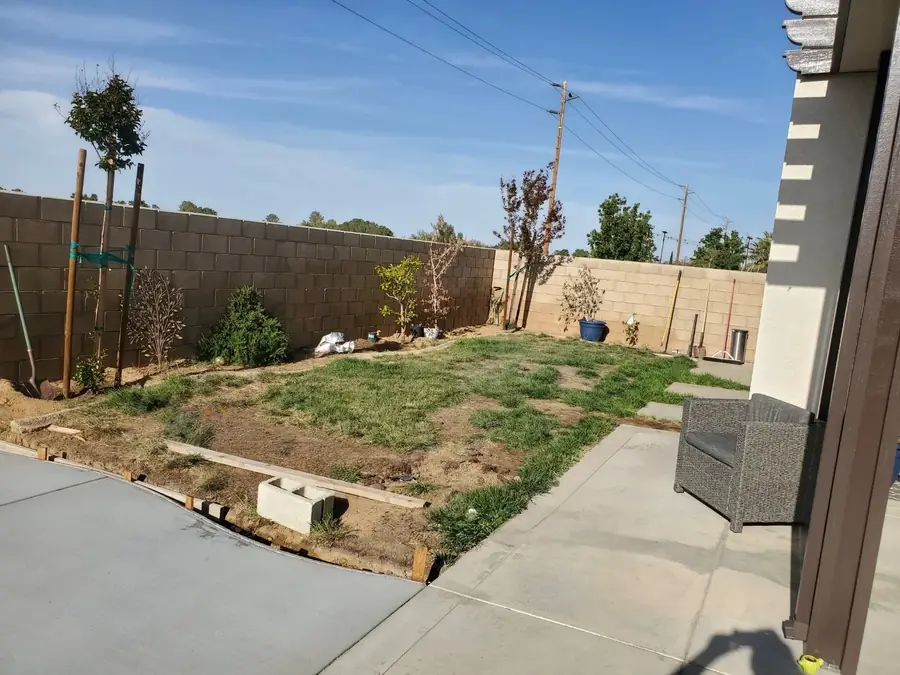
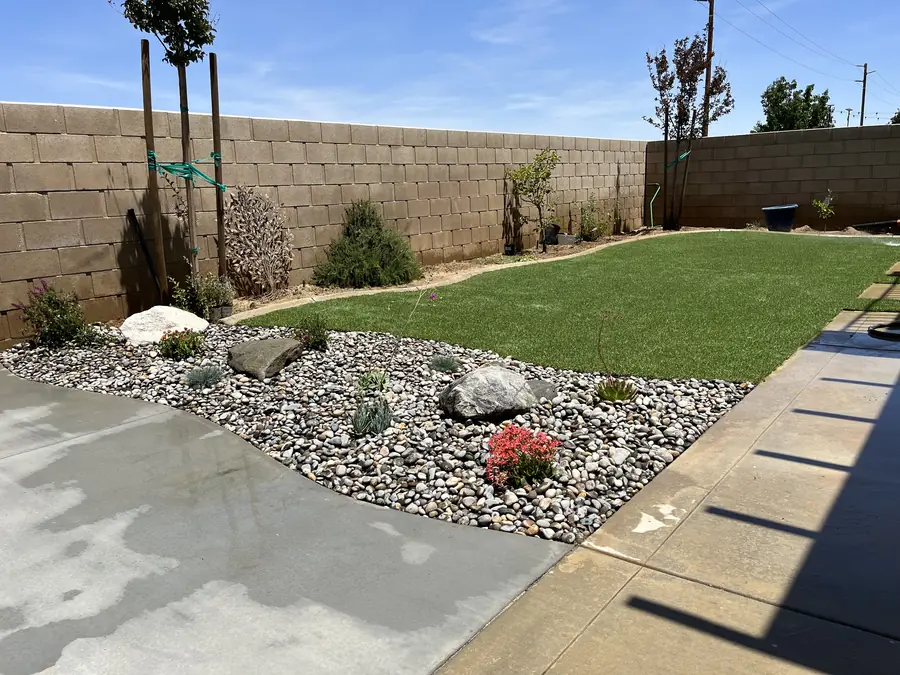
Existing lawn or surface is stripped and hauled off, then the subgrade is excavated to depth and compacted. Crushed aggregate goes in, gets wetted and compacted in lifts, and is screeded to the finished contour, including the slight fall that carries water off. Rolls are laid out and left to relax so wrinkles settle, then trimmed to the shape of the area, seamed where pieces meet, and fastened around the perimeter. Infill is spread and worked down into the fibers, and the whole surface is power broomed so the blades stand up.
Face weight counts the ounces of yarn in a square yard, and it is the closest thing to a density figure, which decides whether a lawn feels full and how well it springs back from traffic. Pile height is simply blade length, and longer is not automatically better, since tall blades at low density lie flat and look matted within a season. Blade shape affects resilience and shine, with shaped or spined fibers standing up far longer than flat ones. Look at density first, then height, then color blend and thatch.
Infill is the granular material brushed down between the fibers, usually rounded silica sand or a coated version of it. It is not filler. The weight holds the turf flat to the base so it cannot ripple or creep, it keeps blades vertical rather than folded over, it shields the backing and the fiber base from wear and sun, and it puts a little cushion underfoot. For yards with dogs, coated or antimicrobial infills help with odor. Skipping infill to save money produces a lawn that lies down and wears out early.
Backing is perforated, so water drops straight through the turf and into the aggregate rather than sheeting across the top. That is why the base matters for drainage as much as it does for support. It is built free draining and shaped with a slight pitch, so water travels down through the fibers, through the rock, and out to daylight or to a drain. Where surrounding soil is tight or the area sits enclosed by walls, a perforated line bedded in gravel goes in underneath to carry water away.
Almost every turf failure is a base failure. If the subgrade was never compacted, the surface develops low spots that read as dents in an otherwise flat lawn. If the aggregate was too thin, edges dip and seams begin to telegraph. If the pad was not screeded true, every ripple shows, because turf has no thickness to hide anything. We compact in lifts, check grade repeatedly instead of once, and build the pad firm right out to the perimeter, since edges are what sink first.
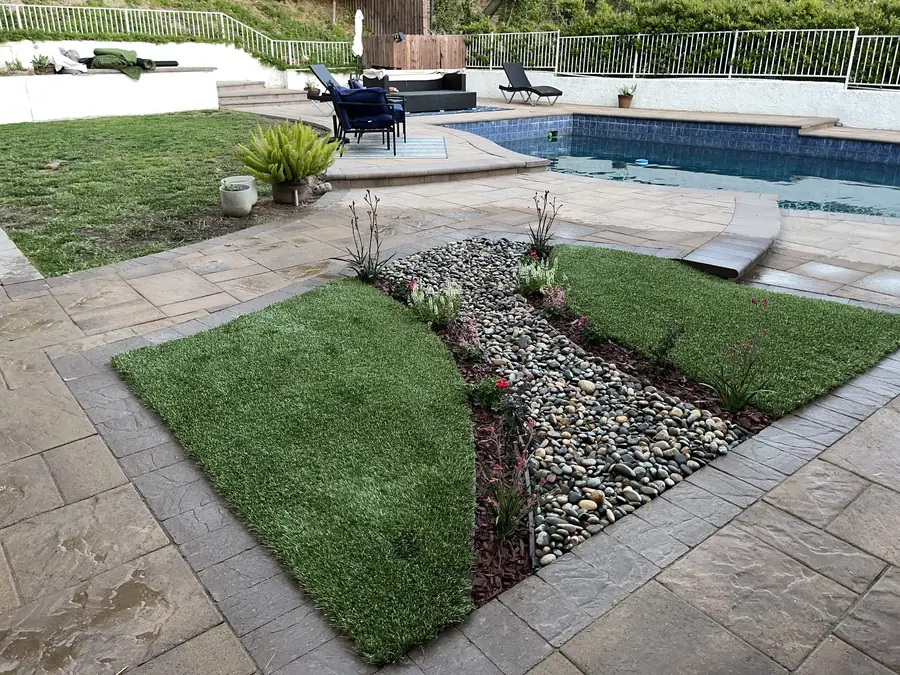
Seams are what give a poor installation away. Rolls are laid running the same direction so fibers catch light identically, and the factory edge is trimmed off before joining. Pieces are butted rather than overlapped, then held with seam tape and adhesive or stapled through the backing, with fibers teased free of the joint so no line appears. Perimeters are nailed with galvanized spikes at close intervals into the compacted base, and edges are tucked tight against a border, a bender board, or an adjoining hard surface.
No outside company touches it. Turf is installed under one licensed contractor, from demolition and base through seaming, nailing, and infill. Daniels Landscaping stays accountable for every part of a project. With synthetic lawn in particular, quality comes down to people doing repetitive work carefully: compacting properly, screeding true, cutting seams straight, brushing infill in fully. That happens with a crew who answer to us and know the standard, and it is the reason our finished lawns do not show the seams and dips that mark a rushed install.
Turf handles dogs well, which is one of the more common reasons people put it in. Urine drains through the perforated backing into the base and rinses out with a hose, and the base is built to move liquid rather than hold it. Solids get picked up as usual and the spot rinsed. For heavy use, antimicrobial infill and an occasional enzyme treatment keep odor down through hot weather. Dogs cannot dig it up once the perimeter is nailed correctly, and there are no muddy paws and no dead patches along their running lines.
Synthetic fibers absorb heat, and in full sun on a summer afternoon a turf lawn reads warmer underfoot than living grass. Shade is the practical answer, whether from trees, an umbrella, or a cover over the part people use most. A quick rinse cools the surface right away, though the effect does not last long. Lighter colored infills and the cooling technologies built into some products help somewhat. Areas that pick up afternoon shade rarely present any issue, and morning and evening use stays comfortable nearly year round.
A quality product over a properly built base lasts many years, and manufacturers generally back the fiber against fading and breakdown with a long warranty. What retires a turf lawn is usually wear in a traffic lane or fibers laying permanently flat where people cut the same corner every day, not the backing giving out. Higher density lasts longer because load spreads across more fiber. Sun exposure, traffic volume, and whether infill was kept topped up all move the number. Worn sections can be replaced without redoing the entire lawn.
Maintenance is real but small. Blow or rake leaves and debris off so organic matter does not compost in the fibers and grow weeds on top of the turf. Brush the busy areas against the grain now and then to stand blades back up. Add infill where it has migrated, usually after a few years. Rinse as needed and spot clean spills promptly. That is the entire list. No mowing, no fertilizer, no watering schedule, and no reseeding after a punishing summer.
The answer shifts with where a property sits. On the flat southern lots, turf usually replaces a struggling front or back lawn, and the job is mostly about base and drainage on level ground. Closer to the foothills it tends to replace grass that never thrived on a slope or under heavy shade, and the installation carries considerably more site work. We would not recommend covering an open acre with it, where low water planting suits the ground better, but for the areas around the house it fits well nearly anywhere here.
Bigger parcels are common in this part of the valley, and that is exactly what makes irrigated grass expensive to keep. A large yard almost never needs synthetic lawn everywhere. What works is defining a turf area sized to how the space actually gets used, a play area, a dog run, a green surface off the patio, and letting drought tolerant planting handle everything beyond it. You keep the look and the usable surface without paying to maintain ground nobody sets foot on. It also keeps the project to a sensible scope.
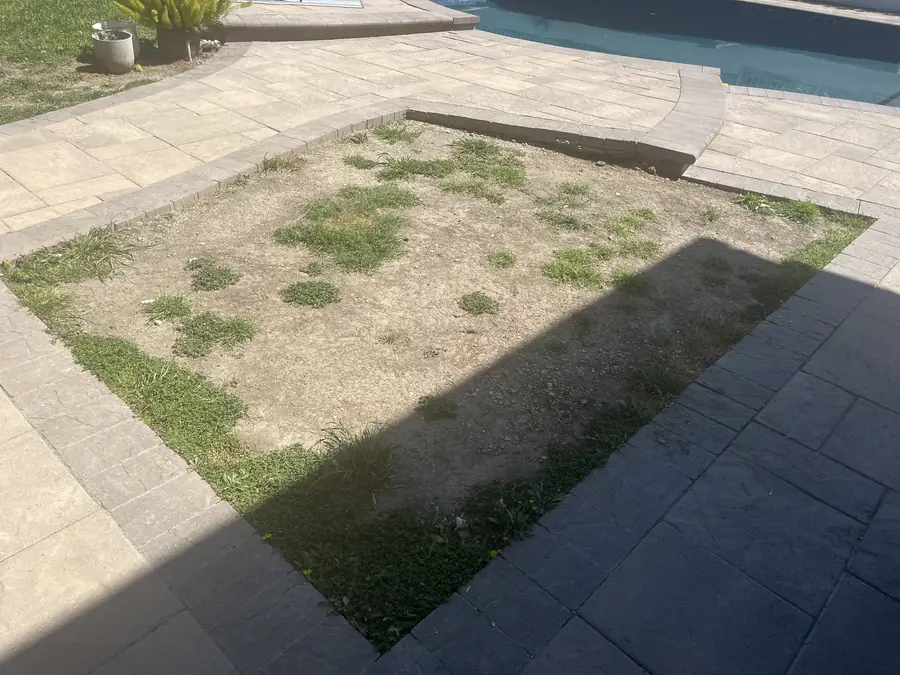
Shade is one of the strongest arguments for synthetic lawn in this city. Streets like White Oak Avenue are known for their canopy, and grass under a big tree competes for light and water and generally loses, leaving thin patches and bare dirt. Turf stays uniformly green in that shade with no irrigation at all, which also removes the constant watering that surface roots and trunk flares dislike. We keep excavation shallow inside root zones, work around structural roots by hand, and accept a little contour instead of cutting to force a perfectly flat pad.
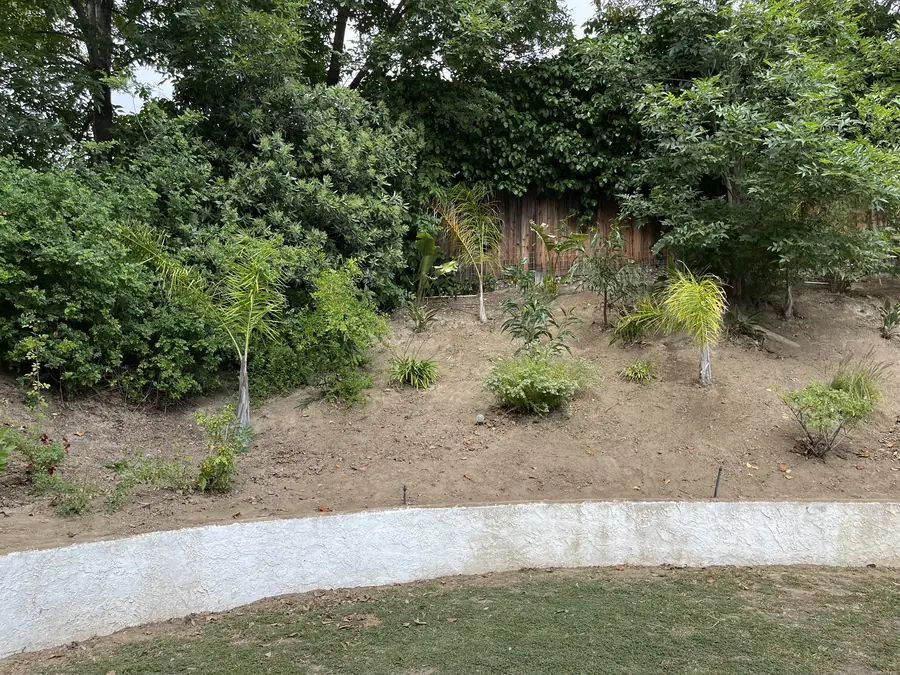
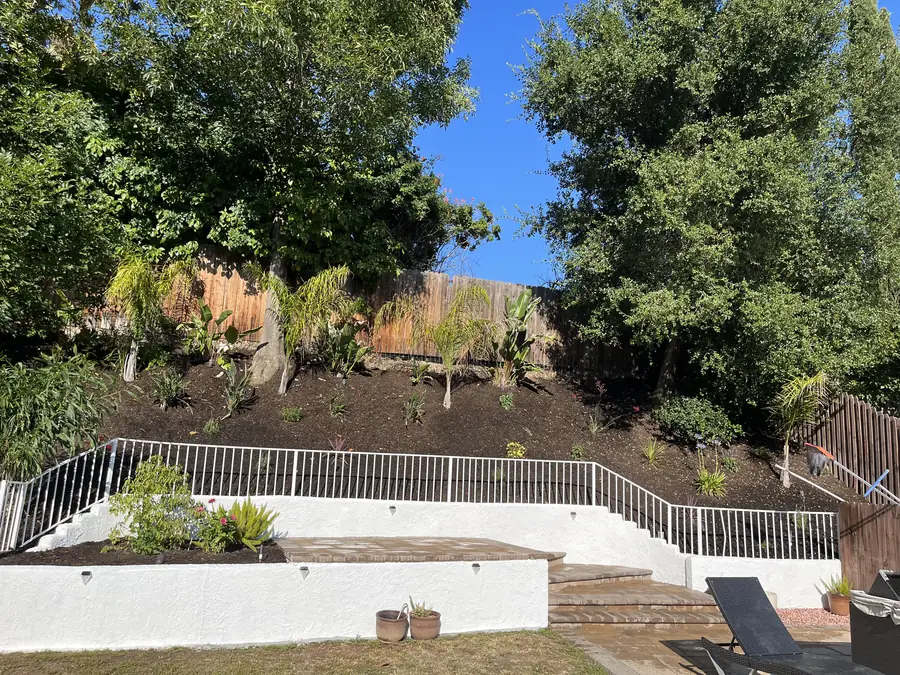
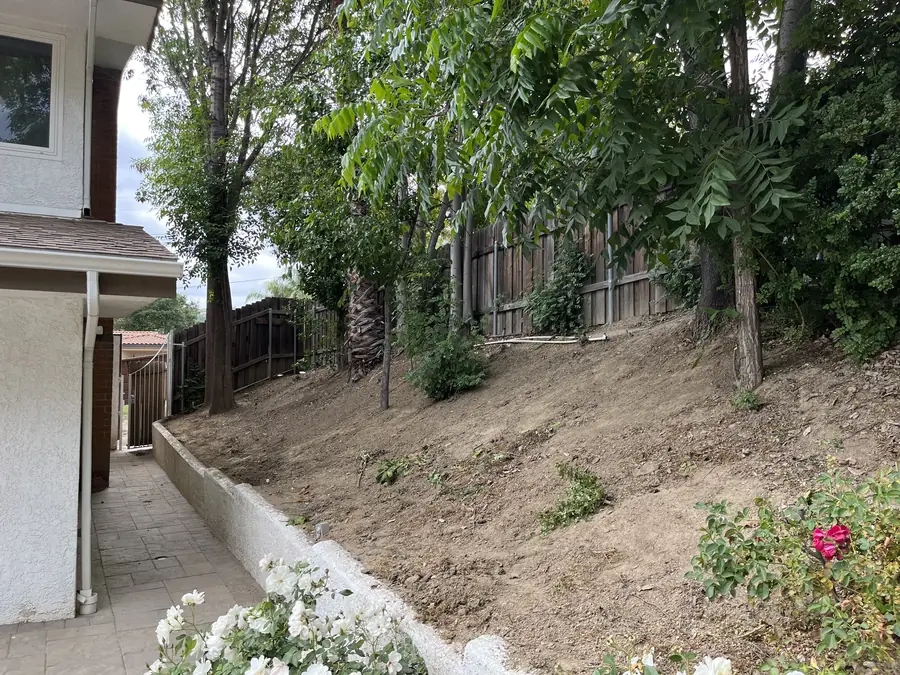
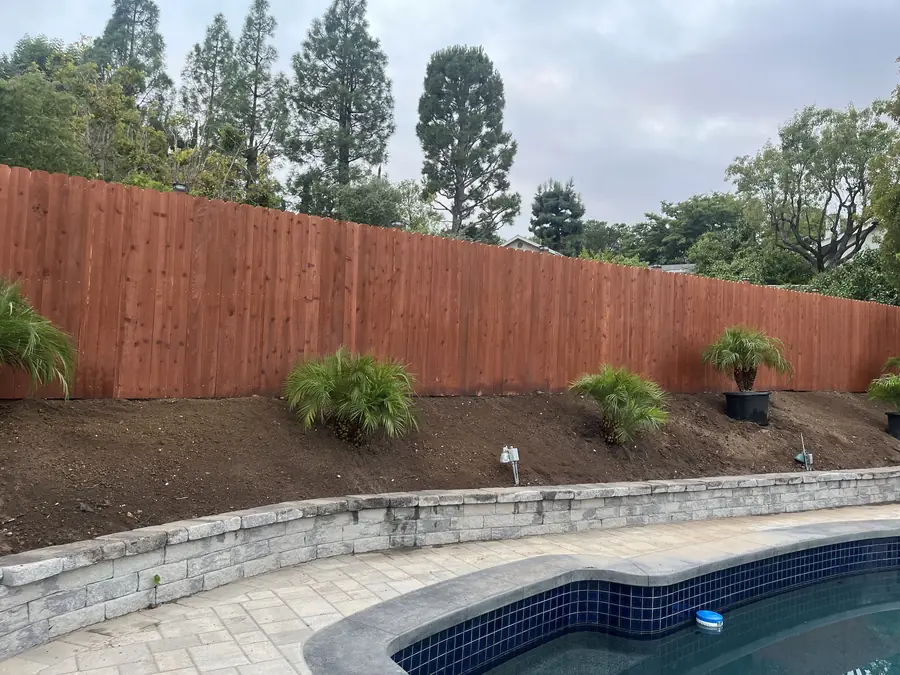
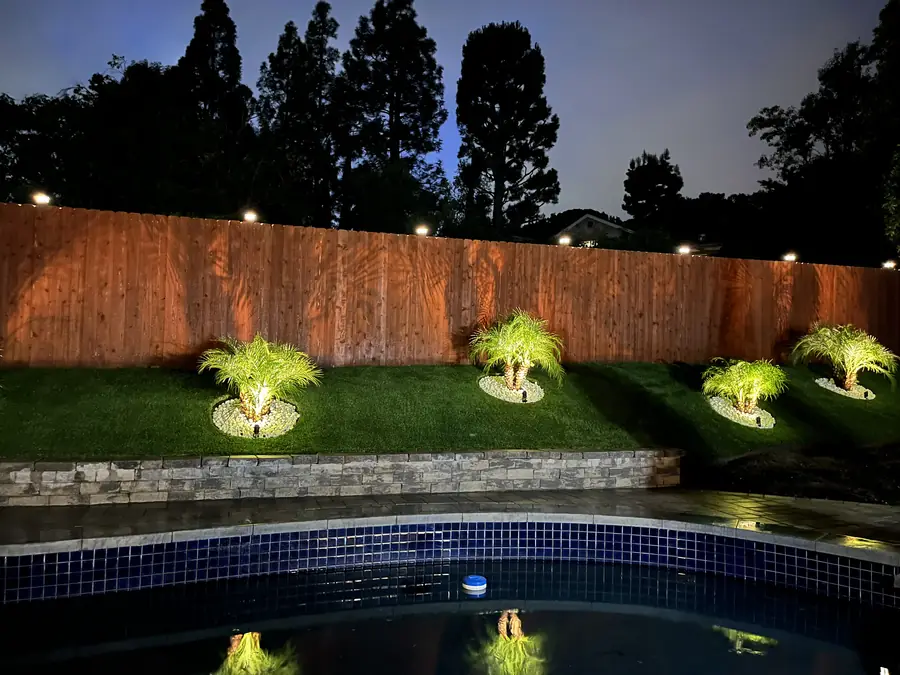
Slope is workable, and on the foothill parcels here it often solves something irrigation never could. Benching or terracing creates level areas where they are wanted, and the faces between them can be turfed as well. On a grade, fastening matters more than usual, with tighter nail spacing, extra anchoring along the top edge, and seams run across the slope rather than straight down it so gravity does not work a joint open. The base still gets compacted just as thoroughly, and water coming from above still needs somewhere to go.
This comes up often along the wildland interface, and it deserves a straight answer. Synthetic turf does not carry fire the way dry grass and dead plant material do, and it remains a petroleum product that will melt or burn under enough heat, whether from windblown embers, a barbecue, or a fire pit. Keep it well clear of fire features, and treat the ground immediately against the house as its own zone. Clearing leaves and needles off the surface matters too, because that litter is the fuel, not the turf underneath it.
On the acreage in the northern part of the city, synthetic lawn belongs near the residence rather than out in the working areas. Paddocks, turnouts, and any ground horses stand on are not turf applications, and no product is made for that load or that cleanup. Where it does pay off is the yard around the house, a green area that stays presentable without adding to the irrigation load a large property already carries, plus a clean surface that never turns to mud along the route between house and barn.
Give us a call at (818) 443-9300 and we will come measure the area, look at the drainage, check for tree roots and grade, and bring samples so you can compare density and color in your own light. You receive a free written estimate covering base work, the specific turf, the infill, and the edging, so nothing hides inside one lump number. Daniels Landscaping is licensed in California under 1138709, and the crew performing the installation works directly for us.