
FAQ
Landscape Lighting in Calabasas, answered
The questions we hear most from Calabasas homeowners.
Low-voltage LED has become the standard for good reason. A transformer steps household power down to a safe level, which makes the wiring around your yard far easier to work with and safer near planting beds and water. LED fixtures draw very little power, run cool, and hold their color well over long service. For a Calabasas property, that combination means you can light a wide area without a heavy energy load, and you can expand the system later as the landscape grows.
In many Calabasas neighborhoods, yes. Architectural committees often set rules on fixture style, brightness, mounting height, and how visible the lighting is from the street. Before we order anything, we put together a clear plan that shows fixture types and placement, which is usually what the committee wants to see. We can adjust the design to match community standards, whether that means shielded fixtures, warmer tones, or lower output near property lines. Working within the rules from the start keeps your project on schedule and avoids a costly redo.
Long driveways are common on Calabasas and Hidden Hills hillside lots, and they call for careful planning. The main concern is voltage drop, where fixtures at the far end dim because the current travels a long distance. We solve this by sizing the transformer correctly, using heavier gauge cable, and splitting the run into balanced zones so every fixture gets steady power. Low mounted, shielded fixtures guide the way without blinding drivers. The result is even, comfortable light from the street all the way up to the house.
Voltage drop is the gradual loss of power as electricity travels along a cable. On a low-voltage system, a long run to distant fixtures can leave them noticeably dimmer than the ones close to the transformer. It shows up most on the large lots common around Calabasas. We plan for it by calculating cable length, choosing the right wire gauge, positioning the transformer wisely, and using proven wiring methods like hub connections. Done right, the lighting looks consistent no matter how far a fixture sits from the source.
Courtesy is built into a good design. We aim to light your property, not your neighbor's windows or the night sky. Shielded fixtures, careful aiming, and glare guards keep the light where it belongs and hide the bright bulb from view. We favor gentle, layered brightness over harsh floods, and we set output levels that suit a quiet hillside setting. Timers and dimming let the system ease down late at night. In Calabasas, where homes sit close on the hillsides, this kind of restraint keeps the whole street looking calm.
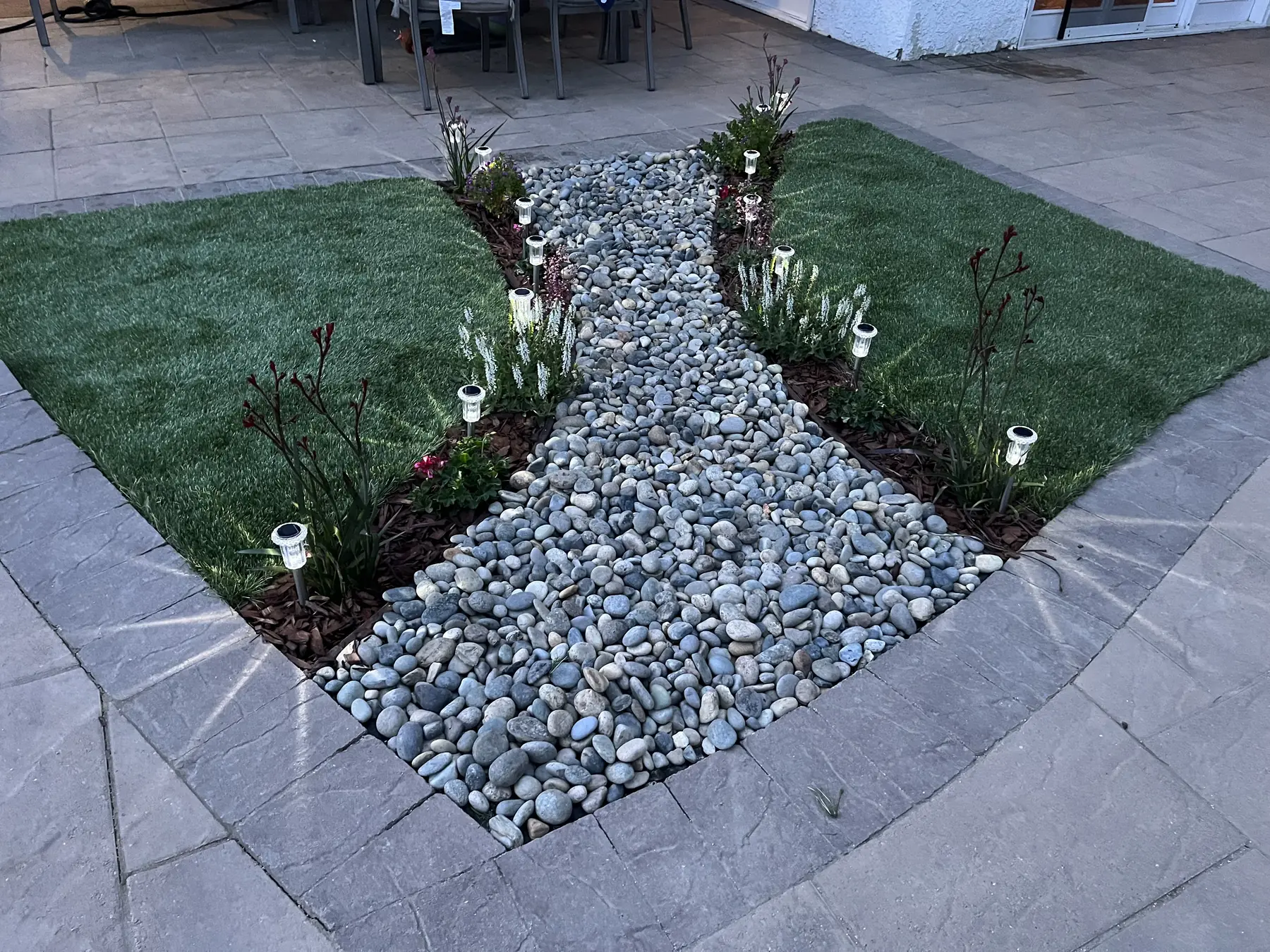
Path and walkway lights make your property safer to move through after dark, and they add a welcoming look. We use low, shielded fixtures that cast a soft pool of light onto the surface rather than glaring outward at eye level. Spacing matters, since lights placed too close look like a runway and lights too far apart leave dark gaps. We stagger them to guide the eye naturally along the route. On steps and grade changes, we add extra attention so every foot placement stays clearly visible.
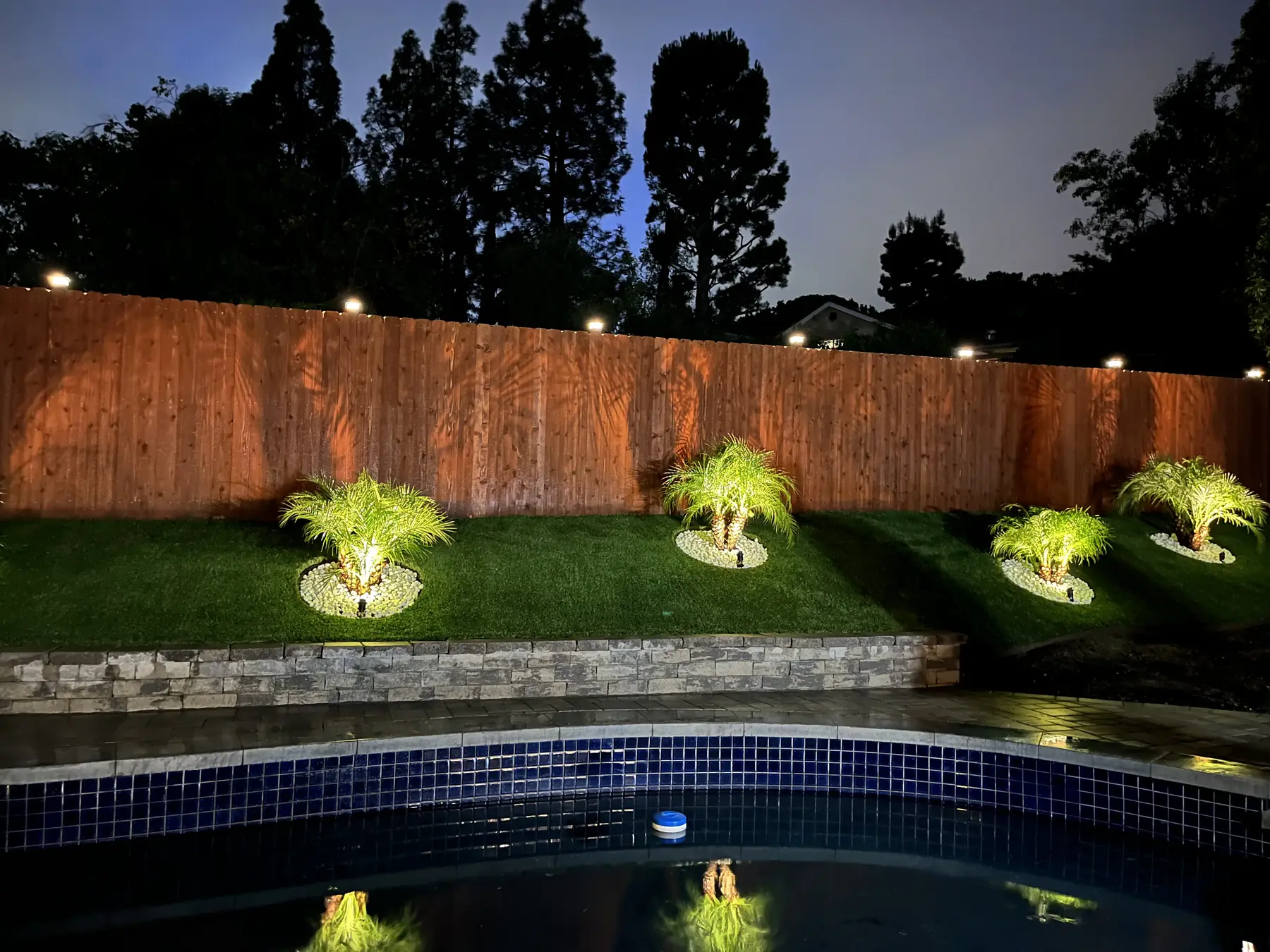
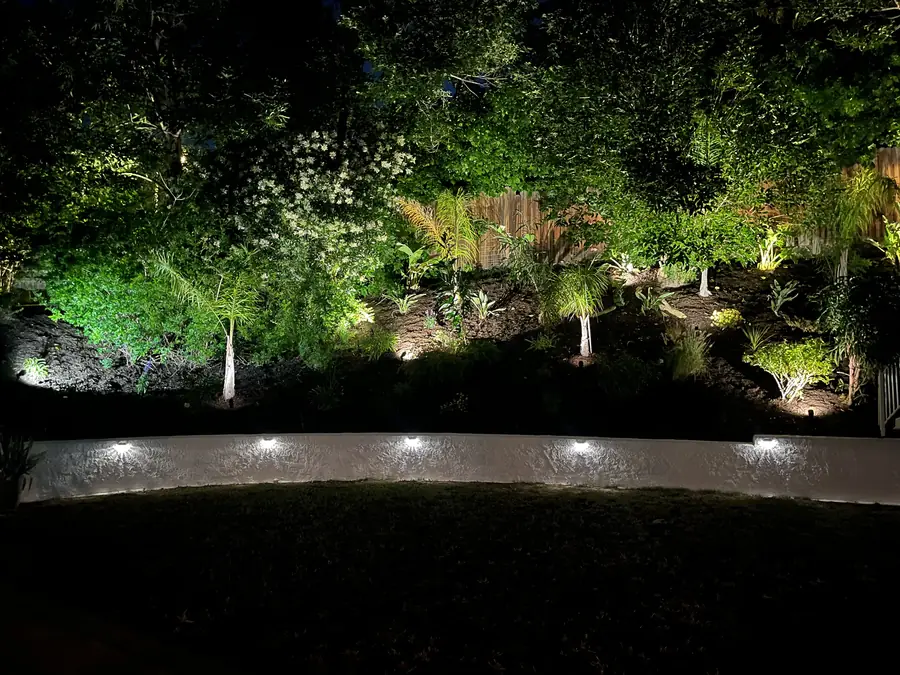
Yes, uplighting is one of the most striking effects in outdoor lighting. Fixtures set at the base of a tree or wall throw light upward to reveal texture, branch structure, and architectural lines. Mature oaks and sycamores around Calabasas take beautifully to this treatment, and the front of a home gains real depth when we graze light across stone or stucco. We choose beam angles and brightness to match each subject, then aim carefully so the source stays hidden and the effect looks natural rather than staged.
Both techniques light vertical surfaces, but they create different looks. Wall washing places fixtures a short distance out and spreads an even, soft glow across the whole surface, which suits smooth stucco or a garden wall. Grazing sets the fixture close to the base and sends light straight up the face, so shadows exaggerate every joint and ridge. Grazing flatters stone veneer, brick, and rough textures. On a Calabasas home we often mix both, washing the broad walls and grazing the feature materials to give the facade dimension.
We do, and it is one of the most practical upgrades for a hillside home. Recessed step lights, low riser fixtures, and lighting tucked under railings or bench edges make stairs and decks safe to use at night without a harsh overhead glare. On the sloped lots common in Calabasas, outdoor stairs connect different levels of the yard, so marking each tread clearly prevents missteps. We build these in during construction when possible, or retrofit them into finished stone, wood, and composite surfaces with clean, hidden wiring.
Good lighting is one of the simplest ways to make a property safer. A well-lit entry, driveway, and yard remove the dark corners where someone could hide, and they help you and your guests move around without tripping. The goal is steady, even coverage rather than a single blinding floodlight, which actually creates deep shadows next to bright spots. We often pair gentle ambient lighting with motion-activated fixtures at key points. On larger Calabasas lots, thoughtful placement covers long approaches and side yards while keeping the look calm and residential.
The transformer is the heart of the system. It steps standard household power down to the low-voltage level the fixtures need, and its capacity has to match the total load plus room to grow. Timers and photocells turn the lights on at dusk and off on a schedule, so you never think about it. Smart controls take this further, letting you adjust zones, brightness, and schedules from your phone. For a large Calabasas property, zoning matters, since you can light the entry nightly and save the garden scenes for evenings outdoors.
Store kits look tempting, but they tend to disappoint on a property of any size. The included transformers are usually underpowered, the cable is thin, and the plastic fixtures fade and crack within a season or two. On the long runs common in Calabasas, a boxed kit cannot deliver steady power to the far fixtures. A professional install uses correctly sized transformers, buried heavier cable, solid brass or copper fixtures, and a design that accounts for voltage drop. You pay more at the start, and you avoid replacing the whole system soon after.
Landscape lighting is fairly low-maintenance, but it is not zero. Over time, lenses collect dust and hard-water spots, plantings grow and block beams, and soil movement can shift a fixture out of aim. A yearly visit to clean lenses, re-aim fixtures, trim around them, and check connections keeps everything looking its best. LED sources last a long time, so bulb changes are rare compared with older halogen systems. On Calabasas hillsides, we also check that seasonal growth and irrigation have not buried or soaked any part of the run.
Color temperature sets the mood of the whole system. Warm light has a soft, golden quality that flatters stone, wood, plants, and warm-toned stucco, and it feels relaxed and residential. Cooler light looks bluish and can read as harsh or commercial in a garden, though a slightly cooler tone can suit blue-green foliage or modern architecture. For most Calabasas homes we lean warm, since it blends with the natural hillside surroundings and the darker night setting. Keeping every fixture at one consistent temperature is what makes a yard look intentional rather than patched together.
Tasteful outdoor lighting suits this setting well. Calabasas sits in a fire-aware hillside area where residents value a darker, quieter night, so the right approach is modest and shielded rather than bright and showy. Low-voltage systems run at a safe electrical level, and we route cable cleanly and keep fixtures clear of dry brush. We favor gentle uplights, path lights, and shielded fixtures that give you safe passage and a warm look without washing the hillside in glare. The effect respects the surroundings and still makes your property feel welcoming after dark.
Material choice decides how long a system lasts outdoors. Solid brass and copper fixtures stand up to sun, heat, and sprinkler spray far better than the painted aluminum or plastic found in budget kits, and they develop a natural patina instead of peeling. Sealed lenses and quality gaskets keep moisture and insects out of the housing. Marine-grade wire connections resist corrosion where cable meets fixture. From Calabasas out to Woodland Hills, the long dry summers and strong sun are hard on cheap parts, so we specify materials built to serve for many years.
We can. Many homeowners come to us with a system that has gone dim, developed dead zones, or simply outgrown the original design. We start by testing the transformer, checking connections, and finding where voltage drop or a failed run has caused the trouble. From there we can repair faults, replace failing fixtures, add zones for new plantings or hardscape, and upgrade older halogen units to efficient LED. If the transformer is undersized for what you want, we recommend the right capacity so the whole system runs reliably from front to back.
Getting started is simple. Call Daniels Landscaping at (818) 443-9300, and we will set up a visit to walk your property, listen to what you have in mind, and note the features worth lighting. We look at driveway length, grade, and power locations, and we flag anything your HOA will want to review. From there you receive a free written estimate that lays out the design, fixtures, and scope in plain terms. We are licensed in California under number 1138709, and one licensed contractor handles the work from start to finish.