
FAQ
Irrigation in Calabasas, answered
The questions we hear most from Calabasas homeowners.
Every job starts with a walk of the property. We check static pressure, flow rate, existing valve locations, sun exposure, slope, and how the planting is grouped. From there we lay out zones, choose heads or drip for each area, size the valves and mainline, and set the controller location. Installation covers trenching, piping, valve manifolds, heads or emitters, wiring, and a controller with rain sensing. We test every zone, adjust each head for coverage, and walk you through the schedule before we leave. Repairs and retrofits follow the same order, just at a smaller scale.
Much of Calabasas sits in a Very High Fire Hazard Severity Zone, so irrigation is not only a landscape question. The planted zone closest to the house is the area you most want green and hydrated, and that only happens with reliable, even coverage that actually reaches the plants rather than the wall or the walkway. Through the brush clearance area, we look at whether coverage is realistic and how the system will be maintained over time. Dry, patchy irrigation in that band is worse than no irrigation at all, because it grows fuel and then stops watering it.
Quite possibly. Many Calabasas neighborhoods run landscape plans past an architectural committee, and the requirements vary from one association to the next. Underground pipe replacement in an existing bed rarely raises an eyebrow. Changing the front yard planting, converting lawn to drought tolerant beds, or adding visible equipment is a different conversation. Tell us at the estimate whether you have an HOA, and we will keep the plan and the equipment choices in a form you can submit. It is far easier to get approval before the trenches are open than to explain the work afterward.
Calabasas is its own incorporated city. Landscape and water requirements follow the Calabasas municipal code, not City of Los Angeles ordinances, even though neighbors a few miles east in Woodland Hills fall under the LA rules. That matters when people read advice online and assume it applies. Add the HOA layer that many Calabasas neighborhoods carry, and you can have two sets of expectations on the same yard. We plan around the local code and the association guidelines together, and we will tell you plainly when something you have read somewhere else does not apply to your address.
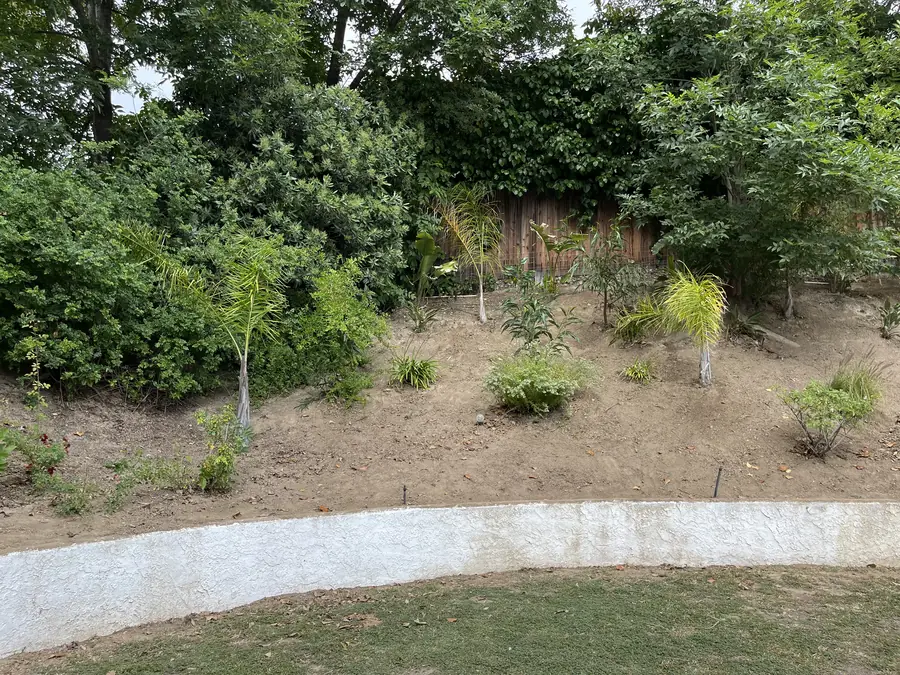
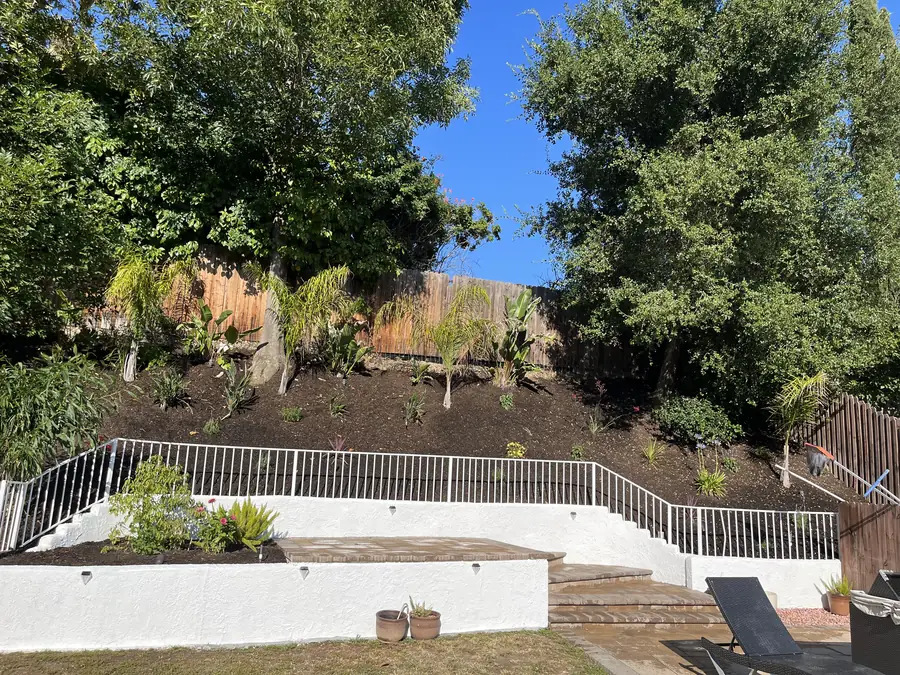
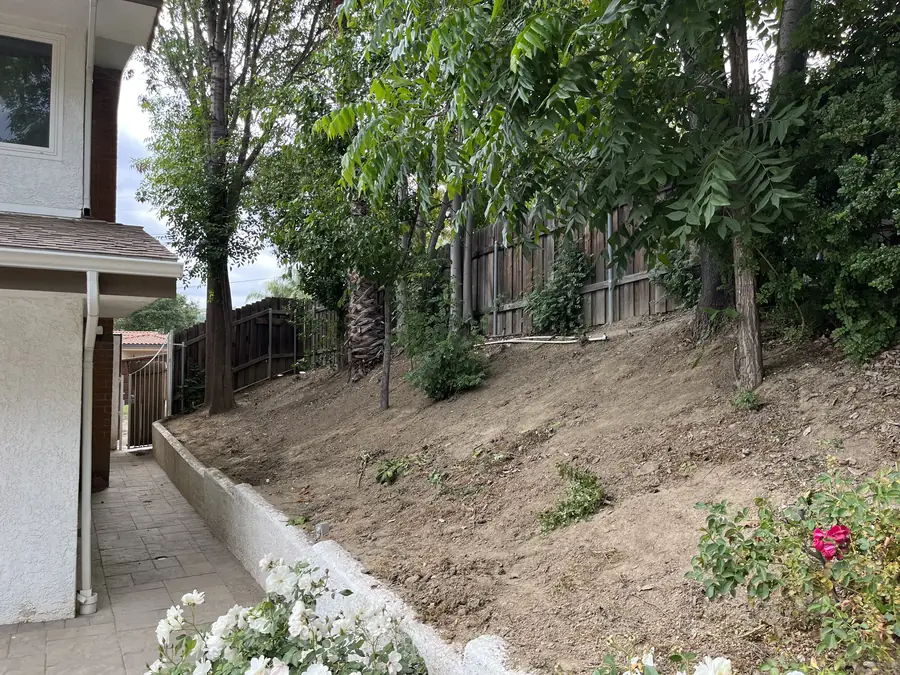
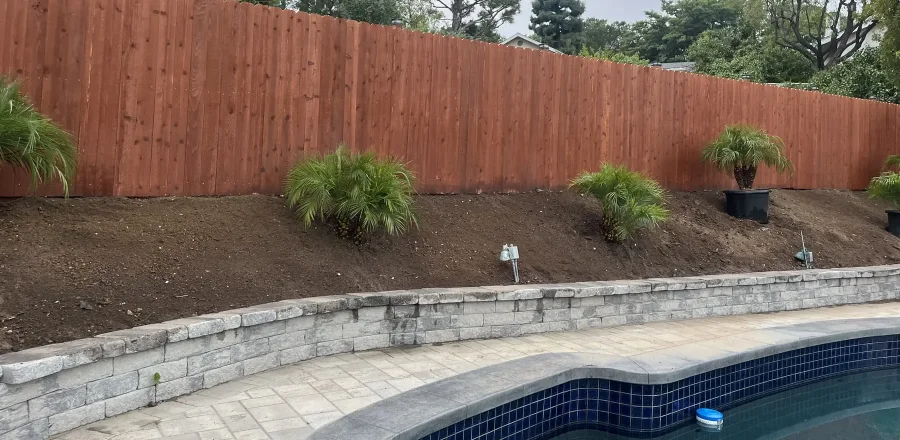
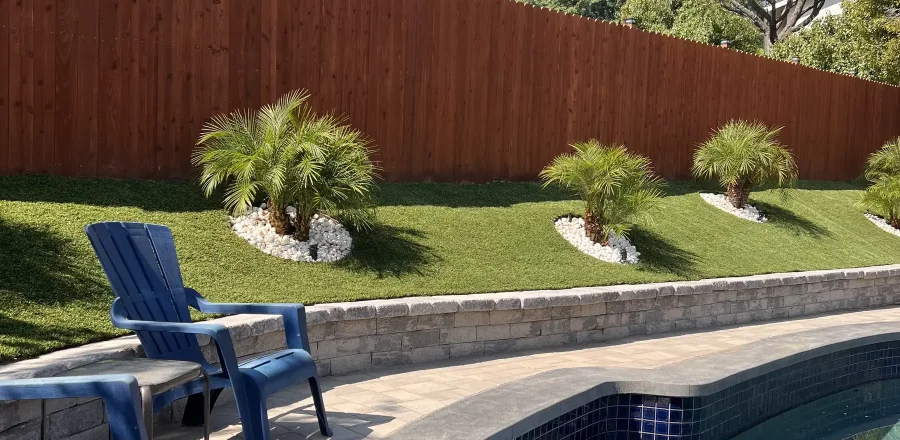
Slopes shed water faster than soil absorbs it, so the fix is applying water slower rather than shorter. Low precipitation rate nozzles, MP rotator style heads, and inline drip put water down at a rate the ground can take. Cycle and soak splits a run time into several short cycles with soak periods between them. We also keep the heads on a slope on their own zone, since a hillside and a flat lawn will never want the same schedule. Where grading allows, check valves in the low heads stop the whole lateral from draining downhill after every cycle.
On a view lot or a hillside property, the high point and the low point of the same zone are not seeing the same pressure. Roughly speaking, every bit of elevation you gain costs pressure at the top and adds it at the bottom. The result is misting at the low heads, which wastes water to drift, and weak throw at the high heads, which leaves dry spots. Pressure regulating heads and pressure regulating drip fittings level that out so each head operates in the range it was designed for. Splitting zones by elevation band helps as well.
For shrub beds, planters, hedges, slopes with groundcover, and most drought tolerant planting, drip is the better tool. It puts water at the root zone, loses almost nothing to wind or evaporation, and keeps foliage and hardscape dry. Lawn is the exception, since turf wants uniform coverage across the whole surface. Drip does need a filter and a pressure regulator at the valve, and it needs somebody to look at the emitters occasionally. Converting an old spray zone to drip is common work for us and usually pays for itself in reduced runoff alone.
A smart controller connects to WiFi and adjusts run times using local weather data, plus what you tell it about soil type, plant type, slope, and sun exposure. Instead of running the same twelve minutes in October that it ran in August, it scales back on its own and skips cycles after rain. You get alerts on your phone when a zone draws odd current, which is often the first sign of a broken wire or a stuck valve. In a climate with a long dry season and a short wet one, the savings are real. We install and program them regularly.
A zone is one valve and everything it feeds. Hydrozoning means grouping plants with similar water needs onto the same valve so nobody gets drowned to keep a neighbor alive. Native and drought tolerant planting on one zone, thirstier ornamentals on another, lawn on its own, slopes separated from flat ground, sun separated from shade. Larger Calabasas properties usually need more zones than owners expect, both because of the planting variety and because long runs limit how many heads one valve can supply at proper pressure. More zones cost a little more up front and save water forever.
Instead of one long run, the controller waters in several shorter bursts with rest periods in between. Water goes down, the soil absorbs it, and the next cycle starts before the ground dries out. Total minutes stay the same but almost nothing runs off the surface. This matters on the clay heavy soils and slopes common around here, where a straight fifteen minute run sends a good portion of it down the driveway. Most modern controllers do this automatically once configured. On older controllers we build it with multiple start times, which works just as well.
Yes, and it is a large share of what we do. Sheared heads from mowers or vehicles, cracked risers, clogged nozzles, valves that will not close, solenoids that have failed, chewed wire, split laterals, and mainline breaks all get repaired. We match replacement heads and nozzles to what is already on the zone so precipitation stays even, rather than dropping in whatever the parts counter had that day. If a system has been patched with mismatched parts for years, we will tell you honestly whether repair or a zone rebuild is the smarter spend.
The clues usually show up before the water does. A soggy patch that never dries, a meter that creeps when everything is off, pressure that has quietly dropped, a sinking spot in the lawn, or a water bill that jumped without a change in habits. We isolate it by shutting valves one at a time and watching the meter, then narrowing to the affected zone and probing along the line. Mainline leaks run constantly and waste the most, so they get attention first. Once located, we open only what is needed and restore the surface when we backfill.
Backflow prevention keeps irrigation water, along with whatever is in the soil and any fertilizer moving through the system, from being pulled back into the drinking water supply if pressure drops. Some form of protection is required on irrigation systems, and the type depends on the system layout and the local water purveyor. Options range from atmospheric vacuum breakers to pressure vacuum breakers to reduced pressure assemblies. We assess what your property has, whether it is installed at the right height and location, and what it needs to be correct.
The two go together better than people assume. Drought tolerant and fire wise plants still need water to establish, generally for the first year or two, and they still need occasional deep watering afterward to stay healthy and hold moisture in their tissue. A plant that is stressed and half dead is not doing you any favors in a fire zone. Drip on a separate valve gives you that flexibility: frequent watering while roots establish, then long and infrequent cycles once they are settled, without touching the schedule for the rest of the yard.
In most cases, yes, and often substantially. Fixing broken heads, correcting overspray onto driveways, converting spray beds to drip, regulating pressure so nothing is misting, and letting a smart controller handle seasonal adjustment all take real water off the bill. It also keeps you comfortably inside watering day restrictions rather than scraping against them. Local water agencies sometimes offer rebates for efficiency upgrades, though programs change and eligibility depends on the agency and your account, so we point you to them rather than making promises about amounts.
Always. We program the controller, set seasonal baselines, configure cycle and soak where the soil calls for it, connect the rain sensor, and label every zone in plain language so the screen says front slope drip rather than zone six. Then we walk the yard with you, run each zone, and show you what good coverage looks like so you can spot trouble later. If it is a WiFi controller, we get it on your network and on your phone before we leave. Call us afterward with questions. We would rather answer than have it run wrong.
We use one licensed contractor. One licensed contractor stays accountable for the work. The people who walk your property at the estimate are from the same company as the people who dig the trenches, set the valves, pull the wire, and adjust the heads. That is why the details hold together: nobody is guessing at somebody else's plan, and nobody disappears when a question comes up. It also means one point of accountability. If something is not right, you call us and we come back.
Call (818) 443-9300 and we will set a time to come out to your Calabasas property. We walk the yard with you, check pressure and existing equipment, talk through the slopes, the planting, the brush clearance area, and anything your HOA expects, then put together a free written estimate covering scope, materials, and cost. No pressure and no vague numbers. We are licensed in California, number 1138709. If the estimate makes sense to you, we schedule the work and one licensed contractor handles it start to finish.