
FAQ
Artificial Turf in Burbank, answered
The questions we hear most from Burbank homeowners.
Face weight is the first number to look at. It measures ounces of yarn per square yard, so a higher face weight means more fiber packed into the same area, which resists matting and keeps the lawn looking full under traffic. Backing quality comes second, since backing holds the tufts in place and determines whether the product stays flat in the sun. Yarn material and any built in memory that helps blades stand back up matter as well. Price differences between products usually trace to those three things, and the cheapest goods give themselves away within a couple of years.
Pile height is the length of the blade, and longer is not automatically better. Taller piles photograph beautifully and lie down faster under regular foot traffic, so heavily used areas do better with a shorter, denser product. Shorter piles also brush up more easily and hold infill more predictably. For a lawn that gets walked on, played on, or used by dogs, a mid range height with high density tends to look right the longest. Longer piles suit low traffic areas where appearance is the whole point. We bring samples so you can walk on them before choosing.
Current products do not, provided the material and the installation are both right. Blade shape drives realism, because flat ribbon blades shine and read as plastic while shaped blades scatter light more like living grass and stand up better. Color blends with a brown thatch layer underneath break up the flat uniform green that gives cheap turf away. Burbank neighborhoods are established and well kept, and a front yard is genuinely on display, so we steer people toward blends that sit naturally beside living plants. Visible seams and flat, uninfilled fiber are what neighbors actually notice.
Infill is the granular material brushed down between the blades once the turf is laid, and leaving it out is a false economy. It weighs the lawn down so it stays flat, keeps blades upright so the surface does not mat, shields the backing from sun, and gives a softer feel underfoot. Silica sand is the common choice, and coated or antimicrobial products get used where pets are a factor. Quantity matters as much as type, since an underfilled lawn lies over and looks tired quickly. Infill also gets topped up over the years as normal upkeep.
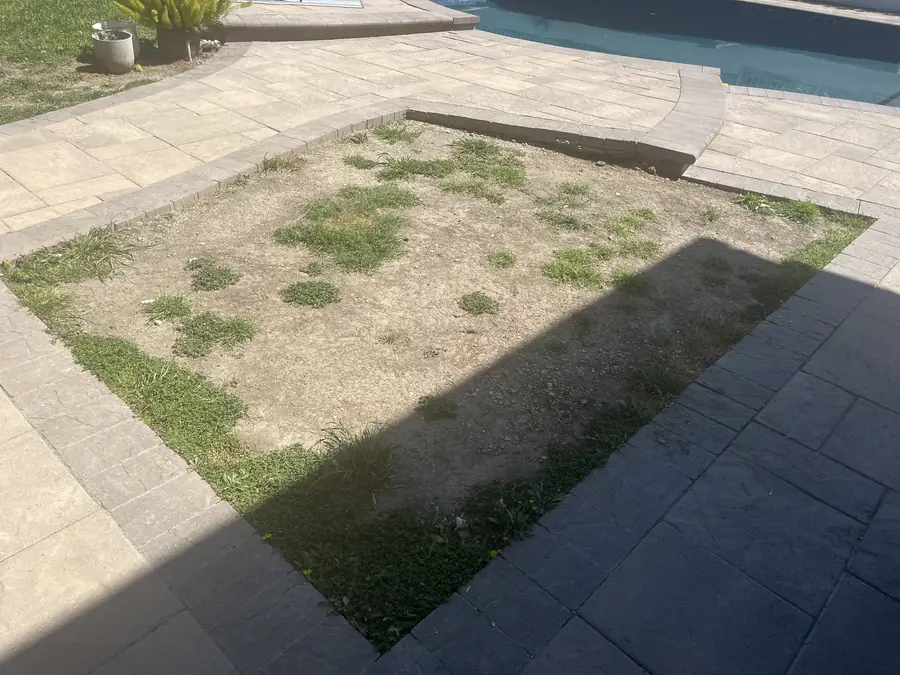
The base does the structural work. We remove existing sod and soil to a set depth, install crushed aggregate, compact it in layers to a firm uniform surface, then fine grade the top until it is smooth. Any dip or soft area telegraphs straight through and shows as a wave once sunlight hits it at an angle. The base also carries drainage, so it is shaped with fall rather than left dead level, and a weed barrier goes in where conditions call for one. Turf laid over unprepared ground is the most common failure we get called to correct.
Straight down, in a correct installation. Quality turf uses a perforated backing so water passes through the surface into the aggregate below and then away. That only works when the base is permeable and pitched. On the flat lots that make up much of the south and central parts of the city there is little natural fall to rely on, so drainage gets designed in deliberately, sometimes with a drain line under the base tied to an outlet. Turf laid dead flat over compacted clay will hold water and smell, and that is an installation fault rather than a product fault.
Carefully, because a seam is the first thing an eye picks out on a synthetic lawn. Rolls come in fixed widths, so any area wider than a roll has to be joined. Blade direction must run the same way on every piece, otherwise the two sides read as different shades in daylight. Edges are trimmed precisely between stitch rows, joined with seaming material, and fastened, then infill and brushing blend the join into the field. Nails are set at correct spacing along seams and the perimeter so nothing lifts or creeps. Done properly, you will not find the seam afterward.
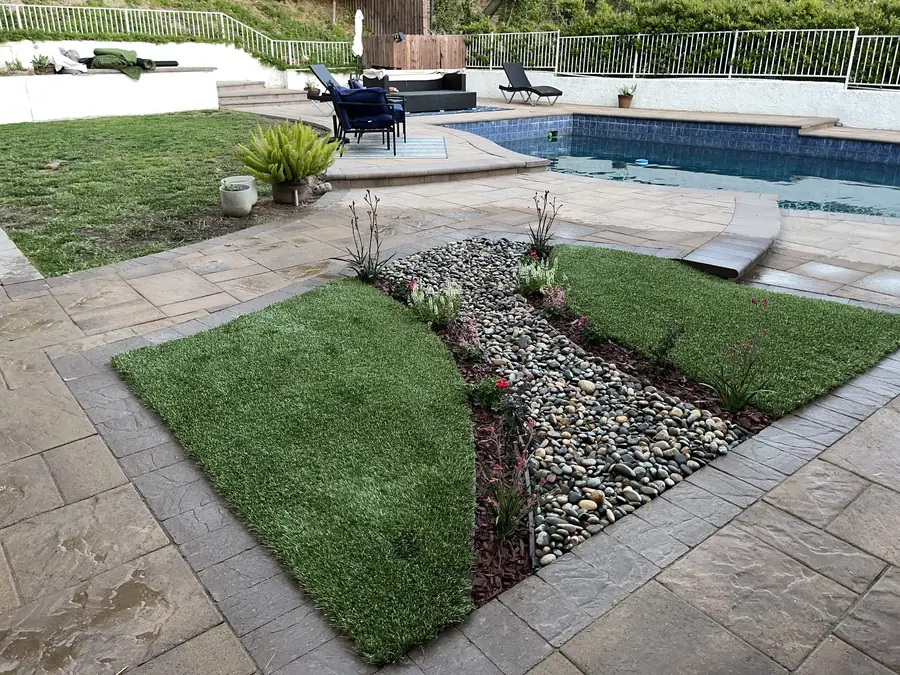
Every edge needs something holding it, or the turf eventually curls or pulls back. Against a paver edge, wall, or concrete surface, the material is trimmed tight and fastened along the boundary. Where the lawn meets planting beds or open soil, we install bender board, composite, or similar edging to give a clean line and a fixing point. Nails go through the backing into the compacted base at close spacing around the entire perimeter. Edge detail is where amateur installations show their age first, and doing it right adds very little to the work.
It is one of the better reasons to install it. Dogs cannot dig it up the way they wreck a lawn, no mud gets tracked into the house, and the worn dirt paths along fence lines stop happening. Solid waste is picked up as usual. Urine drains through the perforated backing into the base, and a well built base plus periodic rinsing keeps odor down, with pet specific infill available where a dog uses one small area heavily. An enzyme cleaner handles anything lingering. The requirement is simply that the base drains, which again comes back to how it was built.
Far less than grass, though not zero. Leaves and debris get blown or raked off, the surface gets rinsed occasionally to keep dust down, and high traffic lanes benefit from brushing against the blade direction to stand fibers back up. Infill is topped up every few years as it settles and migrates. Weeds cannot grow up through a properly built installation, but seeds land on top and can root in the infill, so an occasional one gets pulled or spot treated. There is no mowing, no fertilizer, no reseeding, and no irrigation to run.
In full afternoon sun it runs warmer than natural grass, and that is worth planning around rather than glossing over. Shade from a tree, structure, or umbrella makes a large difference, and a quick rinse before the yard is used on a hot day helps immediately. Lighter colored infill and certain heat reducing products help somewhat as well. In shaded yards and side yards the question barely arises. If a large area sits in full sun and will be used barefoot by children through summer, we will say so up front and talk through layout, shade, or a mixed design.
Quality turf on a proper base lasts many years, and it fails gradually rather than suddenly, with fibers matting in traffic lanes and color softening in the most exposed areas. Manufacturers warrant their products for a stated period, and we show you exactly what applies to whatever you select. Longevity depends heavily on face weight, on infill being maintained, and most of all on the base, because a lawn over a poor base develops waves and low spots long before the fiber itself wears out. Sun exposure and how hard the area gets used set the pace.
A conventional lawn is normally the thirstiest thing on a residential property, and removing it eliminates that demand outright rather than trimming it. In Burbank the water side of this is worth checking locally, because the city operates its own utility, Burbank Water and Power, and conservation programs along with any turf replacement incentives are administered by the city rather than by the utilities serving neighboring areas. Program details change, so contact Burbank Water and Power directly about what is current at your address. We can provide project details for any application you decide to submit.
Burbank is a separate incorporated city, so anything needing review or approval goes through City of Burbank departments rather than Los Angeles ones, and requirements can differ from what applies a short drive away. A straightforward residential turf replacement at existing grade is usually not a permit matter, while meaningful grading, drainage work, or retaining tied to the project can be. Front yard landscape standards are also set locally. We verify what applies to your property and your scope before starting, because assumptions carried over from another city make a poor basis for planning.
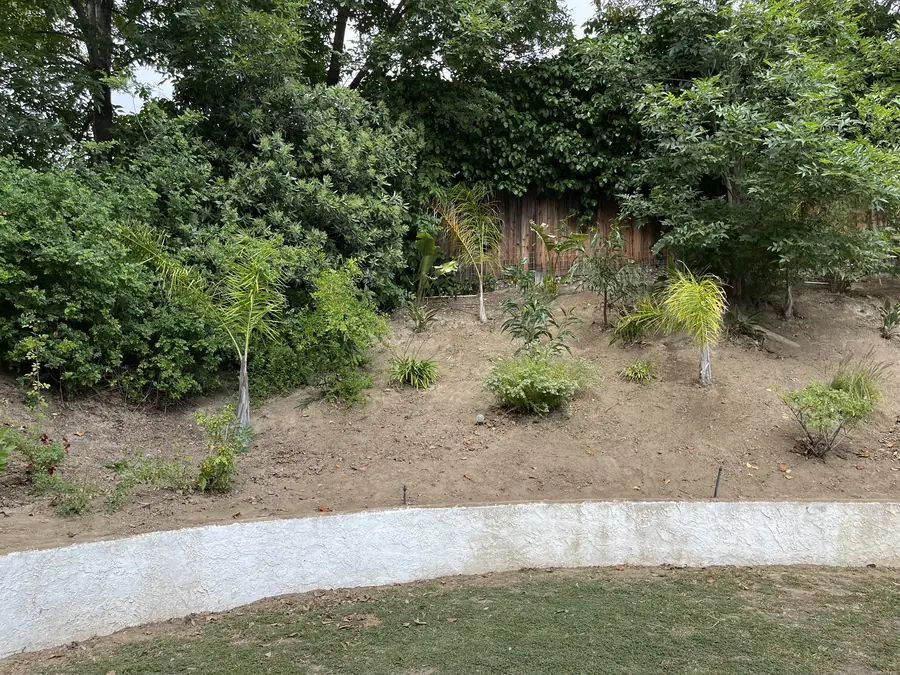
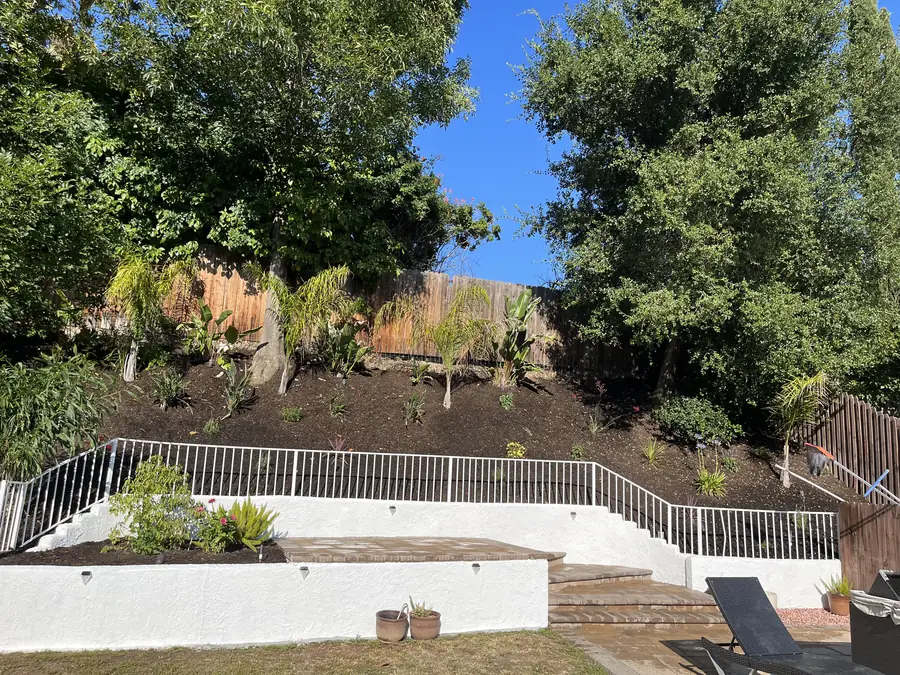
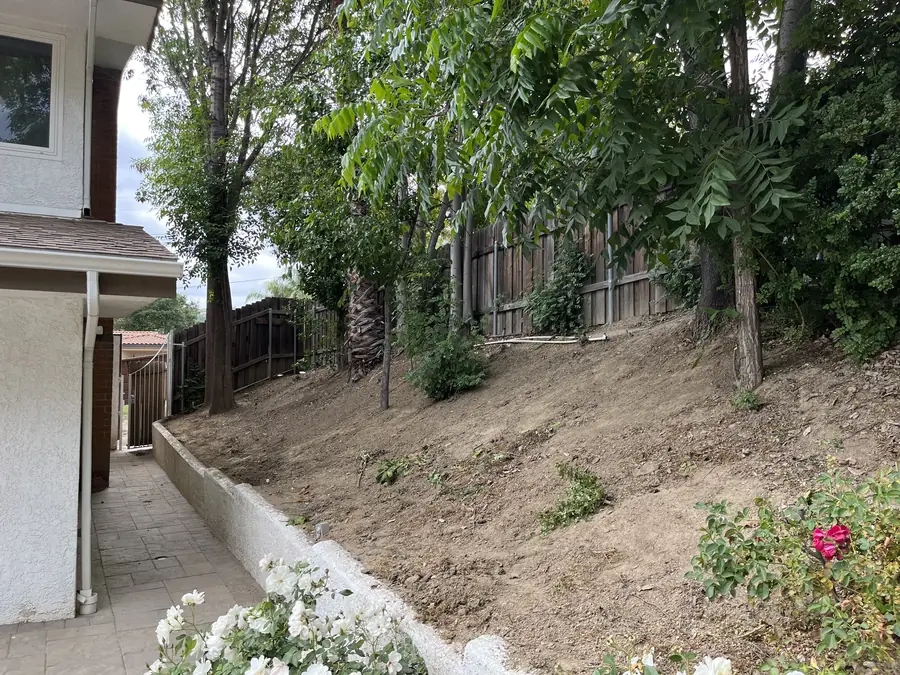
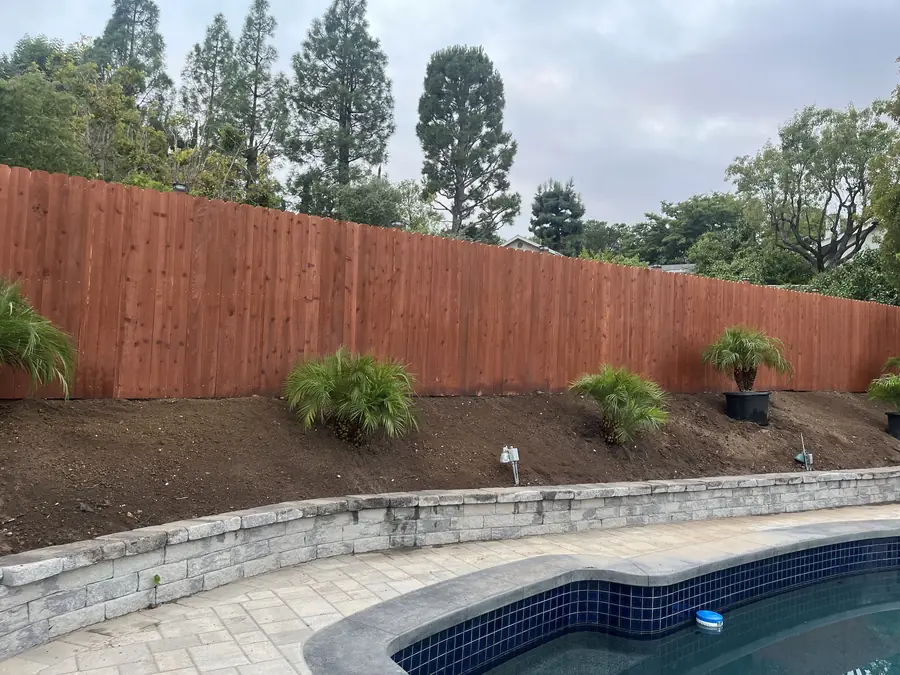
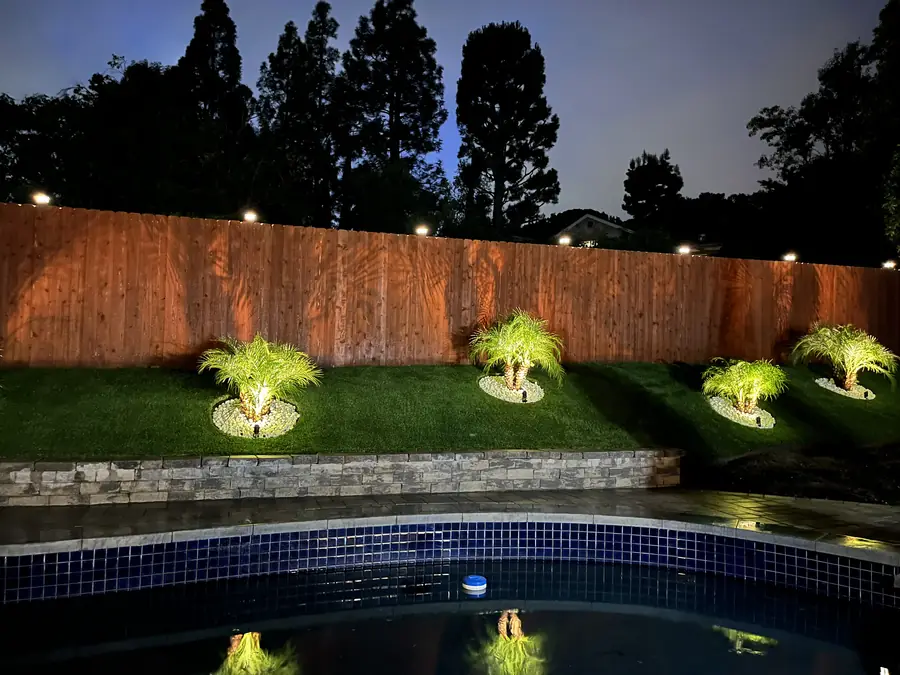
Yes, and slopes come up often on properties toward the north of the city where the ground rises into the Verdugo foothills. Sloped installations need extra attention at the top edge, where the material is anchored so gravity cannot creep it downhill, plus additional fastening across the field. The base has to be compacted well enough that rain does not cut channels beneath the surface. Infill placement takes more passes, since it tends to migrate downslope over time. On a steep bank, turf is frequently the better answer simply because nobody has to stand on the slope to mow.
Shade is one of the strongest reasons to consider it, since real grass thins and gives up under the dense canopy of the mature trees common in older neighborhoods here, while synthetic lawn stays even and green with no sun at all. Roots are the complication, not the shade. We keep excavation shallow within the root zone and adapt the base instead of cutting through significant roots, which protects the tree. Expect more leaf litter to clear off, and expect roots to lift the surface slightly across many years, which can be addressed when it happens.
One licensed contractor, on every job. Daniels Landscaping stays accountable for the work, so the same team that removes the old lawn builds the base, sets the drainage, cuts and seams the turf, and brushes in the infill. Turf is a trade where shortcuts hide underneath the finished surface, and keeping the work under one contractor is how we make certain the base depth and compaction are what we said they would be. You deal with one company through the whole project, and one company stands behind the result afterward.
Reach us at (818) 443-9300 and we will schedule a visit to measure the area, check drainage and grade, watch how sun and shade move across the yard, and bring samples so you can compare face weight and pile height on your own property rather than on a screen. You get a free written estimate covering removal, base, material and installation detail, at no cost and with no pressure. Daniels Landscaping works under California license 1138709. If you are gathering bids, ask every one of them what base depth they intend to build.