
FAQ
Artificial Turf in Sunland-Tujunga, answered
The questions we hear most from Sunland-Tujunga homeowners.
It makes sense for the part of the yard that people actually stand on, which on these big properties is usually a fairly small share of the total. Watering a broad lawn in this ground is a losing proposition, since decomposed granite drains so fast that most of the water is gone before roots use it. A modest turf panel near the house gives you a soft, green, level surface that stays usable through summer, while the rest of the property goes to native and drought tolerant planting that belongs in the foothills.
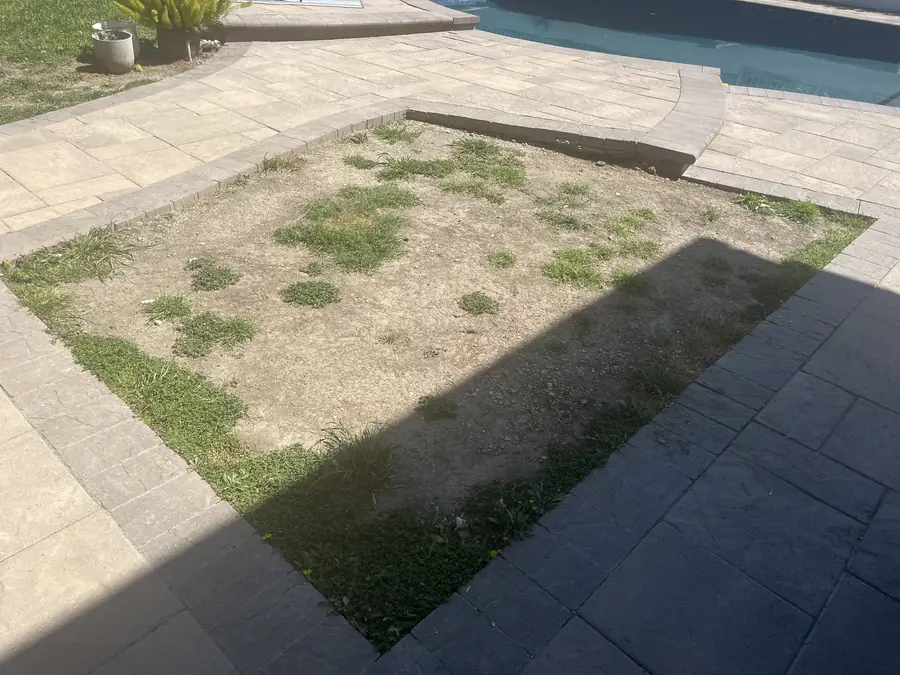
We excavate the existing surface out, then place graded aggregate base in lifts and compact each one, finishing with a smooth screeded layer that the turf lies on. The native decomposed granite underneath is a real asset as subgrade because it is firm and drains freely, which is more than many valley sites offer. The rock content is the tradeoff, since excavation is slow and occasionally an area has to be worked around. Compaction is the whole game here. Every soft spot left in the base becomes a visible dip in the lawn later.
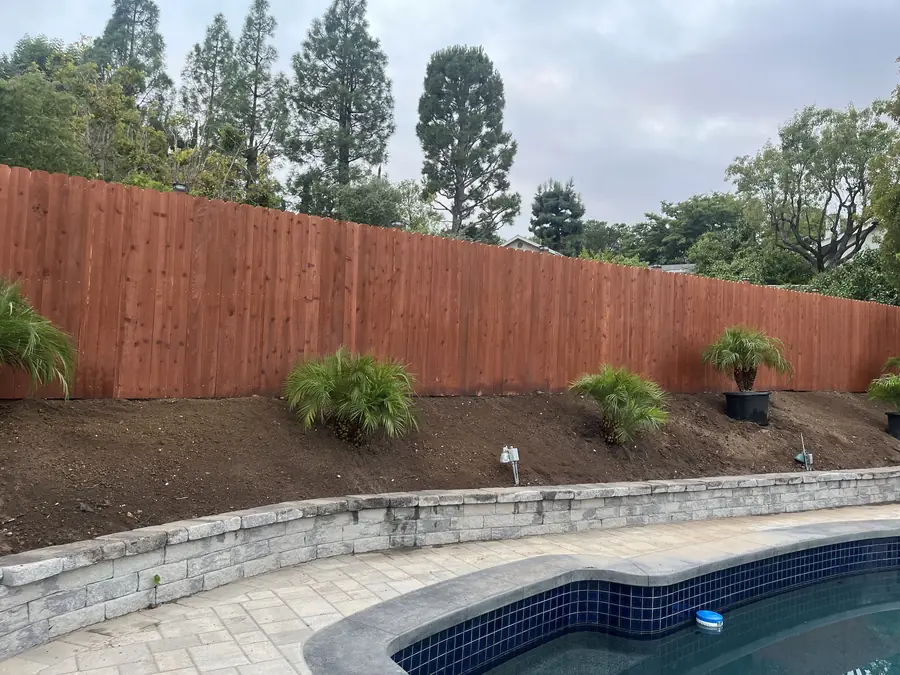
Almost always by building a level terrace for it first. A synthetic lawn on a steep face is uncomfortable to use and difficult to hold, so we cut and retain a pad, deal with the water arriving from uphill, then build the turf area on that. Gentle grades are workable and the turf is fastened more heavily along the fall line so nothing creeps downhill over the years. Water coming off the slope above is intercepted before it reaches the lawn, because runoff traveling under turf will scour the base out from beneath it.
Placement matters more than the product. Synthetic turf is a plastic surface and it is not something we would recommend running right up against the walls of a house in an area with wildfire exposure this high. In the band immediately around the structure we prefer gravel, stone, or paving. Set a reasonable distance out, with a noncombustible border between it and the building, a turf panel works fine and stays green when everything around it is dry. Keeping leaf litter and needles blown off it is part of the same thinking.
Water passes through perforated holes in the backing, moves down through the infill, and enters the open graded base below, which is where the drainage capacity really lives. This site type helps considerably, since the decomposed granite beneath accepts water quickly rather than holding it. The surface still gets a slight fall so nothing sits, and on a terraced lot the base is tied into whatever carries water off that level. Turf laid over compacted clay would need a drain system underneath it. Up here the ground does much of that work already.
Face weight is the amount of yarn per square yard and it is the single best indicator of how a turf will wear. A heavier face weight resists matting and holds its look under traffic, which is worth paying for on any area that gets real use. Pile height is about appearance more than durability, and a moderate height reads most like a lawn. Very tall pile lies over and looks flattened. For a family panel on a large foothill property we generally point people toward a heavier weight at a middle pile height.
Infill is the granular material broomed down into the pile, and it holds the blades upright, weights the turf down, and protects the backing from sunlight. Rounded silica sand is the common choice and it performs well. Where dogs are in the picture we use a coated or antimicrobial infill that resists holding odor. The quantity matters as much as the type, because underfilled turf lies flat and looks tired within a season. Infill is topped up during the life of the lawn, particularly in the paths where people walk the same line every day.
In full afternoon sun it does get warmer than living grass, which is a genuine consideration in these foothills where summer afternoons are hot and there is little marine influence this far inland. Shade changes it completely, so placing a panel where an existing native tree or a patio cover throws afternoon shadow makes a large difference. A quick pass with a hose cools the surface immediately when needed. Some products carry cooling technology in the yarn, which helps at the margin but does not turn a sunbaked lawn into a cool one.
Turf arrives in rolls of fixed width, so any area wider than a roll has seams, and how they are made determines whether you notice them. All pieces are laid running the same direction, since blades carry a grain and a reversed panel reads as a different color from across the yard. Edges are trimmed accurately, joined on seaming tape with adhesive, and pulled tight before fastening. Once infill is broomed in and the pile is lifted, a well made seam disappears. A rushed one shows as a line forever.
The perimeter is anchored to something solid, either bender board, a timber or composite edge, or the side of an adjacent patio or path, and the field is secured with nails driven through the backing into the compacted base at a regular spacing. That is where the rock in this ground announces itself, since a nail meeting stone has to be relocated, and edges take extra attention as a result. Getting the perimeter right matters most, because a loose edge is what lifts first and it is the failure people see from the house.
Yes, and on properties like these it is often exactly why people install it. Dogs cannot dig it up or wear it into the bare dirt patches that a real lawn develops. Urine drains through the perforated backing into the base rather than pooling, and an antimicrobial infill keeps odor down. Solids are picked up as normal and the area is rinsed periodically. A heavier face weight is worth choosing where dogs run the same route daily, since that is where matting shows up first on any synthetic lawn.
Far less than a real lawn, but not nothing. Leaves, needles, and debris blowing off the surrounding native trees need clearing regularly, and in this area that matters twice over because litter left sitting on turf is fuel you do not want near the house. Brushing against the grain lifts the pile back up in the routes people walk. Infill is topped up occasionally. A rinse handles dust, which accumulates faster up here than most people expect given how dry and open the surroundings are.
Good quality turf installed on a properly compacted base lasts many years, and the base usually outlives the turf itself. What ends a lawn early is almost never the yarn. It is a base that was never compacted correctly, an edge that was not anchored, or infill that was never topped up and let the pile lie flat. Ultraviolet exposure is intense at this elevation and orientation, so the stabilizer package in the yarn matters. When the turf is eventually replaced, a sound base can normally be reused.
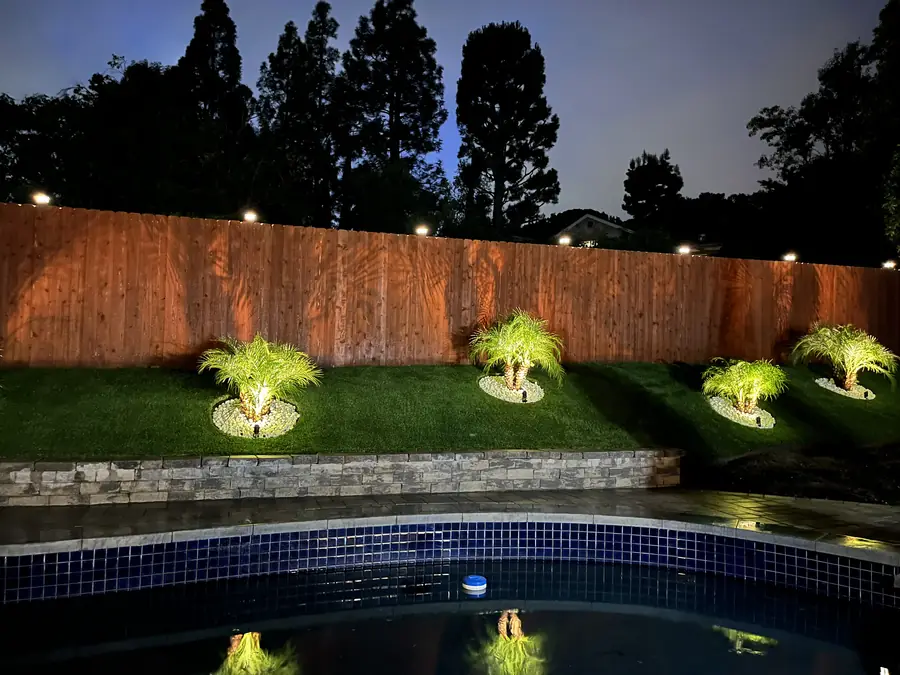
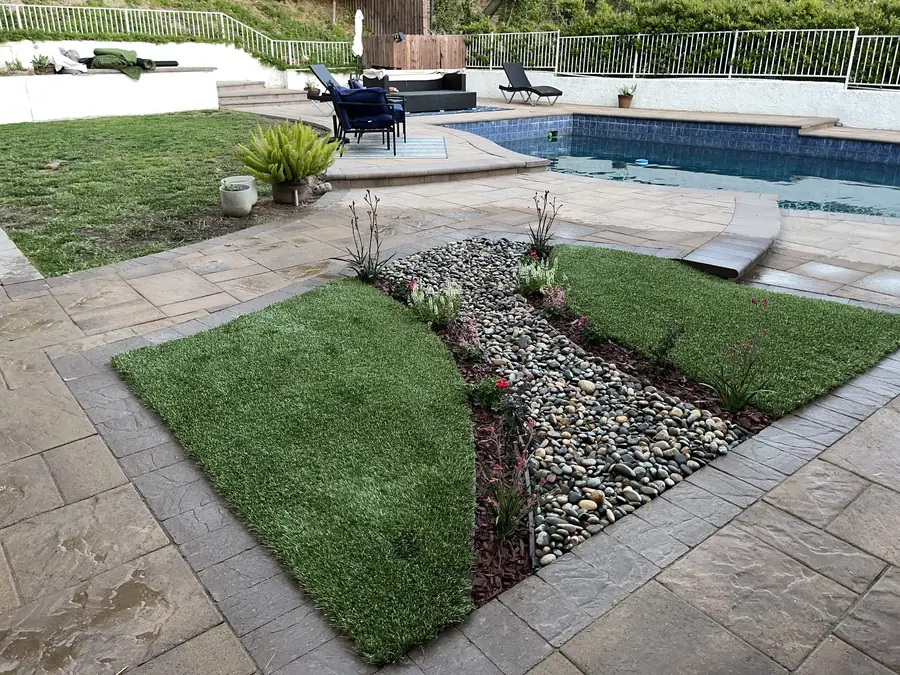
That combination is what usually works best here. A defined turf panel where the family gathers, framed by native and drought tolerant beds, gives you usable green space without pretending a foothill property is a suburban lawn. The border between the two is worth building properly, with a solid edge that keeps infill out of the mulch and mulch off the turf. Keeping the turf area modest and the planting generous also suits the wild character of the surroundings, which a wall to wall synthetic lawn tends to fight.
Sunland-Tujunga sits inside the City of Los Angeles, so any permitting runs through Los Angeles Building and Safety. Laying a synthetic lawn on a prepared base is not normally a permit item on its own. What can trigger one is the work underneath it on a steep lot, since creating the level pad may involve a retaining wall, and walls above a certain height require an engineered design and a permit. On a flat area the question rarely arises. On a hillside terrace it is worth settling before the schedule is built.
One licensed contractor stays accountable for all of it. Daniels Landscaping stays accountable for the work. The same people who excavate and compact the base are the ones who cut the panels, make the seams, fasten the edges, and broom in the infill. Since nearly every turf problem traces back to base preparation, keeping that under one roof is the point. You deal with one company from start to finish, and the person who can explain how the lawn was built is the person who built it.
It can be laid near them, with care about how close. Excavating and compacting a base across a root plate is hard on an established tree, and turf plus base sharply reduces the water and air reaching the ground beneath. We keep the panel back from the trunk and shape it around the root zone rather than driving straight through, leaving that area in mulch or open planting instead. Trees that mature after the lawn is installed can also heave a section as roots thicken, so setting a sensible distance early saves trouble.
Call Daniels Landscaping at (818) 443-9300 and we will come out and walk the property. We measure the area, look at how level it is and what has to be built to make it level, check the rock in the excavation, discuss sun exposure, dogs, and how far the panel should sit from the house given the fire exposure, then provide a free written estimate covering turf specification, base, infill, and edging. We are licensed in California under number 1138709. The estimate costs nothing and carries no obligation.