
FAQ
Irrigation in Sunland-Tujunga, answered
The questions we hear most from Sunland-Tujunga homeowners.
A complete system starts at the point of connection with backflow prevention, moves through a valve manifold that splits the yard into zones, and runs out to whatever each zone needs, whether that is spray heads, rotors, rotary nozzles or drip. A controller ties it together and a rain sensor keeps it from running during a storm. On the larger lots up here we also plan pipe sizing and head layout around the distances involved, because a system that performs near the house can starve at the far corner.
Harder than almost anywhere else in the Valley. The decomposed granite here came down out of the mountains carrying cobble and buried rock, so a lateral that should run straight often cannot. We plan routes with that in mind and shift a line around an obstruction instead of hammering at it, which keeps the pipe at proper depth without tearing up the yard. It is slower going than digging in loam, and a bid that ignores the ground conditions up here still has to meet them on install day.
Shorter cycles repeated more often beat one long run here. Because the decomposed granite drains so quickly, a long soak pushes water straight past the roots and down out of reach, so you pay for water the plants never touch. Cycle and soak splits the same total runtime into several shorter passes with a rest between them, letting each pass settle into the root zone before the next starts. We program the controller that way from day one and then shift it by season instead of leaving it alone.
It can, and on the bigger foothill properties that is one of the first calculations we make. Every foot of pipe, every fitting and every change in elevation costs pressure, so a zone laid out without the math shows it later as heads that mist rather than throw, or a rotor at the end of the line that barely turns. We size mainline and laterals for the real distance, split zones so no single valve is asked to do too much, and add regulation where pressure needs holding steady.
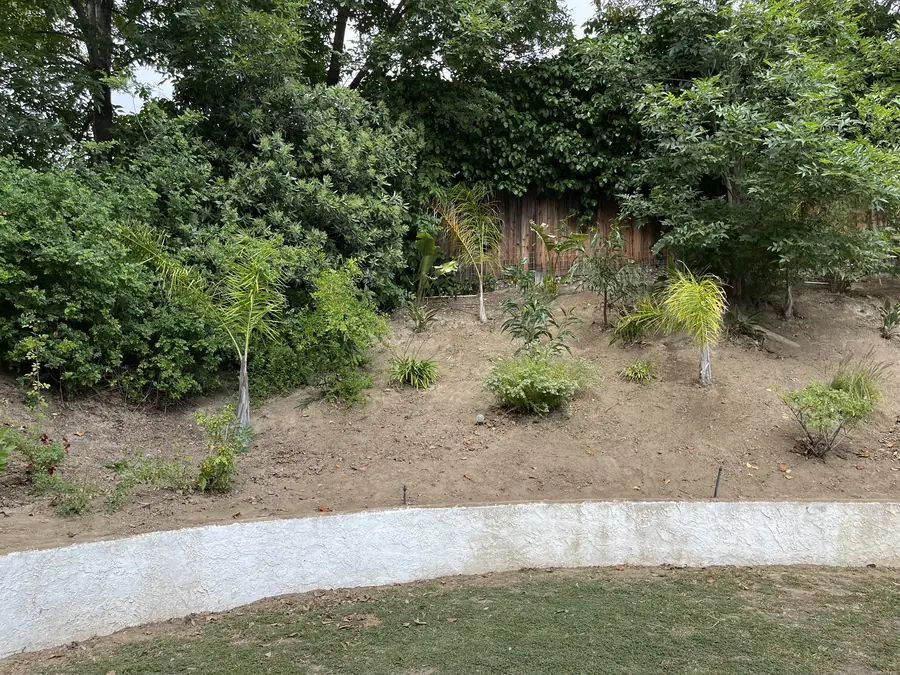
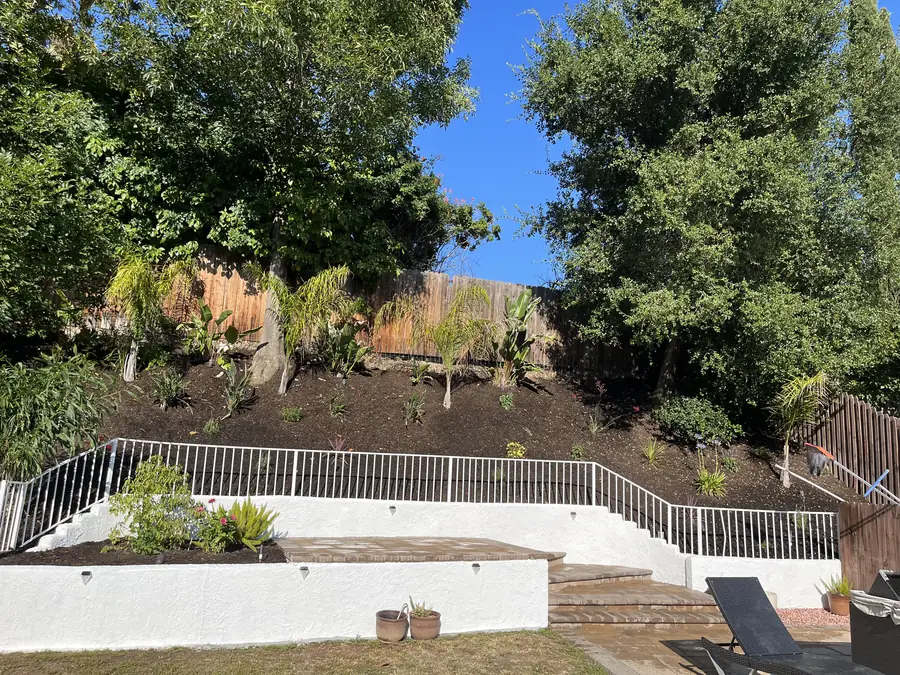
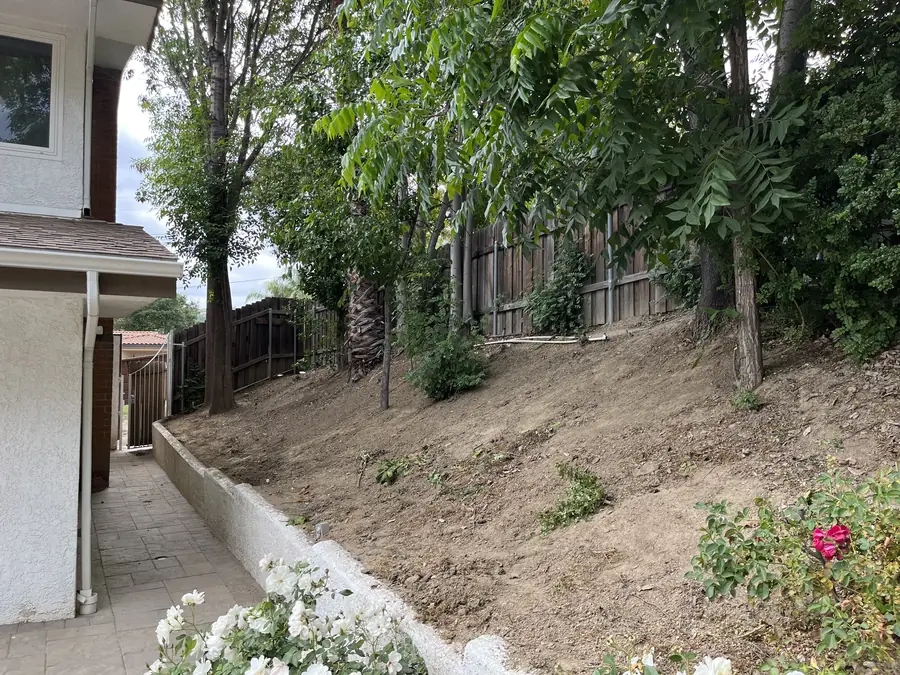
Slopes need a different approach than flat ground. Water applied faster than the hillside can absorb it simply leaves, carrying soil with it, and erosion is already a standing concern on these properties. We use low precipitation rate nozzles or drip on banks, run shorter cycles with soak time between them, and set heads so spray is not thrown downhill across the face. Zones are also split by elevation, since the top and the bottom of a slope dry at different rates and should never share one valve.
In most beds, yes. The valve stays where it is, and we swap the spray heads for a drip conversion with the filter and pressure regulation that drip requires, then run tubing and emitters out to the plants themselves. Drip puts water at the root instead of into the air, which suits both the fast draining ground and the wind that moves through the foothills. Lawn still needs overhead coverage, but shrub and planting beds almost always do better on drip, and the savings show on the bill.
It depends on the size and shape of the area. Fixed spray heads throw a short distance at a high application rate and suit small tight lawns. Rotors throw far and slow, which makes sense across the wide open areas found on the bigger lots here. Rotary nozzles sit between the two, applying water slowly enough that coarse ground can keep up, and that is often the sweet spot in this soil. What you must not do is mix types on one valve, because their application rates do not match.
Sprinklers are designed to overlap. Each head has to throw far enough to reach the next one, which is called head to head coverage, and once spacing stretches past that you get dry rings no amount of extra runtime will cure. People respond by watering longer, which drowns the wet spots and still leaves the dry ones. We set spacing to the published nozzle performance, hold matched precipitation across a zone so every head applies at the same rate, and adjust arcs once the system is pressurized.
By what the plants actually need, which is hydrozoning. Lawn, shrubs, natives and pots all want different amounts on different schedules, and lumping them onto one valve guarantees something is always wrong. Sun and shade divide zones too, and on foothill properties exposure can change sharply from one side of the house to the other. We group plants with similar water needs, keep sloped areas separate from flat ground, and size each zone so the available flow supports every head sitting on it.
For most properties here, yes. A weather based controller pulls local conditions and adjusts runtimes on its own, easing back in cool weather and stepping up through the hot foothill summers, rather than running one schedule all year. It also handles cycle and soak programming cleanly, which counts for a great deal on ground draining this quickly. You keep manual control and can start a zone from your phone. Local water agencies sometimes offer rebates toward this equipment, though eligibility is theirs to determine.
It is a small piece of hardware that stops the controller from running during and just after rain, and it pays for itself quickly. Nothing looks worse than sprinklers going while a storm comes down, and on a hillside that water contributes to runoff and nothing else. Some smart controllers cover this through their weather feed, but a physical sensor mounted at the property is a useful backup, since it reacts to what is actually falling on your yard instead of a forecast written for a wider area.
Too much pressure atomizes spray into mist that drifts off before it lands, wears nozzles out early and blows fittings apart underground. Too little and coverage falls short of where it was supposed to reach. Regulation holds each zone inside the range its nozzles were designed for, either at the valve or through pressure regulating heads. Drip needs it even more, because drip tubing operates at low pressure and will come apart without it. This is one of the cheapest ways to cut waste on a system.
It keeps irrigation water from being pulled back into the drinking supply if pressure in the main drops. Fertilizer, soil bacteria and anything else in the lines stays in the lines where it belongs. The device is installed at the point of connection, and the type used depends on the site and its elevation, which deserves attention on hillside properties where the yard sits well above or below the meter. This is a code requirement rather than an upgrade, and it goes in with every new system.
We start by isolating it. Running one zone at a time shows whether the loss sits on a lateral, at a valve or on the pressurized mainline, and a meter that keeps turning with everything shut off points straight at the mainline. Symptoms help as well: a soft wet patch, a head that will not shut down, a sudden drop in coverage at the end of a run. In rocky ground the repair is usually a clean cut and a proper coupling, not a long open trench.
Allowed days and times change periodically, and a properly programmed controller is what keeps you compliant without letting the yard suffer for it. In practice that means running in the early morning, using cycle and soak to fit an effective amount of water into a shorter window, and moving beds onto drip so what you do apply goes into the ground. Local water agencies periodically offer rebates on efficient equipment. We can point you toward the current programs, but the agency decides who qualifies.
At a wildland interface like this one, the planting nearest the house is the planting that must stay green and well spaced, and that only happens when it is watered reliably. We usually run dedicated drip through the band immediately around the structure so it can be maintained separately from the rest of the yard, and we keep those lines and emitters accessible for inspection. Clearance work also means plants get thinned or removed over time, so that zone is designed to be adjusted, not buried permanently.
One licensed contractor handles every part of it. Daniels Landscaping stays accountable for the work. The same team that maps the zones digs the trenches, glues the pipe, sets the valves, mounts the controller and walks you through the programming before leaving the site. Keeping it under one contractor is why we can tell you exactly where every line runs and why the system was zoned the way it was, and it is why a call about one bad head two seasons later reaches people who remember your property.
Reach Daniels Landscaping at (818) 443-9300 and we will schedule a visit. We check pressure and flow at the source, walk the property to see slope, exposure and planting, and test whatever system is already in the ground. From there you receive a free written estimate covering zone layout, head and emitter types, valves, controller and any repairs needed along the way. Daniels Landscaping holds California license 1138709, and that estimate is yours to keep whether or not you hire us.