
FAQ
Landscaping in Sun Valley, answered
The questions we hear most from Sun Valley homeowners.
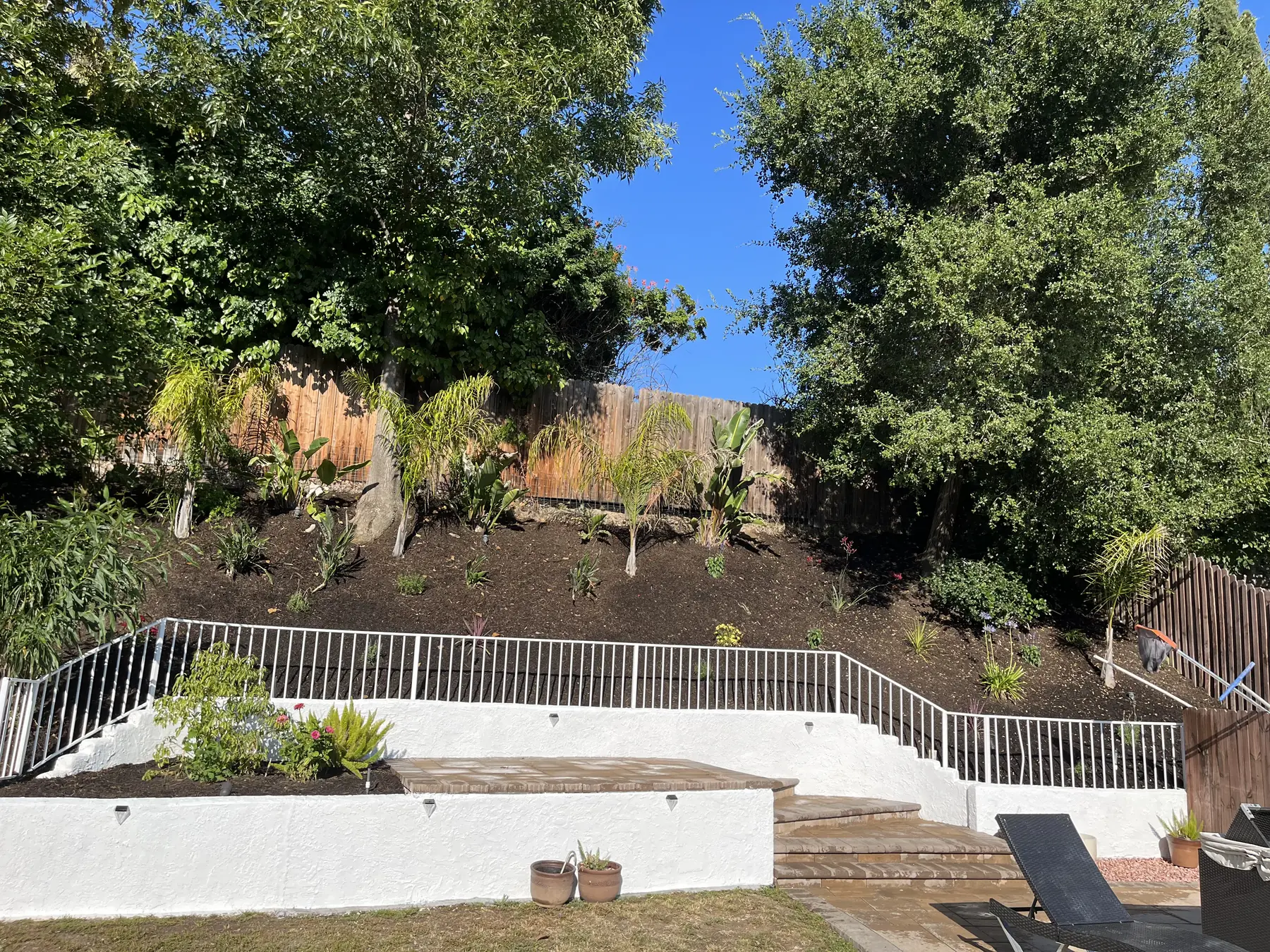
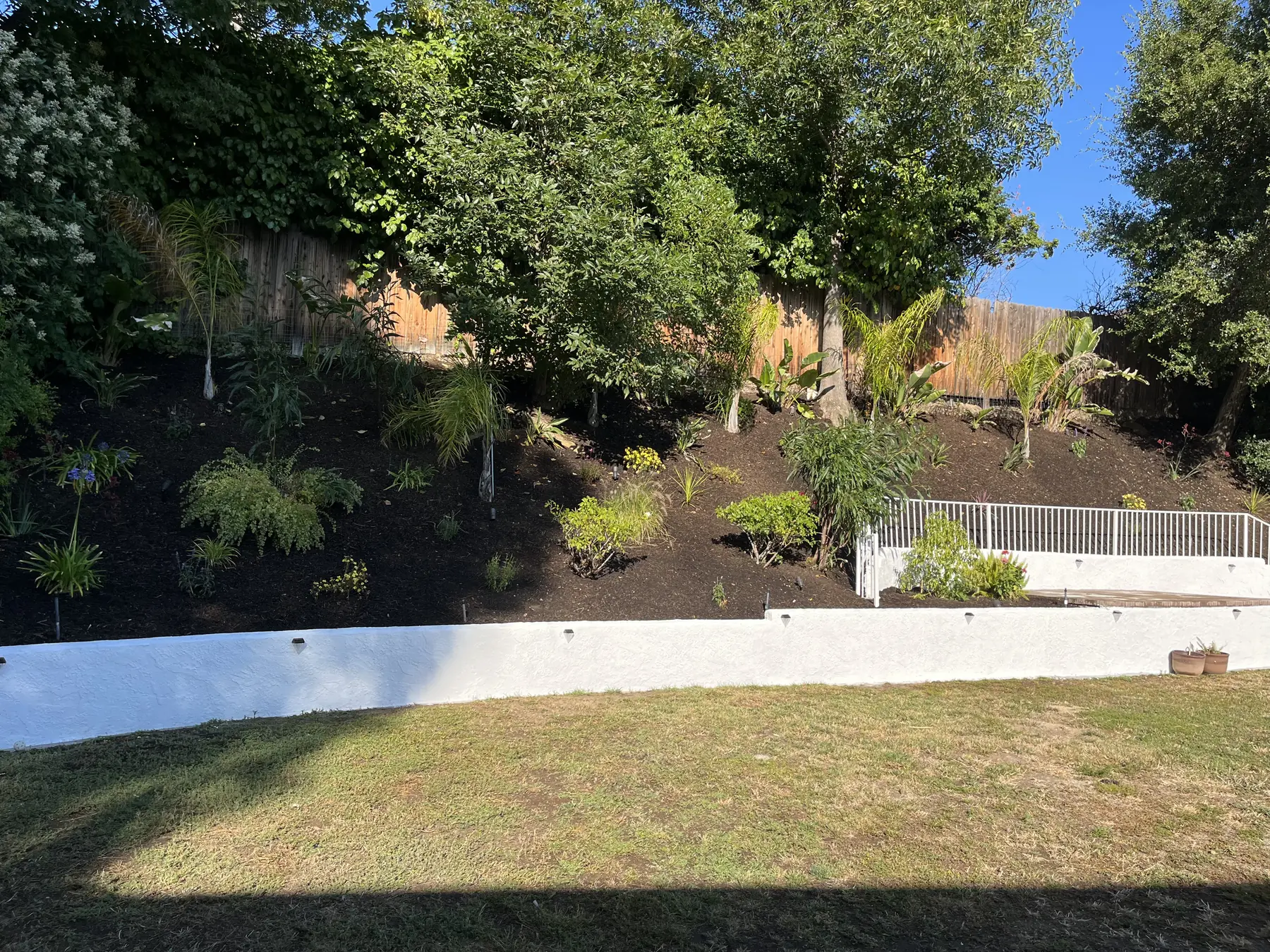
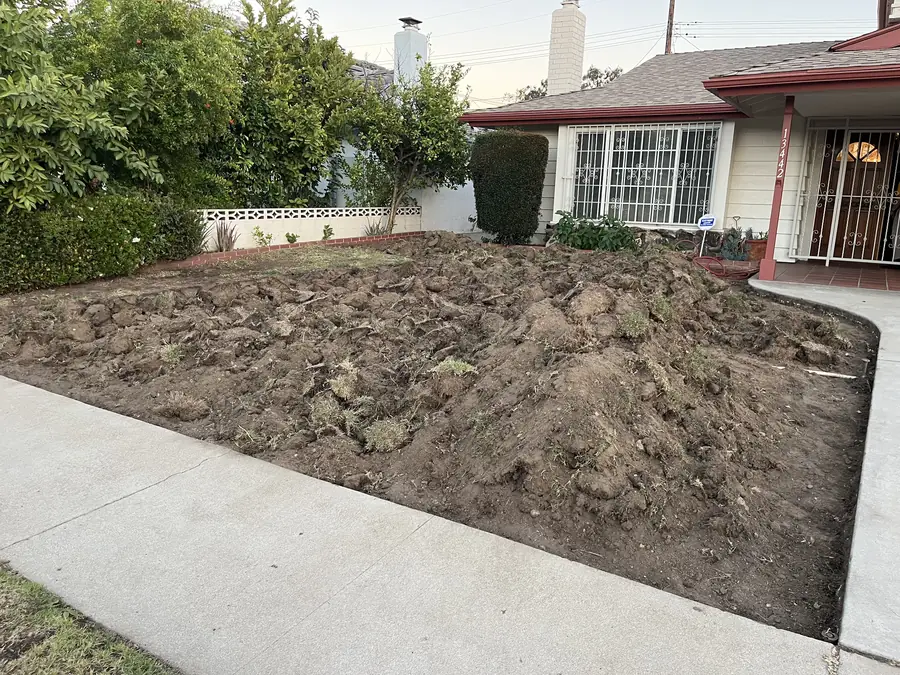
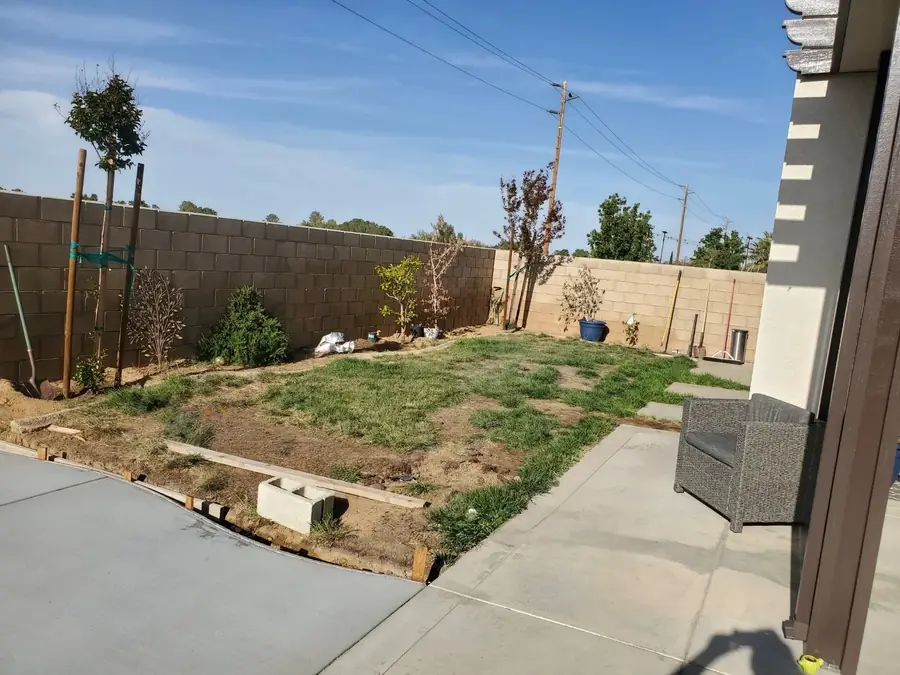
Everything from the dirt up. That means clearing and site prep, grading the ground to the shape it needs, amending soil, laying out planting, setting trees, shrubs, and ground cover, choosing between lawn, synthetic turf, and drought tolerant planting, mulching the beds, and connecting all of it to a working irrigation system. On most properties around here we are also removing something first, because the yard already carries decades of old planting and old pipe. Scope gets settled at the walkthrough, and the written estimate breaks each piece out separately so you can see where the money goes.
The sequence rarely changes, because changing it costs money. Demolition and haul away come first, then grading and drainage while the ground is still open, then any trenching for irrigation and sleeves under future paving, then hardscape, then soil prep, then planting, then mulch, and finally the irrigation heads and controller set and tuned. Planting goes in last so nothing gets trampled or buried by the equipment still working around it. When a crew tries to shortcut that order, something usually gets dug back up, and the homeowner pays for the same trench twice.
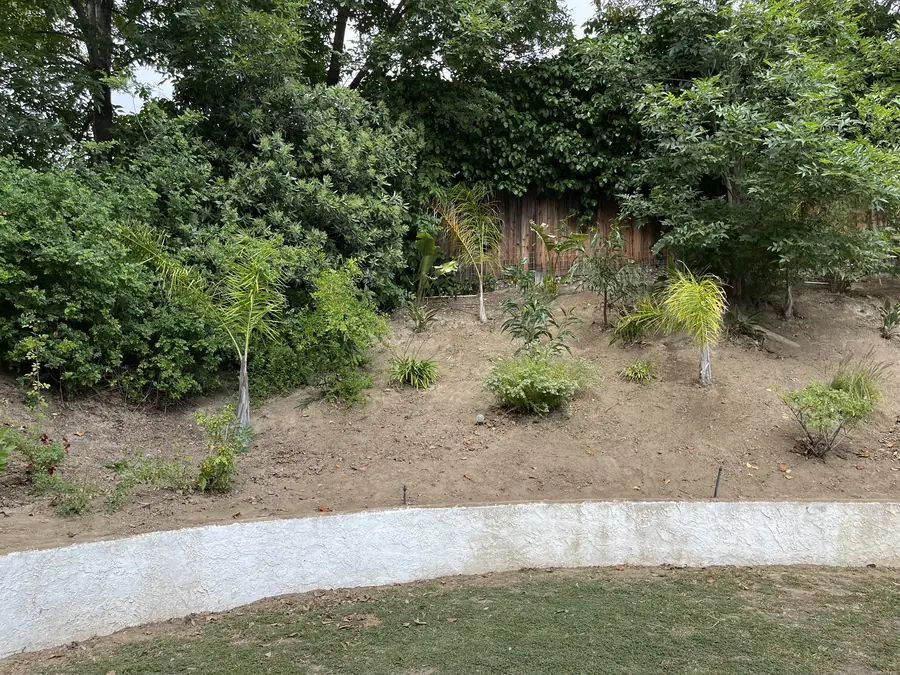
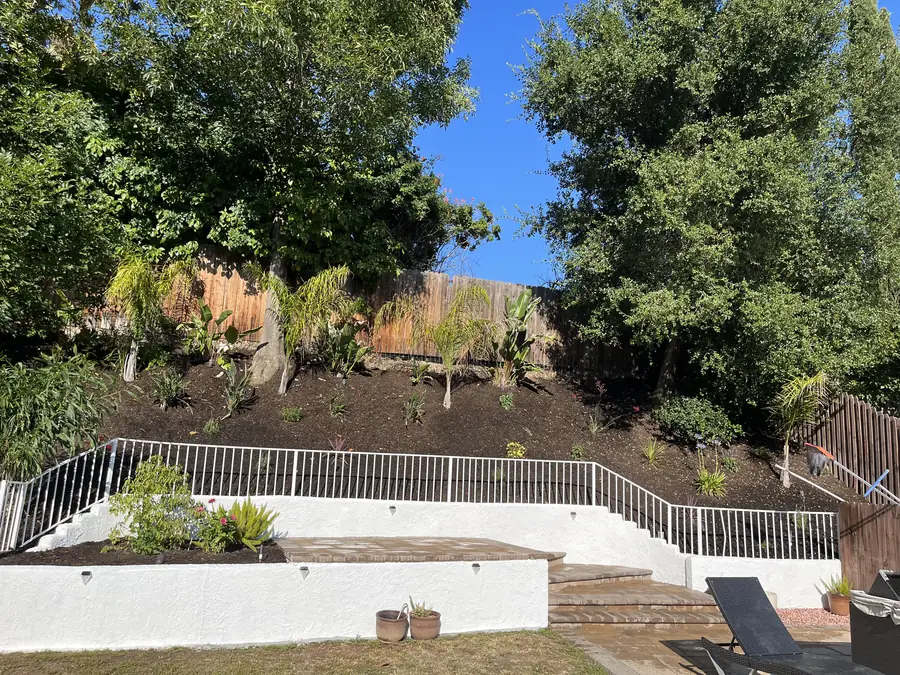
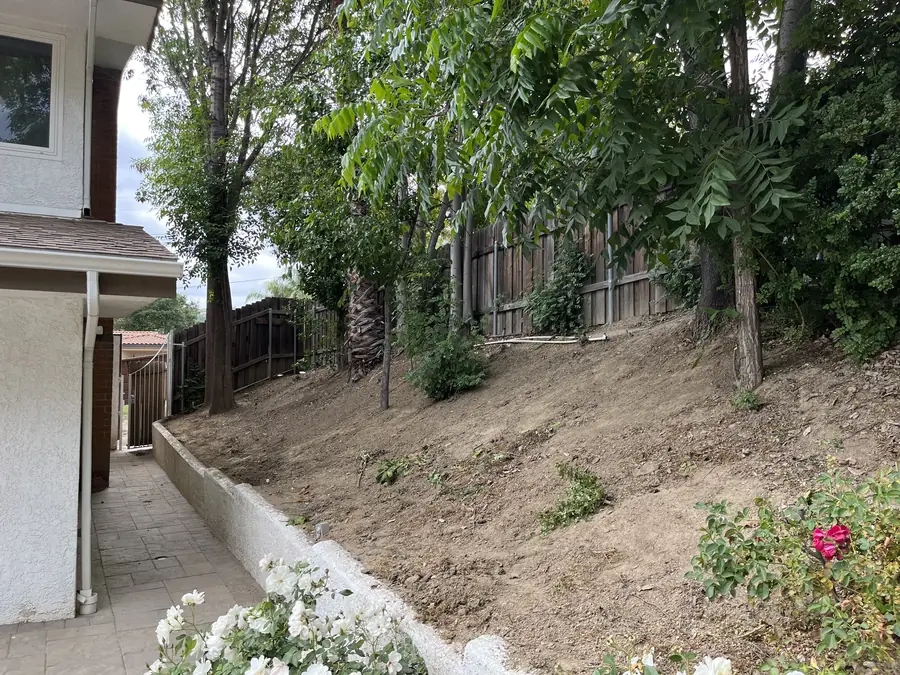
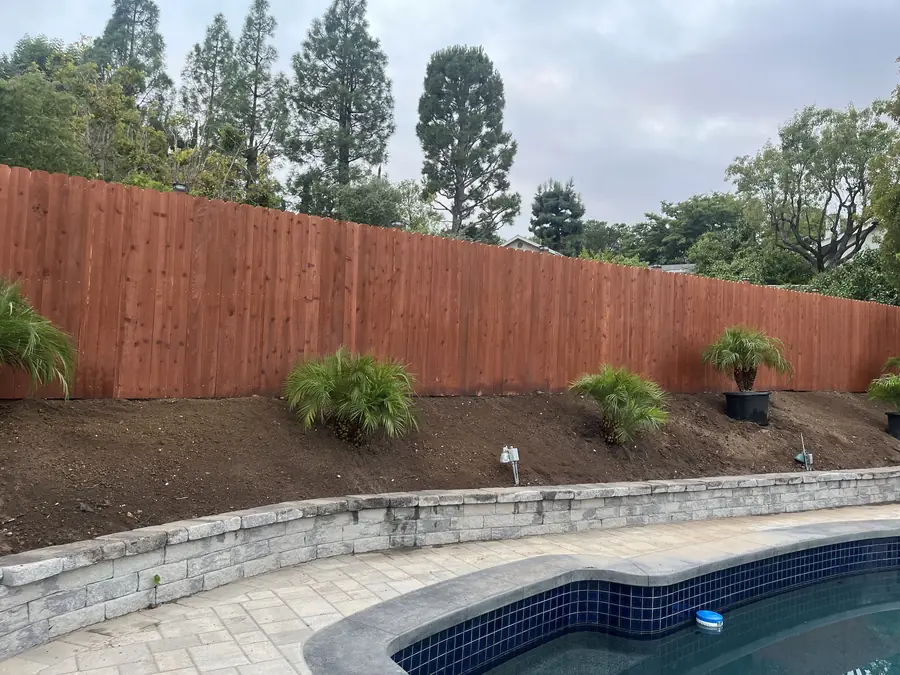
Flat ground gives you nothing for free, so the slope has to be built in on purpose. We set finished grades that fall away from the house at a consistent pitch, shape swales where water needs a path, and make sure planting beds sit slightly proud of walks and patios rather than below them. Where there is genuinely nowhere for water to run, we add a catch basin and a solid line out to the curb or a drywell. Most of the standing water complaints we hear in this part of the valley trace back to grade, not to soil.
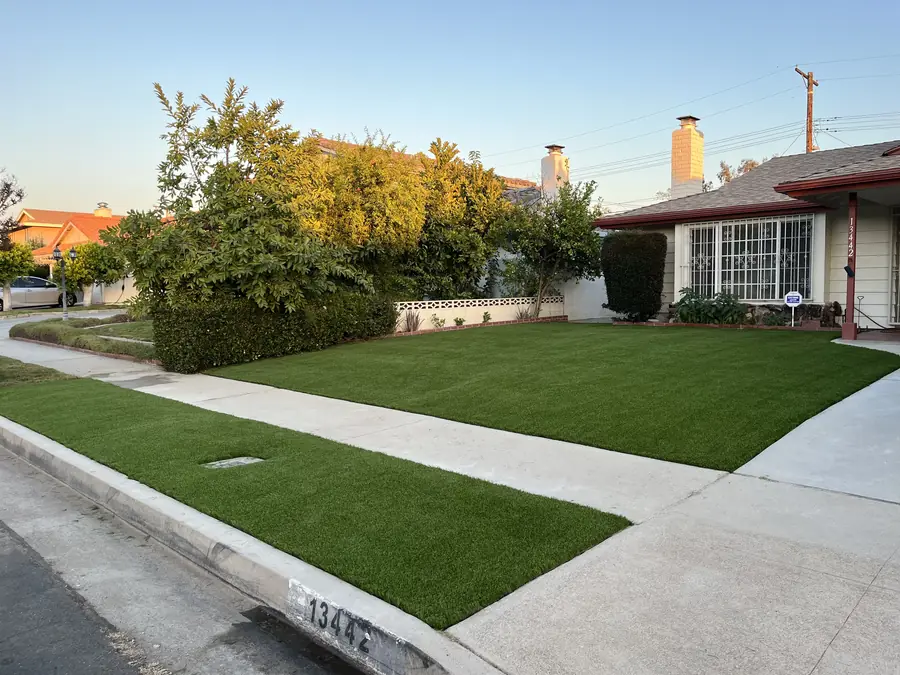
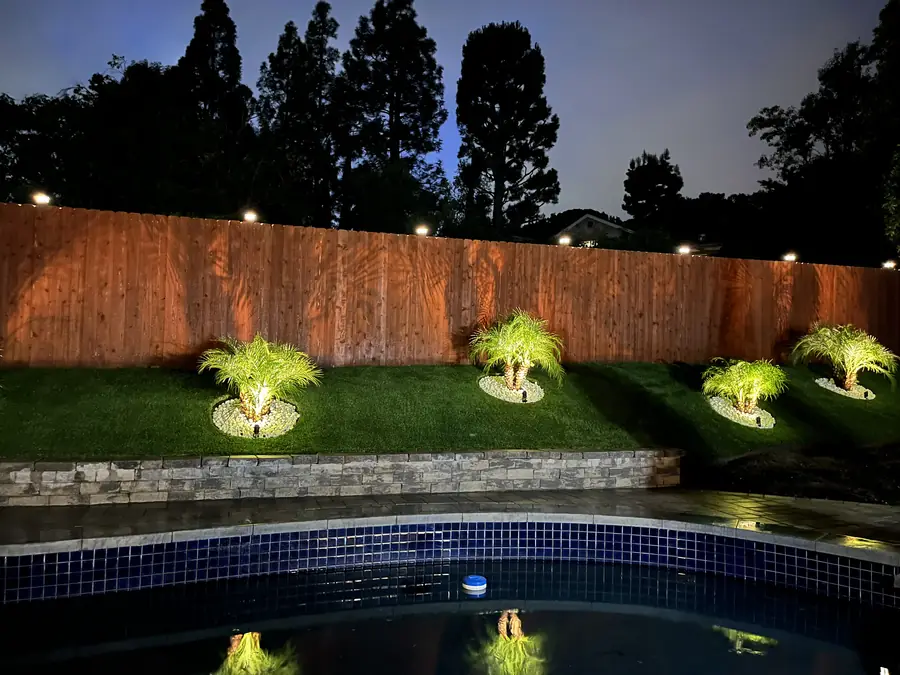
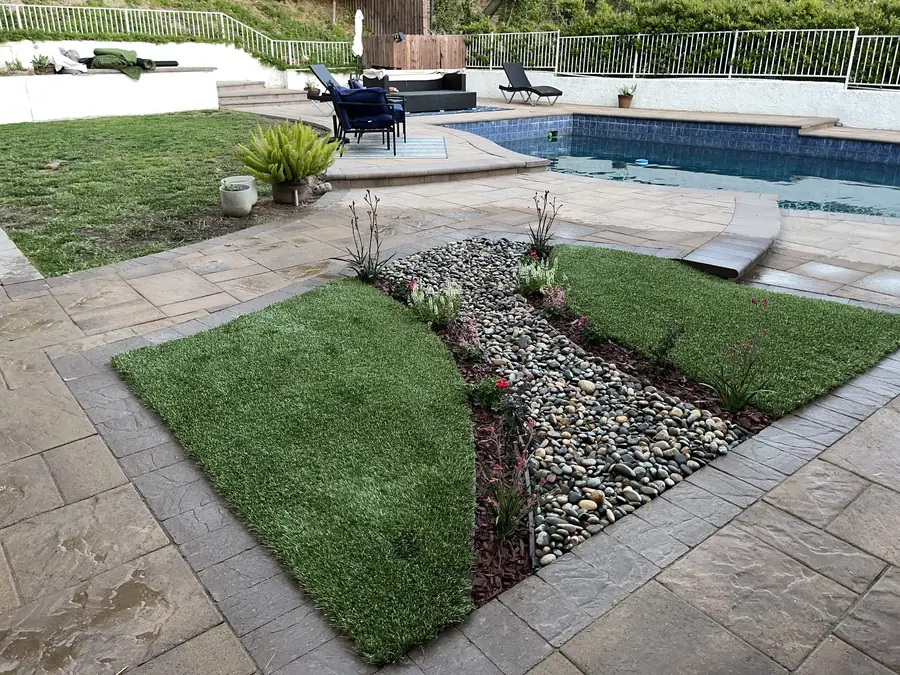
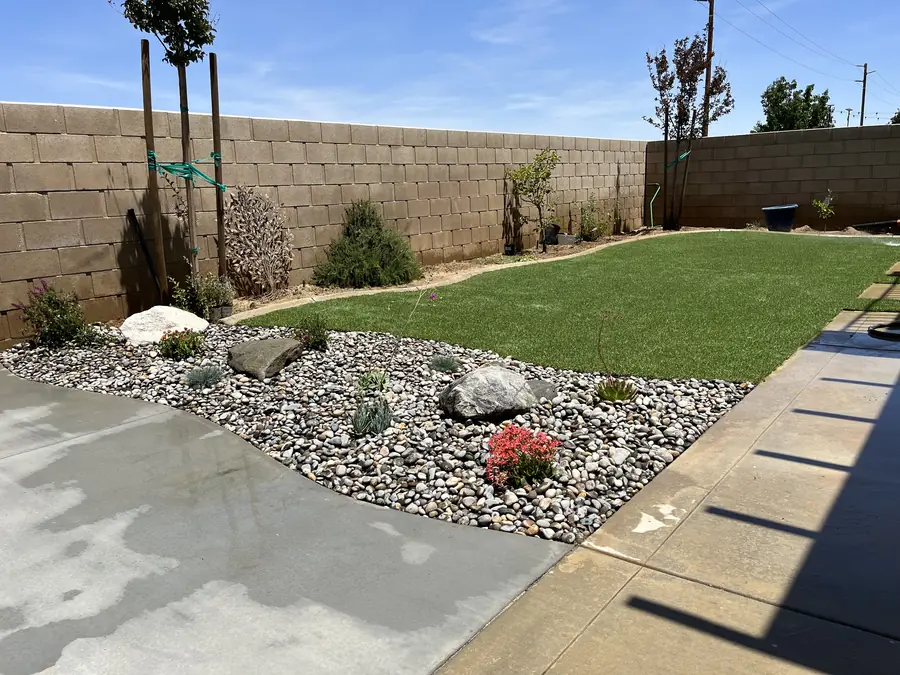
It depends on what the space is for, and the honest answer differs by yard. Real lawn is worth it only where children or dogs use it daily, because full sun and hot dry summers here make grass thirsty and unforgiving. Synthetic turf keeps a green surface with no watering and holds up well under practical budgets over the long run. Drought tolerant planting, meaning succulents, natives, and Mediterranean shrubs over gravel or mulch, is the lowest ongoing cost of the three. Plenty of Sun Valley yards end up with a small turf panel surrounded by low water planting.
Compacted, tired soil is normal on lots that have carried the same landscape for decades. We rip or till the top layer so roots have somewhere to go, blend in compost, and adjust the depth of amendment to match what is being planted, since a shrub bed and a tree pit are not the same job. Where old planting has been irrigated by leaky pipe for years, the top few inches can be salted and crusted, and that comes out rather than getting reused. Good soil work is invisible on day one and obvious two summers later.
Sometimes the mainline and valves are worth keeping, and often they are not. A great deal of the pipe still in the ground around here went in decades ago, which usually means aging galvanized or brittle PVC, heads no longer matched to each other, and zones watering three different plant types on one schedule. We pressure test what is there before deciding. If the bones are sound we rebuild the zones and swap heads and controller. If the mainline leaks in three places, replacing it during the install is cheaper than opening a finished yard later.
Plants that expect heat and expect to dry out between waterings. In full exposure we lean on species with tough foliage and deep roots rather than thin leaved ornamentals that scorch by July. Shade trees get placed on the west and southwest sides where they actually cut heat load on the house. Shrubs and ground cover get grouped so everything in a bed wants the same amount of water. What we avoid here is planting something delicate against a south facing wall or a wide paved surface, because reflected heat there is far worse than open ground.
Yes, and it is one of the more common requests in this area. Sun Valley genuinely mixes homes with industrial and commercial use, and the surroundings can change street by street, so two houses a few blocks apart may need very different treatment. Where a yard faces a yard wall, a truck lot, or a busy frontage, we plant for screening and for softening noise and sight lines, using layered evergreen material at varying heights rather than a single hedge. Fast growing screen planting up front, slower structural trees behind it, is usually the durable version.
Those properties near the horse keeping communities have different priorities than a standard lot. Planting has to be sited away from paddocks and rails where animals can reach it, dust control matters more than it does elsewhere, and surfaces need to tolerate trailers and heavy equipment turning across them. We keep planting beds out of traffic paths, use tough ground cover and gravel where hooves and tires cross, and grade so wash from a wet stall area does not run into a planted bed. It is a working landscape first and an ornamental one second.
Two to three inches over the whole bed is the target, pulled back a few inches from trunks and stems so nothing sits wet against bark. Mulch is not decoration in this climate. It cuts evaporation in hot dry summers, moderates soil temperature under full sun, and holds weed pressure down while young plants fill in. Organic mulch breaks down and feeds the soil, which is why it needs topping up periodically rather than once forever. In beds where we use gravel or decomposed granite instead, the material stays put much longer.
Planting, soil work, mulch, and ordinary irrigation generally do not. Sun Valley is part of the City of Los Angeles, so where a permit does apply, it goes through Los Angeles Building and Safety, and the usual triggers are structures, walls above a certain height, electrical, gas, and anything in the public right of way at the street. We tell you at estimate time which parts of your scope fall into that category. Nothing gets started on a permit dependent item until the paperwork is in order, because inspection failures are expensive to unwind.
By spending where it cannot be redone and economizing where it can. Grading, drainage, soil, and irrigation are buried work that nobody sees and nobody wants to open again, so those get done properly. Plant sizes, on the other hand, are flexible. Smaller stock at planting costs far less and often establishes better in this heat, catching up to larger material within a couple of growing seasons. Phasing also helps. Budgets in this part of the valley tend to be practical, and a written estimate with separate line items lets you decide what waits.
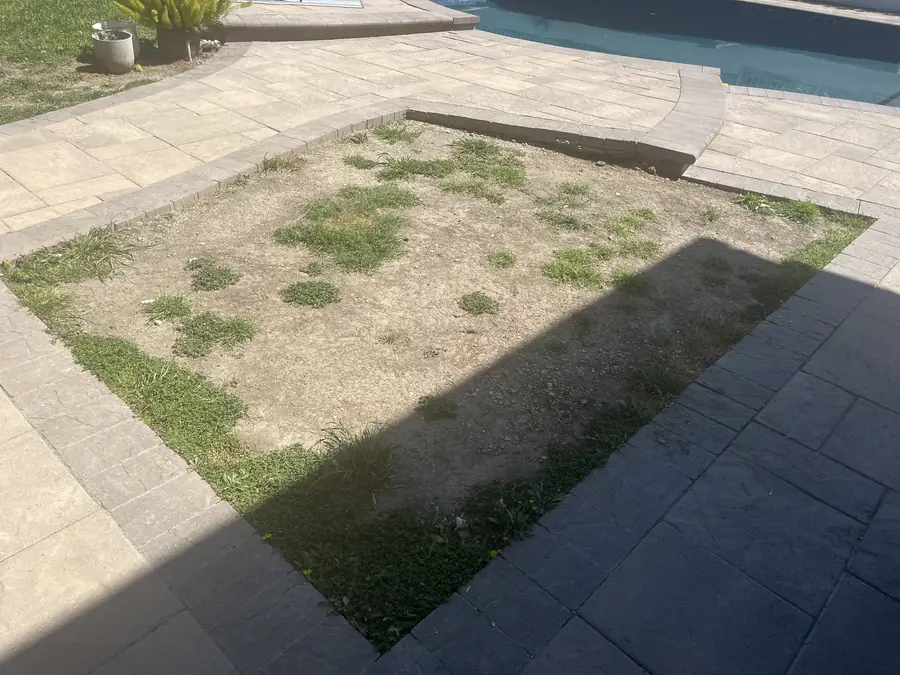
Low growing ground cover, ornamental grasses, and spreading shrubs cover ground with a fraction of the water a lawn demands. Gravel or decomposed granite fields with planting islands read as intentional rather than bare, and they hold up under full sun without browning. A small synthetic turf panel can carry the green look at the front walk while the rest of the yard goes to planting. The version that fails is bare dirt with a few widely spaced shrubs, because it never fills in and the weeds arrive before the plants do.
Water has to be given a route, since flat ground will not provide one. We start with surface grading, shaping a continuous fall from the house outward. Where that is not enough, area drains sit at the low points and tie into solid pipe running to the curb, or into a drywell where a curb outlet is not workable. Downspouts get collected rather than left dumping at the foundation. Under any paved surface we install, base material and drainage get built together, because water that gets under paving is what lifts it.
Yes, and we plan for it openly when that is the right call. The rule is that buried work never gets phased. Grading, drainage, sleeves under future patios, and irrigation mainlines all go in during the first stage even if the surfaces above them wait a year, because opening finished ground later costs more than doing it once. After that, front yard and back yard, or hardscape and planting, split cleanly. We write phased scopes as separate line items so you can see exactly what a later stage would involve before committing to it.
Our own employees. Daniels Landscaping works under one licensed contractor. The people grading your yard, running your irrigation, setting your trees, and cleaning up at the end all work for us and answer to us. That is why the quality stays the same from the first day to the last and why there is never confusion about who is responsible for something. You deal with one company from the estimate through the final walkthrough, not a rotating list of outside outfits.
Attention to water, mostly. New planting is establishing roots through its first hot dry summer, so irrigation runs on a different schedule than it will once things settle, with deeper and less frequent cycles as roots reach down. We set the controller before we leave and walk you through it. Beyond that, expect to top up mulch as it settles, pull the occasional weed before it seeds, and prune lightly for shape rather than heavily. Trees may need staking checked and loosened so trunks strengthen instead of leaning on the support.
Call Daniels Landscaping at (818) 443-9300 and we will schedule a walkthrough at the property. We look at the ground, the existing irrigation, sun exposure, drainage, and what you actually want the yard to do, then put together a free written estimate with the work broken into line items so nothing is vague. We are licensed in California under number 1138709. There is no charge and no obligation for the estimate, and if you want to compare it against another bid or adjust the scope, that is fine with us.