
FAQ
Artificial Turf in Sun Valley, answered
The questions we hear most from Sun Valley homeowners.
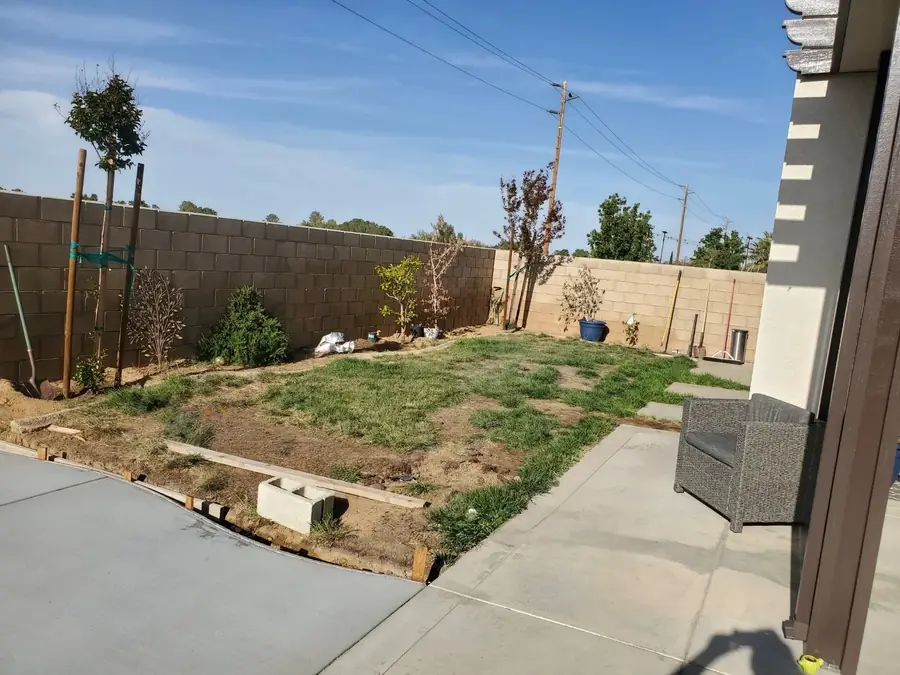
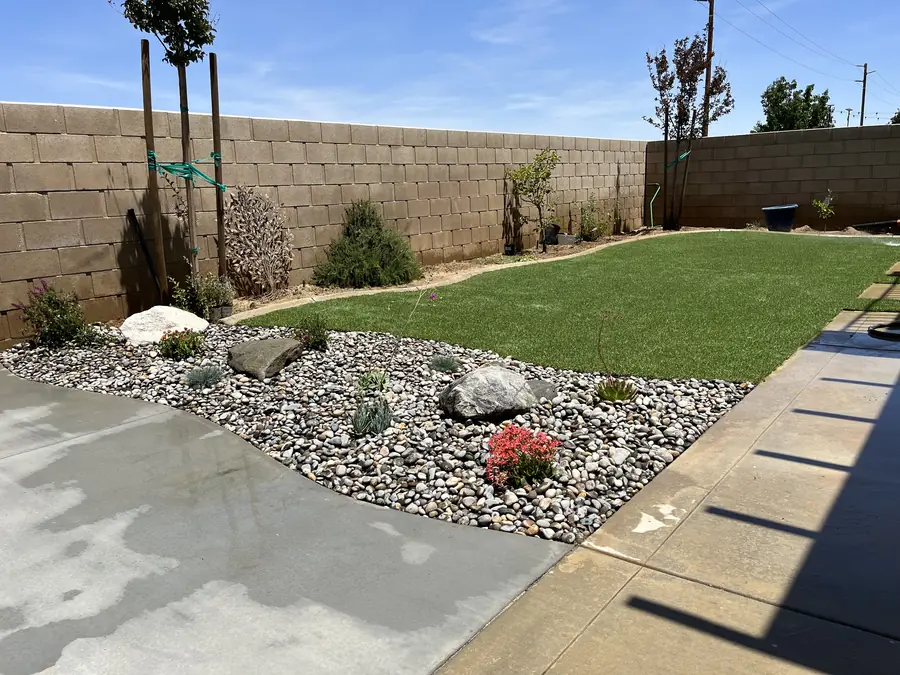
An engineered base, and it is most of the job. We strip the existing lawn or soil to depth, grade the subgrade, then build crushed aggregate in lifts and compact each one until it stops moving. A finer layer goes on top and gets screeded smooth, because every dip or high spot in that layer will telegraph straight through the turf. The turf itself is then rolled out, cut to the shapes of the space, seamed, anchored around the perimeter, and infilled. Turf laid over unprepared ground looks fine for a season and then goes wavy.
It does, provided the base is built for it. The turf backing is perforated, so water passes straight through the surface rather than sheeting off it. Below that, open graded aggregate lets water move down and away. On flat ground like this we still set a slight fall across the base and, where there is no natural low point, tie an area drain into solid pipe running to the curb or a drywell. Water that has nowhere to go will sit under the turf regardless of how well the backing drains, so the outlet gets planned first.
The lawn irrigation drops to zero, which in this climate is the largest single water use in most yards. Hot dry summers and full sun mean a real lawn here demands frequent deep watering for months at a stretch just to stay green, and much of that evaporates before the roots use it. Synthetic turf needs only occasional rinsing. We will not quote a specific figure for your property because household use varies too much to promise a number, but on water efficiency alone this is the change that moves the needle most.
Face weight is the ounces of yarn per square yard, and higher generally means denser, more resilient turf that recovers better from traffic. Pile height is blade length, and taller is not automatically better, because long blades lie over under weight and look matted in high traffic areas. For a family backyard we usually land on a mid range pile with a solid face weight, and go shorter and denser for pet runs and play areas. A rarely walked side yard can carry a taller, softer product because nothing is crushing it.
For pets we favor infill that does not hold odor and drains freely, such as coated sand or a zeolite based product that captures ammonia rather than letting it linger. Silica sand alone works but can retain smell over time in a heavily used dog area. Whatever goes in, the base underneath matters just as much, because urine has to pass through and flush out rather than pool. We also recommend rinsing pet zones regularly. In hot dry summers with full sun, a well drained pet area stays perfectly manageable.
Synthetic turf does run warmer than real grass in direct sun, and with the exposure this area gets, that is worth planning around rather than dismissing. Lighter infills and turf with heat reflective yarn help. A quick rinse cools the surface almost immediately. The bigger lever is shade: a tree, a patio cover, or a pergola over part of the area changes comfort far more than any product feature. Many Sun Valley yards use turf for the open sunny panel and keep the shaded seating area in pavers or gravel.
Quality turf, properly installed, typically gives well years of service and often considerably more. What ends a turf lawn early is almost never the fibers wearing out. It is a base that was not compacted, seams that were glued badly and opened, or infill that was never topped up so the blades laid down permanently. Constant sun does gradually affect color and fiber stiffness, which is why we specify products built with UV stability for exposure like ours. Traffic patterns matter too, so heavier duty turf goes where people actually walk.
Seams get cut so the blade direction runs the same way on both panels, then joined over seam tape with adhesive, or stitched, depending on the product and the location. The panels are butted, not overlapped, and the fibers along the joint are teased free of the seam before infill goes in. Grain direction is the part people miss. Two panels laid with the pile running opposite ways will show a visible line no matter how tight the joint is, because they reflect light differently at every hour of the day.
Along a hard edge such as a patio, a walkway, or a mow curb, the turf is trimmed tight and secured with nails or spikes at close spacing, sometimes with adhesive on a concrete edge. Where turf meets a planting bed with no hard edge, we install a bender board or a paver soldier course to give it something to hold to. Loose perimeters are the first thing to fail. A corner that lifts becomes a trip point, catches a mower or a dog, and pulls more of the field free each time.
Heads within the turf area get removed and the lines capped below the base, and we usually keep the zone valve intact rather than abandoning it entirely, since a future owner may want planting there again. On older properties here the pipe is frequently decades old and brittle, so anything discovered leaking during excavation gets addressed while the ground is open. Surrounding planting beds keep their irrigation and often get converted to drip at the same time, because those plants still need water even though the lawn no longer does.
For a residential synthetic lawn at grade, generally no. Sun Valley sits within the City of Los Angeles, so if a project element does require permitting, it runs through Los Angeles Building and Safety, and the triggers tend to be structures, retaining walls above a height threshold, electrical, or work in the public right of way. A turf area combined with a patio cover or a raised wall could bring one of those into play. We flag anything in your scope that raises the question at estimate time, not partway through the work.
It rinses clean easily, which is one of its advantages in this area. Sun Valley genuinely mixes residential blocks with industrial and commercial parcels, and depending on the street a yard can pick up more airborne dust than a typical neighborhood would. Synthetic turf does not care. A hose down clears settled dust in minutes, and unlike real grass there is no thatch for it to work into. Periodic brushing of the fibers keeps them standing and lifts trapped grit out of the infill at the same time.
For the household areas of those properties, yes. A turf panel near the house gives a clean green space that does not turn to dust or mud, which is a genuine benefit where the rest of the lot is working ground. What we do not recommend is turf in paddocks or anywhere animals stand, since hooves and manure are not what the material is built for. Compacted aggregate or stabilized decomposed granite handles those areas better. Keeping the two zones separate with a firm edge is the practical approach.
Very little is required, but not nothing. Rinse the surface periodically to clear dust, more often in pet areas. Brush the fibers against the grain in traffic lanes a few times a year with a stiff broom or a power broom to keep blades upright. Blow or rake leaves off rather than letting them break down into the infill. Top up infill where it has thinned, particularly along walking paths. Spills wipe up with water and mild soap. That is the whole routine, and it takes a fraction of the time mowing did.
It can, and it is sometimes a good use for a slab that is sound but ugly. The concrete has to drain, so if water currently ponds on it, we either core drill through it or build a drainage layer over it before the turf goes down. A padded underlayment usually goes between the slab and the turf for comfort, and the perimeter is glued and pinned to the edges. Where the slab is cracked and settling, removing it and building a proper base is the more sensible investment.
Yes. Every stage, from demolition and base building through compaction, seaming, anchoring, and infill, is performed by one licensed contractor. One licensed contractor stays accountable for the work. The people who compact your base are the people who lay the turf over it, which is exactly how it should be, since almost every turf failure traces back to base work that was rushed by someone who never had to face the result. One company, one crew, one point of responsibility.
The up front cost is higher than sod, and there is no getting around that. What you are buying is the elimination of mowing, fertilizer, reseeding, and a large ongoing water bill across many years of hot dry summers. Budgets around here tend to be practical, and the way we usually approach it is to turf the area that gets used and looked at, then handle the rest of the yard with low water planting, gravel, or decomposed granite. That keeps the number reasonable while still solving the lawn problem.
Give Daniels Landscaping a call at (818) 443-9300 and we will set up a visit to the property. We measure the area, check drainage and existing irrigation, show you turf samples so you can compare pile height and face weight in person, and then provide a free written estimate itemizing base preparation, turf, infill, seaming, and edging. We hold California license 1138709. The estimate costs nothing, carries no obligation, and is yours to compare against anyone else you are talking to.