
FAQ
Sun Valley landscaping questions, answered
What homeowners in Sun Valley ask us most.
We work throughout Sun Valley, from the older residential pockets in the middle of the area to the streets that back onto commercial and industrial property, and out to the northern edge where the neighborhoods meet horse keeping country. The surrounding northeast valley is part of our regular territory as well, so travel is never a factor in what we quote. If you are unsure whether your address falls inside the boundary, call and tell us the cross streets. We will confirm it quickly and set up a look at the property.
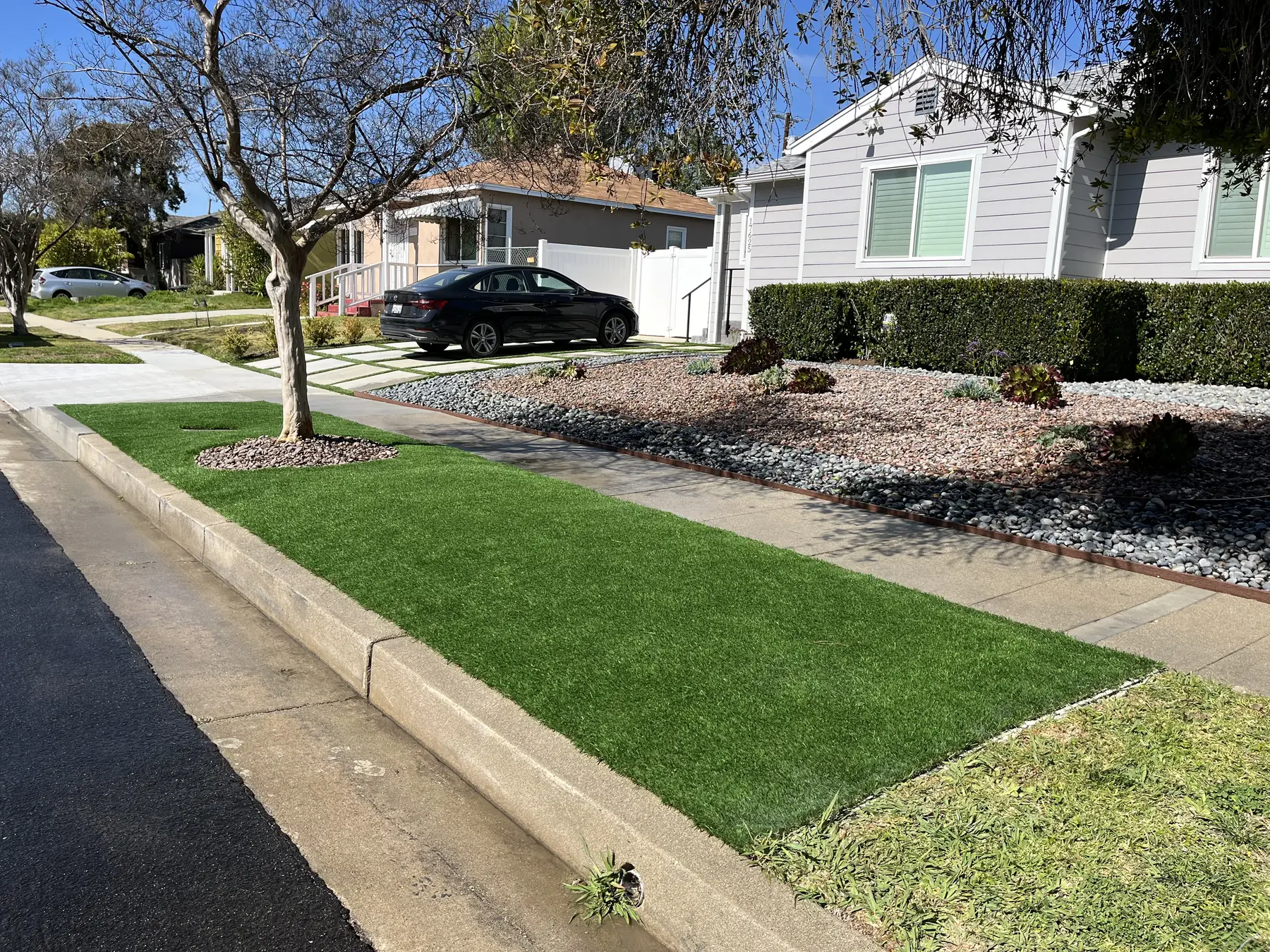
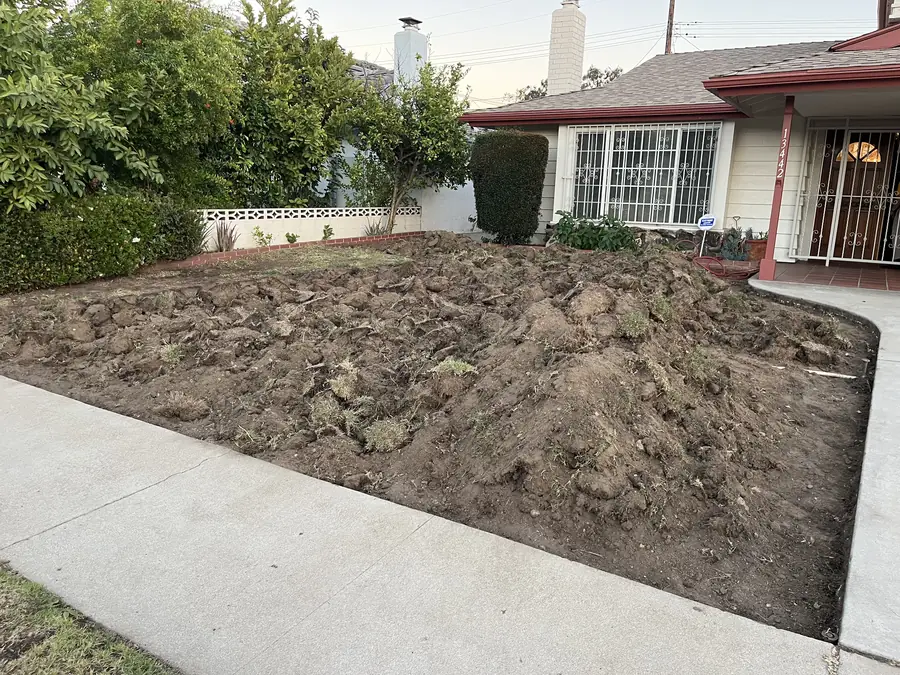
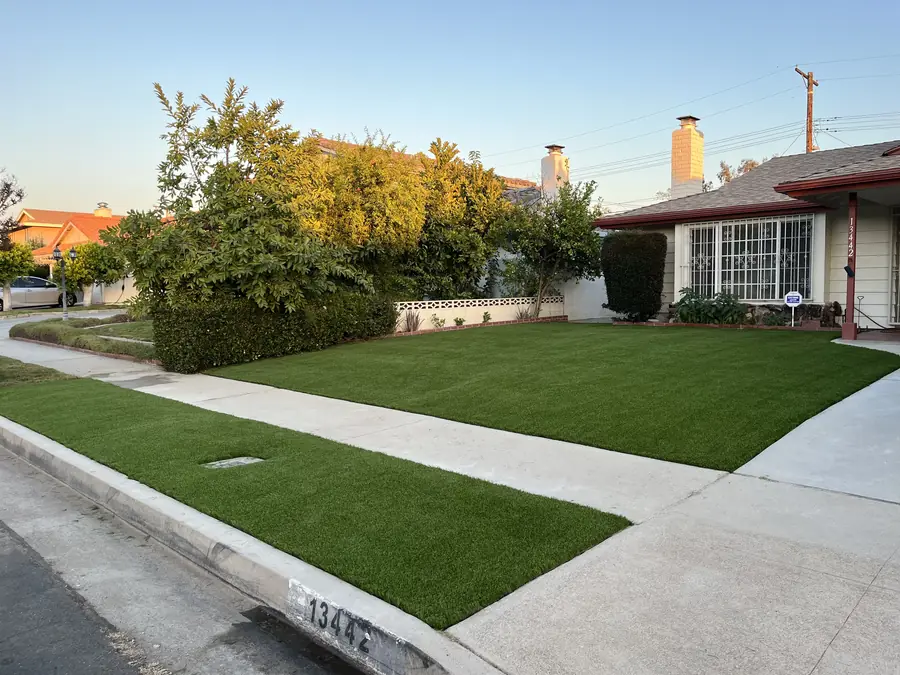
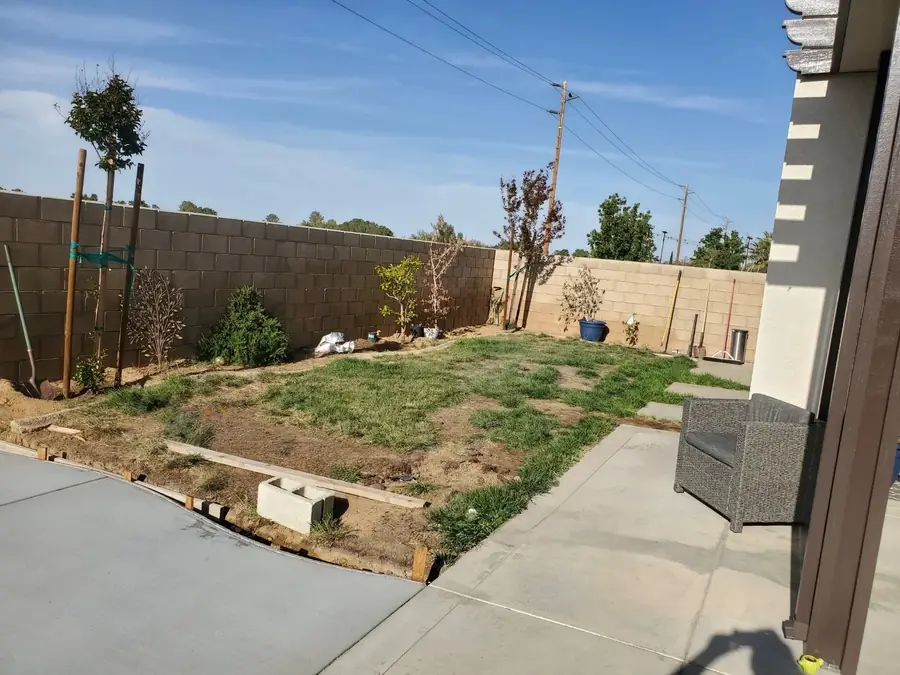
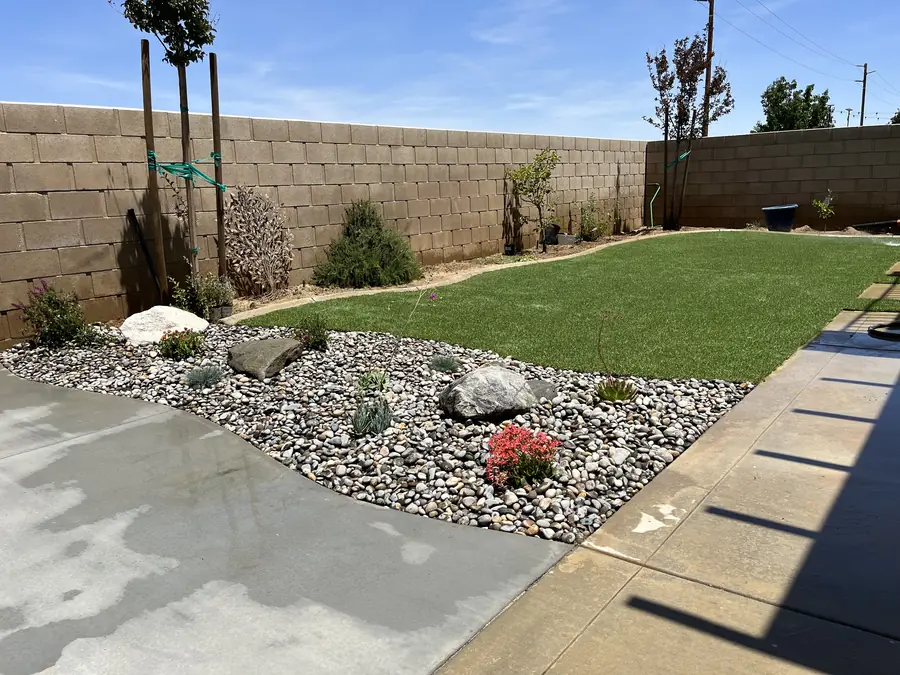
Most of what we build here falls into two groups. The first is the front yard reset, where a struggling lawn and cracked walkway come out and drought tolerant planting, new irrigation, and fresh concrete go in. The second is the back yard buildout, where a family finally puts in a patio, a seating area, turf for the kids, and lighting so the space works after dark. Driveway replacement is common too, since a great many of the original slabs in this area have reached the end of their useful life.
Flat ground is one of the quiet benefits of building in this part of the valley. Without a slope to fight, less of the budget goes to retaining and grading and more of it goes to the parts of the yard you actually use. Drainage planning is cleaner as well, since we set fall deliberately instead of working against a hill. That said, flat is not the same as correct. Plenty of these lots were graded decades ago and now hold water against the foundation, so we check fall carefully before any new hardscape goes down.
Hot dry summers and unshaded exposure define most of these yards, and that narrows the plant list fast. Material that looks fine in a shaded coastal garden will scorch here by late summer. We lean on proven drought tolerant species, group them by water need so the irrigation can genuinely be zoned, and mulch generously to keep root zones cooler. On the hardscape side, lighter colored surfaces stay comfortable underfoot in the afternoon, and we select materials that will not chalk, spall, or crumble after a few seasons of sun.
Older systems are the norm around here, and the same problems turn up again and again: heads buried and sprayed over by shrubs, valves that no longer seat properly, controllers nobody has reprogrammed in years, and pipe repaired in five different places. Sometimes a system is worth saving and we rebuild only the weak sections. More often, when a yard is being redesigned anyway, replacing the lines and converting beds to drip costs less over time than chasing leaks year after year. We tell you honestly which situation you are in before you spend anything.
Some work does and some does not. Straightforward planting, irrigation, turf, and most flat patio work generally move ahead without one. Structures, larger retaining walls, electrical service, and anything touching the public street are a different matter, and driveway approaches often fall into that category. Because this area sits inside the City of Los Angeles, the requirements follow city rules rather than a separate municipal code. We identify which parts of your project carry a permit requirement at estimate time, so nothing catches you halfway through the job.
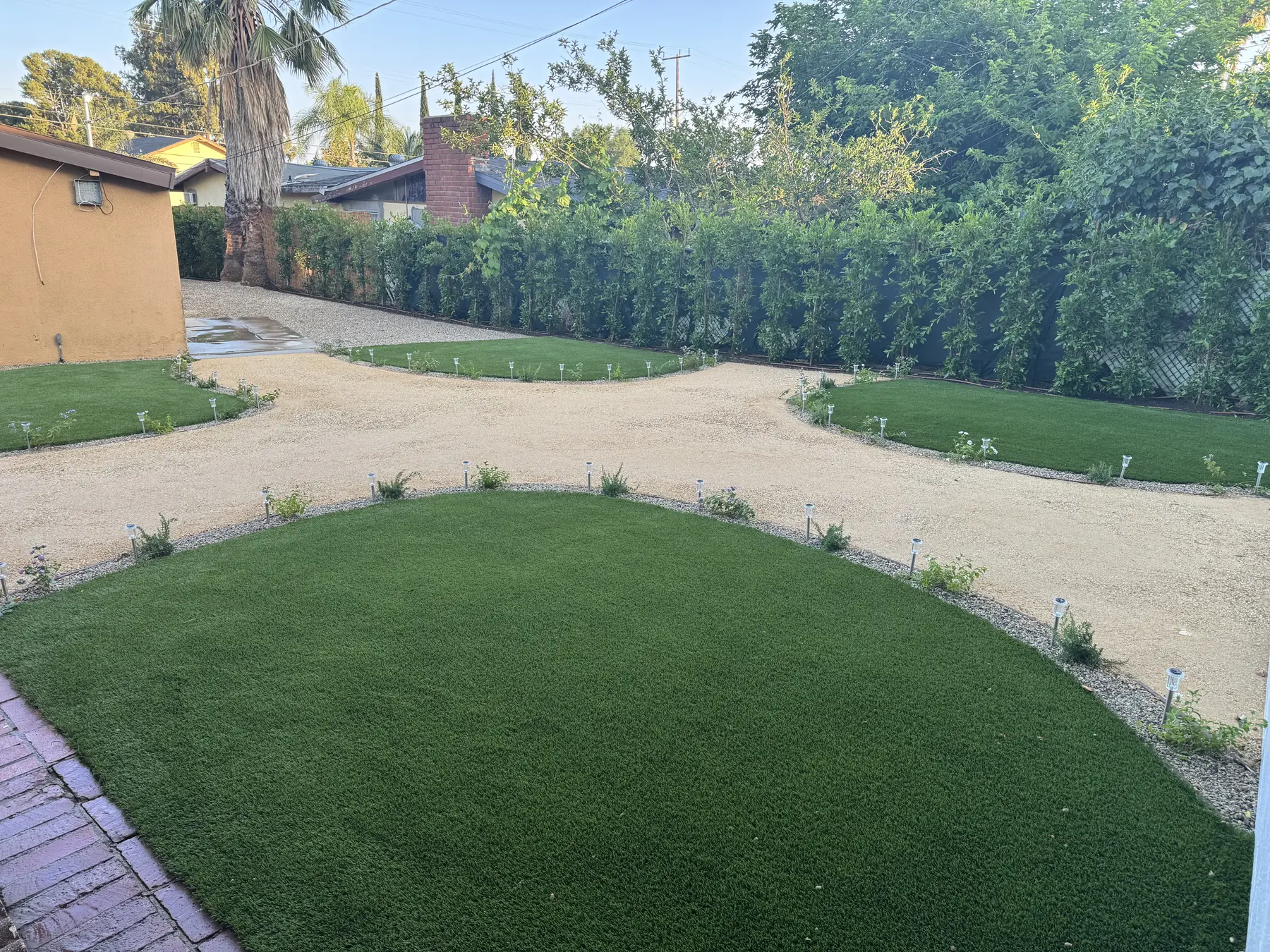
Water rules in Los Angeles shift from time to time, and limits on watering days are simply part of life here. We design so those rules never become a crisis. That means grouping plants by water need, using drip in beds instead of overhead spray, installing a controller you can actually adjust by season, and being realistic about how much lawn makes sense. Where a client wants green year round without the water bill, artificial turf answers it outright. The aim is a yard that still looks intentional in a dry year.
It depends on scope, and we will not pretend otherwise. A planting and irrigation refresh moves quickly. A full property with concrete, masonry, turf, lighting, and an outdoor living area takes considerably longer, and concrete needs its cure time regardless of how fast anyone would like to move. Weather and inspection scheduling can shift things as well. What we commit to is a realistic sequence at estimate time and steady communication while the job runs, rather than an optimistic number that quietly slips week after week.
Access matters more than people expect. Older homes here often have narrow side yards, a fence line close to the house, and a single gate that everything has to pass through. We study that during the walkthrough, because it decides whether we bring in a compact machine or move material by hand, and that affects both cost and schedule. Where a property backs onto commercial frontage, staging is sometimes easier than expected. We plan the route in and the route out before the first load of material arrives.
Design and construction live under the same roof at our company, and that is deliberate. When the person drawing the plan is accountable for building it, the plan stays buildable. You are not paying for a concept and then discovering that the grades do not work or the budget was never realistic. We design it, we price it, and we build it. If something needs to change once the ground is open, that decision happens on site with the people who own the outcome instead of moving through a chain of outside parties.
We build every project with one licensed contractor. One licensed contractor stays accountable for the work. The people who show up on the first morning are the same people you will see through the last day of the job, they work for us, and they answer to us. That is the reason our quality stays consistent from one property to the next. It also means the schedule is ours to control instead of waiting on another company to appear, and when you have a question on site, you are talking to someone who works here.
Yes. The northern edge of Sun Valley runs into horse keeping territory, and those properties have their own logic. Priorities move toward dust control, durable surfaces that take traffic, drainage that keeps low spots from turning into standing water, and planting kept a safe distance from where animals actually are. Fence lines, gates, and turning room for a trailer all have to be respected in the layout. We are comfortable on that kind of property and we plan the yard around how it is genuinely used day to day.
Phasing is common here and there is nothing wrong with it. Budgets in this area tend to be practical, and plenty of homeowners would rather finish the front this year and the back next year than stretch for everything at once. The important part is designing the whole property first, even when you build it in stages. That way sleeves, conduit, and irrigation mains go in during the first phase instead of being saw cut into finished concrete later. We lay out the sequence with you so each stage stands complete on its own.
A fair number of yards in this area are honest candidates for renovation rather than a full tear out. If the concrete is sound and merely tired, we can often work with it. If it is lifting, cracked through, and already patched, replacement is the cheaper decision over any real span of time. The same reasoning applies to irrigation, drainage, and old planting beds. We walk the property, tell you what still has life left in it, and steer the money toward what genuinely needs attention.
Call us at (818) 443-9300 and we will set a time to walk your property. The visit is a real conversation. We look at the ground, the sun, the access, and what you want the yard to do, and then we put together a free written estimate that lays out scope and cost in plain terms. There is no charge and no obligation attached to it. We are licensed in California, number 1138709, and we are glad to answer questions about the process before you commit to anything at all.