

FAQ
Landscape Lighting in Mission Hills, answered
The questions we hear most from Mission Hills homeowners.
Three parts, and the fixtures are only one of them. A transformer mounted near an exterior outlet takes one hundred twenty volt household power down to twelve volts. Buried cable carries that current out into the yard, usually splitting at hubs so each fixture sees similar voltage. Fixtures then do the visible work, whether that is a path light, an uplight in a tree, a well light in a planting bed or a step light in a riser. A timer or photocell decides when the system turns on.
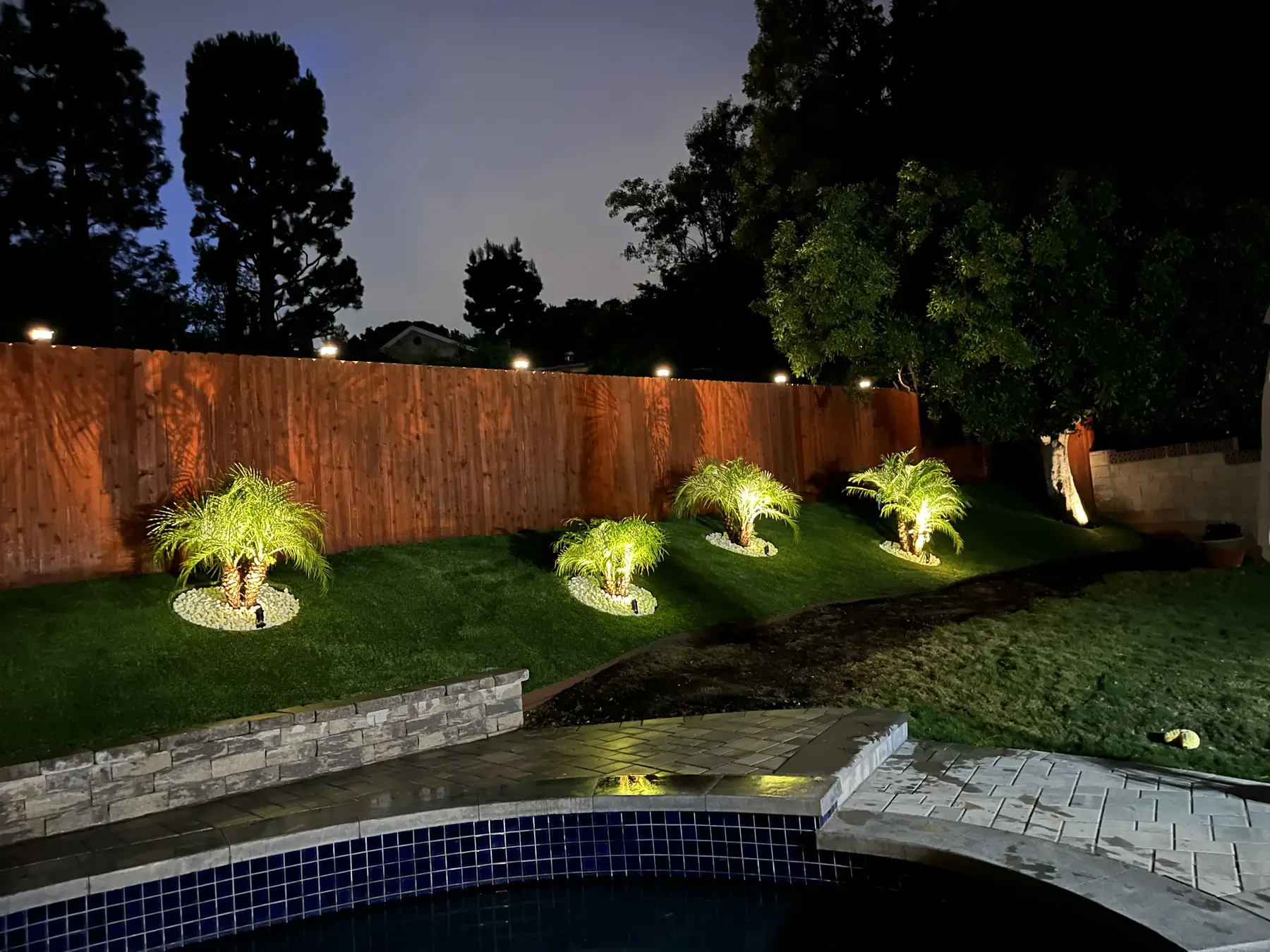
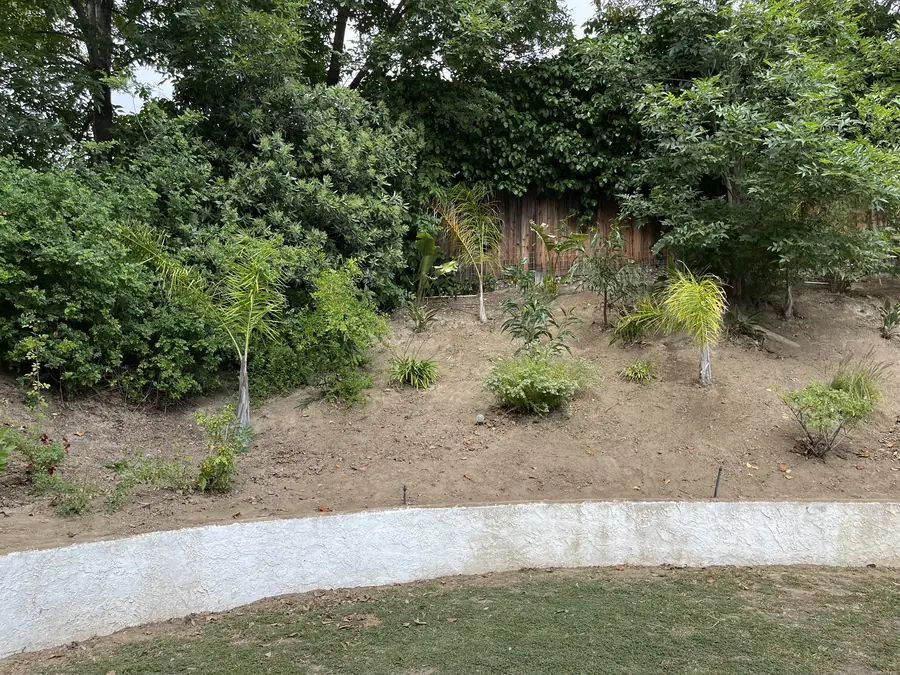
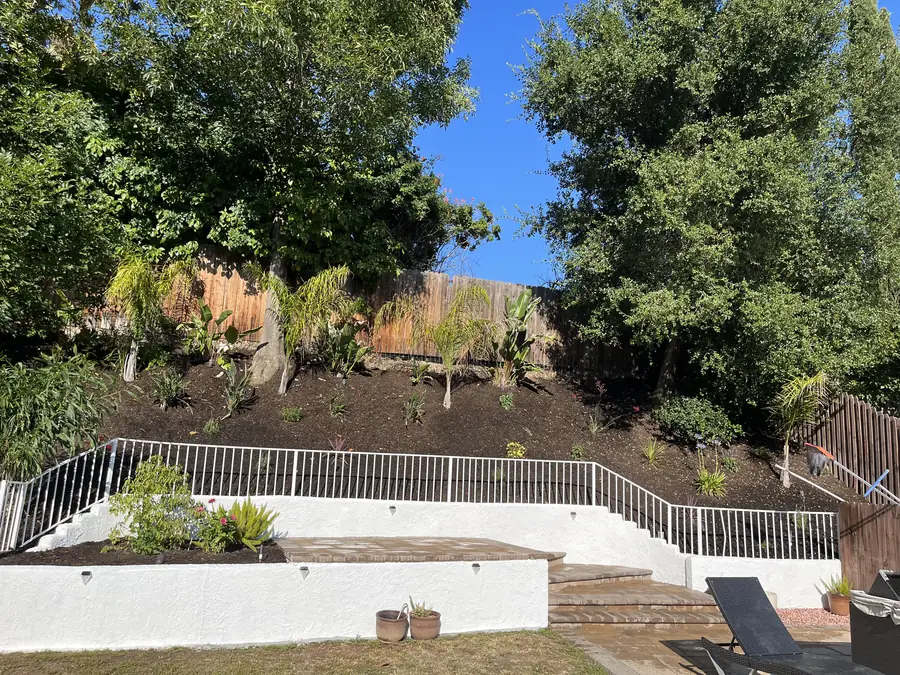
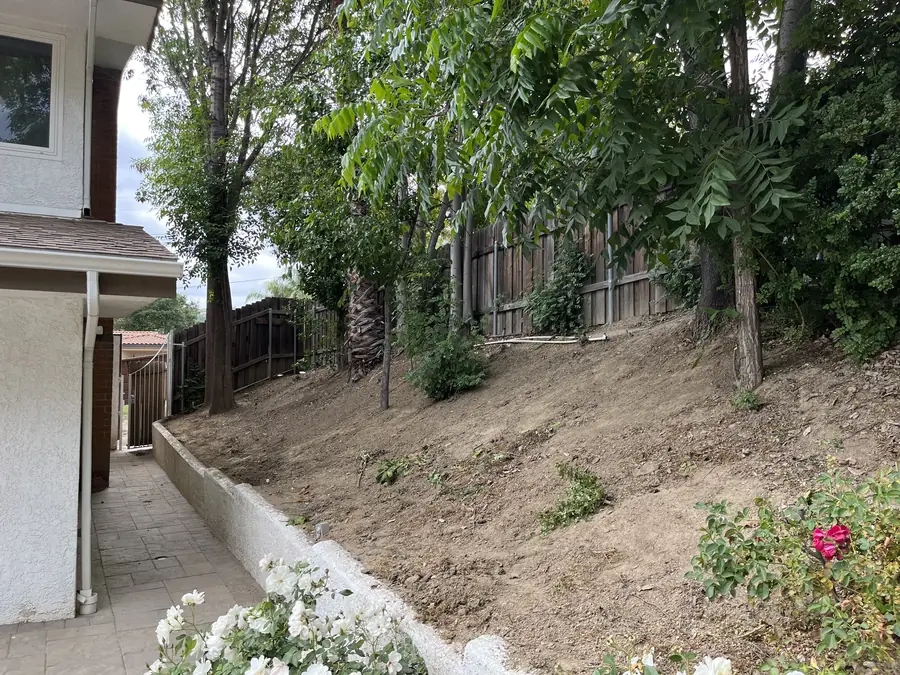
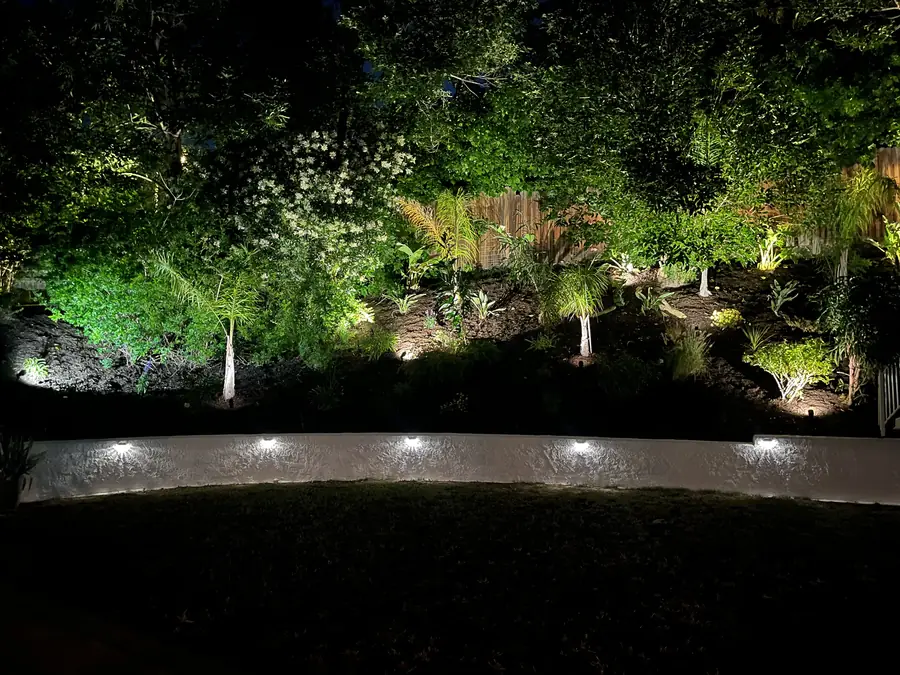
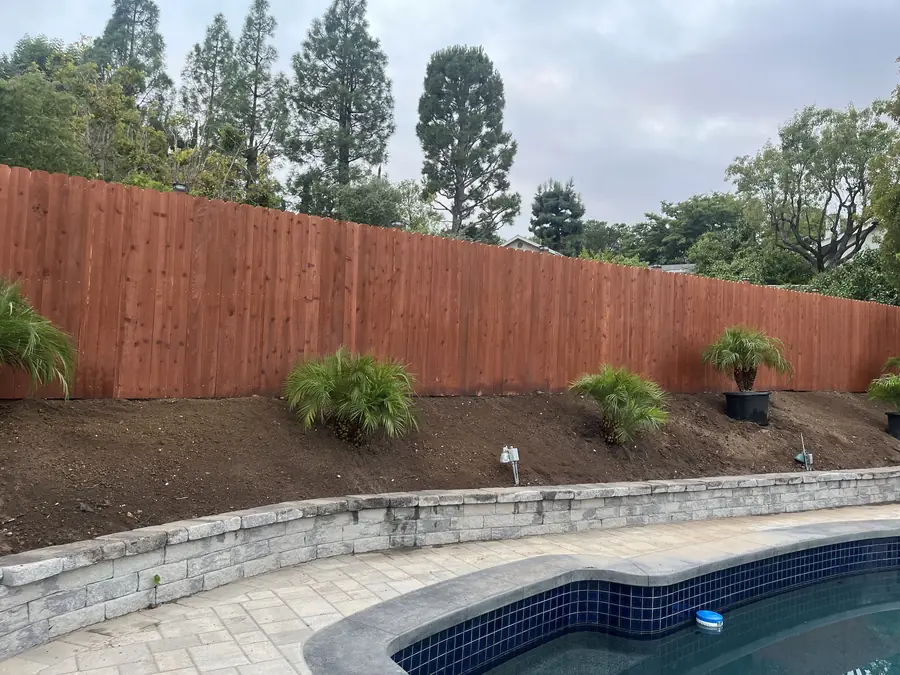
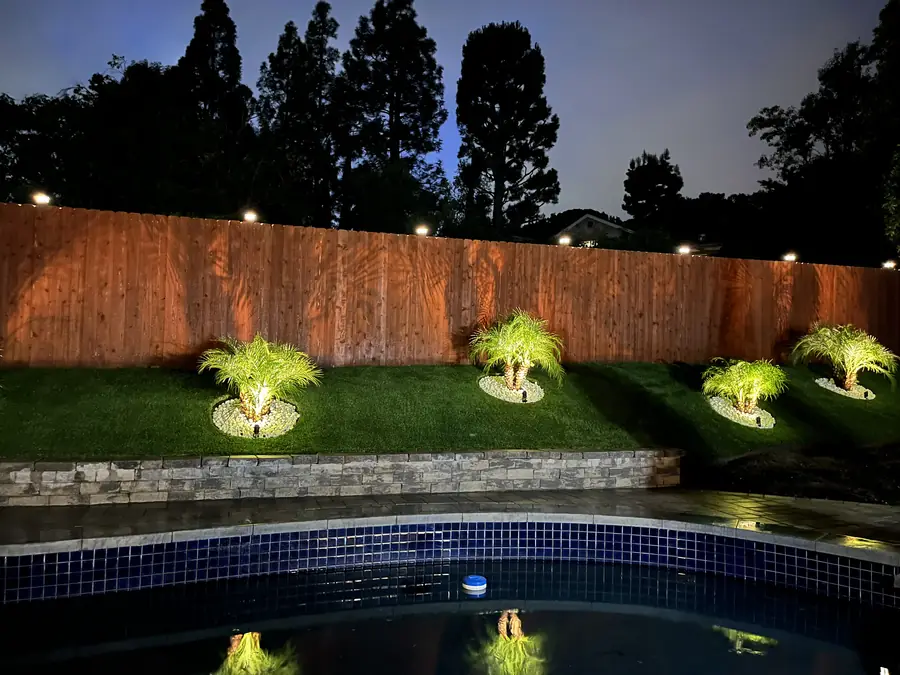
Grade is a gift to a lighting designer. Where ground rolls upward toward the north, you can light across elevations instead of putting everything on one plane, which is what makes a yard read as deep after dark. Fixtures set on a higher level wash down over the ground below, uplights at the bottom throw shadow up the slope, and the change in height keeps sources out of direct sightline. On the flat sections of Mission Hills none of that comes free, so the same depth has to be built through placement alone.
From inside the structure rather than from a pole. Step lights recess into the riser or the side wall so the tread is lit without a glare source in anyone's eyes. Wall lights and hardscape fixtures tuck under a cap or a seat wall overhang and throw a soft band down the face, showing the wall and the walking surface at the same time. On terraced yards this is the safety layer and the design layer at once. Wiring for it should be run before the wall is capped whenever timing allows.
Yes, but every bit of it has to be deliberate. Without elevation to work with, depth comes from layering distances, so light is placed at the near ground, at mid height in shrubs and small trees, and far back against a rear fence or a tall canopy. The eye reads those separate distances as space. Varying brightness helps too, since a few brighter focal points with quieter fill between them looks far deeper than an even wash across the whole yard. Dark gaps are part of the composition, not a hole in coverage.
Farther apart than most people expect. Path lights are meant to place pools of light that guide the eye along a route, not to form a continuous lit runway. Spacing them too tightly gives the airport landing strip effect and doubles the fixture count for no benefit. We stagger them rather than lining them up in matched pairs, keep them low enough that the shade covers the lamp, and let the pools overlap only slightly. Direction matters as well, because a fixture aimed across the walk lights the surface better than one aimed along it.
The terms overlap in practice. Uplighting describes the technique of aiming a fixture upward at a tree, a wall or an architectural feature, while a bullet is the narrow cylindrical fixture most often used to do it. Bullets come in different beam spreads, so a tight spot reaches a tall canopy and a wider flood covers a broad shrub or a section of facade. Aiming is where these live or die. A bullet pointed carelessly puts a hot spot on a neighbor's window or straight into your own eye from the patio.
When the fixture itself needs to disappear. A well light installs into the ground with its lens at or just below grade, so during the day there is nothing to see, and after dark the light appears to come from the earth. That suits lawn areas where a fixture would be mowed over, tight spots against a wall, and clean modern planting where visible hardware would break the look. The tradeoffs are real. Wells sit where debris and water collect, so they need drainage beneath them and periodic clearing of leaves off the lens.
Two different effects from similar fixtures. Washing places the light far enough back that it lays an even sheet across a surface, flattening texture and giving a broad calm glow, which suits stucco and smooth planes. Grazing sets the fixture close to the base and aims steeply upward, so every ridge and joint casts a small shadow and texture is exaggerated. Stone veneer, brick and rough block reward grazing. Choosing wrong is a common mistake, because a graze on flat stucco simply prints every trowel mark the plasterer left behind.
It is sized to the connected load with headroom left over, never filled to capacity. Loading a transformer to its limit leaves nothing for the fixtures you will want to add in two years, so we specify one with room to grow. Placement balances reaching a suitable exterior receptacle against staying close enough to the yard to keep cable runs sensible. Multi tap models offer several voltage outputs, which lets us feed a long run from a higher tap to compensate for loss along the way. It mounts off the ground and stays accessible.
Voltage drop. Current loses voltage over the length of the cable, and on a deep lot the last fixture on a run can end up noticeably lower than the first. Where a property also rises gently, the far fixtures are often the ones sitting farthest from the transformer as well, which compounds the effect. The fixes are ordinary engineering. Heavier gauge cable, hub connections that feed several fixtures from a single point instead of daisy chaining them, splitting the load across more runs, and selecting a higher tap on the transformer.
Carefully and shallowly. Low voltage cable does not require the depth that line voltage does, so runs are cut into the soil with a spade or a narrow trencher and tucked below the level a garden tool reaches. We route along bed edges and hardscape lines rather than straight across open ground, which keeps future digging away from them. Existing irrigation gets located first so nothing is nicked. On established planting the ground closes back over the run and there is almost nothing to see once mulch is replaced.
Sunset shifts by hours across the year, so a fixed clock time drifts badly. An astronomical timer tracks sunrise and sunset for the location and moves with them, which is why we use those instead of a plain mechanical dial. A photocell does the same job by reading actual darkness. Through the hot dry season here the system comes on late, and there is little reason to run it until dawn, so most people switch it off a few hours after the yard stops being used. LED draw is small either way.
LED is the standard now and there is no serious argument for anything else outdoors. Draw is a fraction of what halogen took, which means more fixtures on a transformer and far fewer trips up a ladder. Lamp life is measured in years rather than seasons. On color, warmer output in the range that reads like candlelight or soft white flatters planting, stone and stucco, while cooler output tends to make foliage look gray and clinical. We keep temperature consistent across a property, because mismatched fixtures are immediately obvious after dark.
Because good fixtures aimed badly look worse than modest fixtures aimed well. Anyone can buy a quality bullet. What decides whether a yard looks designed or merely looks lit is where each fixture sits, what beam spread it carries, how it is angled to keep the source out of sightlines, and whether the voltage reaching it is correct. Connections matter just as much, since a cheap twist connector in wet soil is the failure that brings us back. We aim everything at night, on site, with the system running.
Often the buried cable and sometimes the transformer are worth keeping. Mission Hills holds a mix of long established houses and newer construction, and on the older properties the original system frequently still has serviceable wire in the ground even after the fixtures have corroded through. We test the runs, compare transformer capacity against what you want now, and replace fixtures and connections while keeping whatever is sound. Where the old layout no longer matches a yard that changed around it, starting the design fresh makes more sense than patching.
Yes, and it happens that way constantly. Retrofitting into a finished yard is more careful work than running cable through open ground, but low voltage suits it well because the trenches are shallow and runs follow bed edges. What gets harder is anything crossing paving or needing a sleeve under a walk, since that was simple during construction and awkward afterward. If new hardscape is anywhere in your plans, we put sleeves in while the ground is open even when the lighting comes later.
Daniels Landscaping does, with one licensed contractor. One licensed contractor stays accountable for the work. The same team plans the layout, digs the runs, mounts the transformer, makes the connections and comes back after dark to aim each fixture. Keeping it under one contractor is why the aiming actually happens, because that final night visit is the step an outside crew has no reason to return for. One company designed it, one company installed it, and one company answers the phone if a fixture goes out.
Call Daniels Landscaping at (818) 443-9300 and we will come look at the property, ideally walking it once in daylight and talking through how you use the yard after dark. We note trees worth uplighting, walls and steps that need attention for safety, sightlines from inside the house, and where power is available. You then receive a free written estimate listing fixtures, transformer, runs and controls. Daniels Landscaping carries California license 1138709. There is no charge for the visit and no obligation attached to the estimate.