
FAQ
Hardscaping in Mission Hills, answered
The questions we hear most from Mission Hills homeowners.
Hardscaping is the built, non living surface of a yard, assembled dry rather than poured. Paver patios, stone walkways, decomposed granite paths, gravel areas, steps, seat walls, borders, and edging all fall inside it. The defining feature is that units sit on compacted aggregate and lock together through edge restraint and joint sand, so the surface flexes slightly with the ground instead of resisting it. Poured slabs and mortared block or brick are masonry, a separate discipline with different failure modes. Plenty of yards use both, and knowing which one an area calls for saves money.
A concrete slab is one rigid piece. It goes down fast and looks clean, but it will crack somewhere, and control joints only decide where. A paver surface is thousands of small units on compacted base, so ground movement gets absorbed at the joints instead of splitting a slab. If a section settles or a utility needs reaching, pavers lift out and reset with no patch line showing. Concrete usually costs less up front. Pavers cost more to install and are far easier to live with over the long run.
The base is the entire job, and pavers are only the part you see. Native soil gets excavated to depth, then compacted. Crushed aggregate goes in and is compacted in lifts rather than dumped all at once, since a single thick layer never densifies through the middle. A thin bedding course of coarse sand is screeded flat over that base, and pavers set into it. Skimping on base depth or on compaction is exactly why patios go wavy inside a few years, and it cannot be corrected from the top.
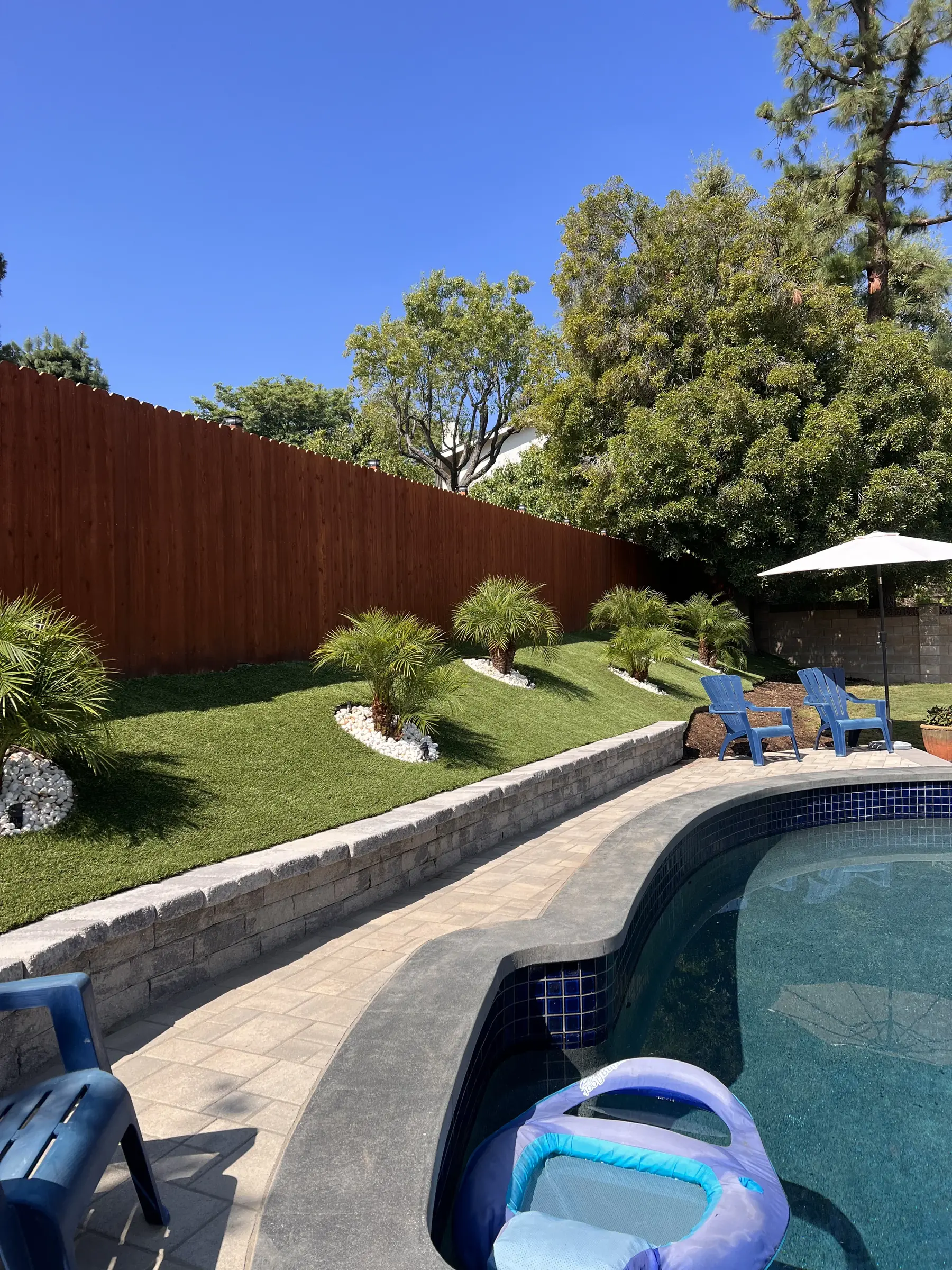
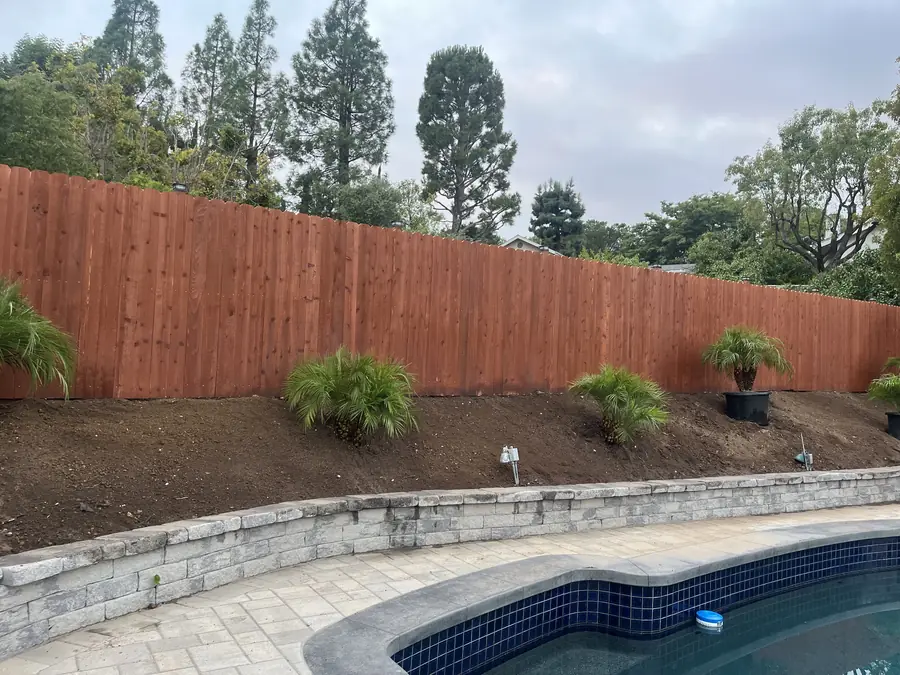
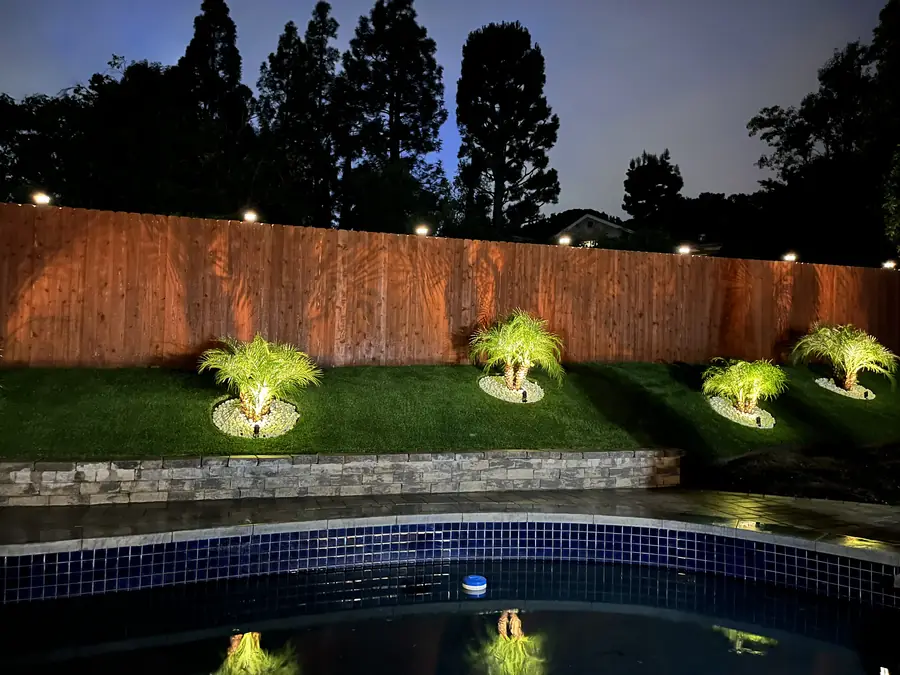
Yes. A gentle fall is worked with rather than against. Where the rise is modest, we cut into the high side and use that excavated material to build up the low side, then hold the difference with a low seat wall or a soldier course border. Where the change is larger, a single step or a short terrace splits the patio into two comfortable levels, which usually reads better than one enormous flat plane. Whatever the layout, the finished surface still carries a slight pitch away from the house so water leaves.
Every paved surface here gets a fall built into it, roughly an eighth of an inch per foot, running away from the house. The base layer sheds water too, which is why open graded aggregate matters more than a fine mix that holds moisture. On lots collecting flow from higher ground, we set a drain line beneath the paving or a channel drain across the low edge, tied into solid pipe with a proper outlet. Water with nowhere to go softens base material, and soft base is what makes pavers sink.
Color choice is a comfort decision as much as a style one. Full sun and long hot summers mean a dark charcoal or deep red paver stores heat and turns genuinely unpleasant underfoot by mid afternoon. Lighter buff, tan, and gray blends stay noticeably cooler and hide dust better in a dry climate. Texture matters as well, since a tumbled surface throws less glare than a smooth one. When a client wants dark units, we steer them toward shaded areas or use them as a border rather than the main field.
Decomposed granite suits this area well. It gives a warm, informal surface that sits comfortably beside the Spanish influenced character the San Fernando Mission lends the neighborhood, and it pairs naturally with olive, agave, and gravel beds. Installed properly it is compacted in lifts over prepared subgrade and held by steel or masonry edging, with a stabilizer binder to keep it from tracking indoors. Left loose and unedged, it migrates and washes. On any surface with real slope we recommend pavers or stone instead, since fines travel downhill.
We do the whole thing ourselves. Daniels Landscaping cuts the base, runs the plate compactor, screeds the bedding, sets every paver, and finishes the joints with one licensed contractor. One licensed contractor stays accountable for the whole job. That matters more in hardscape than almost anywhere else, because base preparation disappears from view once the surface is down, and the only real assurance it was built to depth and compacted in lifts is that the company answering for the work is the company that performed it.
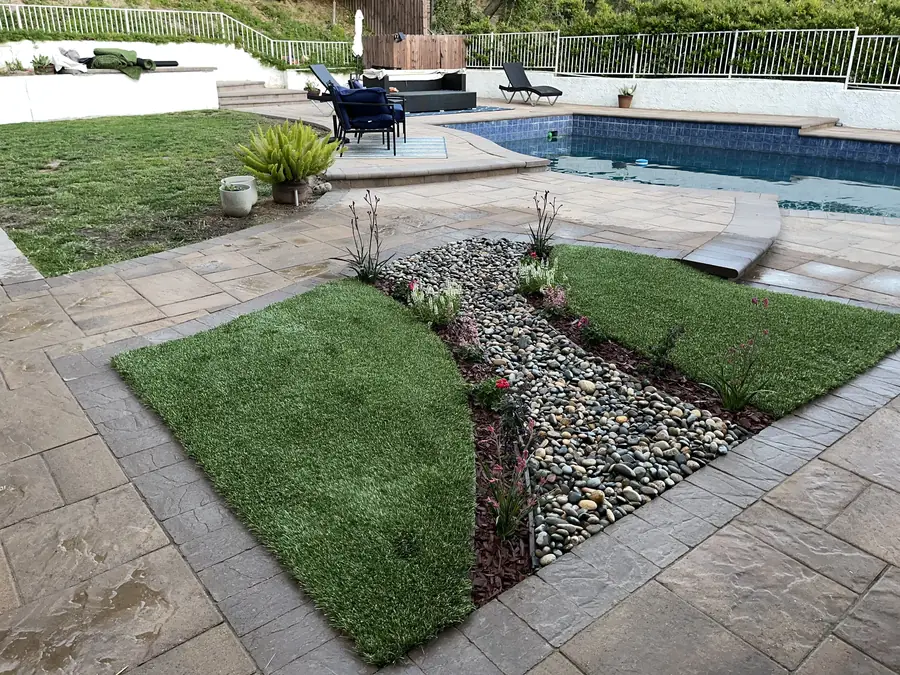
Edge restraint, or the absence of it. A paver field holds together through lateral pressure, and without something locking the perimeter, the outermost course creeps outward every time weight crosses it. Joints open, sand escapes, and that spread works its way inward. We install rigid edging spiked into compacted base around the full perimeter, and where a patio meets a planted bed or a walkway meets gravel, that edge receives the same treatment. Edging set into loose soil rather than compacted base fails just as surely as none at all.
Joint sand fills the gaps between units and is what makes separate pavers behave as one interlocked surface. Ordinary sand works, but it washes out under hose pressure and rain, which slowly loosens the field. Polymeric sand carries a binder that sets after wetting, so it resists washout, discourages weeds and ants, and keeps joints tight. It has to go in dry, be swept fully down into the joints, and be watered exactly as the product requires, since a rushed application leaves haze across the surface. We top joints up during any repair.
Yes, and that is some of the more satisfying work on the sloped lots around here. Steps are laid out so every riser is the same height, because an uneven riser is what people trip on. Treads run deep enough to take a full stride comfortably. Each step sits on its own compacted base rather than on loose fill, and where the run is long we break it with a landing instead of stacking a dozen risers in a row. Where the cut beside the steps needs holding, a low wall goes in alongside.
A seat wall is a low freestanding wall, roughly bench height, built along the edge of a patio, and in a compact yard it earns its space twice over. It defines the edge of the outdoor room and provides seating without furniture eating floor area. Built from wall block on compacted base with a cap set over it, it also handles a modest grade change where the patio meets higher ground. Corners and returns give a wall visual purpose. A straight run with nothing anchoring the ends always looks unfinished.
Manufactured pavers give consistent thickness and dimension, which means faster installation, tighter joints, and a surface easy to match later if a repair is ever needed. Natural stone gives variation no manufactured product replicates, and flagstone in particular suits an informal path winding through planting. The tradeoff is that stone varies in thickness, so each piece is bedded individually and the work takes longer. For a main patio carrying furniture and traffic, pavers usually make more sense. For a garden path with character, stone is worth the extra labor.
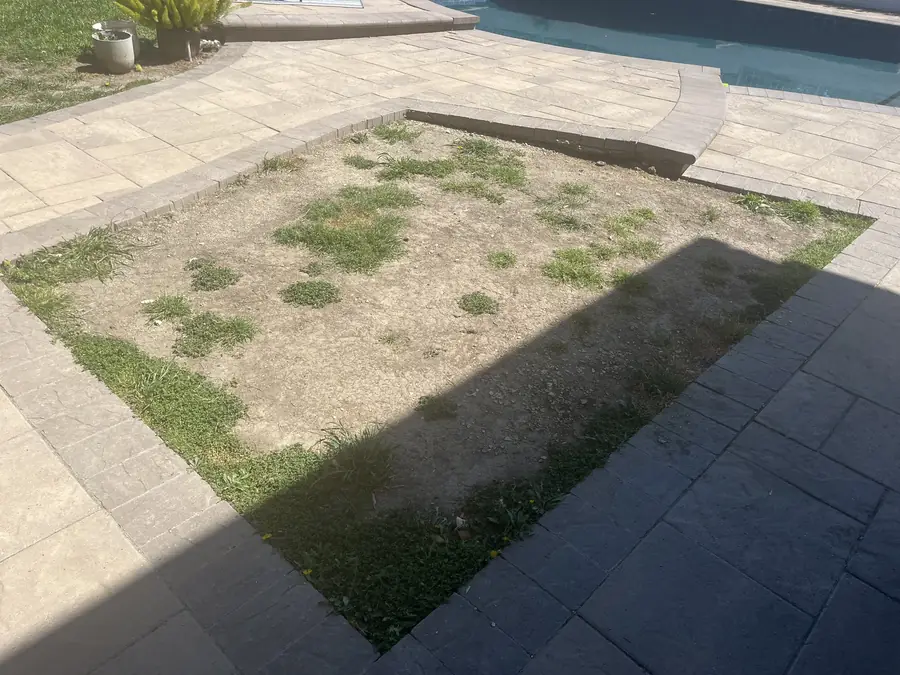
Established properties in this neighborhood frequently have a walkway or small slab that has cracked, lifted, or settled back toward the house, and the honest answer is that patching rarely lasts. We break it out, haul it away, and identify what caused the failure, usually root heave, poor base, or water running the wrong direction. That gets corrected while the ground is open. Then a proper base is built and pavers go down. Removing the old surface is not padding the job. It is the only way the new one holds.
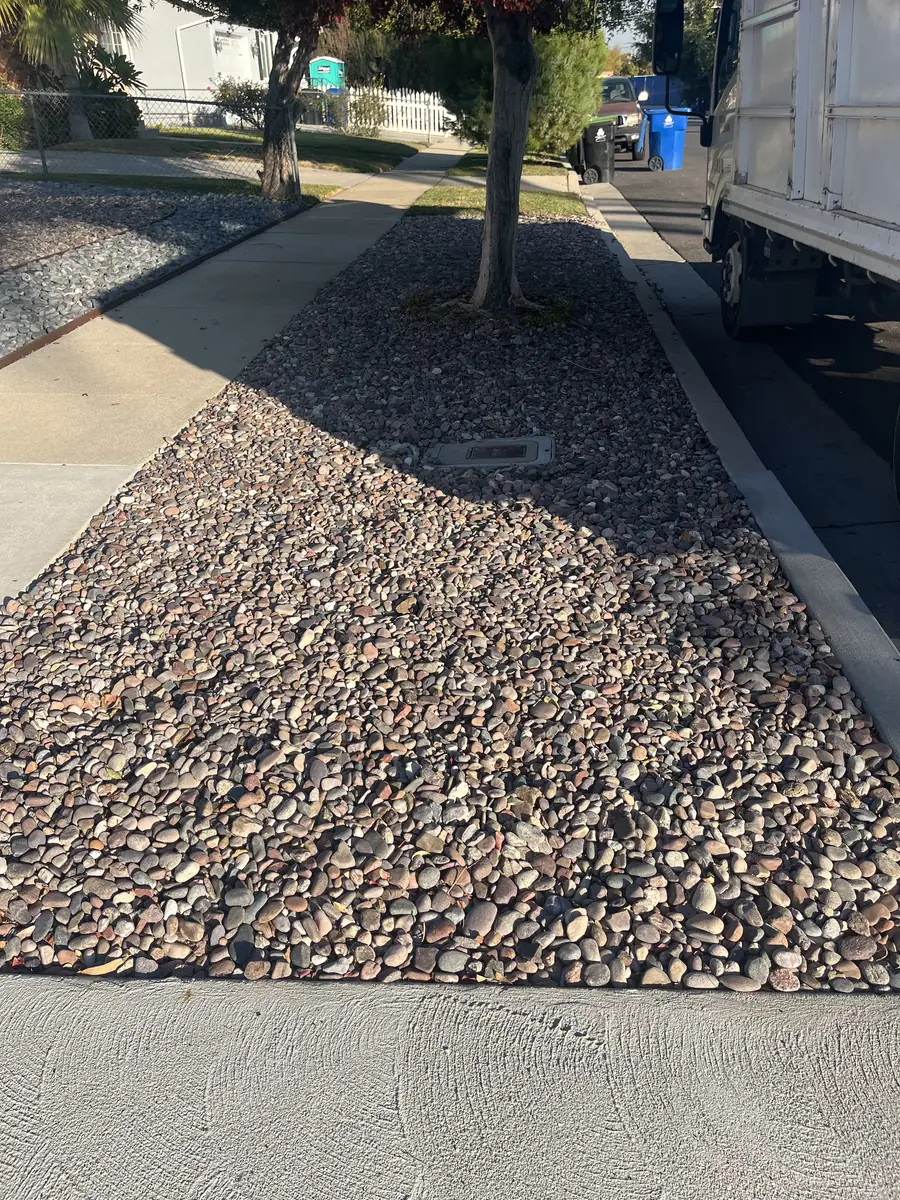
Gravel works well for side yards, utility paths, and informal parking areas, provided it is contained. Loose stone spread over bare dirt sinks into the soil and vanishes within a season. We excavate, lay a geotextile separation fabric, build a compacted base wherever vehicles will drive, then place the gravel and edge it firmly. Angular crushed rock locks together and stays put. Rounded pea gravel rolls underfoot and migrates, so we keep it out of walking routes. Depth stays modest, since deep loose gravel is tiring to walk across.
Very little, which is much of the appeal. Rinsing and sweeping handle ordinary dirt. Joint sand wants topping up every few years, particularly along edges and anywhere a pressure washer has been used carelessly. Weeds that appear are growing in joint debris rather than pushing up from below, so keeping joints full is the prevention. Sealing is optional and mostly about deepening color and making stains near a grill easier to lift. In this dry climate, an unsealed paver patio stays presentable for a long stretch.
Yes, and that is the practical advantage of a dry laid surface. The affected pavers lift out, the bedding and base beneath get corrected or recompacted, and the same units go back down. Done properly the repair is invisible, since original pavers are reused instead of replaced with a new batch that will never quite match. Settling in one spot usually points to something specific, a trench that was not compacted, a downspout dumping in one place, or a root, so we address the cause while the area is open.
Reach us at (818) 443-9300 and we will come out and look at the space. That visit covers the fall of the ground, what existing surfaces are doing, where water currently ends up, access for base material and equipment, and how you genuinely want to use the area. A free written estimate follows, itemized so you can see what the base work involves rather than only the paver you picked. California license 1138709 covers the job, and one licensed contractor performs it.