
FAQ
Artificial Turf in Mission Hills, answered
The questions we hear most from Mission Hills homeowners.
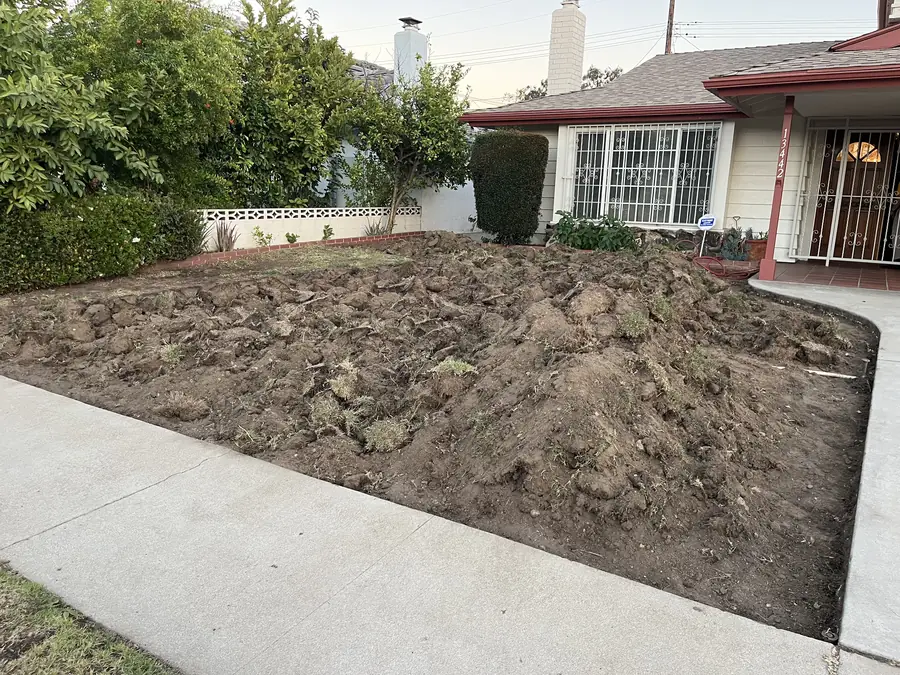
The base determines whether a lawn still looks right in year five. Existing sod or soil is excavated to depth, the subgrade is compacted, and a weed barrier goes down. Crushed aggregate follows, placed and compacted in lifts, then a finer layer is screeded to a smooth plane, since every dip and high spot telegraphs straight through the turf. Drainage fall is shaped into the base at that stage. Only then does turf come off the roll, and it is stretched rather than laid loose so it will not wrinkle later.
It is one of the better fits for this area. Summers run hot and dry with very little relief, and a natural lawn in full sun demands heavy irrigation from late spring into October simply to stay presentable. Synthetic turf keeps its color through all of it with no water at all, no mowing in triple digit heat, and no brown patches to overseed come fall. The tradeoffs are surface heat and up front cost. For a yard where the lawn is decorative or lightly used, the math usually favors turf.
Warmer than natural grass, and that is worth saying plainly. Under unbroken afternoon sun, a synthetic lawn gets hot enough that bare feet and dog paws notice, especially between roughly two and five in the afternoon. Several things help. Lighter colored turf paired with a cooling infill runs cooler than dark dense product. A quick hose rinse drops surface temperature fast. Shade from a tree, a patio cover, or the house itself makes the biggest difference, which is why we look at where shade falls before deciding where turf goes.
Face weight is the ounces of yarn per square yard, counting only the blades and not the backing. Higher face weight means more fiber packed in, which is what keeps a lawn from matting under traffic and looking permanently flattened. Light product feels thin and lies down for good in walking routes. Very heavy product costs more and is unnecessary for an area nobody crosses. For a family back yard we specify a solid mid to upper range face weight, and for a decorative front strip we do not oversell it.
Shorter than most people expect. Long blades look lush in a showroom sample and then fold flat under any real traffic, which is why a tall pile in a play area matting within a season is such a common complaint. Moderate pile height stands up better, cleans more easily, and reads like a maintained lawn rather than a shag rug. Front yards and low traffic display areas can run slightly taller since nothing walks on them. Pet areas go shorter still, because short blades rinse clean and dry faster.
Blade shape is the reason two lawns with identical specifications can look completely different. A flat blade is cheaper and shinier, and that shine is what makes a lawn read as fake from across the street. Shaped blades, whether S, C, or W profiles, carry a spine that stiffens the fiber so it springs back after being walked on, and the faceted surface scatters light rather than reflecting it in a sheet. A curled thatch layer in a contrasting tone at the base is what fills in the look near the ground.
Infill holds blades upright and gives the lawn enough weight to stay put. Rounded silica sand is the standard fill and serves general use well. For households with dogs we move to a coated antimicrobial infill that resists odor retention and does not hold moisture the way an organic fill does. Quantity matters as much as type, since underfilled turf lies flat and looks tired within months. It gets broomed in and worked down to the backing rather than left sitting on top of the fibers.
Yes, provided the base is built for it. Turf backing is perforated, so water passes straight through the surface, but it then has to leave the base instead of sitting in it. On a flat lot, and plenty around here are genuinely flat, we shape a gentle fall into the compacted base toward a defined outlet, and where nothing obvious exists we install a drain line and basin beneath the turf before aggregate goes in. A flat yard is no obstacle. A flat yard with no planned outlet is.
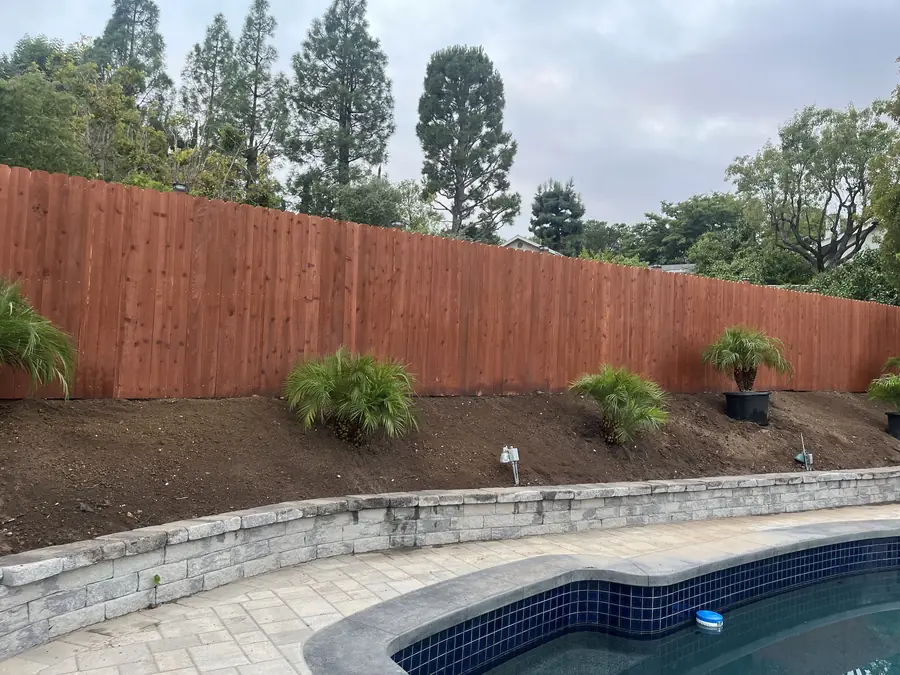
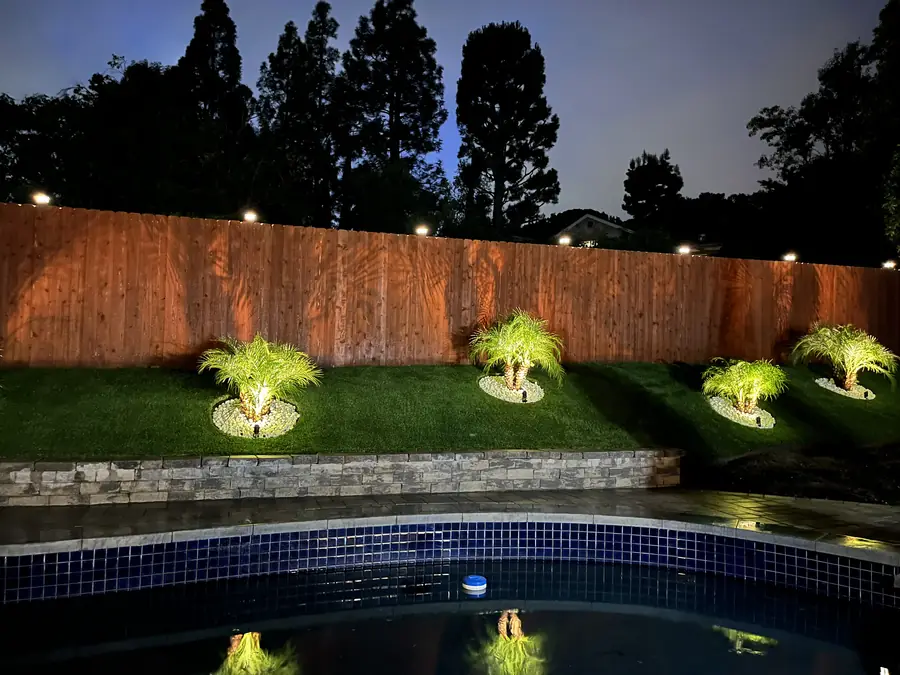
Turf performs well on the gentle grades found on the northern side of this area. The base gets compacted the same way, and the existing fall is used deliberately so water sheds across the surface instead of pooling anywhere. On steeper sections we anchor more heavily, spacing nails tighter along the top edge so the roll cannot creep downhill under its own weight over time. Where a slope runs long enough to build momentum, breaking it with a low wall or a terrace beats running one continuous sheet down the face.
Our own installers, every time. Daniels Landscaping excavates the base, compacts it, screeds the surface, cuts and seams the turf, nails the perimeter, and brooms in the infill with one licensed contractor. One licensed contractor is accountable for the work. Seaming in particular rewards experience, because a visible seam running across an open lawn is permanent and cannot be quietly corrected afterward, and we would rather answer for that ourselves than explain a shortcut somebody else took on a surface you look at daily.
Seams get planned before the first roll is cut. Every piece runs with the blade grain facing the same direction, because turf laid against its own nap shifts color noticeably from every viewing angle. Edges are trimmed so stitch rows meet without overlapping, joined on seaming tape with adhesive, and weighted while the bond sets. Where the layout allows, we place seams away from the main sight line from the patio or back door. A properly built seam disappears once infill is broomed in. A rushed one shows forever.
The perimeter carries all the stress, so it gets the most attention. Turf edges are nailed at close spacing into the compacted base using non galvanized nails that will not stain the fibers. Where turf meets a paver patio or a concrete walkway, the edge is tucked tight and fastened so no gap can open. Along a planting bed, bender board or a similar edge holds the line and keeps soil and mulch off the lawn. Fibers along the cut edge are teased upright so the boundary does not read as a hard line.
It holds up well, which is why so many pet owners choose it. Urine drains through the perforated backing into the base and rinses away, and solids lift off easily. What matters is an infill that resists odor, enough base drainage to move liquid out rather than hold it, and periodic rinsing, more often in summer than winter. Digging does not ruin turf the way it destroys a lawn, and no mud comes indoors after watering. Heavy traffic in one spot may flatten fibers, and brushing stands them back up.
Upkeep is light but not zero. Leaves and debris get blown or raked off with a plastic rake rather than a metal one. A rinse every so often keeps dust down, which counts for something in a dry climate where fine dust settles constantly. Traffic lanes benefit from brushing against the grain with a stiff broom to stand fibers back up. Infill wants topping up every few years, particularly where the lawn gets used hardest. Occasional weeds sprout in surface debris along edges and pull out easily, having no root path below.
Quality turf with UV stabilized fiber holds up for many years, and manufacturers back it with lengthy warranties. Full sun exposure through long hot summers is the hardest condition it faces, and it is precisely why we do not specify budget product here. Cheap turf fades and grows brittle under this much ultraviolet load, and once fiber loses flexibility no amount of brushing revives it. What tends to go first is not the fiber itself but infill level and matting in walking routes, and both of those are maintainable.
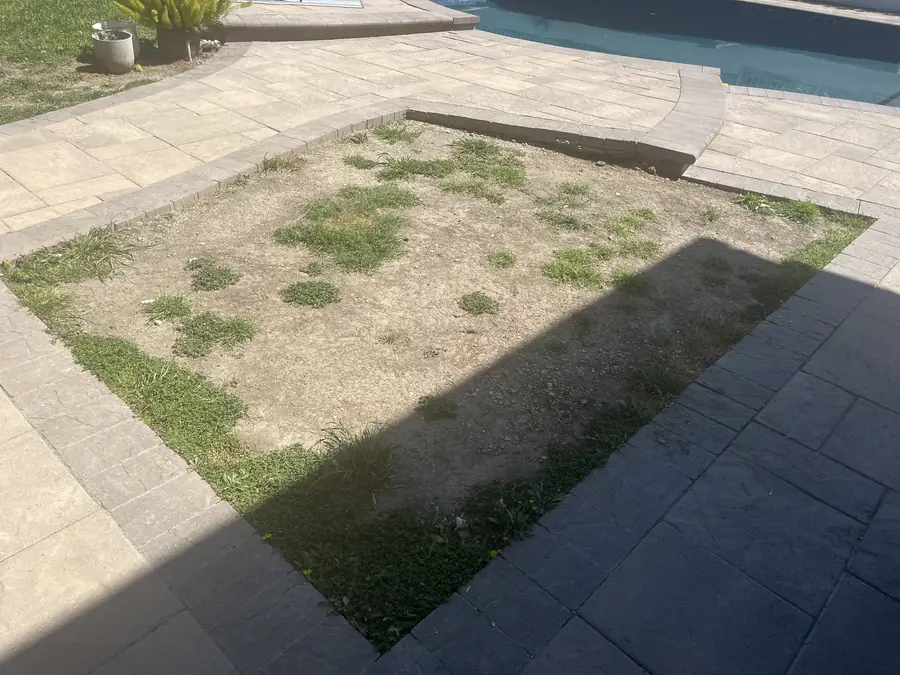
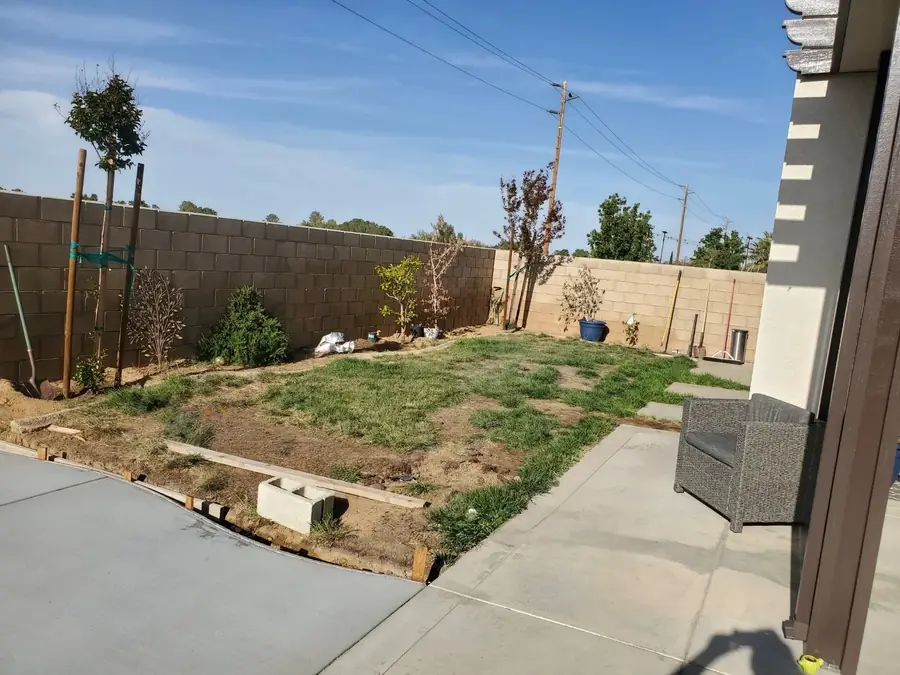
That is one of the most common calls we get around here. Established properties often have a lawn that fought the heat for years and finally lost, and laying turf straight over dead sod does not work, because the organic layer breaks down and the surface goes lumpy. The old lawn and several inches of soil come out and get hauled away, sprinkler heads inside the turf area are capped or converted to feed surrounding beds, and a proper base is built from scratch on clean subgrade.
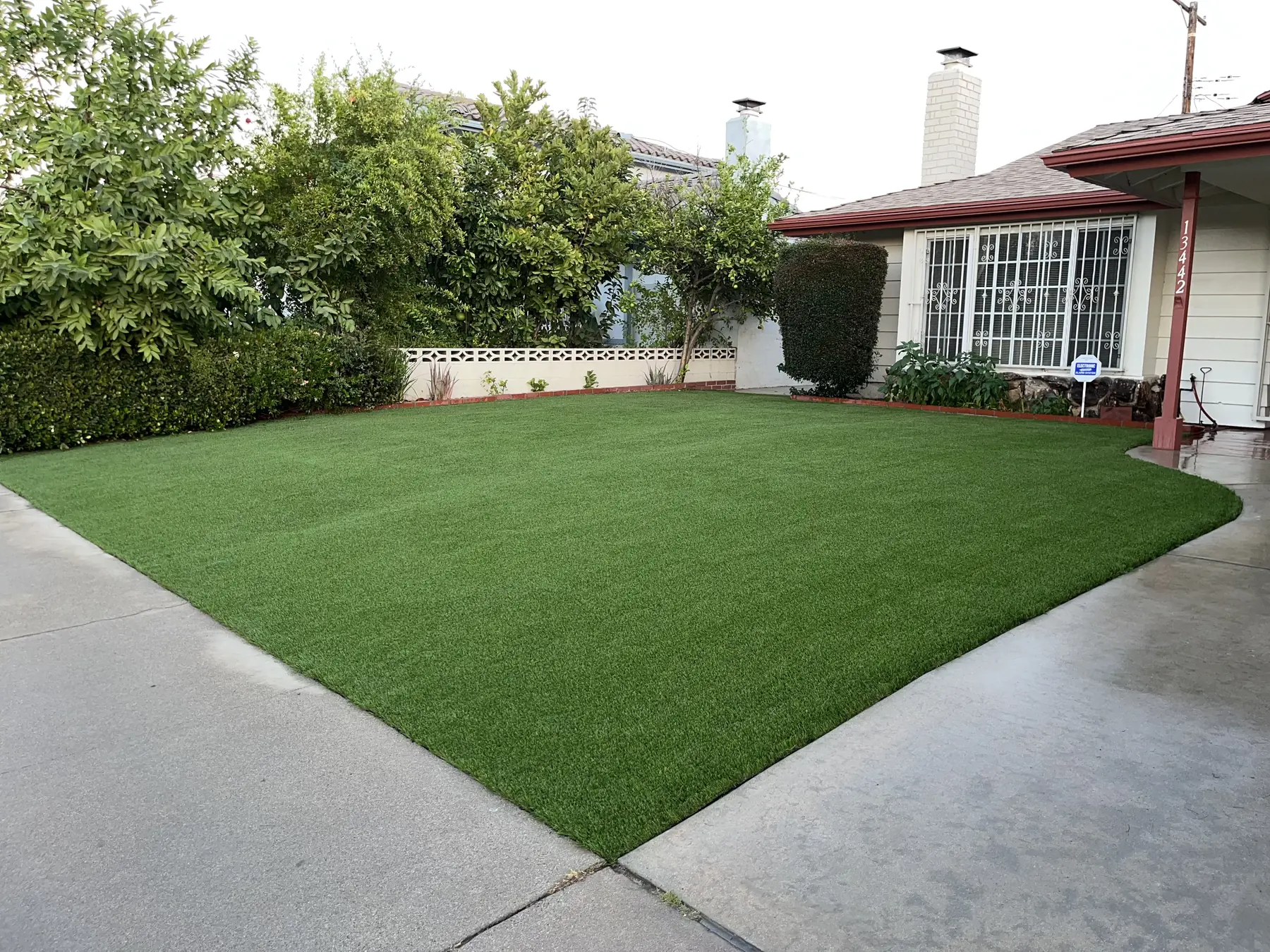
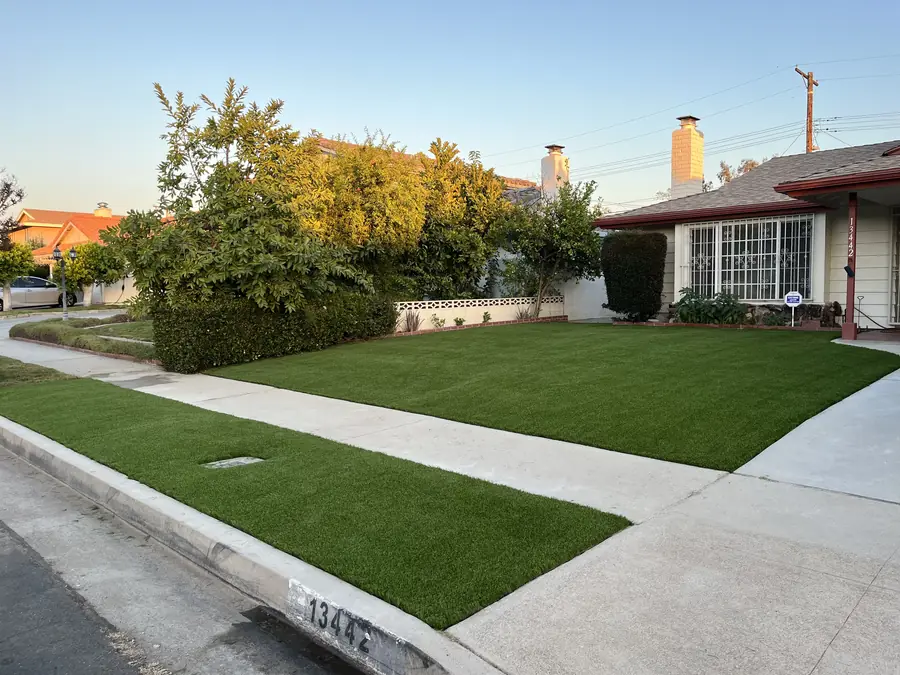
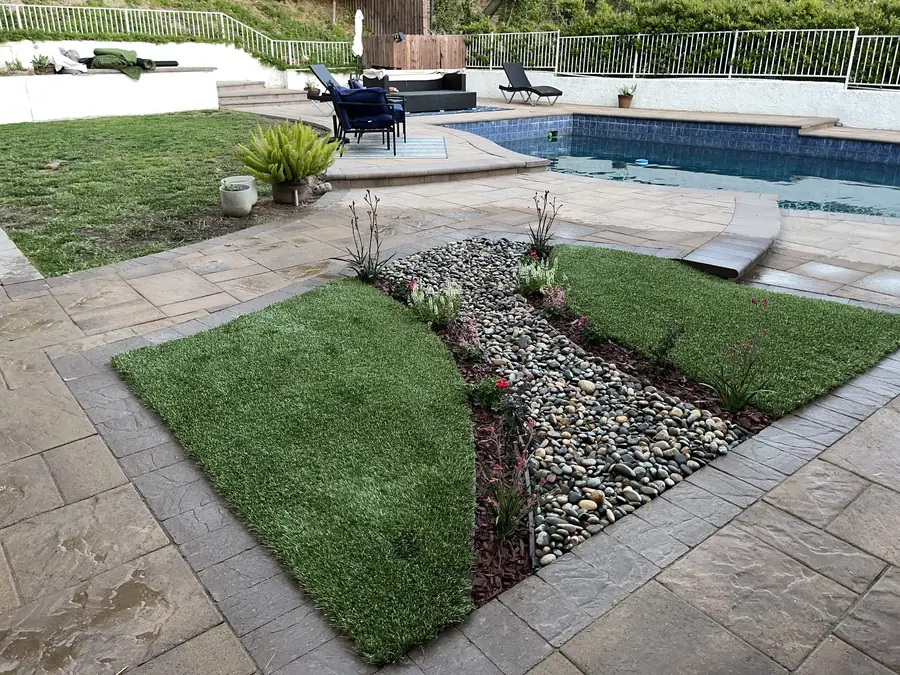
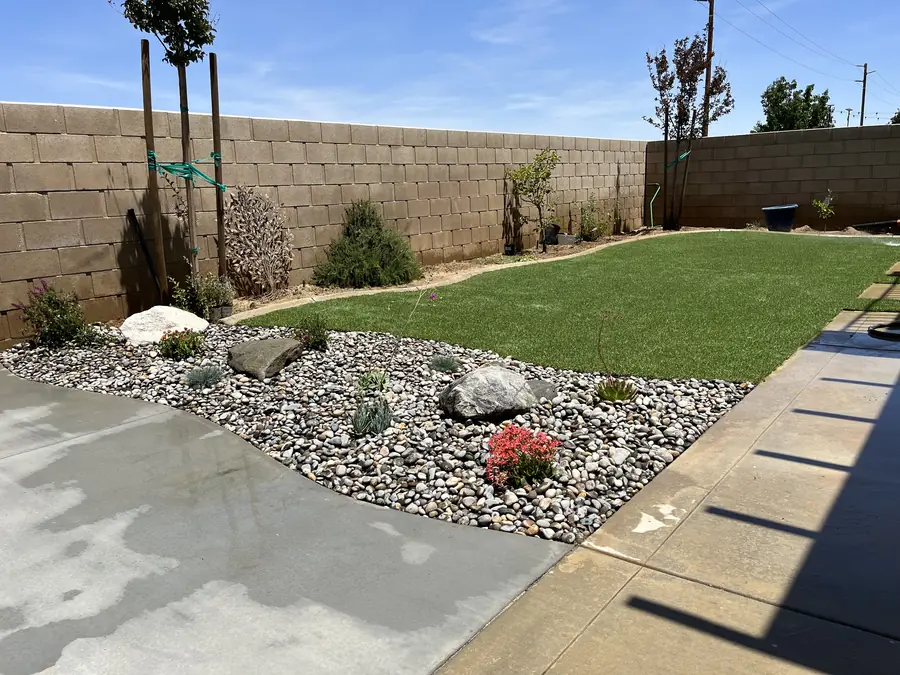
Turf reads best treated as one defined shape rather than as wall to wall coverage. A clean rectangle or a simple curve of lawn, framed by planted beds, gravel, or a paver border, looks intentional. Turf poured into every leftover corner looks like carpet. In front yards here, a modest turf panel surrounded by heat tolerant planting suits the street and keeps the property from looking artificial from the sidewalk. We also keep turf out of deep shade under dense canopy, where it collects litter and never quite looks right.
Call (818) 443-9300 to set up a visit. We measure the area, check what is there now, watch how sun and shade move across the yard, work out where water will exit the base, and go through turf options with samples so you can compare face weight, pile height, and blade shape in your own light rather than under store lighting. A free written estimate follows, with base work spelled out alongside the turf itself. Daniels Landscaping is licensed in California under number 1138709.