
FAQ
Landscaping in Valley Glen, answered
The questions we hear most from Valley Glen homeowners.
Everything from clearing to cleanup sits inside the scope. We strip out what is failing, set rough grade, open trenches for irrigation and drainage, amend the soil, install edging and borders, fine grade, then plant in layers and finish with mulch. Because Valley Glen lots sit flat and regular, the earthwork phase moves along without terracing or retaining, which leaves more of the budget available for planting, shade trees, and a watering system that will still be functioning in ten years. Sleeving for future lighting goes in while the ground is still open.
It does, and the sequence is not negotiable. Demolition leads. Grading follows. Then everything that lives underground goes in: irrigation mainline and laterals, drain lines, and sleeves beneath any future paving. Surfaces and edging come after that. Planting is second to last and mulch closes the job out. Work those steps out of order and you end up cutting a trench through finished beds or driving loaded equipment across soil you just loosened. Respecting the order is the main reason a yard still looks right a year after we drive away.
Flat ground still has to move water somewhere. Without a deliberate fall, rain and irrigation overflow will pond in the middle of the yard or drift back toward the foundation. We work a shallow pitch into the surface, so slight that it never registers when you look at the yard, and aim it toward a drain inlet or out toward the street. The advantage in this part of the Valley is that we are creating slope rather than fighting a hillside, so no erosion control or retaining work inflates the scope.
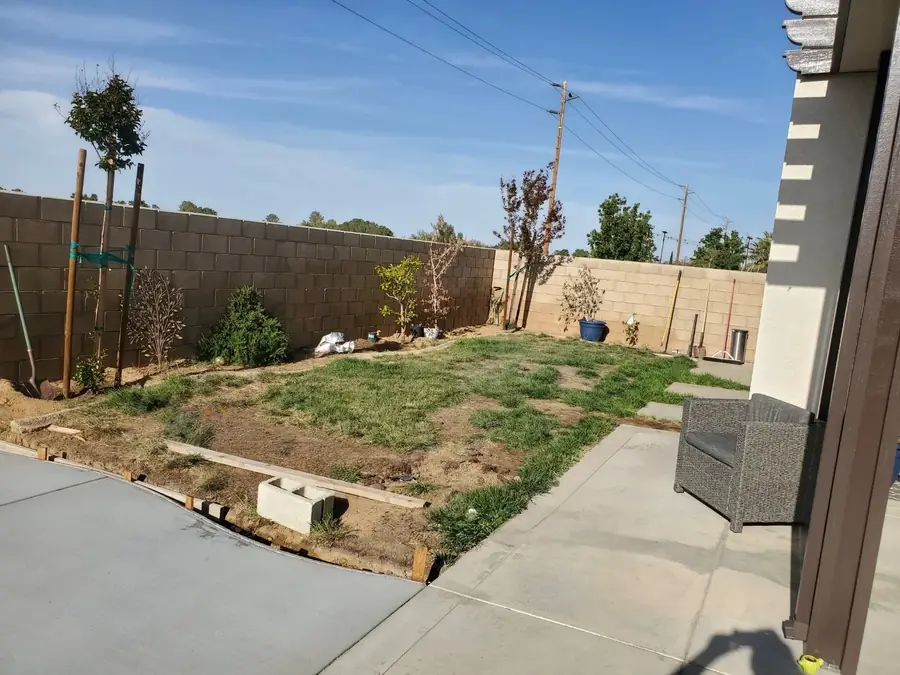
Usually tired rather than hopeless. Years of lawn, sprinkler patterns, and foot traffic press the top layer down until it repels water instead of taking it in. Our first move is to break that layer open, either by ripping or tilling, then blend organic matter through the planting areas and correct for whatever turns up once the surface is off. Beds frequently get raised an inch or two so crowns sit above the surrounding grade. Average plants in prepared ground will outrun premium stock dropped into hardpan every time.
The palette starts with species that actually want this climate rather than ones that merely endure it. For canopy we reach for olive, palo verde, desert willow and crape myrtle. Below that, rosemary, westringia, salvia, lantana, agave, yucca and ornamental grasses keep their shape and color straight through August on very little water. When someone wants a softer, greener feel, the thirstier plants get grouped into one zone near the patio so they can run on their own valve instead of dragging the entire yard onto a heavy schedule.
West exposure takes the hardest hit here, since late afternoon sun arrives when the air is already at its hottest. That side gets the toughest material in the palette, deeper mulch, and drip rather than spray so water reaches roots instead of evaporating off foliage. It is also the first place we site shade trees, because a canopy along the west line cools the wall of the house behind it. Tender plants that would be perfectly content on the north side will scorch out there by midsummer.
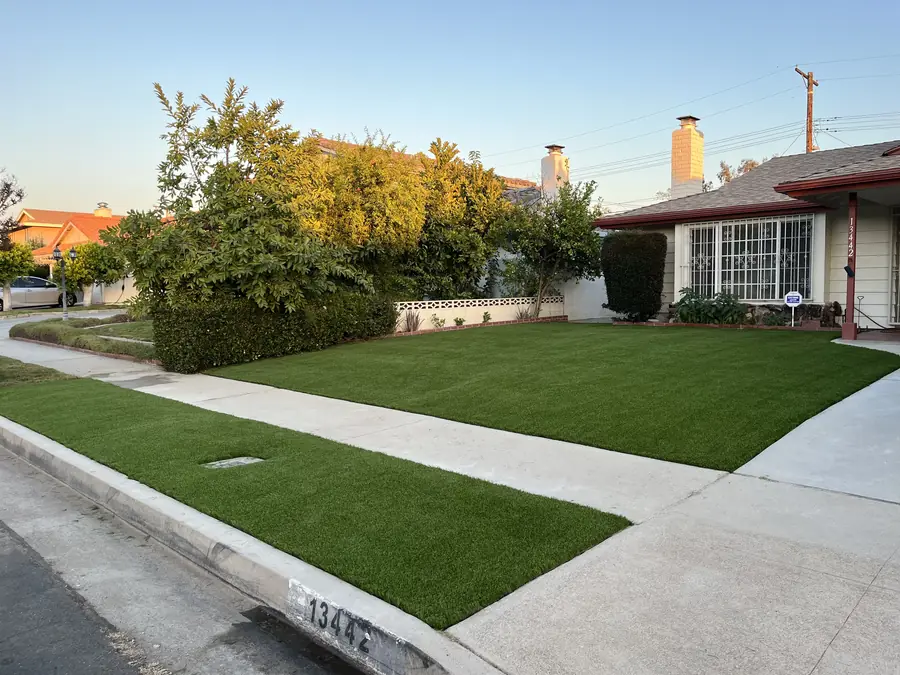
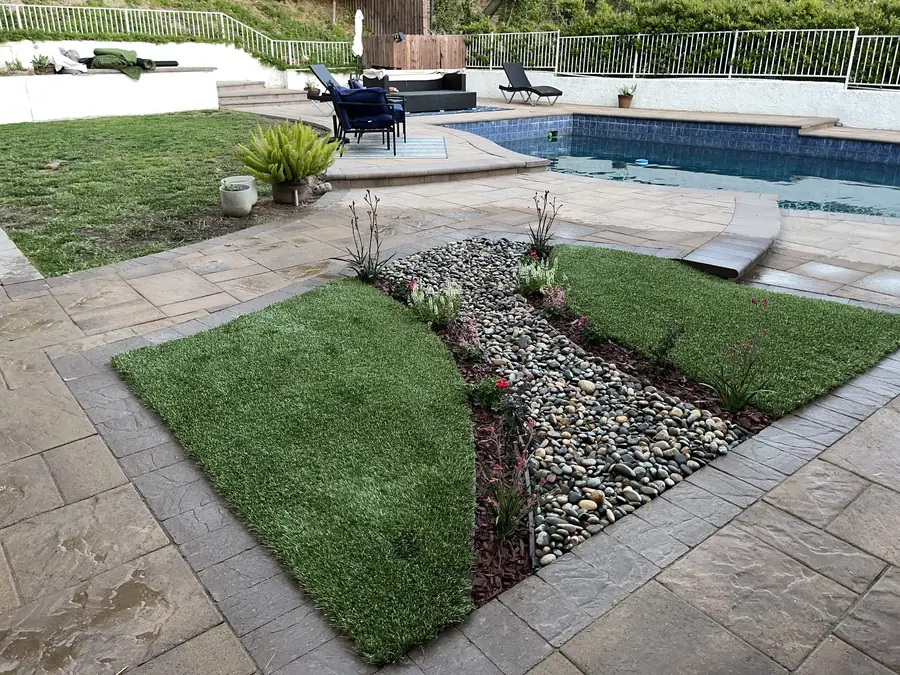
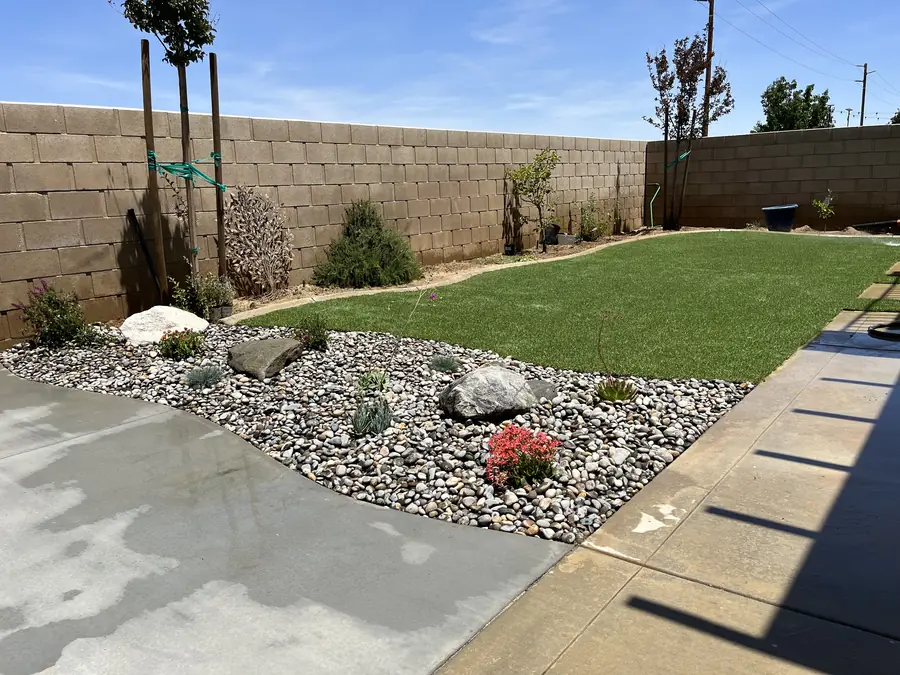
Decide it on how the space actually gets used. Living grass justifies its water only when children or dogs are on it most days of the week, and keeping it green through a Valley summer means running the sprinklers hard. Synthetic turf gives the same open green surface with nothing to water, which is why it suits the modest rear yards common around here. Drought tolerant beds cover the most ground for the least water and look deliberate when the layout is right. A good many yards finish with a small green panel framed by low water planting.
You have to add it, because nothing on an open lot interrupts the afternoon sun on its own. Trees are the lasting answer, planted along the west and southwest lines where the heat arrives, and picked from species that grow to real size in this climate instead of staying decorative. Until they mature, a pergola, patio cover, or shade sail makes the seating area usable right away. There is an irrigation benefit as well, since anything growing beneath a canopy asks for less water than the same plant standing out in the open.
Lots here run to similar dimensions with houses set similar distances apart, so screening usually matters along one or two property lines rather than the whole boundary. We build screens from several species at staggered heights instead of one repeated shrub, which looks intentional and keeps the entire line from thinning out if a single plant sulks. Upright evergreens, tall grasses, and vines on a trellis panel all contribute. Where coverage is needed quickly, larger stock goes in at the critical sight lines and smaller material fills behind it.
That is most of the design work in this neighborhood. A rectangle reads as leftover space until it is broken into parts, so we divide it: a paved area for sitting, a green panel, a planted edge, and a path connecting them at an angle rather than running straight down the middle. Curved bed lines, a change of surface material, and a tree set off center all interrupt the geometry. The lot keeps its shape, but you stop seeing the back fence as the first thing your eye lands on.
Trees lead, since they anchor the composition and their position decides where shade falls a decade out. The shrub layer sits under them, providing mass, screening, and seasonal change. Ground cover closes the floor and shades soil so it holds moisture longer through the hot months. Everything gets spaced for the size it will reach, not the size it arrives at, which is why a fresh planting looks a little open at first. Crowding plants to fill gaps now simply means pulling half of them out in two seasons.
Mulch earns its keep in this climate more than almost anything else we install. A two to three inch layer cuts evaporation sharply, holds root zone temperatures down where there is no canopy overhead, smothers weed seed before it germinates, and slowly turns into organic matter the soil can use. On an exposed lot it is the cheapest way to reduce how long the irrigation has to run. We keep it pulled back from trunks and stems so bark is never sitting damp, and it gets topped up as it composts down.
Occasionally the mainline and a valve or two are salvageable, but a great many houses around Valley Glen are still running the system that went in when they were built, and that equipment has simply aged out. Cracked pipe, mismatched heads throwing at different rates, and valves that seep are the usual findings. We pressure test before deciding. If it holds, we tie in and rebuild the zones above ground. If it does not, replacing it while the yard is already open costs far less than reopening a finished yard later.
One licensed contractor, start to finish. Daniels Landscaping stays accountable for every portion of a project. Whoever shows up to strip out the old yard is the same crew that shapes the grade, trenches the irrigation, places each plant, and finishes the beds. Nothing is passed to an outside company at any point in the schedule. We built the business this way deliberately, because one crew under one roof is the only way to hold a consistent standard and to know precisely who is on your property each morning.
Phasing works here as long as the buried work is completed in the first stage. Grade, drainage, the irrigation mainline, and sleeves under any planned paving must go in while the ground is still open, and none of it is visible once the yard is finished. With the underground settled, planting, surfaces, and finishing details can follow later without disturbing what is already built. Budgets in this neighborhood tend to be practical, so we are used to writing a plan that establishes the structure now and leaves obvious places to pause.
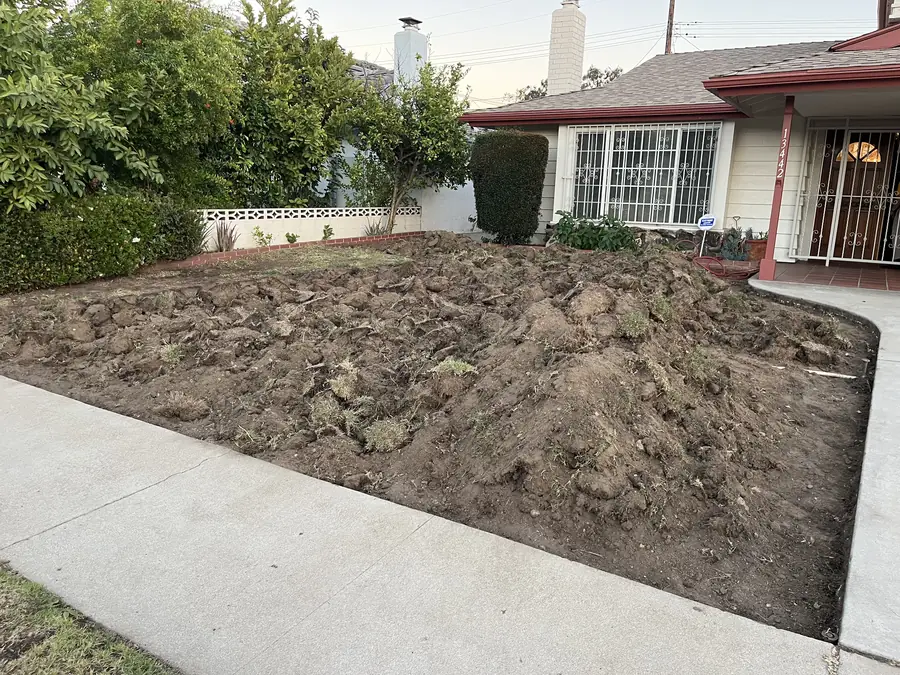
Yes, and it is normally day one. Dead lawn, overgrown foundation shrubs, brittle sprinkler pipe, cracked walkway sections, and whatever else has outlived its usefulness comes out and leaves in a truck. On postwar houses still carrying their original landscape, this single step is often the biggest visible change to the property. We are not indiscriminate about it though. Anything genuinely worth saving, a mature shade tree in particular, stays where it is and the new layout is drawn to suit it.
The first season carries the most risk. New plantings want longer, more frequent watering while roots move out into the surrounding soil, and we step the controller back as they take hold. Expect some weeding while the mulch is still fresh, minor settling in the beds, and light shaping cuts rather than shearing. Before we hand the yard over we walk you through the controller, point out where the valves are buried, and program a schedule for the season it went in. Revisiting that schedule when the weather shifts is the habit worth keeping.
Start with a call to (818) 443-9300 and we will schedule a time to see the property. We look at exposure through the day, how the ground drains, the condition of the soil, whatever irrigation is still buried out there, and how you actually want to use the space. From that we prepare a free written estimate that spells out the scope in plain language. Daniels Landscaping works under California license 1138709. Neither the visit nor the written estimate carries any cost, and nothing obligates you once it is in your hands.