
FAQ
Landscaping in Mission Hills, answered
The questions we hear most from Mission Hills homeowners.
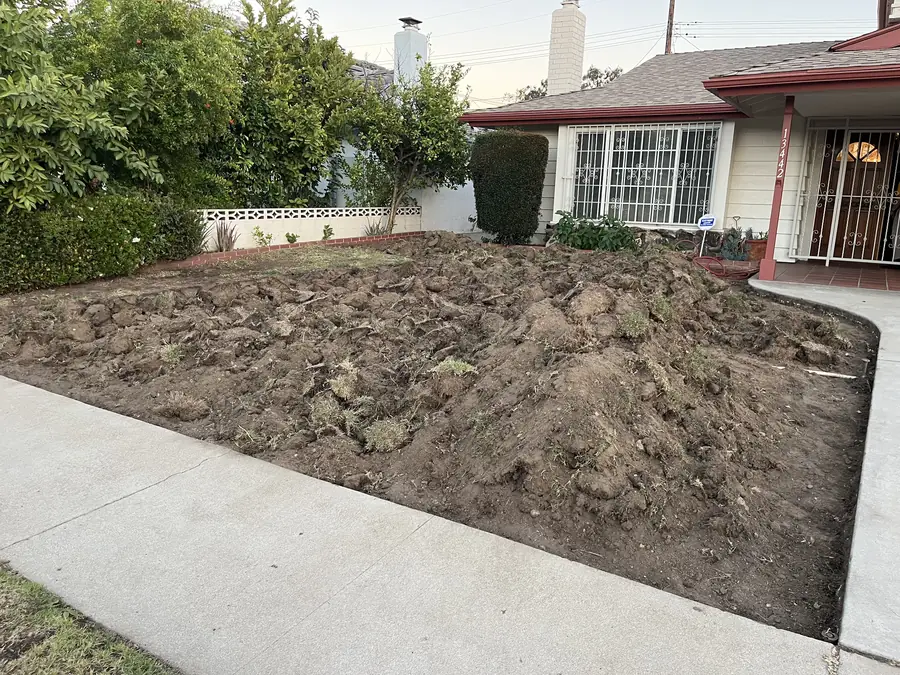
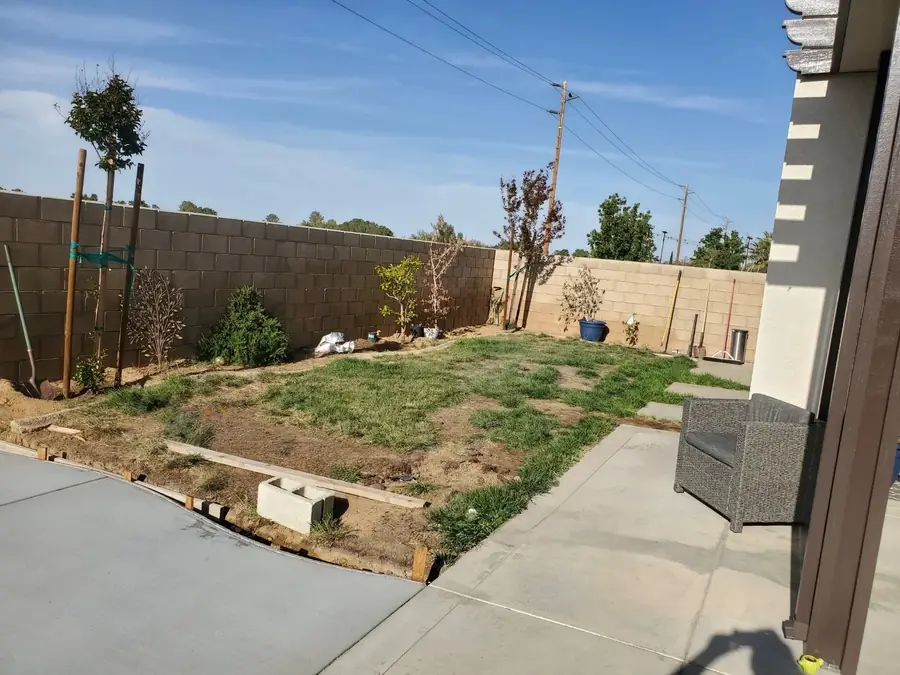
Clearing and demolition open the job, then rough grading sets the shape of the ground. Soil amendment follows, along with trenching for irrigation and any drain lines while the dirt is still open. Edging and hardscape borders go in next, fine grading levels the planting areas, and planting runs from trees down through shrubs to ground cover. Mulch and a final cleanup close it out. That sequence is fixed, because anything buried has to go in before the surface is finished, and correcting a grade after planting means tearing out completed work.
Grade decides where water goes, and every other decision follows from that. If the fall points toward the house or dies in a low spot mid yard, no amount of good planting rescues it. We shape the ground so runoff moves away from the foundation and reaches a swale, a basin, or the street without carving a channel on the way. Setting grade first also tells us which areas hold moisture and which dry out quickly, and that map drives where each plant group ends up.
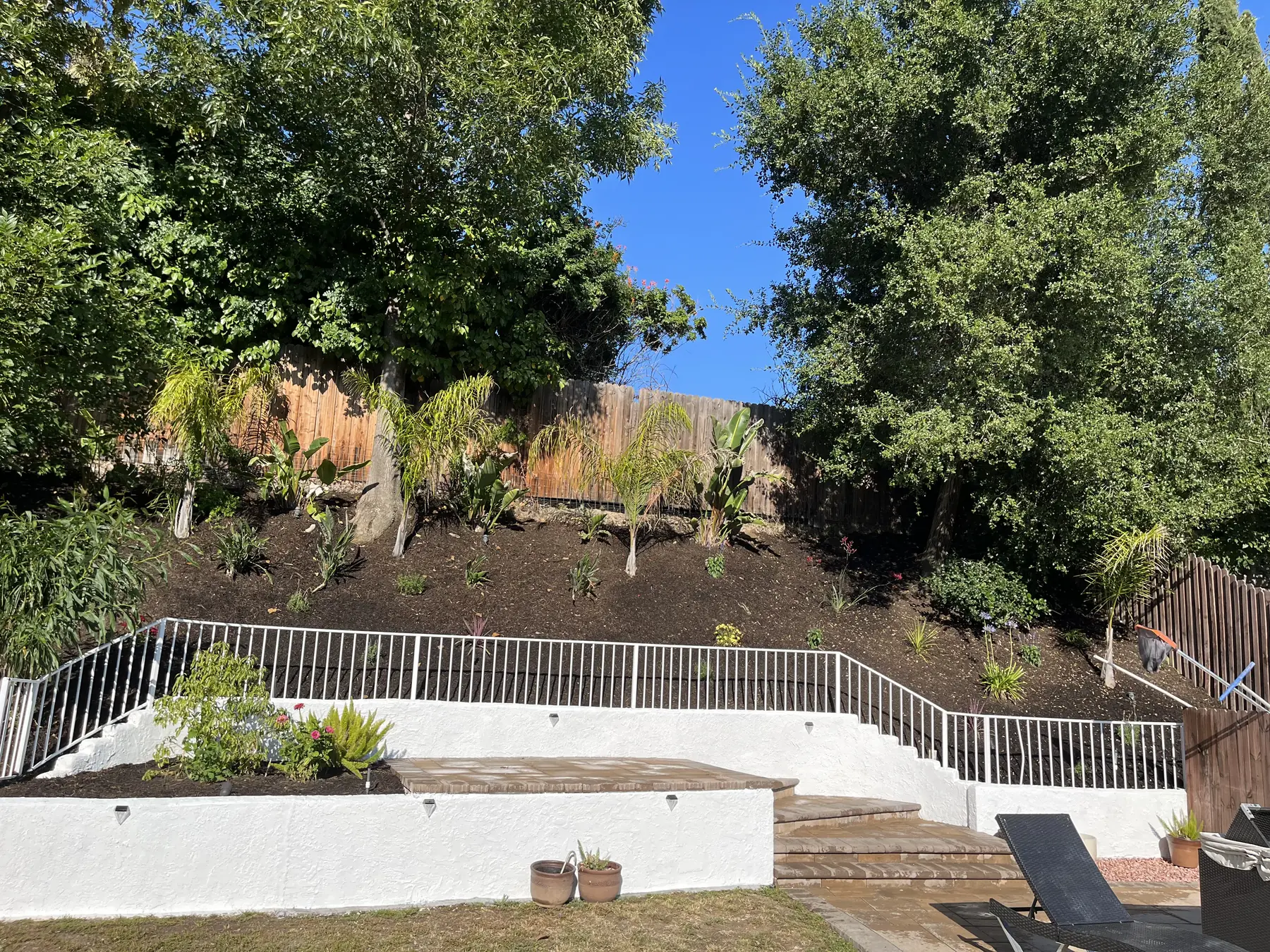
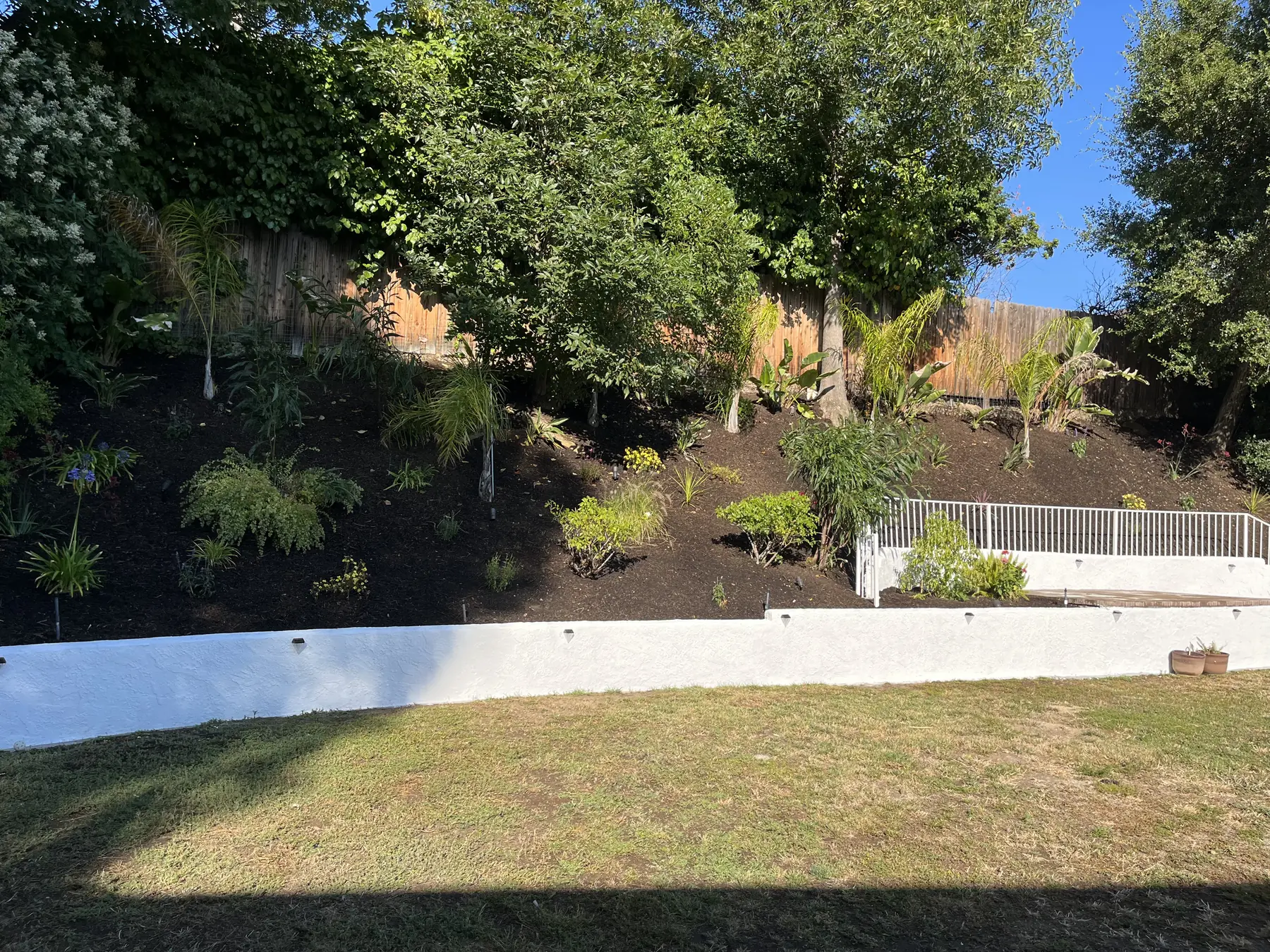
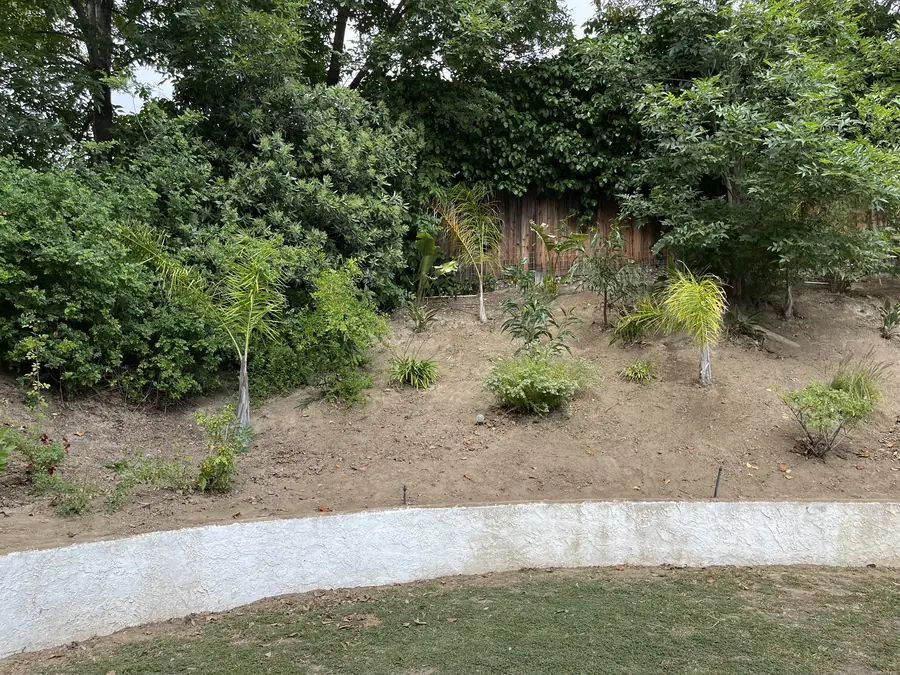
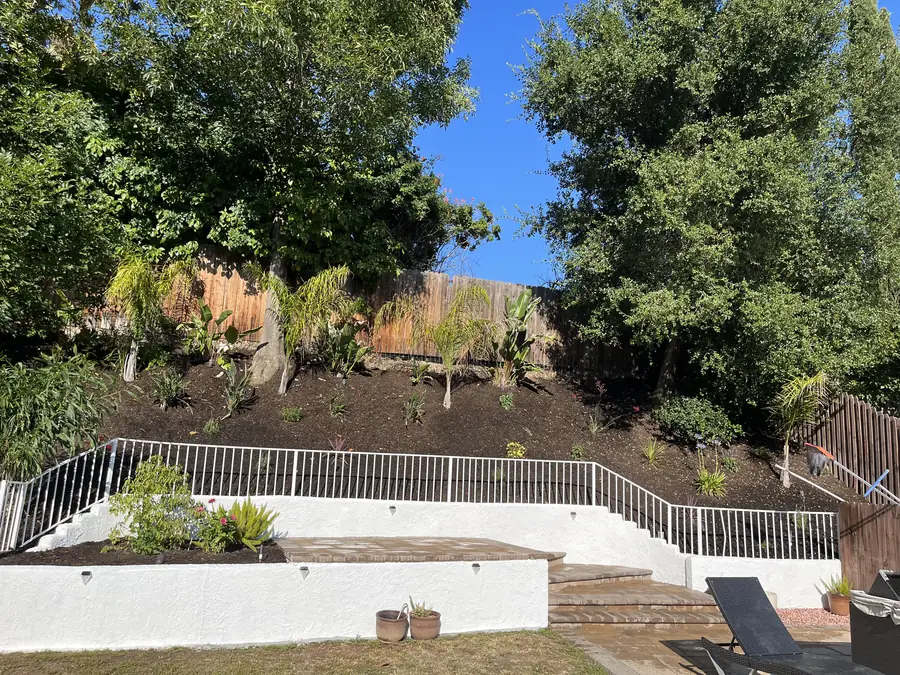
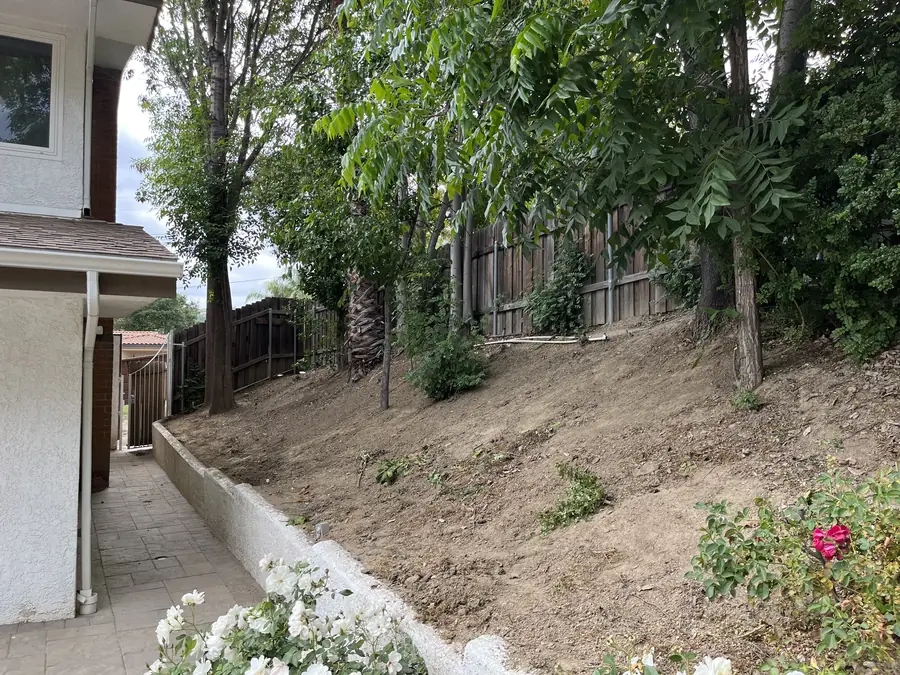
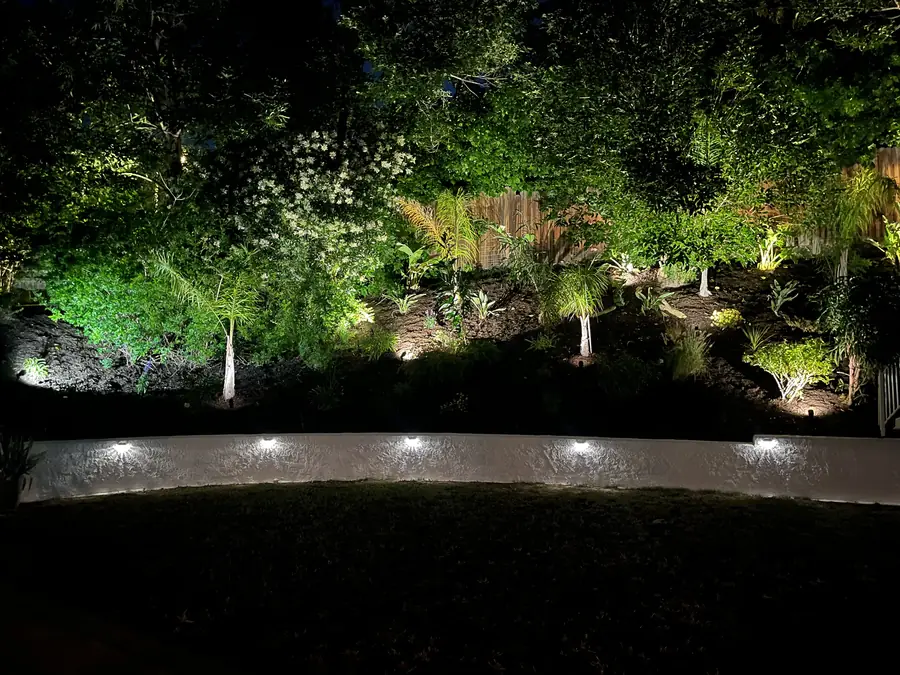
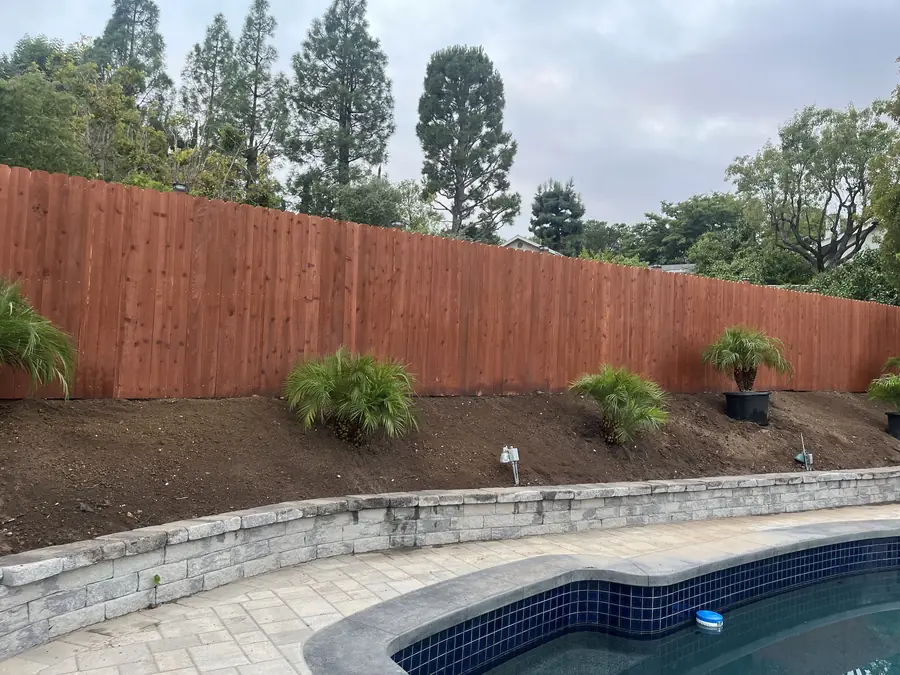
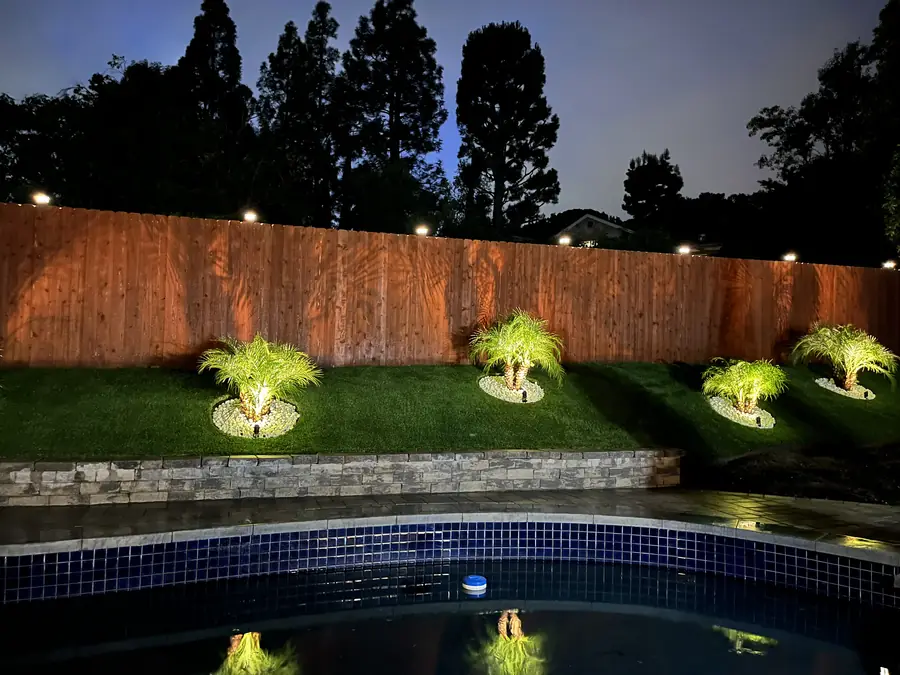
Yes, and usually for the better. A gentle rise gives a yard levels to work with instead of one flat plane, so we can set a raised planted terrace, drop a seating area, or step beds down the fall. What comes with it is drainage planning, since water arriving from the higher side has to be intercepted and routed rather than left to find its own path. A low retaining wall often appears in these plans, not for engineering drama but simply to hold a change in level cleanly.
Quite a bit. Around here older established houses sit next to newer development, and the ground reflects that history. An older property often carries decades of compacted lawn, buried irrigation from two or three generations of repair, and root mass from trees long gone. A newer parcel is more likely to hold builder fill, construction debris, and soil that was scraped and pushed rather than built. Neither is a problem once it is known, so we probe and dig test holes before assuming anything about what sits under the surface.
Summers here run hot and dry, and most yards get full sun with very little relief, so the planting list starts with material that expects exactly that. Westringia, rockrose, Texas ranger, salvias, agaves, and ornamental grasses take the exposure without collapsing by August. For structure, olive, palo verde, and desert willow hold up and throw usable shade. Anything needing afternoon shelter goes on the east side of the house or under existing canopy, never out in the open. Plants placed where conditions suit them stop being a maintenance problem.
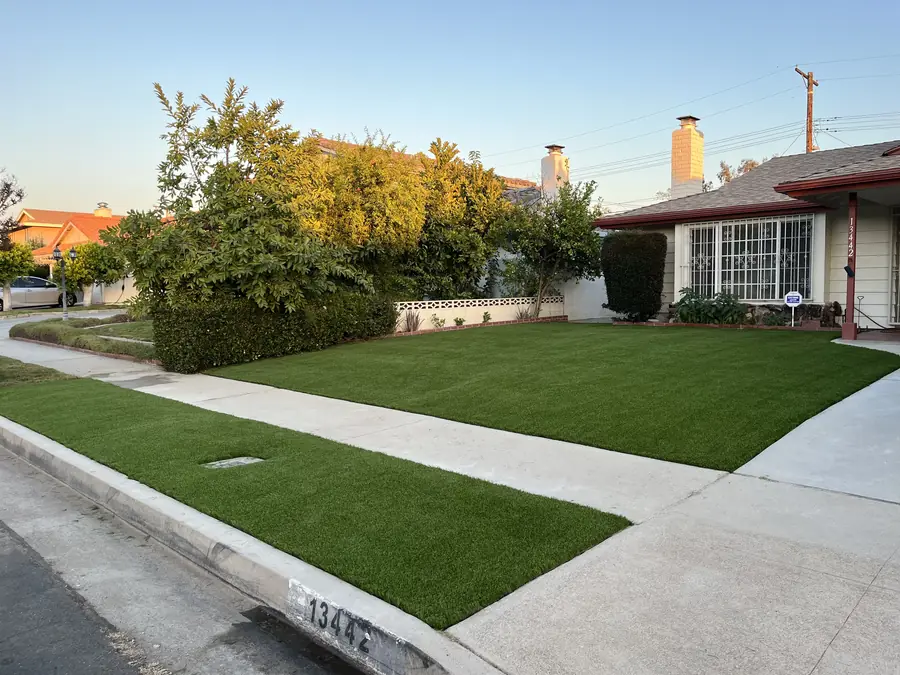
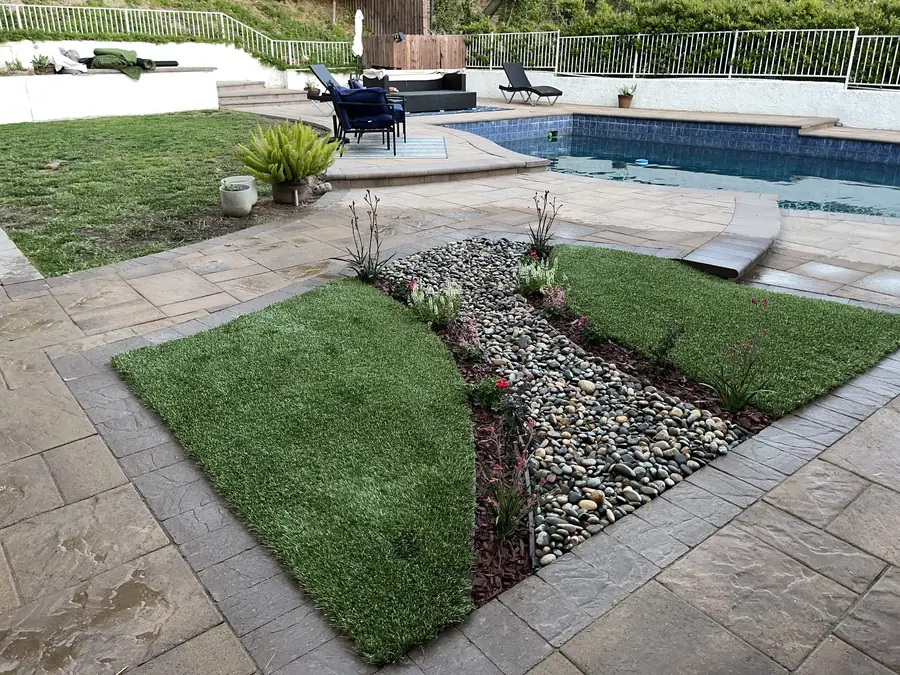
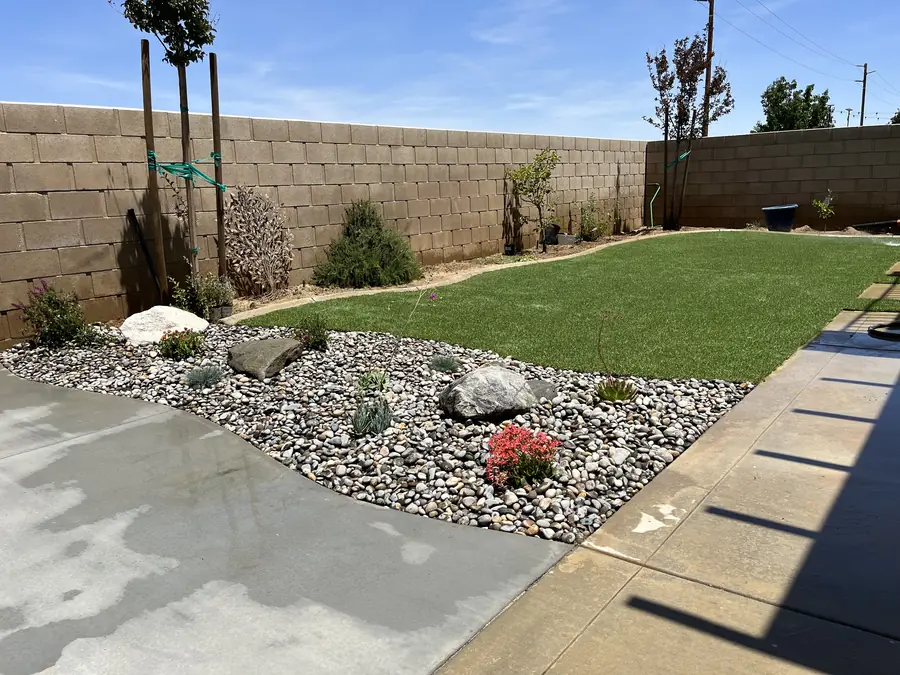
Use decides it. A real lawn is worth the water where children and dogs are on it every day and someone is prepared to mow through the heat. Synthetic turf keeps the same green with no irrigation and holds up in narrow side yards and small flat areas where grass thins out. Low water planting covers the most ground for the least input and reads as intentional when the composition is right. Many yards land on a mix, with a modest open surface framed by drought tolerant beds around it.
One licensed contractor, start to finish. Daniels Landscaping stays accountable for the work. The people who clear and grade your yard are the same people who trench the irrigation, set the trees, and spread the mulch on the last day. Nothing gets passed to an outside company at any point in the project. Keeping it under one contractor is why workmanship stays even across every stage, why you see familiar faces each morning, and why whoever built something is still around to explain it.
Old roots, buried rubble, and leftover construction material come out first, since that is what causes plants to fail a year down the road. Compost is then turned into the beds to open up structure and get biology working. Where a lawn sat for years or equipment tracked across the yard, the soil is compacted and gets ripped so roots can move. Planting holes are dug wide rather than deep, and we backfill with native soil instead of pure amendment so roots push outward rather than circling in a soft pocket.
It does for a lot of homeowners. The historic San Fernando Mission gives this part of the Valley its name and a good deal of its visual character, and clients often want a yard that nods to that instead of fighting it. In practice that means warm toned gravel and stone, olive and citrus, agave and rosemary, terra cotta pots, and simple geometry rather than fussy detail. It is not a costume either. That same palette happens to suit heat and low water use, which is why it holds up locally.
Most yards already have something in the ground, so the first task is judging what deserves to stay. Cracked laterals, mismatched heads, and tired valves get replaced instead of patched, because new planting fed by old hardware fails slowly and confusingly. The yard is then divided into zones by water demand, with drip serving beds and spray or rotary heads serving any turf. Trees receive their own zone where layout permits, since deep infrequent watering has nothing in common with what shrubs want. We program the controller before leaving.
Because the ground genuinely differs. Much of this area is flat, but parts of it roll and lift gently toward the north, so one address is a level rectangle while another nearby has real fall across it. The flat lot is a question of layout, proportion, and planting. The sloped one adds drainage routing, a low retaining wall, and sometimes a terrace or two before anything decorative gets discussed. We never plan from the neighborhood in general. We plan from what the site walk shows on your particular parcel.
Trees outlast everything else in the yard, so they are chosen first and placed deliberately. Mature spread gets measured against the space that actually exists, not the room a young tree occupies at planting. Root habit near the foundation, the driveway, and any sewer or water line matters, and so does litter, because what a tree drops decides whether anyone enjoys sitting beneath it. Evergreens do the screening work along a property line. A deciduous tree on the south or west side shades the house in summer and lets winter sun through.
Two to three inches is the target, and it is the cheapest material in the yard doing the most work. Mulch slows evaporation so irrigation cycles run shorter, keeps root zone temperature steady through a heat wave, blocks most weed seed from germinating, and feeds the soil as it breaks down. It also makes fresh planting look finished rather than raw. We keep it pulled back off trunks and stems, since piling it against bark holds moisture where rot begins. Plan on topping it up every year or two.
On the gently sloped parcels around here that work is usually straightforward once it is planned rather than discovered. We look at what drains onto the property from the higher side, where it concentrates, and where it can safely be released. Surface shaping handles most of it, sending flow along a route we chose. Where a run is long enough to gather speed, a swale or a catch basin tied to solid pipe breaks it up. Any retaining wall we build gets gravel backfill and a drain line behind it as standard practice.
Regularly, and those trees usually set the plan. Established properties in this area often carry a specimen worth far more than anything we would plant to replace it, so the design bends around it. Trenching gets routed outside the critical root zone, and where we must work close, digging is done by hand. Grade is not raised over the root plate, since burying roots suffocates them quietly across a couple of seasons. Planting underneath is chosen for shade and root competition, and that bed gets its own irrigation zone.
The first year asks the most attention. Roots are still establishing, so watering needs to stay consistent and shift as the weather turns instead of being set once and forgotten. Disturbed soil grows weeds, and pulling them while small keeps that from becoming a chore. Once plants establish, low water planting settles into seasonal pruning, a mulch refresh, and an irrigation check a couple of times a year. Before we finish, we walk you through what went in and what each group needs so none of it is guesswork.
Yes. The condition is that the whole yard gets designed up front even when only part of it is built now. Grading, irrigation mainlines, drain runs, and sleeves under future paving all have to reflect the finished layout, and we stub those out during the first phase so later work does not mean cutting into completed areas. Most homeowners begin with whatever they see from the main windows or use daily, then move outward as budget allows. Planned that way, the second phase looks like it belonged there from the start.
Call (818) 443-9300 and we will set a time to walk the property. We look at the grade, the soil, what the existing irrigation is doing, the trees that are staying, and how equipment and material can physically reach the work area, then talk through how you want the space used. You receive a free written estimate afterward, written plainly so the scope is clear before any work begins. Daniels Landscaping holds California license 1138709, and the crew arriving on the first morning works for us.